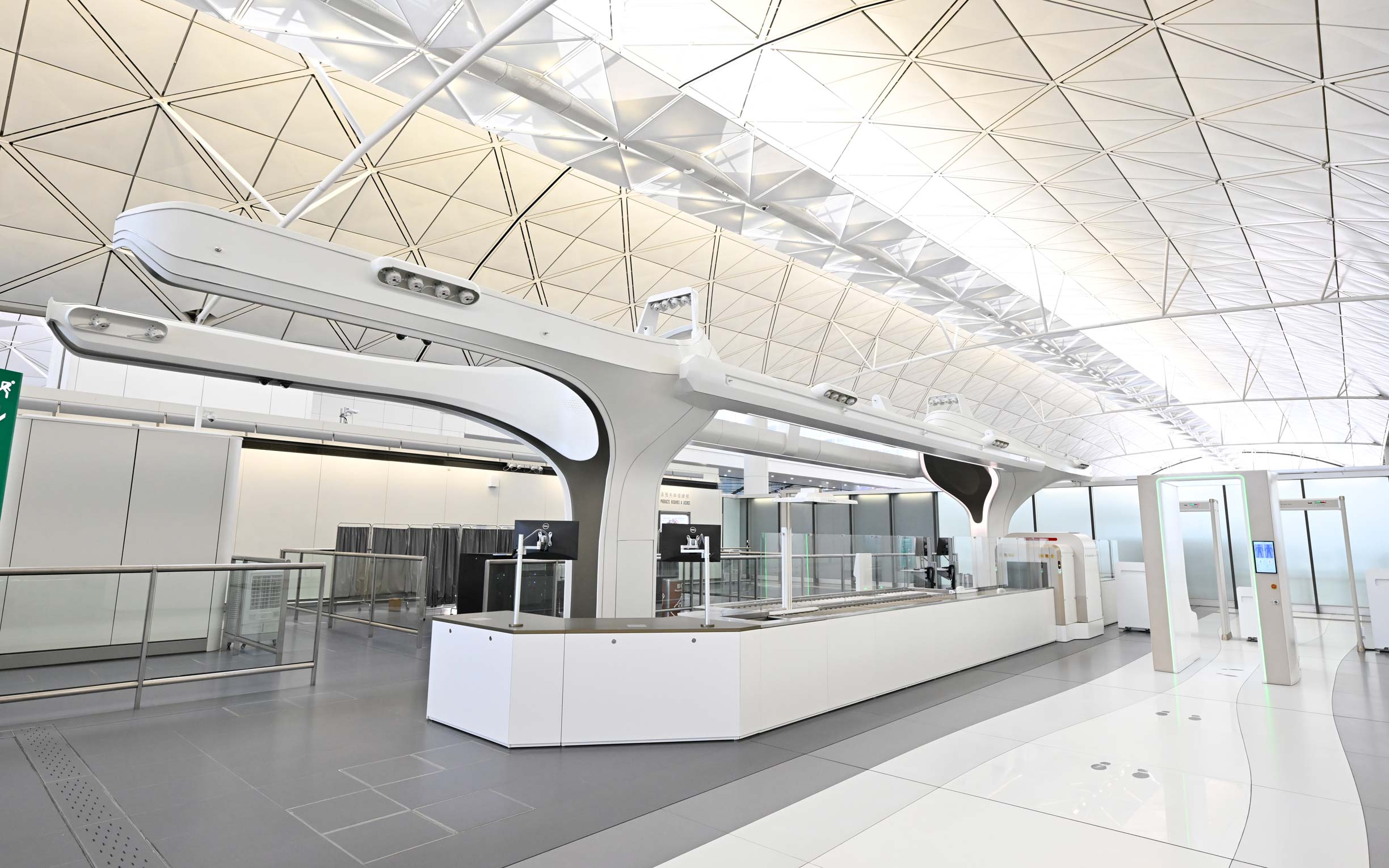
Airport Authority Hong Kong (AAHK) will progressively introduce a smart security screening system at Hong Kong International Airport (HKIA) starting next month, allowing passengers to keep their electronic devices, including laptop computers and mobile phones, as well as liquids, aerosols and gels in their carry-on luggage, without having to take them out for screening as required by existing protocol.
The streamlined procedure is enabled by the latest 3D and 360-degree CT-based X-ray scanning technology, as opposed to the existing system’s 2D capability. The new system also comes with auto tray recirculation, in-built tray sterilisation, and automatic alert to passengers for uncollected items on the tray.
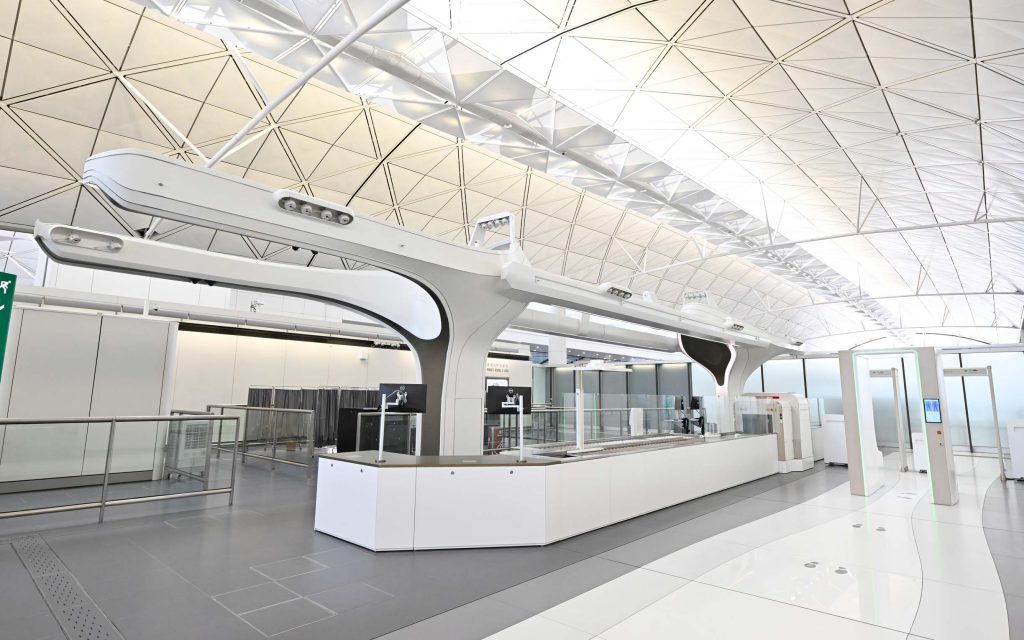
For passengers who fail to clear the archway metal detector, further screening will be conducted in a new full-body scanner that replaces manual searches with a hand-held detector. Advanced imaging technology can accurately locate concealed items while reducing physical contact between passengers and security staff.
Apart from enhancing passenger experience, the new smart security screening system will improve operational efficiency, raising the average throughput by about 20 per cent.
HKIA will be world’s first to operate smart security screening channels in the entire airport. The overhaul will see the installation of 50 channels and 32 full-body scanners, starting from Terminal 1. The first batch will come into operation on July 2 at South and North Departures Immigration Halls.
Steven Yiu, executive director, airport operations of AAHK, said: “At HKIA, we attach great importance to aviation safety as well as passenger experience. We will adopt the new smart security screening channel in the entire airport. The upgrades of the security screening system at HKIA not only further enhance the overall screening performance, but also make mandatory airport procedures more pleasant to passengers, with the existing aviation security standards and requirements remaining intact.”