

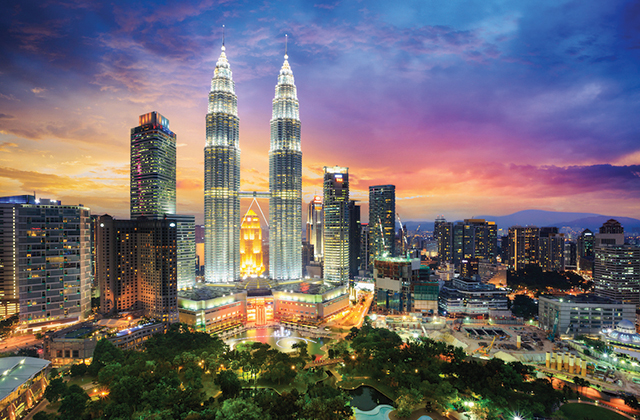
A recent mulling by Malaysia’s health minister to extend the ban on interstate and inter-district travel beyond the end date of the movement control order (MCO) on February 18 has not gone down well with the hotel sector whose business survival is at stake.
In making his case, Adham Baba said maintaining the travel restrictions was very important to continue to flatten the curve.
While acknowledging the rationale behind the recommendation, hoteliers called on the government to adopt a more balanced, considered approach to stemming the virus spread.
Malaysian Association of Hotels (MAH) CEO, Yap Lip Seng, urged the government to discuss the matter with the Ministry of Tourism, Arts and Culture before extending the blanket interstate travel ban across the country.
He said: “The tourism industry had in fact proven itself since the first MCO in March 2020 and had operated in full compliance of standard operating procedures (SOP), and the hotel industry even introduced its own hygiene and safety certification, the Clean & Safe Malaysia label, incorporating standards beyond base requirements of health authorities.”
Yap pointed out that extending the interstate travel ban would force more hotels into closure and more employees getting retrenched as a result. MAH also requested that the Ministry of Health extend the SOP for special clearance of shorter quarantine approved for ministers to other business travellers from overseas.
“If the Ministry of Health is confident of such SOP, it should also work and serve the business community and encourage investments,” said Yap.
Meanwhile, Malaysian Association of Hotel Owners (MAHO) president, Teo Chiang Hong, hoped the government would lift the ban on interstate and inter-district travel in order to revive domestic tourism.
He pointed out that without domestic tourism, hotels would not be able to survive for much longer. From January 2020 to this month, a total of 287 hotels had closed down and 5,265 employees terminated, according to official data. Under MAHO membership, five hotels closed down in 2020 and one hotel shut its doors this month. Hotels also have had to resort to putting employees on 50 per cent salary cut and leave without pay.
In addition, MAHO also requested more assistance for the hotel sector such as an increase in the wage subsidy quantum to RM1,200 (US$297)- RM1,500 without a cap on the maximum number of employees, extension of electricity bill discount from March to September and increasing the discount from 10 to 15 per cent. It also requested for a moratorium on business and operating licences or permits, the Social Security Organisation’s Employment Injury Scheme, deferment or reduction of assessment, as well as a review of Indah Water Konsortium monthly fixed charges linked to a property assessment value.
Teo added: “We feel that if the government is not able to give further assistance as per our request, it is pertinent to allow hotels to do business and operate as normal with the specified SOPs, so that hotels are able to generate revenue to sustain the business and not having to close down, downsize or terminate employees.”


 For a city where Lunar New Year celebrations are traditionally large-scale, vibrant and a serious tourist magnet, creative solutions must be sought to combat the now-familiar travel and movement restrictions during the pandemic.

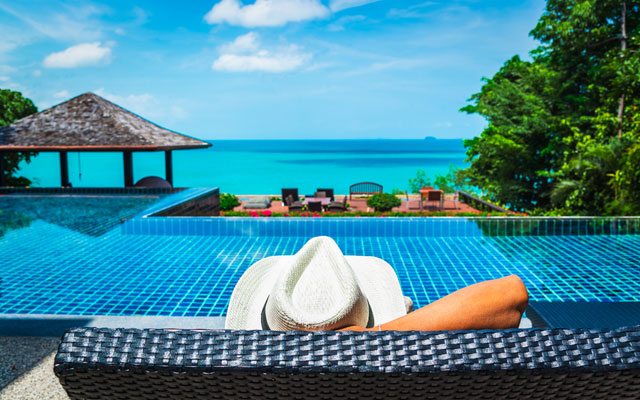










Following the global travel freeze brought on by the pandemic, people are yearning to travel again to reconnect with loved ones and to make new memories this year, revealed a new survey by IHG Hotels & Resorts.
Close to 60 per cent of survey respondents said they cancelled up to four leisure and business trips last year. More than half the travellers surveyed said they have now rebooked cancelled trips or plan to rebook them, with family vacations and visiting loved ones topping travel wishlists for 2021.
The rollout of vaccines is igniting hope and optimism, as respondents across all age groups, ranging from 18 to 55+, said spending time with family and friends is a primary motivator for travel this year.
When borders reopen, one in five respondents said they plan to make up for the lack of travel in 2020 by going on more trips in 2021. The same percentage said they hope to travel to a place on their bucket list in 2021, with that being true for one in three travellers aged 18 to 24.
Younger travellers were five times as likely to say that volunteering for a community in need would be a primary motivator for travel.
However, more than a third of all those surveyed, including 50 per cent of those 55 and older, said they plan to hold off travelling until the Covid-19 vaccine is more widely available.