


Marriott enhances human trafficking awareness training
Marriott International will launch an updated version of its human trafficking awareness training, in line with its goal to train all its on-property associates to recognise and respond to potential human trafficking situations by 2025.
The enhanced training will be rolled out on July 30, in conjunction with the World Day Against Trafficking in Persons.
Covid-19 has ushered in more contactless and mobile hotel experiences, which can make it more difficult to spot potential indicators of trafficking, Marriott said in a press release.
The new training builds upon the original training’s foundation by featuring scenario-based modules, a mobile-friendly design, and increased guidance on how to respond to potential situations of human trafficking – critical enhancements based on hotel-level feedback to help associates turn awareness into action and continue the fight against the multinational crime.
Additionally, the new training was developed in collaboration with survivors of human trafficking, ensuring the training is victim-centered and the resources are survivor-informed.
“As an industry that cares deeply about human rights and the horrible crime of human trafficking, we have a real responsibility to address this issue in a meaningful way,” said Anthony Capuano, CEO of Marriott International. “The updated training empowers a global workforce that stands ready to recognise and respond to human trafficking and allows our company to live up to our core values.”
Through a collaboration with ECPAT-USA and with input from Polaris, two leading non-profits that specialise in combatting human trafficking, Marriott launched its original human trafficking awareness training in 2016 and made it mandatory for all on-property staff in both managed and franchised properties globally in January 2017.
So far, the training has been delivered to more than 850,000 associates, which has helped identify instances of human trafficking, protect associates and guests, and support victims and survivors.
As the company did with its original training, Marriott plans to donate this training and work with ECPAT-USA and the American Hotel and Lodging Association Foundation to make it widely available in early 2022 to help educate the entire hospitality industry.
Etihad rolls out IATA Travel Pass to seven cities
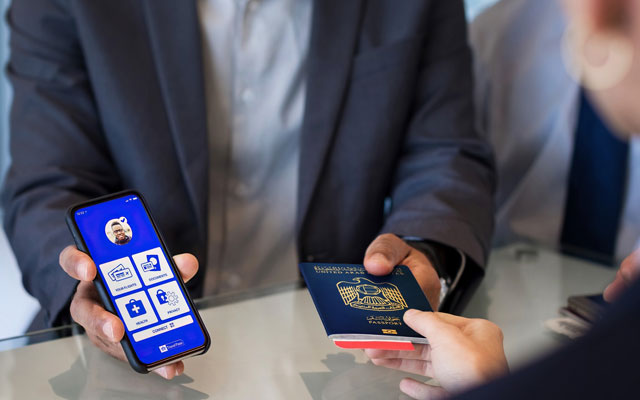
Etihad Airways has expanded the usage of IATA Travel Pass to include flights between Abu Dhabi and seven destinations across its network.
The seven destinations are Bangkok, Singapore, Barcelona, Geneva, Madrid, Milan, and New York.
Etihad Airways was one of the first airlines globally to begin testing IATA Travel Pass, in support of a global, standardised solution for travellers to validate their documents and navigate Covid-19 travel requirements.
Mohammad Al Bulooki, COO at Etihad Aviation Group, said: “The feedback from the IATA Travel Pass trial has been positive, with Etihad’s guests appreciating its ease-of-use and data security. Etihad is pleased to now make IATA Travel Pass available on flights to and from seven major global cities, providing more guests with the option of simplifying their journey and airport experience.”
Currently, the app is able to accept EU Digital Covid Certificates issued by all 27 member states of the European Union plus Switzerland, Iceland, Norway and Lichtenstein, as well as vaccine certificates from Singapore and Qatar.
As vaccines continue to roll out globally, more and more travellers around the world will be able to upload their government issued Covid vaccine certificates to the app to facilitate seamless travel.
The airline said that it continues to work closely with IATA to progressively roll out the digital travel pass to more cities across its route network.
Air travel demand in APAC remain suppressed: AAPA
Ongoing tight border restrictions continue to suppress international air passenger demand in the Asia-Pacific region in June, according to preliminary traffic figures released by the Association of Asia Pacific Airlines (AAPA).
Across the Asia-Pacific region, many countries recorded a surge in Covid-19 transmissions caused by new variants, with limited vaccine supplies hampering vaccination progress.
The region’s airlines carried only 1.4 million international passengers in June, just 4.4 per cent of the 32 million carried in the corresponding month in 2019.
With available seat capacity at 12.9 per cent of pre-pandemic levels, the average international passenger load factor of 31 per cent recorded in June was a 51 percentage point drop from that of the corresponding month in 2019. The decline underscored the significant challenges faced by airlines in the passenger segment, which normally accounts for a significant portion of total airline revenue.
Subhas Menon, AAPA director general, said: “The already dire situation has recently been compounded by new Covid-19 infections across the region due to the Delta variant, with ongoing border restrictions holding back any meaningful restart in international travel markets. Air cargo traffic growth, supported by strong demand for both intermediate and consumer goods from the major advanced economies, remains the saving grace.
“Many Asian economies are facing renewed challenges in bringing the pandemic under control and in progressing vaccination rollouts. Prospects for an early recovery for Asian airlines are dim unless cohesive action is taken by governments to accelerate vaccination rollouts and reopen borders safely based on ICAO and WHO guidelines.”
44% of Singaporeans plan to travel in the coming three months: survey
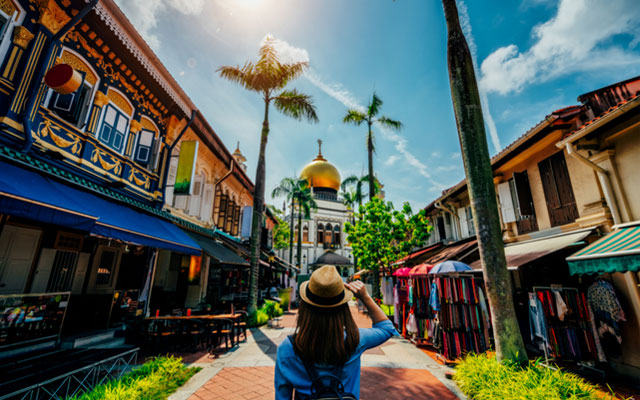
Travel plans are on the rise in Singapore, with 44 per cent of Singaporean adults planning to travel over the coming three months, up from 20 per cent a month ago, according to Finder’s Travel Index.
Both domestic and international travel plans are on the rise. A third of Singaporeans (34 per cent) plan to travel domestically over the months of August, September, and October, up from 12 per cent in the June survey.
One in five Singaporeans (21 per cent) plan to travel internationally over the next three months, up from 10 per cent last month.
The survey also found that 30 per cent of Singaporean adults plan to travel either domestically or internationally in August, while 16 per cent plan to travel in September and 14 per cent in October.
Finder’s global editor-at-large, Angus Kidman, said the jump in travel plans coincides with the launch of Singapore’s Test, Trace, and Vaccinate campaign, as part of Singapore’s post-pandemic roadmap.
“We’ve seen a monumental jump in the percentage of Singaporeans interested in travel over the past month, with the number of people planning short-term travel more than doubling from June to July.
“It’s likely this is in part due to the recent Test, Trace, and Vaccinate campaign for Singapore’s shift to a new normal.”
Over the same period, most other countries surveyed saw the percentage of people with travel plans remain flat or even fall month-on-month, making Singapore an exception to the trend.
“Unfortunately due to the latest outbreak, it’s likely some of the trips planned for next month won’t be possible, with restrictions in place expected to last until mid-August,” said Kidman.
“However this is just a temporary pause, and it’s likely many of these trips will be postponed for when travel is possible again. Overall, it’s promising to see the lift in the number of people planning to travel, and suggests that travel is starting to recover, if not back to the way things were.”
Read the full report here.
Sydney’s lockdown extended by another month
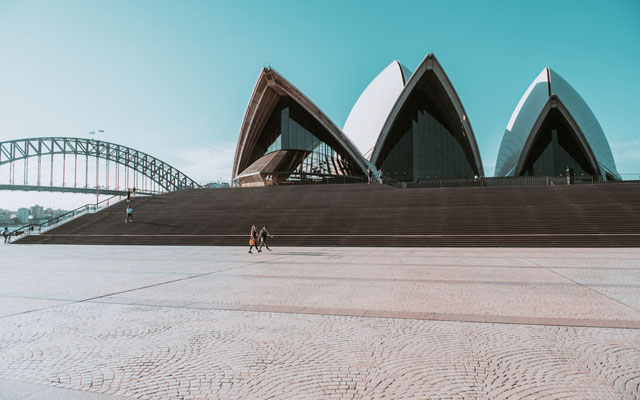
The Australian city of Sydney has extended a lockdown by four weeks amid a continued rise in Covid-19 cases.
The announcement made on Wednesday (July 28) by premier Gladys Berejiklian comes after a protracted stay-at-home order failed to stem an outbreak of the more contagious Delta variant. The state’s lockdown was initially supposed to end on Friday.
More than 2,500 people have been infected in Sydney’s worst outbreak this year, according to a BBC report. The state of New South Wales, of which Sydney is the capital, reported 177 new cases on Wednesday, its highest daily count since March 2020.
Under the extended lockdown, stricter movement curbs have been enforced, including a 10km limit on essential shopping.
Berejiklian was quoted by media reports as saying that police would boost enforcement of wide-ranging social distancing rules and urged people to report suspected wrongdoing, saying: “We cannot put up with people continuing to do the wrong thing because it is setting us all back.”
In one case, a mourning ceremony attended by 50 people in violation of lockdown rules resulted in 45 infections, she said.
The extension turns what was initially intended to be a “snap” lockdown of Australia’s most populous city into one of the country’s longest since the start of the pandemic.
The states of Victoria and South Australia both came out of lockdowns on Wednesday, after bringing smaller outbreaks under control.
New hotels: Fairfield by Marriott South Binh Duong, Radisson Blu Resort Dharamshala, and more


Fairfield by Marriott South Binh Duong, Vietnam
Fairfield by Marriott marks its brand debut in Vietnam with the opening of the Fairfield by Marriott South Binh Duong. Located in the Binh Duong province, the hotel features 181 rooms with separate work and rest areas. The property’s public spaces boast open layouts, multifunctional spaces and natural light.
The hotel features two signature restaurants and a poolside bar. ORYZAA, the all-day dining restaurant, presents a fresh take on local Vietnamese delicacies and Western classics, featuring an international breakfast buffet and an à la carte menu of Asian cuisine for lunch and dinner. For meetings, conferences and social events, the hotel offers 120m2 of function space. Leisure amenities include an outdoor swimming pool and open-air pool bar, 24/7 fitness centre, and The Market, a 24-hour convenience store.
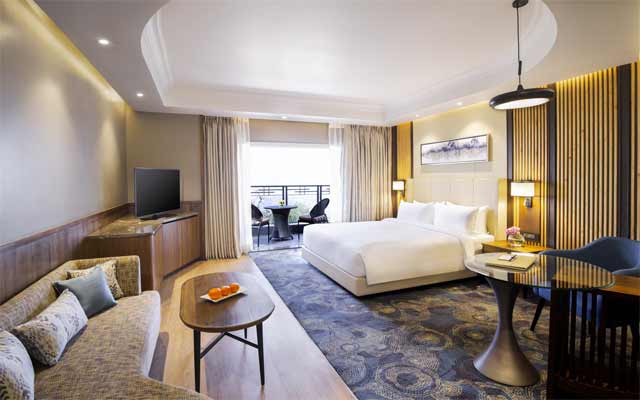
Radisson Blu Resort Dharamshala, India
Located on the foothills of the Dhauladhar Range in Himachal Pradesh, Radisson Blu Resort Dharamshala features 120 rooms overlooking the Kangra Valley. Spread over 30,000m2, the resort offers rooms across standard, superior, deluxe, suite and presidential suite categories. It features three banquet halls with capacity between 80 to 100 pax; and an outdoor venue, The Banquet Deck, offering views of the Kangra Valley.
In addition to 24-hour room service, the resort houses several on-site dining options including The Edge, an all-day dining restaurant serving a range of local and western dishes; Italian Crust, a pizzeria; and All Out, a lounge bar offering a selection of wine and spirits along with small bites. Radisson Blu Resort Dharamshala will feature The Spa at Radisson Blu, a full-service branded spa. Other amenities include a meditation room, a fitness studio and a temperature-controlled infinity pool. The resort offers a range of family recreation options such as an outdoor kids’ play area, family picnic spots in the serene pine forest, and a cozy cards room.
Best Western Premier Sapphire Ha Long, Vietnam
Best Western Premier Sapphire Ha Long is a 31-storey property in the heart of Ha Long city, located on the waterfront of Hong Gai overlooking Ha Long Bay. The hotel offers 1,008 rooms and suites, all with private balconies. All rooms include complimentary Wi-Fi, IPTV channel selection, and large windows offering panoramic views of the bay or city views. A selection of two-bedroom suites are ideal for long-stays or short family breaks. Each room has two bedrooms and an on-suite bathroom, living room, and private balconies.
The hotel features heated indoor pool and seasonal outdoor swimming pool, a fitness centre, kids’ club, and a spa (opening 2022). Two restaurants and a lobby bar serve up a selection of culinary delights including Vietnamese, Asian, seafood and international cuisine. There is also an executive lounge, business centre and meeting facilities with video conferencing available.
Mixed reactions to Singapore’s endemic Covid outlook
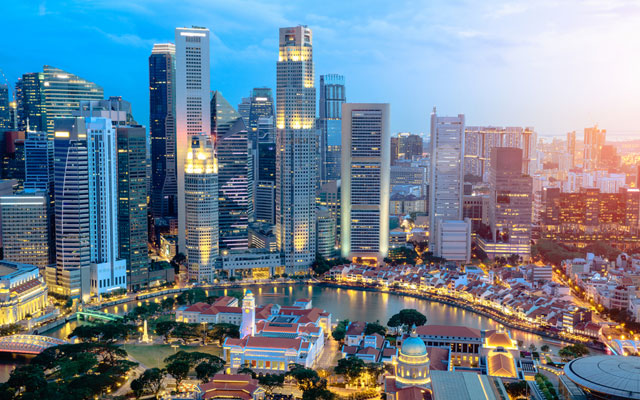
• Singapore’s travel and tourism businesses are ready to transition to endemic state
• Inbound travel recovery will hinge on conditions for vaccinated foreign visitors
• Outbound travel specialists are quickly lining up packages for holiday-starved Singapore residents
It may be months before the Singapore government defines the terms for the city-state’s pandemic exit strategy and reopening of borders, following its announcement on Monday to mark Covid-19 endemic once the population is sufficiently vaccinated, but the country’s travel and tourism industry players are happy to welcome progress.
An outline of an endemic state includes fewer restrictions on social gatherings, larger dine-in groups, and lower requirements and higher capacity for events. Vaccinated individuals will be able to engage in a wider range of social activities and in larger groups, and businesses will not have to shut down premises for deep cleaning whenever new infections surface.
And more importantly for Singapore’s travel and tourism industry, which is heavily dependent on international traffic, the government may permit quarantine-free travel for fully vaccinated travellers.
Steven Ler, president of the National Association of Travel Agents Singapore (NATAS), told TTG Asia that Singapore’s pandemic exit strategy “would mean very tangible economic and social consequences for all of us in travel and tourism, and the wider economy”.
Kwee Wei-Lin, president of the Singapore Hotel Association (SHA), regards the government’s plans to ease travel restrictions for fully vaccinated travellers as a “significant move to boost global confidence in Singapore’s appeal as a tourism destination in the new era of travel”.
Both association leaders say their members are ready for the transition.
Kwee emphasised that the pandemic battle requires a “multi-faceted strategy”.
“While our hotels in Singapore are well-equipped with an arsenal of weapons to protect our guests and workforce, we must remain vigilant and nimble in response to this rapidly evolving pandemic. Singapore has one of the highest vaccination rates for the hotel workforce, where over 90 per cent of our colleagues are now fully vaccinated and undergoing routine ART tests. The critical success factor for the safe resumption of travel depends on compliance with public health protocols and our industry’s continuous digital transformation towards contactless yet efficient guest experiences,” she elaborated.
Ler shared that NATAS inbound members are already in contact with overseas partners to understand the needs of international visitors, while working with local suppliers to ensure safe management measures compliance “so that visitors may have a stress-free and seamless service experience” in Singapore.
Inbound concerns
Jameson Wong, APAC director at travel intelligence firm ForwardKeys, regards Singapore’s move to facilitate quarantine-free travel as a “significant one”, largely because it demonstrates to the “rest of the world that we are moving beyond the pandemic, will likely be ready to receive inbound travellers in the near future, and are taking the first steps in creating the foundation of reciprocity in what is otherwise now merely a unilateral bubble”.
However, he sought to temper expectations of a dramatic improvement in international inbound.
“It is not clear at this point if Singapore will allow quarantine-free entry for fully vaccinated foreigners, or limit it to just fully vaccinated Singapore residents who are returning from overseas trips. According to our data, Changi Airport Group’s total passenger traffic in 2019 stood at 68 million pax. We also know for a fact that out of the total, there were approximately 15 million inbound overnight visitors, and 11 million outbound overnight travellers in 2019. We may be looking at an impact on only the outbound overnight segment,” he elaborate.
According to Ler, inbound recovery will also depend on “the corridors of travel protocols, travel formalities, immigration controls and vaccine equities (which) must be unified and friendly enough for people to want to travel again willingly”.
Outbound hopes
For now, expectations around an outbound travel rebound appear more positive.
Once the growing population of vaccinated Singapore residents are no longer faced with compulsory quarantines upon their return from overseas, many will head out to reunite with loved ones and family, projected Alicia Seah, spokesperson of Dynasty Travel.
That first wave of outbound travel will be followed by leisure and short-haul trips. “Travellers will go in small groups with friends and relatives,” Seah said.
Some agencies are lining up tour packages that are suited to changed travelling patterns in the aftermath of the pandemic.
Mabel Cheang, lead executive, business development at Travel Wander, said post-pandemic travellers will choose to stay away from crowds and visit lesser-known places like the countryside or countries where the pace of life is slower with natural social distancing already in place.
She added: “Many would want a slower travelling pace rather than rushing through their holiday, so that they can truly enjoy being in the moment, after having been deprived of a certain amount of freedom for a while.”
“There are also changes in travelling style. Many have picked up a new sport such as cycling, hiking and running during the pandemic to let off some steam, leading them to realise how much they enjoy engaging in such activities. After exploring all they could within their own country, many will start to want to explore another destination, in their preferred way of activity, like cycling or walking.”
While Travel Wander has existing small group cycling, hiking and walking tours to meet that demand, the agency is in the midst of developing a self-guided series of active holidays and has refined its tour operations to make it even more intimate with health and safety measures in place.
ForwardKeys’ Wong, too, share the expectation that Singapore’s easing of entry for vaccinated individuals will have an immediate impact on Singapore’s outbound travel businesses.
“Singaporeans can look forward to travelling to destinations that welcomes us and we can return home without too much of a hassle. Of course, we need to consider which destinations are ready for us. Tourism businesses providing services for farther afield destinations that are more open (to international travellers), such as Europe, will immediately benefit,” said Wong.

However, Seah warned that rebound in international travel could swing either way for the rest of 2021, as Covid-19 recovery across the world is still too uneven and uncertain.
Sharing results from a travel intention study conducted with Dynasty Travel’s database of 2,000 customers, Seah said 45 per cent of respondents indicated a preference to wait a few months before travelling, even if borders were reopened. Some 33 per cent would travel immediately, while the remaining 22 per cent would wait for a few weeks.
She opined that snap decisions on border restrictions are a main source of traveller uncertainty, and Singapore residents will also be watching how quickly vaccination is progressing in destinations they wish to visit.
Cheang anticipates that demand will be slow for the first few months upon the easing of border measures.
“We do not know if there will be any more variant of the virus. So while we are eager to restart travel, travellers may exercise caution for the first few months upon borders opening up. They may adopt a wait-and-see approach, and let others who are more robust about travel to proceed ahead first,” she said.
Jeremiah Wong, Chan Brothers Travel’s spokesperson, echoed that sentiment. “We expect, at least in the beginning and depending on the eventual measures, outbound travellers may cautiously weigh their decisions to travel based on individual factors such as aversion to perceived risk, health and safety concerns, cost and budget – and this evaluation will vary across different customer segments,” he said.
At the end of the day, agility is the name of the game for business survival during this crisis. Said Chan Brothers Travel’s Wong: “Outbound travel agencies will do well to be fluid, flexible and ready to grasp opportunities whenever they present in line with prevailing authorities’ measures and market sentiments at any given point in time.” – additional reporting by Cheryl Ong
Editor’s note: ForwardKeys has updated referenced data to exclude transfer percentages for clarity.
Oakwood inks deal with Sensation Group to manage two properties in India
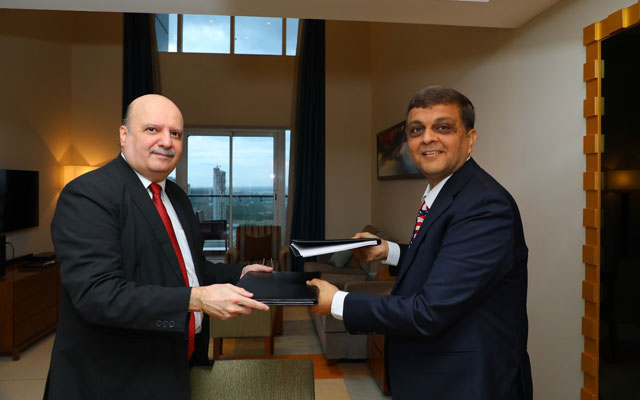
Oakwood has signed a partnership with Sensation Group to fortify its presence in India’s key cities and accelerate its goal to double its global portfolio of managed properties by 2025.
The agreement entails the management of two properties – Oakwood Hotel & Apartments Hyderabad and Sensation Apartments Bangalore, Managed by Oakwood, which is the pilot of a new soft brand, with more projects in the pipeline. The addition of the two properties will increase the group’s portfolio within India to seven properties by the end of 2024.
Located approximately 35 minutes from the Rajiv Gandhi International Airport, Oakwood Hotel & Apartments Hyderabad is slated for completion by June 2024. The property will comprise 350 rooms and serviced apartments, ranging from 38-90m² in size, featuring a swimming pool, fitness centre and a dining concept.
Sensation Apartments Bangalore, Managed by Oakwood is a 1,200-unit property that is slated to open in 4Q2024. Located in the Sadahalli Village in Bangalore North, Devanahalli, the property is within a 20-minute drive from the Kempe Gowda International Airport in Bangalore. The property will offer meeting rooms and co-working spaces, a dining room, a fitness centre, play area for children, and laundrette facilities.
Anantara Layan Phuket Resort launches Luxury Surfing Escape package

Anantara Layan Phuket Resort is beckoning surf enthusiasts to enjoy the swells of monsoon season on Thailand’s Andaman coastline with the launch of its Luxury Surfing Escape package featuring a 90-minute surfing lesson tailored to all individual skill levels every day of the stay.
The package also includes daily transfers to and from Bangtao Beach, a gourmet surf picnic, accommodation in a suite or villa, 25 per cent off resort dining, 20 per cent off dining at the on-site Age restaurant, 40 per cent off spa treatments, and early check-in/late checkout.
From April to October every year, the west coast of Phuket experiences South-east Asia’s best breaks, with the northwest monsoon bringing excellent surfing conditions to this part of the Andaman. The top beaches on Phuket for surfing include Kata, Kalim, Surin, Nai Harn, and Bangtao, just a short drive from Anantara Layan resort.








The World Tourism Organization (UNWTO) has signed an agreement with Bangkok-based real estate investment firm Destination Capital (DC) to promote investment in sustainable hotels and to stimulate re-employment in the hospitality industry to help rejuvenate the sector post-Covid.
The collaboration, which supports the relationship DC has with the International Finance Corporation (IFC), is based on DC’s adoption of best practices aimed at reducing carbon emissions and operating hotels in a manner consistent with IFC’s environmental and social criteria.
Against this backdrop, DC acquires and repositions freehold hotels of 150-250 rooms in Thailand and across South-east Asia with the aim of implementing sustainable water and energy systems. It also works to promote gender equality at every level of the hospitality sector, another of UNWTO’s core priorities and in line with Sustainable Development Goal 5.
While governments and destinations around the world are working on vaccination programs to accelerate the restart of tourism, UNWTO is working with the private sector to encourage employers to play their part in the recovery of local communities through job creation and training programs.
UNWTO data shows that international tourism arrivals fell by one billion in 2020, with the crisis carrying over into 2021. Worldwide, this has placed as many as 120 million tourism jobs directly at risk. Moreover, Asia and the Pacific has been the worst-affected of all global regions, and young workers and women are among the hardest hit by the downturn in tourism employment.
In line with the 2030 Agenda for Sustainable Development, DC recognises the hotel industry not only has a responsibility to re-hire and re-train hotel staff, but also to reduce its carbon footprint and mitigate the impact of energy and water consumption as well as food waste and environmental degradation.
DC said that it is committed to retrofitting its hotels to be compliant as green hotels, as per the Excellence in Design for Greater Efficiencies (EDGE) standards established by IFC.