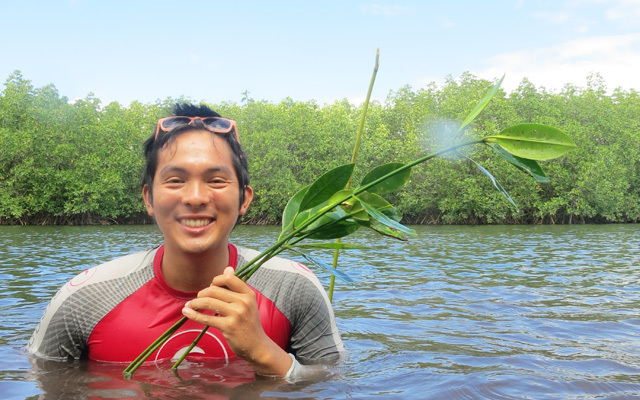
Your social enterprise Make A Difference Travel, along with The Circle Hostel, run alternative tours that support both the environment and the marginalised communities in the Philippines. In less than a decade, your team and clients have reforested thousands of acres of barren land by planting trees and seedlings, collected and repurposed plastic that would have trashed land and oceans, and gave livelihood to indigenous communities. What steered you towards the path of social tourism?
There are two reasons why I’m so into it. On the internal level, all the science shows it is for our human survival. If we don’t empower people to take care of our planet that takes care of all of us, then we’re (done for).
The other is connected to caring. I enjoy surfing, scuba diving, mountain climbing, trekking, swimming – and because I love these activities and the environment that allows these activities to happen, I care for the environment. At one point in Zambales, seeing the degradation caused by thousands of weekend tourists who didn’t care about the beach and threw trash into the sea, it was very painful for me to even go to the beach.
The rest of (my life) will be dedicated to creating a world that is more inclusive and more balanced with the ecology and our environment.
Is social tourism a profitable endeavour?
Of course. Just because we are trying to do good for people and the planet does not mean we are a non-profit. We are not. Neither are we a charity; we want to create profit for everyone. Profit is a reflection of value generated – for people and planet.
That’s the mindset we want to (instil). If your business is not good for people and planet, then you should not be in business. If your business just makes money off the backs of poor people and you are not making them move up and you destroy the environment, you are not creating value.
The premise of the social tourism and social enterprise movement is to create inclusive and holistic value. And the value chain is no longer just customers and owner of the business; it is now the customers and the communities affected by the business and the environment as we have seen.
Boracay is the best example of that. Clearly, not enough attention was given to (preserving Boracay). One can say that in general, businesses and the government did not care or know about the environment – or not enough, at least – (to take care of it,) therefore Boracay was destroyed, and with that, the loss of hundreds of millions of pesos in revenue. Hopefully, Boracay’s rehabilitation is a strong story that people can learn from.
What are your personal observations on the progress of tourism sustainability in the Philippines?
It’s very slow. Our tourism sector is not sustainable at all, but it can be.
Many players are pushing for sustainability, but you have to get the right people on board with the right tools and the right perspective. There has to be a way to really empower the local government units to implement the law and sustainability programmes. Put some teeth into existing environmental laws, or implement new laws as needed.
We need an education programme for tourism practitioners, including agencies, operators, accommodation providers, etc. If they are not empowered, how can we change?
While we try our best to protect the environment, it’s an uphill battle because of the convenience mindset that people have and a lack of facilities to responsibly manage the waste. But more people are now becoming aware of the need to protect the environment, and they want environmental (policies) from their political and corporate leaders.
The travel world has always been about glitz and glamour and what’s beautiful, but this generation is also looking for five-star experiences, which are more important than five-star hotels.
However, the divide is very big between the haves and the have nots and we feel it is our duty to show that you can connect up and down or left and right of the social classes. It is the disconnection of people from each other, and from the environment, that drives the destruction and exclusion.
I was very disconnected when I first started out, but I became friends with people in the countryside and they helped me understand the different parts of Philippine culture, and our environment.
What can be done to hasten sustainability?
I think the basic principle is that people need to see the numbers behind it. The poverty of the environment is the poverty of the people and the richness of the environment is the wealth of the people. If the beach is clean, no matter what you put there – be it a nipa hut or a hotel, it will make money. But if the beach is dirty, the money you lose could be billions of pesos, like in the case of Boracay. The world is more fun when it is cleaner.
(Philippine) tourism is 70 per cent water-based. We sell islands. We have to make even better efforts to save the ocean, especially with the advent of take-home delivery. Six out of 10 fishermen catch plastic. There is no vaccine for dirty oceans. The tourism industry can do something about it by teaching people how to love oceans so they protect it.
What advice do you have for aspiring tourism social entrepreneurs?
There is a body of knowledge, a mindset, and relationships that can be adopted by operators, agents, accommodation providers, etc. Take time to know the community. Take out their biases. They cannot walk in with a superiority complex, which I see happens a lot. The society in the Philippines raises us to have superiority complex (and look down on) farmers and fishermen and indigenous people, but we shouldn’t. Our perspective should be that we can learn from them in the same way that they can learn from us.
I once offered help to one of the elders from the indigenous community of Aetas in Bataan. The elder asked, “What kind of help?” And I said, “For you to earn money.” The elder replied that the kind of help she wanted was one where we both stood to benefit. If only she were to benefit, I would probably end up leaving her, so that (kind of help is) not sustainable.
What the elder wanted was for me to tell her how we can help each other so we are in a relationship of equals. That’s sustainability. Basically, she was saying, “Treat my community like a legitimate business partner, then we can create value together.”
Learn more about Dionisio’s social enterprise here.











Qantas has unveiled a range of new experiences, including a customised digital travel guide to help passengers navigate travel requirements, as the airline prepares to resume scheduled international flights next week for the first time in 20 months.
The airline has developed technology across its website and app and will roll out a revamped digital booking and pre-departure experience that will be tailored to each customer’s journey.
The new digital experience will guide customers through what they need to do when travelling to international destinations based on government requirements at their time of travel. This will include destination specific travel requirements available on the airline’s website.
Upon booking, travel requirements will be emailed to customers, alongside a link to upcoming interactive Travel Ready section on qantas.com. Emails and text messages with customised checklists, reminders and links to relevant information will also be sent to customers ahead of departure.
Over the coming weeks, the digital experience will include a seamless integration with the IATA Travel Pass to enable customers to upload their vaccine and testing documents and be cleared to fly before they get to the airport. Airport check-in for international flights will also open an hour earlier than pre-Covid to allow extra time.
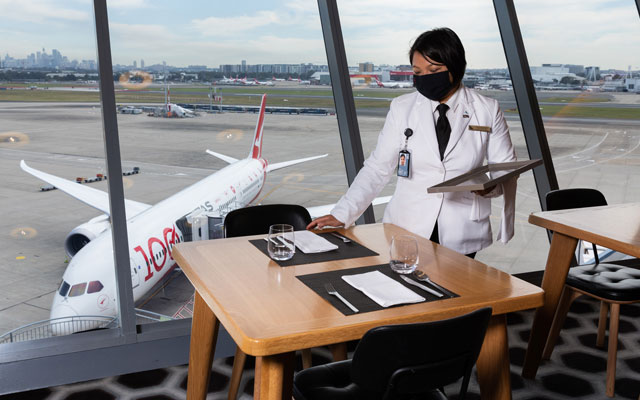
Starting next month, Qantas will roll out a new menu across its international flights and in the lounges including a number of new plant-based options. Iconic Australian ice-creams such as Paddle Pops and Splices will also be added to the inflight menu. A new signature cocktail, Qantas Sky Spritz, featuring Australian botanicals including Davidson Plum and Finger Lime, has also been developed by SOFI.
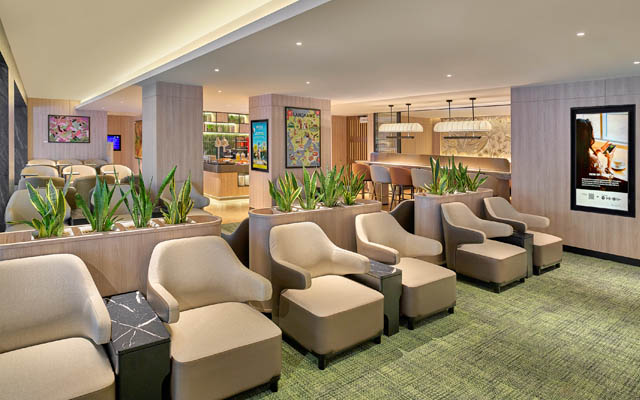
Qantas will use Darwin International Airport’s Catalina Lounge as a pop-up International Transit lounge for eligible customers transiting through Darwin on their way to and from London. Other international lounges will reopen to align with the return of further international routes.