Japan announced today (November 29) that it will be suspending entry for all foreign visitors due to the emergence of Omicron, a new Covid variant.
The measure will take effect Tuesday and last for about one month.
Japan has reinstated border controls as a precaution against the new Omicron Covid variant
With this, Japan will restore border controls that were eased on November 8 for short-term business visitors, foreign students and workers.
According to Kyodo News, prime minister Fumio Kishida said Monday that closing the border is a “temporary measure until information about the Omicron variant becomes clear,” adding that “when dealing with an unknown risk, it’s best to take every precaution”.
Japan is the second country after Israel to bar all entry to foreigners, while most countries around the world are scrambling to control flights and travellers hailing from South Africa.
In Asia-Pacific, governments of Indonesia, the Philippines, Hong Kong and Australia have tightened entry rules, while Singapore has deferred the opening of Vaccinated Travel Lanes with the UAE, Qatar and Saudi Arabia scheduled for next week.
It is currently unclear if the new variant is more contagious than the others that have been identified.
In a Reuters report, a South African doctor who was one of the first to suspect a different Covid strain among patients said last week that symptoms of the Omicron variant in patients have so far been mild.
Hotelbeds has entered a new partnership with the Department of Tourism of the Philippines to launch a new More fun awaits in the Philippines campaign aimed at travel-starved consumers in the UK.
“We are experiencing a significant amount of pent-up demand in the UK market and, with the slow lifting of travel restrictions in the Philippines, now is the perfect time to educate our agents and secure future bookings in the destination,” said Joseph Sheller, head of global destination marketing at Hotelbeds.
Hotelbeds will launch a new More fun in the Philippines destination campaign in the UK market; Palawan pictured
This new campaign will showcase the different activities that can be found in the Philippines. Home to more than 7,000 islands, travellers will discover endless beaches, bustling and trendy cities, smoking volcanoes and incredible underwater experiences. The unique gastronomic offerings of the Asian destination, as well as the culture of the place, are expected to become the perfect lure that UK travel advisors can offer their travellers.
With over 3,000 contracted hotels in the Philippines, the bedbank will now have the opportunity to highlight all properties in the area through the campaign, as well as provide a new set of exclusive offers for Hotelbeds’ network of UK-based clients.
Florian Blois, regional destination marketing manager at Hotelbeds, said: “The country is an important destination for Hotelbeds in Asia-Pacific, and we are delighted to be one of their official partners in the global campaign More Fun Awaits in the Philippines.”
Starting this month, and running until the end of January 2022, the marketing campaign will be promoted through the company’s two main distribution channels, Hotelbeds for wholesale distribution and Bedsonline for retail travel advisors, to its extensive network of travel advisors in the UK.
Jetstar Asia’s first designated Vaccinated Travel Lane (VTL) flight from Kuala Lumpur to Singapore has touched down on Monday morning, setting a momentous milestone for the airline’s recovery on the back of one of the world’s busiest international air links.
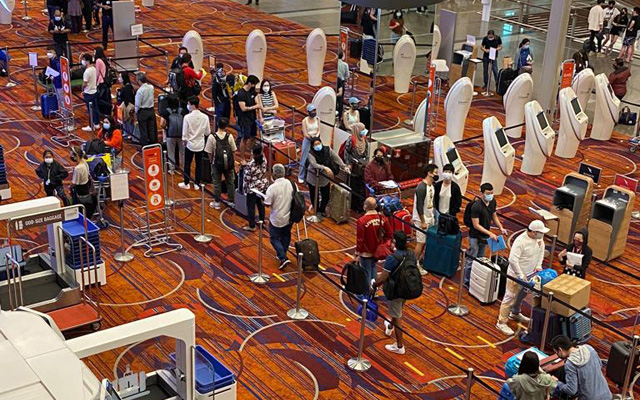
Passengers checking in for flight 3K683, which departed Singapore’s Changi International Airport at 07.15 on November 29; the return VTL flight – first for Jetstar Asia on this route – arrived in Singapore at 10.15
The airline’s first designated VTL flight, 3K684, arrived at Changi Airport at 10.15.
Seven of Jetstar Asia’s 16 weekly return services in December between Kuala Lumpur and Singapore will be designated VTL flights, enabling fully vaccinated customers to enter Kuala Lumpur and Singapore, quarantine-free.
According to a Jetstar spokesperson, there has been strong demand for the VTL services, highlighting the pent-up demand of customers wanting to reconnect with family, friends and colleagues.
Travellers from Thailand, Cambodia, Fiji, Maldives, Sri Lanka and Turkey may enter Singapore under the quarantine-free vaccinated travel lanes (VTLs) next month, joining 21 other countries that are already on the programme.
The scheme will kick in on December 14 for travellers from Thailand, while for the rest it will be enabled from December 16.
Singapore now has VTL schemes with 27 countries, all of which made up a third of total pre-Covid arrivals at Changi Airport; HSBC Rain Vortex at Jewel Changi Airport pictured
According to the Civil Aviation Authority of Singapore (CAAS), arrivals from all 27 VTL countries accounted for about 60 per cent of the total daily arrivals at Changi Airport pre-pandemic.
Along with the additional VTLs, Singapore will raise her daily VTL quota from 10,000 to 15,000 travellers.
According to a CNA report, transport minister S Iswaran said that Singapore’s VTL quotas amount to about one-third of the total pre-Covid flows from these countries.
He added that the VTL scheme will reconnect Singapore with the world while managing the public health risk, and the government will “closely monitor the global public health situation” and “impose additional safeguards as necessary”.
CAAS commented that the “successful implementation of the VTL without compromising public health” gave it the “confidence” to extend the scheme to more countries.
All six VTL countries announced on November 26 have “similar or lower Covid-19 incidence rates” than Singapore and the other VTL countries, it said.
Thailand, Cambodia, Maldives and Sri Lanka have reopened their borders to quarantine-free general travel for vaccinated people.
Fiji will reopen her borders to vaccinated travellers from 40 “partner countries”, including Singapore, from December 1, noted CAAS.
“The VTL with Fiji will allow fully vaccinated travellers from other VTL countries which Fiji has opened to, such as Australia, Canada, France, (South) Korea, the UK and the US, to extend their trip to Singapore without quarantine,” added CAAS.
Asia-Pacific is set to be the biggest driver of the demand for air travel
Trip.com Group and the World Travel & Tourism Council (WTTC) have published a new report that has found pandemic-induced changes to traveller preferences in three clusters – booking trends, consumer considerations and consumer profiles.
Titled Trending in Travel: Emerging Consumer Trends in Travel & Tourism in 2021 and Beyond, the study was commissioned to uncover the global trends for consumer travel by evaluating the booking data analysis and consumer survey responses acquired by the Trip.com Group’s platforms as well as those from industry sources, in a bid to better understand the changing consumer behaviour as a result of Covid-19.
Post-pandemic travellers in Asia-Pacific value domestic trips, longer stays, flexible booking policies, and responsible way of appreciating the destination
Sustained domestic rediscovery
As international travel continues to face persisting limitations or restrictions, travellers remain compelled to search for travel experiences within their home countries. Therefore, the report identifies that domestic travel will continue to lead the recovery of the travel and tourism sector, especially in the short to medium-term.
In particular, the concept of staycations may continue to be in demand and more so for countries with prolonged restrictions on outbound travel.
Globally, the report found that more than half of global travellers plan to travel for a domestic holiday in the next 12 months. Trip.com data analysed a surge in overall global domestic hotel bookings in 2021 as compared to previous years, with an increase of over 200 per cent for 2021 compared to 2019.
Particularly for Asia-Pacific markets, including Singapore, there has been a sustained increase in demand for local staycations. The report indicated that this growth and demand would also be attributed to the respective governmental policies for each country. Singapore, for example, introduced the SingapoRediscovers Vouchers (SRV) scheme to boost domestic demand. The scheme grants locals, above the age of 18, S$100 vouchers for use on hotel stays, tours, and at attractions.
The report noted that domestic travel may slow proportionally as international travel returns, but added that the trend in rediscovering domestic destinations is likely to linger in the long-term.
Preference for longer stays
This year has seen pent-up demand for extended stays, with approximately one in four global travellers preferring longer stays of over 10 nights, as they attempt to make the most of trips taken.
In addition, the pandemic has incited an appetite for hybrid models of travel, which combine work and school with leisure travel. Termed ‘bleisure’, in the form of ‘workcations’ or ‘flexcations’, this form of travel is also a key force in aiding the recovery of the travel and tourism industry.
In Asia-Pacific, a majority of Thai (69 per cent), Vietnamese (57 per cent) and Chinese (54 per cent) respondents indicated that remote work during quarantine and travel would encourage them to stay longer during their trips.
A new wave of travellers
The report uncovered that travellers today value flexible bookings for travel products. This has led to the need for the industry, including airlines, hotels and travel providers, to adapt and review cancellation policies to accommodate changes that may affect traveller itineraries.
Global data from Trip.com also identified shorter booking windows for hotels and flights made on the site. Flight booking windows shortened by 56 per cent to 23 days while that of hotel bookings shortened by 22 days to 10 days in 1H2021, compared to the same period in 2019.
With the prolonged periods of isolation facilitated by Covid-19, travellers are showing a preference to travel to less crowded and even unfamiliar destinations, with an increased interest in exploring secondary destinations and nature.
According to Ctrip data for Asia-Pacific, there has been a rise in nature-related attraction bookings – a 264.5 per cent spike in 1H2021 compared to 1H2020.
Travellers today are opting for more sustainable and wellness-driven options. The report identified an increase in travellers, notably 94 per cent of travellers in Thailand, who plan to reduce and recycle waste when visiting a destination.
Virus prevention measures are also crucial in the making of travel plans. In particular, a majority of Asia-Pacific consumers (72.8 per cent) prioritise clear health and safety precautions above price (36.8 per cent) and location (46.3 per cent).
Looking ahead, there is no doubt that travel will recover, with the WTTC projecting a rise in travel and tourism GDP by 30.7 per cent in 2021 and 31.7 per cent in 2022.
The quarantine period for travellers arriving into Indonesia has been raised from three days to seven as a new Omicron Covid-19 variant surfaces.
Taking effect from November 29, the tightened regulations apply to international travellers and returning Indonesians from countries other than South Africa, Botswana, Namibia, Zimbabwe, Lesotho, Mozambique, Eswatini, Malawi, Angola, Zambia and Hong Kong, which have declared cases.
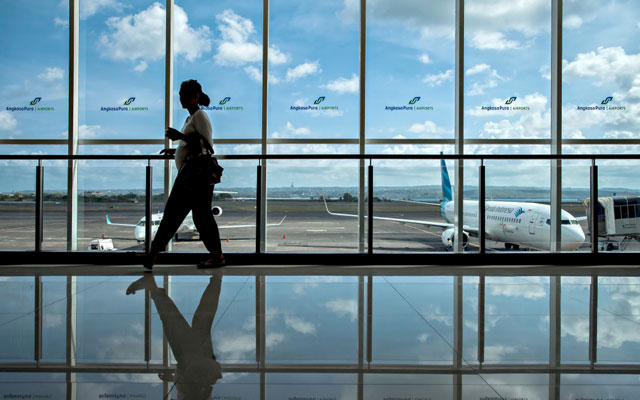
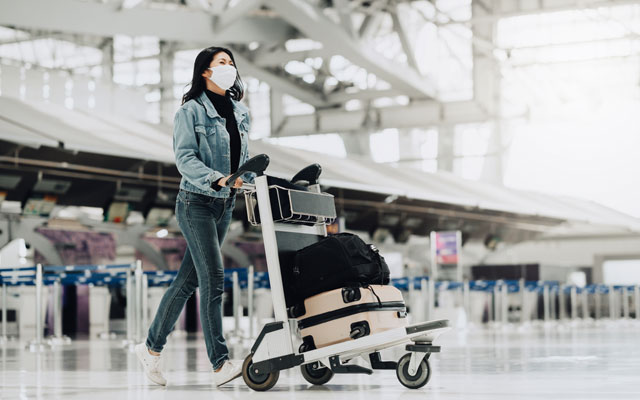
Travellers entering Indonesia must now serve a longer quarantine on arrival
Foreigners from countries with Omicron Covid-19 variant cases will be barred, while returning Indonesians will have to serve a 14-day quarantine.
Indonesia’s tougher stance on international travel came amid a protest led by Bali’s travel industry, whose representatives have issued a petition to president Joko Widodo to revise the country’s entry policy, including scraping the quarantine requirement.
In the open letter to the president, 34 tourism-related associations belonging to the Bali Rise Forum raised five major requests.
Stakeholders asked for the government to provide a special paid e-visa facility without requiring travellers to go through corporate guarantors or re-impose visa-on-arrival and free visas, especially to travellers from low risk countries.
They also suggested that fully vaccinated foreigners with proof of negative PCR tests be exempted from quarantine, or at least be allowed to quarantine on the island instead of within a hotel.
Other key requests included allowing transit passengers at hub/transit countries to continue onwards to Bali after a maximum of 12 hours interval; adding travel-ready countries to the list of those eligible to travel to Indonesia; and lowering the minimum insurance coverage from US$100,000 to US$50,000.
Agus Yoga Iswara, Bali Rise Forum coordinator, said the open letter represented the anxiety of tourism stakeholders in Indonesia, particularly those in Bali.
“Our evaluation showed there was a policy discrepancy that resulted in the implementation of open borders being less than optimal. The regulations…have made it difficult for foreign tourists to come to Bali,” said Yoga.
Addressing concerned industry stakeholders, Sandiaga Uno, minister of tourism and creative economy, explained that the government did not want to rush into taking an open border policy just to attract foreign tourists. A cautious approach was still needed so as to protect the local community.
“Policies are made with prudence and vigilance,” he stated.
Leaders of eight hospitality and tourism associations in Singapore will gather online for the SG Tourism United Forum on December 8 and 9, 2021 to review the year gone by and discuss the directions Singapore as a destination should take in 2022.
Representing associations are: Singapore Hotel Association, National Association of Travel Agents Singapore, Singapore Association of Convention & Exhibition Organisers & Suppliers, Singapore Retailers Association, Restaurant Association of Singapore, Orchard Road Business Association, Association of Singapore Attractions, and Singapore River One.
Leaders of hospitality and tourism associations in Singapore will discuss the future of destination Singapore
The free-to-attend insightful exchange will also be joined by representatives of Singapore Tourism Board, Changi Airport Group, Singapore Airlines and Dream Cruises.
SG Tourism United Forum is presented by PATA Singapore Chapter with event partner, TTG Asia Media.
Wong Soon Hwa, chairman of both PATA and PATA Singapore Chapter, said the event would present an opportunity for Singapore’s hospitality and tourism players to come together “to share, learn and collaborate” as the industry heads into a new year.
“It’s time for solidarity and unity. Do not operate in silos. Only by working collectively as an ecosystem can we truly harness the Power of One,” Wong said.
Darren Ng, managing director of TTG Asia Media, said: “TTG Asia Media is delighted to be able to take this next step alongside PATA Singapore Chapter to re-stage critical conversations for the tourism industry towards recovery. The support from local industry leaders coming together in unity is symbolic of our theme to harness the Power of One. Their perspectives and voices in preparation for the uncertain road ahead will undoubtedly be invaluable, making this two-day event a must-attend for anyone with a vested interest in re-building Singapore’s tourism landscape.”
Wong also acknowledged the immense challenges the industry have had to go through due to the “unprecedented crisis with no playbook to rely on”, but commended players for being resilient survivors.
“The crisis will pass, and it is a matter of when. The show must go on, so we must start preparing ourselves for recovery,” he remarked.
BuzzAR, a Singapore-based metaverse start-up that offers a suite of augmented reality (AR) and artificial intelligence (AI) solutions, is changing the way tourism and hospitality companies interact with their customers.
The company addresses issues associated with the transition from Web 2.0 to Web 3.0, utilising three core solutions, namely, gamified wayfinding; its flagship WebAR solution which transforms any 2D image into a 3D AI-empowered animated video; and a proprietary Face to Cartoon solution for both B2B companies and the mass public that was released early this year.
Future-ready companies must embrace new technologies in line with market demands, says Beh
“For hospitality companies, by standing in front of a screen, their face turns into cartoon in real-time. We further introduced it to the mass public using an app called HappyToon, where users can play with the app by themselves and at event venues, experiencing how AI computer vision is delighting them during difficult times like (amid this pandemic),” said Bell Beh, co-founder & CEO, BuzzAR.
She cited the example of how the Face to Cartoon technology was showcased at the launch of Singapore Tourism Board (STB)’s Tcube hybrid innovation platform.
“At the entrance of the event venue, people were invited to stand in front of ‘BuzzCam’, and this transformed and gamified the customer experience. It inspires curiosity, fun, and drives the target audience to certain locations,” explained Beh.
“For businesses, you can consider it a soft touchpoint to gamify the existing 2D user experience and replace it with a 3D AI-empowered experience with avatars.”
Beh shared that a hospitality company accumulated an estimated S$500,000 (US$365,604) value in bookings after running a WebAR campaign with BuzzAR, with an ROI that was 100 times.
BuzzAR was a member of the cohort 3 of the Singapore Tourism Accelerator (STA), a start-up accelerator launched by the STB.
The programme allowed the start-up to network with industry partners to understand and solve the pain points and challenges faced by tourism companies, Beh said, adding that the revenue generated was funnelled into growing the business.
Through the programme, BuzzAR gained significant business traction that allowed it to expand its offering into the B2C market, with HappyToon gaining users from 120 countries.
“This means that besides providing an AR solution to hospitality companies, we can now collaborate further to drive global traffic to these companies,” said Beh. “Through this, they can get access to our global audience, which are predominantly female and Generation Z, that allows for more informed targeting.”
During their participation in the STA programme, BuzzAR supported two tourism and hospitality companies, and developed another two leads after the programme. The start-up is currently in talks with more companies to onboard them for different solutions ranging from Face to Cartoon, WebAR, and gamified wayfinding.
“Apart from tourism and hospitality companies, we anticipate that many other venues, such as shopping malls and F&B outlets, will seek to gamify the user experience for their customers,” said Beh.
While the business has gained the most traction in South-east Asia, China, and North America, the team remains focused in bringing borderless solutions from Asia-Pacific to the world.
In the near future, the company plans to launch its very own non-fungible tokens, called CryptoToon, that they co-create in the metaverse, allowing businesses, users and creators to create, own and trade in the creator economy.
Beh said that the company is looking for collaboration partners, such as hospitality companies, to bring the digital goods market to the global audience.
With AR, VR and AI revolutionising the travel and tourism landscape, Beh said that such innovative and immersive tech solutions will drive the future of the industry.
“Web 3.0 has arrived. Therefore, a company’s future depends on how fast and how willing they are to adopting new technologies, while continuing to do what they are best at and observing what the market needs. The market demands AR, immersive tech now,” said Beh.
“AR solutions are one of the best ways to stay in touch with every user, even when they are isolated. Together, we can connect, delight, and entertain users from anywhere.”
Agoda has rolled out a multitude of products across the customer booking funnel to improve the accessibility and efficiency of travel in a post-Covid landscape, as countries across Asia-Pacific start to reopen.
Launched earlier this year in Thailand, Agoda has expanded its alternative state quarantine packages for travellers looking to book accommodation for their mandatory quarantine needs across Asia.
Agoda launches new suite of products to facilitate safe and hassle-free travel
Repatriates and inbound travellers can now search availability, room type, and pricing in real-time and pick from a total of over 600 government-approved hotels worldwide, including new locations in Hong Kong, Indonesia, Taiwan, and the Philippines. More market options are expected to join the programme in the coming months.
By simplifying the search and booking process on its platform, participating hotels will also benefit from Agoda’s international reach and marketing strategies to drive higher exposure and conversion among travellers looking for a greater selection of quarantine hotels as more markets reopen.
In addition, Agoda has partnered with Sherpa, a digital solutions provider, to build a travel restrictions world map explorer. Available at agoda.com/travelmapadvisor, the interactive map housed on Agoda’s platform will detail entry restrictions and Covid-19 documentation, testing requirements, quarantine protocols, and more, for destinations around the world. The web-based widget pulls together the latest data and information in real-time via an interactive map for easy navigation.
This secure solution connects across Agoda’s customer journey via homepage banners, property listings and hotel pages, across web, mobile and app, to further reinforce booking decisions and drive conversions, across the funnel. Travellers can choose a country or territory on the map to identify what restrictions are in place, before inputting their passport issuing country, origin and destination country, and vaccination status.
“As international travel remains complex, it is not enough to just have good supply and price. We want to give our customers further autonomy and flexibility over quarantine stays, clarity on which type of rates they need to book, and what requirements and restrictions exist for their travel route,” said Enric Casals, regional vice president, partner services, Southeast Asia and Oceania.
Furthermore, Agoda has built a curated selection of country and city guides housing in-depth information of top travel destinations. The content is aimed at capturing granular details of differing interstate and interzonal requirements, highlighting things to do, places to visit safely, and travel tips in a post-pandemic environment.
The first guide for Thailand will be launched later this week followed by other popular destinations such as the Philippines, Taiwan, Indonesia, France, the US, UAE, South Korea, Japan, and Singapore by the end of the year.
Madame Tussauds Singapore has introduced Thor to the Marvel Super Heroes line-up, joining Captain America, Spider-Man and Iron Man in its immersive zone decked with highly interactive and innovative sets.
The exhibit of the God of Thunder with his all-powerful hammer, Mjolnir, will be showcased for a limited period only. The 182cm by 15cm superhero is clad in his modernised uniform of black body armour, a replica of his costume in the first Avengers film and an update from the brown and gold Gladiator-style ensemble in the first Thor film.
Thor joins the Marvel Super Heroes team at Madame Tussauds Singapore for a limited time
Thor’s arrival marks the launch of the wax museum’s latest thrilling 4D Marvel movie experience. Guests will get to experience wind-chilling, water-soaking and face-flinching special effects as they get closer than ever before to Captain Marvel, Thor, Black Panther, Rocket, Spider-Man, Ant-Man and the Wasp as they battle Loki in a bid to save the world.
















The quarantine period for travellers arriving into Indonesia has been raised from three days to seven as a new Omicron Covid-19 variant surfaces.
Taking effect from November 29, the tightened regulations apply to international travellers and returning Indonesians from countries other than South Africa, Botswana, Namibia, Zimbabwe, Lesotho, Mozambique, Eswatini, Malawi, Angola, Zambia and Hong Kong, which have declared cases.
Foreigners from countries with Omicron Covid-19 variant cases will be barred, while returning Indonesians will have to serve a 14-day quarantine.
Indonesia’s tougher stance on international travel came amid a protest led by Bali’s travel industry, whose representatives have issued a petition to president Joko Widodo to revise the country’s entry policy, including scraping the quarantine requirement.
In the open letter to the president, 34 tourism-related associations belonging to the Bali Rise Forum raised five major requests.
Stakeholders asked for the government to provide a special paid e-visa facility without requiring travellers to go through corporate guarantors or re-impose visa-on-arrival and free visas, especially to travellers from low risk countries.
They also suggested that fully vaccinated foreigners with proof of negative PCR tests be exempted from quarantine, or at least be allowed to quarantine on the island instead of within a hotel.
Other key requests included allowing transit passengers at hub/transit countries to continue onwards to Bali after a maximum of 12 hours interval; adding travel-ready countries to the list of those eligible to travel to Indonesia; and lowering the minimum insurance coverage from US$100,000 to US$50,000.
Agus Yoga Iswara, Bali Rise Forum coordinator, said the open letter represented the anxiety of tourism stakeholders in Indonesia, particularly those in Bali.
“Our evaluation showed there was a policy discrepancy that resulted in the implementation of open borders being less than optimal. The regulations…have made it difficult for foreign tourists to come to Bali,” said Yoga.
Addressing concerned industry stakeholders, Sandiaga Uno, minister of tourism and creative economy, explained that the government did not want to rush into taking an open border policy just to attract foreign tourists. A cautious approach was still needed so as to protect the local community.
“Policies are made with prudence and vigilance,” he stated.