

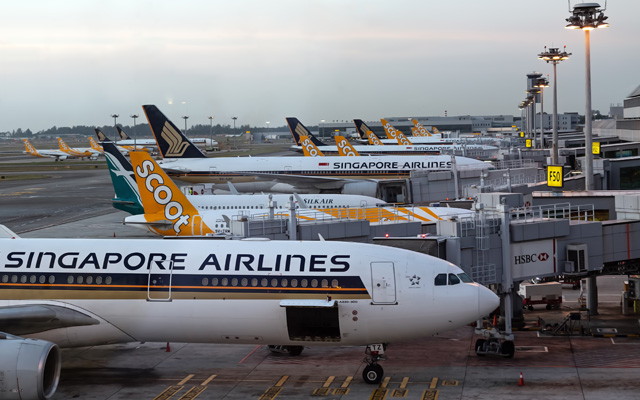
As part of Singapore’s decarbonisation efforts, all Singapore Airlines (SIA) and Scoot flights out of Changi Airport will be powered by blended sustainable aviation fuel in a one-year trial starting in 3Q2022.
Supplied by ExxonMobil, the product will comprise nearly 1.3 million litres of neat SAF (sustainable fuels that are unmixed or undiluted), which will be supplied by Neste and produced from used cooking oil and waste animal fats, and blended with refined jet fuel at ExxonMobil’s facilities in Singapore. This blended fuel will be delivered to Changi Airport via the airport’s existing fuel hydrant system by end-July 2022.
ExxonMobil was selected as the vendor for the trial after a request for proposals was put out in November last year. It is a follow-up to a study conducted by the Singapore government and industry players earlier that year on the operational and commercial viability of using SAF at Changi Airport.
The use of the SAF over the one-year pilot is expected to reduce about 2,500 tonnes of carbon dioxide emissions.
Han Kok Juan, director-general of CAAS, said: “Sustainability will be a key CAAS priority in the coming years as we revive air travel and rebuild the Singapore air hub. The CAAS-SIA-Temasek SAF pilot is an important building block in our effort to develop a sustainable air hub. It will operationally validate SAF integration options in Singapore and provide insights on end-to-end cost components, potential pricing structures for cost recovery and support future policy considerations for SAF deployment.”
Lee Wen Fen, senior vice president, corporate planning, Singapore Airlines, pointed out that SAFs are “a critical pathway for the success of the SIA Group’s commitment to achieve net-zero carbon emissions by 2050”.
Changi Airport Group executive vice-president of airport management Tan Lye Teck added that the airport is committed to becoming a sustainable air hub, and will work with all stakeholders to drive the adoption of SAFs.






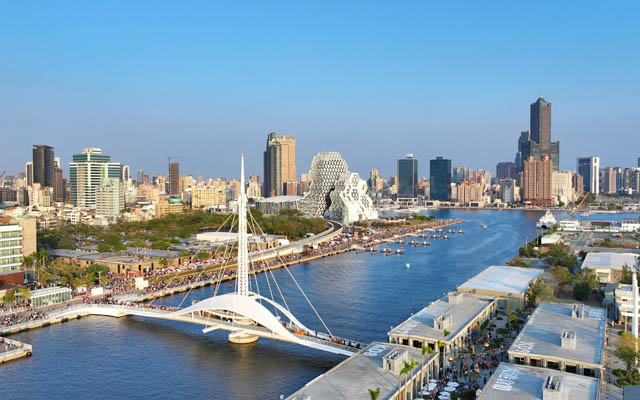






Taiwan aims to ease her blanket on-arrival quarantine requirement for people entering the island from March, in recognition of the need to resume normal life and reopen to the world, the government said yesterday.
While Taiwan has never implemented a full border closure during the pandemic, arrivals have generally been limited to citizens and foreign residence permit holders and with a compulsory two-week quarantine on arrival.
The government now intends to cut on-arrival quarantine to 10 days before the middle of March. Health minister Chen Shih-chung told reporters that infections could be detected within that period with testing.
In an interview with Taipei Times, Chen said the new measures would also permit the entry of foreign business travellers and that the Central Epidemic Command Center might establish business travel bubbles to facilitate shorter quarantine periods for such travellers.
However, a complete removal of on-arrival quarantine before the summer holidays was unlikely, according to Chen.
Standing alongside reopening plans is an acknowledgment that Taiwan will need to reopen safely. Conditions for Taiwan’s reopening include sufficient medical supplies and preparations, as well as a continued expansion of Taiwan’s vaccinated population. Some 30 per cent of Taiwan’s 23.5 million residents have obtained a booster shot. The government wants the figure to hit 50 per cent before easing entry requirements.
News media reported that premier Su Tseng-chang expressed confidence in the government’s ability to cope with rising local infections that might come with the reopening.
“The government must also take into account livelihoods and economic development, gradually return to normal life, and step out to the world,” stated the office of premier Su Tseng-chang.