Grab has launched a new Travel tile on the Grab app that offers a range of travel services to bring travellers more convenience when planning their trips.
The new feature allows Grab users to easily and safely book bus and ferry rides to cities in Malaysia and Indonesia, book airport transfers, and even purchase affordable travel insurance – all of which can be conveniently paid via the secure and cashless GrabPay Wallet.
Grab has launched a new Travel tile on the Grab app that offers a range of travel services
For bus rides, travellers will receive a QR code for boarding, while for ferry rides, they have to present their order summary and collect their boarding passes at the ferry terminal before departure.
In addition, users can purchase travel insurance from as low as S$3.90 (US$2.70) a day, which covers medical expenses and trip changes arising from Covid-19.
Rides can also be booked in seven destinations across South-east Asia, including Indonesia, Malaysia, the Philippines, Thailand and Vietnam. For those travelling beyond South-east Asia, rides can be scheduled in advance in over 1,000 cities across the globe.
The Travel tile also enables users to book hotels and other accommodation from Agoda and Booking.com directly, as well as check out attractions and experiences from Klook.
The Laguna, a Luxury Collection Resort & Spa in Nusa Dua, Bali, unveils its newly-transformed 30-year old property, in time for the G20 Summit.
It was the first international resort in Nusa Dua then and was built by Rajawali Property Group. Since its opening, the resort has welcomed dignitaries and guests from around the world, many of whom became loyal clients of The Laguna.
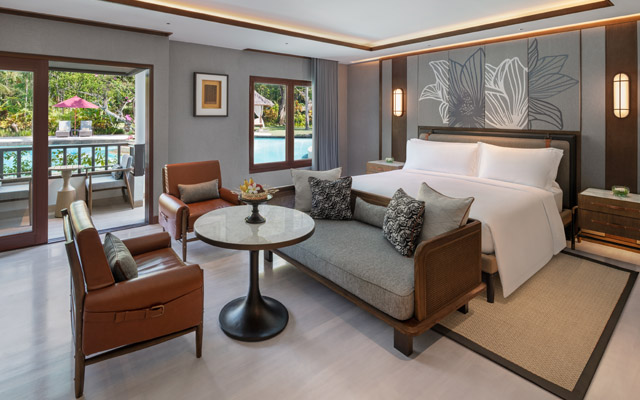
The Laguna’s rooms have been refreshed with natural materials and adorned with Bali-inspired decor
“Last week, we welcomed a family who has marked their 100th visit to the Laguna,” said Lucia Liu, general manager of the hotel when introducing the newly transformed resort to the media in Jakarta recently.
Shirley Tan, CEO, Rajawali Property Group, in a statement said: “The heart of the remake of The Laguna, our very first in two decades, ensures that the next chapter of the resort’s journey honours its rich indigenous heritage through stunning décor.
“Our timely decision to renovate The Laguna in the midst of a global pandemic was driven by our commitment to restore this historic icon and inspire others to rebuild Bali for the future.”
The guestrooms, restaurants and public areas have undergone a restoration, along with an entirely revamped arrival and lobby experience.
The 287 rooms, suites, and villas have been refreshed with natural materials and inspired by the collective stories and traditions of Bali. Nautical elements take centre stage in the nuanced design, influenced by the resort’s seven lagoons.
Emblematic features such as a panel of Balinese sulaman embroidery on headboards and other details highlighting travel and discovery can be seen throughout the resort, part of the DNA of The Luxury Collection.
The F&B outlets have also been transformed into an Epicurean Destination for Gourmands.
The all-day dining Banyubiru is a tribute to the unique traditional warung stalls in the villages and offers breakfast and themed dinners.
De Bale is a re-enactment of a quintessential Balinese village courtyard, where come evening, showcases village dances and storytelling for all guests – the theatrical lounge and bar also features an expansive entertainment terrace, suitable for events.
This concept is in line with brand concept of “Hotel that Defines Destination”, Liu told TTG Asia.
“As part of the brand culture, The Laguna Bali is intrinsically connected to its locale, offering singularly distinctive experiences where once unfamiliar places are encountered, new connections are forged, and new cultures are embraced, leaving guests transformed – their stories enriched, their world expanded,” she said.
Garden Pod, Singapore
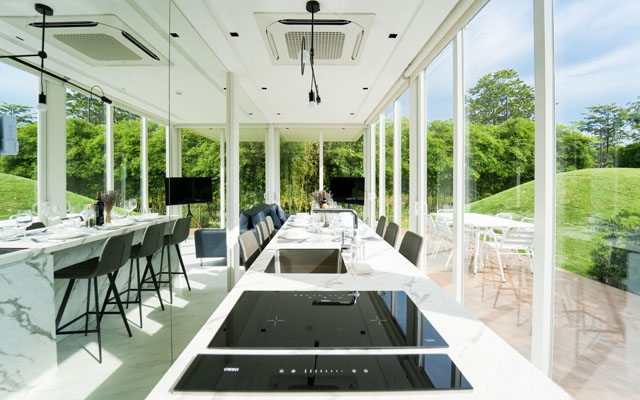
Garden Pod is nestled within the unique foliage of the Serene Garden in Gardens by the Bay and offers a unique stay for both overseas visitors and local residents with its container hotel concept.
With a panoramic view of the Marina Bay skyline, Garden Pod is designed in line with sustainable principles, with elements such as solar photovoltaic panels to reduce energy consumption, repurposed glassware, and recycling bins to encourage guests to recycle any plastic and glass bottles they use during their stay.
Each of the four duplex suites comprise 70m² of space over two levels, connected by a spiral staircase, and features a living room, bathroom, kitchen, patio with dining set, and Wi-Fi. An outdoor electric BBQ grill is available upon request.
Hyatt Place Nanchong Gaoping
Hyatt Place Nanchong Gaoping, China
Hyatt Place Nanchong Gaoping is the first international hotel to open in the heart of Nanchong city and is located on the 29th to 43rd floors of the Chuanbei Financial Center.
A 20-minute drive from Nanchong Airport, the hotel sits by the Jialing River and is also adjacent to the Poly Mall commercial complex, Financial Square Commercial Pedestrian Street and Wangfujing Department Store, making it an ideal choice for business and leisure travellers.
Boasting 276 rooms, the hotel offers F&B options like The Kitchen restaurant and Lobby Lounge, as well as amenities like free Wi-Fi, event spaces and fitness centre.
Ascott Embassy Sathorn Bangkok
Ascott Embassy Sathorn Bangkok, Thailand
Ascott Embassy Sathorn Bangkok features 393 accommodation choices ranging from deluxe rooms and studio apartments to one-, two- and three-bedroom apartments that include washer-dryer, fully-equipped kitchenettes and more.
Well-suited for holidaymakers, families on extended stays, and relocating executives, onsite facilities include the 38th-floor sky terrace, infinity swimming pool, gym, children’s playroom, steam and sauna rooms, and a residents’ lounge that can be used by guests during their stay. There are also events spaces and two restaurants.
Situated in the heart of Bangkok’s central business district, guests will have world-class dining, entertainment options, and medical facilities right at their doorstep.
Swiss-Belcourt Makassar
Swiss-Belcourt Makassar, Indonesia
Formerly known as M Boutique hotel, Swiss-Belcourt Makassar is close to the business, trading, shopping and culinary districts. It is just a 10-minute drive to popular tourist sites in the city, including Losari Beach, 15 minutes to Fort Rotterdam, and only 29 minutes from Sultan Hasanuddin International Airport in Maros, South Sulawesi.
Swiss-Belcourt Makassar offers 76 rooms and provides services such as laundry/dry cleaning and in-room dining and massage.
It also features meeting rooms and the Swiss-Bistro restaurant that serves local and international cuisine.
With family groups making up a sizeable portion of guests leading the travel recovery, top-end hotels are directing their creative juices towards programmes that all ages can enjoy together.
Ramesh Daryanani, vice president, global sales, Asia Pacific, Marriott International, told TTG Asia at ILTM Asia Pacific on Wednesday that families reuniting on a post-lockdown holiday are “looking for programmes to keep everyone entertained and engaged”.
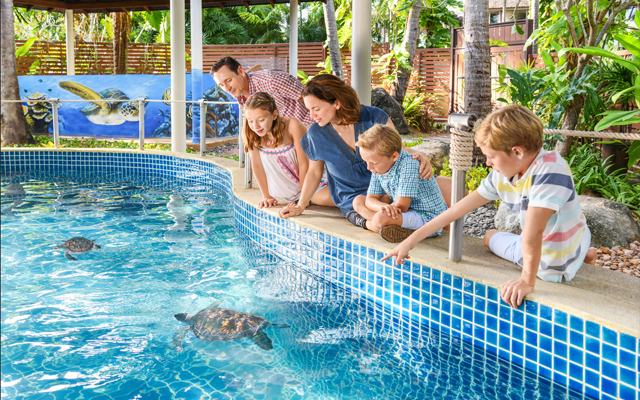
Guests of JW Marriott Phuket Resort & Spa can visit the onsite Turtle Shelter and be part of the centre’s efforts to care for disabled and injured turtles on Mai Khao Beach
“Crafting programmes for families is a priority now for our hotels and Marriott as a company. Everyone is looking for the next new experience on their trip, and wanting to share their stories when they go back. It is our job to give them the experience that they can talk about,” remarked Daryanani.
He pointed to various programmes offered in the Good Travel with Marriott Bonvoy collection that welcome all ages, such as activities at JW Marriott Phuket Resort & Spa’s Turtle Shelter; nature trail and sapling plantation initiatives at Le Méridien Mahabaleshwar Resort & Spa; Blue Swimming Crab rehabilitation at Sheraton Samui Resort; and volunteerism with the St. John’s Gold Coast Crisis Centre, coordinated by JW Marriott Gold Coast Resort & Spa.
JW Gardens installed in JW Marriott properties around the world offer families a chance to see how herbs and vegetables are grown and used by the hotel.
The Ritz-Carlton collection of properties across Asia-Pacific will roll out Ritz Kids 3.0 later this year, a new programme built around Leo the Lion who will take young guests on a journey to spark their curiosity, instill a sense of responsibility and bring them closer to nature and the local culture in whatever destination they visit.
These programmes are not only fun, but they also expose children to sustainable and regenerative tourism concepts, opined Daryanani.
Minor Hotels, which has also witnessed an energetic pickup in family travel demand, has properties all ready to engage the young and the old.
Anantara Kihavah Maldives Villas offers a kids club that comes with a trampoline park, a splash park and slides as well as a full line-up of activities from 10.00 to 18.00 daily, giving children little reason to stay indoors.
Anantara Kihavah Maldives Villas lines up a range of activities for children and families
Paul Counihan, director of sales and marketing for the property, said there are a number of “very creative” activities that are a big hit with the little ones. One of which is a marine biology class conducted within the SEA underwater restaurant, while another whisks little pirates off on a sailboat to ‘conquer’ a sandbar.
Guests looking to bond can sign up for a story-telling date with grandpa and enjoy free cookies and milk. Families can also stargaze at the resort’s over-water observatory and interact with a Maldivian astrologist.
Andy Nightingale, cluster director of sales and marketing for Anantara Dhigu, Veli & Naladhu Private Island, Maldives, said properties offer a mix of programmes unique to children and for everyone in the family because “while families are eager to go on a holiday together post-lockdown, parents are also going crazy after 24 hours with their kids”.
“They need a break, and we are happy to help,” he said.
Properties under his care offer complimentary kids programmes, like movie nights, so that the grown-ups can enjoy a tranquil drink or meal for a couple of hours.
Illustrating the hearty appetite of travelling families, Marion Walsh-Hédouin, vice president public relations & communications, Minor Hotels, said the 15 residences within Anantara Layan Phuket Resort in Thailand are sold out even during the low season. These units offer five to eight bedrooms each.
Anantara Kihavah Maldives Villas’ five residences with between two and four villas are also popular with family groups.
“We are creating more facilities that cater to multi-generational groups,” shared Walsh-Hédouin, adding that “there is a greater focus on tailoring experiences that are good for both kids only and for the whole family”.
“Pre-Covid, couples often travelled without the kids. But when the pandemic kept families apart, they missed each other and learnt to appreciate time together,” she said.
Walsh-Hédouin also found that families are now travelling for a longer duration – up to seven nights per destination – and staying in fewer places at one go. Instead of packing Bangkok, Siem Reap, Luang Prabang and Phuket into a single trip to Asia, for instance, they are choosing to do just two.
“They are also preferring to stay with the same hotel company in the various destinations they visit for seamless travel. For example, families would stay at Anantara Hoi An for a couple of days, then get on The Vietage (train) to Anantara Quy Nhon for another few days. The train is a seamless travel option, and guests can enjoy the views along the way,” she said.
IHG Hotels & Resorts has signed a management agreement with Pan Pacific International Holdings Corporation to open Hotel Indigo Tokyo Shibuya in late 2023.
It will be the fourth Hotel Indigo-branded hotel in Japan, following Hotel Indigo Hakone Gora, Hotel Indigo Karuizawa and Hotel Indigo Inuyama Urakuen Garden.
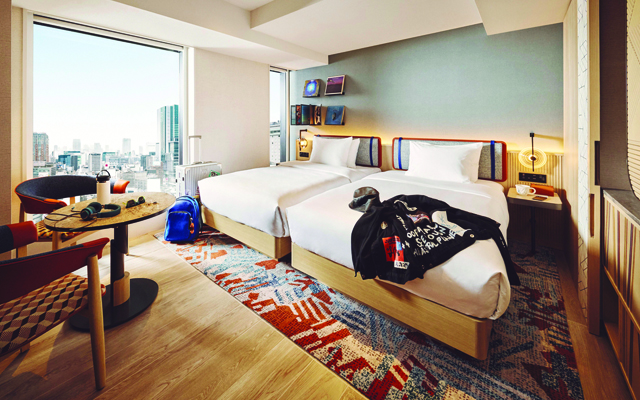
Hotel Indigo Tokyo Shibuya will be the fourth Hotel Indigo-branded hotel in Japan
Hotel Indigo Tokyo Shibuya will be located at the top of the mixed-use complex Dogenzaka Dori that is being developed as part of the Shibuya Ward Dogenzaka 2-chome Development Plan.
The 272-room hotel is located just a five-minute walk away to the Shibuya Scramble Crossing, and nearby the residential Shoto area. Onsite facilities include a neighbourhood café & bar, gym, and coffee shop.
Abhijay Sandilya, managing director – Japan, IHG Hotels & Resorts, said: “Shibuya is one of Japan’s world-class culture hubs that is perfectly suited to the neighbourhood stories embodied by Hotel Indigo, so we could not wish for a better location for this great brand to make its Tokyo’s debut.”
Pan Pacific International Holdings Corporation, president and CEO, representative director, Naoki Yoshida said: “Dogenzaka Dori will create a new destination for people to come to the Shibuya area, a lifestyle hub that attracts a diverse range of people and revitalises the area as a new centre of culture.
“Together with Hotel Indigo Tokyo Shibuya, which reflects the evolving character and charm of the Shibuya area, we hope that Dogenzaka Dori will shine a light on the still undiscovered charms of Shibuya and provide a wonderful experience for many domestic and international guests.”
Once Hotel Indigo Tokyo Shibuya opens, IHG will have five hotels in Tokyo and eight in Greater Tokyo area – with 254 open or pipeline hotels worldwide.
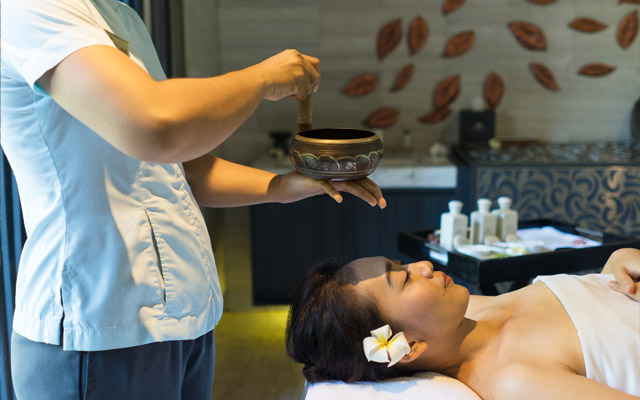
The Westin Resort Nusa Dua in Bali has launched two new Eat Pray Spa packages that provide guests with a complete wellness journey.
The Eat Pray Spa Wellness Only Package by Heavenly Spa by Westin is priced at 1,500,000 rupiah (US$100) per person and 2,400,000 rupiah per couple. It comprises a Balinese purifying ritual called Melukat, hands cleansing ritual, face and body massage, sound bath meditation and a dining experience.
Get pampered with the Eat Pray Spa Wellness packages at The Westin Resort Nusa Dua
The Eat Pray Spa Room Package for two offers a three-night stay, daily breakfast, a Melukat ritual, face and body massage, hands cleaning ritual, sound bath meditation, energising activity programmes, and access to the fitness studio. Priced at 9,200,000 rupiah, this package is available until December 20.
Awareness on sustainable issues is high among travellers but the willingness to invest in sustainable efforts is still lagging, according to a Traveloka survey.
The survey revealed that 40 per cent of Traveloka users care about sustainability issues but are not willing to spend money on them, while 28 per cent of users care about sustainability issues as long as they benefit directly from it.
There is a need to educate Indonesians and raise their awareness on environmental and sustainability issues
Speaking at the 2nd Tourism Working Group National Seminar, G20 Indonesia 2022 on the topic of innovation, digitalisation, and the creative economy, Albert, co-founder of Traveloka, said: “This finding (indicates that) it requires educational and awareness-raising programmes for the community to increase public interest and contribution in sustainability issues, especially in the tourism sector.”
Arfan Arlanda, CEO of Jejak.in, concurred: “There is a necessity for massive education to the Indonesian people because their awareness is still low on environmental and sustainability issues compared to other (communities).”
Sandiaga Uno, Indonesia’s minister of tourism and creative economy, commented that there were several other issues in the G20 spotlight to address, such as food waste, of which the ministry has initiated food watch management activities in tourism.
He explained that by calculating the total food waste in Indonesia in a year and dividing it by the population numbers, a person on average contributes waste of twice his weight. And in the tourism industry, buffet services contribute the biggest in terms of food wastage.
Other speakers at the seminar also shared examples of initiatives their companies have taken.
Traveloka will plant 10,000 mangroves in Mandalika, Lombok and 40,000 in Buleleng, Bali, in collaboration with the Indonesia Ministry of Tourism and Creative Economy (MoTCE). This programme is targeted at the young generation to get them involved in sustainability activities, Albert said.
Jejak.in will work with MoTCE in a carbon offset programme by implementing a carbon footprint calculator in various travel-related activities and businesses. The app will tabulate the estimated carbon footprint produced by the traveller during the journey, which is then converted into a matrix to determine the number of trees to be planted.
Users can plant the trees themselves or use the Jejak.in app to plant in several other locations that have been used as pilot projects. The locations are in Bali, Malang, and several other designated areas.
Sandiaga is hopeful that travellers will cultivate this habit of tree-planting. As of now, implementing the carbon offset programme via the app is still voluntary, but “with more millennials and Gen Z adopting the carbon footprint calculator, I expect we get to achieve net zero before 2050, or by 2035 to be precise”, he opined.
A new booking platform for travel agents, wholesalers and retailers in Asia-Pacific has been launched, promising to take the pain out of coordinating multiple suppliers and quotes while delivering more competitive prices.
Billed as a next-generation DMC, Vio Travel has gone live to offer a virtual one-stop shop with a highly curated collection of travel experiences, accommodation, private villas and packages through a single drag-and-drop dashboard.
Lynden-Bell: tourists are looking for reliable partners, bespoke experiences and customisable arrangements
Co-founded by Michael Lynden-Bell and Dominik Schaufler, who are based in Sydney and Bangkok respectively and have about 40 years’ industry experience combined, the service prioritises local suppliers, family-run operators, and flexible or customisable arrangements.
“Many traditional model DMCs use a lot of resources to combine and build products. We wanted to integrate that into technology to make quotations faster, sometimes in a matter of minutes. But we also recognised that people still like to access advice on the ground and have that human touch,” Lynden-Bell told TTG Asia.
“(Also) everything is transparent. We provide a full breakdown of our costs and by working directly with our suppliers, there’s no multiple layers of mark-ups, so the agents can benefit from that,” he added.
Vio Travel has about 2,000 suppliers directly contracted with products in its system. It currently covers 12 countries in the region and has ten team members with offices in Bangkok, Sydney and Hong Kong – there are also plans to expand after the company gains more traction in Asia-Pacific.
“The opportunity to move into Japan and South Korea is quite big for us and with our model, we can scale up relatively quickly. We’re also looking at the Middle East and potentially parts of Africa in future. But we’ll take it step by step,” said Lynden-Bell.
Vio Travel has been about two-and-a-half years in the making, with the pandemic hindering its launch plans. However, with travellers emerging from this side of Covid, Lynden-Bell noted that tourists are looking for reliable partners, bespoke experiences and customisable arrangements.
Advance planning, slower holidays, experiential travel, wellness breaks and eco-friendly experiences are some of the considerations that luxury travellers in Asia-Pacific (APAC) have, according to the latest survey ILTM conducted in collaboration with affluent research specialist Altiant.
The research surveyed some 500 validated wealthy APAC travellers from six countries – Australia, China, Hong Kong, Japan, Singapore and South Korea.
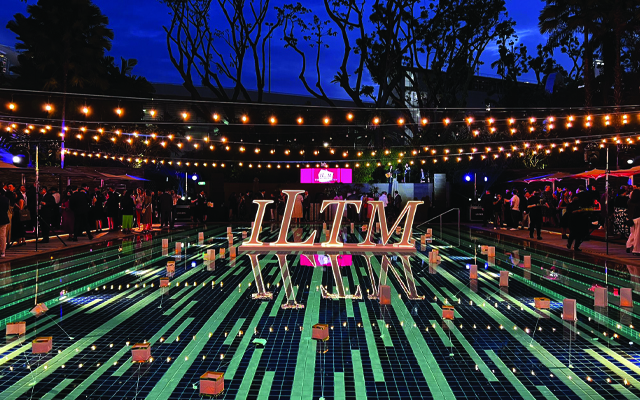
The ILTM opening cocktail party was held at The Ritz-Carlton, Millenia Singapore (Photo: Rachel AJ Lee)
Here are eight key findings:
1. Travel agents will continue to play a critical role in holiday bookings as 92% of affluent APAC individuals plan to use them over the next year. 86% plan to use them the same or more than they did since the start of the pandemic, reflecting the importance of having some expertise to help plan stress-free trips. The fact that two-thirds (65%) say that an agent will be influential when booking holidays over the next 12 months underlines their enduring importance.
2. Many affluent individuals are looking to resume travelling in style. Almost half (48%) plan to spend more on holidays than pre-Covid trips, while only 16% expect to cut back.
3. Spontaneity is becoming less common, with advance planning preferred by many. Holidays booked in advance (62%) and relaxing/slow holidays (61%) are now strongly preferred over last-minute bookings and more active trips.
4. Wealthy APAC travellers are also increasingly looking to fly less often/stay longer (50%) and take holidays that last longer than a week (45%). In terms of deterrents, health and safety concerns (59%) lead the way, showing that for many travellers, Covid-19 remains an ongoing preoccupation.
5. Despite domestic and regional trips being the most popular options for many wealthy travellers over the past year, there is a cohort that is already travelling further afield, with trips to see family members being one of the main motivations. However, ongoing concerns about Covid-19 and sudden changes such as outbreaks mean that some will remain anxious about venturing too far. Health and safety (59%) remains the leading factor influencing both the last and next booking choices.
6. Beach holidays (48%) are the most popular planned holiday type over the next year. This is followed closely by city breaks (43%), signalling a returning willingness to mix. Extended family trips (38%) are still popular, while 61% say that health and wellness is also now a big factor when planning a trip.
7. Around half of wealthy APAC travellers prefer luxury experiences over goods, with a similar share having bucket lists of places and experiences that they are trying to complete. Overall, around half say they would prefer more free time rather than a little extra money, but this rises to 86% in China.
8. Close family, partners and friends have the most influence over holiday bookings, while two-thirds (65%) say that a travel agent will be influential over the next 12 months.
















With family groups making up a sizeable portion of guests leading the travel recovery, top-end hotels are directing their creative juices towards programmes that all ages can enjoy together.
Ramesh Daryanani, vice president, global sales, Asia Pacific, Marriott International, told TTG Asia at ILTM Asia Pacific on Wednesday that families reuniting on a post-lockdown holiday are “looking for programmes to keep everyone entertained and engaged”.
“Crafting programmes for families is a priority now for our hotels and Marriott as a company. Everyone is looking for the next new experience on their trip, and wanting to share their stories when they go back. It is our job to give them the experience that they can talk about,” remarked Daryanani.
He pointed to various programmes offered in the Good Travel with Marriott Bonvoy collection that welcome all ages, such as activities at JW Marriott Phuket Resort & Spa’s Turtle Shelter; nature trail and sapling plantation initiatives at Le Méridien Mahabaleshwar Resort & Spa; Blue Swimming Crab rehabilitation at Sheraton Samui Resort; and volunteerism with the St. John’s Gold Coast Crisis Centre, coordinated by JW Marriott Gold Coast Resort & Spa.
JW Gardens installed in JW Marriott properties around the world offer families a chance to see how herbs and vegetables are grown and used by the hotel.
The Ritz-Carlton collection of properties across Asia-Pacific will roll out Ritz Kids 3.0 later this year, a new programme built around Leo the Lion who will take young guests on a journey to spark their curiosity, instill a sense of responsibility and bring them closer to nature and the local culture in whatever destination they visit.
These programmes are not only fun, but they also expose children to sustainable and regenerative tourism concepts, opined Daryanani.
Minor Hotels, which has also witnessed an energetic pickup in family travel demand, has properties all ready to engage the young and the old.
Anantara Kihavah Maldives Villas offers a kids club that comes with a trampoline park, a splash park and slides as well as a full line-up of activities from 10.00 to 18.00 daily, giving children little reason to stay indoors.
Paul Counihan, director of sales and marketing for the property, said there are a number of “very creative” activities that are a big hit with the little ones. One of which is a marine biology class conducted within the SEA underwater restaurant, while another whisks little pirates off on a sailboat to ‘conquer’ a sandbar.
Guests looking to bond can sign up for a story-telling date with grandpa and enjoy free cookies and milk. Families can also stargaze at the resort’s over-water observatory and interact with a Maldivian astrologist.
Andy Nightingale, cluster director of sales and marketing for Anantara Dhigu, Veli & Naladhu Private Island, Maldives, said properties offer a mix of programmes unique to children and for everyone in the family because “while families are eager to go on a holiday together post-lockdown, parents are also going crazy after 24 hours with their kids”.
“They need a break, and we are happy to help,” he said.
Properties under his care offer complimentary kids programmes, like movie nights, so that the grown-ups can enjoy a tranquil drink or meal for a couple of hours.
Illustrating the hearty appetite of travelling families, Marion Walsh-Hédouin, vice president public relations & communications, Minor Hotels, said the 15 residences within Anantara Layan Phuket Resort in Thailand are sold out even during the low season. These units offer five to eight bedrooms each.
Anantara Kihavah Maldives Villas’ five residences with between two and four villas are also popular with family groups.
“We are creating more facilities that cater to multi-generational groups,” shared Walsh-Hédouin, adding that “there is a greater focus on tailoring experiences that are good for both kids only and for the whole family”.
“Pre-Covid, couples often travelled without the kids. But when the pandemic kept families apart, they missed each other and learnt to appreciate time together,” she said.
Walsh-Hédouin also found that families are now travelling for a longer duration – up to seven nights per destination – and staying in fewer places at one go. Instead of packing Bangkok, Siem Reap, Luang Prabang and Phuket into a single trip to Asia, for instance, they are choosing to do just two.
“They are also preferring to stay with the same hotel company in the various destinations they visit for seamless travel. For example, families would stay at Anantara Hoi An for a couple of days, then get on The Vietage (train) to Anantara Quy Nhon for another few days. The train is a seamless travel option, and guests can enjoy the views along the way,” she said.