

Tourism players rejoice at Japan’s long-awaited reopening

FIT travellers’ long wait to enter Japan is soon to end as the country prepares to allow visa-free, independent tourism and remove the country’s daily entry cap, currently set at 50,000, from October 11.
Prime minister Fumio Kishida made the announcement, which marks the end of more than two years of strict border measures, on Thursday at the UN General Assembly in New York.
Under the new system, tourists will still need to show proof of triple-vaccination or a negative Covid-19 test before travel, but will no longer require visa sponsorship, a rule which has been in place since September 7.
Kishida said Japan’s opening up to visa-free, independent travel is intended to “support the travel, entertainment and other industries that have been struggling during the coronavirus pandemic”.
Japan’s tourism players have welcomed the news, saying it can provide a much-needed boost to the industry, which has seen slow inbound demand since steps began in June towards full reopening of the country.
“We’re very grateful to hear the news, which will be a big support to the tourism industry,” said Chihaya Suetake, a representative of All Nippon Travel Agents Association.
“It’s really going to help as many (inbound) tourists have not come back as they don’t like group tours,” Mike Holland, a representative of Okinawa Prefecture’s Chatan Town Tourism Association, told TTG Asia at Tourism Expo Japan.
Noémie Gaildrat, marketing assistant at Tokyo-based tourism marketing agency Makes Co. said overseas markets have been looking forward to a full reopening for a long time, adding that many of her contacts had already planned or booked Japan trips for the autumn before the announcement.
“Demand will be massive, especially so because the Japanese yen is very cheap now,” said Yoshie Kakimoto Mohanty, managing director of Kagoshima-based tour company and operator Tabitto.
In preparation of a faster tourism recovery from October, she is preparing FAM trips for agents in Europe to showcase what the prefecture has to offer now, more than two years since the country was fully open to tourists.
Okinawa’s Holland agrees that the return of independent, visa-free travel to Japan is the perfect opportunity to raise awareness among international markets of all the country’s regional tourism products and services.
Hyatt, Kiraku unveil new hospitality brand
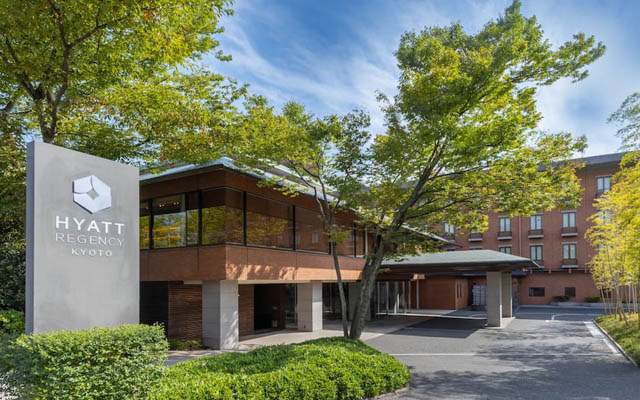
Hyatt Hotels Corporation announced the joint venture of a Hyatt affiliate and Kiraku to launch a collection of modern-style hot spring ryokans (Japanese-style inn) in Japan targeting global travellers under the new hospitality brand, ATONA.
Hyatt and Kiraku will each own 50 per cent of ATONA and will leverage the expertise and strengths of both companies to develop this new offering. It will be managed independently by a team of experienced hospitality experts who have a deep understanding of both Japanese culture and international hotel standards.
The ATONA brand will express the unique charm of each region’s architecture, design, cuisine, activities, and hospitality through the ryokan experience. Centred around the onsen (hot spring), a treasured part of Japanese culture, the ryokans will be modernised and set among breath-taking landscapes, offering new experiences and discoveries both within and beyond the ryokan that are special to its locale.
A combination of two old Japanese words that means “me and you”, ATONA is an expression of deep connection. The brand will offer bespoke experiences and Japanese hospitality, inspiring guests to embrace nature in a peaceful setting, and reconnect with oneself.
Kou Sundberg, founder and CEO of Kiraku said: “Through the building of hot spring ryokans under the ATONA brand across the country, we hope these ryokans will provide guests, both local and from abroad, a special place to experience the still unseen wonders of Japan, while also positively impacting local economies.”
Sam Sakamura, Hyatt’s vice president, Japan and Micronesia, added: “We believe that the five essential elements for inbound tourism are food, culture, history, safety, and transportation infrastructure, and as a highly sought-after tourist destination, Japan exceeds in each of these categories.
“Through our strong collaboration with Kiraku on the ATONA brand, the joint venture will build on the unique, personalised experience of traditional Japanese ryokans, which have been loved by locals for centuries, and make them accessible to inbound travellers, many of whom have never experienced staying in a ryokan before.”
Development plans are currently under way to unveil the collection of ATONA-branded ryokans beginning in 2025.
Japan optimistic about tourism revival as Tourism Expo Japan opens in Tokyo
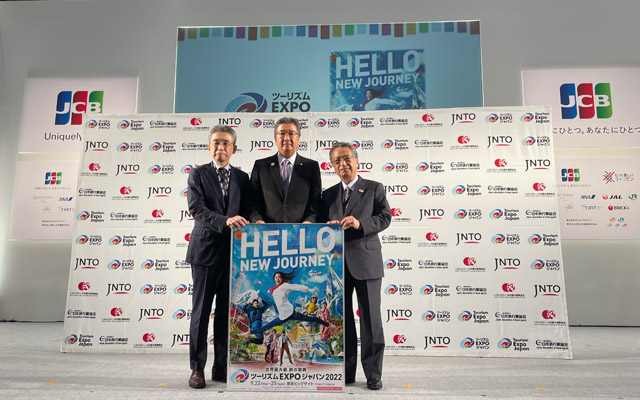
Japan’s beleaguered travel providers should expect a rebound in inbound arrivals this autumn, according to organisers of Tourism Expo Japan 2022, which opened yesterday.
The international event, to be held September 22-25, will focus on growth of the tourism industry in the wake of the Covid-19 pandemic, as Japan eyes further relaxation of its border rules in the coming weeks. Its theme “Restart: Taking on the Challenges of a New Era” reflects its goal of driving the return of travel demand and contributing to the wider economy, said organisers.
Opening the expo, Kenichiro Yamanishi, chair of the Tourism Expo Japan Organizing Committee, said “arrangements are underway” to reinstate the country’s visa waiver for short-term visitors and the cap on daily arrivals lifted entirely, “as soon as possible after October”. A support programme for domestic tourism will also go into effect this autumn.
Yamanishi added that these developments “send a signal for reviving tourism demand” in Japan, while the expo can act as “a chance for the tourism industry to regain its vitality”.
Satoshi Seino, president of Japan National Tourism Organization (JNTO), told attendees that Tourism Expo Japan could be considered a step towards the start of a greater uptick in inbound tourist arrivals, and that the tourism sector wants them to return soon.
Organized by the Japan Travel and Tourism Association, Japan Association of Travel Agents and JNTO, with special cooperation from All Nippon Travel Agents Association, the expo is the tourism industry’s annual headline event.
This year marks its return after a pandemic-induced three-year hiatus, and the first time it is held in hybrid format.
Still, international participation is low, with 256 overseas-based participants representing 27 countries. Of those, 56 are attending in-person while 200 are joining the online programme.
The previous expo in Tokyo in 2018 attracted 1,441 companies and organisations from 136 countries and regions, a record high.
Bhutan reopens to the world with new tourism strategy

The Kingdom of Bhutan reopens its borders today to international travellers following the Covid-19 pandemic.
Aside from welcoming visitors to the country, Bhutan has also unveiled a new tourism strategy, underpinned by transformations in three key areas: infrastructure and services, tourists’ travel experiences, and environmental impact to maintain carbon-neutral tourism.
Brand Bhutan aims to capture the optimism and renewed ambition of the kingdom, and its new tagline Believe reflects this determined focus on the future, as well as the transformative journeys experienced by visitors.
Prime minister of Bhutan, Lotay Tshering, said: “Bhutan’s noble policy of High Value, Low Volume tourism has existed since we started welcoming guests to our country in 1974 – but its intent and spirit were watered down over the years, without us even realising it.
“Therefore, as we reset as a nation after this pandemic, and officially open our doors to visitors today, we are reminding ourselves about the essence of the policy, the values and merits that have defined us for generations.”
While ‘high value’ is typically understood as exclusive high-end products and extravagant recreational facilities, the term holds a different meaning for the country. To the Bhutanese, it is important to be a high-value society that is “infused with sincerity, integrity and principles, where people must always live in safe communities, among serene environments and derive comfort from the finest facilities”, he explained.
Bhutan will be stepping up its efforts to maintain its status as one of only a handful of carbon-negative countries in the world, and will also enhance its sustainable development policies by raising its Sustainable Development Fee (SDF) from US$65 to US$200 per person, per night. The funds will go towards projects that support the destination’s economic, social, environmental and cultural development.
During the pandemic, the government took the opportunity to upgrade the facilities and infrastructure of the country, as well as enhance the standards and certification process for tourism service providers. Employees across the tourism industry also were required to participate in upskilling programmes to focus on enhancing service quality.
In addition, travellers can look forward to elevated authentic experiences supported by world-class services and personal care.
Minister of foreign affairs, Tandi Dorji, said: “We plan to work with our tourism partners to continue to upgrade the itineraries that guests can experience in our country – to help showcase the very best that Bhutan has to offer.
“We hope that visitors to Bhutan will notice and welcome these changes, and we very much look forward to welcoming all guests to Bhutan.”
Sail away on Uniworld Boutique River Cruises’ new 2023 offerings
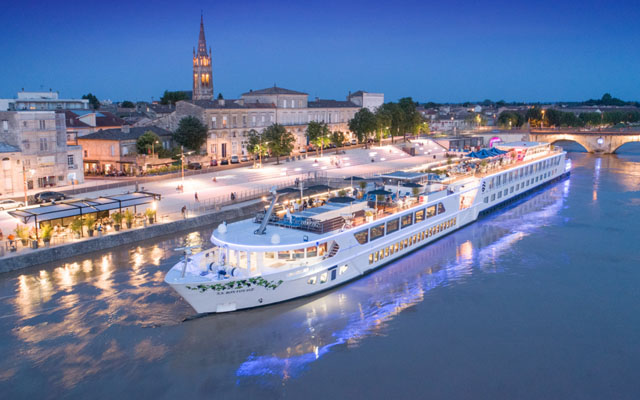
Uniworld Boutique River Cruises has lined up new itineraries, excursions, and cruise extension options for 2023, with four brand-new itineraries across Europe and beyond.
The 15-day Grand Central Europe itinerary will cruise along three iconic rivers – the Rhine, Main and Danube – through Switzerland, France, Germany and Austria, with highlights like climbing the treetops of Bamberg and sailing the picturesque Wachau Valley.
The 10-day Zurich & the Rhine River Valley itinerary will sail along the Rhine and Main rivers through Switzerland, France and Germany, immersing guests in history and nature as they visit Zurich and the spa town of Baden-Baden.
A new eight-day Belgian Holiday Markets itinerary will showcase Belgium’s magical Christmas markets and delicious holiday treats.
The 46-night Rivers of the World cruise will sail to nine countries aboard five luxury Super Ships, with visits to the UNESCO-protected temples of Abu Simbel in Cairo; Schönbrunn Palace in Vienna; Moulin Rouge in Paris; and a day in Cacais and Sintra.
In addition, Uniworld’s ‘Nights Out’ private evening experiences will now be included on almost every European itinerary in 2023, while new immersive shore excursions will be added to the line’s Masterpiece Collection Experiences, such as a visit to the Anne Frank House in Amsterdam; joining a sausage-making workshop in Germany; and more.
For more information, visit Uniworld.
TTG Travel Awards’ 31st edition celebrates 41 top achievers
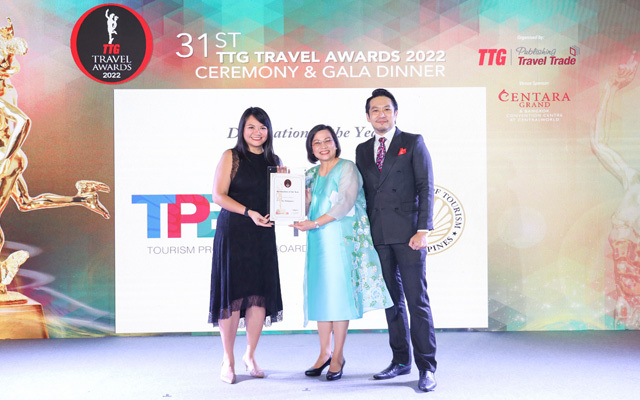
Following a two-year hiatus due to the pandemic, the annual TTG Travel Awards returned yesterday evening with its 31st edition that commemorated 41 exceptional travel and tourism players across Asia-Pacific.
The Outstanding Achievement Awards category – the only non-voting segment of the awards, with winners determined by TTG’s editorial team for their remarkable contributions to the industry – recognised the Philippines as Destination of the Year; Tourism Australia for the Best Travel Marketing Effort awards; and Accor for the Most Sustainable Travel Company award.
The majority of the night’s recipients comprised organisations that have successfully defended their titles, such as Shangri-La Hotels (Best Luxury Hotel Brand), Pan Pacific Hotels Group (Best Regional Hotel Chain), and Centara Grand & Bangkok Convention Centre at CentralWorld (Best Meetings & Conventions Hotel).
Industry veterans Resorts World at Sentosa (Best Integrated Resort) and Frasers Hospitality (Best Serviced Residence Operator) also earned consecutive wins of their titles.
Amid fierce competition, 11 awardees marked their resurgence into the awards. Having previously been awarded in 2015, both Grand Hyatt Macau and Thailand Convention & Exhibition Bureau made an incredible comeback in their respective titles – Best City Hotel – Macau and Best Convention & Exhibition Bureau.
The gala event was held at Centara Grand at CentralWorld, and coincided with IT&CM Asia and CTW Asia-Pacific double-bill event in Bangkok from September 20-22.
Japan removes visa and arrival cap, welcomes individual tourists once again

Japan will resume visa-free entry for individual travellers from October 11, announced prime minister Fumio Kishida yesterday in New York. This brings the country’s border rules close to pre-pandemic norms for the first time after nearly two and a half years of strict Covid-19 restrictions.
Kishida was in New York for the United Nations General Assembly when he made the long-awaited announcement.

In addition, Japan will remove the cap on the number of people entering the country, which is currently capped at 50,000.
The government also hopes to boost the economy through inbound tourism by launching a nationwide travel discount programme starting from October 11.
Kishida hopes that people will utilise the programme to “support the travel, entertainment and other industries that have been struggling during the coronavirus pandemic”.
To date, there are no updates made on vaccine or testing requirements.
Young, hip and very clean
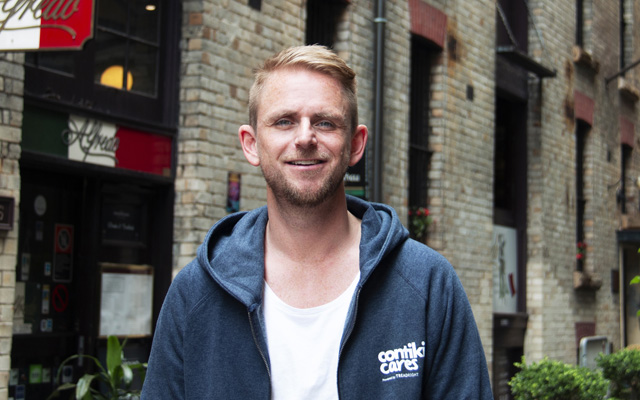
 Contiki is positioned for a young travelling community but the brand is 60 years old this year. How does a grand old dame ensure she is always connected with the 18-35 year-olds?
Well, I’ve never heard of Contiki being called a grand old dame before (laughs). She is 60 years young. We have quite a young team and that connects us to what the 18-35 year-olds are doing, what holidays they are searching for, and how they are consuming media.
We also ask travellers themselves (via) surveys. We get excellent feedback from our travellers through our trip managers, and research from internal and external sources.
We created the Contiki Travel Lounge on Facebook during the pandemic. The idea is for it to be a departure lounge, where people would wait before they could fly and trade travel stories.
All these information help our teams to shape our new itineraries as well as our sustainability journey.
Can you walk me down memory lane and tell me how travel motivations of this age group have changed through the decades?
That’s going to be quite a walk! Back in 1962, our founder John Anderson took a group of 16 around in a minibus, and they camped every night on their long journey which was advertised on a poster in a university bar.
The motivations remain the same – travellers want an unforgettable journey, see many destinations, discover culture, and they want to do this with like-minded people and make some lifelong connections.
What has changed is the demographic – our customers today are more educated. Social media did not exist back in the 60s. Now, travellers can get a lot of information on the destination through social media, and that sets their expectations high.
In previous generations, travellers want to go to all the marquee destinations, go for a drink at night, and do it all again the next few days. Trips had more of a party atmosphere.
Today, it is less about the party and more about getting under the skin of the destination. A lot of our travellers now do not drink alcohol and have different dietary requirements. They also have a genuine interest to get beyond the stereotypical marquee destinations. That means a desire to meet local people and eat in local restaurants, rather than just being on the tourist trail. But, at the same time, they still enjoy having their photo taken in front of the Eiffel Tower.
Contiki has learnt to be really good at getting that mix right between the big tourist sights and off-the-beaten-track experiences.
Another demographic change is the global mix of travellers. Contiki’s clientele was initially predominantly Aussies and Kiwis. Now, we are far more likely to see North Americans, Asians, Europeans and Africans together in a group.
How have your programmes evolved then?
On all our trips of more than seven days, which is the majority, we will fit in one Make Travel Matter experience. That is developed by our Contiki Cares initiative, which is part of The TreadRight Foundation, a non-profit organisation established by our parent company, The Travel Corporation (TTC). These experiences get our groups to interact with people, planet and wildlife.
We run an included walking tour in Berlin that is led by a Syrian refugee, so our travellers get to see the city sights but also hear a different narrative from someone who has come to live in Germany.
Our product has moved away from camping as an accommodation style, and onwards to hostels and hotels. We still do glamping in some locations, though. We have added new destinations, like Africa. One of our goals is to take people to more of the off-the-beaten-track, developing areas. We have also retired destinations that are no longer safe to go. We have created shorter itineraries, even weekend trips, and introduced rail journeys.
I guess the biggest change for us is making 100 per cent of our trips carbon-neutral this year.
How do travellers in your target age bracket regard responsible tourism, and how do their environmental expectations impact their travel choices with Contiki?
Going carbon neutral is just the latest in our long journey to sustainability. There is a lot of data about the growing importance of sustainability. Most Gen Zs choose brands based on their sustainability credentials. Going carbon neutral is therefore good for the environment and for the business.
It has been an interesting experience for us in shaping our carbon neutral messaging. I thought that Contiki going 100 per cent carbon neutral is a great message, and we should talk about it loud and proud. But the engagement we got has been muted. So, my conclusion is that people expect it and don’t need you to be banging on drums to talk about it. To the 18, 19-year-olds today, it is great that you are responsible, but they want to get back to the fundamentals of the product.
What else is being done to ensure that every trip is hugely meaningful with the smallest environment impact?
We have food waste reduction programmes in the two hotels that Contiki owns, and expect the same of our hotel and restaurant partners; we use renewable and clean energy for our offices and coaches; we have eliminated single-use plastics, etc.
Our journey to carbon neutrality requires a lot of work. First, we have to measure. Then, there is a load of initiatives around reducing emissions. After that, we offset what we cannot reduce and invest in carbon capture initiatives.
The Chateau Big Weekender is Contiki’s big anniversary party – why is this special?
The Château by Contiki is very special to us. It is one of only two properties that are exclusive to Contiki. We had a big round of renovation just before Covid, but it remained empty for two years. It will be the first time we are getting people into it with the party.
We will have good food and wine, great DJs spinning, pool parties, painting classes, yoga sessions, wine tasting, and more. Activities will be powered by 100 per cent renewable energy, and food will be sourced locally within France.
Most of the people attending the party will be paying travellers – the lifeblood of Contiki.
What’s next after this milestone?
Celebrations are spread across a 12-month calendar, starting in April.
For the rest of the year, we will continue to focus on returning to normal operations; bringing on destinations that we wanted to launch before the pandemic; building the next stage towards net zero; finding new customers, especially from Asia; and re-engaging travel agents, as many have left the industry during the pandemic.
Travel is experiencing accessibility challenges. How do these obstacles impact Contiki’s ability to engage the young adults and get them to explore the world?
It is a challenging year. On one hand you have immense pent-up travel demand, and on the other hand great difficulties to travel – or so says the mainstream media.
I have been travelling the last couple of months. It isn’t as straightforward as it used to be but it is doable.
In terms of airlift, there are pricing and capacity issues but our customers will fly complex routes if the price is right. Flight limitations have not impacted us much.
In terms of political impact on travel, I see the volatile global environment deterring some customers in our target age group. This demographic is very aware of world events. For example, bookings from our European and Australian guests for the US have not been quite the same as the past. The situation in Ukraine has also led demand for Europe to shift slightly towards the Western region and away from the East.
Here’s one thing that is important – the younger end of our target market has been badly impacted by the pandemic. They are starting their career, and are most affected by redundancies and furloughs. They are most impacted by virtual living. They are therefore desperate to travel but lack the money to do so. They will have to delay their travels, or stay closer to home.
Despite these challenges, we are having a fairly good year.
Hiring challenges plague Japan’s tourism reopening
The mood among Japanese tourism operators is improving as Japan readies for further removal of travel restrictions, but many players are finding it challenging to ramp up operations to meet the boom in enquiries and the eventual return of business.
“We are extremely busy. We are getting a lot of enquiries and bookings,” said Naomi Mano, president and CEO of high-end inbound travel firm Luxurique.
“I’m interviewing and hiring new staff every day,” Mano added.
That surge in business is only expected to intensify, as the majority of bookings now are just from Asia. Mano expects people from North America and Europe to start making reservations after they have witnessed a few months of unrestricted travel.
Avi Lugasi, owner and managing director of Kyoto-based Windows to Japan tour company, said he has yet to restart advertising as there is “so much pent-up demand for Japan that we cannot keep up with the calls”.
He told TTG Asia: “We are seeing a lot of people from abroad making enquiries and reservations for the New Year period, and there is a lot of interest in skiing and winter sports.”
Lugasi is struggling to cope with only half the staff strength compared to what he had pre-pandemic. He is eager to hire, but acknowledged that the process will take time – new hires must be trained and allowed to “find their feet” in the company.
The hunger for additional staff is shared by many other companies in the travel sector, fuelling the fight for talents.
“I was speaking to an official of another travel company only a couple of days ago, and they are trying to hire 50 new people with immediate effect,” he said.
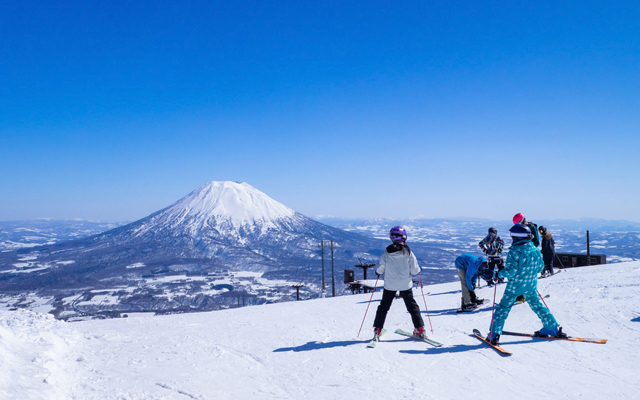
The pace of business is also picking up in the winter playground of Hokkaido’s Niseko, which has struggled in the last two years without the thousands of visitors who normally flock to its world-famous powder snow.
Ross Findlay, managing director of Niseko Adventure Centre, said the upcoming winter sports season is booming and it has been reported anecdotally that hotel rooms are running out.
However, there are hurdles to overcome. Staffing for hotels and other businesses in Hokkaido’s ski resorts is arguably the biggest challenge, with properties that have been operating with 20 staff suddenly needing to ramp that up by a factor of 10, he shared.
There is also a shortage of foreign ski instructors to meet the needs of the inbound market, which is complicated by the need to obtain work visas at short notice to permit their entry to Japan.
For now, the hectic pace is eluding Yuuki Bando, the owner of the Bang-Do travel guiding and translation business in Tokushima City on Shikoku Island. She said travel firms she works with are not yet reporting the surge in enquiries and interest, probably because the prefecture is relatively off the beaten path.
“The feeling is that it will take longer for the international tourists to come back to this part of Japan, but we also need to use this time to get staff back into travel companies, hotels and visitor attractions and to train them so they are ready,” she said.







ASEAN has issued a statement ahead of World Tourism Day to emphasise the region’s tourism recovery, with hotel searches, occupancy rates and travel confidence rising.
According to ASEAN, tourism growth is already “on the incline” in 4Q2022. Quoting UNWTO’s Tourism Recovery Tracker, ASEAN also pointed to a 28 per cent year-to-date increase in South-east Asia hotel searches as well as a 57 per cent increase in occupancy rates.
Overall travel sentiment has also risen by an impressive 40 per cent year-to-date, and it is expected to increase as more Covid-19 vaccines become available across the globe and variants of Covid-19 become milder. ASEAN noted that this progression has led to easing of the regions’ pandemic-related border restrictions.
ASEAN said “the pandemic should serve as an impetus and opportunity for the sector to…build forward better – by designing and building a more sustainable tourism sector that would underpin its resilience, which should no longer be taken for granted”.
“The vision is for tourism in ASEAN to emerge more sustainable and resilient following the crisis induced by Covid-19, with more focus on environmental conservation and climate friendly policies, as well as on the critical socio-cultural impacts of the tourism sector in the region,” noted ASEAN in its statement.
The association also spotlights the region’s tourism tagline, A Destination for Every Dream, as it recalls South-east Asia’s blend of “perfect experiences”.
It said: “No other tourism region offers a unified destination so close in the distance and rich in culture, historical sites, varying cuisines, natural landscapes, ecotourism, modern metropolises, and adventure activities.”
Five of the ASEAN member states were listed in Forbes’s recent article, The World’s 50 Most Beautiful Countries, based on their inherent natural beauty and the availability of nature-based activities for guests and natives.
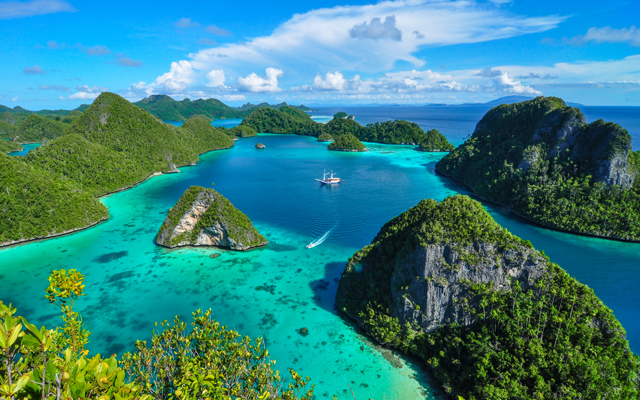
The article listed Indonesia first out of 50 destinations, and Raja Ampat Island in particular as the most beautiful place on earth.
The Philippines ranked 17th on the list; Malaysia at 24th; Thailand at 38th; and Myanmar at 41st.