The Indian Ministry of Tourism has drafted a national strategy for cruise tourism, which will serve as a roadmap for the sustainable growth of the segment in the country.
The draft strategy aims to promote India as a preferred destination for cruise tourism – coastal, ocean and river cruises. It identifies the current challenges and focus areas, and highlights that a sub brand, Incredible Cruises in India, will be developed to better position India as a cruise tourism destination.
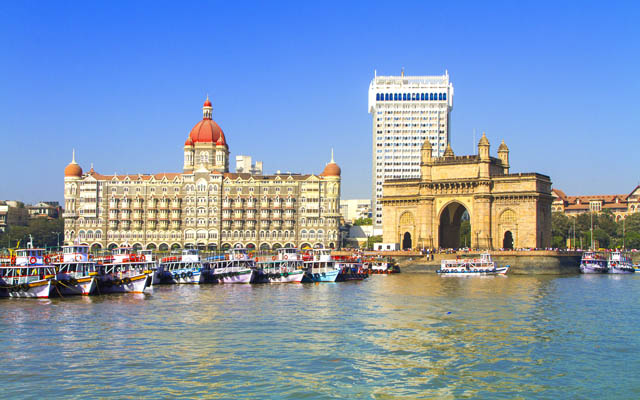
The Indian government’s strategy aims to promote India as a preferred destination for cruise tourism; Mumbai Harbour in India, pictured
“The national strategy will help to attract investments and facilitate the development of cruise terminals, infrastructure, and services. This will not only enhance the overall cruise experience but also attract international cruise lines to consider India as a desirable destination,” said Jurgen Bailom, president and CEO of Waterways Leisure and Cordelia Cruises.
“One of the key potential benefits of promoting India as a cruise destination is the opportunity to tap into a vast market of global travellers who are seeking new and exotic experiences. India’s diverse destinations like Mumbai, Goa and Lakshadweep have immense appeal to international tourists,” he added, sharing that Cordelia Cruises began operating a service out of Chennai to Sri Lanka last month.
As per the draft, the ministry will work with port authorities and state governments to coordinate the development of international year-round cruise terminals in order to cater to large and mega sea cruises. In addition, development of river cruise tourism around heritage sites, religious places and wildlife sanctuaries will be encouraged.
The ministry will be reaching out to international cruise liners and river cruise liners to include Indian ports and terminals as part of their route planning or for home porting in India.
Raj Singh, founder & chairman, Antara Luxury River Cruises, remarked: “A national strategy drafted by the government in consultation with the cruise industry will help resolve problems for all kinds cruises.
“Taxation, permits and licenses will become much easier to manage while safety regulation will also become much more serious. The government involvement will encourage stakeholders to come onboard and invest in making rivers, shore operations and seaports offer superior quality and safer services.”
Upcoming is the Silversea’s World Cruise in 2026 which will include stops in Cochin and Mumbai. Additionally, Costa Cruises has announced that its ship, Costa Serena, will home port in Mumbai from November 8, where it will sail from Mumbai to Goa and Lakshadweep.
Trip.com Group and Tourism New Zealand have signed a Memorandum of Understanding (MoU) to promote New Zealand as a key tourism destination in Asia-Pacific.
This partnership marks the first pan-regional collaboration for both sides.
The partnership will see both parties launch a series of joint marketing campaigns to attract tourists from Asia-Pacific to New Zealand
As part of the collaboration, both parties will launch a series of joint marketing campaigns to attract tourists from Asia-Pacific to New Zealand. The markets include mainland China, Hong Kong, Taiwan, Japan, South Korea, Singapore, India, Malaysia, Indonesia, Thailand, and Australia.
The agreement will also involve the creation of appealing and attractive travel itineraries and experiences to meet specific visitor needs, positioning New Zealand as a destination of choice for travellers.
Data from Trip.com Group’s Ctrip and Trip.com platforms show a keen interest in travel in Asia-Pacific, including New Zealand. Searches for flights to the destination have seen a significant increase of nearly 560 per cent year-on-year, and the volume of bookings was up over 570 per cent compared to the same period last year.
Trip.com Group’s vice president of destination marketing & strategy alliances, Edison Chen, said: “We look forward to collaborating with Tourism New Zealand to leverage our resources and deep data insights to boost New Zealand tourism development, fully optimising the travel experience for tourists in New Zealand.
“With the resurgence of international travel post-pandemic, this collaboration could not be better for both parties involved.”
René de Monchy, chief executive of Tourism New Zealand, shared: “Through the partnership, Tourism New Zealand aims to provide Asia-Pacific travellers with more convenient booking methods, personalised itinerary planning, and comprehensive service support.
“We look forward to welcoming travellers to deeply explore the beautiful landscapes and unique culture of Aotearoa New Zealand, as well as experience our manaakitanga.”
A regional survey by Marriott International has coined a term to describe a new generation of travellers set to disrupt the industry over the next few years – Native Explorers.
It recognises a tribe of affluent millennial and Gen Z travellers in Asia-Pacific who are bucking the trend by traveling in reverse order to generations before them.
Millennial and Gen Z travellers in Asia-Pacific are learning towards more meaningful, one-of-a-kind experiences for travel
The survey across Australia, China, Japan, India, Singapore, and South Korea was commissioned to better understand the attitudes of affluent millennial and Gen Z travellers and help luxury brands meet their evolving aspirations.
While their predecessors may be saving up for more costly longhaul travel later in life, Native Explorers are already well-travelled at a younger age, with one in four notching up no less than two continents outside of Asia-Pacific by the time they hit 26.
Despite having the means, Native Explorers claim they will be spending their travel dollars closer to home for at least the next two years, as 85% believe that they have yet to fully discover all the region has to offer.
With their sights firmly set on holidays closer to home, Native Explorers rank Japan (52%), South Korea (42%), and New Zealand (39%) as their top three travel destinations. They are also seeking out the new in familiar hotspots such as Australia (39%) and Thailand (32%) through a culture-centric lens.
Although one in four Native Explorers would prefer to beat the jet lag and pick nearby, fuss-free holidays, their sense of adventure shouldn’t be underestimated: 43% look for nature escapes and wellness experiences and 36% are looking for hidden cultural gems they have yet to discover.
“Globally, we’re seeing an undeniable shift among travellers towards more meaningful, one-of-a-kind experiences in both new and familiar destinations. This is particularly evident in Asia-Pacific from our findings on Gen Z and millennials’ travel patterns and behaviours,” noted Bart Buiring, chief sales & marketing officer, Marriott International Asia-Pacific
Luxury defined by authentic connections and experience, with craft still key Native Explorers are redefining what luxury travel means – from elusive and exclusive to meaningful connection and experiences. As they transition towards understated and authentic holidays, one in three respondents (37%) called out human connection, genuine hospitality, and being part of a community as critical components of luxury travel.
Majority (58%) believe once-in-a-lifetime experiences and pinch-me moments are what make the luxury travel experience. Top picks include VIP access to sold-out concerts of their favourite artists (52%) and exclusive culinary workshops with celebrity chefs (36%).
Craftsmanship remains crucial to luxury travel, with over 50% believe service excellence and state-of-the-art facilities are key tenets. Personalisation remains a key deciding factor in choosing a luxury hotel, with 32% expecting bespoke services such as a dedicated travel advisor, and 32% preferring to stay with hotels that offer tailored itineraries and customised amenities.
Explore destinations through luxury hotel comforts Caught between their desires to discover and luxuriate, nine in 10 respondents prefer to explore the destination with assistance from their luxury hotel, rather than research and hire a local guide of their own. Almost half (45%) prefer to sample local cuisine through the property’s gourmet dining, 39% want to experience the local culture through the hotel’s curated programming, and 34% are keen to try local wellness rituals available at the hotel spa.
Native Explorers’ thirst for cultural discovery extends to their accommodation choices, with a majority (76%) of respondents opting for hotels and resorts with destination-inspired concepts. Brand affinity remains key for Native Explorers with approximately one in three opting for destination-inspired abodes under an established luxury brand.
To meet these reimagined travel desires, Marriott International has plans to take its portfolio of eight luxury brands to the region’s most popular travel spots such as Sydney and Bangkok and emerging destinations like Fukuoka, Japan and Jiuzhaigou, China.
“With young affluent travellers in Asia-Pacific gravitating towards under-the-radar holidays and culturally-rich itineraries, we’re expanding our luxury portfolio in the region’s most sought-after destinations like Nara, Sydney and Jiuzhaigou in China with a target of opening 12 properties in 2023 alone,” said Buiring.
IHG Hotels & Resorts and AHG Hotels & Resorts have signed a management agreement to develop the 300-key Holiday Inn Resort Kasauli in India.
Overlooking a valley within the Shivalik Hills, the new hotel will be located within one of Kasauli’s largest and most prominent resort areas, offering convenient access to the city centre, prime tourist spots, and the Chandigarh-Shimla highway.
Holiday Inn Resort Kasauli will be located within the destination’s largest and most prominent resort areas; Kasauli in India, pictured
The town is also famous for its dense forests and floras, panoramic views of the snow-clad Himalayan mountains, colonial architecture, and pleasant climate.
Once opened, Holiday Inn Resort Kasauli will feature an all-day dining restaurant, lobby lounge and bar, gym, swimming pool, and a 2,300m2 meeting room.
Korean Air is deploying the new Airbus A321neo aircraft on its daily Seoul Incheon-Phnom Penh service starting July 1, and is the first Asian airline to feature Airbus’ Airspace cabin on an A321neo.
The A321neo is a new aircraft type and the airline’s first narrow body aircraft to have fully lie-flat seats in Prestige Class (business class), a feature normally found exclusively on wide-body aircraft. The cabin comprises eight Prestige Class seats and 174 economy class seats.
Korean Air is the first Asian airline to feature Airbus’ Airspace cabin on an A321neo
The SkyTeam carrier’s Airspace cabin will include customisable lighting system, audio/visual Bluetooth pairing, larger overhead bins, and more.
The airline is slated to receive a total of 30 A321neo aircraft by 2027. It will also be deploying these aircraft on other routes to South-east Asia as well as routes to China and Japan.
Royal Caribbean International is set to return to China in April 2024, and vacationers can now book four- and seven-night vacations on Spectrum of the Seas as it sails from Shanghai to popular destinations like Fukuoka, Okinawa, Nagasaki and Osaka, Japan.
Specially designed for Asia and travellers of all ages, Spectrum of the Seas features a line-up of restaurants and entertainment with regionally-inspired menus and shows, like Hot Pot, Teppanyaki and Sichuan Red, as well as karaoke lounge Star Moment, Showgirls in the Royal Theater and Silk Road in the one-of-a-kind Two70.
The two-level Ultimate Family Suite is perfect for large families and features an in-suite slide
The adventure seekers can try out activities like skydiving on the RipCord by iFly, the all-glass observation capsule, as well as bumper cars and sports in the indoor activity space SeaPlex.
For larger families, they can choose to live it up at the two-level Ultimate Family Suite that accommodates up to 11 people and features an in-suite slide.
Pradyot Rana has been named general manager for Shinta Mani Mustang – A Bensley Collection, which opens in Nepal on August 1.
With a strong background in luxury hospitality and his vast knowledge of the region and creating bespoke unique guest experiences in remote locations, Pradyot will manage all aspects of operations at the property.
He was previously at Tiger Tops Nepal where he held the position of project and business development manager.
The Hong Kong Tourism Board (HKTB) has appointed Martin Gwee as director, South-east Asia.
He will lead the development and implementation of the HKTB’s marketing strategies in South-east Asian markets in his new role.
With extensive marketing experience, industry connections and keen understanding of the evolving needs and preferences of South-east Asian travellers, Gwee first joined the HKTB in 2016 and is currently director, marketing for South-east Asia.
A growing appreciation for winter sports and a strong desire for holidays in the great outdoors and colder climes have fired up intense interest in winter and ski holidays among Asian travellers, especially those from tropical zones.
Expedia data shows ski holiday bookings last winter season (December 1, 2022 to March 31, 2023) out of Asia have climbed to 70 per cent of pre-pandemic levels (December 1, 2019 to March 31, 2020). With ski resort bookings showing an average duration of three nights at least, Expedia believes travellers are staying on longer to ski.
Younger families are showing up for ski holidays
Luxury travel specialist, Scott Dunn, told TTG Asia that Asian enquiries and bookings for ski vacations have spiked 250 per cent in the last ski season, compared to the previous season in 2021/2022.
Koo Ying Ying, Europe travel specialist, Scott Dunn, said the intense interest could be due to travel restrictions being lifted, allowing Asians to get back to planning their long-overdue winter fun.
Asians are also drawn to wintry landscapes, like Lapland and Iceland, and the chance to chase down aurora visions.
“Snow has always been a really strong pull factor for guests from Asia, especially (those living in) tropical climate,” said Koo. “Post-pandemic, we also see that more guests are craving fresh air and longing to be in the great outdoors. The snowy mountains are the perfect place for this, and they also present a very different type of landscape compared to what most of us are accustomed to, which is another factor we think has led to this spike (in winter travel demand).”
When asked if Olympic Winter Games in Beijing 2022 and Pyeongchang 2018 could have fired up Asian interest in ski holidays, Rachael Harding, CEO for East and South Asia & Pacific at Club Med, said any major events on the world stage could influence consumer behaviour. Through the two Winter Olympics, winter sports as well as the host country are cast into the spotlight.
“The fact that Asia had two Winter Olympics in recent years certainly put the region on the map as a winter playground (and inspired people to see Asia as an option) for mountain holidays,” Harding told TTG Asia.
She added that the games had also created a new pool of young athletes and led to more ski associations opening up in various countries across Asia.
“A big case is the formation of the Ski and Snowboard Association of Thailand in 2016. Thailand is now our most aggressive market to rebound,” she said.
That said, Club Med mountain resorts have seen “this consistent trend for quite some time”, where ski business now contributes a third of total business compared to just 10 per cent in 2015.
Demand is growing year on year and “completely outstripping the capacity that we have”, remarked Harding.
Scott Dunn expects strong bookings to continue into the 2023/2024 season. “We’ve just opened bookings for the next ski season and there is already a healthy level of interest and bookings, especially from big families and groups of friends,” shared Koo.
She believes that customers are moving fast to secure availability and rates “because key dates – such as the Lunar New Year, Christmas and New Year’s Eve, and Easter – get booked up very quickly”.
Not only is ski travel demand returning fast, Koo said traveller profiles are also getting younger.
“Traditionally, we often see families with older children, between 12 and 19 years old. Now, we see a trend of younger families with children aged four to 10 exploring ski holidays,” she said.
Asians are open to snowy adventures all over the world. Expedia noted that Niigata, Japan; Zermatt, Switzerland; Banff, Canada; and Haute-Savoie, France are top ski destinations among Asian travellers. Among Scott Dunn’s customers, France and Italy are hot favourites, while Canada and Switzerland are gaining popularity. New Zealand makes a fine choice too, according to Koo, as it has a great ski season between June and September.
Slopes and more
With seven ski mountain resorts in Asia and 13 elsewhere in the world plus three more set to open, Club Med has established itself firmly in the space of winter vacations. However, Harding said the mountains are not just for winter sports enthusiasts.
“The mountains are a beautiful place to escape the city. There is fresh air and the resorts offer a holistic wellness experience. We have a lot of activities that don’t involve skiing and they lean into our different target audiences,” she said.
At Club Med Val d’Isère, the company’s first Exclusive Collection mountain resort in the heart of the French Alps, guests not into snow sports can spend their winter vacation learning how tomme de Savoie and Avalin cheese are made, exploring the old village of Val d’Isère, reclaiming their health at the yoga studio and gym, wining and dining through multiple F&B outlets on property, and joining in artistic events.
Easier vacations
Recognising that winter holidays are a little more complex to plan, Expedia has in recent years been working with ski resorts to provide packages and deals for customers, all to make ski holidays more accessible for international travellers. Ski packages may include room nights, breakfast, barbecue, ski lift and gear rental, shared an Expedia spokesperson.
Scott Dunn’s travel specialists are trained to guide customers on their ski needs and propose the best destination and property based on their preferences. For adventurous guests, these travel specialists may even suggest heli-skiing and glacier hiking. The agency also boasts its own ski concierge team that will help customers secure lessons, passes, restaurant bookings, and transfers once the holiday booking is confirmed.
“We are also able to plan flight routings and itinerary suggestions to visit nearby European cities before or after a ski trip,” said Koo, adding that pre-departure calls and briefings are provided to ensure guests are well-prepared for their winter break.
For families, Scott Dunn offers two Explorers Kids Clubs in the French Alps – one in Val d’Isere and the other in Courchevel. In Val d’Isere, for example, families can engage a nanny to pick the children up from the hotel in the morning, and help them with ski passes, lessons, attire and equipment.
“This equals less fuss, and allows parents to enjoy themselves on the slopes knowing that their kids are well taken care of,” said Koo.
Scott Dunn Explorers Kids Club also curates other activities, besides winter sports, to keep little ones engaged for days.
Limited seats and high airfares have slowed travel recovery across Asia, with experts predicting traffic volumes will only return to pre-pandemic levels by 2024 as airlines increase frequency and routes.
According to figures from the Association of Asia Pacific Airlines, international traffic in Asia-Pacific sat at 52 per cent of 2019 levels in January 2023, with Asia recovering much slower than other regions, due to travel restrictions remaining in place much longer.
The figures revealed that South-east Asia’s recovery in particular have tracked below the global average, with Indonesia, Malaysia, and Thailand lagging, while the Philippines and Vietnam were above average. Vietnam now sits well above pre-Covid-19 levels.
The Asian Development Bank reports that domestic traffic in South-east Asia could reach 100 per cent of 2019 levels by the end of 2023, while international traffic is predicted to hit 90 per cent. In 2Q2023, international seat capacity for South-east Asia hit about 76 per cent recovery, with the full reopening of China expected to aid recovery throughout the rest of the year.
“Airlines have been steadily restoring flights in the South-east Asia-China market since January 2023, when quarantine restrictions in China were lifted, but flights are often added to the schedules with very short notice,” the report noted.
Air Asia launched new services to various Chinese cities, such as Guilin, pictured
It added that by the end of 3Q2023, the South-east Asia-China market could reach 70 to 80 per cent, contingent on airlines securing approvals for additional flights. However, securing approval from Chinese authorities for additional flights has so far been a “slow and gradual process”.
Mayur Patel, head of Asia at OAG Aviation, said that while current schedules show a 98 per cent recovery to pre-pandemic 2019 levels, a full recovery in global capacity is not expected before March 2024.
He added: “As consumers continue to search for fresh experiences, pent-up demand will carry on driving traffic to regional Asia-Pacific destinations over the next 12 months.”
Patel said the reopening of China’s borders and the anticipated travel boom will play a major role in the region’s full flight recovery.
“Most regional travel associations and carriers are predicting traffic volumes to return closer to pre-pandemic levels, despite economic and geopolitical headwinds, by 2024,” he noted. “As for the broader recovery, this will be dependent on how the outbound market from China recovers in the near term.”
He said some of the bottlenecks lie in getting slots for foreign carriers approved by China. For example, capacity recovery has been distorted with Chinese carriers having a larger capacity share.
Pointing to Singapore as an example, Patel said overall capacity for June 2023 compared with the same period in 2019 has shown overall recovery of 54 per cent. However, the two large Chinese carriers, Air China and China Southern, have reinstated 81 per cent and 75 per cent of capacity respectively, while Singapore Airlines Group has only been able to reinstate 58 per cent of its capacity between Singapore and China.
Emirates is expanding its fleet, in preparation for additional capacity and new services
“The Chinese regulators have been somewhat restrictive with the granting of slot allocations to airlines, especially to foreign carriers, which can be attributed to a phased approach for outbound travel that has been slower than anticipated by the market,” he told TTG Asia.
Patel added that other regulators across the region are also imposing restrictions. For example, the Indonesia regulator is imposing restrictions on Singapore Airlines’ flights from Singapore to Jakarta.
“This can be seen from schedules filing for which this city pair has only recovered two-thirds of the frequency from 2019 levels. In comparison, Singapore to Bali has recovered fully,” he added.
On a brighter note, recent schedule announcements made by airlines operating in this region continue to show confidence, with new and additional services planned besides reinstating former ones.
Emirates resumed its longhaul Dubai-Auckland service in December 2022
Emirates unveiled plans to deploy a fleet of 85 A380s, taking the total to 95 by the end of next March.
Adnan Kazim, chief commercial officer at Emirates, said the airline operates about 3,080 departure flights a week globally and is currently exploring adding more capacity to markets, including China.
Furthermore, additional flights to New Zealand’s Christchurch and Auckland as well as Australia’s Sydney and Melbourne will take off on July 15, as well as Singapore on June 1, strengthening operations in the Asia-Pacific region, increasing competition and driving down fares.
Low cost carrier AirAsia is also pinning hopes on China pushing its rebound. In addition to the carrier flying to nine destinations in China, it recently unveiled new services from Kuala Lumpur to Quanzhou, Guilin and Chengdu, beefing up weekly flights between the two nations to more than 129.
Benyamin Ismail, AirAsia X Malaysia CEO, said: “As China is rapidly bouncing back, we expect to launch even more flights to the country, as well as increase frequency on the most popular and profitable routes within our network in the short- to medium-term.”
Earlier in February, when the airline announced its resumption of China services, Benyamin said that its services to the country had seen “tremendous success”, with over 1.8 million guests carried to and from China in 2019 alone.
As travel appetite ramps up, Hong Kong Airlines is stepping up operations, with new services between Hong Kong and China’s Beijing, as well as Hong Kong and Japan’s Fukuoka, besides reinstating services to Bali’s Ngurah Rai International Airport and Shanghai’s Hongqiao International Airport.
New entrant, Thailand-based full-service Really Cool Airlines, said in May that it plans to commence flying in 1Q2024. Its initial routes are likely to include Singapore, Tokyo, Hong Kong and Taiwan, with European routes to be added in 2025.
Patel said factors that would drive full recovery in the region included developing a dual-brand strategy to increase low-cost offerings while simultaneously tapping into the luxury market. For example, through the pairing of Cathay Pacific and HK Express, Qantas and Jetstar, and Singapore Airlines and Scoot.
He predicted a “significant” increase in demand for Bali, Vietnam, Thailand, South Korea and Japan.
“This surge in traffic can be attributed to a growing trend among travellers seeking out more personalised experiences and to explore new, previously unexplored destinations.”
But he cautioned that the road to full recovery is not paved with roses, as airlines have to navigate major challenges such as shortages of staff, spare parts, and engineers, as well as the high cost of oil.
“With the price per barrel unlikely to fall in 2023, air fares will remain high, at least through the summer season,” he remarked.









 He was previously at Tiger Tops Nepal where he held the position of project and business development manager.
 He will lead the development and implementation of the HKTB’s marketing strategies in South-east Asian markets in his new role.