TTG Asia
Asia/Singapore Thursday, 9th April 2026
Page 492

Worldwide Hotels Group acquires Parkroyal On Kitchener Road in Singapore

0

Worldwide Hotels Group has acquired Parkroyal On Kitchener Road in the move to expand the group’s presence in Singapore.

The property is a well-established hotel along Kitchener Road in Little India, which will be rebranded and launched after the takeover has been completed in 4Q2023.

Parkroyal On Kitchener Road will rebrand and launch after the takeover is complete in 4Q2023

Carolyn Choo, CEO of Worldwide Hotels Group, said: “This acquisition aligns perfectly with our growth strategy and allows us to expand our commitment to deliver guest experiences with exceptional value and thoughtful customer service in strategic locations.”

With this new addition, Worldwide Hotels Group’s portfolio now comprises 41 properties in Singapore, including two upcoming hotels to open later this year.

New hotels: voco Ma Belle Danang, Teardrop Villas and more

0
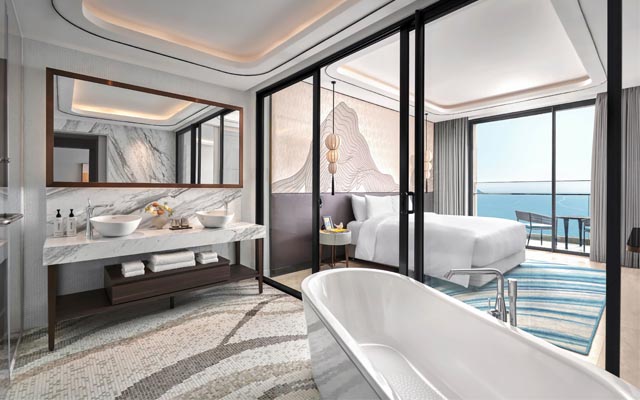
voco Ma Belle Danang

voco Ma Belle Danang, Vietnam
The new voco Ma Belle Danang is just steps from My Khe Beach, on Vo Nguyen Giap Street, and offers three restaurants and bars, a rooftop pool, spa, gym, and event spaces.

Attractions nearby include Man Thai, a traditional fishing village, Linh Ung Pagoda which houses Vietnam’s tallest Buddha statue, and the famed Golden Bridge.

Danang International Airport is a short 15 minutes ride away.

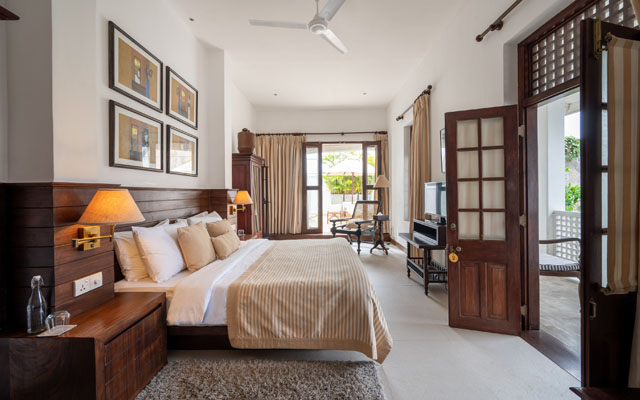
Teardrop Villas

Teardrop Villas, Sri Lanka
Teardrop Hotels has introduced its first Teardrop Villas: 41 and 42 Lighthouse Street villas, located in the heart of UNESCO World Heritage Site Galle Fort.

The 41 Lighthouse Street is a three-bedroom, two-storied luxury private villa which comes with a pool and can accommodate a maximum of seven guests.

The 42 Lighthouse Street is a four-bedroom villa complete with living spaces for up to 10 guests, with a veranda or secret sky terrace, with views of the Galle Fort ramparts and Indian Ocean.

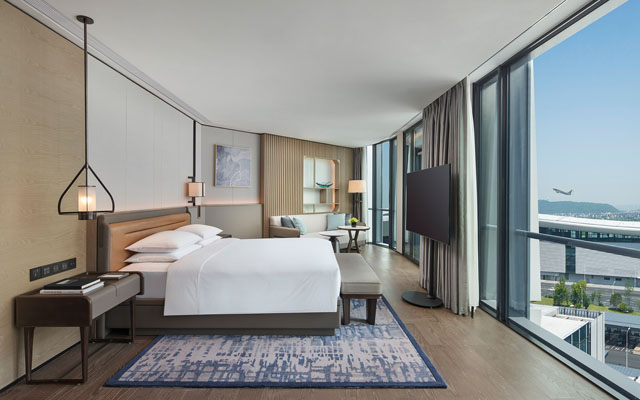
Hyatt Regency Hangzhou International Airport

Hyatt Regency Hangzhou International Airport, China
Hyatt Regency Hangzhou International Airport boasts 336 rooms, three restaurants and lounges, spa, swimming pool, fitness centre, and event spaces.

The hotel, a minute’s walk from Terminal 4 of the airport, is well connected to the city. Hangzhou’s business district and expo centres are a 20-minute drive away, while West Lake is 40 minutes away.

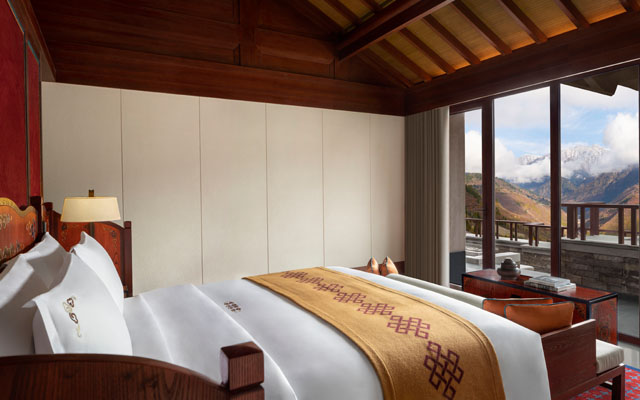
Rissai Valley, a Ritz-Carlton Reserve

Rissai Valley, a Ritz-Carlton Reserve, China
Situated in the famed Jiuzhaigou, Sichuan province, the 87-villa Rissai Valley, a Ritz-Carlton Reserve, offers views of the snow-capped Minshan mountain range, forests, and ancient Tibetan villages.

Each villa stay comes with a dedicated personal host who takes care of every detail for guests.

The property features restaurants, lobby lounge, spa, and a kids’ club. Activities include the artistry of Tibetan folk dance and classical music, the meditative practice of Thangka painting, and hiking in the surrounding forests.

Broadway musical & Juliet to grace Singapore’s stage

0

& Juliet, the hit musical on Broadway, will be making its premiere and only Asian stop in Singapore from September 21 to October 8 at Sands Theatre, Marina Bay Sands, Singapore.

Based on a book by Emmy Award-winning Schitt’s Creek writer David West Read and music from five-time Grammy Award-winning songwriter/producer Max Martin, & Juliet sees Shakespeare’s famous love story remixed with some of the most iconic pop songs of the last three decades in an uplifting story of self-discovery, empowerment and love.

& Juliet features iconic pop songs as it retells Shakespeare’s famous love story

The playlist of pop anthems includes RoarBaby One More TimeLarger Than LifeThat’s The Way It IsCan’t Stop the Feeling, plus a brand-new song written especially for the show by Martin.

Tickets start from S$68 (US$50), excluding booking fees, and are available via Marina Bay Sands and SISTIC box offices and online.

Maybank cardholders can get 15 per cent discount on tickets, and Trip.com is also offering a 15 per cent discount on its website.

For more information, visit & Juliet.

Sofitel Melbourne on Collins appoints new GM

0

Rachael Harman has been named general manager of Sofitel Melbourne On Collins.

She brings over 20 years of experience to her new role having spent time working in senior management roles for various luxury hotel brands across Australia, New Zealand, Malaysia and Singapore.

Before joining Sofitel Melbourne On Collins, she was general manager at Sofitel Adelaide.

UNWTO, G20 develop sustainable development roadmap for tourism

0

As the knowledge partner of India’s G20 Presidency, UNWTO delivered the Goa Roadmap for Tourism as a Vehicle for Achieving the Sustainable Development Goals at the meeting of the Ministers of Tourism of the world’s leading economies.

Halfway between the 2015 launch of the 2030 Agenda and the deadline to accomplish it, UNWTO called on G20 Tourism Ministers to lead the sector’s contribution to accelerating progress towards achieving the 17 SDGs.

The Goa Roadmap offers the G20 economies a proposed plan of action to lead the way forward towards a better future for all

The Goa Roadmap, developed with the Tourism Working Group, builds upon the five priority areas under India’s G20 Presidency.

The first is green tourism, which recognises the critical need to work towards climate action and environmental protection and related international cooperation. The roadmap incorporates recommended actions and good practices from G20 economies and guest countries on issues such as financing, sustainable infrastructure and resource management, integrating circular approaches in the tourism value chain and engaging visitors as key actors in sustainability.

Next is digitalisation – the roadmap makes clear the wide-ranging benefits of supporting businesses and destinations through digitalisation, including enhanced productivity, improved infrastructure management and delivering a safer and more efficient visitor experience.

It also emphasises on the need to provide tourism workers, particularly youth and women, with the skills employers need, to future-proof tourism jobs and to make the sector a more attractive career path.

With tourism MSMEs (micro, small and medium enterprises) accounting for 80 per cent of all tourism businesses worldwide, the roadmap stressed the importance of public policies and public-private partnerships in addressing key challenges, including financing, marketing and skills gaps and market access to support MSMEs through the digital and sustainable transitions.

Lastly, the roadmap presents a set of proposed actions to create a holistic approach to destination management that strengthens public-private-community partnerships and enhances a whole of government approach. It further shares examples of innovative programmes among G20 and invited countries.

UNWTO secretary-general Zurab Pololikashvili said: “As tourism bounces back close to pre-pandemic levels, we must ensure that recovery is sustainable, inclusive and resilient. The Goa Roadmap for Tourism as a Vehicle for Achieving the SDGs offers the G20 economies a proposed plan of action to lead the way forward towards a better future for all.”

“Tourism can be instrumental in addressing many of the challenges faced by our societies while transforming itself to address its socio-economic impacts. Working together on a common roadmap for recovery and long-term sustainability will unlock its immense potential to deliver on the SDGs,” added Shri G. Kishan Reddy, minister of tourism, culture and development of North Eastern Region, government of India.

UNWTO and the UN Environment Programme also hosted the side event Towards a circular economy of plastics in tourism – the Global Tourism Plastics Initiative, in association with the Ministry of Tourism of India.

The Global Tourism Plastics Initiative provides a common vision for a circular economy of plastics in tourism. The side-event provided delegates and participants with practical guidance to address plastic pollution in tourism operations.

The Central Nodal Agency for Sustainable Tourism of India, a technical agency of the Ministry of Tourism, became a signatory of this initiative, together with the government of Punjab and the Responsible Tourism Society of India.

Philippine outbound appetite on the rise

0

Filipinos have taken to traveling in droves to outbound destinations near and far and purchasing travel insurance without prodding.

These observations were shared at the recent 10th Travel Madness Fair in Manila.

Filipinos’ appetite for travel continues to grow as they venture to destinations both near and far

As Ark Travel Express president, Paz Alberto, put it: “Travel has become part of Filipino lives,” adding that their appetite for it has been whetted even more with “promotional airfares, increased long weekends, and the need to maintain one’s health and well-being”.

One of its consequences is the growth in demand for travel insurance, many with Covid-19 coverage, even for shorthaul destinations, a trend likely to persist longer as can be gleaned in the longer list of insurance companies exhibitors this year.

“Travel insurance is a must nowadays. Unlike in the past when passengers had to be pushed to buy, with only about 20 per cent of them getting travel insurance, now it’s the other way around,” said Dorothy Lauron-Aytona, president and general manager, Skynet Travel Corp.

Alberto shared that Japan is now the new Hong Kong, enjoying a brisk demand due to having visas which are valid for one year or more.

Many have opted for Japan after South Korea implemented earlier this year new visa processing procedures eliminating accredited travel agencies in favour of an online visa appointment system, resulting in longer queues and processing time.

The Embassy of South Korea in Manila stated in a notice that “online reservation slots for Individual Applicants for Tourism for the month of July 2023 has been fully booked”, which means travellers had to queue up for slots in August.

Estimating that the number of Filipino tourists to South Korea had halved, Lauron-Aytona said that apart from Japan, Filipinos are also travelling longhaul to the Balkan states, Morocco, Turkey, and Greece.

Dubai is also getting its fair share of tourists, and pilgrimages to Europe and the Holy Land are blooming. Meanwhile, Corporate International Travel and Tours basks in getting good volume for international cruises.

Simon Ang, managing director operations, Celebrate Life, Travel, Leisure and Celebrations, said luxury travel is in and has resumed much ahead of leisure travel.

Lauron-Aytona noted that “China is back” but advised travel consultants to get the hang of visa processing procedures being done in the Philippines. The destination is also accepting groups, however, the tour operator in China will be the one to process visa applications.

She added that previously, families usually travel to a single destination – the trend now is for multiple destinations, like combining Asia with Europe, possibly because they had travel money saved during the pandemic.

Hotel rates are still high owing to increased demand, while the shortage of flights due to some airlines not yet resuming their original flight schedules means airfares will continue to remain high.

Making accessibility a norm

0

Where did your passion for accessibility issues in tourism begin, and how did you end up becoming a champion for its causes?
I’ve been a lifelong traveller doing longhaul flights since I was six months old, until Covid hit. It became increasingly frustrating with the lack of accessibility in tourism as my disability progressed. I’d been doing workarounds to keep travelling for myself, and thought surely there are other people like me who are finding it just as frustrating and there’s so little information out there. So, I wanted to find solutions not just for myself but for others facing the same challenges.

Can you tell us about your disability?
I was diagnosed with multiple sclerosis in 1996 but I had symptoms from 1985. It’s an autoimmune disease of the central nervous system where basically my major nerves and my brain will short circuit, which can cause all sorts of ‘fun’ problems.

In my case at the moment, it’s not being able to walk and having very weak arms, but it started with a few twitches here and there, a few pins and needles and that’s why it took over 10 years to be diagnosed. I now get around in a power wheelchair.

How easy is it to travel with your wheelchair?
It’s not easy but what I found more limiting was the stage where I was still walking, but slowly with a cane. I would tire very easily but wasn’t yet requiring so much assistance that it (could be) labelled assistance.

It would’ve been very helpful to have more benches or different rest spots where I could still enjoy myself. That’s what we talk about at GetAboutAble – how to cater to everyone regardless of what their physical needs are, which can include invisible, psychosocial, intellectual disabilities, or other areas of neurodiversity.

How big is the community of people who love to travel and have disabilities? I’m sure this community bands together and shares notes.
One in five or six people has some form of disability, and that doesn’t even count the older population or others who might never classify themselves as having a disability. The Australian Bureau of Statistics estimates that’s one in three households.

So, when we talk about travellers with access needs, we say, don’t look at us as a specific niche. Look at us as one in five travellers across the entire spectrum. We’re solo travellers, families, luxury and business travellers.
For most businesses it’s 20 per cent of their market but they’re completely missing it because they don’t even think about it, much less work to cater to it. It’s not that hard – it’s all about knowing your customers and how to make their visit more enjoyable.

By the way, most people who think about accessible tourism think about ramps and wide doorways and measurements, but that’s just the compliance piece for building standards. What we need for inclusive travel is just asking the same question you ask other customers: what can I do to make your visit better?

Is there monetary value that you’ve been able to place on the disability travel market?
Absolutely. We just heard from Tourism Australia when they came to speak at our annual conference that they had it valued at A$13.5 billion (US$8.9 billion) annually in 2021, compared to just over A$10 billion before the pandemic.

In the year it was measured, it was (worth) more than the Chinese tourism market. Think of how travel and tourism operators catered to the Chinese market and compare it to this market that’s at least that big and growing without any (extra) effort. We estimate it’s going to be two or three times as big once people start looking at it.

When borders were closed, we were waving our hands going “Hey, we’ve got a market for you” and that’s when people started listening. With Queensland declaring 2023 as the Year of Accessible Tourism and the Olympics and Paralympics coming in 2032, there’s just such a groundswell of momentum.

I’ve been saying this for a long time – people with access needs are high-value travellers, spending almost three times as much as the average traveller even if they’re staying in budget accommodation. The reason is because they travel with more companions, they stay for longer and they are more loyal. I feel like it’s just a big secret that’s going to get out.

What do you think the Accessible and Inclusive Tourism Conference in the Asia-Pacific held in Queensland this year achieved?
It’s our third year but our first with an in-person event.

Progress, not perfection, was a really big theme for this conference. Start wherever you are on that journey, figure out what you already have in your business and build on that.

Also, looking at accessible and inclusive tourism as a customer service issue rather than a compliance issue – so many businesses are used to having to tick the box that says that they’re accessible as part of legal requirements.
We’re not talking about those at all. We’re talking about how do you make a good experience for your customers. Start with a statement of welcoming people of all abilities and telling us what your access requirements are. You might have to say, I’m sorry, we can’t help you or maybe let’s work on this or that.

The other thing is working on access and inclusion as business as usual, not as an afterthought. It’s much more expensive to retrofit or deal with a complaint later. If inclusion is part of your business as usual, and if your intention is good, a lot will be forgiven because you are on the journey together.

It sounds like you are still up against much resistance in the tourism and hospitality industry. What do you think is the biggest misconception about accessible travel that you are encountering?
First of all, I wouldn’t call it resistance – I think it’s fear. The biggest hurdle is the preconception that it’s too expensive or too difficult. If you work in an old heritage building, to get it compliant-accessible could be very expensive but to get it customer service-inclusive is quite a different conversation.

In your opinion, which is the most disability friendly country in the world, and what did you love about it?
In our region, Singapore is incredibly accessible and inclusive every step of the way. The culture is such that people will help people with disabilities. If you are talking cities, Barcelona is also incredibly inclusive.

What are some of the most imaginative ways you’ve seen tourism operators incorporate services for the accessible and inclusive market Ideas?
Oh goodness, there are so many! There is an art deco style hotel in the UK that has a ceiling hoist track, which you can think of as an upside-down monorail that goes across the ceiling – they had done the moulding in such a way that the ceiling hoist track goes into a closet and gets stored there so it isn’t in your face as soon as you walk in the hotel room.

That’s the thing – for most people when they think of accessibility, they’re thinking of the ugly hospital-like looking, plastic or metal up the wall but I’ve seen so many examples of it being done really well.

That’s when it doesn’t feel like accessibility – it feels like a holiday.

Travel confidence holds up for over half of Asia-Pacific travellers despite economic headwinds: Booking.com

0

Booking.com has released the 2023 edition of its APAC Travel Confidence Index (TCI) which provides an in-depth analysis of travel mindsets across Asia-Pacific.

The TCI 2023 research, commissioned by Booking.com and conducted independently by Milieu Insight, involved a survey of over 8,000 travellers from 11 countries and territories across Asia-Pacific conducted between April and May 2023.

The report unveils four distinctive traveller personas and provides insights into their motivations, priorities and travel behaviours

It presents an in-depth analysis of travel confidence and sustainability interest across various destinations in Asia-Pacific. The report includes rankings that assess the confidence level of travellers in each market.

Despite financial concerns ranking highest among their worries (42%), 73% of Asia-Pacific travellers maintain unwavering optimism for their future travel plans over the next 12 months.

Over half (53%) of travellers surveyed have no intention of postponing any of their travel plans, despite the complex and interconnected crises pressuring the global economy, including inflation, climate change and supply chain disruptions. Furthermore, 59% of these travellers not only remain steadfast in their original travel plans, but also intend to increase both the number of trips they take and their travel budgets for the year.

Additionally, the report unveils four distinctive traveller personas for the first time, providing valuable insights into their prime motivations, priorities and travel behaviours.

Conscious Explorers (Hong Kong, India, China, Taiwan) actively pursue eco-friendly and sustainable travel. They are passionate about exploring while minimising environmental impact. They engage in ecotourism, stay at sustainable accommodations, and support local communities to align with their values.

Comfort Seekers (Singapore, Australia) prioritise comfort and convenience. They seek indulgent experiences and accommodations with maximum relaxation, and value personalised services, high-quality amenities, and prioritise comfort over sustainability in their travel decisions.

Mindful Voyagers (Vietnam) have a deliberate and thoughtful travel approach, driven by their sense of responsibility to the environment and desire to help local communities. However, they often experience anxieties in unfamiliar environments and actively seek resources to overcome travel concerns and gain confidence.

Homebound Pragmatists (New Zealand, South Korea, Japan, Thailand) prefer practical travel and staying close to home. They prioritise convenience, efficiency, and optimising time and resources. They seek seamless travel experiences that are well-organised and efficient, making the most of their limited time and resources.

In Singapore, however, only 32% of Singapore travellers consider sustainability to be of importance, revealing a reduced emphasis on environmental considerations. In a world where eco-consciousness is on the rise, Singaporean travellers stand out as the least likely (18%) to invest in sustainable accommodation choices, suggesting a strong inclination towards prioritising personal comfort and indulgence during their journeys.

“Despite some macroeconomic headwinds, one thing remains clear for all Asia-Pacific travellers: their spirit of adventure and the desire to create lasting memories via travel remains steadfast and strong,” said Laura Houldsworth, managing director, Asia-Pacific, at Booking.com.

“Despite the profound impact of the pandemic, insights from this year’s Travel Confidence Index reassuringly proves that Asia-Pacific is well on its way to reclaim its position as the world’s fastest growing travel region.”

The report can be viewed here.

Auckland births new online platform to showcase its many highlights

0

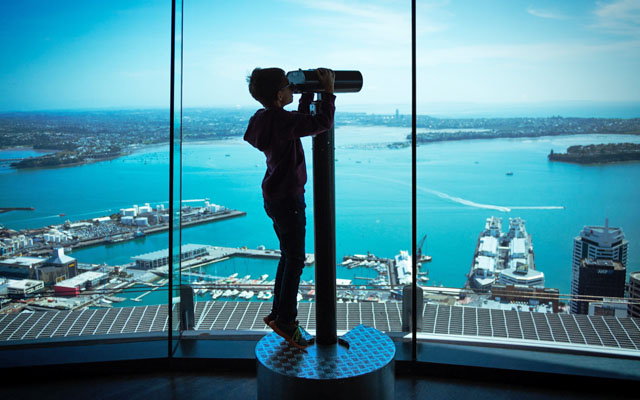
The launch of a new online platform, Discover Auckland, is set to deliver a one-stop-shop for all visitor-related experiences and events across Tāmaki Makaurau Auckland.

The latest initiative from Tātaki Auckland Unlimited, the new destination platform will feature listings of things to see and do across Auckland, and will improve the way locals and visitors discover the region by making it easier to plan a trip to Tāmaki Makaurau.

Discover Auckland will feature listings of things to see and do across Auckland

As a dependable resource for all Auckland travel and local destination inspiration and knowledge, Discover Auckland will also help promote the Tāmaki Makaurau region, its sub-regions, communities, businesses and events, and further enhance the Auckland brand.

Shelley Watson, director of marketing and communications at Tātaki Auckland Unlimited shared: “Globally, destination platforms now need to meet the high expectations of travellers in the digital age. With ever shortening attention spans, travellers tend to approach trip planning like a shopping experience, selecting elements of their holiday based on a few moments of online interaction.

“Up until now, the digital journey for Aucklanders and visitors looking to experience the region has been fragmented with no simple planning, booking or sharing path. The launch of Discover Auckland will directly address this gap in a way that also increases opportunities for visitor growth and increased spend per visit.”

Designed using consumer insights and global best practice to digitise and eventually commercialise the Auckland experience, data from the site will enable Tātaki Auckland Unlimited to tailor visitor attraction campaigns to specific audiences, and in the future, the platform will be used to help generate income and support the visitor economy.

Shelley Watson said: “Discover Auckland will support our region to thrive and compete with other global cities for visitors, talent, students, investment and business. The new platform will specifically support the wide variety of businesses in the visitor economy such as tour operators, cultural organisations, accommodation providers, restaurants, retailers, events, performing arts and music. There will be spill-over economic benefits to many other industries.”

Annie Dundas, head of visitor economy at Tātaki Auckland Unlimited said: “Discover Auckland will stimulate local demand, appeal to Aucklanders to explore their own region as well as attract visitors from Aotearoa and overseas. It will future-proof Auckland’s legacy and shape our visitor economy industry for many years to come.”

The platform will also have a feature enabling users to interact with the site and generate a personalised visitor experience via a section called “collections”. Here, users can curate a collection, such as an itinerary or list, of their favourite Auckland places and attractions, which can then be shared and saved for future planning.

“It’s a unique and innovative feature which we anticipate will have wide appeal,” added Dundas.

Vietjet restarts flights from Hong Kong to Phu Quoc and Danang

0

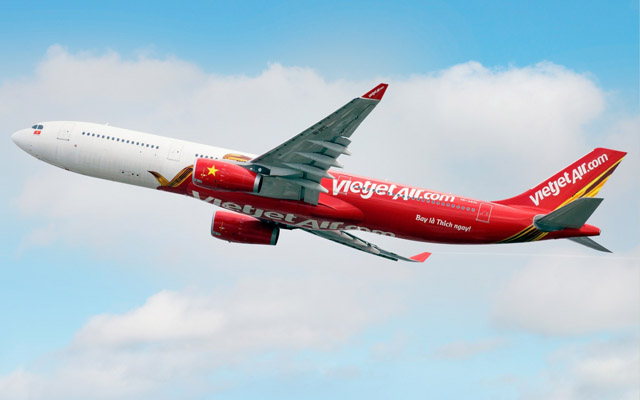
Vietjet has resumed direct routes linking Phu Quoc and Danang in Vietnam with Hong Kong.

The thrice-weekly Phu Quoc-Hong Kong service will operate on Tuesday, Thursday and Saturday, while the Danang-Hong Kong route offers four weekly return flights on Monday, Wednesday, Friday and Sunday.

Vietjet has resumed services from Hong Kong to Phu Quoc and Danang

The airline also recently restored daily return services between Ho Chi Minh City and Hong Kong.