TTG Asia
Asia/Singapore Tuesday, 7th April 2026
Page 406

PPHG’s job transformation study to yield playbook that benefits Singapore hotel industry

0

Singapore-based Pan Pacific Hotels Group (PPHG) has entered the final lap of its research project to redesign key roles in hotel operations, conducted as part of the nation-wide Job Transformation Map (JTM) for the Hotel Industry programme led by the Singapore Tourism Board and Workforce Singapore.

PPHG’s three-year job transformation project involves human resource experts, Mercer, which was awarded the contract in January 2023 after two rounds of tender evaluations jointly performed by Singapore Tourism Board, Workforce Singapore, and PPHG on four tenderers. The three parties are jointly funding the project.
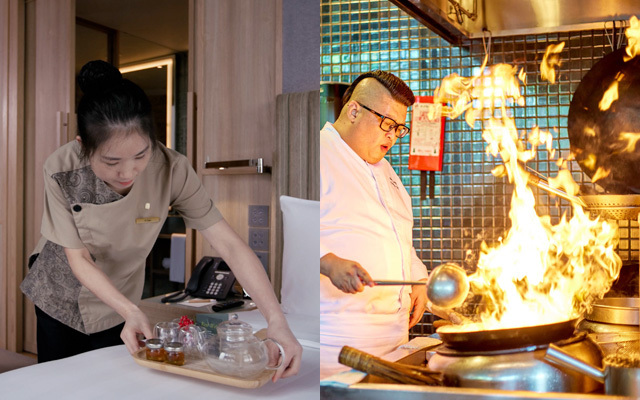
Pan Pacific Hotels Group’s ongoing study of eight critical jobs in hotel operations will help to transform Singapore’s hotel industry for efficiency

In an earlier interview with TTG Asia, PPHG CEO Choe Peng Sum had described the project as “a million-dollar exercise” to develop “a vision of the hotel of the future” through a practical redesign of jobs across various functions.

While the hotel industry-wide programme has identified 40 jobs ripe for various extent of redesign, such as sales coordinator, reservations officer and engineers, PPHG itself has marked out eight roles for scrutiny under its own job transformation undertaking. These roles are in front office, bell, concierge, housekeeping, central reservations, F&B, and security, according to Kung Teong Wah, general manager at Parkroyal Collection Pickering, one of three PPHG properties involved in the study.

Kung shared that research work has been intensive, with the team considering factors such as customer touch points, opportunities for change, and potential technology that could simplify jobs and improve staff capability. A time motion study was also conducted to better understand processes and identify necessary training.

Elaborating on the efforts taken to rethink the housekeeping role, Kung said the team “looked at the full range of necessary tasks and identified possible ones that a Singaporean could and would do” as well as how work could be simplified, and staff could be incentivised to perform faster and better.

Currently, room attendants are all foreigners, as “Singaporeans are not willing and able to do this job – for example, they are not able to carry heavy 46kg mattresses”, stated Kung.

By separating tasks that foreigners and Singaporeans could and would do, the hotel is able to move a percentage of local staff to housekeeping, which in turn eases the dependency on foreign hires and makes hotel jobs more palatable to the local workforce.

Kung’s team is also developing an incentive system that awards housekeepers extra pay should they complete more rooms within their normal working hours. To ensure that speed does not compromise quality of housekeeping, rooms are inspected and the incentive value is adjusted according to assessment.

“In the space of housekeeping alone, we have devised 16 action plans for this transformation journey. By implementing these plans, we have seen improvement in productivity,” Kung told TTG Asia.

“Another positive outcome of job transformation is the ability to expand staff capability. An assistant housekeeper, for example, is almost a managerial role. These individuals can articulate in English, are generally smarter, and can do service well. During peak hours, they could support operations at the executive lounge. Just by having them perform a high value job for two hours a day, their capability rises and they gain a wider set of work experience. Of course, everything comes with additional salary,” added Kung.

When asked if redesigned jobs would benefit mature workers, Kung said the employability of mature staff was one of the motivations of the project.

“We want our mature workers – whom we term young seniors – to remain employable for a longer time, especially as the retirement age rises and the population ages. Upgrading their skillsets is one way,” he said.

Kung said the project harnesses the talents of “non-traditional specialists”, like data scientists “to help us do our work better”.

“Our methods are all very scientific. For example, to transform the F&B job, we measured the number of steps staff would take each day on their eight-hour shift to see if they were spending more time serving a guest or walking. How do we get them to walk just 7km every day instead of 11.3km? To do that, we need to redesign the flow of their work and the layout of the restaurant and stations,” he explained.

While the study is almost complete at press time, Kung said there is still a long way to the end. Study findings will lead to action plans, proof of concept, trials, and eventually a playbook that will benefit Singapore’s hotel industry.

When asked for a timeline, Kung said action plans are “quite comprehensive and could take one or two years to be done”; many also involve “a lot of capital expenditure, as some of the changes require product design from scratch”.

Even though hotel companies can be guided by a playbook, Kung warned that job transformation success requires top management buy-in and an understanding that productivity gains must translate into better staff benefits.

“Companies must see savings and staff must see wage increases. Any extra task must come with a wage increase. Many companies fail their job transformation because they do not pay staff more. The gain sharing model is critical,” Kung concluded.
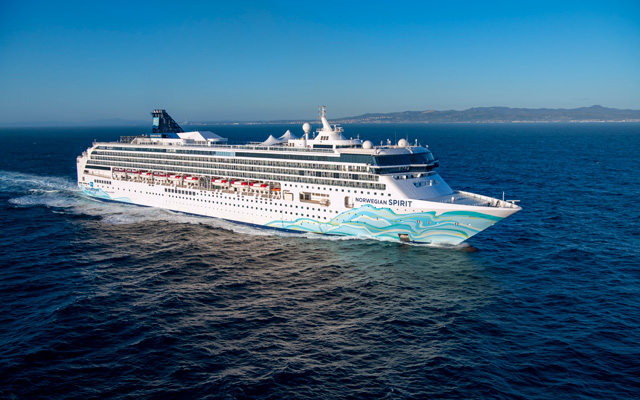

Norwegian Cruise unveils new 2025/26 sailings

0

Etihad, Maldivian ink interline agreement

0
Aerial view of an island in the Maldives

Etihad Airways and Maldivian, the national airline of the Maldives, have established a strategic bilateral interline partnership that will allow travellers easier access to 16 airports in the Maldives beyond the main island of Malé.

Etihad customers can access destinations on Maldivian’s network, which serves many popular islands, via Velana International Airport, Malé, including: Dharavandhoo Island, Faresmathoda Airport, Funadhoo Airport, Fuvahmulak Island Airport, Gan Island Airport, Kooddoo Island, Hanimaadhoo Island Airport, Kulhudhuffushi Airport, Hoarafushi Airport, Kaadedhdhoo Island Airport, Kadhdhoo Island, Madivaru Airport, Maafaru International Airport, Maavarulu Airport, Thimarafushi Airport, and Ifuru.

The Maldives is made more accessible through Etihad and Maldivian’s new interline agreement

Etihad’s chief revenue officer, Arik De, said: “Facilitated by smooth connections from Malé, Etihad customers can easily transition to Maldivian’s services, reaching a wide range of domestic destinations to begin their idyllic island retreat.”

Maldivian’s general manager commercial, Ibrahim Hamdhan Mohamed, believes that the agreement “will open exciting opportunities for our valued customers to connect and travel seamlessly within our strong and growing route network of destinations across the Maldives”.

Meanwhile, since January 1, 2024, Etihad has increased the frequency of its flights to Malé from 10 to 14 a week.

Land long before time

0

Saudi Arabia is a relatively new travel destination, having opened to international tourism as recently as 2019, but the country has ambitious plans to become one of the most visited places in the world by committing US$800 billion to develop tourism nationwide within the next decade.

Tourism is a core component of Saudi Arabia’s Vision 2030, a government programme designed to develop a modern and diversified economy. The country’s Ministry of Tourism, which was founded in 2020, aims to leverage tourism to create one million jobs, enable accelerated and sustainable economic growth, host 70 million international tourists by 2030 (or 150 million including domestic tourists), and amplify the tourism sector’s GDP contribution from the current three per cent to 10.

Night views of AlUla’s historical structures at night

Saudi Arabia welcomed 16.6 million tourists in 2022, indicating a long way to go in the coming seven years, but its fledgling industry is enjoying rapid growth. The country jumped 12 places to be ranked 13th globally in international tourist arrivals in 2022. In the same year, it ranked 11th globally in international tourism receipts, up 16 places since 2019, according to the UNWTO’s World Tourism Barometer.

Moreover, the country received 7.8 million international tourists in 1Q2023, a 64 per cent increase over the same period in 2019, according to the Saudi Press Agency.

Europe and North America are among the key tourism markets globally for Saudi Arabia, but Asia-Pacific is “pivotal” for the country’s growth as an international tourist destination, Alhasan Aldabbagh, president of Asia Pacific markets at the Saudi Tourism Authority, told TTG Asia.

As of September, arrivals from Asia-Pacific markets were up 11 per cent year-on-year, with calendar 2023 numbers expected to exceed 2019 numbers by 15 per cent. The largest contributor to growth has been Umrah, the pilgrimage to Mecca for Muslims to renew their faith, followed by trips for leisure and to visit family or friends, according to Aldabbagh.

Looking ahead, he is eyeing India to provide two million visitors in 2023 and seven million by 2030 to enjoy “leisure, culture and heritage, and adventure experiences.”

In 2022, 900,000 Indian tourists visited Saudi Arabia, spending more than any other source country, making them an important target market.

Pakistan, China and Bangladesh are the other top source markets, with Saudi Arabia targeting 3.5 million, three million and 2.6 million visitors respectively from these countries annually by 2030.

Riyadh’s sparkling, modern cityscape

To reach its core markets, Saudi Arabia has opened offices in India, Pakistan, Bangladesh, Malaysia, China, South Korea, Japan and Australia.

Globally, the Saudi Tourism Authority is targeting each market according to seven prime segments across two categories: leisure and Umrah.

Among the efforts to grow tourism are 14 giga projects under development. The largest, sized at 10,200 square miles, is Neom. One of its islands, Sindhala, will open in 2024, offering “a year-long vibrant destination, a gateway to the Red Sea,” said Aldabbagh, adding that it will include a marina and yacht club, beach club, spa, luxury hotels and golf courses.

The country’s ancient history will also appeal, he said, giving the example of AlUla, “a living museum of preserved tombs, sandstone outcrops and historic dwellings that hold 200,000 years of largely unexplored history”.

“What was once a country known almost exclusively for being the birthplace of Islam, now offers an unrivalled tourist experience like no other,” he concluded.

Trip.com names Edmund Ong as new Singapore GM

0

Edmund Ong has been appointed as the new general manager of Trip.com, succeeding Ru Yi, who will assume the position of regional director, accommodation (Asia-Pacific).

Both appointments are effective January 1, 2024.

Having joined the company in 2014, Ong will strategise and drive Trip.com’s overall business operations in Singapore in his new role, and will continue in his role as senior director for Singapore, Indonesia and Malaysia.
Cooking up green gastronomy

0

Thailand, the world’s fourth most favoured travel destination for international tourists according to the Visa Global Travel Intentions Study last year, is loved for many things. However, gourmet draws may well be the one common magnet for almost all loyal fans of the destination.

Making a move on foodies, the Tourism Authority of Thailand (TAT) launched in May the Amazing Thailand Culinary City project to further develop and promote Thailand as a world-class gastronomy tourism destination.

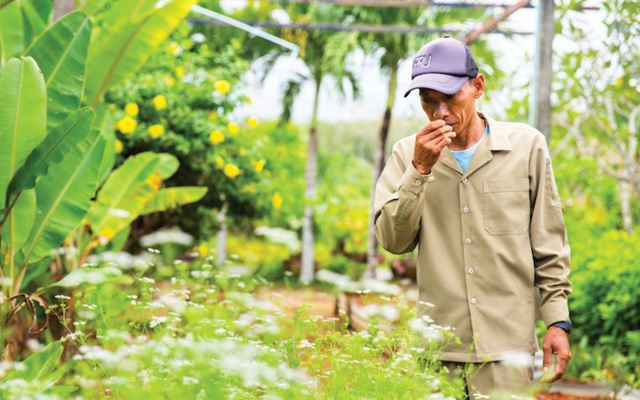
Pru Jampa Farm takes pride in organic farming methods

But the most interesting gastronomy push may well be in Phuket, which was recognised by UNESCO as Gastronomy City of the World in 2015.

Overall, Phuket is experiencing a remarkable transformation in its dining scene – one that’s increasingly focused on sustainability and eco-consciousness.

Phuket’s fine dining establishments are at the forefront of this wave. Restaurants like Pru at Trisara (reopening in November), Jampa at Tri Vananda, and Hom at Intercontinental Phuket are setting new standards for sustainable gastronomy on the island.

Pru holds one Michelin star and earned a Michelin Green Star this year. Jampa, which also shares Trisara’s owner Montara Hospitality Group, earned a Michelin Green Star earlier this year for its zero-waste, plant-based food. Both restaurants source from Montara’s Pru Jampa organic farm, which also supplies herbs, vegetables, fruits and eggs to Trisara’s kitchens.

Pru Jampa is working to share its accomplishments in sustainable farming, and will host Local Roots by Jampa community market on November 4, during which sustainable produce from local farmers and hospitality providers will be showcased. Visitors can pair their sustainable shopping with a low impact meal at Hideaway at Jampa, a rustic restaurant tucked away in a serene and scenic part of the farm and helmed by Jampa’s chef Rick Dingen.

Björn Courage, general manager of Intercontinental Phuket and president of the Phuket Hotels Association, said: “We’d love to see sustainable dining at the Michelin level expanded for Phuket.”

His hotel has hired Portuguese chef Ricardo Nunes – formerly from Bo.lan in Bangkok, a one Michelin-star that shut down in 2021 – to head the new fine-dining establishment Hom.

Nunes’ 10-moment tasting menu is rooted in locavorism, seasonality and creative fermentation of lesser-known local ingredients such as stinky beans or jungle berries.

Phuket showed off its accomplishments in responsible dining at Phuket Hotels for Islands Sustaining Tourism conference in September. On display were canapés, kombucha and ice cream crafted from Veya Pharm’s organic produce grown onsite at Banyan Tree Phuket.

Tipaporn Phianthong, head chef of Banyan Tree Phuket’s Saffron Restaurant, gravitates towards ingredients from local farms because the reliance on natural farming processes without chemicals elevates the taste of produce.

Phuket’s sustainable dining movement is going deeper with the help of the Sustainable Tourism Development Foundation, which leads the Food (Before) Waste programme. The initiative repurposes leftover food from hotel buffets and surplus supermarket items and gets culinary students to prepare hygienic meals that are offered under a pay-as-you-wish model at the foundation’s Metta Kitchen.

However, Bill Barnett, founder of C9 Hotelworks, believes that Phuket’s hospitality sector still has a long way to go in achieving dining sustainability.

“Broadly, over 50 per cent of food in hotels goes to waste and the real numbers are in larger, volume-oriented hotels,” he said.

As Phuket’s tourism market makes a strong comeback, he believes that travellers speaking out about their willingness to adopt the green premium could also help to foster change.

Diamond Princess begins Singapore season

0

After arriving from Japan, Diamond Princess has kicked off her Singapore season featuring 10- to 14-day cruises in the region from now to March 2024.

For December this year, Diamond Princess will sail two 10-day cruises that visit Koh Samui and Laem Chabang (Bangkok) in Thailand as well as Phu My (Ho Chi Minh City) and Danang in Vietnam. For the next cruise departing on December 26, guests can celebrate New Year’s Eve in Ho Chi Minh City.

Diamond Princess has commenced her Singapore season for sailings till March next year

The highlight in January and February 2024 will be the 14-day Malaysia, Thailand and Vietnam cruises. These cruises will take guests along Straits of Melaka, visiting Langkawi and Penang in Malaysia, as well as Phuket in Thailand. After which, the ship will sail the South China Sea, visiting Koh Samui, as well as Ho Chi Minh City and Nha Trang in Vietnam.

The cruise on February 6 will bring guests to Penang and Port Klang, and even Nha Trang in southern Vietnam.

Diamond Princess will then end her Singapore season with a 13-day repositioning cruise from Singapore to Yokohama on March 5, 2024. The ship will arrive on March 18, in time for Japan’s cherry blossom season, and the start of her Japan 2024 season.

Onboard the ship are several Japanese-themed facilities, like a Japanese specialty restaurant with an authentic sushi bar, as well as the largest open-air Japanese bath at sea which offers indoor and outdoor Japanese bathing experiences comprising steam rooms, saunas and hot tubs.

Another ship, Coral Princess, will sail a 33-day South-east Asia, Hawaii and Pacific Crossing cruise from Singapore to Los Angeles in October 2024, visiting destinations in Thailand, Vietnam, Hong Kong, Taiwan, and Hawaii before arriving in Los Angeles. This segment also offers a 12-night sailing from Singapore to Fremantle in Perth, Australia.

Island Princess’ 11-day World Cruise will visit Singapore on February 29, 2024 from Australia, after which the ship will sail on to Dubai. The ship will return to Singapore again for its 2025 World Cruise.

In addition, one of the newest Princess ships, Discovery Princess, will be making her maiden call to Singapore in October 2025 while on her way to Australia.

Mandarin Oriental to open three new resorts in Japan’s Setouchi area

0

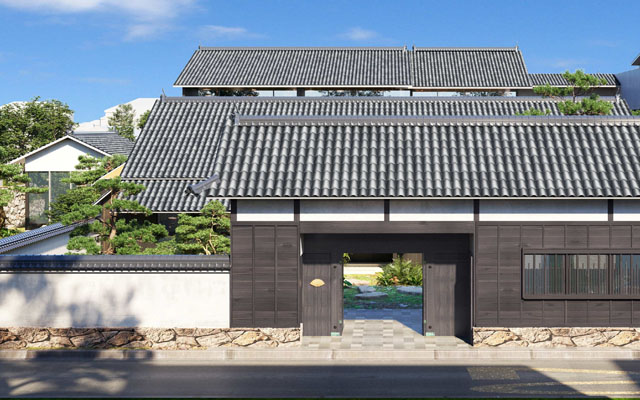
Mandarin Oriental Hotel Group has announced the development of three boutique properties in Japan, branded as Mandarin Oriental, Setouchi, located around the Seto Inland Sea.

The three resorts are set to launch between 2027 and 2030.

The three properties in Setouchi will launch between 2027 and 2030

Located between the main Japanese islands of Honshu, Shikoku, and Kyushu, the gateway resort is adjacent to Takamatsu station and just a 30-minute drive from Takamatsu airport, making it easily accessible.

The Setouchi region is renowned for its breath-taking landscapes, mild climate, unique cuisine, welcoming atmosphere and cultural and artistic treasures. The Seto Inland Sea, with its multitude of islands, offers a unique wealth of attractions and experiences, both on and off the water.

The 92-room Mandarin Oriental, Setouchi at Takamatsu, will open first in 2027, and will feature restaurants and bars as well as spa and wellness facilities..

Mandarin Oriental, Setouchi at Naoshima, will also open in 2027, offering 22 ryokan-style guest suites and villas set in a picturesque fishing village.

The third property, which aims to open in 2030 on a separate island, will feature 50 guestrooms with fully immersive wellness experiences.

To link the three new properties, and to add to the overall experience, Mandarin Oriental, Setouchi will curate a cruise for guests to travel between the sites on board a private yacht, immersing guests in the attractions and landscapes of each island.

Laurent Kleitman, group chief executive, shared: “Setouchi is a unique part of a special country, beloved by discerning and curious global travellers. This relatively undiscovered region of Japan will excite our fans as they explore its different and remarkable facets, particularly as each of our three resorts channels its own distinct character, environment and purposeful, carefully curated experiences.”

Jumeirah Group to double portfolio by 2030

0

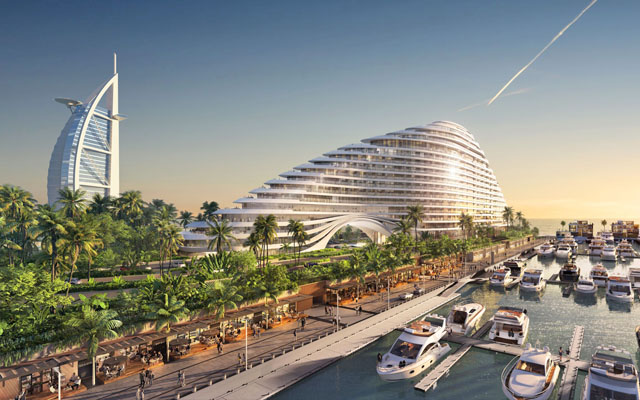
Jumeirah Group has plans to double the size of its portfolio by 2030, building on its strength in the UAE and further expanding its portfolio into key global markets like Europe, the US and Asia-Pacific.

The growth plans include up-weighting its presence in Europe, leveraging its strong base in London, Capri, Mallorca and Geneva to acquire luxury properties in other major cities, as well as exploring opportunities in the US.

Jumeirah Group plans to expand its portfolio into key global markets like Europe, the US and Asia-Pacific; Jumeirah Marsa Al Arab, pictured

The group will also look to capitalise on the strong growth potential of the Asia-Pacific market to extend its current reach beyond its properties in China, Bali and the Maldives.

The plans are part of Jumeirah’s Mission 2030 strategy which will also see an evolution of the brand with a renewed focus on delivering distinct guest experiences and new ancillary businesses to complement its ultra luxury positioning.

Launching in 2024, this will include the integration of wellness into the entire guest journey based on the principles of lifelong learning, longevity and inclusivity, as well as a re-imagined family experience with a focus on education, self-discovery, environmental stewardship, cultural immersion and the arts.

In addition, sustainability is integral to every aspect of Mission 2030 under the group’s three pillars: Planet, People and Governance. With a focus on decarbonisation of operations, eco-conscious building design, strong governance on supply chain, diversity and inclusion, Jumeirah is committed to preserving biodiversity given the location of its hotels in fragile ecosystems.

Jumeirah Group’s CEO Katerina Giannouka commented: “Mission 2030 is a strategic plan that is designed to evolve the Jumeirah brand from a regional success story to a global leader in ultra luxury hospitality. It focuses on four key areas – international expansion, brand and product development, operational excellence and ancillary business – with an overall aim to sustainably double the size of our portfolio by 2030 and enhance our brand experience to meet the diverse and evolving needs of our guests.”

Centara Hotels welcomes furry friends to stay and dine

0

‌Centara Hotels & Resorts has teamed up with Central Pattana are rolling out the red carpet for pets and their owners at its properties in Thailand.

Centara will remove weight restrictions on pets in their Korat, Ubon, Udon, and soon-to-open Ayutthaya hotels, while also launching pet-friendly cafés and restaurants at these same properties.

Centara welcomes pets to stay at their Thailand properties

Centara will introduce a minimal surcharge of 500 baht (US$14) per pet or 600 baht for two pets per night, with a maximum of two pets per room across all four properties.

Each property will also introduce indoor and outdoor pet-friendly cafés, as well as restaurants, with exciting menus specially crafted for pets.

For more information, visit Centara.