Thai AirAsia X is offering a special airfare promotion in celebration of its service resumption between Bangkok (Suvarnabhumi) and Nagoya, Japan.
The maiden flight is scheduled to take off on August 1 this year, and will start off with four flights weekly on every Monday, Wednesday, Thursday and Sunday.
Thai AirAsia X celebrates the restart of its Bangkok-Nagoya route with special airfare promotions
Starting at only 3,990 baht (US$110) for a one-way trip, travellers can book from now to June 2 via the AirAsia MOVE app and on AirAsia’s website for travel between August 1 , 2024 and March 29, 2025.
Indonesia is targeting more than US$5 billion in tourism investment this year and the Ministry of Tourism and Creative Economy (MoTCE) wants investors to inject their money beyond hotel developments.
Investment plans and schemes have been set up and will be presented during The 2024 Indonesia Tourism and Investment Forum (ITIF 2024), set for June 5 and 6 in Jakarta. Investments are targeted for the five Super Priority Development areas – Lake Toba, Borobudur, Mandalika, Labuan Bajo, and Likupang – plus the surroundings of Nusantara, the new capital city.
The 2024 Indonesia Tourism and Investment Forum will take place in Jakarta from June 5 to 6
During ITIF 2024, discussions will be held on hotel and restaurant investments as well as areas seeing growth, such as golf courses, medical tourism, and hospitals, said Rizki Handayani Mustafa, MoTCE’s deputy for industry and investment.
She added that enquiries from local and international hospitals keen on opening branches in Indonesia have spurred a deeper look into medical tourism development.
Apart from the main conference, there will be an Indonesia-India round-table discussion, according to Rizki, in response to the growing investment interest from India, as well as a round-table talk with Russia related to sustainability and other potential projects.
Triawan Munaf, vice chairman of tourism and creative economy at Indonesia Chamber of Commerce, said that while ITIF 2024 was one of the ways to attract investment, regional governments and developers must be clear about their destination’s strengths, needs, business potential, and seasonal waves to lure investors.
“(Investors) will choose places that need tourism infrastructure and facility development. In Lombok, for example, during the MotoGP season, we saw a need for more rooms because hotels were full. However, an investor would consider whether his hotel would be full all year before deciding to build one,” he explained.
Meanwhile, Ridha Wirakusumah, CEO of the Indonesia Investment Authority, pointed out that while Indonesia has a strong investment case, it needed to build a positive image to attract investors.
Australia’s tourism economy is expected to make a full recovery to pre-pandemic levels by the end of the year, with international visitation steadily increasing in most markets and some significant aviation gains.
Inbound arrivals in March were at 91 per cent of arrival numbers in 2019, with India and South Korea exceeding pre-pandemic numbers while other countries like China are slowly closing the gap.
Tourism Australia’s Phillipa Harrison addressing the media at ATE24
These developments were revealed at the Australian Tourism Exchange 2024 (ATE24), which is underway in Melbourne. The event has attracted unprecedented participation, with more than 2,600 delegates registered to attend, including 1,500 Australian sellers and 714 global tourism buyers. There are also 60 first time-sellers and 109 first-time buyers, reflecting a healthy interest in Australia as a tourist destination.
“We are confident this is the year we will return to those 2019 levels so we can stop referring to that benchmark and once again focus on the sustainable growth of our industry which we experienced in the decade leading up to the pandemic,” said Tourism Australia managing director, Phillipa Harrison.
“(Even) China, which is an exceptionally large market for us, is sitting in the 70 per cent mark now,” she noted.
Crucially aiding the recovery are new routes and increased connectivity, which were major points at the ATE24 press conference. Notable among these are 12 new international routes launched between November 2023 and December 2024, including direct flights from Mumbai via Air India and multiple routes from Shanghai, enhancing connections to Brisbane, Sydney, Perth, and Cairns.
Two new flights from Singapore to Broome and Darwin via Jetstar Asia and Qantas respectively are also added this year.
ATE24 also features an aviation hub for the fourth consecutive year, promoting vital networking among 31 airlines and representatives from all 17 international airports.
With a full international visitation recovery on the horizon, Harrison said Tourism Australia is beginning to turn more of its focus on efforts to create more sustainable growth while inspiring tourists to extend their stay and experience more of the country.
Indigenous tourism and epic self-drive adventures are also among key pillars driving its strategy moving forward.
“There’s a whole range of new events and new experiences. So, we have a lot of news to tell you about across Australia,” said Harrison.
Brendan McClements, CEO of Visit Victoria, said hosting ATE24 in Melbourne will play a key role in the sustained growth of Victoria’s visitor economy. He highlighted that the event provides an invaluable platform to globally promote the unique tourism experiences available across the state.
“The event provides a global platform for Visit Victoria’s new tourism campaign, Every bit different, which highlights the inclusivity, diversity and creativity of our State’s experiences and regions,” he said.
ATE24 is delivered by Tourism Australia in partnership with Visit Victoria.
As Jewel Changi Airport celebrates its fifth anniversary, new developments and offerings are underway to increase its attractiveness with a wide range of lifestyle offerings for visitors.
Visitors to the retail and entertainment complex at Singapore’s Changi Airport has been steadily increasing as travel rebounds. From April 2023 to March 2024, the airport saw a 26 per cent increase in footfall compared to the previous year, with 30 per cent comprising overseas travellers.
The Bouncing Net at Jewel is one of its most popular attractions
As one of the first touchpoints for tourists, Jewel serves as an “important platform to showcase the best of Singapore brands to the world” as tourists increasingly seek unique local products, said James Fong, CEO of Jewel Changi Airport Development.
To remain competitive, Fong shared: “We keep pace with the latest consumer trends and developments in order to bring in new-to-market brands, concepts and experiences that excite our different visitor segments, while continuing to enhance our existing offerings to ensure they remain relevant to our guests.”
In December 2023, Jewel collaborated with the Singapore Tourism Board to launch a designated retail cluster on level one that offers a curated selection of Singaporean brands, including snacks, pastries and confectioneries, including exclusive items.
Opening later this year will be new flagship retail stores such as Singapore fashion brand Charles & Keith, and international brands such as Fila, Bimba Y Lola and New Era.
New brands will also make their debut, and include F&B brands Ipoh Town, Nai Xue and Royal Host, as well as fashion brands, Setirom and Satellite Paris.
Attractions are also another way Jewel draws visitors with the top three being the Bouncing Net, Walking Net and Mastercard Canopy Bridge.
There are also events throughout the year to keep visitors entertained, including Jewel Blooms, a multi-sensory experience of florals, a new light and music showcase, and coming in 2H2024, a behind-the-scenes tour of the rain vortex.
“We want our visitors to experience a gamut of emotions each time they visit Jewel, be it a first-time visitor or a repeat customer,” said Fong.
The fifth year celebration is an opportune moment for this as there will be various perks across retail, dining and in-store experiences.
Fong added: “Jewel will continue to play a significant role in strengthening the attractiveness of the Changi air hub with its wide range of lifestyle offerings to both local and foreign visitors. We will focus on building our brand proposition anchored on the concept of ‘where the world meets Singapore, and Singapore meets the world’.”
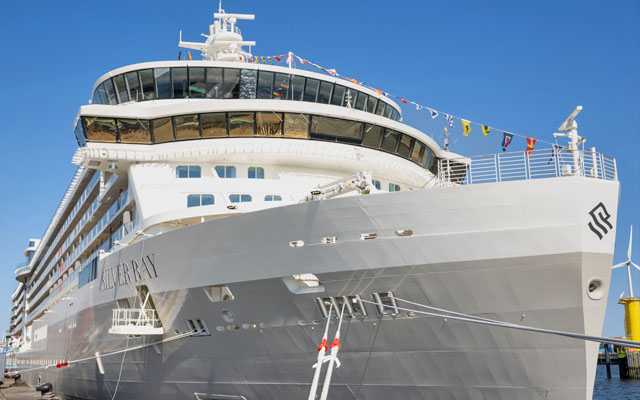
Silversea has taken delivery of Silver Ray, the second ship in its innovative Nova Class, in Eemshaven on May 14.
Participating in storied maritime traditions, including flag-changing and signing ceremonies, commemorative speeches, and a celebratory toast were attendees Jason Liberty, Royal Caribbean Group’s president and CEO, Silversea president Bert Hernandez, representatives from Royal Caribbean Group (RCG) and Meyer Group, as well as captain Alessandro Zanello.
Silver Ray will embark on her maiden voyage from Lisbon on June 15
Silver Ray joins her sister ship, Silver Nova, as one of the most energy efficient ultra-luxury and expedition cruise ships ever built, marking an important milestone on RCG’s journey to reduce emissions and carbon intensity.
Following a conveyance of approximately 40km down the River Ems from the Meyer Werft shipyard in Papenburg at the end of April, Silver Ray completed her technical and nautical sea trials in the North Sea on May 8.
Due to embark on her maiden voyage from Lisbon on June 15, Silver Ray will spend her inaugural season in the Mediterranean before crossing the Atlantic to the Americas in December 2024.
Hernandez remarked: “In addition to being one of the most energy efficient ships ever built, Silver Ray‘s game-changing, outward-facing ship design enables greater access and connection for our guests to the incredible destinations we visit.
“As far as firsts go, I feel honoured that my first delivery as president of Silversea is to welcome Silver Ray to our fleet alongside Jason, my Royal Caribbean Group colleagues, and the wonderful Meyer Werft team. I can’t wait for our guests to experience everything this remarkable ship has to offer.”
Traveloka has partnered with Filipino low-cost carrier Cebu Pacific (CEB) to attract more Thai and South-east Asian tourists to visit the Philippines by implementing an application programming interface that will allow inbound travellers to explore CEB flights through the travel app.
This initiative is expected to positively contribute to the growth of Philippine tourism by making it easier for Thai and South-east Asian tourists to explore the country’s destinations, with offerings such as additional flight choices to explore the country and its tourist spots, as well as special offers for travellers.
From left: Cebu Pacific’s Xander Lao and Traveloka’s Iko Putera at the signing held at the Cebu Pacific office
Traveloka also noted a significant surge, a fivefold increase compared to the previous year, in the number of travellers from South-east Asian countries who booked Cebu Pacific flights through its platform. Apart from domestic tourists, travellers from Thailand, Indonesia, Vietnam, Singapore, Malaysia, and Australia are among the top six nationalities travelling to the Philippines based on Cebu Pacific flight data.
“We are delighted to collaborate with Traveloka to support the local tourism industry and make travelling to the Philippines much easier,” said Xander Lao, president and chief commercial officer of Cebu Pacific.
Traveloka’s CEO of transport, Iko Putera, remarked: “Our partnership with Cebu Pacific will provide diverse possibilities for travellers and spearhead innovation to deliver optimal solutions for customers. We will also contribute to growth within the tourism industry in the Philippines and the wider region.”
Royal Caribbean International’s set the stage for a standout 2025-2026 season in Singapore, with new itineraries on Ovation of the Seas sailing from the city-state to destinations such as Indonesia, Malaysia, Thailand, and more.
Between October 2025 and March 2026, the Quantum Class ship will offer three- to eight-night holidays, where travellers of all ages will enjoy a taste of the sights and sounds of South-east Asia – from indulging in renowned street food in the heart of UNESCO World Heritage Site George Town in Penang, Malaysia, to kicking back on the sandy beaches of Phuket, Thailand, and even immersing in culture and adventure while roaming the waterfalls and temples of Celukan Bawang in Bali and Lombok, Indonesia.
Ovation of the Seas will sail from Singapore to destinations like Indonesia, Malaysia, Thailand, and more
Friends and families can make the most of their getaway in more ways than one while on the ship, with 20 dining experiences, and fun activities such as on the 360-degree glass observation capsule, North Star, and the signature RipCord by iFly skydiving experience, plus more.
Ascott has reported a 28 per cent year-on-year increase in fee-related earnings to S$331 million (US$245.7 million), up from S$258 million in financial year 2022, as well as the highest number of property openings with nearly 9,600 units turning operational in the same year. The achievement is largely due to the “flexibility and agility” of Ascott lodging properties’ flex-hybrid business model, which performed during “both challenging and good times”, thus attracting keen owners.
In an interview with TTG Asia, Ascott’s chief commercial officer, Bee Leng Tan, elaborated: “We did not have to close a lot of our properties (during Covid) because of our apartment-style product’s flex-hybrid business model. This business model…got us a lot of validation from third-party owners who saw how well it can perform in both challenging and good times. As a result, we had better signings during the pandemic and continue to see record signings, which led to record openings.”
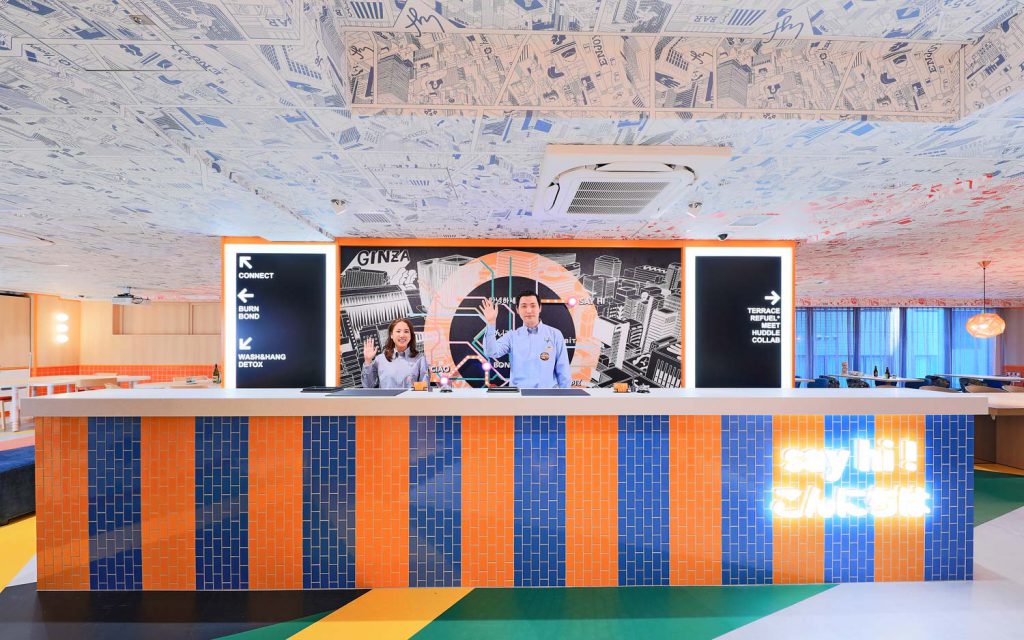
lyf Ginza Tokyo opened November 2023, marking the brand’s entry into the Japanese capital
Ascott defines the flex-hybrid business model as one that allows the company to be flexible with product and room mix, enabling agility to pivot operations to suit the needs of the market and optimise occupancy. With a hotel-in-residence model that supports adaptability, the model also allows Ascott to cater for varying lengths of stays, from short to extended periods, and for different guest profiles, from solo travellers to groups, while providing elevated services, facilities and amenities similar to that of a hotel.
With the appeal of such a business model, the company also attracted intense conversion signings.
Tan said that with conversions, there was no need to build a property from scratch, allowing owners to convert their existing property to an Ascott brand and take it to market sometimes as quickly as within a month.
She shared that of all the Ascott lodging brands, Citadines is the most powerful in the “conversion play”.
“Citadines is now one of our fastest growing brands. It is conversion-friendly, given that it carries very distinct brand signatures that are easier to (deploy) in both new and existing properties,” said Tan.
One of Citadines’ brand experiences is the For the love of coffee programme, which conveys the local coffee culture through a cup of local brew served on property.
“Citadines is an urban city brand and is present in all the key gateway cities. We believe that every city has its own unique coffee culture, and our guests – many of whom are business travellers who cannot get through their day without coffee – can experience city living through the local brew,” she said.
“The owner does not have to tear down this wall and alter that space just to align with our brand standards.”
There are now more than 200 Citadines properties globally, both operating and in the pipeline. Fifty-four of these – or more than a quarter of the Citadines portfolio – are in China. Within South-east Asia, Citadines properties number the most in the Philippines, with 18 in operation and in the pipeline.
Tan shared that The Collection brands – The Unlimited Collection and The Crest Collection – are also ideal for conversions. They are best suited for existing properties that are “very premium, luxurious and unique”, and allow “owners with boutique properties to come to us and benefit immediately from our flex-hybrid business model”.
The Crest Collection portfolio, once concentrated in France, has expanded into Asia. It now comprises The Grand Mansion Menteng in Jakarta, The Robertson House in Singapore, and The George Penang in Malaysia.
As these were signed and opened within months, The Crest Collection “gained a lot of attention from owners”. The portfolio will soon be joined by fresh conversions in London, Paris and Bucharest.
Looking ahead, Tan sees opportunities in altering the Ascott playbook for a stronger presence in tourist destinations.
“Traditionally, we have been more apartment-type and more long-stay focused; we are the market leader in this very corporate-focused segment. Now, we are seeking opportunities to expand our portfolio in tourist destinations, so as to play in the wider hotel space,” she said.
The company has already made its move, with the new Oakwood Suites Chongli in China setting a prime example.
She explained: “The location is popular with business travellers, but it is also known as one of the host cities of the Beijing 2022 Olympic Winter Games and has beautiful snow mountains. We know that business travellers would likely extend for business, or be joined by their family. In this case, Oakwood is an ideal brand due to its blended travel positioning as well as its strong F&B offering.”
lyf, a brand that Ascott had designed and created itself, is also thriving in tourist destinations. lyf Ginza Tokyo opened November 2023, marking the brand’s entry into the Japanese capital; a second property will soon launch in Shibuya. Beyond Japan, lyf is also opening in Bondi Junction, Sydney; Gambetta in Paris; Ostend in Frankfurt; Canggu in Bali; Penang and Kuala Lumpur in Malaysia; among many others.
Other Ascott brands could work in tourist destinations too, and the conversion team would assess location, hardware, and potential clientele before identifying the relevant brand, according to Tan.
As Ascott charts its journey into tourist destinations, Tan said a large team of “hunters” – business development personnel – is “going out to make sure everybody knows Ascott is here for the party”.
“We are telling owners that they can bring their hotel or resort properties to Ascott, not just their apartment-type real estate and that Ascott is prepared to manage a variety of properties for them. We have the right products and brands for any travel intention, be it business, leisure, wellness or medical,” she remarked.
In an earlier press statement, Kevin Goh, CEO for Ascott and CLI Lodging said 2023’s stellar performance has put the company on track to achieving its target of more than S$500 million in fee earnings by 2028.
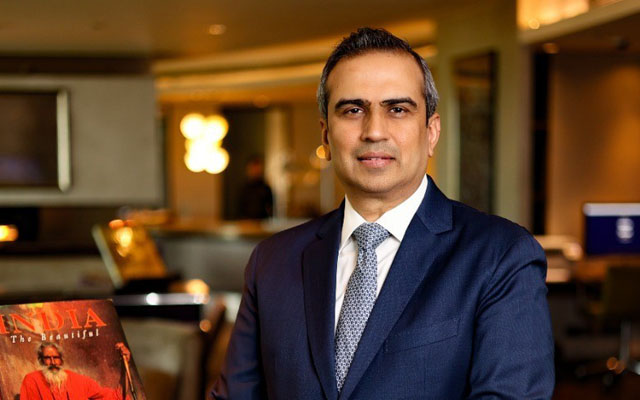
Puneet Dhawan has been named the head of Asia for Minor Hotels, and will be based in the group’s Bangkok Corporate Office when he joins the company in July.
He will be responsible for the performance of all Minor Hotels properties in Asia, working in close collaboration with the Minor Hotels senior leadership team.
A seasoned professional with a 30-year hospitality career spanning Asia, Europe, and the Middle East, Dhawan was previously senior vice president of operations – India & South Asia at Accor.




 Here’s wishing all our Buddhist readers a happy Vesak Day!





 A seasoned professional with a 30-year hospitality career spanning Asia, Europe, and the Middle East, Dhawan was previously senior vice president of operations – India & South Asia at Accor.






Indonesia is targeting more than US$5 billion in tourism investment this year and the Ministry of Tourism and Creative Economy (MoTCE) wants investors to inject their money beyond hotel developments.
Investment plans and schemes have been set up and will be presented during The 2024 Indonesia Tourism and Investment Forum (ITIF 2024), set for June 5 and 6 in Jakarta. Investments are targeted for the five Super Priority Development areas – Lake Toba, Borobudur, Mandalika, Labuan Bajo, and Likupang – plus the surroundings of Nusantara, the new capital city.
During ITIF 2024, discussions will be held on hotel and restaurant investments as well as areas seeing growth, such as golf courses, medical tourism, and hospitals, said Rizki Handayani Mustafa, MoTCE’s deputy for industry and investment.
She added that enquiries from local and international hospitals keen on opening branches in Indonesia have spurred a deeper look into medical tourism development.
Apart from the main conference, there will be an Indonesia-India round-table discussion, according to Rizki, in response to the growing investment interest from India, as well as a round-table talk with Russia related to sustainability and other potential projects.
Triawan Munaf, vice chairman of tourism and creative economy at Indonesia Chamber of Commerce, said that while ITIF 2024 was one of the ways to attract investment, regional governments and developers must be clear about their destination’s strengths, needs, business potential, and seasonal waves to lure investors.
“(Investors) will choose places that need tourism infrastructure and facility development. In Lombok, for example, during the MotoGP season, we saw a need for more rooms because hotels were full. However, an investor would consider whether his hotel would be full all year before deciding to build one,” he explained.
Meanwhile, Ridha Wirakusumah, CEO of the Indonesia Investment Authority, pointed out that while Indonesia has a strong investment case, it needed to build a positive image to attract investors.