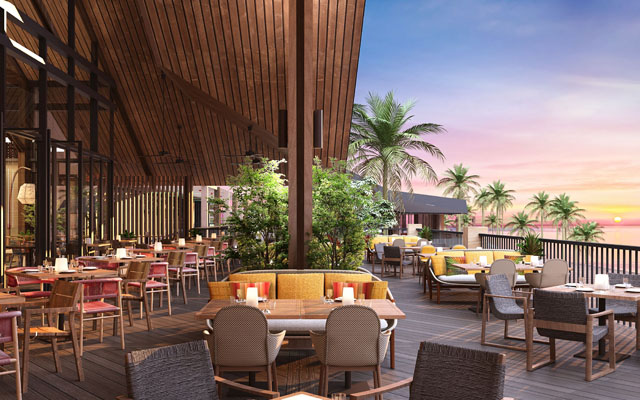
Japan’s hotel investment outlook looks promising, with growing demand and improving supply, including refurbished properties and new luxury hotels, according to experts at the Hospitality Japan Conference.
Speaking at the event in October, Caspar Pingel Schmidt, managing director of QCC Collection Group, said international hotels have high potential to grow in Japan, where only seven per cent of hotels are foreign-branded.
Panel discussion on Japan’s hotel development prospects during the Hospitality Japan Conference; photo by Kathryn Wortley
“The demand for hospitality in Japan is very strong”, due to the attractive prices and high-quality, said Gary Kwok, CEO and managing partner at Axe Management Partners.
Rising construction costs and a shortage of labour, however, are constraining supply of new properties, leading to more renovation and rebranding of existing properties.
It is a popular strategy for investors from an ESG perspective and on practical terms, agreed the speakers, as apartment-type hotels can be run by fewer staff, helping future-proof the properties amid Japan’s population decline.
Still, more supply, particularly in rural areas, is needed for the Japanese government to achieve its goal of welcoming 60 million tourists annually by 2030. The target is for each visitor to spend at least two nights in regional areas.
“Investors had been piling into Japan (pre-Covid), creating over supply – but some hotels were converted into other uses during the pandemic. Now, there is a lot of supply but it is not going to meet the growing demand,” said Kwok. “Investors should work with local governments to promote second- and third-tier cities, because they are important for the long-term sustainable growth of tourism.”
Cooperation is key, added Midori Kataoka, regional director at Preferred Hotels & Resorts, noting that luxury destinations can be created outside the “golden route” only with “meticulous planning with national and regional governments”.
Nico Black, general manager at Six Senses Kyoto, said luxury hotels can “revive small towns” through job creation and community engagement.
Challenges remain though, according to Takahiro Tsujikawa, president and CEO at Polaris Holdings Co., adding that “investors remain very cautious about investing in non-major cities, resulting in less supply coming into rural areas” while Kyoto and Okinawa have many luxury hotels but a shortage of two- and three-star hotels.
The Philippine Hotel Owners Association (PHOA) has partnered with the Department of Tourism (DoT) to create a significant roadmap aimed at guiding future developments and addressing long-standing challenges in the hotel industry over the next five years.
Dubbed the Philippine Hotel Industry Strategy Action Plan (PHISAP) 2023-2028, this document serves as a vital blueprint for infrastructure development, product diversification, marketing and promotions, digital transformation, and industry collaboration, all while emphasising sustainable practices to ensure the long-term viability of the sector.
Philippines’ PHOA and DoT have rolled out a roadmap to enhance the hotel sector and drive tourism growth
PHOA executive director, Benito Bengzon Jr, said it also highlights the necessity of building more hotel rooms required by various Philippine destinations amid growing international and domestic demand.
Currently, there are 335,592 hotel keys across 18,818 accommodation establishments in the Philippines. By 2028, an additional 120,463 keys will need to be added to meet the projected 11.5 million foreign tourist arrivals, as outlined in the DoT’s National Tourism Development Plan (NTD), not including the anticipated 100 million domestic trips each year.
Other proposed programmes under PHISAP include enhancing the industry’s global competitiveness, institutionalising data collection on key hotel and accommodation strategies together with the private sector for effective planning and monitoring, and developing a highly competitive workforce.
It also recommends increasing investments in marketing and promotions within the hotel sector to align with the NTDP projections, promoting public-private partnerships and facilitating investments by enhancing the investment climate through optimised tools for tourism planning, partnerships, and incentives.
Tourism secretary Christina Frasco remarked: “The challenges that we face are too vast and too complex to be solved by any single sector or by government alone. Together, we must build a resilient, adaptable, and forward-thinking tourism ecosystem to meet the demands of today’s travellers while anticipating the needs of the future.”
Recognising that hotel owners are key investors in tourism, Frasco expressed hope that PHISAP will enable investors to “continue to have a deep understanding of the landscape that the Philippine tourism is in and work with us in (the) government to ensure that the landscape improves”.
Widiyanti Putri Wardhana, Indonesia’s newly appointed minister of tourism, plans to boost tourism competitiveness and position it as the leading revenue generator for the economy.
Speaking at the handover ceremony on October 22, Widiyanti outlined her priority work programme for the next six months, which includes developing a strategy for Tourism 5.0, focusing on key pillars such as infrastructure, investment, human resources, and promotion.
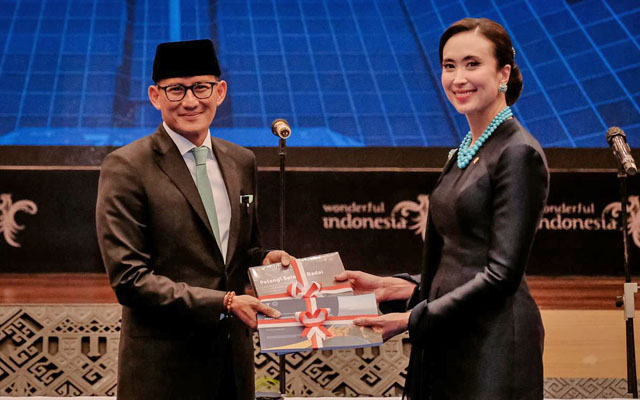
From left: Sandiaga Uno and Widiyanti Putri Wardhana
She stated that in the near future, she will engage with experts, stakeholders, and the private sector, as well as internal staff, to identify current challenges and trends, and “we will design a tourism transformation strategy” based on their input.
Her second priority is to establish a management scheme for the Indonesia Quality Tourism Fund to enhance the events industry. She noted that events will be a key driver of tourism development in the country, and her office plans to diversify the types of events while increasing the number of international events hosted in Indonesia.
Widiyanti will also emphasise the use of technology and digitalisation in the Tourism 5.0 transformation, such as promoting a calendar of events using AI and other digital innovations.
As part of the transformation, she plans to collaborate with world-class agencies to enhance human resource development, focusing on improving the skills of tourism personnel in five key destinations.
In response to the new tourism minister’s plan, Budijanto Ardiansyah, vice president of the Association of the Indonesian Tours and Travel Agencies, opined that Widiyanti’s immediate focus should be on reaching the tourism target of 14 million foreign visitors in 2024.
Paul Talo, chairman of the Indonesian Inbound Tour Operators Association, urged the new minister to implement extensive promotions targeting potential markets. He also expressed hope that the government would partner with inbound tour operators in its marketing activities abroad.
He elaborated: “We know the budget is limited, but if promotions and marketing are carried out in a planned manner and involve the industry, the results will be much better than the current conditions.”
While Budijanto expressed his enthusiasm about working with Widiyanti, he stressed that the ministry should consult with the industry when defining target markets to ensure promotions are right on target, adding that he hopes the industry’s needs will guide the government in shaping future tourism strategies.
Booking.com’s annual Travel Predictions research has revealed that instead of retreating, Asia-Pacific travellers are eager to redefine how they engage with the world by challenging conventional getaway norms and fostering deeper connections with themselves, others, and their destinations in 2025.
By breaking free from traditional expectations around age, gender, and travel styles, these emboldened adventurers are using their journeys to fuel and find long-lasting personal growth.
More travellers will turn to nocturnal escapes in 2025 to foster connections with the universe
To understand how people plan to defy the status quo, Booking.com commissioned research among more than 27,000 travellers across 33 countries and territories, to present nine travel predictions which foresee 2025 being the year that ushers in new ways of experiencing the world for travellers in Asia-Pacific:
1. AI = Alternative Itineraries
New technologies are already helping travellers find experiences tailored to their needs, but 2025 will see innovations being leveraged to help tourists meet the needs of the destinations they hope to experience. 72% of Asia-Pacific travellers will use technology to make informed decisions and find authentic experiences, to not only respect the locations they visit but contribute positively to them.
AI-powered tools, like Booking.com’s AI Trip Planner which was newly launched in Singapore, are set to shape these journeys, with nearly half (49%) interested in using AI to curate trips, opening the door to itineraries that encourage deeper, more positive connections with localities and communities. Travellers will also apply a more responsible lens to how they are using technology, with 38% not tagging locations on social media when visiting a lesser known destination to keep it under wraps. That said, technology will equally play a role in finding alternatives that can be shared without the guilt of overburdening the usual hotspots, with 69% hoping to use technology to find less crowded areas.
2. Passport to Immortality
Amid the hustle and bustle of the daily grind, a vacation is more than just time to unwind. Driven by the desire to cultivate better lifestyle choices, 60% are interested in a longevity retreat – a super-charged flex on traditional well-being itineraries where temporary fixes are replaced in pursuit of a longer, healthier life. Deep revitalisation is a top priority, from body vibration (61%) and red light therapies (54%) to cryotherapy (51%) and stem cell treatment (51%). More than two thirds (70%) are looking for new wellness activities they can mix into their daily lives as they reconnect with a more balanced version of themselves, with 57% of Asia-Pacific travellers revealing they would pay for a vacation that’s sole purpose was to extend their lifespan and well-being.
3. Noctourism
Travellers will be focused on building connections with the universe as they turn to stargazing escapes in 2025. Ditching the daylight crowds for midnight magic, two thirds (67%) are considering visiting darker sky destinations with star-bathing experiences (76%), star guides (66%), constellation tracking (62%) and once-in-a-lifetime cosmic events (61%) top of the stellar adventure list. Concerns around climate change have also influenced this shift, with 57% planning to elevate their night-time pursuits to avoid rising day-time temperatures and 56% of travellers preferring to vacation in cooler locations. An appreciation for the nocturnal world is also deepening travellers’ connections with nature, as the majority of travellers (60%) would book an accommodation without lights to encourage less light pollution and preserve flora and fauna.
4. The Gate Escape
Gone are the days of arriving ‘just in time’ to avoid lingering in crowded lounges post-security, as travellers embrace a new era of airport entertainment. More than a third (44%) express an interest in visiting somewhere because of its airport, with 71% curious about airports with more unique experiences or facilities. Gen Z (50%) and millennials (51%) are set to fuel this trend, as they are keen to consider destinations based on their airport from sleep pods (38% Gen Z, 37% millennials) and spas (31% Gen Z, 33% millennials) to Michelin star restaurants (28% Gen Z, 31% millennials). With over two thirds (73%) suggesting they would feel more excited and stress-free about their trip if there were a wider array of facilities for use prior to their flight, vacations will start long before boarding the plane.
5. Vintage Voyaging
Vacation wardrobes will get a makeover in 2025, as trendy travellers turn vintage voyagers, hitting thrift stores while on holiday to curate a more sustainable suitcase. Over half (57%) said they would be interested in buying their vacation wardrobe during their trip rather than before, jumping to 66% of Gen Z, while 57% would visit thrift stores on vacation with over three quarters (76%) having already bought vintage or second-hand products when abroad. With 57% intending to be thriftier on their trips and 71% tightening budget planning in order to maximise their experiences, finding bargain hidden gems in second-hand stores has become a pivotal part of the adventure. Flying in the face of fast fashion and mass consumerism, 36% say they find better quality products in vintage stores abroad than at home, while 37% say they buy vintage on vacation because they find better bargains. A thrift trip is now more than just shopping; it’s a way to bring cultural connections back home, all while making eco-conscious and wallet-friendly choices.
6. Neuroinclusive Navigation
Neurodivergent travellers will be putting their often invisible needs in the spotlight, using emerging and evolving technologies to revolutionise how they experience the world in 2025. Over half (54%) of Asia-Pacific travellers who consider themselves neurodivergent have had a negative experience while travelling due to their neurodivergence, while 58% believe their travel options are limited because of their neurodivergence. Many would like to see technology play a greater part of their travel journey and help reduce theirs, or their travel companions’, anxiety. Nearly 72% are keen on AI tools that would provide them with up-to-date travel information, reports of delays and suggestions on quieter, less busy spaces in airports and hotels. Sensory rooms in airports, hotels and other locations are sought after by 70%, while 77% would like to see more ‘block out noise’ options across the travel experience. In fact, the call for progress in 2025 is loud and clear with 74% wanting an industry-wide initiative or programme that shares their needs and preferences seamlessly with airlines and accommodation providers, providing a closer connection between travellers, platforms and operators.
7. Boyz II Zen
With growing awareness around stereotypical social guidelines for men, ‘men-only’ vacations rooted in well-being, self-development and vulnerability are becoming popular. Over half (53%) confirm they would encourage one of the men in their life to go on a men-only trip, jumping to 68% for Gen Z and 61% for millennials. Male travellers are also abandoning ‘bro culture’ clichés to switch off from the stresses of everyday life (34%), rest and rejuvenate (36%), in pursuit of mental health benefits (28%) and personal growth (28%). They wish to build connections, both old and new, with 29% looking to make new friendships and 26% looking to improve their relationship-building skills with friends and family. Interestingly, it is women persuading the men in their lives to go on a men-only trip, with 57% encouraging their partner, 40% their friends, 27% their brother and 22% their father to put themselves first.
8. Multigen Megatrips
Parents flip priorities by spending kids’ inheritance instead of squirrelling savings. 51% of Singapore travellers would rather spend money on a trip of a lifetime in 2025 than leaving inheritance to their children – with baby boomers coming in at 54%.
Next year, however, this trend will take on an increasingly altruistic approach as older relatives look to splash the cash among their families, helping the younger generations through the cost of living crisis by paying for their next vacation. While 65% of travellers admitted that their parents had already paid for their vacations or part of their vacations since being an adult, boomers are likely to influence an uptick thanks to the 76% who are happy to pay for their children when booking their next trip.
9. Ageless Adventures
An emerging cohort of baby boomers will defy their years and conventional expectations in favour of thrill seeking in 2025, with 21% of this generation interested in vacations that involve adventure and 24% eager to push beyond their established comfort zones.
Easing their way into an era of adrenaline, close to a third (30%) are interested in horseriding and letting go of their inhibitions at a wine rave (28%). Venturing further, 20% would take to the water to canoe down the world’s largest rivers, 16% will hunt for glaciers and 14% may lace up their hiking boots to trek one of the highest mountain ranges.
Laura Houldsworth, managing director, Asia Pacific at Booking.com said: “In 2025, travellers in Asia-Pacific will be using their trips to transform themselves, their relationships and ultimately the world around them. It’s all about breaking travel norms to foster a deeper sense of connection. Technology and imagination are coming together to create a new era of traditions and ultimately make it easier for everyone to shape their own journeys in 2025 and beyond.”
The World Sustainable Hospitality Alliance (WSHA) welcomes Johnson Controls as its newest member, a company known globally for its leadership in smart, healthy, and sustainable building solutions.
Both WSHA and Johnson Controls will collaborate to transform the future of energy-positive hotels.
From left: Johnson Controls’ Katie McGinty, WSHA’s Glenn Mandziuk, Johnson Controls’ George R Oliver, and WSHA’s Daniella Foster
Johnson Controls brings expertise in building technologies that target the nearly 40 per cent of global greenhouse gas emissions stemming from buildings. With a workforce of over 100,000 employees across 150 countries, the company is poised to enhance operational efficiency, cut energy costs, and propel the hospitality industry towards ambitious net carbon and energy positive goals.
Its innovative Energy-as-a-Service financing model allows hospitality businesses to adopt sustainable solutions without hefty upfront investments, turning sustainability into a strategic advantage.
Katie McGinty, chief sustainability officer at Johnson Controls, emphasised the dual benefits of sustainability: “Embracing sustainability isn’t just a responsibility; it’s a transformative strategy. As we join the World Sustainable Hospitality Alliance, we recognise that hospitality leaders who lean into sustainability not only reduce operating costs but also enhance customer experiences by ensuring equipment uptime and reliability. By integrating sustainability technologies with the power of AI, we supercharge operations, impacting both the bottom line and the world around us.”
Glenn Mandziuk, CEO of the WSHA, commented: “As a global leader in building solutions, their expertise will be a game changer for hotels and resorts. Johnson Controls is not only advancing net zero buildings worldwide but also leading by example with their own net zero journey. I am eager to see the valuable contributions and positive impact they will bring to the alliance.”
Tasmanian Walking Company has introduced a new five-day fully-guided walk inside the grounds of the World-Heritage listed Uluru-Kata Tjuta National Park.
The all-inclusive experience will unite two of the world’s greatest natural wonders, Uluru and Kata Tjuta.
Tasmanian Walking Company’s new five-day walk unites two natural wonders, Uluru and Kata Tjuta; photo by Tasmanian Walking Company
Small groups of up to 14 will spend five days and four nights inside Uluru-Kata Tjuta National Park learning about ancient Anangu culture and history, connecting with nature, and staying exclusively in environmentally sustainable accommodation.
The Uluru-Kata Tjuta Signature Walk commences in April 2026 and marks the second offering in the Northern Territory for the Australian Walking Company, after the company launched the Larapinta Signature Walk in 2022.
25hours Hotels has appointed Jesper Soerensen as general manager of the upcoming 25hours Hotel Jakarta The Oddbird, set to open in November 2024.
With over 23 years of experience in lifestyle and luxury hospitality, Soerensen brings a wealth of knowledge and a global perspective to this vibrant new addition in Jakarta’s landscape.
Fluent in German, Danish and English, he joins 25hours Hotel Jakarta The Oddbird from SO/ Maldives, where he also served as general manager.
The Japan Sports Agency is aiming for martial arts to become a greater tourism resource with the launch of new experiences and activities under its Budō Tourism programme.
Part of Japan Sport Tourism, which also promotes snow sports, outdoor pursuits like cycling and kayaking, and urban activities such as skateboarding and BWX biking, Budō Tourism aims to offer journeys into the heart of Japanese martial arts, budō, which translates to ‘martial way’.
Japan is inviting visitors to explore its world of martial arts through unique experiences and activities
Experiences are available across Japan, in martial arts as varied as judo, kendo, karate, sumo, aikido, kyudo (archery) and iaido (the art of swordsmanship). Some include tours in picturesque, cultural or historical places, and unique dining, to offer visitors “an increased sense of Japan”, according to Japan Sport Tourism.
The kendo experience, available in Tokyo, Yokohama, Osaka, Kyoto, Sapporo, Fukuoka and Okinawa, features an introduction to samurai, a traditional ceremony, striking instruction, practice and a match. One two-hour session is available for up to 200 pax, at 18,000 yen (US$120) per person and includes a professional guide/instructor, rental of kendo armour and other equipment and a towel.
In Okinawa, the birthplace of karate, the Okinawa Karate Kaikan offers a 30-minute tile-splitting experience twice daily, either in front of the facility’s historic dojo or inside. For 3,000 yen per person, a tour of the Okinawa Karate Museum is included.
Visitors who prefer to watch can choose from several options including the Iai Shrine Samurai Show in Yamagata Prefecture. Up to 40 pax can enjoy a demonstration of iaido for 50,000 yen per person.
Generative AI (Gen AI) remains a central focus for the travel technology sector looking ahead to 2025 – but challenges are emerging as initial optimism begins to dissipate.
That is according to a new report released by Amadeus, Navigating the Future: How Generative Artificial Intelligence is transforming the travel industry, which surveyed experts in the field from across the travel ecosystem.
Digital assistants, tailored recommendations, and content generation are the top use cases for Gen AI
Among the 300+ industry leaders questioned, Gen AI was cited as a top priority for the coming year by 46 per cent – ahead of any other technology. This figure rose to 61 per cent in Asia-Pacific, suggesting the region may be ready to take the lead in this transformative technology.
Other technologies cited as a top priority for 2025 included data management (38 per cent), cloud architecture (36 per cent), non-generative AI IT infrastructure (34 per cent), and biometric technology (23 per cent).
Globally, over half of travel technology leaders (51 per cent) argue Gen AI already has a ‘significant presence’ in the travel industry in their country. A further 36 per cent expect this presence to emerge over the next year, while 11 per cent expect the process to take one to two years. Just two per cent of travel technology leaders think it will take three or more years for Gen AI to have a significant presence on the travel sector where they are.
Today, 41 per cent of travel companies say their organisation has the budget and resources in place to implement Gen AI, while 87 per cent are open to working with a third-party vendor to develop Gen AI-powered applications.
While support for the rollout of Gen AI in the travel technology sector remains undimmed, the study finds a number of challenges are emerging.
These comprise data security (35 per cent); lack of Gen AI expertise and training (34 per cent); data quality and inadequate technological infrastructure (33 per cent); ROI concerns, lack of use cases, or difficulty in estimating value (30 per cent); and difficulty in connecting with partners or vendors (29 per cent).
Today, Gen AI specialists are grappling to recruit experts and train existing workforces to bridge a skills gap, while working to secure data and convince senior leaders of the value of Gen AI investments.
How is Gen AI being used? While the process of experimentation continues with the deployment of Gen AI, several use cases have emerged in the travel technology sector.
These are led by digital assistance for travellers during booking (53 per cent) and followed by recommendations for activities or venues (48 per cent), content generation (47 per cent), helping staff to better serve customers (45 per cent), and collecting and condensing post-travel feedback (45 per cent).
Study respondents were looking for, in ranked order, return on investment, customer satisfaction, efficiency and productivity improvements, performance metrics (accuracy, precision and relevance) and increases in key performance indicators.
Sylvain Roy, chief technology officer, Amadeus, said: “(Gen AI) is a technology that has the potential to transform every facet of what we do across the travel ecosystem, significantly enhancing the passenger experience at every step of the journey.
“While technology will be a key focus for the next year, questions are rightly being asked whether Gen AI will deliver sufficient returns on investment, while talent shortages are also coming under the spotlight.
“It is crucial that we use this new technology responsibly, ensuring data security, privacy, and content reliability. It is time for Gen AI to prove it can live up to the hype.”
Navigating the Future: How Generative Artificial Intelligence is transforming the travel industry can be viewed here.
Changi Airports International (CAI) has entered into a joint venture agreement with Hainan Meilan International Airport Co. to manage the non-aeronautical commercial operations at Haikou Meilan International Airport (HAK) – it includes exclusive rights to retail, food and beverage, advertising, leisure, and commercially important-person (CIP) airport services at the Chinese airport for a period of 10 years, starting from January 2025.
The joint-venture – where Hainan Meilan International Airport Co. owns 51 per cent and CAI 49 per cent – aims to transform HAK into an integrated consumer hub and level up consumer spending to enhance its commercial revenue. It will leverage Changi Airport’s brand reputation and expertise in airport commercial management to optimise passenger experience, increase retail offerings, and introduce new digital services such as e-commerce and loyalty programmes.
The partnership will see Changi Airport manage the transformation of Haikou Meilan International Airport into an integrated consumer hub
Through this partnership, the CAI-Meilan joint venture will enhance the airport’s ability to cater to both international and domestic travellers, foster better passenger satisfaction, drive revenue growth and strengthen its position as a top regional hub.
Located in Haikou city, the capital of Hainan Province, HAK serves as a vital gateway for both domestic and international travellers. As of October 2024, the airport connects 116 domestic destinations and 30 international destinations, solidifying its position as a key player in China’s aviation industry.
HAK has shown significant growth over the years, with a passenger throughput of 24.34 million passengers in 2023, ranking 18th among all airports in China’s mainland. In addition, the airport houses offshore duty-free shops where domestic travellers are able to purchase duty-free merchandise, which is a key component of non-aeronautical revenue growth potential.
Eugene Gan, chief executive of CAI, said: “Our collaboration with Meilan Airport stems from the shared vision of creating a world-class airport environment that supports both passenger experience and economic development. It marks a key milestone in the expansion of CAI’s global footprint and we look forward to working closely with HAK to transform the airport into a hub of choice for travellers and retailers alike.”










 Fluent in German, Danish and English, he joins 25hours Hotel Jakarta The Oddbird from SO/ Maldives, where he also served as general manager.