TTG Asia
Asia/Singapore Wednesday, 1st April 2026
Page 2251

Mega Maldives reconnects with more Chinese cities

0

MEGA Maldives is resuming thrice-weekly flights to Chengdu, Chongqing and Hangzhou this summer season after having suspended these services last year.

CEO George Weimann said since the airline wanted to consolidate operations to Beijing, Shanghai and Hong Kong, it had stopped seasonal flights to the three second-tier cities last year.

“With the markets developing, we plan to return to (China) on a seasonal and all-year basis. We’ll be flying three times a week across the year (for some routes) and in others, three times a week during the season,” he told TTG Asia e-Daily.

Mega Maldives has a 35-40 per cent market share of inbound traffic from China, the Maldives’ biggest source market.

The three-year old airline, which presently only flies to Greater China and Palau island in the Pacific Ocean, is also opening routes to Jeddah and Jakarta in the next few months.

“The timing will depends on the arrival of new aircraft,” Weimann said. The carrier plans to increase its fleet to between six and eight aircraft by the end of 2014 by leasing Boeing aircraft.

Singapore promotes fly-cruise segment with second marketing tripartite

0

CHANGI Airport Group (CAG) has joined hands with Princess Cruises and Singapore Tourism Board (STB) in a multimillion dollar tripartite to grow Asia’s fly-cruise sector and promote demand for cruise products from Singapore.

Joint promotions began last month throughout Asia and include China, Hong Kong, Indonesia, Japan, Malaysia, South Korea and Taiwan, for Princess Cruises’ sailings in Asia, Australia, the UK and US.

“Through this complementary partnership, STB and CAG will work together to promote the concept of flying into Singapore to cruise. We are excited that Princess Cruises has come on board, and look forward to more cruise lines joining us in tapping on the immense potential of cruising in South-east Asia,” said Neeta Lachmandas, assistant chief executive, business development group, STB, in a press release.

Said Lim Ching Kiat, senior vice president for market development, CAG: “This second tripartite collaboration with the Carnival Corportion’s group of cruise brands further highlights our synergistic efforts to grow the fly-cruise segment in Singapore.

“With Changi Airport’s strong connectivity to destinations across the world, this serves to complement STB’s vision of making Singapore a global cruise hub, while supporting Princess Cruises’ new offerings in Singapore.”

CAG and STB set up the first tripartite body in 2012 with Costa Cruises, another cruse line under Carnival Corporation, and provided it with support to intensify marketing efforts to Asian consumers.

Presently, members of the collaboration already work individually to promote fly-cruise itineraries. CAG partners airlines and travel consultants on marketing campaigns in countries such as China and India, while STB teamed up with the Asia Cruise Association to facilitate training programmes for travel consultants across South-east Asia last year.

Loss-making SpiceJet to sell minority stake

0

SPICEJET is in talks with an investor for the sale of a minority stake in the loss-making LCC, revealed a top official from the airline last week.

“We are in discussions with an investor for selling a minority stake and will sooner or later make an announcement in this regard,” said Sanjiv Kapoor, COO, SpiceJet, who refused to divulge further details.

SpiceJet posted a net loss of Rs10.3 billion (US$176.3 million) in 2013/2014 and is now looking to raise funds through foreign investors and financial institutions, an option open to airlines since the Indian government last year implemented a policy allowing foreign carriers to own up to 49 per of domestic airlines.

Jet Airways became the first to use the option when it sold a 24 per cent stake to Etihad Airways (TTG Asia e-Daily, December 4, 2012).

Meanwhile SpiceJet has sought regulatory approval from India’s aviation authorities for 7,000 weekly seats to Qatar. It already flies to Dubai, Sharjah and Muscat.

Speaking on the carrier’s expansion plans, Kapoor said that the airline may add Dhaka to its international network and more flights to Dubai once repair works there are complete.

He also denied media reports that SpiceJet in discussion with Qatar Airways for the sale of its overseas parking slots

Two new appointments at Crowne Plaza Resort Xishuangbanna

0

INTERCONTINENTAL Hotels Group (IHG) has appointed Louis Liu as general manager and Jennifer Gu as director of sales & marketing at Crowne Plaza Resort Xishuangbanna.

Liu joined IHG in 1984 and now has almost 30 years of hospitality experience under his belt. In his new role, he will be responsible for daily operations and the overall management of the hotel.

Gu brings with her more than 20 years of sales and marketing experience in China’s hospitality industry and in her capacity as director of sales & marketing, take charge of driving the overall marketing strategy of the hotel, besides overseeing the daily operation of the sales and marketing department. She speaks fluent Mandarin, English and Japanese.

ICCA offers tool to find local association representative

0

ASSOCIATIONS can now have an easier time of identifying local representatives when preparing a bid to host the next edition of an association international meeting using Big Data Search.

Unveiled at IMEX 2014 in Frankfurt, Big Data Search utilises the databases of Google Scholar and Microsoft Academic Search to find academic contacts in specific cities or regions.

The tool is provided by new ICCA member Human Equation and will go live on June 2, alongside Human Equation’s Lead Analytics tool, which identifies organisation names and tracks the online behavior of website visitors.

ICCA CEO, Martin Sirk, said in a press release: “The version announced today is ICCA’s first step in harnessing the power of Big Data and combining it with our own unique data on associations and their meetings, and we anticipate adding new functionality and data sources to ICCA Big Data Search as we receive feedback from users.”

Tall as super tree

0

It’s about nation-building, country branding and an entertaining tourism attraction. Raini Hamdi talks to Tan Wee Kiat, the man who envisioned Singapore’s Gardens by the Bay and coined its ‘city in the garden’ catchphrase

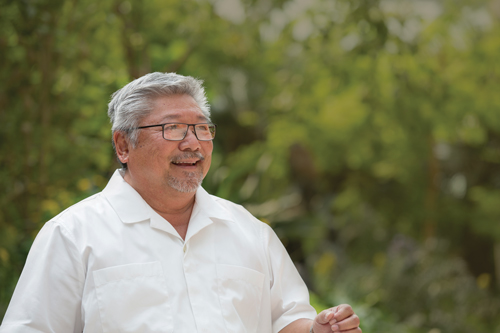
23-may-dr-kiat-w-tan-ceoWhat does the job of CEO of Gardens by the Bay entail?
Well, Gardens by the Bay is a child of my vision, so it is to see through its development, operation and realise its potential.

Let’s go back to the roots: what did you envision for this garden and why?
I envisioned a horticulture display garden, much like Wisley (south of Surrey, London). We already have a botanical garden, so why not create a counterpoint in product distinction.

Botanical gardens are a living museum of plant family for education and research. Here, we cater primarily to the entertainment aspects – the visual, the aesthetic senses. We are the first tropical nation that has developed a garden of this scale, uniquely designed for Singapore and to showcase the plants of the tropics.

So it’s a horticulture theme park but underlying it is some ambitious proposition. It has to do with the branding of Singapore and giving Singaporeans an ownership of Singapore. It’s our park, here in a prime downtown spot, open everyday from 05.00 to 02.00. Only about four per cent is charged (the Flower Dome).

Why would I want to sacrifice for my nation if I don’t own a part of it? Every Singaporean should be able to say ‘the best part of Singapore also belongs to me’.

How does it help with the branding of Singapore?

The concept was mooted to the government in 2004. At the time, Singapore was positioning itself as a global city, competing with other cities for investment and talent. We needed to make sure the Singapore brand was strong.

Was it easy to get the buy-in?
The timing was perfect. URA (Urban Redevelopment Authority) was developing the downtown to be a mini Manhattan; in future people would need breathing space from the tall buildings that cluster around it. What does Manhattan have that makes it a wonderful? A central park. Gardens by the Bay is one-fifth the size of Central Park.

But Singapore government as you know is a tough nut to crack. It is very pragmatic and, unless you can convince it of the financial and economic harvest from such a project, it would not have taken off.

Gardens are also a borrowed concept for our region. It’s not in our culture, in fact, we clear forests in order to survive.

How did you convince the government?

We engaged Edmund Tie (real estate consultant) and PricewaterhouseCoopers to do a study on what value would you increase to a piece of real estate if you were to plant a garden right in the heart of it? We already have a precedent with the Singapore Botanical Gardens where the value of the land around it increased (with the gardens) but I needed professionals to crunch the concept.

Although we don’t have to make a profit, we must not be a white elephant and we must impart value far beyond what is invested. As you can see, we’re not a white elephant. We passed the eight millionth visitor mark in one year and eight months.

Are they all elderly, and British?
(Laughs) Ten per cent of school children in Singapore come here as part of their curriculum. It pleases me too that our locals are coming in with their family after work and during the weekends.

In general, 60 per cent of visitors to the external areas are locals, 40 per cent are tourists from many countries. For the Flower Dome, the ratio is the reverse. We did one promotion to travel agencies in India and suddenly, we had an influx of India visitors to this garden. China too.

How compelling are gardens as a tourist attraction?
From our surveys and how we see visitors do the publicity job for us on social media, gardens are a compelling attraction.

Suddenly photographers are also here as the bird population has increased with the flourishing plants.

We haven’t finished the work here. We’re still trying to train and get the right people to keep the attraction alive and competitive. Our competition is not local but global and we don’t compete with gardens but theme parks and other attractions. People asked, but wouldn’t you be taking away numbers from the zoo or the botanical gardens? No, in fact, there’s one more attraction for visitors to visit and it helps increase the length of stay by half a day.

That’s why part of my role as CEO is to ensure the product, the programming, the service we offer keeps us ahead of the competition globally.

Do you still have naysayers?
You still have people who have never stepped foot into the gardens and say, oh, what a waste of money, it’s all architecture. Why do you need to make fake super trees? Hey, they are also super chimneys! And architecture is the form and shape that attract you, but once you come in, it’s the content. Being on the equator, we have access to the broadest range of plants in the world and we are able to grow them outdoors as we have perpetual summer. The icing is the cool dome, where we can bring in the elements of spring and fall.

This garden, more than any other, combines architecture engineering and nature in its creation. Take the super trees, for instance. We are on reclaimed land where it is almost impossible to achieve the kind of trees you would find in a natural forest, where forest giants after a century obtain 60m, 70m height. In creating the super trees, we impart the same functions to these man-made trees – they trap energy, for example. They are a necessary component of our chilling system.

What man destroys, man can take remedial action. We’ve proven you can recreate nature on reclaimed land.

Can you recreate even in cities such as, say, Bangkok or Beijing?
Why not? Look at Seoul. It developed a central park next to a river which was buried under a highway. It completely eradicated all the structures on top, unearthed the river through the central part of Seoul and brought nature to the heart of the city. Expensive, but it created value. Part of a slum became an elegant centre. It can be done as long as you have young people who work in a dense environment and hunger for a bit of nature. It is in us to want to be back in the forest because we are animals.


10 NEED TO KNOWS ABOUT TAN WEE KIAT

•  Who is in your family? One mother; three sisters; four brothers; 10 nephews and nieces; four dogs; countless fishes

•  What do you do for fun? Work

•  Your ideal vacation? Sleeping in

•  How do you book your own leisure trips? Leisure trips?

•  What are you reading right now? iPad for iDiots

•  How do you stay healthy? By being happy

•  Favourite food? Whatever is bad

•  A bad habit you cannot kick? Favourite food

•  Your pet peeve, something that never fails to annoy you? In the words of the late David Marshall, “sanctimonious posturers”

•  Most people don’t know that you can… And they will continue in their ignorance

Myanmar: Investors beware

0

While businesses are eager for the first bite of South-east Asia’s destination du jour, barriers to entry are high

23-may-proceed-with-cautionMyanmar has become one of the region’s most coveted destinations over the past few years since international sanctions against the country were lifted in response to political reforms.

International air arrivals through Yangon International Airport reached a historic high of 550,654 in 2012, only for the figure to be topped within the first five months of last year, according to research by C9 Hotelworks, which has also seen rocketing hotel occupancy.

The number of airlines serving the country is also steadily increasing, while the destination has made it back onto the itineraries of several cruise lines. Furthermore, four border crossings with Thailand were opened for overland travel last August.

These positive trends have been a boon for inbound operators such as Exotissimo Travel and Phoenix Voyages who now report Myanmar as their second market after Vietnam, where they both started from.

Nevertheless, the trade still faces a number of key challenges: international standard hotel rooms are in short supply, infrastructure is shoddy and human capital is lacking. Perhaps more significantly, political and regulatory risks weigh heavily on the decisions made by investors, said Jean Michel Romon, managing director of Phoenix Voyages, which has been operating in the country for 17 years.

“People need to have a clear legal framework to invest,” he said. “They need to be sure that Myanmar is on the way to a becoming a real democracy.”

“Another major problem is everyone focuses on the main destinations such as Yangon, Bagan, Inle, Mandalay and Ngapali, but to develop and bring more guests into the country we need to open up new destinations. And we need infrastructure – roads, airports, telecommunications – to reach these destinations.”

Businesses wanting to enter the market need a clear strategy given there are already more than 1,300 DMCs operating in the country.

“We see a lot of foreigners coming here dreaming to make business, in reality it is not that easy,” said Romon. “Don’t forget that the (rents in Yangon) are more expensive than Singapore.”

For Edwin Briels, general manager of Khiri Travel Myanmar, the massive swings between high and low season arrivals pose a much greater problem than infrastructure.

“The biggest problem travel (agencies) are facing is the low number of tourists visiting between April and September,” he said. “Bagan, for example, gets about 200,000 tourists per year. The majority visit between mid-October and mid-March, leaving a lot of young professionals in the industry – guides, restaurant staff, hotel staff – without a job for the rest of the year.

“I strongly believe that we need more tourists visiting in the green season in order to grow tourism in a sustainable way.”

The many obstacles are currently deterring some foreign firms, as Arjen de Haan, CEO of Asialink Holidays Thailand, explained.

“We have no interest in opening up in Myanmar now,” he said. “As everyone knows by now, the destination needs more capacity in terms of rooms and finding well-educated manpower is a challenge.”

Dillip Rajakarier, CEO of Minor Hotel Group Thailand, too, felt it wasn’t the right time to enter.

“The country is seeing such swift development the infrastructure is not yet in place to be able to properly support it, and with that comes challenges including the supply chain, staffing and ultimately meeting guests’ expectations.”

However, Patrick Basset, COO for Accor Thailand, Vietnam, South Korea, Cambodia, Laos, Myanmar and the Philippines, said the group felt that “if we don’t start now, it will probably be too late”.

“We have to anticipate the market and plan ahead five to 10 years into the future,” he added. Accor now leads the internationally branded sector with six properties in development.

Progress on room supply is failing to live up to the previously heady expectations, said Bill Barnett, managing director of C9 Hotelworks. “The reality is things are going to take a lot longer then first envisaged…The pipeline is growing but the timeline is stretching out.”

“The Hilton project is a year behind schedule, Peninsula is even further behind. Smaller midscale hotels from local developers will likely come into the market faster, with international projects taking longer,” he said, though remaining upbeat about opportunities.

All eyes are now on the political situation, most notably the general election tabled for the end of next year. Passing this key milestone could remove one of the greatest entry barriers and spur more travel companies to make their foray into Myanmar.

“If the election takes place without trouble, trust builds within the international market and infrastructure is developed, then Myanmar (as a market) will be close to Thailand within 10 years,” said Romon.

Shopping no longer an ‘incidental’ for tourists: UNWTO

0

SHOPPING as a main motivator for travel is on the rise across advanced and emerging economies in the world, especially from Asia, and destinations must break down barriers to benefit from this.

This is the main message of the World Tourism Organization’s (UNWTO) new report that was released yesterday ­– Global Report on Shopping Tourism.

It stated that shopping was no longer incidental to travel but formed a “principal” reason for travelling for tourists. “With the appetite for shopping among travellers from both advanced and emerging economies on the rise, the development of shopping tourism is a phenomenon that is attracting increased attention from policy makers, academics and business leaders around the globe.”

The Chinese were singled out as a market particularly keen on shopping with a strong record of consumption of luxury goods. They spend at least 30 per cent of their travel budgets on shopping.

A TUI study cited by the report said that by 2015 Chinese shoppers will consume 22 per cent of all luxury goods produced in the world.

Similarly, the UNWTO report quoted PATA CEO, Martin J Craigs, who said Asia-Pacific “boasts some of the highest visitor expenditure on shopping as a proportion of the total travel budget”.

“For example, as data from PATA’s mPower market intelligence tool indicates, in 2012 visitors to Hong Kong spent almost 60 per cent of their travel budget on shopping. Visitors to Macau spent 49 per cent, visitors to South Korea spent 43 per cent and visitors to Japan dedicated 32 per cent of their travel budget to shopping expenses,” Craigs wrote.

In order to tap the lucrative potential of Asia-Pacific’s shoppers, UNWTO noted that the obstacles to the development of shopping tourism also affects the sector as a whole.

Key to benefiting from this market is “constant, structured and meaningful dialogue” between all stakeholders, as well as public-private partnerships.

These partnerships need to take into consideration factors such as accessibility (air connectivity, visas); infrastructure (transport); safety (political and social, crime); cleanliness; marketing and promotions; connecting the tourism value chain by bringing other tourism partners to the table; research and development on consumer trends and market behaviour; regulation (trading hours and taxation); and training and education for the workforce.

Download the full report at affiliatemembers.unwto.org/publication/global-report-shopping-tourism.

Qantas rides on New Zealand’s growing appeal in Asia

0

QANTAS is facilitating greater travel to New Zealand through its one-stop flights out of Asia, a region that has seen strong growth in outbound to New Zealand.

Stephen Thompson , executive manager international sales, said: “With year-round daily connections to New Zealand and an ongoing close relationship with Tourism New Zealand, Qantas is always proud to promote New Zealand as a destination from Singapore and elsewhere in Asia.”

As part of its sustained efforts to promote New Zealand as a destination, Qantas offers regular support to the travel trade in the promotion of FIT and group travel, and hosts media fam trips.

According to David Craig, general manager Asia at Tourism New Zealand, Singapore and Malaysia are two key markets in South-east Asia that are vastly different.

In the year up to June 2013, visitors from Singapore contributed a whopping NZ$107 million (US$91.6 million) to New Zealand’s economy, and self-drive holidays have gained traction over the years. From February 2013 to January 2014, a total of 43,056 Singaporeans visited New Zealand, representing robust 19.7 per cent growth year-on-year.

The Malaysian market is still dominated by group tours but self-drive holidays are gaining popularity. From February 2013 to January 2014, 29,536 Malaysians visited New Zealand, 4.1 per cent more than the same period a year ago.

Qantas runs daily flights from Bangkok, Hong Kong, Shanghai and Singapore to Australia, and also four weekly flights from Jakarta and Manila to Australia.

In these markets, Qantas offers one-stop flights through three Australian gateways – Brisbane, Melbourne and Sydney to four cities in New Zealand, namely Auckland, Christchurch, Queenstown and Wellington.

Priced below S$1,000 (US$799), Qantas’ all-inclusive fares allow travellers to visit New Zealand and tag on an Australian stopover.

Philippines plans incentives, tourism mission to court Hong Kong inbound

0

THE Philippines has been urged to offer special promotions to restore demand from Hong Kong now that the SAR has removed its travel ban on the destination.

Speaking to TTG Asia e-Daily, Joseph Tung, executive director, Travel Industry Council of Hong Kong, said: “We do not see any special promotion after the lifting of the travel ban and we do not see any tour group movements to the Philippines this period.

“I think what is important now is to work on…promotions to the Hong Kong people which include special offers from airlines and hotels.

“At the same time, special arrangements to emphasise the safety of travel to the Philippines are very important and I am sure that the Philippine tourism authorities will work on both,” he added.

TTG Asia e-Daily understands that the Philippine Tourism Promotions Board is working on sweeteners they will offer, especially for group tours.

A source from within the Philippines Department of Tourism also said a tourism mission is scheduled to go to Hong Kong next month to woo travellers. This would include a VIP dinner for the travel trade at the Grand Hyatt Hotel on June 23.

In April, Hong Kong scrapped the four-year long travel ban after the Philippines apologised and compensated victims and families of Hong Kong tourists who were embroiled in the hostage-taking incident in Manila nearly four years ago (TTG Asia e-Daily, April 25, 2014).