TTG Asia
Asia/Singapore Saturday, 17th January 2026
Page 1990

Amadeus to buy airline tech solutions business Navitaire

0

AIMING to boost the its Altea suite of offerings, Amadeus is set to acquire Navitaire for US$830 million.

Navitaire is a wholly owned subsidiary of Accenture that provides technology and business solutions to the airline industry, with a special focus on the low-cost and hybrid segments.

It has a base of over 50 international airlines which it supports with revenue-generation and cost-streaming solutions in the areas of reservations, ancillary sales, loyalty, revenue management, revenue accounting and business intelligence.

“Bringing Navitaire’s experience, industry knowhow, client base and strong product portfolio is a significant step for Amadeus in the low-cost and hybrid carrier segments,” said Luis Maroto, president and CEO of Amadeus in a press release.

“Airlines of all shapes and sizes face an increasingly competitive market for an increasingly demanding traveller, and this transaction will give us the ability to serve all airlines with a technology that can enable them to drive new revenues and contain their costs.”

Under the terms of the agreement, about 550 Navitaire employees, including the company’s senior management team, are expected to transfer for Amadeus.

The transaction is expected to complete in 4Q2015.

Separately, Amadeus has announced it will form an alliance with Accenture as its Strategic Partner. The alliance is focused on digital travel services with an emphasis on commercial passenger operations.

A third agreement sees Accenture supporting Amadeus with infrastructure outsourcing, application and research and development services as well as hosting services for existing Navitaire clients and future Amadeus clients who purchase the Navitaire solution.

8 new China properties in store for NH-HNA JV

0

SPANISH chain NH Hotel Group is planning to open eight properties in China this year in a joint venture with Hainan-based HNA travel group.

The group also said it expects to return to profits in 2015 – a year after HNA took over as its biggest stakeholder – for the first time since 2007.

The initial plan for its expansion in China, announced to Spanish stock market authorities in September 2014, was for the two groups to form a joint management company to run six hotels with a total of some 1,300 rooms.

That number has now been increased to eight properties with more than 2,030 rooms, in cities such as Beijing, Haikou on Hainan island, Tianjin and Dongguan in Guangdong.

A spokesperson declined to give further details at this stage when interviewed by TTG Asia e-Daily.

After being hit hard by the European economic crisis, which particularly affected the group’s predominantly business customer base, NH president Rodrigo Echenique declared at the company’s annual shareholder meeting this week that “the worst is now past”.

“The improvement in all the economic indicators in all business units, and growth in income above our competitors’ (levels) in many of the destinations where the group operates, confirm that the company as a whole is making the necessary steps to return to growth,” added CEO Federico González Tejera.

Meet & Stay at Amara Bangkok this summer

0

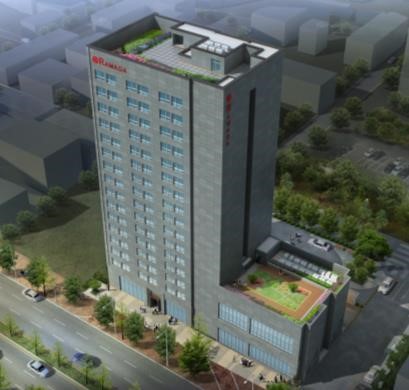
THE recently launched Amara Bangkok Hotel is now courting MICE business with its new Meet & Stay package deal.

Available for half- or full-day meetings with at least 15 delegates and eight room bookings, the package is priced at 4,100 baht (US$121) for single occupancy in a Deluxe Room or 5,500 baht for double occupancy.

Accommodation includes a welcome drink and buffet breakfast, free use of the hotel’s gym and pool, two pieces of laundry per day, and free Wi-Fi and mini bar upon day of arrival.

The full-day option comes with two coffee breaks and one coffee break for the half-day package. Delegates will get a taste of Singapore at breaks when the hotel serves up Singapore snacks like satay and chee cheong fun. Set lunches will be provided for all delegates, or as a buffet lunch for groups of at least 30 people.

The package is available until September 30, 2015. Prices are subject to taxes and service charge.

Amara Bangkok Hotel is the Singapore-owned Amara Hotels & Resorts’ first hotel in the Thai capital, opened in March.

European and Middle East exhibitors to debut at IT&CMA 2015

0

TWO new national MICE entities are set to make their first appearances at this year’s IT&CM Asia (IT&CMA) in Bangkok.

Berlin Tourismus & Kongress follows its inaugural appearance at IT&CM China in Shanghai earlier this year with a presence in Bangkok this September.

Ralf Ostendorf, director market management of Berlin Tourismus & Kongress, said: “VisitBerlin has intensified marketing activities in Asia for the past years to develop new incoming markets for tourism to Berlin.”

“We believe that IT&CMA is a well-positioned platform for us to learn more about the MICE industry in Asia-Pacific and nurture our popularity in the region.”

Likewise, Dubai Business Events will also be joining IT&CMA for the first time this year. Senior manager – sales and convention services, Katrina Lance, said: “The Asia-Pacific market represents 30% of the generated MICE leads for Dubai. This is a growing market, benefiting from the growing economics that various Asian countries have been experiencing.”

This year’s edition of IT&CMA 2015 will also see the debut of six Swiss entities: Arosa Kulm; Destination Davos Klosters; Geneva Tourism & Convention; Lausanne; Montreux Riviera – Lake Geneva; Lucerne Convention Bureau; and Zurich Tourism.

IT&CMA 2015 will run at the Bangkok Convention Centre at CentralWorld as always, between September 29 and October 1 this year. It runs alongside CTW Asia-Pacific.

New CEO at Canberra Convention Bureau

0

CANBERRA Convention Bureau has named Michael Matthews as its new CEO, effective October 1, 2015.

Matthews is currently the executive director of Meetings and Conventions PEI, where he is responsible for marketing, sales and product development for the province of Prince Edward Island in Canada.

The Australian national has spent the last 14 years in sales, operations and destination marketing roles in the Canadian market.

TCEB reaches out to the returning Philippines market

0

THAILAND Convention & Exhibition Bureau (TCEB) is intensifying its promotions in the Philippines, a key source market that is bouncing back after Thailand’s year of political instability.

TCEB acting director Nooch Homrossukhon commented that 80 per cent of MICE from the Philippines are incentive groups. “We’re expecting not bigger events but bigger number of events of 50 to 150 pax per event,” she said.

The Philippines was Thailand’s ninth biggest market with 25,553 pax during the fiscal year October 2012 to September 2013, TCEB’s peak year.

Though it rose to sixth place in the following fiscal year, numbers more than halved to 11,197 pax due to Thailand’s political troubles. After the dramatic drop in FY 2014, the Philippines is showing significant improvement with 19,447 pax in the first half of the fiscal year October 2014 to March 2015, said TCEB acting director Nooch Homrossukhon.

Nooch explained that many companies that held back their MICE events during Thailand’s period of instability will likely return over the rest of the year, crediting social media and word of mouth for the return of MICE traffic.

TCEB unveiled its Thailand – Connect The World scheme offering financial subsidies and spiced up privileges and discounts, among others, for MICE groups at its roadshow in the Philippines earlier this month.

To ease safety concerns, TCEB has also spoken to meeting organisers to reassure them that the CVB has contingency plans in place.

Mobile technology hailed as top trend impacting managed travel: CWT study

0

LOVE it or hate it, technology is making an impact on the travel management industry and Carlson Wagonlit Travel’s (CWT) latest report has identified the top five trends that are affecting managed travel today, including mobile technology and the sharing economy.

Titled Faster, smarter, better? Emerging technologies and trends and their impact on managed travel, the study evaluated over 15 different industry trends and technologies with feedback from travel managers and travellers.

CWT found that travel managers are open to new technologies and the majority of travel managers surveyed who rated the impact of new technologies and trends moderate to high also have firm plans to expand programmes to work new technologies into their operations or are actively considering their options.

The trend thought to have the most impact on managed travel is mobile technology, which includes wearables, seamless multi-channel access across devices, apps, and location based services. There is therefore a need for a clear mobile policy to steer travellers towards using approved apps and solutions and address data safety concerns.

The second is a trend towards more customization in services, driven by Big Data, social media and IATA’s new distribution capability for airline inventory.

Peer-to-peer services such as Airbnb and Uber are also creating specialised products for the managed travel market to address safety concerns and expense management issues in particular.

Travel managers have also shown interest in fare- and rate-tracking technology enabling their programmes to generate more savings, as well as technology-based, proactive rebooking services for employees who face trip disruptions.

New payment solutions that simplify processes, reinforce policy compliance and protect against fraud are also very welcome.

CWT’s study spanned December 2014 to May 2015 and involved more than 65 travel management experts from companies, business travel associations, travel management companies, technology and solutions providers, travel suppliers, trade media and consultants.

It also took into account a detailed online survey that polled 1,080 from four global companies and a similar survey involving 127 travel managers worldwide.

BCD integrates operations to power up global presence

0

TWO heads are better than one, goes the adage, and BCD Meetings & Events is taking that advice to heart with the merger of its two operational units.

The company issued a statement yesterday to announce that its two operational arms BCD M&I and BCD Travel Group have been merged to form a single entity with more than 700 employees and operations in more than 40 countries.

The integration builds on existing collaborations and eliminates duplication in some products and services for more streamlined service delivery, better leverage with suppliers and a larger pool of meeting and event experts.

Former BCD M&I global president Scott Graf heads up the new incarnation, BCD Meetings & Events.

He said in the statement: “The time was right to integrate these two operational units. While we found great success in meeting market needs with separate meetings and group travel organisations, the new configuration positions us better for future growth and scalability.

“The meetings and events business is booming around the world, and our shareholder is committed to seeking out investment opportunities in the meetings and events space. The new brand positions us for growth,” Graf commented.

AEC integration still work-in-progress, MICE delegates told

0

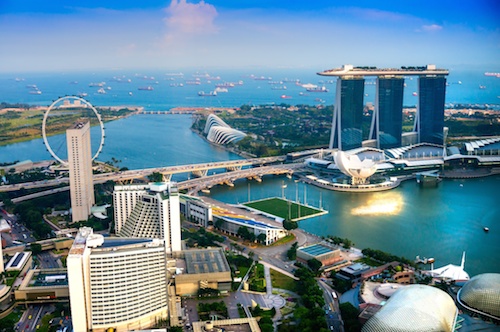
REGIONAL and international MICE industry members at this morning’s Singapore MICE Forum (SMF) 2015 keynote address were told to manage their expectations regarding immediate streamlined visa, VAT and other business rules with the ASEAN Economic Community (AEC) integration framework completion set for December 21, 2015.

Keynoter Ong Keng Yong, Singapore ambassador-at-large and executive deputy chairman at the S Rajaratnam School of International Studies, said headway has been made on removing economic obstacles, but the December date is not the end of the integration process but a “milestone”.

While there will be a freer flow of goods, services and people in ASEAN, travel from Singapore to Myanmar or from Vietnam to Myanmar will still not be visa free, he said, adding Singapore still has to negotiate bilateral agreements with one or two member countries.

Nevertheless the MICE industry and service-oriented businesses will see many opportunities arise from the “standardisation of rules” and more streamlined processes for bringing in participants and products for events.

Ong said: “It will no longer be 10 different countries and 10 different sets of (economic) rules.” The focus is now on building capacity for efficient and effective implementation, he added.

Reacting to the keynote address, Aloysius Arlando, CEO, SingEx Group, acknowledged that AEC integration is still a long road and full integration “may not happen in my life time”.

Sumate Sudasna, president, Thailand Incentive and Convention, said a common language would expedite the integration process. “However, English is not the common language in many ASEAN countries. With China driving the world economy, Chinese may become the working language much like when people were willing to learn Japanese when the country was an economic powerhouse.”

Meeting content, venues need redesigning to satisfy new learning habits: expert

0

MEETING delegates are changing the way they consume content, requiring planners to relook the design of their events, said a brand experience expert at this week’s PCMA Meetings Forum Singapore.Lisa VanRosendale, senior vice president of FreemanXP, who kicked off the day’s presentation, said: “The audience wants bite-size content, on-demand and on-the-go concepts, engaging formats and participatory experiences.”

Some of the learning trends highlighted by VanRosendale include flipped learning, which sees people acquiring knowledge outdoors and returning to the classroom to solve issues together; and gamification, which satisfies people’s “love to connect with each other”, among others.

When asked if the entry of Millennials into the workplace has catalysed the change in information consumption, VanRosendale said: “The consumer space has everything that influences the way we do events. I’m not a Millennial but I’m customising my consumer experience. What I pick, what I watch is decided by me; I’m dictating my own programme. I get my news on Twitter. Life is a lot faster today.”

Technology advancements have also created new ways for planners to deliver content and offer sponsorship opportunities. With augmented reality, for example, sponsors who are absent from the tradeshow can still reach out to the audience, while the rise of telepresence technology and virtual events can help bring content to people who were not able to attend.

VanRosendale advised meeting planners to understand their audience and “market the event to who you want and the way they buy or do their job”.

“Do an audience profiling and build your event strategy around that. Planners need to have different event tracks for different audience. Build an event brand equity and then have different messaging for specific audience under that,” she suggested.

Meeting venues also need to redesign their spaces to support the new learning model and appeal to a varied audience, she urged.

In response, Angeline Lue, director of sales and marketing at Kuala Lumpur Convention Centre, Malaysia, said the venue is already moving with the times.

“We deal with cross-gen audiences, so we have to have different meeting designs,” she said, offering examples of beanbags being used in place of chairs in meetings, the creation of a lounge with all-day refreshments where delegates can graze and network, and events being held outdoors.