HONG Kong’s Morning Star Travel has been acquired by China’s Fantasia Holdings Group last month for HK$220 million (US$28 million), effectively linking the 43-year-old homegrown agency with Fantasia’s outbound travel business Colour Life Services.
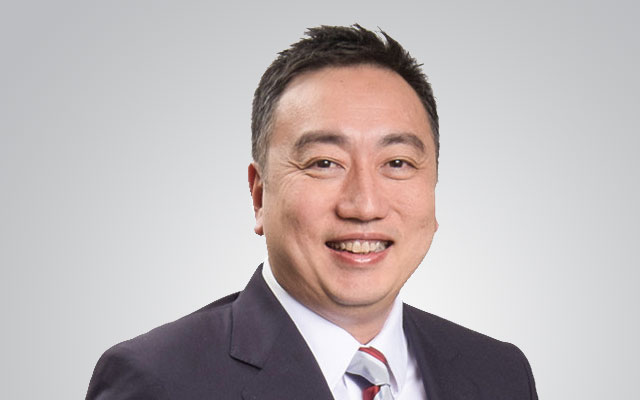
Philip Chow, vice-president finance and operation, Morning Star Travel, said: “The new ownership opens up opportunities for us. Colour Life specialises in property management in China, serving communities in over 147 cities in China. This means direct access to more than 10 million residents.
“From now on, residents living in properties under Fantasia’s management may take advantage of our travel products through the group’s online platforms.”
Morning Star plans to set up around 100 stores within the Guangdong area this year and will officially offer travel services to residents after Chinese New Year in February.
Dannia Cheung, general manager, Morning Star Travel, said: “We will make sure there are no cookie-cutter products to suit different peak travel seasons,” adding that they mainly plan to target the mid to upscale clientele.
FIVE new packages for meetings and events are now available at the 203-key Sheraton Bali Kuta Resort, offering activities that range from engagement with the Balinese community to customised teambuilding experiences.
Aimed at enhancing the delegate’s experience, these packages are: Share Your Plate programme where guests create a meal with unknown ingredients which will then be shared with children from the local orphanage; a 15-minute post-lunch activity with Sheraton’s fitness team; a three-minute SHINE Spa massage session during coffee breaks; a selection of power bars and candies at the refreshment lounge; and an After Work Happy Hour session where beers and cocktails are served at the refreshment lounge. Prices per pax vary.
These packages come with use of the hotel’s meeting spaces, complimentary microphones, a projector, conference sound system, clutter-free meetings set up, stationery, candies and bottled water.
DORSETT Putrajaya, a 218-key property located at Precinct 3 in Putrajaya, is set for a soft launch on January 16 with 43 rooms first available. The remaining rooms will open progressively and the property is expected to be fully operational in early-May.
Nearby attractions include Putrajaya Maritime Centre, Putrajaya Lake Club and Palladium Mall, while government departments such as the National Registration, Customs, Ministry of Health and Federal Court of Malaysia are also within walking distance.
For meeting spaces, its pillarless ballroom seats up to three hundred pax while smaller groups can fit into its five function rooms.
Dorsett Putrajaya also houses the city’s first rooftop infinity pool and rooftop gym equipped with state-of-the-art facilities.
Ally Bhoonee, executive director of World Avenues, said: “The opening of Dorsett Putrajaya provides more choices for leisure and MICE tourists as well as tour operators seeking midscale hotels, as most of the existing hotels in Putrajaya are five-star properties.”
THAILAND is expecting to generate 2.41 trillion baht (US$66.4 billion) in tourism revenue this year, of which 1.56 trillion baht is expected to come from international markets while the remaining 0.85 trillion baht will come from domestic travel.
In 2015, Thailand generated 2.23 trillion baht of which 1.44 trillion came from international markets and 0.79 trillion came from the domestic sector.
Deputy prime minister Somkid Jatusripitak said Thailand should place an emphasis on domestic travel as part of the country’s goal to maintain tourism competitiveness and sustainable market share.
“The tourism ministry and TAT have been assigned to brainstorm and introduce policies to drive the country’s tourism forward,” said Jatusripitak. “One project that needs to be discussed is One District One Tourist Destination to add more value to popular destinations as well as create new destinations through a storyline to encourage travellers to explore new places.”
He also noted that quality of souvenirs, tourism activities and public streets need to be developed further. As well, authorities are encouraged to seek cooperation with neighbouring countries like Cambodia, Lao, Myanmar and Vietnam to strengthen Thailand’s gateway status in South-east Asia.
Other plans to boost domestic travel include urging airlines to open new destinations and increase frequencies, as well as launching a new campaign, Thai Chuai Thai, proposed by TAT governor Yuthasak Supasorn, which rewards Thai travellers with a lucky draw worth one million baht every month. An even bigger draw every quarter is also proposed.
“We are now discussing with the airlines and hotels to offer discounts to encourage Thais to travel in the country, particularly long-weekend holiday offers and specific travel packages to tap niche markets, such as government officials, corporate incentives, students, retirees and sports enthusiasts,” said Supasorn.
AMADEUS has added self-service rebooking functionality to its Amadeus Ticket Changer (ATC) suite of products.
Named ATC Shopper, customers of travel agencies who offer the service can independently go online anytime to modify their flight booking, before and after departure.
According to a statement from Amadeus, online travel agents can expect a reduction in the number of calls to their call centres as customers make changes on their own.
“We created ATC Shopper because we know that passengers want to have control of their itinerary and travel agents want to provide their customers with the best possible experience,” said Rudy Daniello, vice president, distribution product management, Amadeus.
ATC Shopper is the latest addition to Amadeus’ ATC suite which includes ATC Reissue, ATC Involuntary and ATC Changer Refund.
At Shanghai Disneyland, Disney stories will come to life at the tallest, largest and most interactive castle at any Disney theme park. It will offer immersive attractions, dining, shopping and spectacular entertainment, and will be the first castle in a Disney theme park that represents all the Disney princesses. (PRNewsFoto/The Walt Disney Company)
SHANGHAI Disney Resort is set to open its doors to guests come June 16. Sited in the Pudong District of Shanghai, this opening will mark Disney’s first destination resort in mainland China.
On opening day, Shanghai Disney Resort will feature six themed lands namely Adventure Isle, Gardens of Imagination, Mickey Avenue, Tomorrowland, Treasure Cove and Fantasyland, all centered around the Enchanted Storybook Castle, poised to be the largest and tallest castle of all Disney theme parks.
Outside the theme park, guests can also shop and dine at Disneytown, located adjacent to the entrance, or take a leisurely stroll at the 40-hectare Wishing Star Park.
Accommodation is also available at the Shanghai Disneyland Hotel and Toy Story Hotel, both located nearby.
“When it opens in June, Shanghai Disney resort will be a one-of-a-kind, world-class destination that is authentically Disney and distinctly Chinese,” said Robert A. Iger, chairman and CEO, The Walt Disney Company.
THE Philippines hopes to court more Muslim travellers by having at least 50 establishments in Manila, Cebu, Boracay and Davao to become halal-compliant by April 2016.
Assistant tourism secretary Art Boncato said that the Philippines Department of Tourism (DoT) will incentivise companies by paying for the basic cost of halal certification, while also using its resources for promotions via trade missions, advertising and publicity campaigns.
The DoT is currently working with a halal certifier accredited by the National Commission on Muslim Filipinos. It is also liaising with Singapore-based CrescentRating, which ranks countries according to how Muslim-friendly they are. The DoT hopes to improve the Philippines’ current ranking on the 47th position from a list of 100 nations.
As well, Boncato wants the country’s Muslim-friendly establishments to be included in a Muslim travel guide being produced by CrescentRating.
Muslim travellers from the Middle East and ASEAN are fast increasing in number, yet there are only a handful of halal-certified venues in the Philippines, added Boncato.
BOMBS and gunfire rang out in central Jakarta today as militants suspected to be affiliated with Islamic State (IS) attacked the Indonesian capital, leaving at least six dead, some reports indicate.
Local media reports that the first explosion went off at 10.50 outside a Starbucks located at the Skyline building adjacent to Sarinah department store on Jalan M.H. Thamrin. Another blast went off at a police post located on the street junction.
The area is frequented by tourists and local office workers alike. A UN building, embassies and the central bank also reside nearby.
Helicopters, armored vehicles and police snipers, among hundreds of other security personnel, were deployed.
Credit: TMC Polda Metro Jaya
Gunfights between the assailants and police also took place and authorities have sealed off the surroundings, leaving Jakarta’s usually crowded streets eerily empty. Police and bomb squads were seen earlier entering the Skyline building to flush out the attackers.
“We have previously received a threat from IS that Indonesia will be the spotlight,” said police spokesman Anton Charliyan according to Reuters.
Further media reports indicate police have taken down all of the attackers and that one of the dead was a Canadian national and another a police officer.
Clarence Tan, senior vice president development AMEA, InterContinental Hotels Group (IHG)
THE number of Asian professionals who head development for international chains in their own region can be counted on one hand.
Clarence Tan has no development background and is the first Asian to be appointed senior vice president development AMEA at InterContinental Hotels Group (IHG), replacing Paul Logan who retired January 1 after 25 years at the role.
In this Newsmaker interview, Tan tells Raini Hamdi why Asians are rising to the top of their professions in the region, how IHG grooms leaders horizontally, and challenges and opportunities for expansion in the region in the coming months.
Clarence Tan, senior vice president development AMEA, InterContinental Hotels Group (IHG)
You joined IHG Asia-Pacific in 2004 as head of finance. Why does it make sense that you’re its head of development AMEA today? A lot of it is due to us looking to connect the dots for hotel owners and investors. Today, why someone like me makes sense is because there are lots of cross-regional flows of capital – China to Singapore, India to somewhere else, and so on. Cross-referrals from IHG China, for instance, have been tremendous for IHG AMEA; we now have Chinese investing in Africa, or Hong Kong developers investing outside China.
Having been in China, Japan, South-east Asia, having the ability to speak Mandarin and Chinese dialects, and having the cultural sensitivity and operational know-how in the different countries in the region, I could connect those dots better.
How did you journey from finance to development? I joined IHG in January 2004 as CFO Asia-Pacific, at the time including Greater China (now an autonomous region). Since 2009, I started supporting Jan (Smits, CEO AMEA) in Singapore in operations while remaining head of finance. In 2011, I was relocated to Tokyo to head up the second phase of the joint venture IHG bought into in 2007. In 2013, I was relocated to Bangkok to set up our South-east Asia resorts plan and launch the Holiday Inn Express.
In Tokyo, just after I arrived, the tsunami hit; in Bangkok, it was the red/yellow shirts riots and the floods. So I became somewhat of an ‘expert’ at crisis-handling. My time in both places up to 2014 were spent more on recovering the business, then Paul (Logan) made the call to retire and I was earmarked for the role.
Why? I think a lot of it had to do with how I interacted with the regional and global team, operations members and owners. I’ve always been operational and commercial in my approach. They (Smits and Logan) felt confident I could converse with owners, GMs and our corporate functions globally, besides having the financial acumen. With my experience, I’m able to say, yes, I’ve been there, I’ve held owners’ hands, GMs’ hands and I know what exactly you’re talking about and offer solutions.
That’s important especially in emerging markets. The whole thing about development is building relationships and trust. So I may not look or ‘smell’ like a developer, but I’ve the DNA to be one, plus I’m inheriting a very strong team that Paul has built. So a huge part of my job is to ensure the team gets good directions, coaching, leadership to achieve our ambitions.
So was 2014 to 2015 ‘training’ and handover from Paul to you? Actually it is a long, planned transition, the idea being for me to take bite sized portions of the regions (north Asia/South-east Asia) and gain more confidence, learn new skills, manage challenges, etc.
Then since mid 2014, Paul started coaching me strategically, things like when an opportunity is real, when not to get excited – he’s my fall back and I grew more confident. It’s like learning to drive, you have the instructor next to you at first.
For a company like ours, whenever we lose a senior leader like Tony South (Logan’s predecessor) or Paul, it’s comforting to have someone from within to step into those shoes and I’m grateful for the opportunity to contribute to the region.
I would have loved to spend more time in operations but in a company like ours, mobility, moving internal resources is important.
What was the most valuable lesson you’ve learnt since then? The power of listening – to not give immediate feedback. That’s a challenge because in finance or operations, if an owner said, I’ve got this issue, the finance or operations guy will say, this is how you solve it, it’s quite direct.
In development, it’s quite different because often the owners do not even know the real issue of what they are trying to address. So you need to allow the owner to share his thoughts and you need to listen first. Especially the new relationships where partners are ‘shopping’ before deciding who to go with. They are judging your opinions, answers, whether you’re the best brand fit, etc – you can’t just cut the conversation short. On top of it, you need to be culturally sensitive and aware. How I engage a Middle East owner will be different from the Indian or Thai owner – the three powerhouses of AMEA are all different.
AMEA is a huge area. Which countries specifically are expected to be the star areas for you? In terms of emerging markets, India and Indonesia are exciting. In India, we have 23 hotels in operation and a pipeline of 47 hotels, mostly Holiday Inn and Holiday Inn Express to open in the next five years. That’s net growth over seven years, as we exited properties that didn’t represent us well when their contracts expired.
We’ve also been successful in conversions, and our other brands are getting recognised. Recently, for instance, we introduced Crowne Plaza into Chennai (the property was formerly under Starwood Hotels & Resorts) and opened an Inter-Continental in Chennai.
Indonesia too remains big for us because of the growing middle class. Our portfolio is small – 16 hotels in operation – but we have 27 in the pipeline to open in the next five years.
But Indonesia has a lot of homegrowns that focus on mid-range and budget.
Yes, the Tauzia’s, Santika’s Panorama’s – hundreds of brands can be good for consumers. But our strength is delivering a consistent brand experience that people know what to expect of. They know that the experience in Bali is not different from that in Bandung, save of course for the local nuances, food, scent, etc.
What about the Middle East, especially with new tensions in the region? There are pockets of skirmishes. Saudi Arabia is both opportunity and risk. We’re still anchoring ourselves there with the biggest Holiday Inn in the world in Mecca.
Dubai will always be important as it connects key cities within a matter of eight hours. We introduced our second InterContinental there, InterContinental Dubai Marina, which is also the latest expression of the brand. Clients today have their own version of luxury, different from their parents’ generation, so our brand needs to evolve.
The market in Dubai traditionally is upper class and luxury but we feel it is opening up, thereby giving us a room to grow our midscale, select service and boutique brands. We have already three Hotel Indigos in the pipeline, to open this year and next year. The days of just pure luxury for Dubai are slowing down.
Speaking of boutique brands, will you be introducing Kimpton to AMEA? With the acquisition of Kimpton, IHG is the largest player of boutique hotels in the world, with 126 properties in operation (62 Kimpton hotels at the point of acquisition last year, two Even hotels and the rest Indigo hotels) and a pipeline of 200 hotels. We spent the last nine months understanding the DNA of Kimpton. It’s a strong design-led hotel with great F&B offerings.
Doesn’t that cut into Indigo? No. From a rate perspective, Kimpton is above Crowne Plaza and closer to InterContinental.
We want to grow it selectively. It’s very precious – in Jan’s words, it’d be like marrying his daughter off. The brand is predominantly in the US so we need to find the right partner to take it outside the US and set the right tone for it. We’re looking at key cities only – the likes of Singapore, Tokyo, Jakarta – and resort locations. I’m confident we will sign one or two this year.
But overall all we’re seeing are bad news everywhere.
The climate is indeed tough. But we live in a cyclical industry and we’ve learnt to absorb crises, currency or financial or whatever. There is also always a counter-balance, one country may be a bit more of a challenge, another turns to be less. In stressful times, reliable brands look more appealing than when the market is hot and booming; it’s easier to convince owners to do conversions.
ONLINE marketing initiatives and sales promotions for the 576-room Shangri-La at the Fort, Manila in Bonifacio Global City that had begun long before its scheduled opening on March 1 this year, have led to strong expressions of interest from local and overseas MICE planners.
In an interview with TTGmice e-Weekly, the hotel’s general manager, John Rice, said hard hat tours for interested parties and available rate structure and meeting packages have allowed the hotel to “submit our offers and negotiate for high potential leads”.
While the Shangri-La brand needed little introduction, Rice’s team made an awareness campaign their “first order of business”. It touted its extensive conference and meeting spaces – 21 in total and said to be the city’s largest collection – among other selling points, drawing the attention of event planners.
The Grand Ballroom, measuring 1,800m², and other function rooms are inspired by a jewelry box and outfitted with Lasvit chandeliers that resemble a necklace and wall panels that look like brooches.
Rice expects “good demand particularly from within the Bonifacio Global City accounts, as there is a very limited supply of meeting venues and (five-star) hotel rooms in the area”, with the brand and facility size drawing mostly “corporate and social milestone events”.
“We will also be the venue of choice for our exciting and creative meeting packages and services, courtesy of the on-trend facilities this comprehensive complex will have the flexibility to offer,” he added.
Shangri-La at the Fort intends to leverage its close proximity to Kerry Sports Manila, a 8,000m² sports complex across levels five and six within the same mixed-use development, to court sports events and corporate programmes that desire some action.
“Sports is popular locally, particularly basketball and badminton which Kerry Sports Manila will have the facility to host through The Arena, an NBA-grade indoor basketball court which can be converted into a badminton court. Our multiple training zones and the Adventure Zone may also be the venue for teambuilding exercises, family-bonding activities and themed breaks,” said Rice.
Meanwhile, Rice hopes that the country’s successful hosting of the 2015 APEC meetings in Manila will “put us back on the map of new MICE destinations”.




 Credit: TMC Polda Metro Jaya