CARNIVAL Corp’s Princess Cruises will call at Sabah, Sarawak and Brunei for the first time through its upcoming 2016/2017 homeporting season.
The 2,678-guest Sapphire Princess will begin its homeporting season from November 2015 to March 2016, making three- to 11-day roundtrips from Singapore to destinations in Malaysia, Indonesia, Vietnam, Cambodia and Thailand.
Features aboard the Sapphire Princess include staterooms with private balconies, F&B outlets such as a steakhouse, wine bar, patisserie and a pizzeria, boutique shops, spa, poolside theatre, an internet café and more.
The Diamond Princess will also make its debut in the region in 2016, offering an array of itineraries with 16 cruise trips ranging from three to 10 days and 14 long voyages of nine to 21 days.
Both the Sapphire Princess and Diamond Princess will have multi-lingual crew members onboard as well as dining room menus that include local dishes along with the line’s international offerings.
FORMER Best Western International (BWI) head honcho in the region, Glenn de Souza, has set up his own hotel management company and wants “the good old GMs” to come back to run the hotels, which will carry a Wyndham Hotel Group (WHG) brand.
Glenn de Souza
Since setting up the company, Kosmopolitan Hospitality in March, with offices in Bangkok and Singapore, De Souza has already signed up nine hotels: Days Inn Rest Sea Jomtien Beach Pattaya; Days Inn Siam Central Pattaya; Days Inn Pratamnak Hill Pattaya; Ramada Suites Wong Amat Pattaya; Ramada Chaofa Phuket; Days Inn Patong, Phuket; Tryp by Wyndham Yangon Boutique; Wyndham Legend Ha Long; and Ramada Encore Niigata (Japan).
Kosmopolitan is WHG’s preferred development partner in Asia, excluding China, with de Souza concentrating in particular on five of 15 WHG’s brands, Wyndham, Ramada, Days Inn, Howard Johnson and Tryp.
The arrangement is win-win, said De Souza, as WHG is relatively a newcomer to Asia while Kosmopolitan needs established global brands.
Kosmopolitan manages all the hotels while franchising the brands from WHG.
A hallmark of Kosmopolitan-managed hotel will be “bringing back the true, personalised service that is lost today”, said de Souza, who wants to hire retired GMs who may wish to return to the industry.
The fast-growing company needs people. Aside from the nine already signed up, Kosmopolitan has another 27 projects in negotiation, both new-builds and conversions, in Thailand, Myanmar, Vietnam, Bangladesh, Bhutan, Maldives and Japan. De Souza expects to flag another five to six hotels under a WHG brand before the year is out. He intends to take Kosmopolitan to 50 hotels within the next three years.
The former BWI vice president of international operations for Asia & Middle East took BWI from only six hotels to 200 in the region over the 13 years he was with BWI.
Kosmopolitan has 10 staff currently, including a couple from de Souza’s previous team at BWI such as Paul Suvodip, now his regional revenue manager. Other professionals include managing director-development Akarapong Sukjit, regional operations manager Wassana On-Putta, regional director of brand management Dominique de Souza and regional sales manager James Ross. The staff strength is expected to increase to 15 by mid-2016.
De Souza speaks to Raini Hamdi about his new company in this Newsmaker interview:
When did you set up Kosmopolitan and what’s the business model?
We set up in March. We’re pretty much like any other hotel management company, i.e., we offer technical services, sales, marketing, revenue management, finance, human resources, etc, and we have the right contacts with services such as interior design and landscaping.
The difference is the support we give to owners. We are ethical, transparent, honest and we live by our commitment. We manage all their projects and while most hotel management companies rather the owners stay away, we’d rather the owners work with us. At the end of the day, owners always want to know what’s happening with their hotels, otherwise the seeds of distrust are planted.
How did the partnership with WHG come about?
Wyndham is a relatively new company in this part of the world. It lacks the awareness and it wants to piggyback on our expertise and the contacts we’ve developed in our previous life with other brands. It wants to be a lot more aggressive than it was before and sees us as an opportunity to enable them grow very quickly in this part of the world. In the last four months we’ve given them nine hotels and we expect to give them another five to six hotels by the end of this year.
We have established a lot of owner relationships, from Chinese to Thais to Koreans, and they all have different mindsets and needs. We have the local culture knowledge and the infrastructure, which Wyndham does not have, to expand quickly in this region.
Basically, we share our pipeline with Wyndham. We don’t compete with them – if they are looking at a property, they can go ahead with it.
Are you working with partners other than Wyndham?
Realistically, the partnership with Wyndham is more than enough at this stage. We will take this company (Kosmopolitan) to 50 hotels within the next three years. We’re quite comfortable to give them (WHG) 10-15 hotels a year. That’s not to say we are in a hurry to grow. What is important to us is our commitment to owners.
Why do you need WHG?
When you set up a company, you need a brand. People buy a brand because it gives them a sense of security and assured standards. Owners need a brand to facilitate the bank loan and they are buying a platform that’s already been established by a global brand. It takes a lot money to build a new brand and it might not even work, as you have seen with some brands.
Wyndham is the right brand for us in terms of positioning. Upscale and midscale brands are what’s viable for Asia at this time. Construction-wise a three-star hotel costs less than four, and four less than five. But the ROI for three and four-stars is within seven years while luxury is about 10 years. We leave the luxury hotels to the Four Seasons and the Ritz-Carltons. So Wyndham is a good match for us.
So what will define Kosmopolitan’s hotel management style from others?
I think today, we need a different breed of hoteliers in terms of commitment and integrity – I believe we need to go back to the basics of operating hotels.
Why did the industry lose its basics?
People have been promoted too quickly. Technology also has a lot to play, because of it, people have lost the contact, the personal touch, with customers. You don’t see the GM; they are on Facebook. In the past, you see the GM at breakfast, lunch and dinner, because they want to know who the customers are, they want to interact with them personally, not via social media. Today you don’t see GMs and people keep changing jobs. I go through resumes, six months here, three months there.
I want to bring back the 60-year-old GMs or the old timers those who have retired and want to come back. I give them a 200-room hotel and they will know how to operate it, they will know how to handle the owners and they will know how to train the staff. I’ve spoken to quite a few; they are not after the money, they want to do something meaningful. These are the real hoteliers, the real pros.
Do you think younger travellers, or your owners for that matter, want old GMs?
It will be nice for the young travellers to meet real hoteliers for a change. They never experience that kind of service. And it’ll be great for young hoteliers to learn from the professionals and the legends who came from the established hotel schools.
As for my young owners, and I have plenty of them, they do not mind at all. In Asia, many are from the family business and they are used to looking up to the elders.
What about distribution?
Actually, the occupancy a brand can deliver to a property today is diminishing. If you can get five per cent occupancy from a brand, you’re very lucky. At the end of the day, you need to drive sales yourself and I believe in running a high occupancy even if I have to compromise on my average rate, because rooms are perishable and cashflow is important for owners.
I have a sales team that drives the volume. We have the contacts and network with the volume producers and top agents. Let the brand deliver five per cent of the volume and do the marketing. This is why we can open with a 75 per cent occupancy.
Does it feel like starting all over again as when you were with BWI with only six hotels 13 years ago?
Yes, but today it is my company and it is more interesting, more viable and pleasing. I can be as flexible as I like, I can decide who I work with and when, and there are no restrictions on who I can hire.
THE Hawai‘i Tourism Authority (HTA), Hawaii’s tourism agency, is making a big push into Asia with the appointment of Aviareps Southeast Asia and Brandstory Asia to provide destination management services in South-east Asia and China respectively.
Aviareps Southeast Asia, which has offices in Kuala Lumpur, Singapore, Jakarta and Bangkok, will focus primarily on Singapore and Malaysia, with Indonesia and Thailand being secondary markets. Both leisure and business segments will be targeted.
Meanwhile, Brandstory Asia, headquartered in Shanghai and with offices also in Beijing, Guangzhou, Hong Kong, Taipei and Singapore, will begin representing HTA from January 1, 2016.
In a statement, the company said it will employ “a strategic mix of airline and travel trade partnerships as well as consumer marketing via advertising, PR and social media programs to increase the desire for and actual travel to the Hawaiian Islands.”
DATA from travel search engine Skyscanner has revealed the cheapest months in 2016 to book a flight to locales featured in James Bond blockbusters through the years.
In Asia, flights to Khao Phing Kan, Thailand, featured in The Man With the Golden Gun, can cost as low as US$119 in September next year. Meanwhile, flying to Shanghai, as featured in Skyfall, will only set you back $115 when booking in January, while flying to Tokyo, filmed in You Only Live Twice, is as affordable as $163 in February.
Further afield, jetting to St Andrews, Scotland, featured in Goldfinger, will have fares starting from $616 when flying in February, and as filmed in James Bond’s latest film, Spectre, bookings to Mexico City will only cost $946 in May.
TRAVELLERS from Helsinki via Finnair will be able to connect to codeshare services operated by Singapore-based Jetstar Asia from December 15, 2015 onwards.
Finnair’s code will be added to Jetstar Asia’s flights to and from Singapore’s Changi Airport, as well as services in Penang, Kuala Lumpur, Ho Chi Minh City, Phuket, Perth and Darwin.
Guests flying on Finnair will retain its baggage allowance aboard Jetstar Asia’s flights.
Barathan Pasupathi, CEO of Jetstar Asia, said: “The collaboration between Jetstar Asia and Finnair is a welcome enhancement towards the codeshare and interline model at Jetstar Asia. The Finnair service from Helsinki will connect to Jetstar Asia’s services at Changi Airport.
“This will allow customers from Europe to connect via Singapore onwards to Jetstar Asia’s Australasia destinations”.
THE Malaysia Convention & Exhibition Bureau (MyCEB) is spurring association executives to group themselves into an association by next year.
Tai Lee Fen, MyCEB’s manager – association development, said an association of associations would give them one voice in tackling common challenges and they can have advocacies.
Even as the association is not yet in existence, so strong is the bureau’s support for it that it already held in Kuala Lumpur in November what would be the group’s first annual conference, Malaysia Association neXt.
Tai said 120 people graced the event which is meant to create a platform for all associations to learn, exchange ideas, network and debate issues that impact them.
She revealed that MyCEB could provide funding support to the association, such as for the secretariat.
While the bureau has 500 national associations on its database, it is not yet known how many of them will join the planned association.
Tai said there are many examples around the world where the society for association executives have been successfully established including in the United States, Australia and the Philippines.
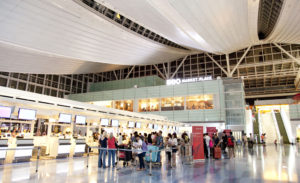
PLAZA Premium Group has launched a new airport dining concept at Kuala Lumpur International Airport, located on the mezzanine level of the airport’s satellite building.
Named Flight Club, the 24/7 establishment serves western and international cuisine with an emphasis on the use of herbs, seeds and natural, healthy ingredients.
The approximately 297m² space can cater to roughly 110 pax and features a buffet salad bar, dessert display counter and a live-cooking kitchen station.
Specialty cocktails, coffee, chilled beers and cold-pressed signature juices are also available.
Other conveniences include charging stations, flight information display boards, complimentary Wi-Fi, runway views and a selection of reading materials.
SINGAPORE’s nocturnal wildlife park, the Night Safari, has adopted a time-based admission for visitors.
Visitors will now need to choose an admission time at either 19.15, 20.15 or 21.15 when they purchase tickets online or onsite, as opposed to the previous policy which allowed entry anytime during opening hours.
Guests are also encouraged to purchase tickets online to avoid disappointment as there are limited slots available per timing.
Tokyo in winter. Credit: Knot Mirai/Shutterstock.com
JAPAN has emerged as the favourite destination for travellers from Singapore and Hong Kong.
Tokyo in particular is the most-searched destination on Kayak’s Singapore and Hong Kong portals during the holiday season, with Osaka ranking 4th and Sapporo the 7th most popular destination for travellers from Hong Kong during this Christmas period.
Other popular places shared among Singapore and Hong Kong travellers include Seoul, Bangkok, Taipei, London and Paris, all ranking among the top 10 most-searched destinations.
In another finding, travellers from Singapore are increasingly searching for the Japanese cities of Sapporo, Nagoya, Osaka and Tokyo, according to Skyscanner. All four cities are among the top 10 destinations that have seen the greatest increase in flight searches from 2012 to 2015.
Surprisingly, Phu Quoc, Vietnam, has seen the greatest surge in search on Skyscanner, increasing by 209 per cent over the same period.
LUXURY planners seeking ideas for special experiences for honeymooners may consider Love in St Moritz, a package offered by the Kempinski Grand Hotel des Bains which aims to bedazzle couples.
Here’s how: It begins with a BMW limousine service from either the Milan or Zurich airport for the most direct and convenient route to St Moritz.
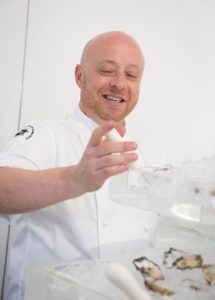
On arrival in the new elegant Kempinski Residences, a serene and exclusive wing of the hotel, the butler will welcome them with an exotic fruit plate and champagne, and provide round-the-clock service. That same evening, Michelin-star chef Matthias Schmidberger creates a candlelight dinner at the gourmet restaurant Cà d’Oro and pampers them with aphrodisiac delicacies including French oysters and the finest Valrhona chocolate.
The next day, a private helicopter flight over the snow-capped mountain peaks. For lunch, a romantic sleigh ride and a subsequent gourmet menu served on the frozen lake surrounded by a picturesque winter scene and brilliant sunshine. On the second day, recharge at Kempinski The Spa. with a full body massage for two in the spa suite, followed by cosy high tea by the fireplace in the lobby bar afterwards.
The package price starts at CHF 10,000 per person for a stay of three nights, including honeymoon welcome treatment and daily breakfast and all of the above exclusives. It is now available to book for stays from December 4 to March 28.
– The next issue TTG Asia Luxury is out January 8, with bonus circulation at ASEAN Tourism Forum 2016