MALAYSIAN tourism authorities, overwhelmed by protests from Indians and Sri Lankans over a restrictive visa entry process, say they are seriously considering relaxing the policies.
“I will send recommendation on the need to relax the visa rules,” said Daljit Singh, member of Tourism Malaysia’s board of directors, during a press conference in Colombo last week.
He was responding to comments that while Malaysia wants to welcome as many visitors as possible, its visa process for Indians and Sri Lankans remain highly restrictive.
“We were told in India too that the visa process was restrictive and (we) need to look into this (as a matter of urgency),” added Daljit.
At current, visitors to Malaysia have to submit documents such as bank details, employer’s letter and business registration, among others. Meanwhile, visa fees have sharply risen since the process was outsourced to an agency in 2014.
South Asia is an important source for Malaysia, but arrivals from India and Sri Lanka have dropped significantly last year to 722,141 and 51,337 respectively, from 770,108 and 61,670 in 2014.
“We want to increase or retain the earlier numbers,” said Daljit.
Seow (left) and Boh. “Virtual reality and augmented reality are two aspects that will penetrate the travel space next,” said Seow.
SINGAPORE-based Asiatravel.com aims to make virtual travel fairs a reality in the region with its just-launched VTF platform which travel agencies, consumer banks, hotels and NTOs can use.
The company launches the platform with an ongoing DBS Online Travel Fair (February 23 to March 13) exclusive to the bank’s credit cardholders for travel ex-Singapore. Over eight million travel products worldwide are featured, Asiatravel.com said, and there’s a 24-hour customer service hotline and live chat. The bank sponsors gifts such as luggages while online games and contests are organised.
Results are “very encouraging”, said Fred Seow, Asiatravel.com’s vice president marketing and B2B, although he declined to reveal traffic and sales figures to-date. While flights and hotels which customers are already booking online are popular, so are bundled packages of air, hotel and destination activities, he added.
“As this is the first VTF, we are more concerned about users’ experience than site traffic numbers. Furthermore this is a private event extended only to credit card members of this bank. The system recognises and accepts only the bank’s credit cards.
“We like the daily ratio of returned and new visitors while the average number of pageviews is much higher than our normal standard. To us, these are all very positive indicators that the markets need a VTF,” he said.
While declining visitor numbers, lack of manpower and higher costs of participating at brick-and-mortar fairs have led some to believe that VTFs are the way of the future, virtual fairs have yet to thrive, let alone take over physical fairs.
In Malaysia, Smart Online Travel Assistant (SOTA) had organised the eponymous Virtual Travel Fair with The Star Online, the digital unit of Star Publications, but the last collaboration between them was in 2013; today SOTA only provides the platform for travel agents to go online.
Asked to comment on this, Seow said he believed the Malaysian fair had no full e-commerce support, including instant booking confirmation capability.
“Technology has improved rapidly. Virtual reality and augmented reality are two aspects that will penetrate the travel space next,” said Seow.
At the next fair, Asiatravel.com hopes to introduce unique virtual reality experiences that will enhance customers’ experience and help them decide on their purchases.
The company is pursuing agencies and suppliers in countries such as China, India, the Philippines, Malaysia and Thailand to use its VTF platform.
Its executive chairman Boh Tuang Poh is also in discussion with tourism organisations and travel trade associations in the region to organise more VTFs year-round.
Additional reporting by S Puvaneswary in Kuala Lumpur
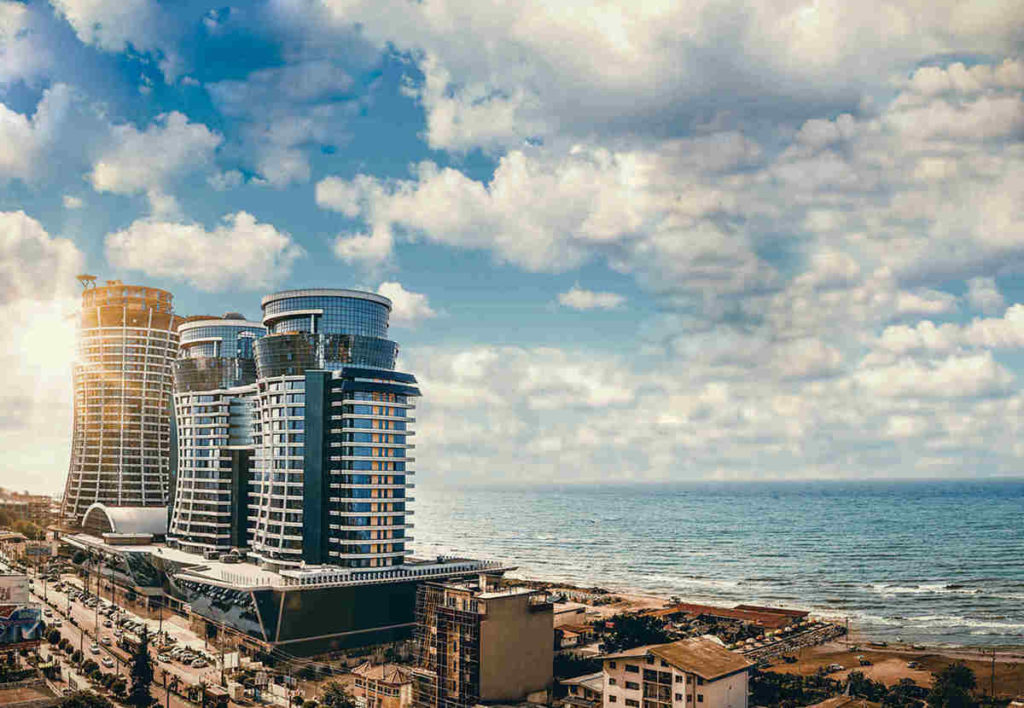
WITH international sanctions against Iran lifted, the country is set to receive its first five-star foreign-run hotel, the Gran Meliá Ghoo, a resort property to be located by the Caspian Sea in the city of Salman Shahr.
Spain’s Meliá Hotels International signed a contract on March 2 with Iranian businessman Ahad Azim Zadeh to manage the resort, due to open in June 2017, and which will be part of a new mixed-use residential and shopping complex.
Gran Meliá Ghoo will be located in a 130-metre tall tower, with 319 rooms and a 500m2 presidential suite. Facilities will include seven restaurants and bars, more than 1,300m2 of conference space, two swimming pools and a spa.
Meliá Hotels’ vice president and CEO, Gabriel Escarrer, said: “We have always been pioneers in the development of new markets for tourism, which is why we take on this challenge, one that is important for the future of the country. We firmly believe in the tourism potential of Iran.”
Iran is looking to boost arrivals from the current five million a year to over 20 million by 2025. Sanctions had restricted foreign investment into Iran since 2006.
ASSOCIATION, event and communication management company MCI has partnered ICCA Scandinavian Chapter to launch the Global Destination Sustainability (GDS) Index.
The index, which is the first sustainability ranking for event destinations worldwide, aims to promote sustainable growth of international meeting destinations by highlighting best practices and responsible business tourism.
It will evaluate the sustainability performance of cities and bureaus in four key areas: city environmental strategy and infrastructure; city social sustainability performance; industry supplier support; and convention bureau strategy and initiatives.
Guy Bigwood, group sustainability director at MCI, said: “Our vision is to have over 100 cities benchmarking and collaborating together by 2020. I am pleased to announce we have 25 Scandinavian cities based in Finland, Denmark, Norway, Iceland and Sweden, as well as our first wave of global cities including Barcelona, Geneva, Stuttgart and Sydney.”
Martin Sirk, CEO of ICCA, commented: “The unique feature of the GDS Index is that this is a bottom-up phenomenon, driven by the destinations themselves.
“We believe this is an excellent platform for leaders in sustainability from every region to showcase their policies and good practices, and for any destination to swiftly improve their competitiveness,” he added.
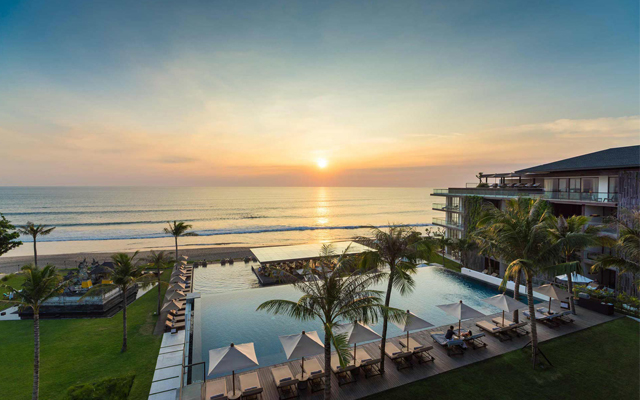
There is just one word to describe the latest Alila outpost in Seminyak: sexy.
There is just one word to describe the latest Alila outpost in Seminyak: sexy.
Location Simply fantastic, minutes’ walk to Seminyak’s chic boutiques and restaurants and boasts a long beachfront.
Ambience I arrive in extremely heavy rain. Yet, curtains of water and staff scrambling to keep the lobby dry fail to dampen Alila’s stylish vibes. The architecture has the brand’s stamp on it – clean lines, minimalist, open spaces – except this newest Alila is larger, more sprawling, more contemporary, posher. Some may argue it needs to be more Balinese but for me the architecture fits like a glove in trendy Seminyak. A beautiful, old temple on prime beachfront is incorporated right into the heart of the development – what better Bali flag is there than that?
Room I’m in Deluxe Ocean Suite 134 which is on the third floor of a low-rise building, one of three buildings that comprise the hotel. The size of my suite is a generous 60m2 and its sleek, clutter-free design makes the room feel even more spacious and comfortable. The huge balcony with an inviting daybed hits a yearning; I know I will be immersing myself in a book there often, or watching people along the beach and enjoying the famous Seminyak sunset.
Ironically, there isn’t enough space in the very spacious suite – too few drawers for clothes and no working table. But its modern comforts are faultless; I love the complete range of Alila toiletries, free speedy Wi-Fi, LCD TV with satellite channels and plenty of movies, and coffee-/tea-making facilities.
There are several room types and sizes. At the time of visit in early February, 124 of 240 rooms have opened.
F&B Move aside Potato Head next door. Alila’s Beach Bar clearly is the new flavour of the month. A large open pavilion with the cosiest daybeds and cushiest floor couches, it’s the place to be anytime from 11.00 but especially in the evenings, with beach music being spun by a DJ.
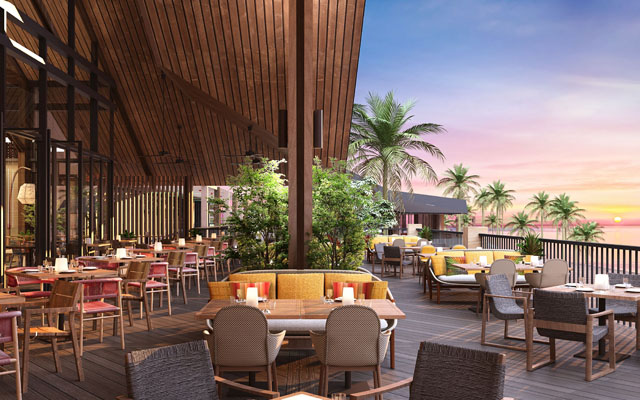
Alila’s all-day dining is an open-kitchen beachfront restaurant with many sections, including an Asian noodle bar and a grill & rotisserie. I love the variety it offers. My favourites are the chilli crab claws and crispy chicken with Szechuan lemon mayonnaise.
Facilities Three of five infinity pools have opened – and how gorgeous they are. Equally a dream is the fitness centre near the Beach Bar which is lined with the best machines, yoga room, body-building and relaxation spaces. Other facillities include the Alila Spa and an Event Centre which can host meetings and banquets for up to 350 people.
Service Alila prides itself on being ‘Surprisingly Different’. On standby at the lobby are handsome, young ‘menpower’ dressed in smart white shirts and navy trousers ready to welcome and help guests with luggage, shopping bags, directions, etc. All the staff I encounter are clearly proud to be part of a swanky hotel; morale is high and they are so eager to be of service. There are real stars among them, like Roma who serves at the all-day dining restaurant, and there are others who are still ‘raw’ but their enthusiasm more than make up for their inexperience.
Verdict Hottest chick in town and dripping with tropical cool. A great addition to Alila’s portfolio, and that of Design Hotels, of which it is a member.
No. of rooms 240
Rates Check various introductory deals on offer throughout the year on the website
Anantara team members with over 15 years of service celebrating the hotel chain’s 15th anniversary with Dillip Rajakarier, CEO, Minor Hotel Group and William Heinecke, chairman and CEO, Minor International, at Anantara Siam Bangkok Hotel.
FINLAND hopes to ease access for mainland Chinese travellers with the setting up of 13 new visa centres across the country.
By spring 2016, new visa centres will open in the cities of Changsha, Chengdu, Chongqing, Fuzhou, Guangzhou, Hangzhou, Jinan, Kunming, Nanjing, Shenyang, Shenzhen, Wuhan and Xi’an. Currently, Finland has application centres in Beijing and Shanghai.
A new stopover service, announced last year, will also be launched by Finnair in partnership with Finnish travel companies by end-March, offering packages to mainland Chinese visitors staying in the country for a period that ranges from five hours to five days.
The new moves are coming on the back of a 40 per cent increase in overnight stays by mainland Chinese visitors to Finland in 2015. Mainland Chinese travellers are already the biggest spenders per visit of all international visitors to the Nordic country.
ONGOING studies by MyTravelResearch.com shows that the luxury travel segment consist of a diverse mix of consumers with a broad range of expectations.
“Our initial research says that the travel industry needs to stop looking at high-end travel consumers as homogenous,” said Carolyn Childs, co-founder of MyTravelResearch, adding that she has identified multiple types of luxury travel consumers, namely the ‘hedonists’, ‘jet setters’, ‘philanthropists’, ‘lotus eaters’, and more.
The research also looks at the growing trend of executive assistants handling travel management budgets, which range from US$10,000 to US$2 million, as well as MICE, noting an increasing focus on meetings, events and executive travel in the luxury space.
Michelle Papas, director of marketing and buyer relations at Luxperience, said: “With these kind of budgets, a clear understanding of how executive and personal assistants work will boost the high-end travel sector.
“We will continue to work with partners to better inform the industry on the needs of the various market sectors as they affect luxury travel.”
The full study is scheduled for publication in tandem with Luxperience 2016 in September.
FOREIGN arrivals in Asia-Pacific averaged a year-on-year growth of 5.2 per cent in 2015 to reach a total of more than 455 million travellers, according to preliminary data collected by PATA.
Regionally, arrivals grew most in South Asia (8.2 per cent), followed by South-east Asia (6.7 per cent) and North-east Asia (3.5 per cent), with overall growth in Asia reaching 4.5 per cent in 2015 compared to the year before.
At the destination level, Japan had an especially strong year, growing by over 47 per cent year-on-year and setting a new record with more than 19.7 million foreign arrivals.
Also remarkable were arrivals to Thailand and Sri Lanka, which grew by 21 and 18 per cent to almost 30 million and 1.8 million respectively.
The gains were supported by the continued expansion of scheduled air seat capacity, with an 8.7 per cent annual growth in 2015 for the Asia-Pacific compared to the global average of 6.7 per cent.
According to PATA’s forecast, growth rate up to 2020 is expected to be around 3.4 per cent for North-east Asia, around 6.8 per cent for South-east Asia and 7.6 per cent for South Asia to collectively reach 650 million total arrivals.
Overall, Asia is predicted to see its foreign arrivals count increase by an average of 4.5 per cent per annum between 2015 and 2020.
In terms of source markets, the Pacific enlarged substantially in 2015 with annual growth of over seven percent to reach almost 27 million people. The Americas – which excludes the US – also grew significantly by nine percent to almost more than 54 million arrivals.
Origin markets within Asia will generate the largest volume of arrivals into Asia-Pacific heading into 2020. From a proportionate volume of 66 percent in 2015, Asia will increase its relative share of arrivals to more than 68 percent by 2020. Asian source markets are expected to generate close to 400 million arrivals annually into the Asia-Pacific region by then.
At the destination level, unsurprisingly, China will lead as the largest generator of foreign arrivals. It is expected to create over 60 million arrivals to non-mainland China destinations in Asia-Pacific in 2020.
EMIRATES has stated that it is no longer interested in investing or managing another airline again, citing an unsuccessful partnership with SriLankan Airlines that concluded in 2008.
Since the 10-year management contract with Emirates ran out, SriLankan Airlines has accumulated losses totalling 145 billion Sri Lankan rupees (US$1billion).
But the national carrier is once again on the lookout for a partner. Quashing Emirates as a possible option, Matt Raos, vice president corporate sales at Emirates, said: “We don’t intend to go back down that road (either by investing in or managing other airlines).”
SriLankan Airlines, like many global aviation players, is faced with an increasingly difficult operating environment as competition rises and margins tighten. Recently, it announced plans to stop flying to Rome from May.