TTG Asia
Asia/Singapore Tuesday, 24th March 2026
Page 1879

Gavin Smith takes on SVP role at Royal Caribbean

0

ROYAL Caribbean has appointed Gavin Smith as senior vice president international, effective immediately, taking over the role of Dominic Paul, who is leaving the cruise liner on May 1.

Smith’s new role sees him responsible for all sales, marketing and commercial operations for the cruise brands Royal Caribbean International, Celebrity Cruises and Azamara Club Cruises in South-east Asia, Europe, the Middle East, Latin America, the Caribbean and Australasia.

He reports directly to Michael Bayley, president and CEO, Royal Caribbean International.

During his time with Royal Caribbean, Smith was responsible for opening the company’s first Australian office in December 2008 as its managing director.

Millennium Hilton Bangkok names GM

0

HEIDI Kleine-Moeller, formerly the hotel manager at Millennium Hilton Bangkok, has been promoted to general manager, effective since January 1, 2016.

The industry veteran with 20 years of experience in the hospitality industry, 10 of which are with Hilton Worldwide, was promoted to her present role in recognition of her capability where she helped the property exceed business targets, grow market share and increase its revenue.

millennium-hilton-bangkok-names-gm

Prior to joining Millennium Hilton Bangkok, she had worked in many other countries including the US, Germany, Dubai and Kenya.

Photo of the Day: Industry veterans dinner hosted by M&C

0

dinner

(From left) Alex Chan (Hong Thai Travel), Michael Chow (TTG Asia Media), Yap Puay Beng (TMIS), Tony Lim (Discovery the World), Aloysius Lee (M&C Hotels), Mohd Rafin (Park Hotel Group), Wong Soon Hwa (Blacklane), Anthony Chan (Chan Brothers Travel) and Ricky Ong (The South Beach), at a dinner for travel industry veterans last week at Grand Shanghai Restaurant, Singapore, hosted by Aloysius Lee, CEO of Millennium & Copthorne Hotels.

The Olympian opens in Hong Kong’s West Kowloon

0

olympian-room

SINO Hotels, the hospitality management arm of Sino Group, has launched The Olympian Hong Kong, a 32-room contemporary boutique hotel in the heart of West Kowloon.

The property is located in Kowloon’s ‘Golden Circle’ and close to Olympic Station and the shopping and residential complex of Olympian City. It is also minutes away from the business hub of Tsim Sha Tsui.

Rooms and suites range from the 43m2 Deluxe Olympian Room to the 75m2 Olympian Suite. All guestrooms feature a 3.3m ceiling height and full-length windows, maximising the view over Victoria Harbour and the city skyline.

Amenities include a fitness centre and a private lounge where guests can have cooked-to-order local and international meals round the clock.

The hotel is currently offering a special introductory room rate from HKD1,600 (US$206) per night excluding service charge, available until June 30.

Royal Caribbean now offers custom shore excursions

0

royal_caribbean_international_-_private_journeys

ROYAL Caribbean International has introduced customisable shore excursion itineraries for guests across the cruise liner’s 288 ports of call in 77 countries.

Named Private Journeys, the concierge-style planning service, offered on top of Royal Caribbean’s existing 3,000 excursions worldwide, connects guests with an expert who will help design journeys tailored to the guests’ budget, interests, experience and travel style.

“Private Journeys is a natural evolution of Royal Caribbean’s renowned shore excursions programme that allows us to offer guests the bespoke travel destination experience of their dreams, even if they don’t know exactly what that is yet,” said Roberta Jacoby, managing director, global tour operations, Royal Caribbean International.

To make a custom booking, guests must complete and submit a request form online at least 30 days before their sailing date.

In celebration of the new programme, Royal Caribbean is waiving the mandatory US$100 deposit for bookings finalised before March 31, 2016.

With Ebola gone, operators boldly sell Africa to Asia again

0

13336753_l

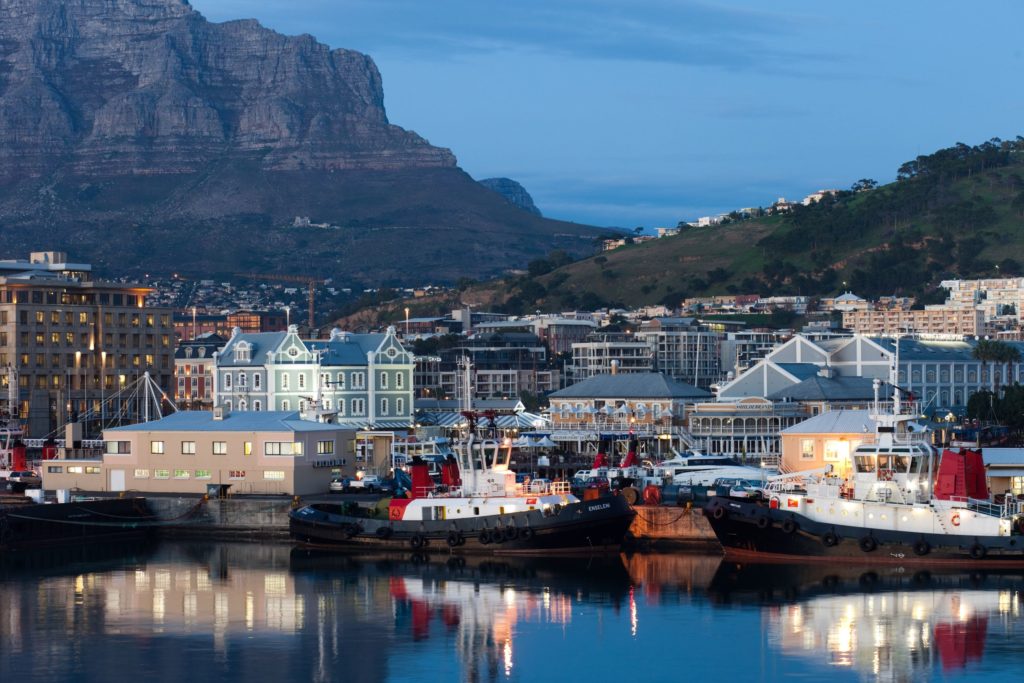
Cape Town, South Africa

WITH the dust settled following the World Health Organization’s declaration of Liberia to be Ebola-free in January this year, African specialists are eagerly targeting Asia’s travellers again.

Asia arrivals in Africa had taken a big hit since the 2014 Ebola outbreak in West Africa caused widespread death in the region, which led to the abstinence of travel to the entire African continent.

The avoidance of the whole of Africa, even though the virus only spread in the western regions, was ostensibly understandable given this was the deadliest occurrence of the disease in history with over 11,300 confirmed dead.

Now with Ebola out of the picture, Johan Groenewald, managing director of Royal African Discoveries, a DMC, has led a contingent of eight suppliers to South-east Asia for the first time to update travel agents on new product offerings, but more importantly to educate and to let everyone know that Africa is now, and had always been, a safe destination.

The roadshow, which first stopped in Singapore yesterday, will also make its way to Indonesia, Malaysia and Vietnam – the three fastest growing source markets for them in the region.

“Asia is key for our business and we will keep investing in the region,” said Groenewald, adding that working with trade partners has always been the preferred option rather than approaching consumers directly.

He is also hoping to ride on the momentum of 4Q2015, which saw Asia arrivals make its first positive turnaround since numbers plunged on Ebola fears.

Business for Asia-based outbound operator A2A Safaris is also making good progress. It’s managing director, Kim Nixon, said: “If you look at the first two and a half months of this year, we are 35 per cent of the distance to our entire 2015 performance. This is a very clear indicator of where this market is going.”

He attributed the promising numbers so far to pent up demand for Africa now that the “hangover of Ebola is gone”.

Slow ASEAN integration but prospects high

0

ASEAN remains a region of huge opportunities despite a slow pace of economic integration and headwinds such as a China slowdown, high household debt levels in Malaysia and Thailand, and geopolitical tensions.

Kicking off HICAP Update in Singapore last Wednesday with an overview of the region, Fraser Thompson, director of AlphaBeta based in Singapore and Sydney, said major new trade deals such as the ASEAN Economic Integration, the Regional Comprehensive Economic Partnership and the Trans-Pacific Partnership would reshape the region, even if progress is mixed to-date.

Thompson pointed out a few positives for the industry, including travel and tourism now being the second most liberalised sector for FDI in ASEAN after logistics, albeit there remain constraints in some countries such as Thailand. Visa requirements for short-term travel in most member states by ASEAN citizens have also been removed, while open-sky policies have encouraged the birth of new airlines in routes previously dominated by national carriers.

On the other hand, progress on a single ASEAN visa is limited, and ASEAN countries still impose visa requirements for short business trips. As well, there remain restrictions on domestic airline competition, with domestic routes only open to national carriers.

Progress on tourism-related labour mobility in ASEAN has also been limited despite mutual recognition agreements for tourism professionals in the region.

In the face of this “hodge podge” bag of results, he urged the audience to disband skepticism, pointing out that tourism is booming in ASEAN, in particular by ASEAN visitors themselves.

fraser-thompson

Fraser Thompson, director of AlphaBeta

And the biggest driver of growth for the longterm is urbanisation, which will grow the intra-ASEAN pie, currently constituting half of travel in ASEAN. More than 90 million people are expected to move from agriculture to urban jobs by 2030 and the “middleweights” – cities with 750,000 to five million people – will be where they go to. These cities are where investors should be looking at for the longterm, he said.

Supporting urbanisation, infrastructure investment is on the uptick, albeit at levels below the global financial crisis. A real momentum to build infrastructure, such as in Indonesia, and a “political race” to support infrastructure investment projects in ASEAN – as seen in the Asian Infrastructure Investment Bank, Silk Road Fund, Japan’s fund to support quality and innovative infrastructure, etc. – will mobilise huge amounts of funds for projects, Thompson said.

On headwinds such as a slowdown in China, he said the impact would vary. The likes of Malaysia would significantly be affected by China as it’s directly linked to the supply chain in China, unlike countries such as Indonesia or the Philippines, which have bigger domestic-driven economies, he said.

Household debts in Malaysia and Thailand, which stand out as among the highest in the world, may start to crimp consumer demand in the near term and thus the industry is not likely to see the growth rates as in the last four to five years coming out of those countries.

Investors also must have their geopolitical radar on ASEAN be more “finely attuned” as there are a number of important issues such as the South China Sea dispute, the haze problem, elections in Myanmar and Thailand and the 1MDB scandal in Malaysia, among others, said Thompson.

Jesper Palmqvist, area director Asia-Pacific, STR Global, delivering a hotel performance & outlook, also stressed that while there are negatives in the region, the market is growing with new travellers across Asia-Pacific and infrastructure spending by government and private sector to support the growth.

On Thailand and Singapore, which are on the radar due to their recent performances, the verdict from HICAP Update sessions is as follows:

  • Thailand: Stop discussing its recovery. It has recovered and is really growing. It leads the region with arrivals growth. But although occupancy is high, rates are low.
  • Singapore: Performance is likely to be flat or better than flat this year. Spending is down due to fewer corporate and MICE business but on the bright side, the country always has something new to offer and some hotels are delaying their opening. The South Beach for instance is said to have opened only 250 rooms or so, out of 651. Upscale and luxury segment is faring better than other segments.


Malaysian agents find ENTRI ineffective for groups

0

47356302_l

THE Malaysian government’s introduction of ENTRI (electronic travel registration and information) earlier this month to boost Chinese tourist arrivals to Malaysia has been found ineffective in attracting business events from China.

ENTRI allows visitors from China visa-free entry for stays of not more than 15 days. However, the process has proven cumbersome, and is the latest sore point for Malaysian agents after a string of failed initiatives by the government to ease visa restrictions.

Asian Overland Services Tours & Travel assistant manager, business development, Roger Yin, said that the ease of obtaining visa is an important consideration for MICE organisers when choosing a destination.

But ENTRI is not user-friendly for outbound travel agents in China who are attempting to bring groups to Malaysia, according to Mint Leong, secretary general of the Malaysian Inbound Tourism Association (MITA).

She elaborated: “Agents can only key in the details of up to five applications per unique ID. Imagine the manpower and time needed if there is a group of 600 delegates.”

Leong added that MITA had already written to the Malaysian government on March 14 to have the system rectified, as well as to lengthen ENTRI beyond its December 31 end date, as business events from China usually take six months or more to materialise.

John Chan, business development director, Kris International Traveltours, said: “It is cumbersome as it does not allow smooth processing for big groups. The shortcomings have to be resolved quickly in order not to stifle the enthusiasm of incentive houses and meeting planners who have placed Malaysia as one of the key destinations this year.

“If this is left unresolved, Malaysia will lose its attractiveness as a destination to competing neighbours,” added Chan.

Photo of the Day: Singapore Changi wins best airport award

0

changi-airport

Lee Seow Hiang (left), CEO of Changi Airport Group, receiving the World’s Best Airport award from Edward Plaisted (right), CEO of Skytrax. Singapore Changi Airport has been voted the World’s Best Airport by air travellers for the fourth year in a row at the 2016 World Airport Awards, held at the Passenger Terminal EXPO in Cologne, Germany. This is the 7th time that Changi Airport has picked up this top title at the World Airport Awards.

Lufthansa appoints APAC VP

0

d_vranckx1

GERMANY’s flag carrier Lufthansa has appointed Dieter Vranckx as vice president sales Asia-Pacific with immediate effect.

In his new role, Vranckx will be responsible for managing and directing sales efforts for all markets in the Asia-Pacific region while being based in Singapore.

Prior to this, he had held a variety of positions in passenger sales and cargo within the Lufthansa Group, including vice president, head of sales & marketing Switzerland, Germany and Austria for Swiss International Air Lines in Zurich.