TTG Asia
Asia/Singapore Sunday, 29th March 2026
Page 1835

Photo of the Day: Star Alliance chiefs meet in Zurich

0
The Chief Executives of the Star Alliance member airlines arrive in Zurich for their summer meeting. They flew in on Bombardier's new CS100 aircraft, due to start normal operations in July.

The Chief Executives of the Star Alliance member airlines arrive in Zurich for their summer meeting. They flew in on Bombardier's new CS100 aircraft, due to start normal operations in July.

Chief executives of Star Alliance member airlines arrived in Zurich on Bombardier’s new CS100 aircraft for their summer 2016 meeting. The Swiss International Air Lines flight brought the Alliance’s top executives from Dublin, Ireland, where they were gathered for IATA’s AGM.

The confused world of hotel categorisation

0

TTG Asia‘s probe into mid- and upscale hotel labels uncovers flaws with a seemingly arbitrary classification system – and why travel agents want the muddle taken out of such ratings
10june_hotels-2


SINGAPORE
By Paige Lee Pei Qi

Judy Lum, group vice president for sales and marketing, Tour East Group

Definition of mid- and upscale hotels in terms of prices and brands
• Midscale: S$200 (US$145.70)-S$250; Orchard Hotel, Hotel Rendezvous and Swissotel Merchant Court.
• Upscale: S$300-S$400; Grand Hyatt, Pan Pacific Singapore and Fairmont Singapore.

Current demand Companies undergoing corporate cut backs tend to move from upscale to midscale hotels, which will be seen as a prudent move while (retaining) a presentable image for the company.

C-level executives are (downgrading) from suites in signature and iconic hotels to upscale hotels, which still have strong branding but do not cost an arm and a leg.

Current supply We have good supply of hotels overall but it does not hurt to have more. Singapore is a top destination for business and MICE events so rooms will be filled. A bigger supply will not exert downward pressure but will stabilise rates and make the destination more attractive.

Areas for improvement There’s an increasing number of hotels changing their check-in to 14.00 or even 15.00 and check-out to 11.00. It used to be 12.00 for both check-in and -outs.

Clarification or confusion? In Singapore, I feel that the mid- and upscale labels are being used by some hotels to blindsight the industry and consumers alike to accept a certain price point when their hotel cannot meet the desired star-rating criteria. Hence, it is best to use star ratings or associate the standard or category with a known brand.

Michael Chong, manager of global business, Star Holiday Mart

Definition of mid- and upscale hotels in terms of prices and brands
• Midscale: S$120-S$160; applies to boutique hotels in general.
• Upscale: S$180-S$300, for four stars and above rated hotels.

Current demand There’s a stronger demand for newer hotels. Price and location are the main deciding factors for both categories.

Current supply More midscale hotels are entering the market and the category seems to be oversupplied. With lesser new supply and stiff competition, upscale hotels are lowering rates to a similar level as midscale hotels.

Areas for improvement There should be clearer definitions of category and facilities, and rate stability.

Clarification or confusion? The differentiation line is very thin and blurred, as different hotels have varying classifications. Hotels should work on clearer updates and differentiation factors.


THAILAND

By Xinyi Liang-Pholsena

Victor Mogilev, general manager, Diethelm Travel Thailand

Definition of mid- and upscale hotels in terms of prices and brands
• Midscale: 4,000 baht (US$112.30)-7,000 baht; Amari, Centara and Avani.
• Upscale: 7,000 baht and above; Banyan Tree, Aman Group and Six Senses.

Current demand With the current uncertain world economy, more people
are looking to spend (more wisely) while still wanting personalised services. There is hence a higher demand for midscale hotels, which also see opportunities to attract new clientele beyond their usual segments.

Current supply We expect further development of midscale properties with a focus on quality, personalisation and efficiency, while upscale properties will have to work to retain occupancy and rates.

Areas for improvement Midscale hotels should look into delivering personalised service and consistent standards for both guests and industry partners.

Upscale hotels should make sure products and services are on the bespoke level  as guests paying top money have become more demanding than ever.

Clarification or confusion? The main issue is the difference in individual perceptions. For some guests and markets, a room priced at 4,000 baht per night is considered an upscale product while for others even a room at 8,000 baht will be taken as an average product.

Kim Martin Rasmussen,
product manager, Exo Travel Thailand

Definition of mid- and upscale hotels in terms of prices and brands We rely on star ratings and our hotel classification system instead of these terms.

Current demand Midscale hotels are emerging for new growth markets where price is still a factor for travel to Thailand; these hotels are also widely used in our SIC programmes. We always have a demand for upscale hotels due to (our predominantly high-end clientele).

Current supply Small boutique hotels in the midscale category can be in shortage during peak seasons, so more boutique midscale hotels would be nice. Upscale hotels appear to be in demand year-round and run out of supply during peak seasons.

Areas for improvement More boutique hotels and better service in the midscale range would be good in key destinations. Upscale hotels can benefit from more options and inventory, clear separation of rates for agents and direct clients, and extra benefits when booked through agents.

Clarification or confusion? We do not use these terms. The confusion comes more from boutique vs luxury distinctions.


MALAYSIA

By S Puvaneswary

Manfred Kurz, managing director, Diethelm Travel Malaysia

Definition of mid- and upscale hotels in terms of prices and brands
• Midscale: RM400 (US$103)-RM500 in Kuala Lumpur and RM500-RM800 in Langkawi and Sabah; Four Points by Sheraton, Dorsett and Holiday Villa.
• Upscale: RM600 and above in Kuala Lumpur, and RM800 and above in Langkawi and Sabah; for St Regis, Mandarin Oriental and Grand Hyatt.

Current demand The favourable exchange rate has contributed to demand. As well, demand for beach hotels is higher during the Malaysia and Singapore school holidays. City hotels do well on weekdays because of corporate and meetings demand.

Current supply Kuala Lumpur has an oversupply of mid- and upscale hotels. In Sabah, there is an undersupply during the May-October peak season. In Langkawi, the supply is just right.

Areas for improvement Service levels must be improved on for both categories.

Clarification or confusion? A midscale five-star property could operate like a four-star brand, so guests’ expectations are not (always) met.

Ally Bhoonee, executive director, World Avenues

Definition of mid- and upscale hotels in terms of prices and brands
• Midscale: US$70-US$80; four-star hotels like Holiday Inn, Furama  and Melia.
• Upscale: US$110-US$250; five-star hotels like Westin, JW Marriott and Ritz-Carlton.

Current demand There is greater demand for upscale hotels due to the
ringgit depreciation, which makes upscale hotels good value for money as it
costs a third of a similar brand in Europe.

Current supply There’s an oversupply in the capital city right now and Kuala Lumpur City Hall has temporarily stopped issuing new licenses for all hotel types. In secondary destinations such as Penang, Johor and Kuching, there is room for more investments in upscale hotels.

Areas for improvement I would like for hotels to improve service and for owners to upkeep their properties.

Clarification or confusion? Some define midscale as a four-star and upscale as a five-star property, while others refer to a five-star deluxe hotel as midscale and a five-star super deluxe hotel as an upscale one. Such (varying) definitions are confusing to travellers who tend to recognise hotels by their brands and star ratings only.
 

10june_hotels-3

JAPAN
By Julian Ryall

Tetsuya Takeda, general manager of inbound division, Nippon Travel Agency

Definition of mid- and upscale hotels in terms of prices and brands
• Midscale: The Keio Plaza, The Royal Park and The Shinagawa Prince.
• Upscale: The Mandarin Oriental, The Ritz-Carlton and The Peninsula.

For an agent, it is too sensitive for us to put a price on hotel rooms.

Current demand We are seeing demand for midscale properties because they tend to cater to larger groups of foreign tourists, while luxury hotels are more geared towards VIP travellers. Demand is extremely high now and continues to rise (with the surge in foreign tourists to Japan).

Current supply Japan has a room shortage and the situation particularly acute in Tokyo, Osaka and Kyoto. It does not seem feasible that new hotels can be built fast enough for Japan to accommodate 40 million visitors for the 2020 Olympics. We are trying to alleviate the problem by encouraging visitors to stay outside the big cities or come at different times of the year.

Areas for improvement Besides a bigger room supply, we need to ensure that new properties have adequate parking spaces for tour buses. Many city-centre hotels do not and guests often need to walk some distance to their hotel. The government should give out tax breaks for hotels that include parking facilities.

Clarification or confusion? Tour groups usually follow the advice of their agents when it comes to hotels, but there may be some confusion among independent travellers. American tourists, for example, generally want bigger rooms but Europeans are more focused on the hotel location, so the demands and expectations of what is upscale or midscale are different.

Hiroyasu Shima, director of sales, Triangle Japan

Definition of mid- and upscale hotels in terms of prices and brands
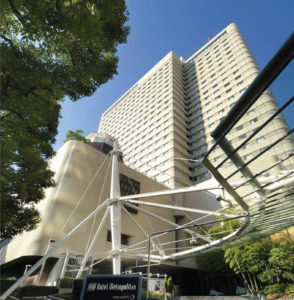
• Midscale: from US$300; Hotel Metropolitan Tokyo Ikebukuro, The Tokyo Dome Hotel and The Shinagawa Prince.
• Upscale: US$700 and above; The Shangri-La Hotel, The Conrad and The Peninsula.

Current demand There is huge demand for hotel rooms across all price brackets in the major cities. Agents are now bringing a lot of tourists from South-east
Asia, and they are filling up the midscale hotels.

Current supply Five years ago, it was easy to get rooms pretty much any time of the year as most visitors tended to be wealthy and stayed at five-star hotels. Now we are facing a shortage of rooms across all price brackets and the consequent price increase gets passed on to the customer.

Areas for improvement The average Japanese hotel (used to) focus on the needs of domestic travellers because only around 10 per cent of guests were from overseas. That figure is now above 30 per cent in most places but most operators have not added new services or facilities such as providing halal meals. We have to go beyond building new hotels to meet demand.

Clarification or confusion? There is some confusion among foreign visitors, primarily over price and service levels. Prices are rising due to the room shortage and travellers from other parts of Asia are surprised at the amount they have to pay for seemingly basic rooms and services.


HONG KONG

By Prudence Lui

Jenny May, managing director, The Destination Management Company

Definition of mid- and upscale hotels in terms of prices and brands
• Midscale: HK$1,500 (US$193.22)-HK$2,350; Sheraton, Marco Polo and Hyatt Regency
• Upscale: HK$2,400-HK$3,400; Shangri-La, Grand Hyatt and InterContinental.

Current demand Despite the current downturn in tourism, demand for both categories is still quite high. With most hotels now offering special rates, it’s possible to book an upscale hotel at midscale rates, which is beneficial for MICE agents as clients can reduce their hotel costs and spend more on ground programmes.

Current supply There is enough midscale hotels but the city could do with a few more upscale hotels – a few brands have not entered into Hong Kong yet. It amuses me that a few lower-scale hotels are classifying themselves as midscale and trying to charge midscale rates even during this dire tourism season.

Areas for improvement Standards in Hong Kong are already exceptional.

Clarification or confusion? These terms are ambiguous and confusing. The star-rating system is much better.

Ivy Sung, CEO, Faces of Hong Kong

Definition of mid- and upscale hotels in terms of prices and brands
• Midscale:  HK$1200-HK$1300; W, Sheraton and New World Millennium Hong Kong.
• Upscale: HK$2000-HK$3000; The Peninsula, Four Seasons and Shangri-La.

Current demand (Looking at corporate travel trends), industries like pharmaceuticals are opting for midscale over upscale accommodation (as they are limited by) their compliance policies amid existing economic conditions.

Current supply The supply seems enough for both categories unless inbound traffic, especially from China, recovers.

Areas for improvement
Service standards have dropped (relative to) other Asian cities. The immediate cause is higher labour cost and manpower shortage. Greater work pressure also leaves staff less time to mingle and interact with customers.

Clarification or confusion? Some five-star hotels are beyond five-star standards so the grading cannot reflect the reality. Also, some suppliers are not clear on the difference between four- and five-star premises.


CHINA
By Caroline Boey

Sam Lay, director, Greater China, BCD Meetings & Events

Definition of mid- and upscale hotels in terms of prices and brands
• Midscale: RMB500 (US$77)-RMB1,000; Renaissance, Pullman and Novotel.
• Upscale: RMB1,000-RMB2,500; JW Marriott, Shangri-La and Ritz-Carlton.

Current demand The large domestic market continues to drive demand for all categories. In particular, we are seeing strong demand for midscale hotels, driven by growing corporate meetings especially from a policy compliance perspective.

Current supply For the tier-one cities of Beijing, Shanghai and Guangzhou, there is a good mix already present or in the pipeline for both hotel categories. Supply growth should be focused on tier-two and -three cities cities like Xi’an and Chengdu with good MICE traffic.

Areas for improvement The overall offerings of mid- and upscale hotels are generally satisfactory, but China still has room for improvement in the service touchpoints.

Clarification or confusion? There is a lot of ongoing debate regarding the two terms and definitions. It is key for meeting planners to understand the client’s requirements, and to deliver value by recommending the right hotel.

Violet Wang, destination manager, Pacific World China

Definition of mid- and upscale hotels in terms of prices and brands
• Midscale: RMB1,000-RMB1,600; Langham, Fairmont and Westin.
• Upscale: above RMB1,600; Peninsula, Waldorf Astoria and Banyan Tree.

Current demand There is good demand in both categories in China. The strict compliance policies for the pharmaceutical industry and government events, where accommodation is capped at midscale hotels, is contributing to high demand for mid-range meeting hotels.

Current supply More hotel groups are now debuting their high-end brands into China, as Chinese customers become better educated and seek out luxury brands.

Areas for improvement Midscale hotels should not lower their service levels even if they decide to reduce their rates amid stronger competition. Upscale hotels need to stretch their capabilities to accommodate larger groups for outside catering and offer distinctive programmes such as cultural lectures, specialised cooking classes and Chinese opera.

Clarification or confusion? In some Chinese cities, brands such as Sheraton and Aloft are both considered mid- and upscale. Customers also still depend on the hotel’s star rating to determine if it is mid-scale or upscale.

To a (lay) customer, any five-star hotel is (considered) upscale but our standard is to follow the automative and luxury industry’s definition.
 

10june_hotels-5

INDIA
By Rohit Kaul

Subhash Goyal, chairman, STIC Travel Group

Definition of mid- and upscale hotels in terms of prices and brands
• Midscale: Rs2,500 (US$37.34)-Rs5,000; Choice Hotels, ibis Hotels and Sarovar Park Hotels.
• Upscale: Rs10,000 and above; Hyatt, Sheraton and Leela.

Current demand There’s strong demand for both categories but most are being diverted to the New Delhi Capital Region (NCR) as there is 15 per cent luxury tax on the published tariff in New Delhi, versus 10 per cent on the actual tariff in NCR.

Current supply New Delhi has a shortage of midscale hotels but an oversupply of upscale hotels after (multiple openings) in Aerocity near the international airport.

Areas for improvement Hotels in both categories need to offer free Wi-Fi and provide the same rates to travel agents and tour operators as given on the Internet.

Clarification or confusion? The difference is clearly understood by the travel agents, tour operators and consumers alike.

Ayappa Somaiah, vice president, Splendour Holidays

Definition of mid- and upscale hotels in terms of prices and brands
• Midscale: Rs3,500-Rs4,000; Quality Inn, ibis and Fortune.
• Upscale: Rs5,000-Rs6,000; Vivanta, Marriott and Sheraton.

Current demand For the average foreign and domestic leisure travellers, midscale is preferred for its rates and value-for-money features. Corporate and high-end leisure travellers prefer upscale hotels for the comfort, facilities and full services.

By and large upscale hotels in major Indian cities are in demand, while in the secondary cities midscale hotels fuel growth.

Current supply Professionally-managed midscale hotels are not evenly distributed. For example, in Bengaluru there are adequate upscale hotels but a shortage of midscale hotels. Currently, we see more upscale hotels entering the big cities.

Areas for improvement Upscale hotels generally conform to international product and service standards but it is not the case for midscale hotels that do not belong to reputed chains.
There is a shortage of well-trained staff across both segments but we, as an inbound tour operator, receive most complaints on midscale hotels.

Clarification or confusion? This confusion is mainly with foreign travellers, as sometimes our upscale hotels do not conform to standards (they are familiar with, due to varying definitions across the world). But this scenario is changing with many international brands now coming up.


SRI LANKA

By Feizal Samath

Nilmin Nanayakkara, managing director, NKAR Travels & Tours

Current demand Current country-wide demand is for the three- and four-star range.  Europeans are looking more at the three- or four-star range, probably due to the economic recession, while new markets like China tend to opt for four- and five-star hotels.

Current supply There has been an increase in room supply reflecting the national growth in tourism. However, there is a shortage of three-star hotels if going by the ratings of the hotels themselves.

Areas for improvement It is necessary for the authorities to impose a proper star rating  system without allowing the hotels to decide on their own ratings.

Clarification or confusion? Some OTAs allow (arbitrary) star ratings to be attached to hotels. Lots of three-star quality products are sold as four-star ones, diluting the four-star recognition.

Also, some four-star quality products are found in the five-star category due to the minimum rates policy between city hotels. This confuses the end buyer and creates a bad image for the destination.

Anura Lokuhetty, chairman, Asian Council on Tourism

Definition of mid- and upscale hotels in terms of prices and brands Upscale refers to hotels five star and above while midscale tend to be three- to four-star properties.

Current demand There is more demand for the midscale sector, with the industry driven by affordability.

Current supply After the end of the civil war, most old hotels have gotten a facelift while the newer ones are mostly in a higher category. In terms of product (mix) we are on the right track.

Areas for improvement The huge informal sector – which in the past five years has mostly evolved in the mid-to-lower – needs to be regulated.

Pricing is also a sensitive issue and we need to ensure our rates are competitive with other destinations in the region. We need to be careful in accelerating development in order to retain this beauty and authenticity of Sri Lanka.

Clarification or confusion? The NTO has its own star rating system, while most operators have their own classification. We may tag a property five star but some operators will refer it to as three to four stars.

This article was first published in TTG Asia, June 3, 2016 issue, on page 14 To read more, please view our digital edition or click here to subscribe.

Coping with currency woes

0

With the Malaysian ringgit in a recent flux, S Puvaneswary finds out what measures travel companies are taking to ease the effects of currency volatility on their business

10june_analysis

Malaysian travel agents are changing and adapting their business strategies in the face of a weak  ringgit, as currency fluctuations since 4Q2015 weigh on their operations and earnings.

Desmond Lee, group managing director of Apple Vacations & Conventions, told TTG Asia: “The weakened ringgit has made Malaysians more cautious of their spending, and we had to change our strategy in selling Japan and Europe.

“In the past, we used to focus on Tokyo and Osaka, but we now focus on Hokkaido, the eastern part of Honshu island and Mie Prefecture, where ground costs are cheaper by 30 per cent than Tokyo and Osaka,” he said. “In Europe, we focus on tours to Romania, Greece and Bulgaria as ground costs there are relatively cheaper than central Europe.”

The Kuala Lumpur-based firm now makes full payment in advance to ground suppliers overseas to lock prices at the current exchange rate. It has also allocated a bigger budget for advertising and marketing this year in order to close sales and settle advance payment with ground suppliers faster, added Lee.

Mayflower Acme Tours, meanwhile, monitors outbound package prices daily and marks up with a bigger buffer to prevent losses, deputy general manager – channel management Abdul Rahman Mohamed revealed.

Abdul said: “We also have a clause in contracts with customers and corporate clients that specify that the current rate quoted may be revised at the point of final payment, which may be made a month or two later when rates have changed.

“While MNCs are understanding and will comply (by contractual agreements), SMEs try to take advantage of the currency fluctuations and bargain for a lower rate to gain savings,” he lamented.

“The (ringgit) volatility has also made it necessary to hedge with foreign banks to purchase room inventory and ground transportation, something we didn’t have to do in the past when the ringgit was stable. However, we also see hedging as a means of making extra profit.”

Abdul indicated that hedging  of currency risk is “especially necessary” with non-ASEAN partners as they do not want to trade in ringgit, unlike ASEAN agents who usually have a Malaysian bank account and will transfer the money to their currency when the ringgit appreciates.

The volatile ringgit has also unnerved inbound tour operators, with many opting to put a contracting clause with their overseas counterparts to protect themselves from foreign currency fluctuations.

Ally Bhoonee, executive director of World Avenues, said: “Inbound wholesalers like ourselves give credit to overseas wholesalers for FIT bookings two or three months in advance.

“We only get paid 30 days after the guest checks in and at an exchange rate (usually in US dollars) that had been predetermined earlier. If the ringgit weakens, we make a loss. But if it strengthens, we gain.”

Bhoonee added that a larger buffer would safeguard the company against losses, but they risk losing customers to OTAs amid a competitive business climate. Conversely, if the margins are kept thin, the company has to shoulder the risks.

Similar contracting pains are observed at Olympik Holidays, said general manager Adam Kamal. “It is easy with ASEAN partners as bookings are usually a month in advance so the difference is not much. It is much more difficult to deal with European and Middle Eastern counterparts as they book six to 10 months in advance and they want to adhere strictly to the contract.”

“We suffered a 15 per cent loss in 1Q2016 handling the European inbound market as we had to absorb the difference. Having been burnt, we thus concentrate on the ASEAN market.”

Olympik Holidays is currently developing an online booking engine for its B2B and B2C clients. Expected to be ready by early 2017, the booking engine will provide real-time updates on package prices.

Said Adam: “The booking engine will replace our traditional contracts with agents as they will be given a password and can book directly with us.”

Kingston Khoo, senior product development and contracting manager at Discovery Overland Holidays, said: “Ringgit fluctuation has been quite volatile since March and we have been sending out email announcements on foreign currency exchange rates to our partners every two weeks.

“When the ringgit depreciates against major currencies, this means savings to our (overseas) agents. In April, the ringgit appreciated, and agents have been accepting of the new rates.”

On the other hand, the domestic tourism market has not been severely impacted by the ringgit fluctuations, a situation the Malaysian Inbound Tourism Association (MITA) has taken advantage of when it held its inaugural travel fair in January this year.

Uzaidi Udanis, vice president of MITA, said: “We wanted to encourage more Malaysians to travel within the country. We didn’t think that response would be so encouraging, with around 13,000 visitors and package sales estimated at RM2 million (US$495,946).”

MITA wants to grow its fair next year by involving more industry players and organising it in the states of Kuala Lumpur, Kedah, Johor and Sarawak.

This article was first published in TTG Asia, June 3, 2016 issue, on page 5. To read more, please view our digital edition or click here to subscribe.

RCI: No need for purpose-built China ships

0

3-june-quantum-of-the-seas_aerial-shot-2_cmyk

Zinan Liu, Royal Caribbean International (RCI) president China and North Asia Pacific
Zinan Liu, Royal Caribbean International (RCI)
president China and North Asia Pacific

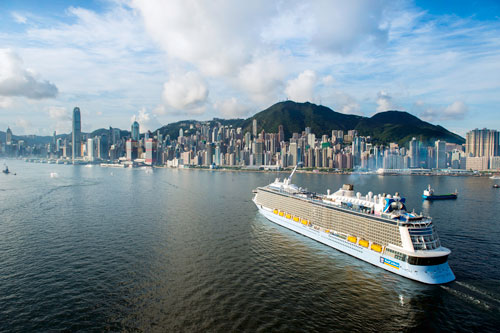
Swimming against the current, Royal Caribbean International (RCI) president China and North Asia Pacific, Zinan Liu, said “we do not do purpose-build (ships) for the China market and we never said any ship was built for China”.

Chinese travellers do not like purely Chinese products, said Liu. Rather, they like international products with some Asian or Chinese elements.

Royal Caribbean has been successfully tapping Chinese cruise passengers by homeporting in China and Asia since 2008 – without custom-made Chinese ships. Many Chinese guests are not seeking fly-cruise vacations, and homeports in the region with their friendly visa policies make them attractive to this group of people, he pointed out.

“Chinese consumers enjoy a three-year multi-entry visa to Singapore while ports of call such as Thailand, Malaysia and Vietnam offer convenient visa processing for cruise travellers. Australia also has friendly visa procedures for the Chinese. Plus, when China enters its winter season, Australia and Singapore are suitable for cruising,” he said.

Recounting its China milestones, Liu said it first tested the waters with Rhapsody of the Seas in 2008. In 2009, Legend of the Seas drew attention to cruising among consumers and the trade, and also hosted one of the most successful corporates charters in China.

In 2012, Voyager of the Seas arrived and “was referred to as the ship that brought China into the Super Boat era.”

“In 2013, with the arrival of Mariner of the Seas in China, we celebrated the fourth year in a row where there was a 100 per cent increase of passenger capacity in this region. Finally in 2015, the arrival of Quantum of the Seas, the most technologically advanced ship in the world, moved us from the Super Boat era to the Quantum era,” he said.

Even with the strong Royal Caribbean  development in China, the penetration rate of cruising is far behind the rate of the North American market, thus great potential still awaits.

“The market is becoming mature and guests now are focusing more on the ship itself instead of the port-of-call destinations,” said Liu.

Is JW right for South Beach? Starck answers

0

philippe-starck1

TTG Asia’s senior editor Raini Hamdi interviewing
Philippe Starck during M Social’s media event held yesterday

HOTEL design is nothing without the right operator to bring “life” to the property, says pioneer of design and lifestyle hotels Philippe Starck, who was in Singapore yesterday at the media launch of Millennium and Copthorne Hotels (M&C)’s first M Social hotel in the world which he designed.

Responding to a question from TTG Asia e-Daily if he thinks hotels such as The South Beach in Singapore will be more original if it is self-managed than operated by a global hotel brand, Starck said this was the difficult question for owners.

“Me, I make the stage. You, now you need the movie director and without the right one, all of this will never work. They have to have the same ‘mood’, the same ‘tribe’; it’s difficult otherwise to drive a hotel like that, which is so personal,” he said.

M Social and South Beach both represent the dream of Singapore tycoon and developer Kwek Leng Beng, chairman of M&C, to create an iconic impact in the global industry. Kwek is in two minds about self-managing the South Beach and is in talks with Marriott International to flag it as a JW.

When asked about it at M Social’s media event yesterday, Kwek said it was “still not confirmed” if JW would manage South Beach and declined to say more.

Starck designed both South Beach and M Social. In an interview, he said in the wake of so many design, boutique and lifestyle brands, the life and soul of hotels have become ever more crucial.

“Design is nothing. Before design, there’s humanity, generosity, vision. I am not making a design but a movie. When I design something, I don’t know if it is beautiful or not, I don’t care. But I know step by step what my friends will feel, see, what emotions they will have and when they leave, they will say to their wife, ‘Oh my god, I was in a place and it was full of energy, it gave me ideas, it made me creative. Design is not life,” Starck said.

If South Beach was well-managed, he added, it would be the most “classic” hotel in Singapore, which he defined as “perfect, timeless, with astonishing quality”; not because it was on some front cover of a magazine but because it did not forget the people aspect and it made guests feel they were at home with “mood, feeling, soul”. He added it was ridiculous how so many hotels now were lifeless.

“I invented the boutique hotel and when we see the ‘children’ of boutique hotels today, I’m ashamed. My wife and I travel every day. We prefer classic hotels; we never go to trendy hotels,” he said, adding that super trendy hotels riled him the most. “You know its lifespan is two years. When you go to sleep, you don’t know where the switch is and when you wake up, you wait two hours for the breakfast.”

When asked how South Beach and M Social inspired him when designing them, Starck said: “My body has the age to go to South Beach, but my brain has the age to come here,” referring to M Social, which is designed for the millennial mindset.

“South Beach is a very well done hotel. It is for interesting, intelligent, cultured, fun businessmen and fun parents. Here (M Social), it is for the crazy children, because we hope all our children will be crazy.

“South Beach talks about the serious part of Singapore, money. M Social talks about the future of Singapore – the life, creativity, what the young people will do in Singapore.”

Meanwhile, Starck hints of a new brand he is developing in France which he said would be a “revolution”. It is set to be launched in September. In Asia, he is designing another hotel in Taiwan.

He is not interested to set up a Philippe Starck hotel brand.

“My job is to dream and create, not to know if the champagne is cold. We’re not operators. Everybody has to know his know-how and make the best use of it,” he said.

– Read more on TTG Asia’s July issue as Millennium Hotels & Resorts’ president-Asia, Cetin Sekergioglu, and M Social general manager Ting Huong Tak talk about injecting life into M Social

Armed with fat budgets, California heads to China

0
The new Lumix GX1 arrived today.

The new Lumix GX1 arrived today.

Beteta: China is a very important market

TOURISM promotion organisation Visit California recently led a trade mission to China, its first one in the country, as part of efforts to attract more Chinese travellers to the US state.

The 12-member team headed to the key cities of Beijing, Shanghai, Guangzhou and Hong Kong.

President and CEO of Visit California, Caroline Beteta, said: “With this market being so important and (with their businesses) being driven by relationships, we want to make sure to come over and establish relationships ahead of the others. This will be a regular practice.”

California is already receiving a good level of Chinese visitation, having recorded 1.1 million Chinese arrivals in 2014, but Beteta said she wants to better capitalise on the projected 60 per cent growth over the next four years.

She added that the agency’s global operating budget has been more than doubled from US$50 million last year to US$115 million this year, allowing it greater firepower.

Also expecting an increase in funds is Greater Palm Springs Convention and Visitors Bureau, which would likely have its marketing budget bumped up from US$300,000 to US$500,000 in 2016-17.

“We’ll invest more in social media and plan to partner with other destinations like Santa Monica and Gateway to Death Valley in order to explore FIT itineraries,” said its president and CEO, Scott White.

The bureau, which sees meetings traffic dominated by domestic travellers, hopes to attract more MICE groups from China.

Online GDS training tool for agents goes live

0

gds_genie_screenprint

GDS Genie, the world’s first online resource dedicated to GDS training, is now accessible.

The portal offers proficiency in three of the world’s largest GDSs, namely Galileo, Amadeus and Sabre.

Across all three systems, 40-hour introductory sessions cost 199 pounds (US$286) while the 120-hour professional sessions cost 229 pounds. Various other refresher courses and specialised training are also available.

Fees are inclusive of examination and certification.

“A career in travel is much sought-after and many jobs are advertised asking for GDS experience, but it’s not easy to get official training from GDS companies unless you already work in travel; it’s a Catch-22 situation,” said managing director of GDS Genie, Bruce Martin, who has been in travel recruitment and training for over a decade.

GDS Genie is being launched alongside two distribution partners, social media strategy firm Ginger Juice, which was founded by Martin, and travel trade e-learning platform Online Travel Academy.

Corporates spur demand aboard United’s first direct Singapore service

0

united-airlines-san-francisco

BUSINESS travellers and FITs are driving demand on United Airlines’ direct Singapore-San Francisco service, the only non-stop air link between Singapore and the US since Singapore Airlines suspended their direct services to New York and Los Angeles in 2013.

The inaugural flight departed from San Francisco International Airport on June 1 and touched down in Changi International Airport this morning. Its first flight from Singapore also took off earlier today and will land in San Francisco at 09.15 the same day.

Asked why the carrier is offering the service now, Laurence Chin, country manager Singapore and offline sales, United Airlines, said: “It is important for us from a business and strategic perspective, and we can do it because of the 787-900 Dreamliner aircraft that we have recently received with the capability of doing this in a profitable manner.”

He added: “We know this product is what customers want because they have told us as such and we are comfortable with the numbers so far from both the business and leisure side of things. In fact, passenger load has exceeded our projections.”

According to travel agents in Singapore, corporates are especially keen on the service given the four hours saved by taking the direct route. Previously, Singapore travellers needed to transit at Tokyo or Hong Kong.

Jane Chang, spokesperson for Chan Brothers Travel, said the time saving is a clear advantage, especially for corporate travellers.

There was also strong FIT response on economy seats during a recent three-day sale. “During the promotional period, the under S$1,000 (US$724) air fares were attractive in comparison to other indirect flights to San Francisco traditionally priced between S$1,300 and S$1,500,” said Chang.

However, she also observed that some leisure travellers may prefer a transit to break the long commute from Singapore to the US.

But even as United ceased services between Singapore and Tokyo as of June 2, Chin argues that it’s all about giving customers more options.

“Before, they have to fly via Narita or Hong Kong to San Francisco. Now, they have the option to fly direct and save four hours. For those who still want to go via Narita or Hong Kong, that is still available too through our joint venture with All Nippon Airways,” he said.

Strong interest for the flight have been garnered from firms in the technology, finance and pharmaceutical sectors, added Chin, stating that corporate clients have always been strong supporters of United’s offerings, and the Singapore-San Francisco service is no exception.

Dynasty Travel is also seeing an uptake especially on business class seats by corporates.

Alicia Seah, spokesperson for Dynasty Travel, said: “For corporate clients entitled to travel in business class for flights longer than seven hours, United’s BusinessFirst is selling the best (compared to Economy Plus and Economy).”

Seah also noted that United’s new service in economy class is about 20 per cent to 30 per cent cheaper compared to SIA, depending on travel dates and timings.

She further added that Singapore’s position as a regional air traffic hub means “demand can also derive from Indonesia, Malaysia, Myanmar and Vietnam”.

When asked if SIA’s plan to revive direct flights to the US in the near future is a threat, Chin said: “We welcome competition because we believe that by having good, robust and fair competition, everybody benefits. The consumer obviously benefits and we benefit by being forced to come up with better products to compete effectively.”

Additional reporting from Dannon Har

Travel industry sees wave of interest in messaging chatbots

0

smartphone-chat-apps

WITHOUT the lambaste and fanfare often associated with new technological trends, chatbots have crept their way into social messaging applications and are being used by travel companies to engage with their customers.

Skyscanner made known this week that users can now search for flights or get destination inspiration conversationally via Facebook Messenger, the first metasearch engine to implement such technology.

The chatbot is powered by several internal components, such as its flights API data and machine learning of user search trends. For instance, users can simply type “not sure” when the chatbot asks where they wish to go, and suggestions given will be tailored to each user based on what the bot knows about that person.

“The messaging economy and conversational search are areas which we believe are incredibly important evolutionary features for the travel industry. It has been a top priority for us to take a pioneering approach when it comes to building a bot for Facebook Messenger,” said Filip Filipov, director of B2B at Skyscanner.

“We want to make travel search as easily accessible as possible, and believe that the launch of our Messenger bot will allow more people to search for their travel in a fun and informative way.”

Explaining why this is taking off in the travel space, Fergal Kelly, chief commercial officer at Mobile Travel Technologies (MTT), told TTG Asia e-Daily during the sidelines of Travelport LIVE APAC Customer Conference 2016: “The first instinct (for many people) these days is to text. It’s how they interact with each other and it’s how they expect to manage and sort out their lives. What chatbots are simply doing is allow them to interact that way.

“(Even as social technologies evolve), people still want to be treated like a human, an individual customer. Chatbots come as an efficient way of servicing this need compared to (having someone) take a call, for example.”

Meanwhile, hotel operators such as Onyx Hospitality, with brands like Amari Hotels and Resorts and Ozo under their belt, have integrated chatbots with their property management systems, offering guests round-the-clock automated chat services with the hotel.

They take a blended approach however, with chatbots replying automatically to customers while at the same time allowing the option for hotel staff to also conduct “real” chats via the integrated system developed by Hong Kong-based hospitality solutions provider StayPlease.

Said founder and CEO of StayPlease, Alan Sun: “Guests can choose to interact through visual interfaces (on the chat apps) to request service amenities, but they can also simply type it out (like having a) normal conversation.”

Hotel customers of StayPlease are currently offered integrated solutions on an array of social chat apps, including WeChat, Whatsapp, Line, Facebook Messenger, Skype and Telegram. Services that guests can request via chat range from room upgrades to in-room dining as well as car, spa and restaurant bookings.

On the airline front, KLM Royal Dutch Airlines is a pioneer, offering real-time 24/7 social media interaction as a service with their customers since 2009. They don’t use chatbots at all however, preferring instead to hire a dedicated team of over 200 service agents.

But the big idea remains the same and they have even taken this a step further as of end-March this year.

Via Facebook Messenger, customers can check booking and check-in details, as well as be given boarding pass and flight status updates, the only airline to do so. Passengers can also contact KLM’s social media service agents directly on the same platform.

“We believe we should be where our customers are,” said Pieter Elbers, president and CEO of KLM.

“Our customers feel comfortable sharing info with us via a more personal platform like Messenger. Last year, we activated the Messenger button on our Facebook page, allowing customers to contact KLM even more directly via private messaging. Cases increased by 40 per cent, which shows customers appreciate this form of communication.”

Kelly observes that this is a positive move by brands to better cater to customer needs.

He said: “What we are seeing is a call to action in travel, like in any other industry, to build a relationship where customers already are, whether it’s Whatsapp, WeChat or Facebook Messenger. The brand has to follow.”

Still, “it is very early days so it’s not yet possible to see what the impact is”, he warns, advising that “(as such apps proliferate), it is important to find the balance between interaction and irritation.”

When asked if Kelly’s customers at MTT, which include the likes of Singapore Airlines and BCD Travel, and recently Etihad Airways, are looking into this, he said: “Yes, everybody is looking at it right now and it’s a very current topic.”

[SPONSORED POST] Finding the Lowest Hotel Rates

0

Individual corporate travelers do not always possess an overall view of the travel volume generated by all their colleagues. Finding a one­ – off cheap rate doesn’t help companies consolidate volumes, neither does it gain negotiation power with hotels. With increased transparency and knowledge of public rates through the Online Travel Agencies and price comparison websites, corporate buyers today have trouble distinguishing between the different hotel pricing options available. The availability of free information also means that travelers may see low non – ­refundable saver rates on a hotel’s website and compare them to fully flexible rates negotiated by the company.

hrs

Corporates require the best of both worlds – a choice of hotels to meet travelers’ needs at the lowest price, bearing in mind booking conditions. Effective rate negotiation is as much about choice as price; the mix of rates available is determined by the corporate’s choices. The lowest rate may not be the most cost effective rate, as negotiated rates often include airport or local transportation, breakfast, Internet, parking and other amenities. Corporate buyers no longer need to choose between dynamic and fixed price models when it comes to finding the lowest hotel rates. Neither do procurement managers need to invest the time to create a hybrid model. In order to leverage the best value, HRS, the leading hotel solutions provider, has a few key pieces of advice for buyers:

  1. The key driver in any hotel rate negotiation is occupancy. Volumes can be leveraged to source and shortlist hotels that meet the corporates quality and location requirements – as well as price objectives. Develop an understanding of the day of week, location and seasonality patterns in order to take advantage of the available rate types.
  1.  The cost of amending or cancelling a booking should also be factored into the negotiation. HRS estimates that one in six corporate bookings are cancelled or changed. The incremental cost to the corporate could be as much as 100% of the first night’s stay.
  1.  The dynamic nature of hotel rates means that price does not necessarily equate to quality. It does not always follow that a better quality of hotel should cost more. New hotels are generally more prepared to offer lower rates because they need to ‘lock in’ corporate business and have the flexibility to do so.

corporate.hrs.com/sg

salesapac@hrs.com

+65 6580 2828

twitter@HRS_AsiaPac

A9R9C2DHRS Global Hotel Solutions

hrs