TTG Asia
Asia/Singapore Saturday, 20th December 2025
Page 1802

SIA establishes holding company for Scoot and Tiger Airways

0
????????????????????????????????????

????????????????????????????????????

SINGAPORE Airlines (SIA) has established a holding company to own and manage both its budget airline subsidiaries, Scoot and Tiger Airways.

The news have come on the back of Tiger Airways delisting from the SGX and on the formation of the Value Alliance, an eight-member LCC alliance including members Scoot and Tiger Airways.

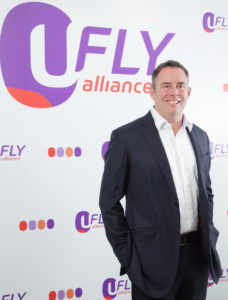
The newly-formed holding company, Budget Aviation Holdings, will be helmed by Lee Lik Hsin, who has led Tiger Airways since May 2014. He will manage both budget carriers as the new company’s CEO.

Goh Choon Phong, SIA’s CEO, will be chairman of Budget Aviation Holdings and its management will include senior staff from Scoot, Tiger Airways and SIA.

Key functions of both airlines such as sales, marketing, IT, planning and operations will also be shared or integrated.

Goh said: “The holding company structure will drive a deep integration of our low-cost subsidiaries, which are important parts of our portfolio strategy in which we have investments in both the full-service and budget aspects of the airline business.”

Meanwhile, Campbell Wilson, Scoot’s CEO since the LCC’s launch in 2012, will be returning to the SIA group in a senior position.

SIA took full ownership of Tiger Airways following a general offer that closed on March 4, 2016.

Seoul gains more Singapore event groups, rolls out new support features

0

bongeunsa-temple-seoul
View of Seoul skyline from Bongeunsa temple

SINGAPORE MICE arrivals into Seoul have doubled over the past year, a result of in-market destination promotions by the Korea Tourism Organization (KTO) Singapore office and the emergence of more four-star hotels in the South Korean capital city.

Speaking to TTGmice e-Weekly on the sidelines of a Seoul roadshow for MICE buyers in Singapore on Monday, Helen Shim, director of the Singapore office, said: “Our hard work over the past three years (in courting Singapore MICE buyers) have paid off. MICE buyers here have become better aware of the various infrastructure available in Seoul.

“While we usually get smaller incentive groups to Seoul from Singapore, this year we have confirmed five to six large groups with 300 to 400 pax each. In April, Prudential led an incentive group to Seoul for four days, with day trips to nearby Gyeonggi Province. Come June, Herbalife International will be hosting an event there.”

Shim added that the growing supply of affordable four-star hotels in the city had a role to play in attracting Singapore clients.

“Clients used to think twice about hosting an event in Seoul because of the high costs. But now that they have cheaper – and brand new ¬– accommodation options, making a decision to visit Seoul is a lot easier,” said Shim, adding that her team has been actively promoting these new four-star hotels in Seoul to “swing votes our way”.

Meanwhile, Singapore MICE buyers will have more reasons to pick Seoul for their next event as Seoul Tourism Organization (STO) has recently expanded its support programme for business event groups.

One of the two latest offerings is a series of special tours that provide delegates an in-depth look at the city’s culture and key industries.

Lee Joon, executive director, tourism & MICE division, STO, said: “For instance, we led a group to see the historical palaces in Seoul, had them make kimchi and brought them for a behind-the-scenes tour of the Seoul Traffic Centre which isn’t open to the public.”

The other new offering is the Seoul MICE Card, which is given to event delegates attending qualifying business events in Seoul. These rechargeable and reusable cards come with a 5,000 won (US$4) credit and can be used on public transport including the airport express as well as with selected merchants.

Lee said: “By expanding our range of support for MICE groups, we hope to encourage business event delegates to make repeated visits to Seoul, both for business and for leisure.”

Angsana properties tout CSR incentive programme

0

angsana-langco-meeting-room-1170x470
Angsana Lang Co event space

CORPORATE event planners seeking a corporate social responsibility (CSR) element for their activities can consider Angsana Hotels and Resorts’ Meet for Good incentive programme at Angsana Lang Co in Central Vietnam, Angsana Laguna Phuket and Angsana Bintan.

Meet for Good features various opportunities to contribute to the local community and environment through activities such as visits to local orphanages or nursing homes, beach clean-up, cooking local dishes for the elderly, and giving language classes to disadvantaged children.

As well, Angsana Lang Co – which has four fully-equipped meeting rooms and a 392m2ballroom for 400 guests – offers full- and half-day meeting packages and a range of complementary recreational activities with Connect@Angsana.

corporate-meeting-room-angsana-bintan
Meeting room at Angsana Bintan 

Angsana Bintan provides a beachfront venue with meeting rooms where guests can have outdoor meetings by the South China Sea. Two meeting venues allow for a total capacity of 132 people, topped off by 111 guestrooms and suites. The meeting experience can be complete with golfing at the property’s 18-hole championship course and activities such as trekking and ATV rides.

And at Angsana Laguna Phuket, planners can choose from 11 meeting spaces, four outdoor venues and a 358m2 grand ballroom.

Berlin dethrones Paris in global meeting cities ranking: ICCA

0

icca-table_1
Table 1: Top 20 city ranking by number of meetings organised in 2015

BERLIN is the new number one city to meet in according to the latest ICCA ranking of global cities for international association meetings, published this week.

The study captured a record number of 12,076 rotating international association meetings in 2015, 571 more meetings compared to 2014.

Paris now sits in second place this year. Seven other top cities have remained on the charts, albeit taking different positions. Singapore has, however, remained at seventh spot.

Meanwhile, in country rankings, the US and Germany have clung onto pole and second position respectively, while the UK has climbed a rung to third position. Canada is a newcomer to the top 10 list.

Table 2: Top 20 country ranking by number of meeting organised in 2015

ICCA identified 94 additional international association meetings that took place in the US in 2015, eight additional meetings in Germany and 39 additional meetings in the UK. Spain and France dropped by six and 11 meetings respectively.

ICCA CEO, Martin Sirk, commented: “In an uncertain world with ever increasing business disruption, the stability and continuing long-term growth of international association meetings are encouraging more suppliers and destinations to include this market segment in their mix of business. What also remains true is that these are the most complex and long-lead-time meetings to win, requiring excellent research and targeting, top class bidding and presentation skills, and patience.”

He added: “It appears that competition is getting tougher for the traditional market leaders, with faster growth outside the top 10 positions. This might also reflect a trend, as many of the top destinations are starting to create their own international meetings, rather than bidding for traditional association meetings whenever rotation patterns allow, and these new meetings don’t appear in our data, since they don’t usually rotate between countries.”

Business event groups to gain more in Hong Kong

0

MEETINGS and Exhibitions Hong Kong (MEHK) has launched the 2016/17 Hong Kong Rewards! programme, introducing new and enhanced privileges for MICE delegates visiting Hong Kong.

Among the perks is a chance to enjoy complimentary cocktail receptions at 40 hotel venues; exclusive group shots, priority seating at the Festival of the Lion King show and a 15-minute CEO procession at Hong Kong Disneyland; welcome drink and souvenir at Ocean Park Hong Kong; up to HK$2,000 (US$257.50) in shopping and dining discounts at some 400 airport restaurants and shops for each delegate; and complimentary cultural performances such as traditional lion and dragon dances.

For more information, visit MEHK website.

8,000 from China give Seoul its largest incentive group yet

0

joy-main-incentive-seoul
The delegate dinner on May 10 served a party of 4,000 from Joy Main

WITH support from local tourism boards and government stakeholders, Seoul welcomed its largest incentive group to date when 8,000 participants from China-based Joy Main Science & Technology visited the South Korean capital in May.

Because of the sheer size of the group, the participants were split into two batches, with the first visiting from May 4 to 9 and the second from May 9 to 13.

The event could generate an estimated 4.95 billion won (US$4.2 million) for the nation’s economy, according to the Seoul Tourism Organization (STO).

Seoul’s Joy Main victory was said to have been due to a collective effort between the Korea Tourism Organization (KTO) and Seoul mayor Park Won Soon when they attended the 2015 Beijing Seoul Road Show in August last year.

Seoul city and STO also provided a range of support including coordinating early-stage negotiations, organising site visits for Joy Main, making logistical arrangements which ended up requiring 34 flights, 16 hotels and 100 buses, and providing financial subsidies, airport greeting messages and welcome kits.

Another instance of stakeholder support was a delegate dinner organised by the Seoul metropolitan government, STO, KTO, the Ministry of Agriculture, Food and Rural Affairs, and other organisations.

Several popular attractions in Seoul were featured on the trip itinerary, including Gyeongbokgung Palace, Namsangol Hanok Village, and the popular commercial area of Myeongdong.

Eui Seung Kim, director-general of the Seoul metropolitan government’s Tourism Policy Bureau, believes that the massive incentive movement will give Seoul’s diverse culture and sites “a significant promotional boost in China”.

AccorHotels offers meeting planners more rewards

0

CORPORATE meeting bookers will now receive a complimentary night voucher for every 40 or more group room nights booked, from now until September 30, 2016. This free night can be redeemed at any AccorHotels property in Singapore within six months of the issue date.

Participating properties are Sofitel So Singapore, Sofitel Singapore Sentosa Resort & Spa, Novotel Singapore Clarke Quay, Grand Mercure Singapore Roxy, Mercure Singapore Bugis, Ibis Singapore on Bencoolen, Ibis Singapore Novena, and Ibis Styles Singapore on MacPherson.

Corporate bookers can also join AccorHotels’ Le Club Meeting Planner, a loyalty programme dedicated to meeting organisers. Every two euros spent will get the organiser one point, and an accumulation of 2,000 points can be redeemed for hotel vouchers, airline miles, partner vouchers.

Asia’s hottest resort spots

0

Accessibility, picturesque beaches and myriad activities are key makings of top resort destinations. TTG Asia speaks to outbound agents to reveal the region’s hottest – and emerging – resort spots

THAILAND
20-may-patong-beach-phuket-thailand-aleksandar-todorovic-shutterstock_386187769_cmyk

*HOTNESS SCORE 8.4

WHAT’S HOT Phuket, no doubt, remains an evergreen favourite among Asia’s outbound travel agents.

“Phuket’s popular with honeymooners, young couples and families because it has beautiful beaches, marine sports and other activities nearby,” said Koto Takebe of the marketing strategy department of Tokyo-based HIS, adding that it would be a tall call for other destinations to usurp its lead.

Daniel Chan, deputy general manager of Hong Thai Travel Service Hong Kong, agreed: “It’s home to quality five-star resort hotels with activities like spa, swimming, cuisine (and island excursions).”

Phuket’s diversity of offerings, from run-of-the-mill attractions like shopping and night shows to extraordinary activities like helicopter rides and boat parties, translates into “unlimited ways” for agents to sell to different market segments, according to Nishan Senaveratne, general manager (outbound) at Aitken Spence Travels in Sri Lanka.

Furthermore, pockets of tranquillity still exist on the island, pointed out Royanto Handaya, CEO of Panorama Tours Indonesia. “The main beaches include Kamala and Bang Tao while Mai Khao, Beach, part of the Sirinat National Park,  is still blessedly undeveloped.”

WHAT SHOULD BE HOT Krabi, with its stunning seascapes and offshore islands, is still unexplored among Indian travellers, said Yatra.com’s president, Sharat Dhall.  Koh Samui also has potential to become a hotter resort destination.

HIS’ Takebe shared: “Samui and Krabi are becoming more popular but they’re still some way behind Phuket. Samui, for instance, does not have a big shopping district, which is a must for Japanese tourists.”

Hong Thai’s Chan, while acknowledging Samui’s appeal, cites pricey airfares as the biggest deterrent for Hong Kong visitors. “Airfare (to Samui) may cost about HK$3,000 (US$386.83) while a destination like Bangkok is more affordable.”

And for Singapore and Malaysia markets, Hua Hin looks promising.

Said John Chan, business development consultant at Malaysia’s Kris International Traveltours: “Hua Hin can be considered an undiscovered gem with plenty of upside potential. (Although) its location and limited activities compared with better-known destinations present a downside, this will change for the repeat traveller who may appreciate its rustic charms.”

Chan Brothers Travel Singapore’s head of marketing communications, Jane Chang, agreed: “Hua Hin is making a comeback as a destination where cosmopolitan living meets the sea. Family-friendly attractions like Swiss Sheep Farm and Santorini Park have also raised its appeal.”

OUTLOOK “The country is sitting atop others as a resort destination. We expect 2016 to continue in the same direction,” commented Yatra’s Dhall, echoing the general sentiments of other agents.

Chang opined that Thailand will continue to do well as long as it clamps down on crime in its resort islands.


MALAYSIA

20-may-langkawi-_dsc7276-as-smart-object_cmyk*HOTNESS SCORE 7

WHAT’S HOT Langkawi clinched the top spot among several outbound agents, for whom the archipelago’s combination of nature and beaches is a hit.

“It has the nicest beach in Malaysia and offers more beach activities than the other resorts,” said Nishan Senaveratne, general manager (outbound), Aitken Spence Travels. “When it comes to outdoor pursuits – whether it’s mangrove exploring, jungle trekking, waterfall hiking, snorkelling, diving or even banana boating – Langkawi wins on all counts.”

Borneo gets the attention of Koto Takebe of HIS’ marketing and strategy department, due to direct, regular flights from Tokyo’s Narita International Airport. “It is also famous for its abundant nature and wildlife, marine sports and a number of high-quality golf courses,” he added.

WHAT SHOULD BE HOT For Nishan, Penang has potential to step up its appeal among South Asian visitors, especially since it offers historical sights, shopping, street food and accommodation at economical prices.

The Perhentian Islands, on the east coast of Peninsula Malaysia, are already established among backpackers and divers, according to Chan Brothers Travel’s head of marketing communications, Jane Chang, but the lack of access compared with Thai island resorts makes it a “second place in mind”.

Moreover, Tioman Island is still “not a familiar name” for Indonesians despite its strong snorkelling and diving attractions, said Royanto Handaya, CEO of Panorama Tours Indonesia.

OUTLOOK Agents say Malaysia’s affordability will attract footfalls to its resort destinations.

Hong Kong’s Miramar Travel, general manager, Alex Lee, said: “There are (many) options for beach and urban resorts. Moreover, the (cost of living) is low so young visitors and families can spend (more) freely.”

“Given the proximity and budget-friendly attributes, Malaysia has grown to be a favourite resort destination for Indian travellers,” added Yatra.com’s president, Sharat Dhall.


INDONESIA

*HOTNESS SCORE 7.8

WHAT’S HOT Ruling the roost is Bali, which is “almost synonymous with Indonesia”, said Sharat Dhall, president of Yatra.com, a sentiment shared among other agents.

“Bali is still the biggest name for Japanese visitors to Indonesia. They go for its unique and traditional culture, beautiful beaches and mountain resort town of Ubud,” said Koto Takebe of the marketing strategy department of HIS. “For women travellers, it is also famous for reasonably- priced massages and aesthetic treatments.”

It is a similar story for Hong Thai Travel Service, for which Bali is the only Indonesian destinations the Hong Kong agency promotes. “The island offers many six-star, luxury hotels and is a hotspot for beach and sun,” said deputy general manager, Daniel Chan.

On Bali itself, Seminyak and Nusa Dua are most popular among Kris International Traveltours’ clients, business development consultant John Chan said.

WHAT SHOULD BE HOT Just across the Lombok Strait from Bali lies Lombok, a potential resort destination that agents say is often overlooked by tourists.

Chan said: “Although gaining popularity fast, Lombok can be considered a relatively new kid on the block. Its natural beauty and exquisite handicrafts will require additional promotion.”

Said Chan Brothers Travel’s head of marketing communications, Jane Chang: “Indonesia’s other island resorts such as Komodo Island and Gili Islands are often overshadowed by Bali.”

Takebe, on the other hand, considers Bintan Indonesia’s best “hidden resort”. “The island is just a short ferry ride from Singapore, so it is relatively easy to get to from Japan, but not enough people know about it,” he said.

OUTLOOK Chan surmised that Indonesia will remain a sought-after destination for Malaysians, “drawing both novice and (seasoned) travellers alike with a broad selection of attractions”.

Karan Anand, head of relationships at Cox & Kings India, is sanguine due to Indonesia’s “series of investment announcements” to boost tourist arrivals.

Furthermore, resorts in Indonesia have a reputation for being more upmarket and developed than neighbouring countries, said Dhall, and will continue to “attract travellers in good numbers”.


PHILIPPINES

20-may-shutterstock_299421719_cmyk*HOTNESS SCORE 6

WHAT’S HOT Cebu’s strong promotion and direct air links to various Asian cities have earned it popularity among the region’s travellers, according to Pauline Suharno, managing director of Elok Tour Indonesia.

“Cebu is relatively easy to get to from many parts of Japan – the direct flight takes less then five hours – while the white sandy beaches are a big attraction. Many people also go there to (obtain) their scuba qualifications,” said Koto Takebe from HIS’ marketing strategy department.

Boracay reigns for affluent travellers from Singapore due to the wide availability of high-end accommodation, Chan Brothers Travel’s head of marketing communications, Jane Chang said.

Though Boracay is a choice destination for the Hong Kong market according to Hong Thai Travel Service, agents are not actively promoting the Philippines due to the recent hostage incident.

WHAT SHOULD BE HOT Boracay has yet to reach Cebu’s popularity in some markets primarily due to its lack of direct flights.

Sharat Dhall, president of Yatra.com, said: “Boracay has pristine beaches and beautiful resorts. However, it has limited flight options and (its tourism potential) is still untapped.”

Bohol could see more visitor footfalls too, according to John Chan, business development consultant of Malaysia’s Kris International. “Bohol still lacks basic creature comforts such as basic infrastructure and shopping sought after by the modern-day traveller,” he said.

He added: “There is a need to cater to the increasing demand of the Muslim traveller via the availability of halal food as well as places of worship.”

Palawan, with its shining attractions such as the Puerto Princesa Underground River, also has potential to be a strong resort destination, said Suharno.

OUTLOOK “The many untapped and unexplored islands make the Philippines attractive for newbies and seasoned travellers alike,” said Chan.

Other agents take a more wary stance, with accessibility commonly cited as a bugbear.

Suharno said: “The Philippines offers similar products as Indonesia like beaches and dive sites. Unless there is easy access and value-for-money airfares, it (would be) a challenge to push the market.”

Hong Thai Travel Service deputy general manager, Daniel Chan, still finds it a challenge to promote the country in Hong Kong following the 2010 hostage incident. However, should there be a breakthrough, he foresees prices would be “very affordable” as the destination has not been promoted for the last few years.


VIETNAM

*HOTNESS SCORE 7

WHAT’S HOT Danang tops the list as Vietnam’s most appealing resort based on agent feedback.

The coastal city is a favourite among Japanese tourists, said Motohisa Tachikawa of JTB Corp’s marketing division. “Vietnam Airlines started direct flights from Japan to Danang in 2014, which helped to open up (the destination). The city has good beaches, excellent hotels and is close to Hoi An, a UNESCO World Heritage site,” he said.

In addition to the wide availability of resort properties, Danang is also popular for its beautiful landscape, French influence and timeless charm, according to John Chan, business development consultant of Kris International Traveltours.

However, the strength of the longhaul market has jacked up room rates during winter and as a result Hong Kong travellers tend more to choose Japan instead, according to Miramar Travel, general manager, Alex Lee. As well, the city does not appeal to families as tourism infrastructure is not yet well-developed.

WHAT SHOULD BE HOT Nha Trang, in southern Vietnam, is an emerging destination with its beaches, scuba diving and offshore islands, revealed Clifford Neo, managing director of Dynasty Travel Singapore.

Even for Japanese travellers, for whom Vietnam is still a new market, there is already a “gradually growing interest in Nha Trang”, said Tachikawa.

There are some factors working against Nha Trang’s favour though. Said Chan: “Nha Trang has been hit by negative publicity over illegal and unauthorised tour operators and service providers.”

Sharat Dhall, president of Yatra.com, sees potential in Phu Quoc, Vietnam’s southernmost island. “However, not many people are aware about the island, which is why it remains relatively unexplored by travellers.”

OUTLOOK Agents are generally optimistic about Vietnam’s resort market.

“Vietnam is frequently visited by Indian travellers seeking a short getaway,” said Dhall. “There should be more visitors to the country this year.”

Tachikawa added: “We are really positive about Vietnam as a destination over the longer term, but it still needs development and, more importantly, promotion and advertising in Japan to make it better known.”


JAPAN

*HOTNESS SCORE 7

WHAT’S HOT Hokkaido is a clear choice for the South-east Asia outbound market.
“Hokkaido is well known for its ski and snow experience in the winter, and is a much sought-after spa/onsen getaway among Singaporeans during the December-March period,” said Clifford Neo, managing director of Dynasty Travel.

Hokkaido and Sapporo are destinations that are finding favour among Indonesians who have already visited Tokyo or Osaka, according to Putu Ayu Aristyadewi, group vice president, marketing and communications at Smailing Tours. “The four seasons, food, shopping and cultural attractions add to the easy access and relatively short travel time.”

On the other hand, Osaka sees greater appeal among Hong Kong travellers. Said EGL Tours, product development manager, James Lam: “Osaka has replaced Tokyo as a hotspot after the 3/11 earthquake because people want to avoid north-western Japan, and Osaka enjoys easy access to cities like Kobe.”

WHAT SHOULD BE HOT Both Neo and Putu see good potential in Okinawa but flight connectivity has posed a challenge. Neo elaborated: “It was not easy to get there without direct flights before but now with aggressive campaigns by the tourism board to create awareness and SilkAir’s direct flights into Naha, Okinawa will become a resort hotspot in 2016.”

As well, Kyoto has plenty to offer in terms of temples and shrines, but the resorts there “lack the pulling power of the better-known key destinations in offering a wider appeal of entertainment, shopping and nightlife”, John Chan, business development consultant of Kris International pointed out.

OUTLOOK Agents expect that the recent visa exemptions for South-east Asian visitors, growing LCC links and the upcoming Olympics will tilt the balance in favour of Japan’s overall resort market.

Said Neo: “With the 2020 Tokyo Olympics coming up, there will be great funding from the government for infrastructure and the addition of hotels or conversion of homes to homestays and different modes of transportation around the country for tourism growth. This will boost the overall resort market.”

The projection is much dimmer for the Indian market, as Japan “is not a very popular resort destination of choice”, posited Sharat Dhall, president of Yatra.com.


CHINA

*HOTNESS SCORE 5.8

WHAT’S HOT Agents’ choices of what’s hot in China are as diverse as the country itself.

Clifford Neo, managing director of Dynasty Travel, voted Jiuzhaigou for its abundance of hot springs and wellness resorts like the InterContinental Resort Jiuzhai Paradise Hotel and other well-known international brands including Sheraton and Shangri-La, plus local four- and five-star resort properties.

Sanya and Guilin are hottest for Kris International business development manager, John Chan. “There are amazing natural landscapes, strong cultural legacy and relics of China are widely displayed in hotels and places of interests. Club Med Guilin and Sanya Marriott Yalong Bay Resort & Spa are popular with Malaysians.”

Likewise for Sharat Dhall, president of Yatra.com, Sanya is a natural choice for retreats. “Travellers aiming for relaxing stays choose to go to Yalong Bay (in Sanya), home to many resorts and beach houses.”

EGL Tours, product development manager, James Lam, commented: “Xiamen is ranked the cleanest city and its rich tourism resources such as strong culture make it a favourable getaway. Most importantly, the city is located close to Hong Kong and shares similar culture and cuisine.”

WHAT SHOULD BE HOT Haikou can be more popular due to its proximity to Hong Kong, suggested Lam, “but news on local seafood restaurants ripping off tourists” have put a damper on demand.

Elsewhere on Hainan, Wuzhizhou has a famous underwater world, according to Yatra.com’s president, Sharat Dhall, but its distance from Beijing – a six-hour flight away – is a major deterrent.

Chan said: “Hangzhou makes up the famous triumvirate of Shanghai and Suzhou well-known for their spectacular silk embroideries and water villages. (But) it cannot be considered a standalone destination compared with the many attractions of better-known beach and mountain resort destinations.”

OUTLOOK Neo said: “China is an evergreen destination among Singaporeans and is growing at a rate of five to eight per cent annually. More youngsters are now looking to visit this destination due to its history, culture and natural wonders.”

Conversely, youth travellers in Hong Kong are more interested in other Asian destinations, leading to Lam’s negative outlook.

Similar to Japan, Indian travellers do not perceive China as a resort destination and often do not visit the country beyond main cities like Beijing, according to Dhall.


INDIA

20-may-travel-tourism-kerala-background-panorama-of-tourist-houseboat-on-kerala-backwaters

*HOTNESS SCORE 5.5

WHAT’S HOT Goa’s established beaches appeal to honeymooners while Kerala, famous for its boathouses, draws families, honeymooners and nature lovers, said Aitken Spence Travels, general manager (outbound), Nishan Senaveratne.

John Chan, business development consultant, Kris International Traveltours Malaysia, agreed: “Both destinations are easily accessible with exotic cuisine and strong religious influences.”

Premium Holidays, general manager, Simon Wo, picked Jaipur as it’s a “classic destination” that can easily be combined with popular attractions like Taj Mahal in Agra.

WHAT SHOULD BE HOT Resorts in Mumbai can offer a relaxing getaway, opined Chan, but being better known as a commercial and financial city, the destination lags behind resort destinations in northern and eastern India.

Kashmir’s landscapes are fantastic but it suffers from safety perception issues as well as facility standards that do not match guests’ expectations, said Wo.

Nishan, meanwhile, urged the promotion of Andaman Islands in the Bay of Bengal.

OUTLOOK Chan expects positive growth in Goa and Kerala. He said: ‘India will continue to hold the fascination and awe for many due to her deep-rooted historical past. Besides beach resorts, hill stations and palaces remain in high demand.”

Wo has bleaker prospects: “The majority of traffic is for business. Given the uncertain global economy, the outlook is not positive and there is also competition from neighbouring destinations that offer more affordable options. Meanwhile, it also loses traffic to Sri Lanka which provides a safer option for tours and FITs.


*Derived from the average scores given by agents interviewed

This article was first published in TTG Asia, May 6, 2016 issue, on page 19. To read more, please view our digital edition or click here to subscribe.

Overpricing comes under fire

0

Jacked-up entrance fees for foreign visitors are also hurting local travel operators

20-may-famous-ancient-sigiriya-rock_-sri-lanka-dimol-123rf-27848484_cmyk

Tourists and tourism players in Sri Lanka are lamenting the country’s tiered pricing system that charges foreign visitors inordinately more than locals to enter national parks, and cultural and heritage sites.

“This is a serious issue we have had for many years,” said Dirk Grigson, an industry veteran and chairman of the 2016 Tourism Fair organised by the Sri Lanka Association of Inbound Tour Operators.

“We did a survey three to four years ago and found this is far too expensive for visitors (compared with other regional rates),” he commented, adding that it costs US$17 to visit India’s Taj Mahal versus US$35 to enter and climb the Sigiriya rock palace in Sri Lanka.

Furthermore, entry rates at the Buddhist Temple of the Tooth in Kandy was recently raised to Rs1,500 (US$10) from Rs1,000 for tourists, while locals are charged half the price, he said.

Travel operators said it would cost between US$150-200 per person to visit all the best-known sites in Sri Lanka, a significant sum for visitors.

“Why should they charge tourists to visit religious places if some of them go there (for) worship?” an anonymous industry official challenged.

Disagreeing, Dharma Dharmapala, CEO of Lanka Sportreizen, an adventure agency, said rates in Sri Lanka are generally in line with international rates. The biggest problem, he opined, is the lack of infrastructure at Sri Lankan attractions.

“There are no proper toilets, restaurants and rest facilities. Vendors in the vicinity charge exorbitant rates for food and drinks,” he pointed out.

Other common grouses of the trade are sudden hikes in entry rates and the depreciating value of the local currency.

“When sudden increases are made, we have to bear the additional costs as overseas DMCs which contracted months ahead refuse to pay the increase,” said an agent, who stressed that tourism authorities are not acting in line with industry trends and practices.

However, the depreciation of the local currency could also mean lesser fees to pay for some foreign visitors.

For example, entry into Sigiriya has remained at Rs3,900 per person over the past two years. This was equivalent to US$30 a year ago, but the rupee depreciation has brought the fee down to US$26 (at press time).

Industry players are not calling for a single-fee-for-all approach however.

“That might not be a viable solution because of varied needs. What the industry wants is reasonable site rates not much more than the local rate and good facilities,” said an veteran industry member who declined to be named.

This article was first published in TTG Asia, May 6, 2016 issue, on page 26. To read more, please view our digital edition or click here to subscribe.

Making peace with progress

0

Free from the shackles of civil war, Sri Lanka’s tourism is ready to welcome a new dawn. But new tensions are surfacing amid rapid development with issues of sustainability at the heart

20-may-stilt-fisherman

Sri Lanka is celebrating 50 years of organised tourism and the cherished goal of two million arrivals this year, but it seems the industry has not been able to reap the full benefits of peace since the decades-long bloody civil war ended in May 2009.

Some believe the growth in arrivals to the country – 1.8 million in 2015, a sharp rise from 450,000 in 2008 – is unrepresentative of sustained interest in Sri Lanka as a tourist destination.

Srilal Miththapala, director at Laughs Leisure and former president of the Tourist Hotels Association of Sri Lanka, opined: “Though year-on-year arrivals grew after the end of the conflict, it is mostly due to the curiosity factor and pent-up demand.

“There has been no proper focused country promotions except for participation at roadshows and trade fairs,” Miththapala noted, echoing a sentiment among many industry players of the need for a targeted marketing plan.

In defence, state-owned Sri Lanka Promotions Bureau chairman Paddy Withana said promotions are ongoing but efforts are mainly channelled towards digital marketing at the moment.

On the other hand, Shafraz Fazley, managing director of Viluxor Holidays, witnessed the surge in Chinese arrivals despite the lack of promotions in China.

Fazley reckoned the few country promotions undertaken some years ago have created lingering awareness even in the absence of more recent promotions.

“In fact if there are country promotions, we may not be able to meet the demand,” he said.

The growth in Chinese arrivals is dramatic. From just 10,410 arrivals in 2010 and without even ranking in Sri Lanka’s top 10 source markets, China swept aside the competition to reach 214,783 arrivals in 2015, a 67.6 per cent surge from 128,166 in the previous year.

This year China is expected to overtake India as Sri Lanka’s main source market, a reflection of the dramatic change in the visitor profile to the country which was once dominated by European travellers from the 1970s to 2000.

Since 2009, new hotels, guesthouses and homestays have sprung up in Colombo and its outskirts, with pricing varying from US$10 to US$1,500 per day.

Online bookings, mostly for two- to three-star and lower-tier accommodation, have surged to  an estimated 30-40 per cent of all bookings against established contracts through travel operators.

New upscale brands opening in 2016-2018 are Shangri-La (with two resorts), Sheraton, Hyatt, ITC, Movenpick, adding to existing properties such as  Hilton, Taj and Ramada. Home-grown brands such as Heritance, Cinnamon and Jetwing are also expanding rapidly.

Further adding to the landscape are new restaurants offering international cuisines and a few shopping malls.

However, some industry stakeholders are questioning if a fixation on burgeoning touristic establishments may eclipse the more enduring attractions of the island such as untouched nature, rich culture, vast swathes of green countryside and rustic villages.

Heritage, for instance, holds a rare charm unparallelled by the appeal of newer  establishments, evident from the over 200-year-old Mount Lavinia Hotel, Queen’s Hotel (160 years), Galle Face Hotel (152 years) and The Grand Hotel (124 years), former mansions of governors during British colonial rule.

“Sustaining and maintaining the industry is the challenge,” said Hiran Cooray, chairman of Jetwing Group.

“What is distinctive in our market? We have to score on the warmth, friendliness and cheerfulness of our people. That comes naturally (to an island nation like Sri Lanka). Even during troubled times, tourists came because of the people,” he added.

Another challenge, he said, is to keep Sri Lanka as green as possible. “We are blessed that close to 50 per cent of our country is still green – plantations and forests. This should be in the DNA of tourism.”

Suppose these remain part of the landscape, travellers will continue to visit Sri Lanka, enchanted by the same quality of beauty, gemstones and spices that enticed 13th-century explorer Marco Polo – with or without promotions.

This article was first published in TTG Asia, May 6, 2016 issue, on page 25. To read more, please view our digital edition or click here to subscribe.