TTG Asia
Asia/Singapore Saturday, 20th December 2025
Page 1793

Online marketplace for MATTA members goes live

0

matta-lol

Screenshot of matta.travel

THE Malaysia Association of Tour and Travel Agents (MATTA) is urging its members to sell their packages on matta.travel, the association’s newly-launched B2C online marketplace.

Having gone live yesterday, the portal currently has more than 340 domestic packages submitted by more than 100 members and is the largest travel package portal in the world, according to Rohizam Md Yusoff, deputy president at MATTA.

Features of the portal include subsections for outbound packages, halal tours, Umrah (pilgrimage to Mecca that can be undertaken any time of the year) and special needs.

Rohizam, who is also CEO of Creative Advances Technology, the company that developed the portal, said: “We are targeting 700 packages to be online by this year-end.”

The number he quoted isn’t far-fetched considering that MATTA has 3,200 members.

“MATTA will promote the site locally, regionally and globally as well as actively use it during MATTA fairs,” said Hamzah Rahmat, president of MATTA.

Creation of the portal is MATTA’s way of offering opportunities for members to sell their products online, while at the same time eliminating unlicensed operators, as only MATTA members are allowed access to sell.

Switzerland opens nine more visa application centres in China

0

siro-barino

Siro Barino, managing director, Swiss Deluxe Hotels

SWISS exhibitors at ILTM Asia are flaunting a circular that gives them a further boost in the China market – nine more Visa Application Centres (VACs) in mainland China will be operational by mid-July, while a portable biometric visa service which is under trial will make it even easier for Chinese to apply for a Swiss Schengen visa.

Currently, visas can be applied for at six VACs in Beijing, Chengdu, Guangzhou, Shanghai, Shenyang and Wuhan. The nine new centres will be in Changsha, Chongqing, Fuzhou, Hangzhou, Jinan, Kunming, Nanjing, Shenzhen and Xi’an.

Further, TTG Asia e-Daily understands that the portable biometric visa service will see an officer going to tour operators, MICE planners, corporates and end-consumers in cities without a VAC to collect the biometric fingerprints of passengers. This is being tested with selected travel trade partners, with details such as cost and timing to be communicated in the coming weeks.

Swiss Deluxe Hotels, which comprises 41 luxury hotels in Switzerland, expects more guests from China, a market that has grown 20-30 per cent in the last seven years and now numbers around 1.5 million travellers a year, according to managing director Siro Barino.

Barino said: “More VACs will help, but the main reason why the market will grow in the next 10 years is because the wealthy Chinese are switching from spending on luxury items such as buying watches when they are in Switzerland, to spending on travel itself. They want to get to know the destination in more in-depth ways, i.e., travel becomes the reason itself.

“This mega trend is normal. The first generation travels to see a destination. The second travels to see the details of the destination, with the possibility of returning two or three times.”

China is now one of the top five international markets for Swiss Deluxe Hotels, accounting for six per cent of their business. Asian markets too have grown (except for Japan which dipped because of its economy) and now contributes eight to 10 per cent of business, said Barino.

Mark Jacob, managing director of the ultra-luxe Dolder Grand Zurich, said: “More VACs will help for sure. The easier it is, the fewer obstacles there are in their way, the more likely travellers will choose the destination.

“We’re also seeing changing Chinese customers who are younger – the second generation who travel as a couple or with friends and stay three or four nights in one location because they are interested in fine dining, learning about the art collection at the hotel, interacting with local people, and such. They are more immersive and we’re able to cater to this changing clientele.”

Victor Xu, sales director China for several Swiss attractions including Chronoswiss and Lake Lucerne, is pleased with the news as he said this year was looking flat after last year’s 40 per cent growth from China. He attributed this to the slowdown in China’s economy.

“On the other hand, Switzerland is seen as safe and now, getting a visa will be so much easier,” said Xu.

Vietjet flies from Ho Chi Minh City to Kuala Lumpur

0

vietjet_mo_duong_bay_tp_hcm_-_kuala_lumpur

VIETJET yesterday launched its inaugural Ho Chi Minh City-Kuala Lumpur daily service, taking off from Tan Son Nhat International Airport at 9.30 and arriving in Kuala Lumpur International Airport at 12.25.

The return flight will depart at 13.00 and arrive in Vietnam at 13.55. Each leg of the route takes approximately an hour and 55 minutes to complete.

Vietjet currently also offers twice-daily flights from Singapore to Ho Chi Minh City. Other international routes include Bangkok, Siem Reap, Taipei, Yangon and Seoul.

Michelin Guide Singapore to debut in July

0

SINGAPORE’s first Michelin guide will be released on July 21, cementing the city-state’s honour of being the first and only country in South-east Asia to be covered by the guide.

Inspection was completed in 2015 by anonymous Michelin inspectors who selected establishments according to five criteria – quality of ingredients used, mastery of cooking techniques and flavours, projection of the chef’s personality in his cuisine, value for money and consistency, both over time and across the entire menu. Factors such as place, décor, service and facilities were not considered.

Michelle Ling, programme director of Michelin Guide Singapore, was tight-lipped about the number of inspectors and the number of eateries that were reviewed, but TTG Asia understands that everything under the F&B categorisation – such as hawkers – are included in the Michelin Guide.

The awards ceremony will also be held on July 21, at Resorts World Sentosa. The ceremony will see the presentation of stars to restaurants in Singapore for 2016, and Michael Ellis, international director of Michelin Guides, will be in attendance.

This is the first time the awards ceremony will be held in conjunction with a gala dinner, and it is also the first time the event is open to the public. Organised by Robert Parker Wine Advocate (RPWA), the dinner menu will be prepared by Joël Robuchon and a few local chefs who have earned a mention in the guide.

On the relationship between RPWA and Michelin, Ling said: “Michelin are the inspectors who taste the food, give the rating, produce the book and bring the guide to Singapore. RPWA organises the events thereafter, and we are also behind the website.”

The website is an English-language web portal which was launched by the 100-year-old brand in collaboration with RPWA and the Singapore Tourism Board.

Ling added: “We would like to make the Michelin Guide Singapore an ongoing process throughout the whole year rather than having just the events on July 21, and you’d have to wait a whole year before the Michelin Guide is published again.”

Other post-launch activities include the world’s first trade seminar hosted by Ellis on July 22 for 100 Singapore-based chefs, restaurateurs and hoteliers in the F&B industry, an International Chef Showcase and a Local Chef Showcase.

Trade welcomes cleanup of Cambodia’s Sihanoukville coast

0

sihanoukville-cambodia

A beach in Sihanoukville

TRADE members in Cambodia are upbeat about upcoming plans to “beautify” the Sihanoukville coast despite controversy surrounding the development.

While the Coastal Management Masterplan is still pending approval, proposals include evicting vendors that sit within 50m of the beach and segregating beaches into distinct zones.

Approving the move, Mick Spencer, Sihanoukville Tourism Association board member and owner of ANA Travel & Tours, said: “This is a good opportunity for the government to make right mistakes made in the past.”

He explains that it is essential for factors such as waste, pollution and safety to be taken into account this time in order to attract more tourists in the long-term.

“The future for tourism rests very much on whether or not these issues are taken seriously,” he added. “Planning for sustainable, sympathetic development of the beaches is a key factor if Sihanoukville is to enjoy increased visitor numbers.”

In recent years, over-crowded O’Chheuteal Beach – where 96 vendors have already been evicted – has been dogged with litter, petty crime and illegal sellers. Nearby Otres Beach is likely to follow, but beachside restaurants and bars have been given a reprieve by authorities for now.

Samnang Sen, owner of guesthouse Otres Orchid, said: “There are many businesses that will close if they get evicted, but something needs to be done to clean up the area and make it more attractive for visitors.”

Hun Phalla, owner of restaurant O’Chheuteal Seafood, added: “Tourists want clean beaches and seas. We hope that is what we will get.”

[PERSPECTIVES] Duty of Care: An expectation, not an exception

0

Today’s global organisations have a large number of employees working as international assignees, expatriates and business travellers. Employees who travel across borders often find themselves in unfamiliar environments and situations, subject to increased risks and threats, and less prepared to handle these situations than if they were in their home country.

As a result, employers carry an increased “Duty of Care” obligation to protect their employees from these unfamiliar – yet often foreseeable – risks and threats.

Prevention is key
In an ever-changing and volatile world, the growing focus is clearly on prevention and risk mitigation. Our statistics have shown a positive trend of an emerging risk management culture where risks are managed efficiently and effectively. A recent study by International SOS Foundation also showed that there are tangible commercial incentives to investing in preventive programmes.

It is evident that corporate meeting planners can no longer ignore the importance of having a robust business continuity plan to ensure the safety of their attendees, and they must take proactive steps to minimise and avoid costly emergencies and evacuations.

For them, being able to identify a suitable business event destination based on a sound understanding of the health and security risks of the destination is crucial. Preparation – including a risk assessment, education and health check programmes – will reduce the need for intervention during and after travel. In the case of an emergency, in addition to taking certain precautions, the onus lies on corporate meeting planners to make sound decisions as to whether or not an event should be cancelled.

Medical and travel security risks can easily escalate at short notice during a crisis or evolving situation. The bombing incidents in Bangkok and Jakarta last year were painful reminders that one could easily become a victim of an attack even in urban – and typically perceived as safe – areas. In such time-critical situations, having access to up-to-date intelligence and actionable advice from a trusted source are absolutely critical for corporate meeting planners to assess whether or not to proceed with an event.

To better prepare corporate planners, we advise the following top 5 action tips towards assessing risk and preparing for emergency situations on the ground:

1. Identify specific health and security risks at event location
2. Ensure event delegates are prepared for the trip – this can be in the form of either pre-travel briefings or sending notifications that includes relevant medical, security and itinerary details
3. Set up an online platform hosting critical information about the destination country and make it easily accessible for delegates and/or business travellers
4. Ensure first aid kits (or stations) and evacuation routes/plans are in place in case of emergency
5. Have a reliable partner, with the necessary medical and security expertise, to support you on the ground

As international travel continues to be an inevitable part of global meetings and conventions, corporate meeting planners need to manage their duty of care responsibilities by strengthening their capability to protect the health and safety of delegates. Our call is for corporate meeting planners to step out of their day-to-day mind-set and think about the success of events at a broader level, which includes delegate welfare. Beyond the delivery of a grand event to your guests, true success also hinges on the organiser’s security, safety and crisis management capabilities.

dr_philippe_guibert_online

Philippe Guibert is the Regional Medical Director, Consulting Services, Asia at International SOS, integrating a risk management framework into an organisation’s broader policies through education, information, preparation and prevention.

International SOS is the world’s leading medical and travel security risk services company, pioneering a range of preventive programmes and delivering unrivalled emergency assistance during critical illness, accident or civil unrest. www.internationalsos.com

Article by Philippe Guibert.

New Genting Dream cruise to cater to MICE groups

0

dream-cruises_jpg
Genting Dream

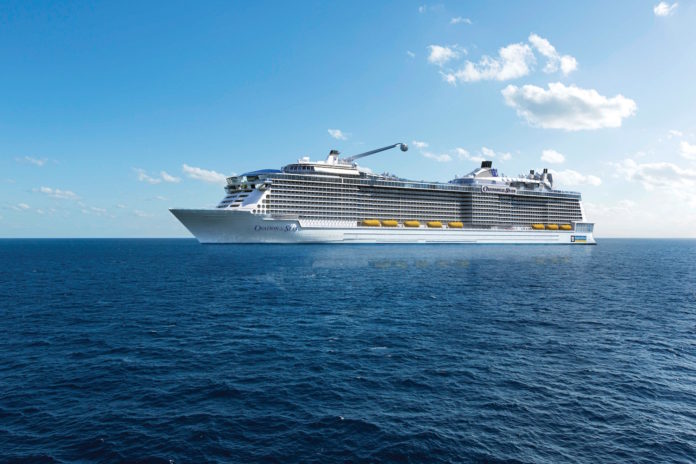
GENTING Hong Kong is launching Dream Cruises, a new product line targeted at the luxury MICE and leisure segments, and deemed as Asia’s first luxury cruise line.

It’s first ship, Genting Dream, is currently undergoing outfitting by shipbuilders in Meyer Werft, Germany, and will arrive in Singapore on November 4 to offer a two-night cruise, followed by a six-night itinerary to Hong Kong.

Thatcher Brown, president of Dream Cruises, said the luxury cruise ship will homeported in Guangzhou after that, from November 18 to March 26, 2017, offering two- and five-night itineraries.

Michael Goh, senior vice president of Dream Cruises, said he is targeting a guest mix of 40 per cent MICE travellers and 60 per cent leisure travellers from source markets such as China, India, Japan, South Korea, Taiwan, Indonesia, Malaysia, Singapore and Indonesia.

He added: “MICE groups in China are usually large groups of 500 people or more. Groups from South-east Asia are usually smaller, between 50 and 300 pax.”

The ship’s Zodiac Theatre can comfortably accommodate 1000 people.

Made for Chinese

0

A fleet of new ships built specifically for Chinese cruise passengers is starting to come out of the docks and sail to their new homeports in China and how they are different

3-june-cruises-generic

MSC LIRICA
Debut: May 2016

“China is a market that many different cruise lines are looking at and investing in. We expect to see continued double-digit growth in the market over the coming years.”
Achille Staiano, head of commercial services, MSC Cruises

MSC Cruises’ first ship reconfigured for the China market, MSC Lirica, set sail for her maiden voyage on May 1 with predominantly domestic Chinese guests and a cruise itinerary around China, South Korea and Japan.

A majority of the cruises are three to four nights in duration, however longer voyages of up to nine nights will start in January next year.

“For a number of years we have been gathering insights into the Chinese cruise market and working with partners on the ground to fully understand the specific needs of Chinese guests. Using these insights, we have completely overhauled one of our ships, MSC Lirica, to meet the needs of the Chinese home market,” said Achille Staiano, head of commercial services, MSC Cruises.

“Paying particular attention to the differences in cultures and values, we modified a number of aspects of ship life to ensure that every guest receives our best-in-class service and a memorable experience.”

Three examples include:
altering the dining options on board, tailoring them for Chinese tastebuds, including the introduction of a partnership with world-renowned chef Jereme Leung.

“This means that we are able to bring an excellent mix of cuisines to guests, including traditional Asian experiences, as well as a range of refined international dining opportunities,” said Staiano.

introducing its first-ever cruise ambassador scheme on board, where staff have been trained by native service providers in order to pass on specific Chinese service customs.

“We recruited local staff specifically for MSC Lirica,” said Staiano. “Over 80 per cent of staff on board are Mandarin-speaking, offering specific and expert advice to guests in their native language.”

changing the shopping experience onboard, reflecting the popularity of European brands with Chinese guests.

“China is a market which is of great interest to us. We already work with partners that cater to Chinese guests wishing to experience our offerings in the Mediterranean, Europe and the Americas. We are very excited to have launched, in partnership with CAISSA Touristic, our China-dedicated product which made its maiden voyage at the beginning of this month,” said Staiano.


GENTING DREAM
Debut: November 2016

3-june-dream“The number of Chinese and Asian cruise vacationers has grown substantially over the past few years and these passengers have developed a more sophisticated understanding of cruise products; they are better able to appreciate the value of a luxury brand such as Dream Cruises.”
– Thatcher Brown, president, Dream Cruises

The first ship under Genting Hong Kong’s new cruise brand, Dream Cruises, will set sail on November 13, offering two-, five- and seven-night coastal China and Vietnam cruises from Guangzhou. With a capacity of around 3,400 passengers, the 150,000-ton Genting Dream marks a new chapter in Asian cruising.

Dream Cruises’ president, Thatcher Brown, explained: “Currently, the majority of ships with homeports in China are mainly targeting the mass-market consumers with the occasional seasonal premium ship deployment in this region. With Dream Cruises, we are proud and excited to be the first-ever Asian luxury cruise line that specifically caters to the large and rapidly-growing premium market in China and Asia with a purpose-built new ship, exclusively for this market and that is homeported in Asia.”

When asked why Dream Cruises won’t be on a collision course with sisters Crystal Cruises and Star Cruises, Brown said they were all positioned differently – Crystal for the international luxury market, Dream for the Asian luxury market and Star for the contemporary segment.

“Star Cruises currently services the region with a well-established fleet of contemporary ships and we felt that it was time to create a completely new and distinct brand with a singular vision to cater to the Asian luxury segment to service the burgeoning middle and affluent classes in China and the region,” he said.

Agents can expect Dream to combine the history and expertise of the six-star Crystal and the Asian hospitality of Star, he added. There will also be the right balance between international elements with the product customisation for the China and Asian market.

Highlights of Genting Dream include a VIP-only Dream Mansion with 142 suites and access to a private sundeck with pools, Jacuzzi, a private gym and a private dining room.

The ship also boasts 100 connecting rooms for family and larger group vacations, 35 restaurant and bar concepts, a 610m-wraparound promenade for dramatic seaside dining and lounging, and a plethora of recreational features including six water slides, a rock-climbing wall, mahjong room and mini-golf.


MAJESTIC PRINCESS
Debut: Summer 2017

3-june-majestic“We believe there is a strong demand for a locally-based premium cruise product that is offered by an international cruise line, with experiences custom-designed for travellers from China.”
– Tony Kaufman, executive vice president international operations, Princess Cruises

Princess Cruises’ first ship built and designed specifically for the China market, Majestic Princess, will set sail on her maiden season voyage in summer 2017 from her homeport in Shanghai for year-round cruising to Japan and South Korea.

For China’s international travellers, Princess Cruises would continue to tailor itinerary lengths to their needs, explore new ports and take these travellers on fly-cruise voyages in Alaska, Australia, New Zealand and Europe, said the line’s executive vice president international operations, Tony Kaufman.

When asked how different Majestic Princess would be from other ships, Kaufman said it would have many of the well-received features of her sister ships, Royal Princess and Regal Princess, including a dramatic multistorey atrium serving as the social hub; an over-the-ocean SeaWalk, a top-deck glass-bottomed walkway extending eight metres beyond the edge of the ship; and a special Chef’s Table Lumiere, a private dining experience that surrounds diners in a curtain of light.

However, while it caters to Chinese travellers’ desire for international experiences – flavours from around the world, warm and gracious service, entertainers sourced from Hollywood, etc – there will be “a number of new onboard venues and experiences designed specifically to satisfy what’s important to Chinese travellers, the details of which will be revealed in the coming months”, said Kaufman.

The ship will debut a new livery featuring Princess’ logo that will be rolled out fleet wide.

Befitting her dedication to the Chinese market, the ship will carry a Chinese name on the hull that suggests ‘grand world’ or ‘grand spirit’.

The 143,000-ton vessel has a capacity for 3,560 guests. It reached a construction milestone when it was ‘floated out’ of its building dock at the Fincantieri shipyard in Monfalcone, Italy, and met ocean water for the first time.

As for the competition with sister Costa Cruises, which is also fielding purpose-built ships for China, Kaufman said there was a market for both.

“The products on Costa and Princess are very different. Princess is a premium international brand focused on bringing its experience of providing cruise vacations throughout the world to the Chinese passengers, allowing them to enjoy food, service and entertainment from all over the world and making them feel special. Costa is an Italian brand and brings its authentic Italy at Sea product to its passengers. Chinese travellers are seeking differentiated services and unique experiences,” he explained.


NORWEGIAN JOY
Debut: 2H2017

3-june-norwegian“Cruise passengers, whether (they are) from North
America, Europe or Australia, have their own unique preferences. China is no different.”

– David Herrera, president, Norwegian Cruise Line Holdings China

Norwegian Cruise Line (NCL) will debut its China-centric ship, Norwegian Joy, in 2H2017. It will be homeported in Shanghai year-round and, following a short season in Tianjin in August and September, sailings will be predominantly four- and five-night cruises to Japanese and South Korean ports with some three- and six- night cruises as well.

The ship has a capacity of 4,200 passengers and is the second of NCL’s Breakaway Plus class ships.

When asked how it’s custom-designed for Chinese passengers, David Herrera, president, NCL China, gave the following examples: “Chinese guests travel more often in multi-generational family groups than (Americans), therefore we have added new family cabins with multiple sleeping areas and a shared common area so families can travel together while still having some privacy.

“Clearly the dining options and venues have been made with the Chinese passengers in mind as well as the multiple new entertainment shows. Other key differences on Norwegian Joy will include Mandarin-speaking crew in all passenger-facing roles, and signage predominantly in Chinese characters. This ship is being made for our highly valued guests to know we did not simply modify an existing vessel, but designed it especially for the Chinese market. We wanted our first entrant into China to be the ship that Chinese VIPs deserve.”

He added that the line’s goal was to make every ship a little bit better than the previous one.

“In the same way that Norwegian Escape took the best aspects of the Getaway and Breakaway before her and improved the experience for our guests, Norwegian Joy continues this trend,” said Herrera.

The launch of Norwegian Joy is key to NCL’s return to Asia this year after a 13-year hiatus.

“We think that by giving Chinese cruise passengers the ability to experience our premium product from a ship homeported in Shanghai or Tianjin, it will make a repeat customer interested in cruising with NCL again,” said Herrera, adding that NCL has designed programmes specifically for Chinese guests on its ships in Europe, Alaska and Hawaii that include special pricing, language skills and menu options.

“We are excited about both homeport and fly-cruise China business potential,” he said.


COSTA ASIA
Debut: 2019/2020

“The new order will allow us to continue to significantly build the Chinese cruise market, which will become the second largest in the world at the end of the decade.”
– Michael Thamm, CEO, Costa Group

Costa Asia did not reply to TTG Asia’s queries by press time about its vision and strategies for China purpose-built ships, but a press release issued on April 6 announced an order for two new ships specifically-designed for the Chinese market to be built by Italian shipbuilder Fincantieri. Operated by Costa Asia, they represent an investment of more than six billion euros (US$6.8 million).

The ships, each with 135,500 gross tons and carrying 4,200 guests, will be delivered in 2019 and 2020. The order is part of contracts signed by parent Carnival Corporation with Fincantieri to build five new ships by 2020 at the company’s shipyards in Monfalcone and Marghera, both in Italy, providing jobs for many Italians.

Costa Asia ships feature an innovative Italian design in line with its concept of Italy at Sea, offering an authentic Italian and European experience for Chinese guests, with high-quality hospitality, style, cuisine and entertainment.

The Costa Group said it was the first cruise company to enter the Chinese market back in 2006. Four Costa ships are currently deployed in China and Asia year-round: Costa Atlantica, Costa Victoria, Costa Serena and most recently Costa Fortuna.

Hong Kong Airlines to fly to Osaka

0

HONG Kong Airlines is set to launch daily flights from Hong Kong International Airport to Osaka’s Kansai Airport beginning July 15.

The schedule is as follows:

hong-kong-airlines-osaka-schedule

Said chief commercial officer of Hong Kong Airlines Li Dianchun regarding the new route: “As the second largest city in Japan, Osaka has long been one of the favourite destinations for Hong Kong people due to its proximity to popular sightseeing areas such as Kyoto, Nara and Kobe.”

Aside from flights to Osaka, the full-service airline currently flies twice-daily to Okinawa and Narita; once-daily to Okayama; five times weekly to Sapporo and Kagoshima; and twice-weekly to Miyazaki.

With the new route, Hong Kong Airlines will operate a total of 54 weekly flights to Japan.

ANA calls for inflight volunteer doctors

0

all-nippon-airways

PHYSICIANS willing to assist during an emergency aboard flights operated by All Nippon Airways (ANA) can soon do so in a more efficient manner.

ANA will be introducing its Doctor on Board programme in September, where doctors can choose to be identified and registered in advance. Flight crew can then quickly and directly approach the medical professional should the need arise.

The volunteers must be registered doctors and a member of the ANA frequent flier programme, Maho Ito, a spokeswoman for the airline, told TTG Asia e-Daily.

Registration begins from July and the system is set to take off on international flights from September.

“The main reason we are introducing this is because there are more and more foreign visitors coming to Japan and we are expanding our international services to meet that demand,” said Ito.

“There is therefore an increased possibility of a passenger being taken ill during a flight and we want to have a system in place to deal with any eventuality.”

Given the possibility of language being a barrier to rapid and effective treatment, the system is also incorporated into ANA’s new Communications Board app. Carried by cabin crew, the i-Pad application enables a user to verbally translate phrases between 17 languages.