TTG Asia
Asia/Singapore Saturday, 4th April 2026
Page 1770

Maldives imposes remittance tax as tourism outlook declines

0

maldives_workers

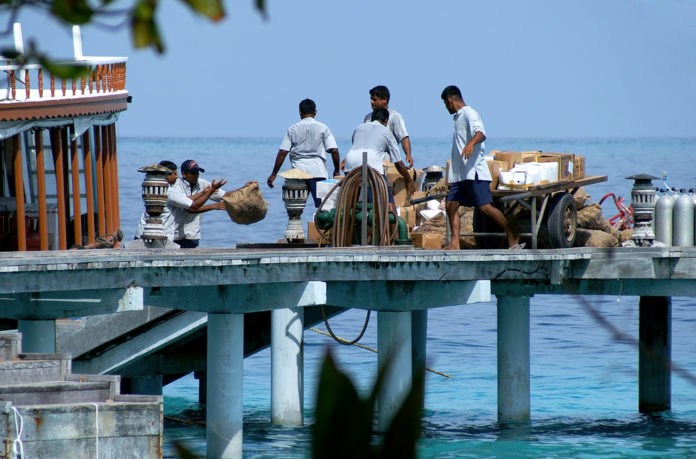
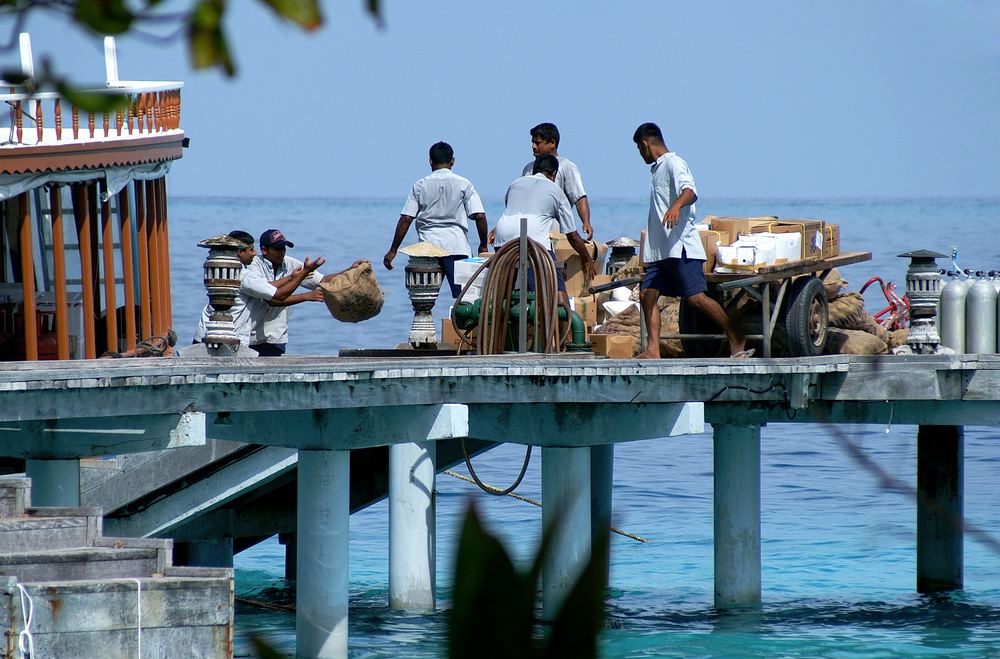
MALDIVIAN authorities have slapped a tax on remittances by expatriates in an effort to garner extra revenue for the cash-strapped nation dependent on tourism revenue.

The Maldives Inland Revenue Authority (MIRA) said the 3 per cent Remittance Tax to be charged from expatriates will be in effect starting October and be enforced on nearly 100,000 foreigners working mostly in resorts.

Another 50,000 to 75,000 undocumented, low-wage workers mostly from Bangladesh will be the most affected by the move.

“They get very little (around US$100 to US$200 a month) and deducting 3 per cent off this could be a bit harsh,” said a travel agent who declined to be named.

Of the estimated 367,000 total population in the Maldives, about 150,000 are foreign workers mostly attached to resorts.

According to new laws, salaries of all expatriate workers in the Maldives must be deposited in accounts of banks operated in the Maldives.

Political unrest, an economic slowdown and a drop in tourist arrivals, the country’s main source of income, has seen the country’s revenue decline.

JTB forms anime tourism association with JAL, Kadokawa

0

anime_tour_map

JTB is teaming up with Japan Airlines and Kadokawa, one of the nation’s leading publishers, to tap into international interest in Japan’s famed anime and manga scene.

The three companies launched the Japan Anime Tourism Association last week, and the association’s very first initiative is the creation of 88 “animation spots” around the country where fans are able to explore the locations used in their favourite tales.

The destinations combined form a pilgrimage route for dedicated manga and anime fans, inspired by the famous 88-temple route walked by religious pilgrims on the island of Shikoku.

Tsuguhiko Kadokawa, vice president of the new association and chairman of Kadokawa, said this is “what Japan needs to take advantage of to drive its economy”.

“It is impressive that the presence of Japan’s pop culture in the world has grown into something that can be on a par with Hollywood,” he added, pointing to the emergence of prime minister Shinzo Abe in a Super Mario costume at the closing ceremony of the 2016 Olympic Games in Rio de Janeiro.

“Manga and anime have made a lot of young people from around the world very interested in coming to Japan,” Motohisa Tachikawa, a spokesman for JTB, told TTG Asia e-Daily.

“But we have also realised that plenty of middle-aged people are also coming here for similar reasons. There are locations associated with anime and manga stories from Hokkaido in the very north of Japan to Okinawa in the south and there is strong demand for those places to be made more accessible,” he added.

The association will initially focus its marketing efforts on other nations in Asia, where anime and manga already have a firm and widespread following, said Tachikawa.

JTB also intends to promote tours that feature pop culture sites, while the association will utilise social media to disseminate information on the project.

Labour market woes

0

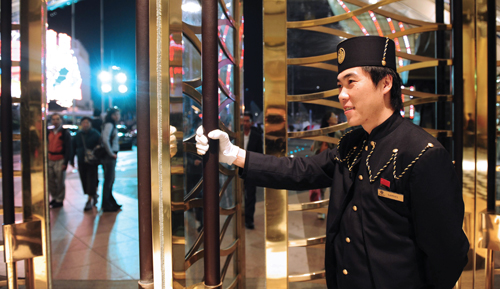
Macau’s lingering manpower shortfall is affecting travel agencies more than hotels. Prudence Lui inspects
sept30_labour-market

A surge in Macau’s hotel supply is heightening the demand for skilled demand, compounding a labour crunch issue that has afflicted the industry for ages.

According to Macau’s Land, Public Works and Transport Bureau, a total of 17 hotels under construction in 1Q2016 would bring online some 10,774 rooms while 34 other hotels in the construction planning phase are expected to supply a further 8,884 rooms.

Most recently, the debut of luxury integrated resorts like The Wynn Palace in August and The Parisian Macao this month have added over 4,700 keys.

However, Macau’s manpower shortage has played out unevenly on the sector, with hotels generally faring better than travel agencies, according to industry players interviewed by TTG Asia.

“In this poor economic condition, hotels do not need to compete directly with other industries for staff as people find hotel pay more attractive,” said Patrick Lo, Institute for Tourism Studies, Macao, lecturer and member of IFT Tourism Research Centre.

He further added that some unsuccessful entrepreneurs in the F&B industry have been reabsorbed into the hospitality sector, lured by better renumeration packages in hotels.

The brunt of the  industry’s manpower crunch hence falls disproportionately on SMEs, noted Bruno Simões, CEO of Smallworld Experience.

“Of course agents and SMEs are suffering with the opening of new properties. Labour is very scarce and expensive. Large properties pay better, have more appealing fringe benefits, and offer better career and promotion prospects.”

China Travel Service (Macao), travel department sales and marketing manager, Pun Cheng Man, agreed: “For sure, hotels are better off (while) we agents face severe manpower problems owing to long and irregular working hours. Moreover, our pay can’t compare to generous hotel pay.”

Eric Tam, Macau general manager at Westminster Travel, has a different view. While acknowledging that “new graduates are easily lured by the hotel industry given their better working environment and perks”, he opined that agencies are not entirely in competition with them “as the nature of hotel and travel agent (jobs) are different”.

He added: “Travel agencies owned by casino junket operators have either downsized or closed due to (the sharp decline in) Chinese visitors. This has generated some manpower supply (for other agencies).”

Amid such tepid climate, travel agency bosses have undertaken measures to surmount labour market challenges.

“To retain talent, we maintain good team morale and stress close communication with staff. Our team in Macau is small but the most effective way is to incentivise them,” Tam said.

He continued: “In the long run, I hope to see more internship opportunities for students and widen their perspectives by putting them in various job positions in travel industry.”

Smallworld’s Simões shared: “To compete with (bigger employers), we offer benefits that the young generation appreciates – flexibility with holidays and working schedule, informal atmosphere, empowerment and independence in their projects.

“We minimise the impact (of labour shortage) by opening an office in Zhuhai to support Macau operations. Like many other companies in Macau, we also expanded operations to other markets such as Hong Kong, China and Vietnam.

Urging a liberalisation of the work force in Macau, he remarked: “Protectionism is an old-fashioned policy. Singapore is a good example. It’s a country that welcomes talent in a competent and swift way.”

This article was first published in TTG Asia September 2016 issue. To read more, please view our digital edition or click here to subscribe.

Weak results prompt strategy change at Cathay Pacific

0

cx_business_update_5Agatha Lee (second from left) and Yongyut Lujintanon

LOWER 1H2016 revenue has turned Cathay Pacific’s sights towards the leisure market to better deal with business challenges expected for the rest of the year.

Yongyut Lujintanon, the airline’s sales and marketing manager for Thailand and Myanmar, said corporate clients significantly dropped in the first half of the year due to global economic downturns.

The period saw revenue fall 9.3 per cent to HK$45.68 billion (US$5.8 billion), resulting in profits taking a 82 per cent dive to HK$353 million year-on-year.

Yongyut said that while the proportion of leisure and business travellers were somewhat even previously, lower corporate demand means the airline needs to make up for the difference through the leisure market.

In Thailand, an important market for Cathay, the carrier has made airfares more attractive in a bid to boost demand, said Agatha Lee, manager of Cathay Pacific for Thailand. The airline is offering fares starting from 4,700 baht (US$135) for a Bangkok-Hong Kong flight.

Cathay Pacific remains the biggest player among seven airlines on the Bangkok-Hong Kong route, operating 63 flights per week.

Apart from pricing, the firm has invested in new technology, aircraft and services to meet demand of clients and to compete with rivals.

Delivery of the first of 22 Airbus A350-900 aircraft arrived in May and the airline will take delivery of a total of 48 A350 XWB aircraft by 2020. With this, it hopes to grow its network of routes and increase flight frequencies to popular destinations in North America such as Boston and Vancouver.

Cathay also recently opened new lounges in Bangkok, Tokyo, Manila, Taipei and Vancouver and a rebrand of its subsidiary airline Dragonair into Cathay Dragon to better target Chinese passengers is set to commence in November.

[SPONSORED POST] BITEC is expanding!

0


BITEC is bringing an exciting new era of business events to Southeast Asia.
Characterised by superb connectivity with proximity to two international airports, Laem Chabang port on the Eastern seaboard, major roads, highways and public transport, the 70,000 sq.m. venue will be the ultimate one-stop destination for vibrant, creative and inspiring events.Click to discover more or request a proposal


Bangkok International Trade & Exhibition Centre (BITEC)
88 Bangna-Trad Road (Km.1), Bangna, Bangkok 10260, Thailand

Tel: +662.726 1999 / Fax: +662.726 1947
Email: pr@bhirajburi.co.th  Website: www.bitec.co.th

Copyright © 2016 BITEC Management Co., Ltd. All rights reserved.


Erkan Tuncaakar made GM of Go Vacation Vietnam

0

GENERAL manager of Go Vacation Sri Lanka, Erkan Tuncaakar, has been appointed as general manager of the DMC’s latest outpost in Vietnam.

Tuncaakar joins Go Vacation Vietnam after spending nine years in various managerial roles for the company in Indonesia and Sri Lanka, in addition to his previous eight years with Go Vacation’s founding parent company LTU/REWE Touristik.

go-vacation

Meanwhile, Tim Grosse has joined as general manager of Go Vacation Sri Lanka.

Prior to this appointment, Grosse spent five years as a contracting manager with the DER/Touristik Group, and before that, worked 13 years in various destination management roles with TUI.

TTG Asia gears up as only Official Show Daily at ATF 2017

0

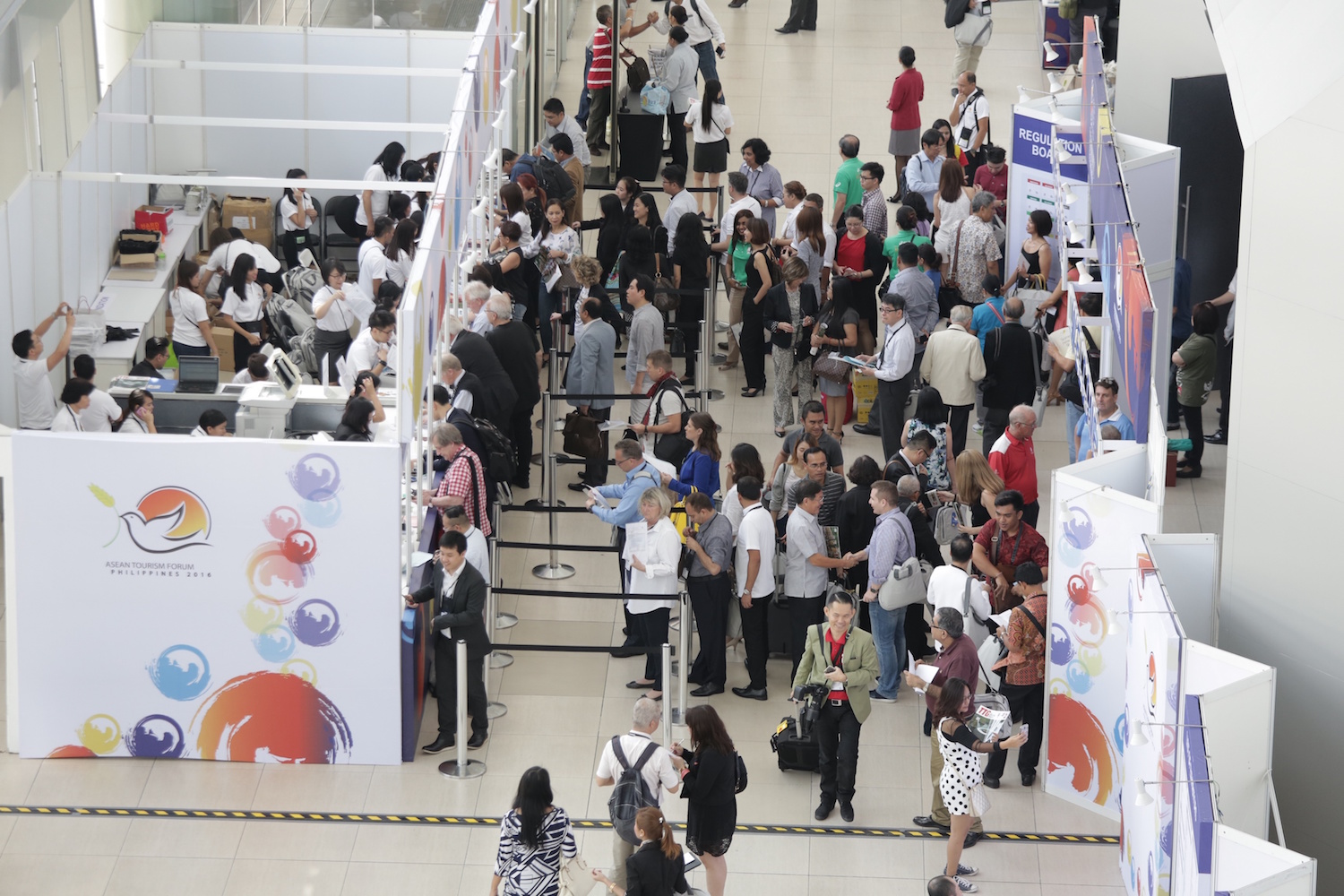
atf2016Registration booth at ATF 2016. Credit: TTG Asia

THE ASEAN Tourism Forum (ATF) 2017 Organising Committee has appointed TTG Asia to produce the only Official Show Daily at the 36th edition of the annual gathering.

Co-organisers Singapore Tourism Board, NATAS and the Singapore Hotel Association provided their endorsement since February for the publishing of four issues of the Show Dailies, one distributed each day from January 17-20, 2017.

ATF 2017, to be held at the Sands Expo and Convention Centre in Singapore from January 16-20, 2017, will be a watershed event marking the launch of the ASEAN grouping’s 50thanniversary celebrations.

As such, the Show Dailies at ATF 2017 will likewise be special edition issues to commemorate the milestone year. Two other ASEAN 50th Anniversary Special Edition issues will also be published.

New hotel openings: September 19 to 23, 2016

0

The latest hotel openings and announcements made this week

hilton_jinan

Hilton Jinan South Hotel & Residences
The first international hotel in Jinan South, this newly-launched China property features a combined total of 420 rooms – 316 are hotel guestrooms, while the remaining 104 are one-, two- and three-bedroom residences. Recreational facilities include a swimming pool on level 33, along with a 24-hour fitness centre, sauna and steam rooms. There are four F&B options: Open, an all-day dining space; Yuxi, a Chinese restaurant; View, a speciality restaurant; and Ji Lounge, a library-themed bar. The property also offers more than 2,600m2 of meeting space, which includes 10 multifunctional meeting rooms and a 1,000m2 terrace garden.

InterContinental Maldives Maamunagau Resort
The island nation of Maldives will be welcoming its first InterContinental resort on the island of Maamunagau. Located at the southern point of Raa Atoll, the property will have 83 rooms and amenities like an all-day dining restaurant, a kids’ club, club lounge, pool and spa. There will also be a sea sports centre nearby where guests can partake in a wide range of watersports such as snorkelling or jet skiing.

east_japan_railway_company
Credit: East Japan Railway Company

Train Hostel Hokutosei
Compartments of a defunct sleeper train will get a new lease of life in the 78-bed Train Hostel Hokutosei, located in Tokyo’s Nihonbashi district, come December. The carriages were previously used on the 16-hour Tokyo to Sapporo route, which was stopped in 2015. Each compartment feature four bunk beds and free Wi-Fi. Prices start from 2,500 yen (US$25) a night.

attitude_on_granville

Attitude on Granville
Step back in time in this boutique hotel that offers 81 retro-themed guestrooms reminiscent of scenes from Hong Kong in the 1970s and 1980s. Rooms come in four categories – Urban, Cozy, Elite and Studio Suite – and feature murals of landmarks such as the Clock Tower, while the lobby boasts vintage letterboxes and retro payphones. There are two F&B options: Yum Cha, a contemporary Chinese restaurant that serves up unique-looking dim sum; and Urban Park, a modern European restaurant and bar with an open-air terrace that overlooks Granville Road.

Mergui is Myanmar’s next emerging destination

0

mergui-myanmarMoken village, Mergui

THE Mergui Archipelago in Myanmar is poised to open up to the broader tourism landscape within the next two years.

According to research by C9 Hotelworks, the archipelago, located in far southern Myanmar and comprising over 800 islands of varying sizes, is seeing a surge in tourism interest, especially from the upscale segment.

From 1,158 visitors in 2012, who all arrived via licenced marine vessels, the total number of arrivals in Mergui has risen to 146,736 for the January to June period of this year alone. This is mainly due to the opening of the Ranong-Kawthaung border between Thailand and Myanmar since August 2013.

Entry into Mergui requires a permit which ranges between US$120 and US$170 in price, depending on the length of stay and area travelled. However, only licenced tour operators may purchase one, meaning FIT travel is barred for now.

This is expected to change as new hotels come online, stated Bill Barnett, managing director of C9 Hotelworks.

As of 2015, there are 21 licensed yacht operators in Myanmar for overnight trips, 20 of which are situated in Thailand. Of those, Phuket is home to 13, Ranong hosts five and there is one each in Phang Nga and Bangkok.

Burma Boating is one company that has plans to continue expansion in the region and will increase its fleet size to cater to increased demand from luxury clients. It will be offering a seven-day itinerary twice a month at US$5,000 per person.

Hotels there too are set to expand. At current, there are two hotels in Mergui, namely the Grand Andaman Resort on Tha Htay Kyun Island and the Myanmar Andaman Resort on Macleod Island, totalling 227 keys.

Accommodation options are set to boom with 12 approved projects in the pipeline as of mid-2016.

Sabre study finds majority of Asians enjoy exploratory travel

0

IN A report released yesterday, Sabre revealed a polarising trend in travel behaviour and motivation and found that most Asians travel in order to discover new things.

The Polarisation of Asian Travellers report, conducted by The Futures Company for Sabre, showed that a majority (56 per cent) were driven to travel by internal motivation and the desire to improve themselves, while the remaining 44 per cent were motivated more by the idea of sharing with others.

As well, 58 per cent of respondents expressed a preference for taking control of their own travel bookings while the remaining 42 per cent preferred for it to be managed for them.

From mapping out these trends, the study identified four distinct traveller types.

Most of the respondents surveyed (38 per cent) came under the Explorer type, which values discovery and self-actualisation. They like to take control of their travel bookings and most likely want to plan on the go. To cater to this segment, travel providers can render planning support through on-demand services and platforms.

The second group of Asian travellers are Followers, making up 23 per cent. They are most likely to seek help from others during the planning phase of their trip and four out of 10 typically travel with a tour group.

20 per cent of respondents show the attributes of Connectors. They like to be in charge of the travel planning and their motivation to travel is to share experiences with others. This group tends to travel with friends and family.

Finally, there are the Opportunists (18 per cent), who like to be taken care of. They focus on getting to their destination and making the most of the experience without being bogged down by practicalities. This type tends to be spontaneous in their travel.