TTG Asia
Asia/Singapore Thursday, 15th January 2026
Page 1626

More China, India, Australia flights on the horizon for Indonesia

0

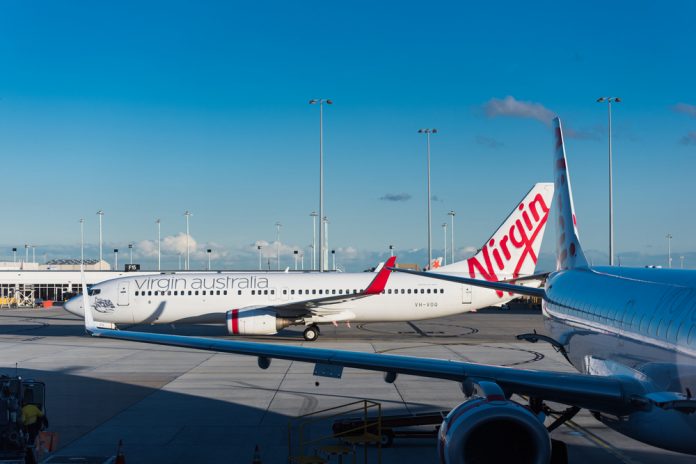
Shortly after Indonesia’s Ministry of Tourism announced a sharpened focus on boosting seat numbers into the country, new pipeline routes were revealed from its visit to the offices of Sriwijaya Air, AirAsia, Garuda Indonesia and Angkasa Pura II in Cengkareng last Monday.

Toto Nursatyo, commercial director of Sriwijaya Air, said: “This year, we will receive 12 new aircraft so we will be able to bring in more tourists here… China now (makes up) 80 per cent of our international network, and we will expand our network to Australia and India.”


Ngurah Rai International Airport, Bali

He shared that the airline has the rights to fly to 48 cities in China, but will focus on connecting eight cities in China with more destinations in Indonesia, such as Medan and Makassar, on charter basis.

“Currently, we have flights from Guangzhou, Wuhan, Changsha, Nanjing, Jianjien and Fushan (to Bali and some to Manado).These are the major sources of tourists from China.”

Meanwhile, AirAsia plans to open new services between Indonesia and China and India via Kuala Lumpur this year, targeted to commence in October and May respectively.

Dendy Kurniawan, group CEO of AirAsia Indonesia, said: “We will announce the routes and exact flying dates when we are ready. Currently, we are still in the preparation stage.”

On the other hand, Garuda’s new president and CEO Pahala Nugraha Mansury told the media that the airline is now reviewing plans to launch several new services, on top of additional seasonal services to Australia.

“We are having internal reviews on (operations), including plans to open services (from Jakarta) to Moscow and the US as well as from Bali to Chengdu. We will announce the results (soon),” he said.

‘Underwater flight’ to become reality in the Maldives

0

DeepFlight Adventures has partnered water sports operator Ocean Group to launch its three-man submarine for underwater excursions, which will be offered at a select luxury resort in the Maldives come 4Q2017.

The DeepFlight Super Falcon 3S submarine was designed to enable guests to experience “underwater flight” as they glide alongside marine life and over spectacular shipwrecks and reefs.


SuperFalcon submarine

Adam Wright, managing director of DeepFlight Adventures, said this presents the opportunity for properties to differentiate themselves.

The submarine has been pilot tested and according to an Ocean Group statement, meets safety standards, is environmentally clean, quiet and efficient.

Hilton makes key hire in China

0

Hilton has named Qian Jin as the company’s first area president for Greater China and Mongolia.

A Chinese native, Qian studied in Australia and has worked in Fiji, Malaysia and Singapore. Spending the majority of his career at Starwood Hotels & Resorts, the hospitality veteran ultimately became president for Greater China, before taking on his most recent position as president of Wanda Hotels & Resorts.


Qian Jin

Based in Shanghai, he will now be responsible for taking Hilton forward in what is already the company’s second largest market in terms of hotels open and under development. He reports to Martin Rinck, area president of Asia Pacific Hilton, and serves on the regional executive committee.

Qian’s appointment comes after several key additions to Hilton’s Greater China leadership team in recent months, all of whom are native Chinese. He will replace outgoing senior vice president of Greater China and Mongolia, Bruce McKenzie, who is retiring after a distinguished career in the industry.

Events: Singapore International Festival of Arts 2017

0

Travel agents may entice theatre and arts-loving audiences to Singapore with a four-month stretch of the Singapore International Festival of Arts (SIFA) from June 28 to September 9. This will comprise the pre-festival of ideas called The OPEN (Open, Participate, Enrich, Negotiate) and the main festival. Unlike previous years, there will be no gap between these two festivals.

This year’s edition will focus on Singapore artists and collaborations with international artists across 16 productions. In addition, there are seven international productions. Together they will generate over 90 events for theatre and arts-loving audiences, including OPEN films, featuring the world’s best feature films screened at The Projector this July.


Show programme; https://www.sifa.sg/sifa/programme/shows/

In another highlight of OPEN, culinary activist and 2016 Prince Claus Laureate, Kamal Mouzawak, will deliver a keynote on July 7, and create an Open Kitchen based on his philosophy of Make Food Not War, which inspired the food movement in Lebanon from market (souk) to the table (tawlet). Then, across different locations in Singapore there will be Open Kitchens on different dates where audiences are invited to cook with local hosts in various venues including The Arts House, Victoria Theatre and homes.

More information is available at www.sifa.sg.

Overheard: Tourist deposits crab in resort’s safe

0

A tourist from China has been fined US$300 for hiding a crab in his room safe at a resort in the Maldives’ Ari Atoll.

Avas newspaper reported that the room attendant Ali heard something moving inside the safe during a routine inspection.

“Ali reported his suspicion to the manager who then questioned the tourist. After the tourist opened the safe in the presence of both Ali and the manager, the crab crawled out.. and scurried under the bed. Housekeeping reportedly spent hours trying to get the crab out of the room,” the report said.

The tourist admitted to catching the crab at the beach and planing to cook it in a rice cooker he brought with him.

He had first tried to store the crab in the bathtub, but later moved it to the safe after repeated escape attempts by the crustacean.

Gen Z rules the roost for family travel, seeks offbeat destinations

0

While millennials previously held court as the leading force in the travel industry, global luxury travel network Virtuoso says Gen Z is the new influencer in tourism, driving travel decisions in their family with an interest in unconventional locales and thrills.

Consisting of young people born late in the 1990s to 2010s, this generation holds considerable sway over their families’ travel decisions, according to 88 per cent of Virtuoso advisors polled. By 2020, this generation will account for 40 per cent of all consumers with disposable income to travel.


Source: Virtuoso

Gen Zs are well-travelled from an early age and globally minded, and thus interested in offbeat destinations with exhilarating adventures like diving the Great Barrier Reef and kayaking among icebergs in Greenland, says Virtuoso.

Listing the top 10 unconventional family destinations this summer, Virtuoso reveals that trips of two weeks or longer are seeing increasing demand, with families travelling more to far-flung Asian countries such as India, Vietnam and Japan.

The polar regions of Iceland, Antarctica and the Arctic lead the pack due to the threat of climate change, while Africa and the Galapagos Islands snag top spots as experiences involving wildlife conservation remain top-of-mind.

The strong American dollar, combined with the 100th anniversary of the Russian Revolution, has also triggered a renewed interest in visiting the country.

Cultural immersion remains one of the leading travel trends, driving families to Cuba before the country loses its historic charm.

Meanwhile, the desire for personalised travel experiences, deeper cultural immersion, and Instagram-worthy design continues to drive the popularity of boutique hotels. Gen Z has been hyper-connected to the Internet since birth and places great emphasis on visual storytelling. Sharing one-of-a kind travel moments with friends on social media is today’s postcard.

The hottest destinations this year for Gen Z travellers and their families, Virtuoso reveals, are Italy, Mexico, Hawaii, Orlando (Florida), England, Costa Rica, South Africa, Turks and Caicos, the Dominican Republic and Australia.

Norwegian Joy to boast Ferrari-branded racetrack

0

Norwegian Cruise Line has partnered Scuderia Ferrari Watches on the first racetrack at sea, which will debut on the cruise line’s newest ship designed for China, Norwegian Joy, in summer 2017.

The two-level Ferrari-branded racetrack will be located on the ship’s top deck. Up to 10 drivers at a time will be able to race each other on the course in electric go-carts.

Guests of Norwegian Joy’s The Haven and Concierge class will enjoy a number of complimentary rides as part suite and stateroom benefits.

The 3,850-guest Norwegian Joy will homeport in Shanghai and Tianjin, following an inaugural port tour leading up to a christening ceremony led by her Godfather and Chinese pop star Wang Leehom on June 27.

India’s impending GST raises concerns about tourism fallouts

0

Already reeling under pressure post-demonetisation and the recent service tax hike, Indian travel agents are worried that the implementation of the Goods & Sales Tax (GST) from July 1 to replace all other taxes will cause further setbacks to the tourism and hospitality sectors.

The outbound tour and corporate hotel segments have already taken a beating from the recent service tax hike, lamented Rajat Bagaria, managing director, Shrishti Tours & Travels.

With effect since January 22, tour operators need to pay a service tax on 60 per cent of the total invoice value of a packaged tour, versus the earlier service tax levied on 30 per cent of the invoice value. This has doubled service tax on tour packages to nine per cent from 4.5 per cent.

Bagaria added: “A service tax of nine per cent is a very high charge on the client who has the option to book the hotel directly on the website. The government is indirectly putting pressure on the travellers to pay in cash directly at the hotel internationally, so we are facing the brunt of this increased tax.”

Concerned that tourism goods will be taxed the higher of the GST slabs (five, 12, 18 and 28 per cent) and result in costlier packages, tour operators argue that GST should be applied accordingly on invoice value.

With speculations that GST could be 18 per cent on the tourism industry, consultants are afraid that a higher GST will push travellers to bypass Indian outbound tour operators and book with OTAs or overseas agents and hotels.

“We have to compete with other countries. With a higher GST slab (it will be difficult to) see India among the top destinations in the global market,” said Ashwani Sharma, CEO, Sheraton Travels.

Sunbeam Tours & Travels’ director Bharat Shah commented: “One country, one market and one tax is the idea behind the GST. If the government is serious about promoting tourism, it needs to place the sector in the lowest tax bracket.”

As well, agents are adamant that outbound tours be exempt from GST as the services are utilised overseas.

Madhav Oza, director, Blue Star Air Travel Services, said: “We expect the GST to be five per cent for domestic and inbound tour operators. Outbound tour operators should be exempted from the service tax.”

Concurred Ashok Lalchandani, managing director, Ashok Travel World: “GST on tour operations should be imposed only on the Indian components.”

However, some consultants believe GST is a step in the right direction to simplify India’s taxation system. The tourism sector currently sees three taxes: VAT, luxury tax by the state governments and service tax by the central government.

“The value of VAT tax varies from 12 to 14.5 per cent depending on the state. The luxury tax varies from zero to 12 per cent depending on room type and state whereas the service varies according to the type of service provided,” said Hitank Shah, chapter chairman, Gujarat, Travel Agents Federation of India.

“When all these three taxes are combined, the taxes go up to 20-27 per cent. With the implementation of GST, the cascading taxes will combine and a single tax regime would reduce it to just 17-19 per cent. This will encourage travellers to visit India the low tax rate,” he opined.

Easier visa rules underway for Asians into Taiwan

0

Starting June 1, Taiwan’s (ROC) Ministry of Foreign Affairs (MOFA) will further relax visa rules for nationals from South and South-east Asia, under its New Southbound Policy, to attract more visitors for tourism and business.

Changes include the extension of a visa exemption trial programme for nationals of Thailand and Brunei to July 31, 2018. Since it was introduced on August 1, 2016, the numbers of visitors from Thailand and Brunei have increased 57.3 and 52 per cent respectively. And in the first two months of this year alone, the number of Thai visitors surged 91.8 per cent.


Jiufen, New Taipei

A visa exemption trial for Philippine nationals will also be introduced for a year.

In addition, the eligibility criteria for online visa applications will be eased for nationals from Cambodia, India, Indonesia, Laos, Myanmar and Vietnam.

Those who have been issued with an ROC visa (labour visas excluded) over the last 10 years and who have no record of violating ROC law may apply for a multiple-entry visa using the Online Application for ROC (Taiwan) Travel Authorization Certificate run by the National Immigration Agency.

Citizens of Sri Lanka and Bhutan will also become eligible for tourist visas.

As well, businesspeople from Bangladesh, Bhutan, India, Nepal, Pakistan and Sri Lanka can apply for an eVisa to Taiwan at the recommendation of local offices of the Taiwan External Trade Development Council.

Chinese tourists biggest spenders in 2016: UNWTO

0

Chinese outbound tourism expenditure grew 12 per cent to US$261 billion last year, continuing a trend of double-digit growth every year since 2004 and placing China first in UNWTO’s ranking of international tourism spend.

The number of outbound Chinese travellers also rose six per cent to 135 million in 2016, consolidating China’s position as the world’s top source market since 2012. Asia-Pacific benefitted especially from the growth in Chinese travel, most notably Japan, South Korea and Thailand, and also longhaul destinations such as the US and several in Europe.

Elsewhere in Asia, Hong Kong entered the top 10 spending markets following five per cent growth in expenditure (US$24 billion, while South Korea (US$27 billion) and Australia (US$27 billion) both spent eight per cent more in 2016.

Among the largest 50 source markets, there were nine apart from China that recorded double-digit growth in spending in 2016: Vietnam (+28 per cent), Argentina (+26 per cent), Egypt (+19 per cent), Spain (+17 per cent), India (+16 per cent), Israel and Ukraine (both +12 per cent), Qatar and Thailand (both +11 per cent).

Tourism spending from the US – the second largest market – increased eight per cent in 2016 to US$122 billion, up US$9 billion on 2015. For the third year in a row, strong outbound demand was fuelled by a robust US dollar and economy. The number of US residents travelling to international destinations increased eight per cent through November 2016 (74 million in 2015).

Germany (+five per cent to US$81 billion), the UK (marginal change to US$64 billion), France (+seven per cent to US$41 billion) and Italy (+one per cent to US$25 billion), the four European spenders in the global top 10, likewise reported growth in outbound demand last year.

In particular, demand from the UK remained sound despite the significant depreciation of the British pound in 2016. UK residents’ visits abroad were up by five million (+seven per cent) in 2016 to 70 million.

By contrast, outbound tourism from some commodity exporters continued to be depressed as a consequence of their weaker economies and currencies. Expenditure from Russia dropped further in 2016 to US$24 billion, while Brazil also saw declines in outbound spend.