Centara Hotels & Resorts has appointed Allen Thomas as vice president business development.
Reporting to Centara’s deputy CEO Markland Blaiklock, Thomas will be responsible for executing the company’s plan to grow its hotel stable from 58 to 134 properties over the next five years.
Thomas has 28 years of experience in the hospitality sector, including, positions with HPL and Como Hotels, and most recently Resorts Holdings International.
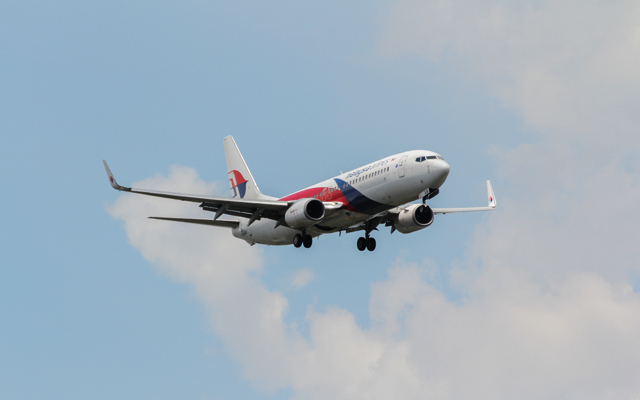
Malaysia Airlines relaunches Brisbane flights
Malaysia Airlines will reinstate flights between Kuala Lumpur and Brisbane from June 6.
From Brisbane, MH134 pushes back at 23.20 to reach Kuala Lumpur at 05.50 the following day. Out of Kuala Lumpur on the return leg, MH135 takes to the skies at 09.50 to reach Brisbane at 19.50.
The service will run four times a week, providing 120,000 seats to/from Brisbane airport on the Airbus A330-300 aircraft. The airline will be operating the route every Monday, Wednesday, Thursday and Saturday.
Other routes between Kuala Lumpur and Australia are to Sydney (twice daily), Melbourne (twice daily), Perth (daily) and Adelaide (four times a week).
Eurowings links up Bangkok and Munich
German low-cost airline Eurowings will begin twice-weekly flights – on Mondays and Saturdays – between Bangkok and Munich starting on June 15 this year.
The inaugural flight will leave the Bavarian capital on June 15, whereas the first flight from Bangkok is going to take off on June 16.
AirAsia launches Macau-Phuket flights
AirAsia has begun daily flights between Macau and Phuket.
Taking three hours and 45 minutes, flights will depart Phuket at 05.20 and arrive at 10.05. The return flight will depart Macau at 10.40 and arrive in Phuket at 13.05, taking three hours and 25 minutes.
Apart from this route, Thai AirAsia offers a variety direct flights to Macau from Thailand, including Don Mueang-Macau (four flights a day), Chiang Mai-Macao (one flight per day) and Pattaya (U-Tapao)-Macau (four flights per week).
Tianjin Airlines adds Auckland to network map
Tianjin Airlines now flies from Auckland to Tianjin via Xi’an, making it the second intercontinental flight between China and New Zealand for the airline.
GS7968 will depart Auckland on Saturdays at 22.05 and arrive in Tianjin at 11.25 the following day, while GS7967 will depart Tianjin at 21.10 and arrive back in Auckland at 19.05 the following day on Fridays.
Finnair adds longhaul frequencies to Asia
Finnair will add several frequencies to some of its longhaul Asian destinations, namely Osaka, Hong Kong, Delhi and Phuket, for the 2018/2019 winter season.
Finnair’s route to Osaka will now become daily during the winter season with two additional frequencies on Tuesdays and Thursdays. Two additional frequencies will also be added to the Hong Kong route on Fridays and Sundays, for a total of 12 weekly frequencies.
As well, Finnair’s route to Delhi will become a daily destination during the winter season with the addition of a flight on Wednesdays, and a fourth weekly frequency will also be added to the Phuket route on Mondays.
Air New Zealand has appointed Jenni Martin as head of South and South-East Asia. She will report to Scott Carr, regional general manager Asia.
In her new role, Martin will be based in Singapore, and will be responsible for sales and market development activity across South and South-east Asia, with a particular emphasis on working closely with Air New Zealand’s alliance partner Singapore Airlines.
Martin began her career at Air New Zealand in 2010 when she joined from Qantas as an account executive in the New Zealand region corporate sales team. Since then, she has progressed through a number of roles and was most recently the airline’s senior manager sales and operations based in Sydney.
Tung (middle) commemorated his retirement with friends last month
Hong Kong’s tourism trade ushered in 2018 with new leaders at the helm of key associations and councils, eager to propel their organisations forward amid changing forces in the industry.
Last month, Joseph Tung retired from the Travel Industry Council (TIC) after a 20-year tenure and handed the reins to his deputy, Alice Chan.
Tung (middle) commemorated his retirement with friends from the industry last month
Chan said the key challenge for TIC going ahead is preparing to transform. It now plays the dual role of trade association and self-regulatory body of travel agents, but is expecting to relinquish the latter once the trade’s new regulatory body, the Travel Industry Authority, is set up.
“To prepare for the upcoming changes, TIC has been allocating more resources to assist traders and has already embarked on a number of funding schemes and projects to help enhance members’ competitiveness by promoting the use of information and computer technology; training of travel agency personnel; and collaboration with mainland and overseas tourism organisations,” she shared.
“Indeed, the workload of the executive office has grown tremendously in the past few years and is bound to expand further in the next few years. We are looking forward to obtaining additional manpower and developing an even more efficient team.”
At the Hong Kong Hotel Association (HKHA), Patrick Kwok, formerly general manager for business development of the Hong Kong Tourism Board for over 34 years, in late August replaced veteran James Lu as executive director.
A series of proactive changes has been planned for roll-out, such as a website revamp to enable better communication with members and consumers, new initiatives to enhance membership benefits, and increased collaboration with stakeholders and partners to uplift HKHA’s profile.
Kwok told TTG Asia: “The industry enjoyed a very rewarding year in 2017 and expects to continue in the first half of 2018. However, we have to be nimble in view of external factors including political tension, increasing interest rate and the strong US currency as well as intense competition in the region.
“In fact, the industry faces a (situation of) high base and slow growth in terms of overnight visitors. With about 20,000 new hotel rooms in the next five years, manpower resources is a real challenge. Moreover, our reliance on OTAs will continue to hurt our yields and, not to forget Airbnb, which is becoming more active.”
The association will hence spearhead new initiatives and leverage new business opportunities such as those that may arise from the completion of major infrastructures and the Big Bay Tourism Development.
Meanwhile, the Hong Kong Association of Travel Agents (HATA) has elected 32-year-old Ronald Wu as chairman, making him the youngest chief in the association’s history. Son of the former TIC chairman Michael Wu, he joined Gray Line Tours in late 2011 and began his involvement with HATA in 2012 as a convention committee member.
In his two-year term, he intends to focus on members’ participation. He elaborated: “With over 300 members, we can make a difference in the trade, but this can only be done if our members are as engaged as the executive committee are. The challenge is in how to continue to strengthen HATA’s role as a key voice of the industry. We need to remain influential and be involved in all areas that will affect the trade, including regulations, development, education, etc.”
In order to achieve this, he stressed that HATA will need to evolve with the industry, and be aware of the current travel trends including those concerning customer behaviour and new technology. “For the industry to grow, we definitely need more new blood to join the trade,” he said.
Resort closed from January 2-6 as roads leading to national park were flooded
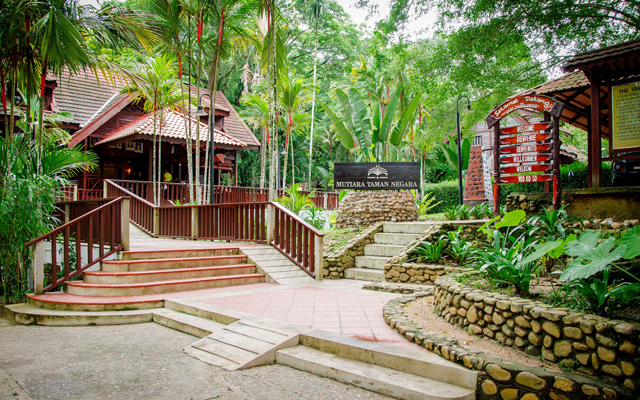
Roads to Taman Negara, Malaysia’s largest national park and conservation area, were made inaccessible by floods in Jerantut District earlier this month, but some agents and resort operators say it is now business as usual at the attraction.
After a temporary closure from January 2 to 6, one of the larger resorts in the park, the 87-key Mutiara Taman Negara National Park Resort, reopened its doors on January 7.
Resort closed from January 2-6 as roads leading to national park were flooded
Mutiara Taman Negara’s director of sales, Kingston Khoo, said: “The weather is beautiful now at Taman Negara. Water levels on the Tembeling River in Kuala Tahan have receded by more than seven metres and are back to normal levels.”
Khoo shared that activities at the resort are running as usual, including the canopy walk, boat trips from the resort to Lata Berkoh, jungle-trekking trips and visits to indigenous communities.
He said the resort is looking to close the month with an average occupancy of 40 per cent, adding that agent partners have continued to support and promote the park since its reopening.
One such agent, Manfred Kurz, managing director of Diethelm Travel Malaysia, said: “We had a handful of FIT clients whom we had to divert when the resort was temporarily closed. But now that it is open, we continue to (sell) programmes to Taman Negara, which we think is the (go-to) park in Peninsular Malaysia if you want to learn more about jungles.”
Meanwhile, Khoo remarked that weather patterns have changed, and the monsoon season normally expected in the months of November and December have begun later in the past two years, and in shorter spells.
Hoshino Resorts is set to debut its fourth brand, OMO, with openings in Tokyo and Hokkaido scheduled for spring 2018.
Joining Hosihoya, Risonare and Kai under Hoshino’s brand portfolio, OMO is positioned as an urban-based, mid-range line of hotels. The brand will carry the tagline ‘Get down with the local rhythm’ and focus on actively introducing guests to local and insider-type experiences from eateries, bars and other attractions.
A rendering of OMO5 Tokyo Otsuka’s look. Photo credit: Hoshino Resorts
Hotel names will include numbers signifying the range of services offered, with zero denoting complete no-frills and nine the full OMO experience.
Set to open on May 9, OMO5 Tokyo Otsuka will be located a minute’s walk from JR Otsuka Station which has a direct access from major train stations such as Shinjuku and Shibuya on the JR Yamanote Line.
OMO7 Asahikawa will open on April 28, offering guests experiences such as the Asahiyama Zoo as well as the area’s famed local ramen shops.
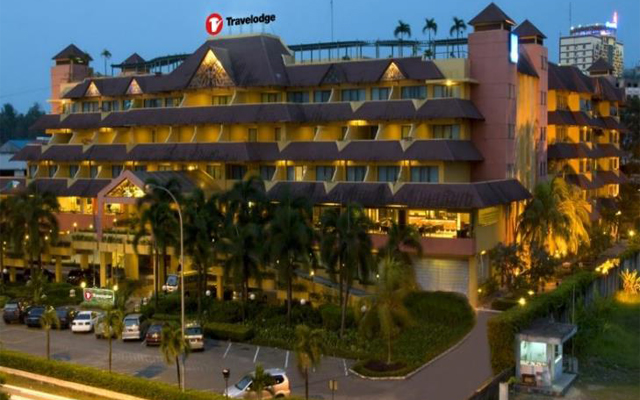
The former Novotel Batam has been rebranded as Travelodge Batam, marking the Indonesia debut of the Travelodge brand.
The newly-refurbished Travelodge Batam features 249 rooms and facilities such as an indoor swimming pool and a fitness centre.
This will be the first Travelodge-branded hotel in Indonesia
Located in Batam’s shopping and entertainment district, the hotel is within walking distance or a five minutes’ drive to key attractions including Nagoya Hills Mall and Harbour Bay Mall and the Harbour Bay International Ferry Terminal.
Travelodge Batam is 45 minutes from Singapore by ferry and 30 minutes’ drive from the Hang Nadim International Airport.
Development part of the Malaysia Vision Valley masterplan
Jakarta-headquartered Archipelago International has expanded its reach in Asia with the signing of a 700-room management contract in Port Dickson under its Quest Hotel brand.
The project, scheduled to open in mid-2019, will also feature the city’s largest convention centre and a 30,000m2 waterpark.
Development part of the Malaysia Vision Valley masterplan
John Flood, Archipelago International’s president and CEO, said: “Over the past few years, our team has been preparing for growth throughout Asia, the Middle East, and Cuba. Quest being a branded hotel, we will attract 20 per cent more business than a non-branded hotel. When you mix in the country’s largest waterpark, the hotel will surely attract a lion’s share of travellers and that’s always great news for investors. This project further expands the group’s presence as a leading international travel company.”
The new Quest property and convention facility are also part of a much bigger masterplan for the Malaysia Vision Valley, where a comprehensive development plan to identify economic and social drivers for growth, as well as the protection of the environment, will be developed.
Currently, Archipelago International holds Indonesia’s largest portfolio of over 130 hotels (17,000 rooms) with another 100 new properties under development across Indonesia, Philippines, and Malaysia.
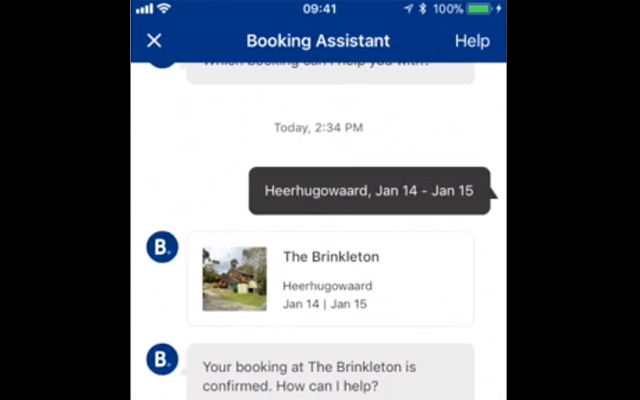
The chatbot automatically identifies the most common post-booking questions
Booking.com is expanding its pilot on a service and support chatbot, the Booking Assistant, which is now available to English-language bookings and can handle 30 per cent of those customer enquiries automatically in less than five minutes, it says.
Leveraging natural language processing technology, the tool identifies the most frequently asked post-booking questions from customers – including on payment, transportation, arrival and departure times, date changes, cancellation requests, parking information, extra bed requests, pet policies, Wi-Fi and Internet availability, as well as a wide variety of greetings and thank-you messages.
The chatbot automatically identifies the most common post-booking question
If the Booking Assistant, which is built entirely in-house, has identified a question it can’t solve on its own, depending on the nature of the query, it pulls in support from either the Booking.com customer service team or the property, adding their response directly into the conversation and making the source of that information known to customers.
With increased access to additional consumers and their most pressing questions, the Booking Assistant is expected to become more sophisticated. Booking.com is currently training the model to refine the current number of questions it can manage into more than 90 specific sub-topics that can be quickly identified and handled appropriately.
“For us, AI is not about replacing human interaction, but is instead a vehicle to facilitate an even more personalised, instantaneously gratifying and frictionless travel experience for consumers,” said James Waters, global director of customer service at Booking.com. “As we operate in an industry that is incredibly personal, emotional and complex, maintaining the right balance between genuine human interaction and efficient automation is something we’re always trying to fine-tune and optimise throughout every stage of the consumer journey, including with the Booking Assistant.”
Citing its own poll of 19,000 travellers in 26 countries, Booking.com said 50 per cent of consumers don’t mind if they deal with a real person or a computer – so long as their questions are answered – and 80 per cent prefer to self-serve in order to get the information they need.
The Booking Assistant was built as a mobile-first experience and has been adapted to operate natively within the iOS and Android versions of the Booking.com app, as well as via Facebook Messenger. It can also be accessed via the Booking.com website on desktop, mobile or tablet.
Repeat cybersecurity breaches in Hong Kong's travel agency community
Two mid-scale travel agencies in Hong Kong, Big Line Holiday and Goldjoy Holidays, had their customer database hacked last week, resulting in customer information such as identity card, passport and telephone numbers being leaked.
This makes cyber security breaches a recurring problem in Hong Kong’s travel industry, after the first known case surfaced last November at Worldwide Package Travel Services.
Repeat cyber security breaches in Hong Kong’s travel agency community
Local police have classified the hacking as cases of blackmail, and the Cyber Security and Technology Crime Bureau is currently investigating the incidents.
Big Line Holiday temporarily suspended its operating system, website and mobile application for 14 hours from 22.00 on January 4. According to a statement from the agency, a hacker had sent a blackmail message on January 2 and the company immediately informed the police and the Office of the Privacy Commissioner for Personal Data.
The company further apologised for leaking clients’ information and resolved to strengthen cyber security and plug all holes by recruiting external technical specialists and assistance. Specialising in shorthaul tours to China, its 13 small branches target the mass market with affordable prices.
Meanwhile at Goldjoy Holidays, which is known for longhaul and upmarket itineraries, executive assistant Agnes Lee told TTG Asia that no sensitive information such as credit card or banking data were involved.
She said: “None of our operations were disrupted and we suspended only the instant online tour booking function for police investigations. Our inhouse IT team, which monitors and updates our system regularly, and outside consultant, which handles upgrades, may explain why no serious damage resulted from the cyber security (breach). In future, (we will deploy) more resources (to guard consumer data) as technology evolves every day and we rely on it to promote our products.”
Meanwhile, other travel agencies in Hong Kong are stepping up their efforts to protect consumer data from similar hacking incidents. Premium Holidays general manager, Simon Wo, said: “Since the first blackmail case was reported, our IT team started checking the strength of the firewall and assigned an outside expert to assess the levels of protection on our system.”
However, he reckoned that “only agents in mid-scale or above can afford to invest more on cyber security”, while this might be costlier for smaller-scale players.
Last year, the Travel Industry Council organised two events about cyber security and there are plans for education on the topic to continue this year.



 Malaysia Airlines relaunches Brisbane flights