Personalities who were part of the significant points of Myanmar's history
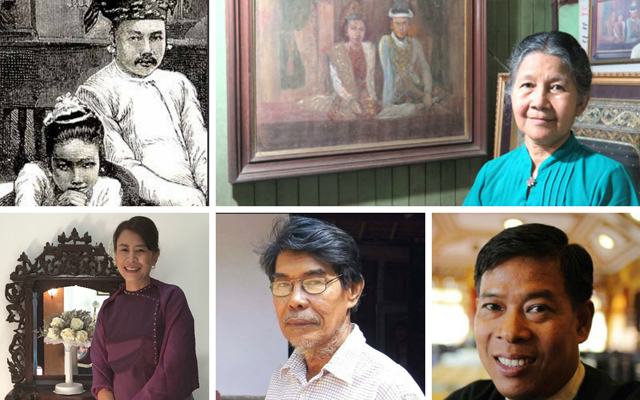
Khiri Travel has created a new tour component which brings travellers into contact with some of the key eyewitnesses to Myanmar’s turbulent history – including Burmese royalty, artists and activists.
Through the Personal Stories and Encounters – Meet the Leading Minds of Myanmar programme, tourists can meet Soe Win, a descendent of the last King Thipaw of Myanmar, to learn about the fate of Burmese royalty.
Personalities who were part of the significant points in Myanmar’s history
Another encounter that tourists can have is with art gallery owner, Aung Soe Min, who will give insights into the country’s reawakened art scene. Academic Aphwar Nyein will reminisce the days when Myanmar had some of the best universities and highest literacy rates in South-east Asia; while Dewi Thant will describe the environmental challenges confronting the country now that the ‘Burmese Road to Socialism’ has been abandoned in favour of Western-style economic development.
The programme, which can be purchased as an add-on to any of Khiri Travel Myanmar’s tours, also offers encounters with a lethwei boxer, a puppet master, an author, a food connoisseur, a former political prisoner, a tattoo artist, and various craftsmen and women.
Edwin Briels, managing director of Khiri Travel Myanmar, said: “These meetings with remarkable people add a rewarding new element to tourists’ understanding of Myanmar, past and present.”
Most of the encounters take place in Yangon, with some in Mandalay, Bagan and Inle Lake. In all, Khiri Travel Myanmar can facilitate meetings with around 20 experts throughout the country.
Indonesian peer-to-peer marketplace Triponyu.com, which connects savvy independent travellers with local hosts of travel experiences in the country, is now looking to expand its market reach through partnerships with tour operators and participation in travel marts.
Triponyu.com was established by four milliennials from Solo, Central Java in 2016, and officially launched in mid-2017.
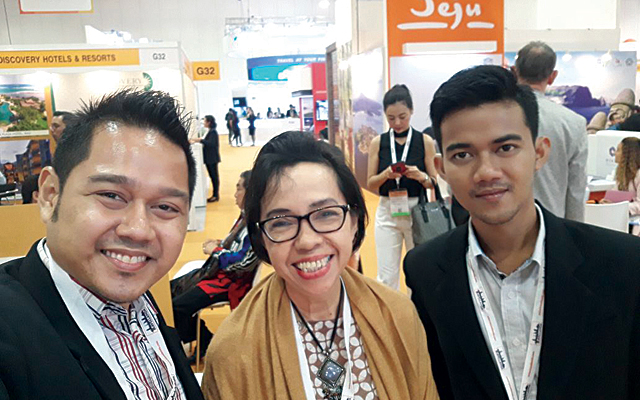
Augustinus Adhitya, CEO of Triponyu.com, said a system to incorporate the B2B component is in development and will “launch soon”.
Augustinus (left) tells TTG Asia’s Mimi Hudoyo (centre) about his plans to start partnering with tour operators
He said his business is all about “empowering the local community, which used to be a spectator of the tourism growth around them, to become active players (themselves)”.
“The trips we offer are created by the locals (who) develop interesting and unconventional products,” he added.
Programmes are mostly day tours that run for four to five hours.
Citing examples, Augustinus pointed to a culinary tour in Solo that takes tourists beyond sampling local food, and instead also imparts philosophy behind traditional cuisine, history of the eateries and knowledge of food preparation.
Another example is a batik tour that throws in tips on how to determine the quality of a batik cloth and lessons on batik production.
Experience hosts join Triponyu.com for free and determine the price of their own programmes. To ensure quality of experiences, Triponyu.com verifies and approves content, and also guides local hosts on package creation and pricing.
In return, the company draws seven per cent of sales takings as commission.
Since its launch, Triponyu.co has quickly expanded its product range beyond Solo and Java to include experiences in other parts of Indonesia such as Bali and Lombok. As well, Triponyu.com offers homestays and car rental services too.
Augustinus believes there is good growth potential for experiential tours, as “the trend today is for people to travel individually rather than in groups” as well as a growing desire for adventure and travel flexibility.
“(Independent travellers today don’t want to) come to a destination clutching tickets and accommodation vouchers. They want to look for things to do after they have arrived and they prefer value-for-money products found on the Internet,” he said.
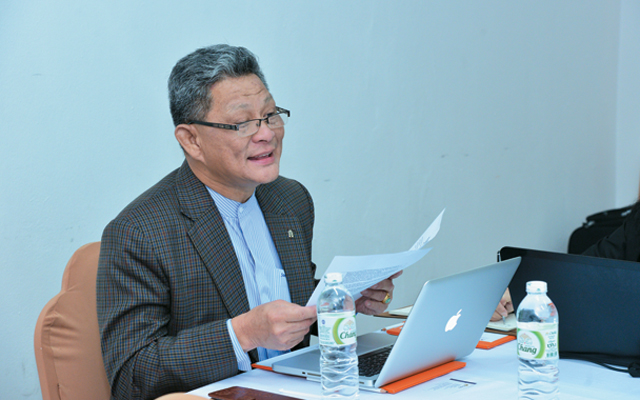
Cheah: strengthening collaboration between region's airlines, NTOs and associations
The ASEAN Tourism Association (ASEANTA) Board has made an unusual move of bringing together several travel industry associations at ATF 2018 to facilitate a more coordinated approach to resolving issues such as market penetration and courtship of Muslim travellers.
Cheah Swee Hee, ASEANTA president, pointed out that this decision has resulted in a “merrier” ASEAN airlines meeting on Monday, as three member airlines – Thai Airways, AirAsia and Philippine Airlines – are joined by NTO representatives from Indonesia and Thailand as well as ASEANTA Board members.
Cheah: strengthening collaboration between region’s airlines, NTOs and associations
Explaining the benefit of bringing all parties together, Cheah said: “Member airlines target different market segments and can contribute to our plans. Philippine Airlines, for example, is strong in North America, so we can work with it should we hope to grow that market.”
He added that NTO presence was also valuable as they were the ones to bring travellers into their destination and garner critical support from their governments and airport authorities to expand an airline’s network.
Airline, NTO and ASEANTA Board members also discussed on Monday ways to improve intra-ASEAN travel for Muslims, an increasingly attractive segment in the region.
Desiree Bandal, Philippines AirAsia’s head of government policy & ASEAN, told TTG Asia: “AirAsia hopes for the tourism industry in South-east Asia to create increased awareness about halal-compliant products and services, and make them more readily available across the region.
“South-east Asia’s population comprises around 40 per cent Muslims, with Malaysia and Indonesia being the biggest tourist source markets. As we continue to promote intra-ASEAN travel, it is important that the needs of Muslim tourists from the region are met.”
Cheah is engaging his peers from the ASEAN Hotel & Restaurant Association (AHRA) and the Federation of ASEAN Travel Associations as well, through separate meetings during ATF 2018.
He noted that stakeholders within South-east Asia’s tourism sector were dependent on each other and only by helping each other – such as through the sharing of business information – would they meet their business objectives.
For example, he believes that the ASEANTA Board can share knowledge on halal tourism with AHRA members to enable more hotels to be Muslim-friendly.
Cheah acknowledged that a single meeting would not bring about immediate solutions, so numerous and regular meetings with various travel industry associations in this region would be arranged going forward.
Twenty-four per cent of Singapore Sevens attendees last year were foreign visitors
The HSBC World Singapore Rugby Sevens is pushing beyond its sporting roots to become a family-friendly festival that hopes to pull in travellers from around Asia.
Supported by the Singapore Tourism Board (STB) and government agency Sport Singapore, event organiser Rugby Singapore has been increasing outreach efforts to tie up with attractions and travel agents.
Twenty-four per cent of Singapore Sevens attendees last year were foreign visitors
“We see the Singapore Sevens as one of the tentpole events that can bring fans and people from around the world to Singapore. We are currently in talks with agents, family-friendly attractions and retail options for partnerships”, shared David Lim, chairman of the board, Rugby Singapore.
He added that there has been a “rise in popularity” for rugby in Asia, particularly driven by Japan’s recent victories in the sport. Last year, 24 per cent of Singapore Sevens attendees were foreign visitors, and the event generated a total economic impact of S$23.5 million (US$18 million).
As the only South-east Asian host in the HSBC World Rugby Sevens Series, Singapore aims to “draw more visitors from proximity markets such as Malaysia and Indonesia”, by delivering a memorable fan experience that differs yearly, STB’s sports director Jean Ng told TTG Asia.
For the third edition this year, Rugby Singapore is stepping up the programme with the Singapore Rugby Carnival, an event with activities such as face painting, themed challenges, inflatable stations, photo booths, local bands and food.
“We want that diverse variety of activities – not just sports – that will engage and bring people (together) here. This is something we want to use to distinguish ourselves from every other stop in the World Series,” explained Lim.
The Singapore Sevens is the eighth leg – out of 10 – in the Series, and is one stop after the sell-out Hong Kong Sevens.
Agents feel that having the event as a destination lure is a plus for Singapore. General manager of Diethelm Travel, Judy Lum, described the initiative as “good news”. She said: “The organiser should consider having a dialogue with local DMCs. I am sure there are some of us who can help to promote it to overseas tour operators.”
Samson Tan, founder/CEO of GTMC Travel, suggested maximising marketing distribution by using the National Association of Travel Agents Singapore as a communication platform with agents.
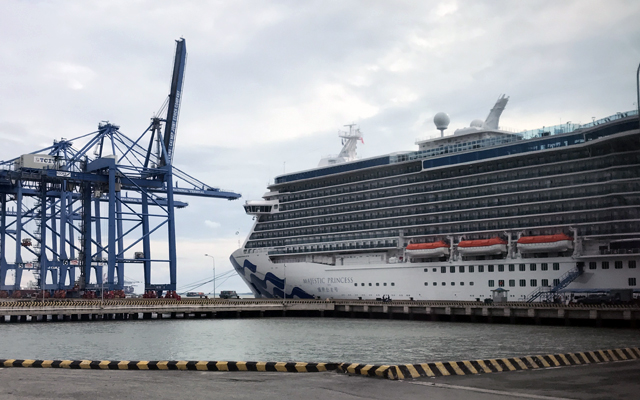
In 2017, Majestic Princess sailed to Phu My port in Ho Chi Minh City
Princess Cruises will boost its guest capacity in Vietnam by over 40 per cent in 2018 from 2017 as demand for Vietnam sailings grows.
In 2017, Princess Cruises carried over 58,000 guests on 22 sailings to Vietnamese ports such as Phu My, Nha Trang, Da Nang and Cai Lan.
Majestic Princess at Phu My port in Ho Chi Minh City last year
This year, Princess Cruises’ six ships – Majestic Princess, Sapphire Princess, Diamond Princess, Golden Princess, Sun Princess and Coral Princess – will be deployed for 31 voyages, bringing over 80,000 guests to Vietnam throughout the year.
“Vietnam has become an increasingly popular destination for our guests from the US, Australia, and Europe as well as Asian countries, and cruising is one of the best ways to explore this part of the world. In response to this demand, we have significantly expanded our itineraries to offer passengers a choice of sailings and exciting itinerary options,” said Farriek Tawfik, director of South-east Asia, Princess Cruises.
According to CLIA, Vietnam received more than 400 ship calls across all its ports, the sixth largest number for Asian countries.
Figures from CLIA further show that cruise demand from Vietnam has increased by 126 per cent from 2012 to 2016, the largest increase in any Asian country. In 2012, there were only 158 Vietnamese cruise passengers, and in 2016 this number increased to over 4,100, demonstrating the huge potential of Vietnam as a source market for cruise travel.
Since 2014, the cruise line has been offering South-east Asia voyages that homeport in Singapore.
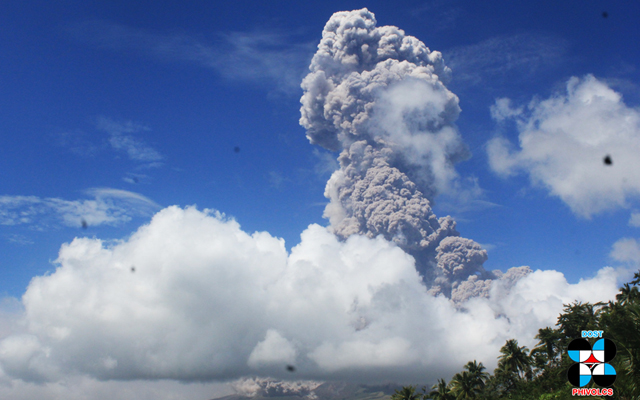
Ash cloud billowing out of the volcano (photo credit: Facebook/phivolcs)
The alert warning on Mount Mayon was on Monday raised to a level four after a huge eruption took place, prompting the closure of Legazpi City International Airport as well as a string of flight cancellations.
At press time, the alert remains at level four on the five-level scale, meaning an explosive eruption is possible within hours or days.
Ash cloud billowing out of the volcano (photo credit: Facebook/phivolcs)
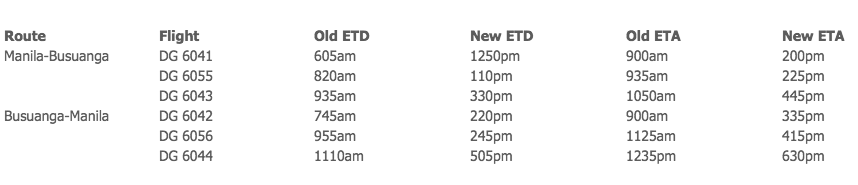
According to the latest travel advisory issued by Cebu Pacific Air at 19.00 yesterday, the ash cloud spewing from Mayon Volcano is spreading into the atmosphere and is forecast to move towards the general direction of Mindoro and Northern Palawan by today morning.
The airline is hence rescheduling flights to and from Busuanga, Palawan for today as follows:
It is also cancelling Cebgo flights to and from Naga City and San Jose, Mindoro scheduled for January 24 with the codes DG6113, DG6117, DG6114, DG6118, DG6031 and DG6032.
Philippines Airlines also announced it would cancel flights to Legazpi City International Airport plying today and tomorrow, namely PR2922 and PR2921 to and from Manila; and PR2927 and PR2928 to and from Cebu.
It is also cancelling today’s services between Clark and Virac, Masbate and Naga.
Since Monday, airlines have been cancelling flights in and out of Legazpi, City International Airport – which remains closed – and Manila as a result of the volcanic activity. International flight cancellations include Jetstar’s services between Singapore and Manila on January 23.
Centara execs raring to go on the second Cosi property
Centara Hotels & Resorts has broken ground in North Pattaya for another Cosi hotel, after the brand debuted in Samui last month.
Scheduled to open in 2019, Cosi Pattaya Naklua Beach will offer 282 rooms, all with Smart TVs, free Wi-Fi and USB ports. Cosi properties typically come with a swimming pool, laundromat, and the all-hours Hub, a social hangout and digital playspace complete with a café. At the 24-hour cafe, guests can enjoy free food and drinks using daily credits they get with their stay.
Centara execs raring to go on the second Cosi property
The hotel will be located a short walk to the beach and a five-minute drive to Central Festival Pattaya.
Launched in late 2012, Cosi targets travellers with “modern, connected lifestyles”. It is positioned as simple and affordable accommodation, with innovations like smartphone integration and self-service check-in.
As part of a five-year plan, Centara expects to add close to 40 more Cosi hotels to its portfolio, all situated in resort and city locations throughout Thailand and Asia.
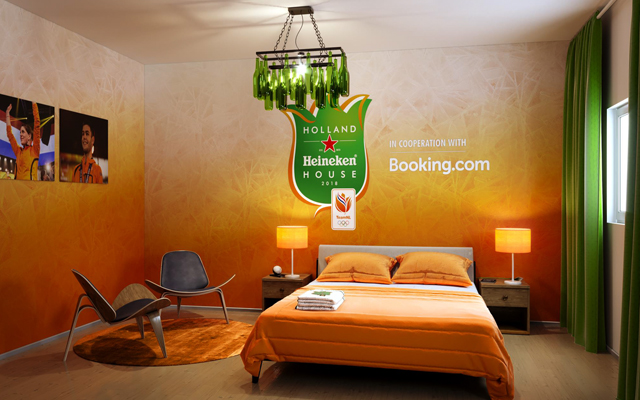
Bringing orange fever to sporting fans at the Games
Holland Heineken House, which has travelled to every Olympic Games destination since Barcelona in 1992, is on Booking.com for the first time, offering sporting fans a space to stay and socialise in during the upcoming Games in South Korea.
From January 23 to 27, reservations will be made available on Booking.com each day at 09.00 (GMT). Rooms are available for only 32,500 won (US$30.23) per night.
Bringing orange fever to sporting fans at the Games
This year, Holland Heineken House will host performances by Dutch artists including Van Velzen, André Hazes Jr and Di-rect, as well as offer a behind-the-scenes tour and visit to the Team Netherlands Lounge.
Originally a venue for Dutch athletes, their families and friends, the Holland Heineken House has since grown into a meeting place for thousands of Dutch and international visitors. Heineken organises the national house on behalf of the The Dutch Olympic Committee*Dutch Sports Federation.
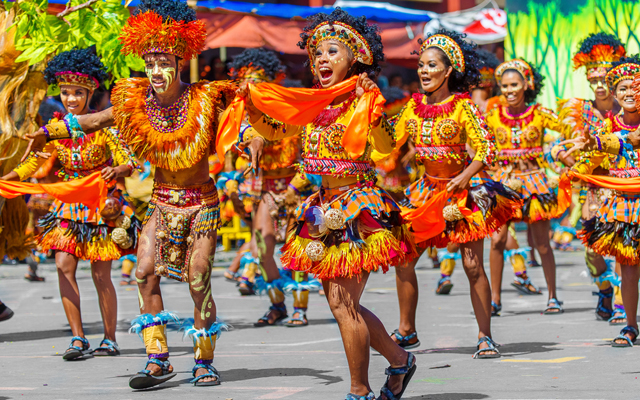
TPB wants to promote the country's festivals to tourists; pictured, Festival Dinagyang in Iloilo
The Tourism Promotions Board Philippines (TPB) will turn feasts and festivals into regular celebrations as well as craft a tourism icon to complement its stronger thrust in consumer and digital marketing – all part of its effort to offer more “innovative activities” to tourists.
Explaining the new direction, TPB’s COO Cesar Montano, told TTG Asia that tourism efforts must evolve with the times, especially as “everything is going digital”.
“But no amount of online promotions will help if there are no activities on the ground,” he added.
TPB wants to promote the country’s festivals to tourists; pictured, Festival Dinagyang in Iloilo
The country’s colourful and unique feasts and festivals will be “institutionalised” to ensure that they are held regularly with government and private sector support, which will in turn enable them to become part of tour packages that travel agents can sell.
There will be monthly themes, beginning with a culinary festival in April which will be experienced by a fam trip for up to 40 bloggers from around the world, in time for Madrid Fusion Manila 2018 and Philippine Tourism Exchange.
Montano also shared that since the Philippine tourism image is “so chop suey”, an icon will be chosen to represent the destination, similar to what Angkor Wat is to Cambodia and Statue of Liberty is to New York.
He pointed out that for ASEAN’s 50th anniversary last year, member states featured manmade attractions as their national landmarks while the Philippines’ was the eagle.
Another “innovation” is the cross selling of regional tourist destinations, hardware and packages. For instance, those in Luzon can be sold also in Visayas and Mindanao and vice versa.
TPB’s stronger investment in digital marketing and online promotions will mean a less prominent presence at travel trade shows.
“We’re partnering with Agoda, TravelAdvisor, etc. That is (our) direction, coupled with more efforts in consumer activation,” Montano explained.
In a separate interview on the Philippines’ past year performance and outlook for 2018, tourism undersecretary Benito Bengzon Jr said the destination “managed to insulate ourselves from the whiplash of travel advisory” as foreign arrivals in the first 10 months of 2017 registered an 11.5 per cent year-on-year growth.
The double-digit growth, higher than the ASEAN and global single-digit average growth, was partly the result of a strategy targeting opportunity markets when some of the destination’s biggest source markets – which generate close to 70 per cent of total arrivals – were hit.
Bengzon explained that while these opportunity markets are “relatively low-based”, their combined performance “is able to mitigate the downturn in major markets”.
Bengzon expects 2018 to be another growth year as the Department of Tourism intensifies international marketing and networking activities with airlines, cruise planners and other industry players. The department is also maintaining its support of charter flights from other countries; expanding the product portfolio with new destinations and attractions; and ensuring that the competencies of hospitality frontliners will be on par with the rest of Asia.
He added that the Philippines is also targeting the promising markets of Turkey and Israel as it expands its geographical footprint.
Tourism Malaysia will get a bigger budget this year to support the Visit Malaysia Year 2020 campaign, which will see a string of promotional activities beginning this year.
While Tourism Malaysia’s director-general Mirza Mohammad Taiyab is keeping mum on the budget figure, he told TTG Asia at ATF 2018 that the amount would be bigger than previous years’, and there would be more money to spend on raising Malaysia’s visibility as a tourist destination in the lead up to the Visit Malaysia Year 2020 campaign.
Plump budget to support Visit Malaysia Year 2020 campaign
The year-long campaign is expected to boost tourist arrivals to 36 million and tourist receipts to RM168 billion (US$42.6 billion).
For a start, campaign details will be communicated to travel trade players at ATF 2018, and again at ITB Berlin in March.
Mirza said: “The build-up towards Visit Malaysia Year 2020 starts from this year as we want the country’s visibility to improve.”
He added that Malaysia’s hosting of PATA Travel Mart later this year in Langkawi will “present us with (another) platform to promote Malaysia and Visit Malaysia Year 2020 to the world.”











The HSBC World Singapore Rugby Sevens is pushing beyond its sporting roots to become a family-friendly festival that hopes to pull in travellers from around Asia.
Supported by the Singapore Tourism Board (STB) and government agency Sport Singapore, event organiser Rugby Singapore has been increasing outreach efforts to tie up with attractions and travel agents.
“We see the Singapore Sevens as one of the tentpole events that can bring fans and people from around the world to Singapore. We are currently in talks with agents, family-friendly attractions and retail options for partnerships”, shared David Lim, chairman of the board, Rugby Singapore.
He added that there has been a “rise in popularity” for rugby in Asia, particularly driven by Japan’s recent victories in the sport. Last year, 24 per cent of Singapore Sevens attendees were foreign visitors, and the event generated a total economic impact of S$23.5 million (US$18 million).
As the only South-east Asian host in the HSBC World Rugby Sevens Series, Singapore aims to “draw more visitors from proximity markets such as Malaysia and Indonesia”, by delivering a memorable fan experience that differs yearly, STB’s sports director Jean Ng told TTG Asia.
For the third edition this year, Rugby Singapore is stepping up the programme with the Singapore Rugby Carnival, an event with activities such as face painting, themed challenges, inflatable stations, photo booths, local bands and food.
“We want that diverse variety of activities – not just sports – that will engage and bring people (together) here. This is something we want to use to distinguish ourselves from every other stop in the World Series,” explained Lim.
The Singapore Sevens is the eighth leg – out of 10 – in the Series, and is one stop after the sell-out Hong Kong Sevens.
Agents feel that having the event as a destination lure is a plus for Singapore. General manager of Diethelm Travel, Judy Lum, described the initiative as “good news”. She said: “The organiser should consider having a dialogue with local DMCs. I am sure there are some of us who can help to promote it to overseas tour operators.”
Samson Tan, founder/CEO of GTMC Travel, suggested maximising marketing distribution by using the National Association of Travel Agents Singapore as a communication platform with agents.