Package includes vouchers, dining credits, and more
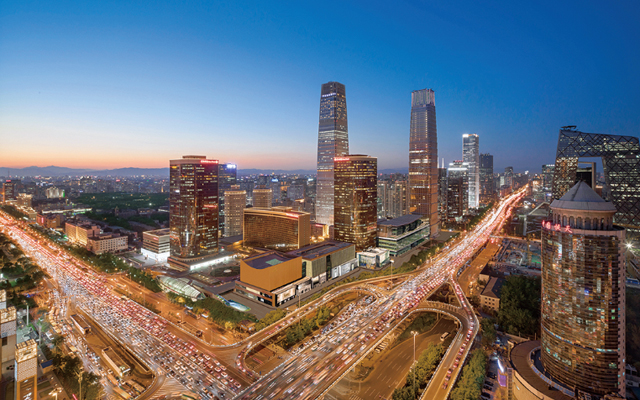
Four Shangri-La hotels in the China World Trade Center Complex are offering stay packages with perks that can be enjoyed across all four properties and the China World Mall.
The deal is available to guests who book in advance at China World Hotel, Beijing; China World Summit Wing, Beijing; Hotel Jen Beijing; and Kerry Hotel, Beijing on Fridays, Saturdays and Sundays, including public holidays.
Package includes vouchers, dining credits and more
The package includes dining credits for use at any of the hotel’s restaurants; extra bed; access to all four hotels’ health clubs; a voucher for use at China World Summit Wing, Beijing worth RMB200 (US$31.80); a glass of craft beer at Beer Smith at Hotel Jen Beijing; and VIP Gold member shopping discounts at China World Mall.
Also part of the deal are family-friendly inclusions such as two tickets to Le Cool ice rink at China World Mall, three-hour access to Adventure Zone at Kerry Hotel, Beijing and weekend classes for one at China World Hotel, Beijing.
At China World Summit Wing, the package will be priced from RMB1,988 net per night, with RMB700 in dining credits; at China World Hotel, Beijing, it will be RMB1,588, with RMB600 worth of credits; at Hotel Jen Beijing RMB1,388, and RMB500 in dining credits; and at Kerry Hotel, Beijing RMB1,588, with RMB600 in credits.
Numerous luxury developments set to rise on Chao Phraya riverfront
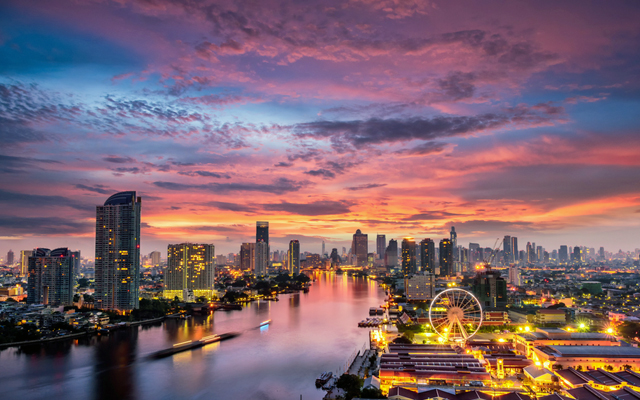
With the rapid expansion of metro lines, mega projects breaking ground and a slew of high-profile hotels in the development pipeline for Bangkok, expectations are high among industry watchers that the Thai capital is at the cusp of becoming a world-class megacity, opening up vast opportunities for the travel and tourism sector.
“The great promise of the East has now become the new West,” said Bill Barnett, managing director of C9 Hotelworks, at the recent Thailand Tourism Forum (TTF) 2018. “Move over New York, move over London. Bangkok will soon join Shanghai and Beijing as a megacity.”
Several massive infrastructure projects like the East Economic Corridor, expansion of the Suvarnabhumi and Don Mueang International Airports, and high-speed trains linking the capital to Rayong, among others, are expected to change the face of Bangkok’s development.
Numerous luxury developments set to rise on Chao Phraya riverfront
For Bangkok, which already accounts for half of the tourism receipts into Thailand, “infrastructure is a first and foremost step to success,” stated Nikhom Jensiriratanakorn, director, Horwath HTL, pointing to developed metropolises like Singapore, Tokyo and Hong Kong.
Meanwhile, Bangkok’s potential as an up-and-coming megacity is not lost on Apichart Chutrakul, CEO of Sansiri, who unveiled at the forum plans to venture outside of the property development sector by bringing The Standard Hotels into Thailand.
This diversification gameplan is also part of the company’s efforts to bring Bangkok “up to standard” with other global urban conglomerations, the real estate mogul declared.
Such sanguine projections are further backed by the city’s surging inbound visitor numbers as well as robust hotel performance in recent years.
In particular, Bangkok’s hotels saw a “really good year” in 2017, achieving an ADR of 3,400 baht (US$108), occupancy levels of 79 per cent and RevPar growth of 4.6 per cent, with records broken for 10 out of 12 months last year, shared Jesper Palmqvist, STR Global’s area director Asia-Pacific at TTF.
“If the stability of the city in the last two, three years – which is already unusual – can be sustained, this will supercharge Bangkok,” he commented.
Furthermore, major luxury hospitality brands like Four Seasons and Capella have already announced hotel projects along Bangkok’s Chao Phraya River, which together with upcoming mega projects like 50 billion baht Icon Siam by local retail developer Siam Piwat, is expected to drive the riverfront as a major growth area in the coming years.
However, industry watchers are keenly aware that it could be too early to pop the champagne, as a number of factors, whether it’s the overstrained airports or Thailand’s looming elections in late 2018, could put a spanner in the works of Bangkok’s ambitions.
Enforcing standards a way to keep consumer confidence up, agents say
Despite the slew of agency closures in Singapore – with Citi Travels & Tours being the latest to shutter its door earlier this month – the trade is hopeful that the resultant smaller pool of firms could lead to higher-quality players and stoke consumer confidence.
Yew Hoong Wong, director of EU Holidays, initially expressed concern that the closure will affect “overall consumer confidence in travel agencies”.
Enforcing standards a way to keep consumer confidence up, agents say
However, he observed that the Singapore Tourism Board (STB) has been “more stringent with agents” since the abrupt closure of Five Stars Tours in 2014, and this in turn “instils greater consumer confidence in (the) industry”.
He said: “(STB has) most recently reviewed the Travel Agents Act and Regulations with new measures that began this month. Overall, it is good that they are monitoring and tightening the measures as it helps eliminate errant agents.”
This clampdown also poses “less competition” to surviving agencies, which is vital as online travel players are making it “quite hard to do business” for traditional agents, said Kei Satoh, sales & marketing senior manager, JTB Central Sales Operations (Asia Pacific).
A spokesperson from the National Association of Travel Agents Singapore said: “The suspension of Citi Travels is unlikely to impact the general environment of Singapore’s travel trade. STB’s active enforcement of its requirements and regulations (is) maintaining and building up the professionalism of the industry as a whole.”
Citi Travels & Tours’ suspension came as a result of the agency failing to submit its audited statement of accounts in a timely fashion.
To ensure it can sidestep being at risk, EU Holidays “engage(s) a third party financial compliance officer to regularly check (its) financial health”, shared Wong.
The airline has reversed two unpopular policy decisions in just a month
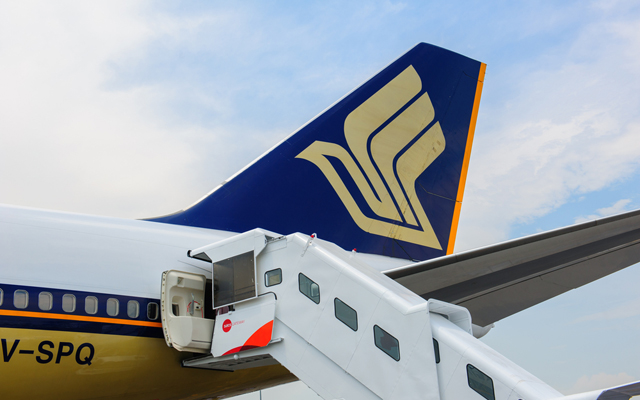
After facing consumer backlash, Singapore Airlines (SIA) has reversed the decision to automatically charge passengers for travel insurance through an opt-out rather than opt-in feature, according to local media reports.
The airline has reversed two unpopular policy decisions in just a month
Accounts of the online booking inclusion surfaced weeks ago, after unhappy customers took to online forums and local media with complaints that they noticed the travel insurance payment only after booking, Singapore’s Straits Times reports.
This is the second time in a month the airline has backtracked on a policy change. In January, it decided to impose a credit card fee on some travel bookings from Singapore, only to retract the decision the next day.
The charge – 1.3 per cent of the total fare amount, capped at S$50 (US$38.16) – was to apply to those who bought its cheapest Economy Lite tickets, the airline had said.
Penalty for violation is jail time of up to a year or over US$3,000 in fine, or both
Thailand yesterday began its smoking and littering ban on 24 popular tourist beaches across 15 provinces to promote a clean and safe environment.
The smoking ban includes beachside locations at high-volume destinations such as Phuket, Koh Samui, Koh Phi Phi and Hua Hin, under the regulations of the Department of Marine and Coastal Resources.
Penalty for violation is jail time of up to a year or over US$3,000 in fine, or both
More beaches are expected to be added to the list in the future.
Officials say there will be designated smoking areas provided inland with refuse containers for the disposal of cigarette butts.
Violators will be taken to a criminal court and could face up to one year in jail, or a fine of up to 100,000 baht (US$3,193), or both, reported Reuters.
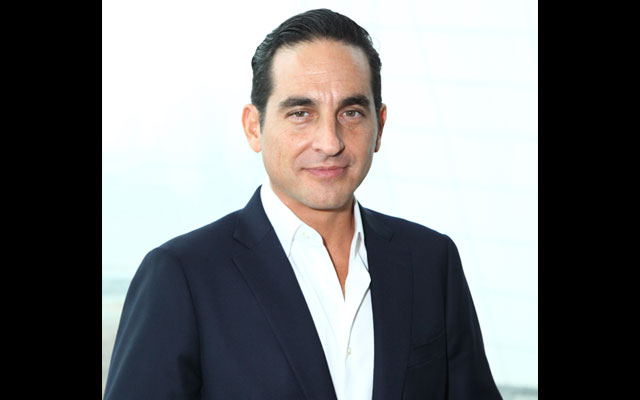
John Blanco has been appointed general manager of the 101-room Capella Bangkok, which is expected to open in 4Q2018 along the rejuvenated Chao Phraya River waterfront promenade.
Blanco will provide provide strategic guidance to the pre-opening team ensuring operational success and premium positioning of Capella Hotels and Resorts’ first property in Thailand.
An American with roots in Venezuela, the hospitality veteran has 25 years of experience, and possesses a stellar track record with luxury hospitality companies such as Ritz Carlton and Four Seasons.
Etihad Airways’ baggage fees are now calculated based on weight for all markets except the US and Canada, where passengers are still charged based on number of checked bags.
With the switch to a weight-based baggage policy, the majority of markets will be entitled to 23kg of checked baggage on Economy Deal fares, 30kg on Economy Saver and Classic fares, and 35kg on Economy Flex fares.
Customers in all Business Class fare categories are entitled to 40kg, and First Class customers enjoy a 50kg allowance. Guests in The Residence onboard Etihad Airways’ flagship Airbus A380 fleet are provided with an allowance of four bags at 32kg each.
Etihad Guest Silver, Gold and Platinum members will continue to receive a complimentary excess baggage allowance of 32kg on US and Canada routes, and 20kg for Platinum members, 15kg for Gold members and 10kg for Silver members on all other routes.
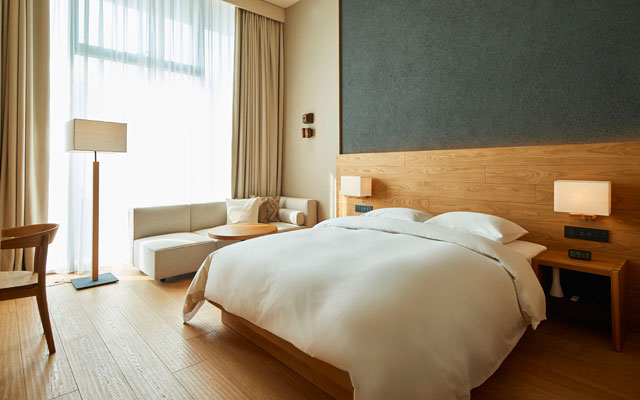
Muji Hotel Shenzhen
Designed to reflect an “anti-gorgeous, anti-cheap concept” is the first Muji Hotel in the world. The Shenzhen property has 79 rooms, decked out with regular mod-cons such as an electric kettle and fridge, across five configurations. Facilities on-site include 118-seater eatery Muji Diner Shanghai Huaihai 755, a gym, three conference rooms, and a library holding approximately 650 tomes. The hotel is located in the heart of the city in the new UpperHills multi-use complex and sits above – what else? – a Muji store.
Six Senses Fiji
Located in a secluded bay on Malolo Island, Six Senses Fiji will feature 24 one- and two-bedroom pool villas boasting private pools, decks and outdoor showers. In addition, there will be 10 more private residences of two-, three-, four- and five-bedroom configuration (with another 50 scheduled to be built during phase two of the development), and furnished with private pools, barbecues, and fully-equipped kitchens. Amenities on the island include five F&B options, kid’s club, tennis courts, gym, hot and cold whirlpools, spa, and an elevated treetop yoga pavilion. The property officially opens on April 14, but reservations can now be made.
Hyatt Centric Ginza Tokyo
The first Hyatt Centric-branded property has opened on Namiki-dori street in Ginza, Tokyo. The 12-storey property offers 164 guestrooms furnished with environmentally conscious bath products by Beekind, Bluetooth-enabled electronics and salon-grade blowdryers. Amenities include the Namiki667 restaurant and bar, and a gym. For meeting planners, in addition to the hotel’s 86m2 of function space, the 127m2 Namiki Suite on the top floor is also bookable as a meeting room.
Alba Wellness Resort
Billing itself as the “first ever complete wellness resort in Vietnam” is the 56-key Alba Wellness Resort. The five-star property features 2,000m2 indoor and outdoor onsen pools filled with natural mineral hot spring water, a spa centre with an extensive list of treatments, three restaurants and bars, swimming pool, and a garden for yoga workouts. The hotel is located 30km north of Hue city, at the foot of Truong Son mountain.
The Chen, Box Hill
The seventh hotel in the Art Series Hotel’s collection is located in Melbourne’s Box Hill suburb, and is inspired by and dedicated to Chinese Australian artist Zhong Chen. The hotel is filled with Zhong’s portraits and prints, and all of its 100 rooms feature views of the city skyline or Dandenong Ranges and its surrounds. Facilities include a rooftop pool and entertainment deck, a modern Australian cafe, yum cha eatery, and gym. Renowned art tours, art libraries and dedicated art channels are also available for guests, alongside the rental of Art Series-branded Smart Cars and Lekker bicycles.
The recently launched (December 13, 2017) four-times-weekly flights by Qatar Airways to Chiang Mai now makes it more convenient for longhaul visitors to also visit its South-east Asian neighbours.
Malinee Nitikasetsunthorn, director, The Americas market division covering North America and Latin America, Tourism Authority of Thailand (TAT), believes the direct flights will make it much easier to promote Northern Thailand to Sao Paulo and Buenos Aires, where Qatar has direct daily connections.
Malinee added that the opening of TAT’s first office in Sao Paulo in 2018 will help to develop markets and drive traffic from South America. Moreover, as a longhaul destination, Malinee opined that Chiang Mai will attract tourists from niche segments such as luxury and honeymooners.
Yves Van Kerrebroeck, managing director of Bangkok-based Asian Trails, indicated that the new flights will offer more opportunities to tap into the source markets Qatar has connections to.
“These could be Qataris or expats working in Qatar and its surrounds, as well as European and Latin/North Americans,” he said.
“I don’t see Chiang Mai as a standalone destination for the longhaul market, but it could in some cases work as a starting point for some tailored and unique longhaul products. For example, we have an overland itinerary combining the northern regions of Thailand, Laos and Vietnam. Such a programme is a perfect match for Qatar’s direct Chiang Mai flight, so we will promote this new option to our partners in Europe, Latin and North America,” Van Kerrebroeck shared.
TAT’s governor Yuthasak Supasorn pointed out: “The entire Northern Thailand region is worth a stay of at least 10 days. If you add the neighbouring countries of Laos and Myanmar, which are just across the border and easily accessible by road, the importance of Chiang Mai as a gateway becomes more apparent. It is highly unlikely that people who travel such long distances will return home after spending only a few days in Chiang Mai.”
Wanchai Thavorthaveekul, deputy managing director of Destination Asia Thailand, shared that holidaymakers from European and Latin America markets usually combine Chiang Mai with a beach stay before leaving Thailand, and Phuket made perfect sense as travellers can depart for Doha from Phuket via Qatar Airways’ twice-daily flights.
Meanwhile, Klaus Ludwig, general manager at Kulturen Leben in Rüsselsheim am Main, Germany, added: “People travelling all the way from Europe won’t want to just see Chiang Mai. They will want to explore other parts of Thailand or Asia. Thus, the flights open up the possibility of making Chiang Mai a main gateway. Chiang Mai also has direct air connections to Asian cities such as Singapore, Kuala Lumpur, Yangon and Hong Kong, so itineraries could also be combined with other cities in Asia.”
The Mastercard-CrescentRating Global Muslim Travel Index 2017 published in May showed around 121 million Muslim international travellers in 2016, a figure projected to grow to 156 million by 2020.
Under-30s make up the bulk of the Muslim travel market
No less important were Muslim millennial travellers, the report was eager to show. In fact, the Muslim Millennial Travel Report 2017 launched in October identified Muslim millennials as a key driver of growth in the Muslim travel market.
The research projected total expenditure from Muslim millennial travellers alone to surpass US$100 billion by 2025, while spending by the overall Muslim travel segment was estimated to reach US$300 billion by 2026.
Those under the age of 30 formed a bulk of the market, making up 60 per cent of the population in Muslim-majority countries.
Fazal Bahardeen, CEO of CrescentRating & HalalTrip, said Muslim millennials constituted a “fast-growing and increasingly influential market”, adding that this group would be entering their peak earning, spending and travelling life stage in the next five to 10 years.
A panelist at the report’s launch, Nisha Barkathunnisha, founder & principal consultant at Elevated Consultancy & Training based in Singapore, further pointed out that the report helped debunk the notion that Muslim millennials mainly resided in the Middle East.
Of the 372 respondents surveyed in the 2017 report, 88 per cent were from Asia-Pacific. This was congruent with geographical representation in other studies where only 20 per cent of the world’s Muslims lived in the Middle East and North Africa, and 60 per cent resided in Asia.
Nisha also reminded that Muslim travellers were heterogeneous, segmented by gender, income and education level.
“Service providers looking to tap into this segment need to understand their relationship with travel and what they value – such as authenticity, affordability and accessibility, as revealed in our research – while ensuring that they also cater to their faith-based needs and requirements,” Aisha Islam, vice president, core & digital products, Indonesia, Malaysia & Brunei division, Mastercard, said.
Potentially helping travel suppliers cater better to the segment, the study found that Muslim millennials travelled mostly for leisure and holidays, to experience local culture and heritage, as well as to visit friends and relatives. On average, Muslim millennials travelled two to five times a year, and tended to be cost conscious.
When it comes to the booking of accommodation, Muslim millennial travellers typically opted for OTAs and direct booking channels. They prioritised affordability, location and free Wi-Fi when selecting accommodation. In terms of Muslim-friendly services and amenities, they valued availability and proximity to halal food options, mosques and prayer facilities.
For flight bookings, Muslim millennial travellers mostly opted for online direct booking, followed by travel websites. They shared that ticket pricing, safety records, baggage allowances and halal meal choices were important considerations when selecting flights.
Notably, while Muslim millennial travellers said they preferred halal-assured and certified places, they were open to patronising seafood- or vegetarian-only restaurants if such establishments were not available.
The study also showed that they used photo sharing apps like Instagram and other platforms such as Facebook and Snapshot during their travels, and were motivated to remain active and visible online during their travels.
Tourists at the old Sarajevo bazaar
Travel providers up their game
Even beyond AMEA, travel players are catching on to the potential of this sub-segment, interviews by TTG Asia showed.
Barbara Sette, managing director, Sette Reps, the appointed representative in Malaysia, Indonesia, Singapore and the Philippines for specialised local operators from West Central and Eastern Europe, Balkans and Russia, said: “We have been running escorted tours for Muslim travellers to the Balkans and Spain since 2014. Initially, these tours were popular with the senior market but we (have since) observed growing interest from young couples and small groups of millennials.”
The company is also seeing a trend of millennial Muslims extending their stay in Europe after their Umrah pilgrimage.
Apart from allowing time for prayer in hotel rooms or mosques, the company also designs its itineraries such that stops can be made for halal dining. “It took us a few years to develop such tours as there are restaurants in Europe claiming to be halal but in fact are not ‘fully certified’,” Sette explained.
The company works closely with hotels in Europe to ensure breakfast lines are clearly labelled, indicating dishes containing pork, for example.
As well, it holds roadshows to Indonesia and Malaysia to facilitate information exchange between its European partners and local outbound agents.
Outbound agents opined that lack of access to halal food in longhaul markets has not been a major deterrent to selling longhaul destinations – especially when targeting Muslim millennials – having found creative solutions to circumvent the challenge.
Adam Kamal, manager, Aidil Travel & Tours based in Kuala Lumpur, said: “We need to be creative when creating itineraries outside Moscow and St Petersburg, or to Eastern European destinations such as Croatia, for example. When halal food is unavailable, we inform clients to bring food from home. In some locations, (arrangements can be made for) Malaysian Muslims living abroad…to prepare food for our guests.”
Azizi Borhan, managing director of Asutra Convex, another outbound agency, said seafood or vegetarian meals are viable alternatives.
The company also caters to women millennial Muslim travellers. Being less adventurous than their male counterparts, they place greater emphasis on safety and prefer to be accompanied by a local guide.
Meanwhile, Aidil Travel’s Adam said Muslim millennials are venturing further afield, thanks to LCCs offering affordable airfares, and the availability of budget accommodations such as ecolodges and homestays.
One further afield destination is Fiji. Tourism Fiji targets Muslim travellers through its office in Singapore. Eelian Lee, country manager, Singapore, said: “Many agents from Malaysia and Indonesia have approached us to help them service Muslim travellers. Singapore, Malaysia and Indonesia have big Muslim populations which we want to tap.”
And in Spain, Eva Maria Riesgo Ramos, tourism counsellor South-east Asia, Australia and New Zealand for the Embassy of Spain, tourism division, said that in 2016, a fam trip to Madrid, Cordoba, Seville and Granada was held to showcase Muslim-friendly facilities to outbound travel agents from Indonesia, Malaysia, Singapore and Brunei.
This year, a 13-episode travel documentary on Spain will be produced, targeting Muslim millennials and young working professionals. The television series will touch on topics ranging from the country’s historical ties with Morocco and North Africa and the resident Muslim population in the modern day.
Andalusian Tourism and Sport’s marketing officer, Jose Maria Perez, further shared that there are plans to publish a halal tourism guide, with listings of halal restaurants, among others.