TTG Asia
Asia/Singapore Friday, 26th December 2025
Page 1502

Green lane created for Singapore agents to go high tech

0

The Singapore Tourism Board (STB) is developing a “green lane” to support the industry in technology adoption.

There has been a five-fold increase in the number of applications by Singapore agents for project funding to develop and adopt innovative technology solutions.

STB is taking steps to expedite travel agents’ adoption of technology

Following the STB-NATAS (National Association of Travel Agents Singapore) launch of the Tourism Innovation Challenge for Travel Agents in May, the initiative will now identify and pre-qualify a set of technology solutions for funding support that cover administrative solutions like human resources and accounting, and travel-agent specific solutions like booking and reservations systems.

The aim of the challenge is to catalyse the development of new technology solutions curated specially for travel agents, said Sim Ann, senior minister of state, Ministry of Culture, Community and Youth and Ministry of Trade and Industry.

Sim added: “Travel agents who wish to adopt pre-qualified technology solutions will be able to enjoy expedited funding approval and implement them more quickly.”

At Wednesday’s Travel Agents Industry Forum’s Technology Showcase, there were exhibitors with solutions supported through the challenge like AI applications and multi-source travel solutions provider Zumata, which is working with Amadeus, Expedia and insurance companies.

Circus Social, another candidate for the innovation challenge, is helping travel agents like Buffalo Tours, Quotient DMC, Tradewinds and Traveller DMC create “intelligent itinerary” products using predictive analytics to offer what inbound and outbound travellers want. It is a B2B and B2C subscription-based platform.

For travel agents offering seat-in-coach programmes, Drop Positioning Systems provides tour guides and tour group members Internet connectivity, live positioning and messaging capabilities, including for social media, for groups of up to 64 users.

Steven Ler, NATAS acting president and general manager, head of travel, UOB Travel, added: “Building on the momentum of the innovation challenge, NATAS will be developing a Travel Technology Challenge with key partners in 2H2018.

“We hope the challenge will result in even more solutions curated for the travel agent industry and proliferated by key partners throughout the industry.”

Sim told the forum Dynasty Travel was developing a mobile app, which prospective customers can use to book travel, provide reviews and feedback and contact the agency during emergencies.

Anywhr, a new online only entrant was cited as another example. Its online platform allows travellers to provide key parameters and preference like number of travellers, travel dates, recently visited cities and budget to create a customised trip. Travellers are told what to pack and only find out where they are going on the day of the departure.

Fujita Kanko forays into service apartments with Jakarta as first stop

0
Fujito Kanko has made its first foray into the serviced apartment segment

Japan’s Fujita Kanko will foray into the serviced residences business with its first property scheduled to open in Greater Jakarta’s Cikarang in the fall of 2019.

“South-east Asia is a market that we’ve been eagerly watching, and we saw a big opportunity in Cikarang,” said Akira Segawa, president and CEO of Fujita Kanko. “We have built our expertise as a hospitality company for over 60 years, so expanding into the serviced apartment business is a natural extension of Fujita Kanko’s core offerings.”

Fujito Kanko has made its first foray into the serviced apartment segment

The serviced residence, yet to be branded, is expected to have 214 rooms in three-unit types for both single and family residents, suitable for business travellers and expats. Facilities will include a restaurant, gym, club lounge and Japanese-style spa with outdoor bath.

In a statement, the group said the property’s typical clientele is business people, especially those relocating from overseas.

Cikarang, approximately 35km east of Jakarta’s city centre, is known for its up-and-coming industrial developments, including Kota Jababeka, the largest industrial park in South-east Asia. The area is attracting a growing number of international companies setting up offices in Indonesia.

Fujita Kanko currently has six overseas offices in Asia: Shanghai, Seoul, Taipei, Bangkok, Yangon and Jakarta, which was opened in 2015 to promote its portfolio of over 70 Japanese properties, build international recognition for its businesses among travellers and other stakeholders, and develop local business.

Fujita Kanko is also growing its hotel footprint in Asia, with scheduled openings counting Hotel Gracery Asakusa and Hotel Gracery Seoul in 2018, and Hotel Gracery Taipei in 2019.

APAC villa rentals a US$390 million industry: Villa-Finder.com

0

The Asia-Pacific villa rental segment accounts for US$390 million of the global US$120 billion vacation rental market, according to a Villa-Finder.com analysis of Airbnb listings and Airdna data.

It estimates there are 9,000 villas for rent in Asia-Pacific, only about three-quarters of the total number of properties that are available full-time in Paris.

Villa rentals are on the uptick in Asia-Pacific

There are signs that this is on an uptrend, as Villa-Finder.com cites Statista research showing 18.3 per cent growth annually in the region.

David Chambat, CEO of the Villa-Finder.com, expects villa supply to develop beyond Bali, Koh Samui and Phuket, and spread all around the region.

He observed that with more investors building villas either for returns, or to prepare for retirement, countries like Vietnam, Myanmar, Laos, China and India are increasingly developing villa rental offers.

Moreover, Richie Lopez, managing director of White Rose Samui, predicted: “In Thailand, the competition is getting fierce which I think will drive the rates lower which will mean more bookings. The key country is China. It will be the market for the next five years.”

Meanwhile in Sri Lanka, Jack Eden, CEO of Eden Villas, is positive that tourism development will bring in more holiday home investors to the island. “These investors will in turn attract top agents seeking an alternative accommodation options for their clients, which will in turn fuel the rental market,” he said.

Klook partners JNTO in Hong Kong-specific campaign

0

Klook, a tours and activity booking platform, has partnered Japan National Tourism Organization (JNTO) to launch a series of marketing campaigns that promote a new travelling style in Japan called “Yurutabi” which highlights off-the-beaten-path experiences.

The joint campaign from Klook and JNTO features Hong Kong band ToNick in fun videos trying an all-you-can-drink sake tasting in Tokyo, dressing up as samurais, and participating in a sushi-making class in Osaka.

(From left) JNTO’s Hiroshi Yakumaru and Klook’s Eric Gnock Fah

Earlier in November 2017, Klook set up a local team in Japan to establish partnership with local service providers in order to cater to the growing demand.

Currently, Hong Kong-based Klook covers over 2,000 activities in Japan, partnering directly with major theme parks such as Universal Studios Japan, railways and local activities operators.

“Hong Kong has become one of the most important markets for Japanese tourism with a huge population of returning travelers annually,” commented Hiroshi Yakumaru, executive director of JNTO Hong Kong.

“Seeing this hot trend of digital and smart traveling, we believe that by joining hands with Klook, we can help more Hong Kong visitors explore not only the charm of Japanese cities but also local regions, and expect new trends to be created by enabling bookings of more unique activities and experiences.”

According to JNTO’s statistics on visitor arrivals in Japan, Hong Kong is ranked fourth globally claiming 7.6 per cent of the total number of overseas visitors. In 2016, close to 1.84 million visitors traveled from Hong Kong to Japan, with 20.7 per cent visiting 10 times or more.

Travelife to strengthen sustainability pillar for Nepal lodge

0

Tiger Mountain Pokhara Lodge recently became the first property in Nepal to receive Travelife Gold Sustainability certification, a responsible tourism badge of honour it plans to take seriously.

The property was audited on all aspects of the lodge operations – including environment, chemicals, community engagement, guest engagement, child protection, employee welfare, legal compliance, CSR and more – according to managing director, Marcus Cotton.

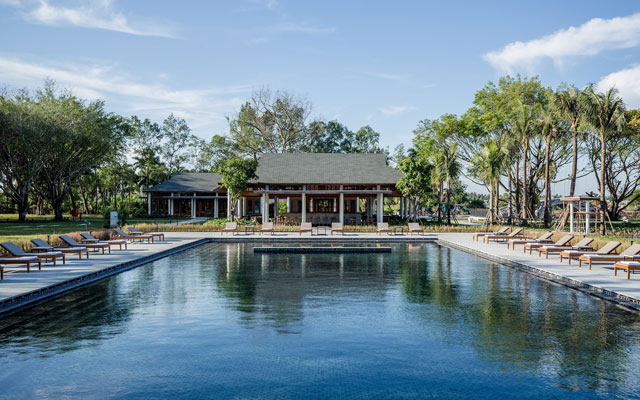
The lodge’s swimming pool and the Annapurna Mountain Range in the background

“Primarily, it is a validation of our own Responsible Tourism Policy and a vindication of our efforts to ensure we are focussed on the 4Cs – conservation, community, culture, commerce (or people, planet, profit),” Cotton commented.

As responsible conservation tourism is the core of the company’s ethos, the accreditation also reinforces the brand identity, he said.

But beyond serving as a marketing tool, the Travelife standard would help the company “mitigate the weaker elements of our operations”.

“The impacts of ‘green-washing’ by companies talking up their credentials but having no substance to their noisy claims, undermines our sincere efforts. Therefore, we undertake both verification and certification audits to validate our sustainability claims.”

The company is working towards its next audit in 2019.

New hotels: Sofitel Sydney Darling Harbour, Avani Metropolis Auckland Residences, and more

0

Sofitel Sydney Darling Harbour
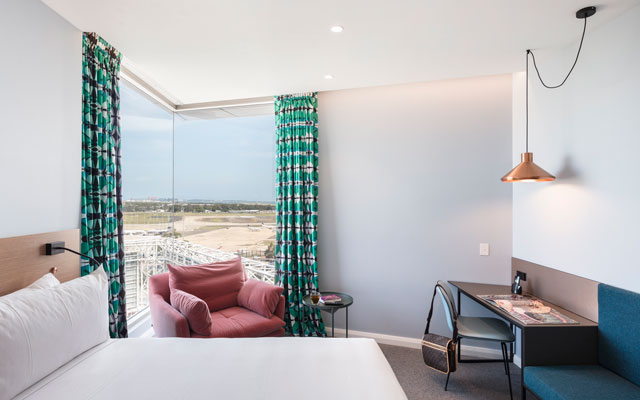
Touted as the first new-build five-star hotel Sydney has seen in more than a decade, the property offers 590 guestrooms including 35 suites. All of its maritime-inspired rooms come furnished with the Sofitel MyBed, double shower heads, and soaking tubs, and boast floor-to-ceiling windows with views of Darling Harbour or the city. Facilities include three bars, a restaurant, 20m-long infinity pool, gym, as well as nine flexible meeting spaces which include a 450-pax Magnifique Ballroom.


Avani Metropolis Auckland Residences
Located on Kitchener Street and overlooking Auckland’s Albert Park is Avani Hotels & Resorts’ newest residence offering. The property boasts 65 apartments available in one- and two-bedroom configurations, some of which come with balconies. Each residence comes furnished with an open-plan kitchen, lounge and dining room, laundry facilities, and high-tech appliances. Guests will also have access to Avani’s signature ‘Forget Me Not’ amenities, a service designed to provide essentials – such as yoga mats and international power adaptors – should they be left at home. On-site amenities include a 22m-long heated indoor swimming pool & jacuzzi, sauna, and gym.


Casa Meridian Residence
The Ascott Limited has opened its first serviced residence in Phnom Penh, Cambodia. Standing on Diamond Island (Koh Pich), the property offers 75 fully-furnished residences on the top 13 floors of the 34-storey integrated development. Apartments range from studios to three-bedroom for six, and all come with fully-equipped kitchens. Facilities on the property include an infinity swimming pool, children’s wading pool, jacuzzi, indoor playroom, yoga room, sauna and gym. There are also conference rooms, meeting spaces and serviced offices for rental.


Renaissance Pattaya Resort & Spa
Renaissance Hotels has opened the 258-key Renaissance Pattaya Resort & Spa in the coastal town’s Na Jomtien district. There are four room categories available, including Pool Villas and Family Suites. Recreational facilities abound – two outdoor swimming pools, a kid’s pool, kid’s club, a 24-hour fitness centre, and a spa. Other amenities include five F&B options, as well as seven meeting spaces; the largest of which can accommodate 500 pax.


Moxy opens two doors in Japan
Marriott International added two Moxy hotels in Japan. The 205-room Moxy Tokyo Kinshicho is located in the urban Kinshicho district, while the 155-room Moxy Osaka Honmachi (pictured above) is located near to the Honmachi Station. Bedrooms feature folding workspace desks and chairs, flatscreen TVs, USB ports, motion sensor lighting, walk-in rain showers, and fast and free Wi-Fi. There are no front desks; instead guests access their bedrooms via keyless entry with the Marriott Mobile App or check in with a crew member at the bar. Aside from a 24/7 self-service grab-and-go (aka Moxy Pickups) and a noodle station, both properties will also sport highly-social communal areas complete with foosball tables and board games, and will hold events from trivia nights to beer pong competitions.

On the road with their brood – inbound

0

AUSTRALIA
Gary Paterson, general manager, global sales & marketing, The AOT Group
Visiting families from Asia are still finding Australia the perfect getaway destination as it does not require long flights, and only about three to five nights away from home.

We see families today as being much more independent than ever before. They undertake more research online before they arrive, and look for cool new things on offer in a destination, for instance an arts festival like Vivid Sydney or the Night Noodle Markets in Melbourne.

The growing abundance of hotel apartments in Australia also offers families a huge selection of accommodation conveniently located in the city centre. What is also often surprising for Asian visitors is the wide array of Asian cuisines on offer, as well as the range of world famous restaurants in Australia.


INDIA
Kapil Goswamy, managing director, Trans India Holidays
Previously, India was perceived as a destination for mature travellers or couples. Fortunately, this perception has changed in recent years, and we are seeing a large number of families with young children visiting India these days.

Parents realise that in addition to seeing monuments or learning about the country’s history, activities such as trekking in the Himalayas, or going on a wildlife safari in one of the many national parks, will be interesting for children as well.

These trips will also allow for a digital detox, giving the family time to bond.

Almost every tourist destination in India has child-friendly activities, such as a Segway tour in Delhi, a hot air balloon ride in Jaipur, or mountain biking in Shimla. Beach holidays in Goa remain popular as well, but wildlife holidays and village walks are rising in popularity.


JAPAN
Tsunehisa Kumagai, sales manager, Tonichi Travel Service
This year, we have seen an increase in the number of foreign tourists coming to Japan in family groups, and this is due, in part, to the terrorist attacks in Europe.

We deal primarily with inbound travellers from North America and families, who in previous years would go to Paris, Barcelona or London. It’s safe here and they know it. And that is very important to them when they are with their children.

Families want to experience authentic Japanese culture – the cuisine, history, temples and so on, but youngsters are also keen to see Japanese anime and manga culture. The US has its own theme parks, so that is not a big draw for visitors from North America, but theme parks are more popular with families from other parts of Asia and Australia.


MALAYSIA
Saini Vermeulen, executive director, Within Earth Holidays
Middle Eastern families on holiday look for hotels and villas with private pools as they value privacy, especially for the women, and Malaysia has a growing number of such resorts to choose from.

The country also gets many repeat visitors from the Middle East region, and such visitors tend to book their transfers and tours online, and make their own travel arrangements. They may use the services of a tour operator for arrival transfers only.

However, first time visitors from the Middle East travelling with children continue to require the services of a travel agent as they are unfamiliar with the destination.

For the Middle East market, travelling with extended families, including grandparents, and doing things together, has always been the norm, especially during the summer season, where stays can extend to two to three weeks.

In Malaysia, Kuala Lumpur remains popular for shopping, while Penang and Langkawi are popular beach destinations.


PHILIPPINES
Gigi Jamora, operations manager, Blue Horizons Travel and Tours
It’s always Boracay. Bohol and Cebu are also options, and the markets that we deal with always prefer top-end resorts. Families come from India, the Middle East, Europe and China although the latter are mainly couples.

The market segments that we deal with, luckily for us, are aware how far hot spots like Mindanao are from Manila.

Depending upon the kids’ age brackets, families with toddlers prefer attractions that are safe come with child-minding services and playgrounds such as the Enchanted Kingdom in Laguna and the J Waterpark in Cebu. Those with teens prefer island hopping, especially with water activities, as well as kayaking and trekking.


SINGAPORE
Joseph Sze, project director, Siam Express
Families are preferring more semi-FIT packages, where they go online and research for places to visit, and hunt down these locales after they break away from the group.
Hawker centres in the heartlands such as Toa Payoh, Ang Mo Kio and Tiong Bahru are becoming popular with families during the free-and-easy portion of their visit, as well as handicraft shops in Haji Lane and Little India, where tourists can get products they cannot find in their own countries.


THAILAND
Chotechuang Soorangura, associate managing director, NS Travel & Tours
Foreign tourists see Thailand as a cheap destination with great food. Families who travel to the kingdom usually choose destinations outside Bangkok for activities. Usually, a family group would consist of many generations; this is common in Indian families.
We’ve also seen Chinese families combine family holidays with business, where they come to Thailand to spend time with their loved ones, while taking some time to explore potential business opportunities.

The top three destinations in the country are Koh Samui, Phuket, Chiang Mai. The beaches of Thailand are famous among foreign visitors, so they prefer to spend more time in the southern part of the country as compared to the north.

On the road with their brood – outbound

0

AUSTRALIA
Sue Henderson, product and crisis communications manager,  Flight Centre Travel Group
Australian families nowadays tend to combine relaxation/resort travel with soft adventure.
The ‘flop and drop’ beach holiday is still popular, but many families are opting to combine this with more adventurous and cultural activities. Vietnam is particularly popular for this at the moment, as it is a reasonably priced destination and there are numerous direct flight options out of Australia.

We also see extended families or a number of families travelling together. Larger family groups (or multiple families) are travelling together more often.


The popularity of villa and apartment style accommodation in places like Bali has increased as these customers like the idea of a home away from home. The accommodation is self contained which enables everyone to stay together and they have pools. Adults don’t have to leave the poolside to put down the kids down for nap.

As well, we are seeing more requests from families for escorted adventure tours to countries like Cambodia, Laos, Vietnam and India. Parents also see these as great educational opportunities for their kids and appreciate the value of expert guides who help to showcase the best attractions. An escorted tour also removes the challenge of arranging their own transport when travelling with children.

HONG KONG
Alex Lee, general manager, Miramar Travel Service
Overall, the frequency of family travel has increased, from one to twice per year. Top destinations include countries in South-east Asia and South Korea, due to Korean TV shows and affordable cosmetic shopping.

Meanwhile, families with higher spending power opt for Dubai – which is trending for 2018 – because of the availability of a ski venue, water sports, as well as 4WD desert tours.
Though cruise holidays have been aggressively promoted, it still can’t win over family travellers who prefer to travel by air, as cruises are not as frequent as air flights.

Another trend is that family groups are also requesting more free time – to go where they want to go and do what they want to do – on tour programmes. It’s a must and there must be at least one to two such days or they won’t consider joining the package tour.


INDIA
Nishant Pitti, CEO & co-founder, EaseMyTrip.com
Indian families are taking more multigenerational trips, especially tours with grandchildren, to explore new destinations.

We are also seeing a boost in the number of adventure trips. These are very popular among Indian families, where millennials usually affect the travel decisions the most. These families usually avoid going to a destination which has political unrest or tension.

Rejuvenation has also become an important aspect for Indian families when deciding on a destination, hence resorts that offer detox or wellness are rising in popularity.

Popular destinations for Indian families include Morocco, Oman, Jordan, Cambodia, Philippines, Vietnam and Seychelles.


JAPAN
Yusuke Asami, manager, outbound travel marketing and strategy department, JTB Corp
Japanese families are pretty predictable and we saw strong demand for Hawaii again this summer. To be honest, it has been like this for a long time and I do not expect this to ever change.

Typically they go for four or five days and do things together as a family, whether it be sightseeing, shopping, relaxing on the beach or eating out. For Japanese families, the most important thing is to make happy memories together.

A new trend we see emerging this year is that some travellers want to do things they have never done before, but they don’t want to be too adventurous or to spend too much money. That has coincided with a sharp increase in the number of cruises that are available around Japan, so families are taking cruises to other parts of Japan, as well as to South Korea and Taiwan. We see this as the start of a new wave, especially if prices remain reasonable.

Meanwhile, longhaul holidays are not really an option for Japanese families, primarily because of the cost, and the amount of holiday time that most Japanese working people do not have.

In the past, Guam and Saipan used to be very popular – they have good hotels and beaches, and it is only a couple of hours flight from Japan – but prices have risen steeply in the last couple of years. People who might have gone to Micronesia in the past, are now going to Okinawa instead.


MALAYSIA
Adam Kamal, CEO, Olympik Holidays
There is a growing trend of Malaysians booking their seats online to save costs. In the past, the older generation of travellers used to come to us for flight bookings. But we have seen their numbers reduce over the last three years, and now they only buy ground packages (hotels and tours) from us.

There is also a growing trend where clients come to us with their own itinerary. This is especially common among millennial parents with children. They have done their research online and know which places they want to visit while on holiday, and just require us to arrange transfers and a guide. However, the older generation of travellers remain content to follow our group series departures with fixed itineraries.

There is also a growing trend where young families with children tend to go on holidays with close friends who also have children. This is so that costs on private tours can be shared.

Visiting South-east Asian countries are most popular among the middle income group of travellers, where holidays are usually short stays with a minimum of three nights. Popular destinations are Ho Chi Minh, Bangkok and Bandung for shopping, Batam for resort stays, and Lombok and Phuket for the beach.


PHILIPPINES
Lyn Galon, consultant, Scorpio Travel
Outbound family travel this year is a bit weak compared with the surge in 2014 and 2015.
Japan remains a strong destination – though expensive, it is perceived to be safe. There have been many enquiries about Australia, New Zealand and the Holy Land as well.
Families usually look for destinations with theme parks, not so much for beaches as we have many in the Philippines.

Multigenerational travel is common, usually with a complete family (parents and kid/infants), and an uncle or aunt thrown in. Average group sizes are usually about seven to nine pax.


SINGAPORE
William Loh, operation manager, Farmosa Holiday Tour
Cruises and FlyCruise packages are on the rise with families, especially multigenerational ones.

For example, bookings for sailings in February 2018 started pouring in from February 2017. It’s a very hot market now. Singaporeans like new experiences, and cruises are fresh. Younger couples stick to shorter sailings around the region, while older generations are open to longer cruises.

A self-drive holiday in Australia is also popular, especially among young families who prefer to travel at their own pace. Flights to Australia are getting more affordable as well, contributing to its popularity. Interest is spread evenly across Tasmania, Melbourne, Sydney and the Sunshine and Gold Coasts.

For year-end winter destinations, South Korea is a shining destination as it’s one of the most affordable winter countries with ski resorts, especially for families who have never seen snow or skied before.


THAILAND
Mongkol Thitawannoned, manager, Miracle Time Travel
This year, Thai family travel usually comprises a few generations, and they like cheap tours (up to 20,000 baht [US$602] per person), and usually choose Asian countries. This trend will probably continue into 2018.

Hot destinations for such families include Japan, South Korea, and Taiwan. Japan is the top destination for Thai travellers as they perceive the country to have everything – good weather, good food, interesting tourist attractions, and it is also a perfect place for shopping.

Brunei takes serious look at Islamic tourism

0
Sultan Omar Ali Saifuddien Mosque is one of the main attractions in the Sultanate

With Brunei Darussalam having identified Islamic tourism as a strategy to expand the tourism sector and diversify the economy, the kingdom’s tourism stakeholders are fine-tuning strategies and enhancing tour programmes to lure more visitors to the country.

Islamic tourism in Brunei Darussalam spans the local way of life or sightseeing at some of the mosques that represent the culture and heritage of Brunei, said Salinah Salleh, head of promotion and marketing at Brunei Tourism.

Omar Ali Saifuddien Mosque is one of the main attractions in the Sultanate

The major attractions for Islamic Tourism in Brunei Darussalam include a tour of the Omar Ali Saifuddien Mosque, Jame’ Asr Hassanil Bolkiah Mosque, Darul ‘Ifta Building that exhibits Islamic artefacts, The Royal Mausoleum, Brunei History Centre among others.

Salinah shared: “Brunei Tourism has been continuously working closely with the Ministry of Religious Affairs to enhance the product offerings to attract tourists to come for the purpose of Islamic Tourism. Calligraphy activities and Al-Quran reading classes have also been offered. These activities are considered as value-add to the normal travel itinerary, such as visiting mosques and Islamic gallery.

“The month of Ramadhan is a very enlightening time to visit giving a unique insight into the country’s Islamic activities and local culture.”

The main source markets for Islamic Tourism, he said, are Singapore, Malaysia, Thailand and the Philippines.

Brunei Tourism supports inbound agents promoting Islamic tours by providing materials as well as facilitating on potential Islamic tourism products and tours that would be of interest to their clients.

Freme Travel Services is an inbound tour operator selling Islamic Experience tour packages in Brunei that showcase the Sultanate’s Malay Islamic monarchy and give an insight into Malay culture and heritage and how Islam as a religion is practiced.

Sugumaran Nair, manager, inbound & MICE division at Freme Travel Services said the Islamic sightseeing tours offered at the company and have been well received by the Malaysian, Singaporean and Indonesian Muslim visitors, who make up the bulk of demand for such tours.

Year to date, the company saw a 10 per cent year on year growth.

In 2018, Freme Travel will include The Sultan Haji Hassanal Bolkiah Islamic Exhibition Gallery, expected to be open by then. The gallery will house over 1,000 Islamic manuscripts and artefacts owned by the Sultan of Brunei. There will also be research facilities available in the building.

Another new package that will be introduced in 2018 is Muslim Youth Camps. Spiritual activities such as Islamic lectures and attending mass prayers will be part of the itinerary. Youths will stay within the mosque grounds for the entire duration of the programme.

New M’sian cruise trade association on recruitment drive

0

The Malaysia Cruise Industry Association (MCIA), launched last week with 30 founding travel agent members involved in the business, is ramping up its recruitment drive by offering a free three-day course to new members.

The membership drive will be MCIA’s focus over the next three months, president Rashid Khan told TTG Asia. A member is conducting the course and MCIA is also working with local universities to identify suitable instructors.

The recently-launched MICA is looking for more members to join their ranks

Rashid said: “MCIA’s goal is to have members that can contribute to and influence the industry and, to build a quality membership, we are looking at collaborating with professional bodies and international organisations like CLIA (Cruise Lines Industry Association) to professionalise the industry and bring skills sets to a different level.”

MCIA, he said, is taking the lead in developing Malaysia’s inbound and outbound cruise industry. “The association intends to facilitate and assist the government in formulating cruise industry-specific policies and regulations that also include smaller enterprises like river cruise operators in our fold,” Rashid said.

“Our strategic road map is almost finalised. In the meantime, we are progressing with capacity development on the demand and supply sides, developing standards to professionalise the industry and protect the consumer, and engaging regional and national authorities to liberalise policy decisions, making sure there is a framework to enable sustainable participation of cruising.”

Malaysia, ranked number five in Asia, is expecting 468 cruise line port calls in 2017, an 11 per cent growth. The number of passenger destination days is also expected to increase from 740,000 in 2016 to 816,000 this year. “Since 2013 cruise line port calls have grown by 23 per cent in absolute volume,” Rashid noted.

With more cruise lines boosting capacity in the region MCIA has in place a stakeholder engagement programme and cruise lines have a platform to understand the challenges in Malaysia and the region, he added.

In a related development, MCIA is one of three main hosts of the inaugural South Sea Cruise Conference taking place in Haikou, Hainan between December 12 and 15. About 300 international and China delegates from cruise lines, government, state-owned enterprises and travel agencies are expected to attend.