

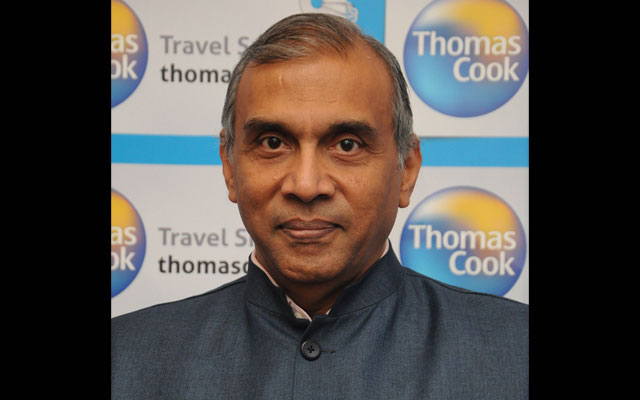
Thomas Cook India (TCIL) will undertake a corporate restructuring, subject to regulatory approvals, that is aimed at streamlining its businesses into four key verticals.
The verticals include, travel (outbound, domestic, business travel and MICE), foreign exchange, destination management services and portfolio investments such as Sterling Holiday Resorts.
The restructuring also involves the consolidating of the human resource services business into Quess Corp.
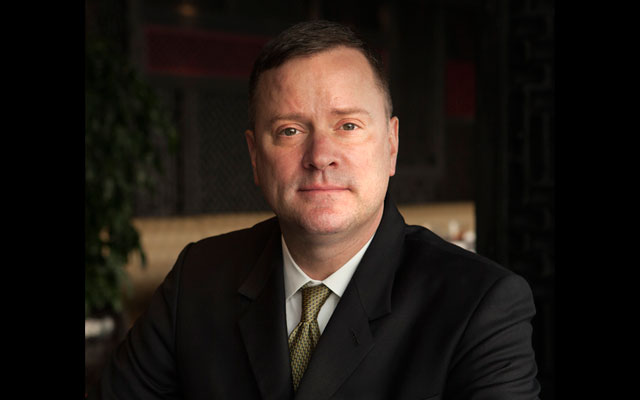
Madhavan Menon, chairman and managing director, TCIL, said in a statement: “This proposed restructuring with the realignment of the travel businesses of TCIL and consolidation of the human resource services business into Quess Corp will simplify the group structure, enabling both TCIL and Quess to grow independently and consolidate their positions in their segments with far greater clarity of focus from an industry and growth/opportunity point of view – for investors, management and teams.”
In its current structure, TCIL along with its subsidiaries and associate companies such as SOTC, TCI, TC Travel and Sterling Holidays are engaged in various travel and travel related financial services, vacation ownership and resorts.
Meanwhile, Quess Corp is engaged in human resource and business related services such as industrial asset management, integrated facility management, human resource services and technology solutions.
The TCIL Group’s many travel and non travel-related acquisitions in recent years, including Kuoni Hong Kong and Kuoni’s multiple destination management services entities across 21 countries, among others, as well as Quess’ several acquisitions both in India and overseas had created complex structures both at the Quess as well as the group level.
In the wake of the proposed restructuring, TCIL will be a travel-focused company, while Quess will continue its growth trajectory in the high growth opportunity space of human capital and allied services, the release said.
“We believe that the proposed restructuring will give our individual lines of business the advantages of flexibility and the integration of size, scale and financial strength to take us to the next level of growth,” added Menon.










Tourism spend is on the rise globally, with the Chinese coming in as the top spenders and Russia and Brazil making strong recovery last year, according to the latest UNWTO World Tourism Barometer.
All top 25 source markets, comprising emerging and advanced economies, in the barometer reported higher spending on international tourism in 2017.
The BRIC economies are a standout. China consolidated its leadership as the biggest spender in travel abroad in 2017 with US$258 billion in expenditure (+5 per cent in local currency). The other BRIC economies also all substantially increased expenditure in 2017.
Rebounding from weaker spending in previous years are Russia, which climbed three places to re-enter the top 10 at eighth place with US$31 billion (+13 per cent), and Brazil, which moved up eight places to number 16 with US$19 billion (+20 per cent).
India, another key emerging outbound market, continued its rise with nine per cent growth in spending to US$18 billion, moving up four places in the ranking to 17th.
Advanced markets also reported robust performance in 2017, led by the US as the second largest outbound market to spend US$135 billion (+ nine per cent).
Expenditure from Germany (the third largest market) and the UK (fourth) both increased three per cent, and France (fifth) saw a one per cent increased.
Australia (sixth) reported seven per cent growth and Canada (seventh) a nine per cent increase. Completing the top 10 are South Korea (ninth), where expenditure grew by nine per cent, and Italy (10th), which increased by six per cent.
Beyond the top 10, notable increases in tourism spending were seen in Sweden (+14 per cent) and Spain (+12 per cent).
These strong results in outbound tourism are consistent with the seven per cent increase in international tourist arrivals in 2017. Demand for travel was particularly high in Europe, where arrivals increased eight per cent last year.