TTG Asia
Asia/Singapore Monday, 22nd December 2025
Page 1446

For Mongolia, a steppe towards luxury tourism and business events

0
Destination shapes up for more luxury adventure and business event visitors

It’s time to rethink Mongolia’s image as a destination solely for rugged explorers and adventurers, with the market mix changing along with improving air access from Europe and a “modernising” of the country’s visitor infrastructure.

Marking an inflection point in the destination’s evolution, a new airport – thrice the size of the existing one – is scheduled to open at end-2018, shared Gantemur Damba, president of the Mongolian Tourism Association.

Destination shapes up for more luxury adventure and business event visitors

“This creates huge opportunities to increase the number of international flights, especially from Europe, to Mongolia,” Damba told TTG Asia at the recent ITB Berlin.

He added that the destination could soon be getting more connections from Germany, a strategic hub between east and west Europe, with Munich-Mongolia flights slated for early 2019 and plans for Lufthansa to introduce feeder services.

Traditionally, European visitors mainly arrive in Mongolia in two ways – via the Trans Siberian rail and on one of three airlines: Mongolia Airlines, Turkish Airlines and Russia’s Aeroflot.

While many Europeans prefer the Trans Siberian route, they are part of a niche and transient segment of travellers that spend just three to five days in the country, he pointed out.

On the other hand, flights bring in longer-staying travellers with stronger luxury leanings. A typical package for European travellers spans 12 to 21 days.

With improving air access, business events and luxury segments are looking set to become a bigger part of Mongolia’s visitor mix. Moreover, visitor infrastructure is maturing, with about 15 international hotel chains – such as Shangri-La and Kempinski – already in Mongolia.

He said: “In 2016, Mongolia hosted the Asia Europe Meeting, a high-level ministerial summit of 55 countries. (Through it) we showed that Mongolia has the potential to be the next big destination for (business events) and luxury (travel).”

Damba said these developments are also setting Mongolia up as a key transit hub, with the country being well-positioned to connect Asia and Europe in an “economically efficient” way.

Meanwhile, the destination intends to vie for business events with its unique features – modern amenities without the the appearance of being a concrete jungle, remarked Damba.

Tauzia brings Fox Harris Hotels to life with a trio of openings

0
Rebrand complete at three properties, including Fox Harris Hotel Pekanbaru (pictured)

Tauzia Hotels has launched its newest Fox Harris Hotels brand, with a trio of openings – all rebrands of existing properties – in Pekanbaru, Bandung and Bali and five more in the pipeline.

Stefano de Champeaux, brand manager Fox Harris Hotels, said: “Fox Harris Hotels is the latest brand from Tauzia Hotels, positioned as a midscale hotel. It is a non-standardised contemporary brand.

Rebrand complete at three properties, including Fox Harris Hotel Pekanbaru (pictured)

“The strategy of Fox Harris Hotels is to take over existing hotels and to plug in the Fox Harris Hotels mood and signature collage artworks. It hence requires minimum investment to refurbish or to revamp hotels (in terms of) rooms, staff uniforms, public areas, collaterals and F&B etc.”

Fox Harris Hotels is targeted at the midscale leisure and business markets in primary and secondary cities, he shared.

De Champeaux added that the Harris Hotels brand will evolve in the next few months into its third generation, Harris Connect Hotels.

Harris Connect Hotels would represent connectivity both in a technological and social sense, he revealed.

Red Planet Japan enters sale-and-leaseback deal with Goldman Sachs

0
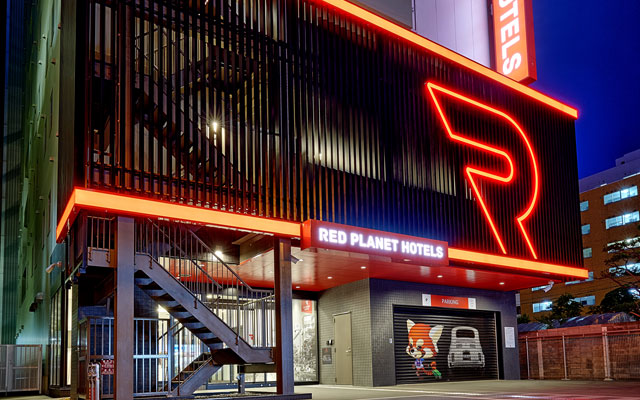
Red Planet Nagoya Nishiki

Red Planet Japan, subsidiary of Bangkok-based budget chain Red Planet Hotels, has announced a 11.8 billion yen (US$110 million) sale-and-leaseback transaction with Goldman Sachs.

The transaction includes Red Planet’s hotels in Asakusa, Naha and Nagoya as well as a forward purchase of the Susukino Central development project in Sapporo, resulting in gains of nearly 2.6 billion yen.

Nagoya property (pictured) among three others sold

Under the terms of the transaction, Red Planet has sold ownership rights to the four hotels and simultaneously entered into a lease-and-operate agreement with Goldman Sachs for an initial period of 20 years.

“We anticipate a long and fruitful relationship with Goldman Sachs over the coming years as we recycle capital at competitive cap rates,” remarked Yoshi Ikurumi, CFO, Red Planet Japan.

Red Planet Hotels is reinvesting the sales proceeds into new hotel developments across Japan. The hotel chain has two hotels under construction in Sapporo and seven more in its Japan development pipeline.

According to Tim Hansing, CEO, Red Planet Japan, the transaction will enable the company to “accelerate the roll-out of Red Planet Hotels” in Japan, its “fastest growing market”.

Red Planet Hotels currently owns and operates 29 hotels in four countries.

What a PHAB way to support Phuket’s hospitality students

0
Last year's gala raised about US$130,000

The Phuket Hotels Association Benefit (PHAB) will take place on April 28, 2018 to raise funds for over 20 hospitality scholarships and traineeships for local residents.

Organised by the Phuket Hotels Association, the Glam, Glitz and Glitter event will take place at the Latitude Marquee, Laguna Phuket from 19.00 until midnight.

Last year’s gala raised about US$130,000

Last year’s PHAB gala drew 300 guests and raised over four million baht (US$130,000) for the scholarship fund. The association is targeting a similar figure at this year’s event, where 400 guests will participate in an evening of cocktails, dining and entertainment, including a live, silent auction.

Among the auction items are a chef’s degustation menu by two Michelin-starred Gaggan, as well as three-night stays in a number of Accor, Anantara, Hyatt, Dream Group and Marriott Group hotels worldwide.

All proceeds from the benefit will be used to support the education of 20 plus young scholars and trainees from Phuket, who would otherwise be unable to fund their education. The training will last from three to four years and cover vocational and degree courses, as well as overseas learning, helping to pave the way for a new generation of hospitality managers, chefs and other key personnel for the island’s tourism sector.

The entertainment highlight will be live music from Mark Zitti ei Fratelli Coltelli, a seven-piece swing band flying in from Italy to support the event for the second year in a row. DJ Benjamin Jenkins (Ben Jay) will also take to the stage.

Tickets to the PHAB fundraiser start from 3,900 baht.

The Anam recreates The Bachelor experience with new package

0
Anam invites guests to experience romance of the matchmaking show, away from the eyes of cameras and crew

After being selected as the filming location for the grand finale of the German spinoff of The Bachelor, Vietnamese beachfront resort The Anam is unveiling a package inspired by the reality TV series.

The 10-night Following The Bachelor’s Trail package includes limousine transfers, couples massage, bubblies and a bouquet of roses in a villa, in addition to a Vespa trip through the countryside that concludes with a gourmet picnic and wine by a waterfall.

Anam invites guests to experience romance of the matchmaking show, away from the eyes of cameras and crew

On the same beach captured in Der Bachelor, the couple is also treated to a seafood BBQ dinner under the stars. The couple is split up at one point, with one half heading for the resort’s Sri Mara Spa for a three-hour massage, manicure and pedicure, and the other to the kitchen and the tutelage of professionals. He then decorates the table for two on the edge of the lawn fronting the sand before a private waiter serves the five-course seafood feast.

At the resort’s cinema, the couple can enjoy a private movie screening of either the grand finale or Hollywood films such as La La Land, Forever Love and Pretty Woman, complemented with champagne, popcorn and ice-cream, and access to the Anam’s Colonial Club Lounge where high tea is served. The couple also takes home two plush bathrobes.

Building the Cinnamon brand, one event at a time

0
Dileep, a self proclaimed 'pracademic', believes in marrying research with practice

The successful debut of the first Broadway theatre production in Sri Lanka, which saw the legendary Sound of Music performed to full houses every day, marked a significant milestone in the country’s entertainment industry – and another feather in the cap for tourism veteran Dileep Mudadeniya.

“There was a lot of planning that went into it,” recalled Dileep, head of brand marketing at Cinnamon Hotels and Resorts, a key figure at the hospitality company tasked to transform the capital Colombo into a vibrant events destination in South Asia.

Dileep, a self proclaimed ‘pracademic’, believes in marrying research with practice

Dileep’s entry into the private sector – moving from the public sector to John Keells Holding (JKH), owing company of Cinnamon Resorts – has not only transformed the company but made Cinnamon a driving force in Colombo’s entertainment scene.

He has brought in foreign musicians, artistes, celebrity chefs including Australia’s MasterChef judge George Calombaris, as well as contestants from the Miss UK, Miss China and Miss India beauty pageants in the past two years to profile them as signature events in Sri Lanka.

The 45-year old, also a key member of the national tourism task force under the Prime Minister’s Office, sees branding as an asset for the tourism sector.

“Destination marketing is one of the (most) complex marketing (types) in the world. People can get easily lost; there are many stakeholders, a lot of egos are around, (and) money can be wasted by overdoing things,” he opined.

When he joined JKH in 2012, he brought with him a brand of research-driven decision-making that has helped take the conglomerate to new heights.

“I was able to convince John Keells on a forward-thinking approach and they became involved in destination marketing as a result of our research and they saw the benefit. We have built a powerful brand and come up with cutting-edge marketing campaigns,” he said, alluding to the many events that the Cinnamon brand has organised in Colombo.

Prior to joining the company, he had already started the non-profit organisation, Research for Sustainable Studies in Tourism. “We did a lot of social research. We want to bring together academia and practitioners through research and are developing an employer value proposition for tourism,” he said.

A non-believer of traditional promotion platforms like print ads or a TV commercials, Mudadeniya is strong proponent of user generating content. “People believe what is said on social media, which they are most accustomed to relate to. Brand and development comes through these platforms,” he said, referring to the annual Asian Travel Bloggers conference that Cinnamon launched in 2014.

While Sri Lanka has struggled to launch a marketing campaign since the war ended in 2009, Mudadeniya has engaged bloggers from around the world, organised innovative treasure hunts for writers, run best photography, video and blogging competitions to promote the Cinnamon brand and, in the same breadth, the Sri Lankan product.

“One good thing that has come out of the (Cinnamon) campaigns is that we were able to rally everyone in the industry to agree on the destination positioning strategy. That is kind of carved in stone,” he remarked.

A firm believer that the private sector should take the lead, Mudadeniya cited New Zealand’s private sector-led success in tourism as an inspiration, and hopes to develop similar “industry maturity” for Sri Lanka.

Gagan Talwar returns to Malaysia as Hilton Kuala Lumpur hotel manager

0

Hilton Kuala Lumpur has appointed Gagan Talwar as hotel manager, replacing Linda Pecoraro who has been promoted to general manager of Hilton Kota Kinabalu.

In this new position, Talwar will support regional general manager Jamie Mead by overseeing the operations and leading the management at Hilton Kuala Lumpur.

Talwar returns to Malaysia after six years from leading the operations and business development team in Hilton Hanoi Opera and Hilton Garden Inn Hanoi.

Revised tax split gives Malaysian state governments more tourism funds

0
Half of the tourism tax imposed will go to the state where it is collected

Malaysian tourism and culture minister Mohamed Nazri Abdul Aziz has announced that the tourism tax will be split 50:50 between the federal and state governments, rather than 90:10, a welcome move for the Malaysian Association of Tour and Travel Agents (MATTA).

This means that state governments are to receive RM5 (US$1.30) for every RM10 collected in the tourism tax.

Half of the tourism tax imposed will go to the state where it is collected; parade participants at the 4th Usunan Festival competition in Kota Belud, Sabah, Malaysia pictured

This is a sharp contrast to the initial share of 33 per cent, or RM3.30 for every RM10 collected, before the tourism ministry reduced it further to 10 per cent, the percentage used when the tax was implemented.

MATTA president, Tan Kok Liang, said: “It is certainly a right move in empowering the states to be more involved with tourism, which brings immense opportunities and economic benefits to its people.

“The additional funds would allow the states to showcase areas in their own backyards they know best. Each district can develop a strong ecosystem to attract and ensure visitors enjoy their stay so that they will want to come back for more and recommend to others,” he remarked.

This will enable state tourism organisations to be “more aggressive in overseas promotions”, Tan stated, as the funds could be invested into tourism infrastructure development and digital marketing such as destination apps that provide information and on-the-spot bookings.

“A portion of the extra fund should be allocated for human capital development to train frontliners to provide better customer service, including learning to communicate in basic foreign languages,” he added.

Nazri had said the funds will be channelled to the states every quarter for their tourism promotions and activities. The government had raised almost RM40 million in revenue from the tourism tax collected in the first four months of its implementation.

New cryptocurrency platform TravelKoin takes on industry’s pain points

0
TravelKoin allows travel suppliers to transact with one another without bank charges

Amid a polarisation of views on the practical value of cryptocurrency, TravelKoin is positive it can alleviate persistent travel industry painpoints – think many thousands of dollars on unneeded costs annually, according to Fabian Bartnick, TravelKoin’s head of strategic partnerships.

TravelKoin, which offers payment and loyalty applications for the travel industry, will launch an initial coin offering next month.

TravelKoin allows travel suppliers to transact with one another without bank charges

A familiar problem for travel companies is the substantial amount of bank fees that come with international transactions.

Bartnik, who is also with revenue management firm Lodgiq, shared that a US$500 service can come with US$20 in bank fees, resulting in US$520 being paid by the hotel and US$480 received by the technology vendor, and that’s not taking into account currency exchange.

For DMCs, which deal with many layers of payment, the siphoning effect is even more severe, explained Sandor Levai, CEO of ICS Travel Group – which last month became an early integration partner of TravelKoin.

Frictional costs also come into play. “(Some banks charge) a flat fee of US$80-100 per transaction, so we have to wait until we (get bulk) so it makes more sense to pay the bank fee than to fly (to another country) to deliver payment,” Levai said.

Levai added that transactions can take up to five days to process, while TravelKoin offers a near instant solution. For him, quicker turnaround could well mean greater business volumes.

And when it comes to certain countries, “sometimes payment doesn’t arrive, or gets blocked”.

Take for example Myanmar, “a politically incorrect country… for a lot of banks”, but in the travel industry represents a big emerging destination, Levai pointed out.

Bartnick said TravelKoin solves such problems by removing the bank intermediary from the equation and having the same currency on both sides, with users charged only a small fee for currency to be mined.

For many travel service providers however, a new currency isn’t a total alternative until the many parts of the supply chain – down to the smaller tours and activities provider – get on board.

But Bartnick said TravelKoin could be an easier sell than one would expect. Regardless of the industry’s track record of technology inertia, savings and convenience are ideas that resonate.

“Every start-up has to get over a hump, but it’s only as big as its limitations of value creation,” he said.

If transacting in the new currency requires a simple click of a button, and results in thousands in savings, “then the value creation is already bigger than the hump”.

Even for providers of tours and activities, who may lack organisational resources, the same applies. “They (may not understand the technology) but they understand savings, convenience and reach. The heavy lifting is already done by the DMCs and all (the activity supplier) has to do is sign up,” he reasoned.

If a future where cryptocurrency payment is the norm is still a remote idea, Levai points to history. “We used to (barter trade). Someone came along and said why don’t I give you a coin in exchange. Suddenly people started having these coins, then credit cards which people also initially didn’t trust. But at some point everyone is using them – because it was the logical next step,” he said.

Yogyakarta Marriott marks brand’s debut in Indonesia

0

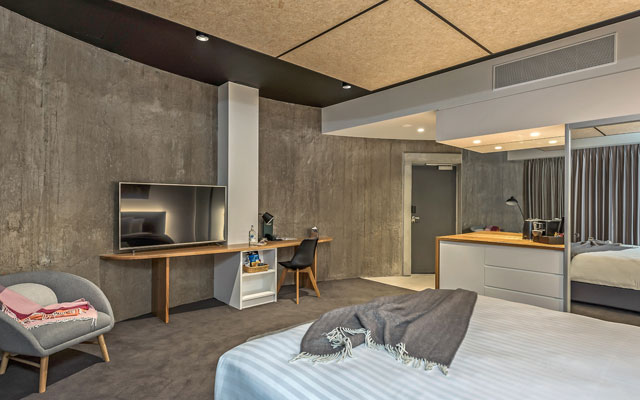
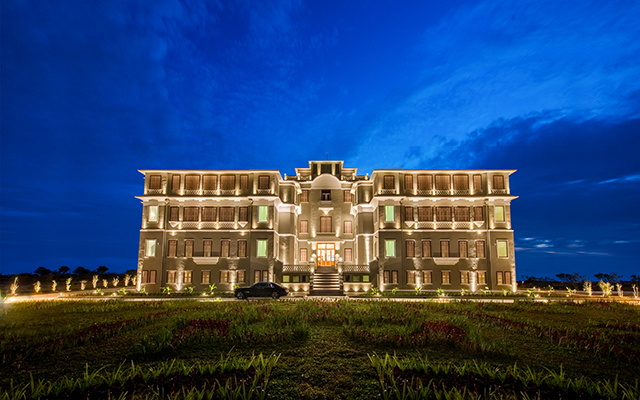
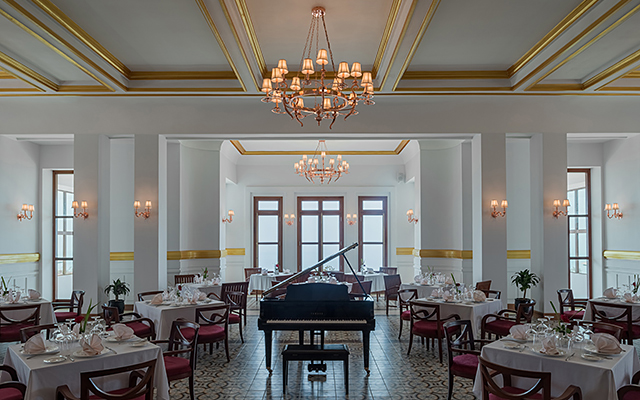
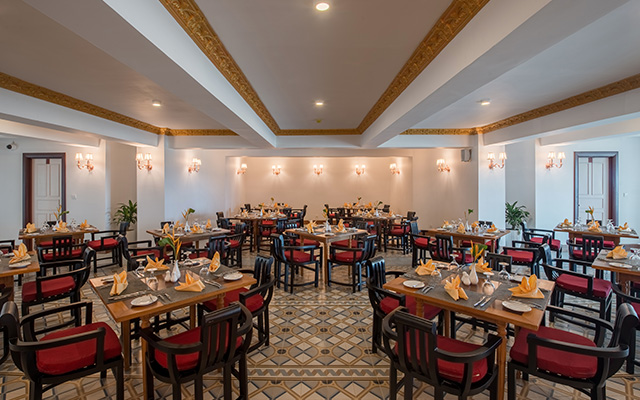
Having soft opened last November, the 347-room Yogyakarta Marriott Hotel is in its early days seeking volume in order to gain visibility in the market.

The hotel, the first under the Marriott Hotels brand in Indonesia, currently features the biggest hotel ballroom in the city, club room and lounge, and is adjacent to Hartono Mall, the largest mall in Central Java.

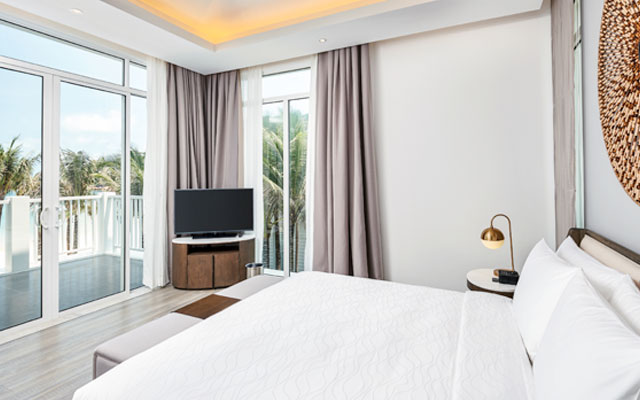
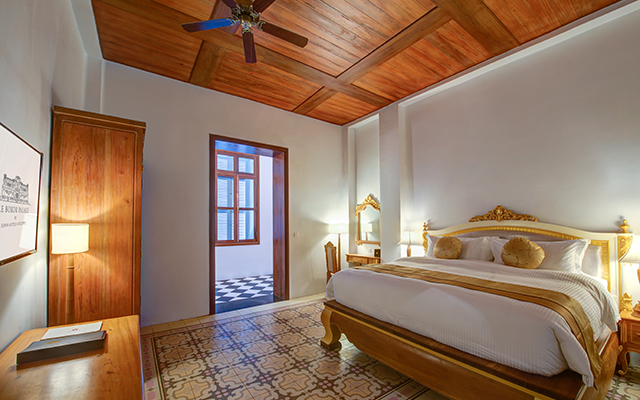
A guestroom in Yogyakarta Marriott

Winkie Wong, senior director brand and marketing Asia Pacific, Marriott International, said: “Indonesia has immense potential as a growing source market and we see a lot of opportunity there for the Marriott Hotels brand.”

As for the choice of Jogjakarta, Wong told TTG Asia: “In addition to having a great owning partner, Duta Merlin Dunia Properti, there’s a lot of potential in the destination for international leisure and business travellers. Jogjakarta is a hub of art, culture and education as well as a dynamic city that is growing in terms of business and economic development.”

The city has direct air access with Singapore and Kuala Lumpur and is only a 50-minute flight from Jakarta.

The opening of the hotel is also considered timely as the city is expected to have a new international airport by 2020.

Alain Rigodin, general manager of Yogyakarta Marriott Hotel, believes the opening of the airport would be a game changer for the destination. The hotel will officially launch 12-18 months ahead, affording it the time needed to position itself in the market and be ready when the airport is up, he said.

With the biggest, pillar-less ballroom in town measuring 1,870m2, seven meeting rooms and one boardroom, business events will be its primary focus, followed by corporate and leisure travellers, Rigodin said.

During this introductory period, the hotel has benchmarked prices for the lead-in category between one million rupiah (US$77) and 1.5 million rupiah.

“This is reasonable when you compare with other destinations like Jakarta, Bali or even Singapore. where you will see similar offerings for three to five times the price.”

To attract corporate and community gatherings, the hotel is also putting in place various promotions such as nightly all-you-can-eat buffet with different themes, the first such hotel offer in the city.

“We are (currently) looking for volume because want to showcase the hotel and our strategy is to get more people to talk about it – such as through social media,” Rigodin shared.