TTG Asia
Asia/Singapore Thursday, 9th April 2026
Page 1444

Catalonia – Barcelona is much more. A destination with quality and character.

0
Catalonia - Barcelona is much more. A destination with quality and character.

Brought to you by Catalan Tourist Board

Catalonia – Barcelona is much more. Fall in love with our land, gastronomy, Mediterranean culture, and rich heritage.

Besalú – Medieval village in Costa Brava
Image: Besalú – Medieval village in Costa Brava

Catalonia is a Mediterranean destination with a millenary history, its own culture and language, wealthy historical and natural heritage. With a population of over 7.5 million, the region covers 32,107 km2 and enjoys a temperate and mild Mediterranean climate, characterised by dry, warm summers and moderately cool winters. It is home to many significant metropolises, from its capital, Barcelona, to the provincial cities of Girona, Tarragona and Lleida and smaller towns filled with remarkable heritage and majestic monuments.

Barcelona, the gateway and capital city of Catalonia is the perfect start to the region with its incredible vision of architect and designer Gaudí. As you take a stroll around the city, you will be awestruck by the whimsical Catalan Modernism epitomized in the Sagrada Família, Casa Batlló, Casa Milà and Park Güell and the newly opened Casa Vicens.

Unha - snowcapped village in Val d’Aran
Image: Unha – snowcapped village in Val d’Aran

If you fancy a change of scenery, you do not have to travel far. The beauty of Catalonia is that a diverse array of landscapes can be found within a compact area highly connected by high speed trains and highways. Visit the mountains of Montserrat, go wine-tasting at iconic wineries like Bodegas Torres, discover the home-towns of Salvador Dalí, Picasso and explore the 36 UNESCO World Heritage treasures and taste the gastronomic highlights of Catalonia.

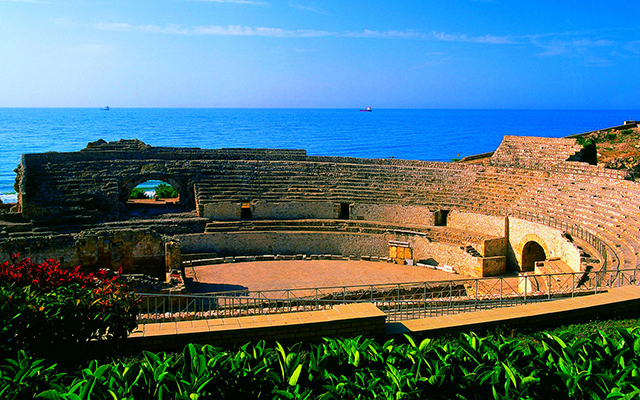
Tarragona Amphitheatre - UNESCO World Heritage Site in Tarragona
Image: Tarragona Amphitheatre – UNESCO World Heritage Site in Tarragona

The Catalan landscape is varied; with the rugged Pyrenees, with several peaks well over 2,000 metres, inland mountain ranges, charming villages, seaside towns, 600 km of Mediterranean Sea and also one of the largest deltas in Europe, the Ebro Delta. In addition to its landscape, the region boast incredibly colourful and tasty produce. It is no surprise that the small region has 65 Michelin stars and 11 Designations of Origin for wine and cava (Catalan champagne).

Camp Nou – FC Barcelona home stadium, Barcelona
Image: Camp Nou – FC Barcelona home stadium, Barcelona

When it comes to sporting credentials, Catalonia is unsurpassed. Boasting one of the most famous football teams in the world, FC Barcelona, the region also hosts Formula One and has one of the finest golf courses on the continent. Today, over 300 sports are played in Catalonia. From swimming to sailing, deep-sea diving, skiing, mountain-biking and road cycling, there is something to cater to every sports lover.

All this and much more make Catalonia a destination that attracts more than thirteen million foreign visitors every year.

Whether you are looking for a luxury break, an adrenaline-packed adventure, a beautiful honeymoon, MICE destination with a difference, or an exciting gastronomic journey, Catalonia is truly the place to experience the good life.

We invite you to see it with your own eyes.  Visit www.catalunya.com for more information!

‘World’s loneliest airport’ in Sri Lanka gets even lonelier

0
At one point, five airlines flew to the airport

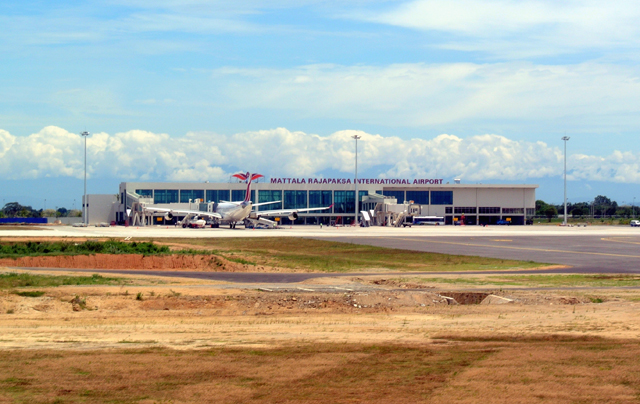
Sri Lanka’s Mattala Rajapaksa International Airport (MRIA), once dubbed “the loneliest airport in the world”, yesterday become even lonelier when the only airline flying there ceased services.

Owing to a combination of bird strikes and commercial viability, Dubai-based budget carrier Flydubai has stopped flights to Mattala, located in Sri Lanka’s southern town of Hambantota, from Monday onwards. It was the only airline flying there since the airport’s opening in 2013.

The airport had initially opened to some fanfare and attracted five airlines

“Bird strikes have led to costly repairs, and we have only an average of 13 passengers per flight to Mattala,” said an officer at Flydubai’s Colombo office, who declined to be named.

The airline has faced 21 bird strikes since the inception of flights to Mattala. Each time this happens, the airlines is forced to heli-transport an engineer from Colombo, 260 km away. In one instance, an engine even had to be replaced.

“Mattala doesn’t have proper infrastructure (nor) engineers to handle this type of crisis,” he said, adding that apart from costly bird strikes, it was also commercially unviable to continue this route. Flydubai will however continue its four-times daily flights on the Colombo-Dubai sector.

The officer said while they are considering resuming flights in December to Mattala, this is also contingent on the airport being upgraded with bird alarms, and better passenger loads. “We are also hoping to attract hotels in the areas with more charter flights,” he said.

Airline and travel trade industry officials said the Mattala airport would have succeeded if there was enough international marketing and promotion. “No one marketed this airport, otherwise it may have attracted airlines since its closer from Mattala for tourists to visit popular sites in Sri Lanka, then coming to Colombo,” an industry member said.

MRIA was built by the former regime in the hometown of former president Mahinda Rajapaksa, opening to much fanfare on an old wildlife sanctuary of birds and elephants.

Initially five airlines were using MRIA – SriLankan Airlines, budget carrier Mihin Lanka, Abu Dhabi-based Rotana Jet, Air Arabia and Flydubai. Gradually others pulled out due to low passenger loads from Mattala, while Flydubai, which also operated a few wedding charters, continued operating there.

The government has been looking for a foreign party to manage the airport and industry sources said India was interested in striking a deal. Sri Lankan migrant workers make up most of the traffic to and from the Middle East.

Cartoon Network theme park coming to Bali

0
First Cartoon Network theme park with indoor and outdoor components

Indonesia will welcome its first internationally branded theme park in 2020, with Turner Asia Pacific having entered a licensing partnership with Indonesian real estate and hospitality investment company, The Maj Group, to develop a 4.3ha entertainment park in Bali.

The destination will feature the island’s largest waterpark and an indoor entertainment centre – all splashed with Cartoon Network theming.

Artist impression of the first Cartoon Network theme park with both indoor and outdoor components

Live entertainment and performances at the park will feature characters from shows such as Ben 10, We Bare Bears, The Powerpuff Girls and Adventure Time.

The development will include water rides as well as surf and wave pools, and sit within The MAJ Nusa Dua complex, which also features hotels and an award-winning golf course.

Gita Wirjawan, chairman of The Maj Group, expects the Maj Nusa Dua complex, with the addition of the theme park, to help position Bali as a family-friendly destination in Asia.

This will be Indonesia’s first park to partner with an international brand, and will be Cartoon Network’s first with both indoor and outdoor attractions.

Sojern bolsters APAC presence with bigger office, team in Singapore

0
Sojern's office space in Singapore's Republic Plaza (pictured) has nearly tripled

Travel marketing engine Sojern has announced an expanded presence and hiring plans in Singapore driven by its rapid growth in Asia-Pacific.

Sojern launched its first Singapore office in March 2015 and has since grown to more than 40 employees. In 2018, Sojern plans to expand its Singapore workforce by 25 per cent to meet the growing business demand, and has almost tripled its floorspace with its new office at Republic Plaza in downtown Singapore.

Sojern’s office space in Singapore’s Republic Plaza (pictured) has nearly tripled

“We plan to continue investing in the Asia-Pacific region because we see a tremendous growth opportunity here for travel marketing,” said Russell Young, Sojern managing director of Asia-Pacific. “Asia-Pacific has a burgeoning travel industry and we anticipate further expansion in the years to come.”

Sojern’s company expansion in Singapore comes on the heels of its explosive global growth with now nearly 500 employees across 13 global locations. Last year, the company made its first acquisition in Adphorus, a Facebook marketing partner specialising in travel.

Russia tourism, Europe’s hub airports score this World Cup

0
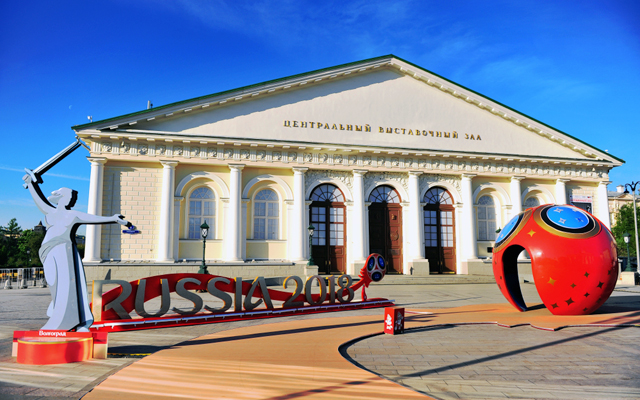
This will be the first FIFA World Cup to take place in Eastern Europe

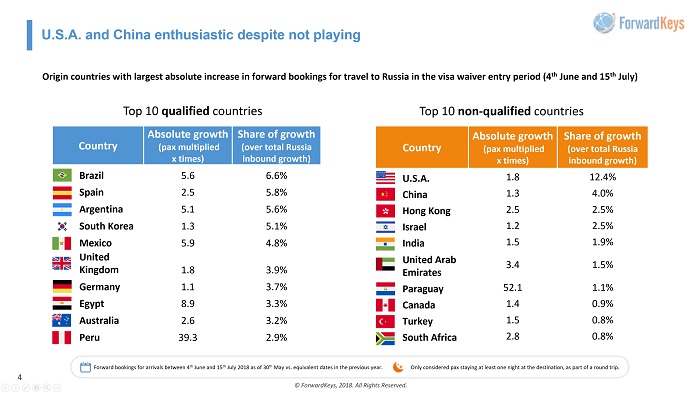
For the upcoming FIFA World Cup in Russia (June 4 – July 15), Forwardkeys is reporting a 50.5% surge in visitors, with an uptick observed even from non-qualifying countries such as Hong Kong.

Non-qualifying countries showing the largest uplift are the US, China, Hong Kong, Israel, India, UAE, Paraguay, Canada, Turkey and South Africa.

Of the countries that have qualified, those with the greatest increase in visitors to Russia are, in order, Brazil, Spain, Argentina, South Korea, Mexico, UK, Germany, Australia, Egypt and Peru.

Source: Forwardkeys

In addition, with many Russians staying home for the tournament instead of going ahead with their usual holiday plans, outbound bookings from Russia are 12.4% behind the same period last year.

A notable feature of the booking profile is that the current upsurge peaks around the opening matches and, as of now, there is a limited advancement in bookings after the group stages of the tournament, according to Forwardkeys’ analysis.

However, once the outcome of the group stages become clear, Forwardkeys postulates it is possible for a subsequent surge in bookings for the later knockout rounds.

While the FIFA World Cup is bringing more visitors to Russia, Forwardkeys says further analysis of data suggests that many of these visitors’ “real interest is in football, much more than it is in Russia”. World Cup ticket holders being required to obtain a Fan ID, which grants them visa-free entry into Russia from June 4 to July 15, for stays until July 25, presumably allowing pass holders to remain in the country after the final on July 15. Yet, Forwardkeys says data shows that bookings for overnight stays fall sharply to normal levels after the final.

Forwardkeys further observed that major hub airports are other beneficiaries of the mini tourism boom to Russia, with over 40 per cent of visitors during the World Cup arriving via indirect flights.

Hub airports with the greatest number of passengers to Russia is Dubai, with forward bookings up 202%. This is followed in order by Paris, whose Russia (+164%), Frankfurt (+49%), Amsterdam (92%) London Heathrow (+236%) ahead, Istanbul (+148%), Helsinki (+129%), Rome (+325%), Munich (+60%) and Warsaw (+71%).

New marine centre opens on Phi Phi Island

0
New facility will serve as a base for reintroducing clownfish, breeding bamboo sharks and replanting coral reefs

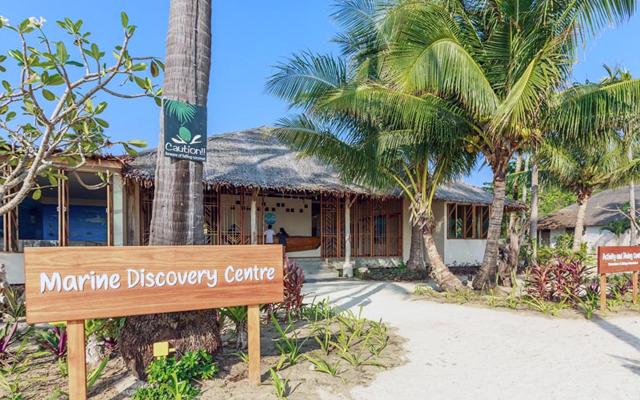
Amid mounting concern surrounding of environmental damage on Thai islands frequented by tourists, Singha Estate in May opened a Marine Discovery Centre at the Phi Phi Island Village Beach Resort to raise awareness about the importance of marine biodiversity and conservation.

The Marine Discovery Centre houses four zones – the Shark Room, the Phi Phi Islands Room, the Clownfish Room and the Auditorium – and offers visitors interactive displays with educational material about unique marine species endemic to the region.

New facility will serve as a base for reintroducing clownfish, breeding bamboo sharks and replanting coral reefs

The new environmental attraction will also be a base for the re-introduction of clownfish, as well as breeding bamboo sharks and replanting coral reefs.

The company is also collaborating with national park officials, local communities and the Faculty of Fisheries at Kasetsart University to rehabilitate the reef and protect marine life in Maya Bay, a recommended attraction for guests at the resort.

“Over the last few years Singha Estate has taken an active part in sustainable development projects to catalyse the prototype ‘Phi Phi Set to Change’ programme, aimed at recovering, restoring and managing the natural assets of the world renowned destination of Phi Phi Island,” said Naris Cheyklin, CEO, Singha Estate.

The opening of the Marine Discovery Centre comes amid a stronger focus on conservation in Thailand. A new law banning harmful activities such as the feeding of marine life, walking on the seabed, and new seaside construction is set to kick in on the islands of Koh Samui, Koh Phangan and Koh Tao in July. Moreover, some beach and island destinations such as Maya Bay have recently been closed to allow for the rehabilitation of marine ecosystems.

Singha Estate also intends to reference the “Phi Phi Model” in its new mega project, Crossroads, in the Maldives. The multi-island development will feature a marine conservation centre; a coral laboratory to study, grow and reintroduce corals; as well as a coral reef nursery, covering a planned area of 62,000m2.

Make a booking, donate to child protection in tourism

0
Funds raised by Bedsonline will go to A21's Thailand Child Advocacy Center

For each booking made through the Bedsonline platform today (June 12), the International Labour Organization’s World Day Against Child Labour, one euro (US$1.20) will be donated to A21, an Australia-based non-profit organisation that aims to abolish slavery worldwide.

Bedsonline said the one-day initiative is aligned to its commitment to protect against the commercial sexual exploitation of children and adolescents in the travel and tourism industry, and forms part of parent company Hotelbeds Group’s Child Protection Policy.

Funds raised by Bedsonline will go to A21’s Thailand Child Advocacy Center

Alistair Rodger, director of retail travel agents at Hotelbeds Group, commented: “We recognise that the tourism industry has the legal and moral obligation to ensure that the protection of children and adolescents is included in its development agenda. That is why we wanted to launch a global campaign to both raise money and raise awareness with travel agents about this global problem.”

A21 will use the funds raised by Bedsonline for its Thailand Child Advocacy Center. The Thailand centre was chosen as it is dedicated to children in the region, and the group has a particular commitment to Thailand, its fourth most booked destination globally, Rodger added.

Much ado or much abuzz?

0

Blockchain has the potential to become “the final evolution of the Internet”, and its applications in the travel industry bear great promise of more secure, cost-effective and frictionless systems.

While there’s a great deal of uncertainty and scepticism surrounding the disruption, recent happenings in the travel industry and beyond make apparent that it is worthwhile to start taking the technology seriously early on, rather than broad-brush it as a myth perpetuated by anti-establishment crackpots or initial coin offering (ICO) scam artists.

Unpacking the jitters
The cryptocurrency market has seen extreme fluctuations that Morgan Stanley earlier in the year said mirrored movements preceding the dotcom crash, only 15 times faster. Bitcoin traded at an all-time high of nearly US$20,000 per coin in December 2017, before tumbling to under US$7,000 in February 2018. After it peaked, trade volumes rose almost 300 per cent, which analysts said was indicative not of investor activity but a rush to get out.

This year has also seen an ICO explosion with ponzi schemes in the mix, such as Oncecoin, reported to have taken investors for millions.Governments such as China and Japan are stepping up scrutiny of digital-asset trading, prompting a flight of some the world’s major crypto-exchange operators out of Asia.

However, it is important to note that blockchain is not Oncecoin, Bitcoin, or even the aggregate of all major digital currencies, but the technology that powers them and potentially a multitude of other functional systems and applications.

“The recent concerns about blockchain are really concerns about the launch of highly speculative cryptocurrencies traded as investment vehicles. Rezchain (launched by Webjet to eliminate invoicing disputes) is solving a business problem, and just happens to use blockchain as its underlying technology platform,” said Daryl Lee, CEO of WebBeds Asia Pacific.

Fabian Bartnick, TravelKoin’s head of strategic partnerships, stressed that many digital tokens are being traded, but ones likely to prevail are those that address problems.

Though a subject of scepticism, blockchain was born out of a distrust of “traditional” financial institutions. It has its value anchored in the supposed transparency, traceability and autonomy of data recorded in a decentralised network.

“This is a system that is totally public, secure and irrefutable. To (alter data on the chain) you’d have to go to every computer and reverse the encryption, which will take forever,” said Wong Toon King, a Singaporean Internet pioneer, chairman of Wegogo and managing partner of FarSight Capital.

Making ripples in travel
A look at more targeted applications of blockchain pulls the focus back onto the enabling aspects of the technology and the examples are numerous in the travel industry:

• Invoicing disputes
Invoicing disputes are a “significant issue” in the travel industry, WebBeds’ Lee said, and the associated costs “inhibitive”, especially in the face of intensifying competition.

Webjet developed Rezchain to eliminate such disputes, with Lee noting a success rate of nearly 90 per cent since the technology rollout.

“In our experiences, payment disputes in our hotel distribution marketplace can be difficult to resolve as buyers and sellers rely on the data contained within their own systems which will usually only interact together at the time of booking. Any discrepancies or problems between the booking systems often won’t surface until after the transaction has been fulfilled (i.e. the guest checks out of the hotel) which has a downstream impact to reservations and finance teams,” Lee shared.

With Rezchain, systems can pick up on disputes and alert the relevant company as the transaction occurs, allowing disputes to be dealt with instantly, Lee explained.

• Cross-border payments
“Travel is very right for blockchain because it is naturally cross-border and involves multiple currencies. If people can use digital currencies and stay on it, they can save a lot,” said Wegogo’s Wong.

“(Currently) it takes three to five working days to do an interbank transfer. You go through 11 intermediaries and everyone is taking a cut to facilitate the transaction. Banks also take a foreign currency cut, which can be up to seven per cent.”

For DMCs, which deal with many payment layers, the siphoning effect is even more severe, said Sandor Levai, CEO of ICS Travel Group, an early integration partner of TravelKoin.

Frictional costs also come into play. “(Some banks charge) a flat fee of US$80-100 per transaction, so we have to wait until we (get bulk) so it makes more sense to pay the bank fee than to fly (to another country) to deliver payment,” Levai said.

Transactions can take up to five days to process, he added, unlike TravelKoin’s near instant solution.

• Financial inclusion and rewarding small businesses
When it comes to certain countries, “sometimes payment doesn’t arrive or gets blocked”, Levai remarked. Take for example Myanmar, “a politically incorrect country… for a lot of banks”, but in the travel industry represents a big emerging destination.

And for Wegogo, which aims to connect small activity providers often left out of large travel marketplaces, digital tokens can help do the job. Wegogo users earn WeGold, launched in an ICO last month after a trial run, in exchange for recommending travel activities in South-east Asian island destinations.

Activity providers that “strengthen partnerships within the Wegogo ecosystem, deliver aspirational services and promote the platform” are also rewarded with WeGold.

Transactions and incentives are captured on the Blockchain, allowing for a “fair-share” ecosystem that builds trust and confidence among users, Wegogo stated.

Trade uptake and the road ahead
Some experts see signs that blockchain is moving beyond the proof of concept era. The Global Trade Review highlighted the “widely-held view that 2018 will be the year blockchain takes root commercially” after numerous trade and non-trade programmes demonstrated the technology’s functionality last year.

For Rezchain, this appears to be the case. It was piloted by Webjet with its internal hotel distribution brands in 2016, and in February 2018 was rolled out to four major travel partners in Europe (Thomas Cook) and Asia (DidaTravel, MG Group and Far East Hospitality).

However, it remains to be seen if the initiatives that involve digital currency are met with the same enthusiasm. While acknowledging problems and inefficiencies with existing B2B payments, travel players interviewed are not swayed by digital currencies, with volatility still a big concern.

“We foresee some potential to possibly integrate (cryptocurrency), but not in the near future,” said Niels Steeman, group director marketing and e-commerce, Asian Trails, pointing to the variances and volatility cryptocurrencies bring. “It also depends on our B2B customers, whether they see the need to pay us in cryptocurrency, and this has not yet reached our company.”

With trepidation over digital currency fluctuations as well as technology inertia within the travel trade, many blockchain champions in travel remain in the proof-of-concept stage, TravelKoin’s Bartnick admitted, while addressing anxiety through means such as stabilising mechanisms (which arguably are another concept to prove).

“Every startup has to get over a hump, but it’s only as big as its limitations of value creation,” Bartnick said. If transacting in the digital currency requires a simple click of a button, and results in thousands in savings, “then the value creation is already bigger than the hump”.

Until digital travel tokens find enough takers for the benefits to be realised, good news for blockchain initiatives come in the form of trader-investors. “Traders love volatility. A lot of attention is going to be in crypto because they can make money,” Wong said.

Moreover, Wong expects volatility would taper off over time.“When you’re pouring water into an empty pail, it (is bound to) slosh. The whole market cap for alt coin is US$450 billion. It’s tiny – that’s why there’s this great volatility. But as different crypto tokens become used in the economy and the pail fills up, it’ll solve this liquidity issue.”


Preferred Hotels & Resorts celebrates Golden Anniversary with alluring travel offers

0

Brought to you by Preferred Hotels & Resorts

Preferred Hotels & Resorts, the world’s largest independent hotel brand with more than 700 one-of-a-kind member hotels, resorts and residences across 85 countries, celebrates its 50th anniversary this year.

To commemorate this major milestone, a year-long Golden Anniversary Offers has been launched and along with it comes a series of alluring perks and rewards for travellers who book a stay at any of the more than 200 participating hotels worldwide.

Inspiring stays with Golden Anniversary Offers

Throughout 2018, travellers can enjoy rooms at the Best Available Rate, plus a US$50/£50/50 hotel credit or a complimentary 50-minute activity at participating hotels around the world. Full terms and conditions for the Golden Anniversary Offers and promotions can be found here.

Nassima Royal Hotel, Dubai, United Arab Emirates
Book BAR and enjoy a 50-minute couple massage and complimentary breakfast
Royal Plaza on Scotts, Singapore
Book BAR and enjoy 50-minute Signature Skin Analysis+ Facial Treatment (worth S$170) at DFS T Galleria
Gayana Marine Resort, Kota Kinabalu, Malaysia
Book BAR and enjoy Coral Planing activity for 2 with certification at our Marine Ecology Research Centre (worth more than USD50)
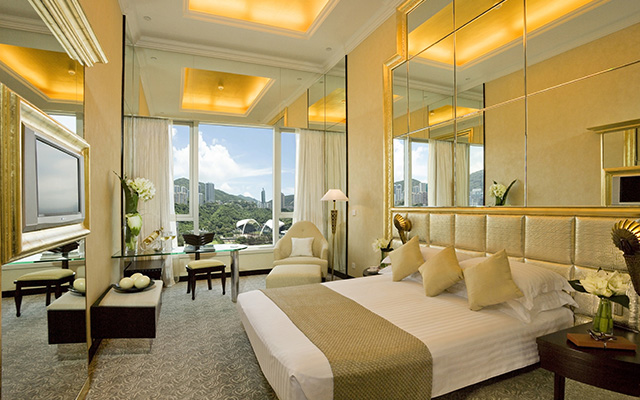
Regal Hong Kong Hotel, Hong Kong
Book BAR and enjoy a 50-minute city tour along Hong Kong’s outstanding landmarks on board a first class sightseeing tram, receive additional two sets of L’Occitane Amenities and a two-day unlimited access to Hong Kong Tramways’ network with access to over 10 exciting attractions.
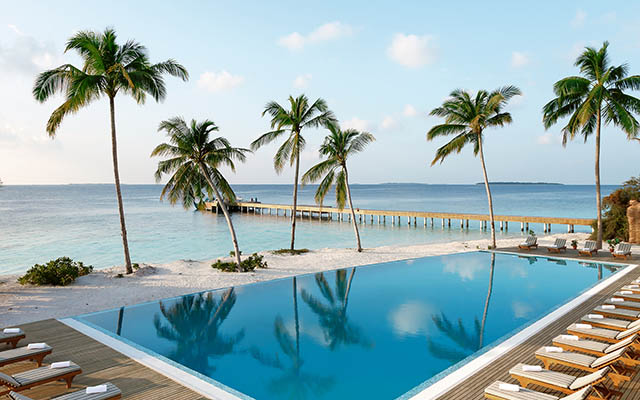
Reethi Faru Resort, Raa Atoll, Maldives
Book BAR and enjoy a $50 dining credit
East, Beijing, China
Book BAR and enjoy a 50% discount off dinner buffet at Feast restaurant
 
More inspiring anniversary experiences
 
Preferred Hotels & Resorts’ array of celebratory activities include an inspiring video series, a new social media campaign, #PreferredCelebrates50, and the creation of a dedicated Golden Anniversary microsite that will serve as the hub of all related activities throughout the year.


Sri Lanka’s tourism sector in C-suite shake-up

0
Sigiriya or Sinhagiri is an ancient rock fortress located in the northern Matale District pictured

Sri Lanka last week made two significant decisions impacting on its emerging tourism market, appointing a new head to its state tourism promotion agency and removing the CEO of its loss-making national carrier.

Both institutions are key to the country’s tourism promotion with 2.5 million arrivals targeted this year.

Dehan Seneviratne, a veteran marketing and management consultant, has been appointed as chairman of Sri Lanka Tourism Promotion Bureau (SLTPB) on June 4. He replaces Udaya Nanayakkara, who was forced to quit in January 2018 after just six months in the job, due to disagreements over the long-delayed destination marketing campaign with tourism minister John Amaratunga.

Two heads of important tourism institutions have been replaced; Sigiriya, an ancient rock fortress in the northern Matale District, pictured

Seneviratne’s appointment comes at a critical time as Sri Lanka’s tourism promotion campaigns finally got underway earlier this month starting with a promotion blitz through CNN.

SriLankan Airlines chairman Ranjit Fernando confirmed to TTG Asia that CEO Suren Ratwatte, who has been criticised in the past for extravagant spending, is stepping down in August. “We are interviewing a couple of local and foreign candidates for the post,” Fernando said.

Fernando stated that the 2017/2018 financial year ending March saw a loss of US$105 million but that a restructuring plan submitted by Nyras, an aviation consultancy, is underway. There are plans to turn around the loss-making airline in two to three years with “some hard decisions”.

In a circular to staff last week, Fernando said the board of directors has decided to make changes to the structure of the top management team.

“There will be a new chief for the commercial division. Our fully owned subsidiary, the catering company, is led by a part-time CEO. We have already engaged a new CFO, who will assume office shortly. There will also be some minor reallocation of responsibilities in the organisational structure,” he said.