TTG Asia e-Daily will be taking a break on Friday, June 15, for the Hari Raya Puasa public holiday.

News will resume on Monday, June 18.
From all of us at TTG Asia Media, Selamat Hari Raya Aidilfitri to our Muslim friends!
TTG Asia e-Daily will be taking a break on Friday, June 15, for the Hari Raya Puasa public holiday.
News will resume on Monday, June 18.
From all of us at TTG Asia Media, Selamat Hari Raya Aidilfitri to our Muslim friends!
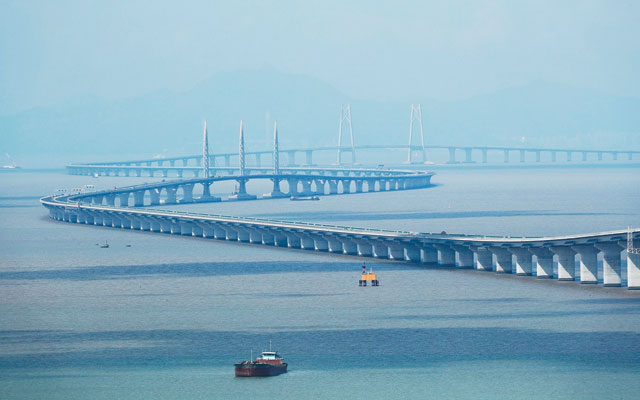
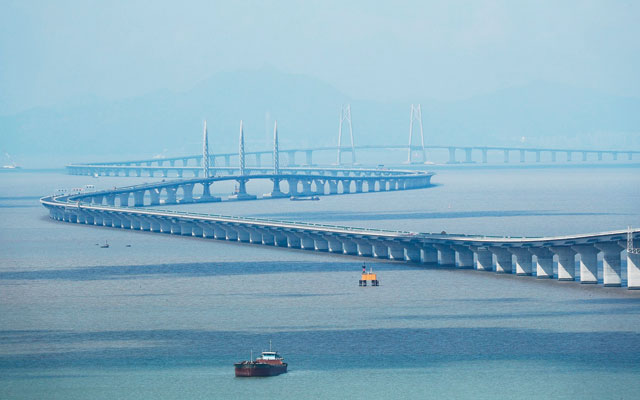
The 42km Hong Kong-Zhuhai-Macau Bridge (HZMB) is promising to open the floodgates to new source markets and travel segments when it kicks off later this year, linking three of the most prosperous centres in the South China region.
A Macao Government Tourism Office (MGTO) spokesman said: “The new competitive advantage (HZMB) provides lies in its ability to offer visitors a new option for travelling to Macau from neighbouring mainland cities and Hong Kong.
“This will be strongly bolstered in terms of connectivity with many international flights operating from the Hong Kong International Airport (HKIA), where the constraint of having a single mode of transportation to HKIA by sea would soon become liberated.”
The new bridge will present an additional option linking Hong Kong and Macau. “Some visitors find the existing ferry connection complicated so we’re hoping the bridge will offer greater convenience,” said Manuel Wu, managing director of Macau Explorer Cultural Travel.
Besides further integrating the three regions physically, the bridge is also expected to change visitor profiles, travel patterns and average length of stay in Macau and Zhuhai.
The Macao Tourism Industry Development Master Plan projects that by the year 2025 the average stays of visitors will be 2.3 days, compared with only 1.2 days in 2017.
Wu said: “I am sure it will stir up demand for lengthier visits here. The bridge may also help divert the traffic from China which currently jams up the existing cross-border gates.
“Also it may further intensify and promote the established multi-destination travel concept across the Pearl River Delta.”
He believes the bridge will also bring more FITs and day-tripper traffic, especially for longhaul travellers arriving at HKIA.
“In the past, they treated Hong Kong as the main destination while Macau was only a getaway escape. Hopefully, the fact that the Hong Kong side of the bridge is adjacent to HKIA will change this perception.”
Beyond improving access, the bridge will also be treated as an attraction in itself.
MGTO is looking into working with partner travel agencies and airlines to develop commemorative and themed tours incorporating the bridge as a novel component in their Macau and multi-destination tour packages.
In addition to repackaging the “Hong Kong and Macau twin cities” tour products, Wu has also observed more frequent requests to charter a boat and tour around the mega-project, which is deemed an engineering marvel.
The launch of the bridge is likely to enhance Macau as a business events destination as well.
Wu added: “While both (Hong Kong and Macau) prove capable of hosting mega groups, Macau’s transportation services remain a stumbling block owing to limited international air connections, as well as flight and ferry capacity. This makes it difficult to mobilise big groups and drives event planners to choose (Macau over) other destinations.”
However, Sands China, marketing and brand management, senior vice president, Ruth Boston believes it’s probably too early to tell the full scope of how the bridge will affect travel to Macau. Still, she acknowledged that convenience of travel is a primary motivating factor for people booking holidays, and the new bridge which links up several key Chinese cities in Guangdong will substantially reduce overall travel time.
Meanwhile, Macau’s air connections keep improving. In July 2017, Beijing Capital Airlines inaugurated flights between Lisbon in Portugal and Macau via Beijing. Last November, AirAsia commenced the first Malaysian connection to Macau from Johor Bahru, which was followed by Thai AirAsia’s Phuket-Macau service in January 2018.
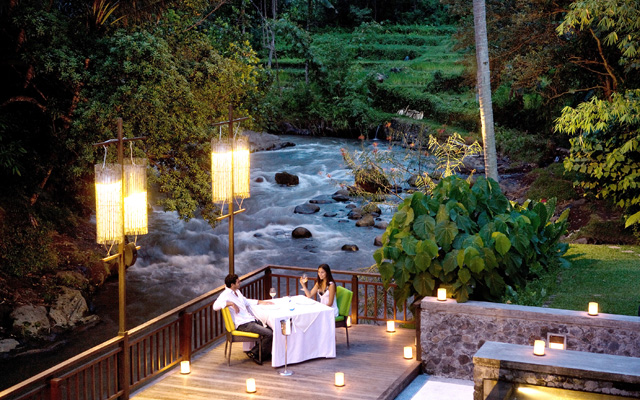
The hospitality industry in Indonesia is flourishing on the back of the country’s brisk tourism sector. Not only are more global hotel companies coming in and growing their presence beyond the major destinations, homegrown hotel brands too have been hard at work.
Larger homegrown groups like Santika Indonesia Hotels & Resorts, Archipelago International and Tauzia Hotel Management have consistently been growing their portfolio, while smaller players, such as Sahid International Hotel Management and Consultant, have been steadily scaling up in recent years.
New names such as Jambuluwuk Hotels & Resorts, Dafam Hotel Management, Artotel Group and Sudamala Resorts have also entered the hospitality space in the last decade to grab a piece of the huge domestic travel pie and the growing international market.
Launched in 2011, Artotel Group currently operates five properties with five more to open this year and six next year, the majority of which will be under its midscale Artotel brand. The group also has an upscale (Curated Collection) and economy brand (Bobotel).
“We are collaborating with rising young talented artists and art galleries. Artotel strives to enhance guest experience while promoting local contemporary art to the world,” said Erastus Radjimin, CEO of Artotel Group.
Meanwhile, Jambuluwuk Hotels & Resorts’ properties combine traditional elements with a modern touch. The group currently owns and operates five properties in Yogyakarta, Bali, Puncak, Batu and Gili Trawangan, and is reaching out to international wholesalers as well.

Mella Purwanaika, Jambuluwuk’s vice president marketing, commented: “We have surveyed some of the governments 10 New Bali’s such as Morotai. We find (the locations) beautiful but it would probably be some time before we enter these markets, as we want to concentrate on destinations that are more ready (to welcome tourists).”
Jambuluwuk’s owning company Arcs House is hence planning to open outposts in Labuan Bajo, Ubud and Bandung, tourist destinations that are growing in popularity. The group is also seeking to expand its management service into existing and new hotels.
Family-owned Sudamala Resorts launched its first property, Sudamala Suites & Villas, in Bali’s Sanur in 2015, and now has properties in Lombok and Labuan Bajo (Komodo), with another one coming soon in East Bali.
Sudamala’s owning company, Griya Usaha, is committed to developing bespoke boutique resorts with strong local cultural characters.
Emily Subrata, director of Griya Usaha, told TTG Asia: “My father is a great art collector so there are many artistic masterpieces adorning our properties. Each suite has its own unique interior design, and we are careful to make our properties blend in with the environment, particularly its local culture.”
Sahid International Hotel Management & Consultant, which for many years was content with maintaining its existing properties, has now adopted an aggressive strategy to plant its brands around Indonesia.
Said Sahid’s director of sales, marketing and business development, Vivi Heelambang: “Our aim is to have a hotel in every city in the country, whether (through new-builds) where we get involved from scratch or taking over existing hotels.”
In the last couple of years, Sahid Hotels has acquired management of existing properties in Maumere, Kupang, Wakatobi and Banyuwangi, while new hotels will be opening on Bangka Island, Gili Trawangan, Serpong and Bandung. In the pipeline are properties in Pangandaran, Timika and Yogyakarta.
“There are nice hotels with good locations in exotic destinations managed by individual owners, which have not been very successful in operations. We take over the management of such hotels that we believe have the potential; most of them did not perform merely because of the lack of management skills,” Vivi elaborated.
Most of the hotels, within months of the takeover, have seen their occupancy and revenue increased by 200-300 per cent, according to Vivi.
“Some hotels needed renovations, while others needed additional amenities and our sales marketing channels to make them visible to markets,” she added.
InterContinental Hotels Group (IHG) has launched Voco, its new upscale hotel brand, alongside a first signing in Australia.
The new brand will focus primarily on conversion opportunities and work with individually and locally-branded hotels to leverage IHG’s systems which includes revenue management and technology capabilities, and will be part of the IHG Rewards Club loyalty programme.
The roll-out of Voco will begin in IHG’s Europe, Middle East, Asia & Africa regions, with plans to take it to the Americas and Greater China over time.
The first signing will be the Watermark Hotel & Spa Gold Coast, Surfers Paradise, Australia, and is due to open under the Voco flag late this year. The 388-room hotel offers guests two swimming pools and 800m2 of meeting space.
As well, IHG announced last month it was adding 13 UK hotels to its portfolio after signing a deal with Convivio (formerly Foncière des Régions). A number of these properties will join the Voco brand in coming months.
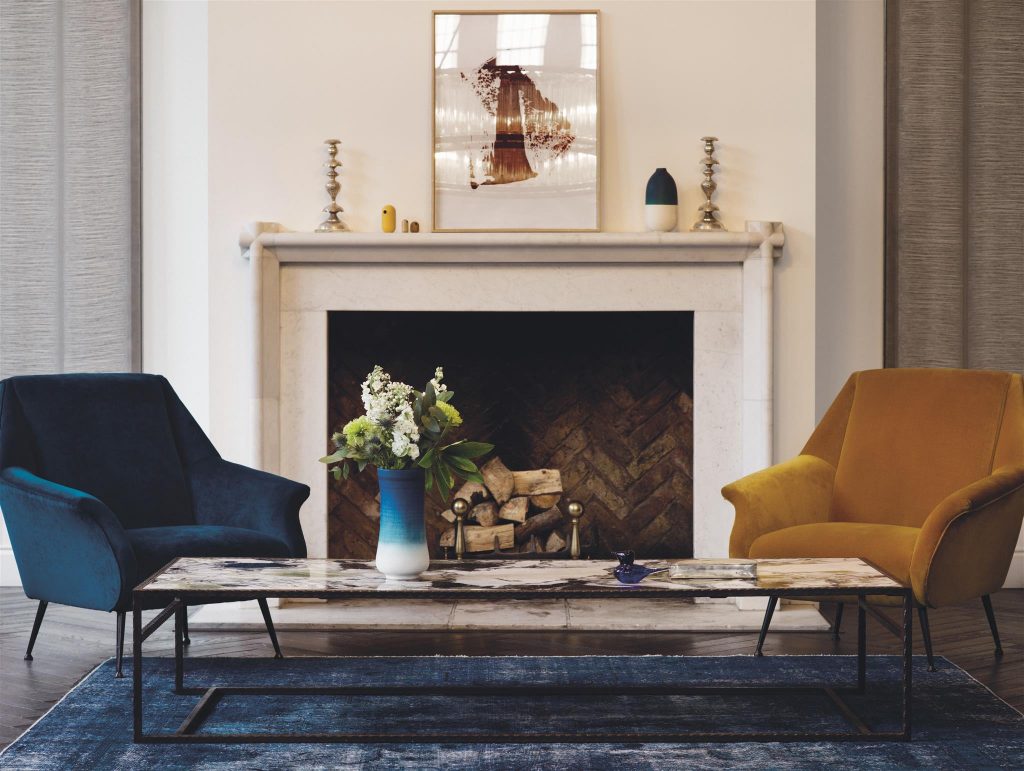
Voco – inspired by the meaning ‘to invite’ or to ‘come together’ in Latin – will focus primarily on conversion opportunities and strengthen IHG’s offer in the US$40 billion upscale segment, which is expected to grow by a further US$20 billion by 2025. Voco is also expected to open more than 200 hotels in urban and leisure locations over the next 10 years.
IHG said it had identified three “critical moments on the guest journey” through “deep customer insight where Voco can create a compelling guest experience that will differentiate the brand.”
These are Come on in – targeting guests at the beginning of their stay with a “swift and simple check-in” and “unexpected, locally-influenced treat”; Me time – IHG will invest in bedding, bathroom amenities, smart TVs and connectivity; and Voco life – communal spaces that “work for different moments of the day.”
Keith Barr, CEO of IHG, said in a statement: “We’ve talked about the significant growth opportunity we see for IHG in upscale and Voco will help us deliver against this. With Voco, the recent addition of Regent Hotels & Resorts in the luxury space, the launch of Avid hotels in the Americas, and the work we’re doing to enhance our existing brand portfolio, we’re making great progress with our ambitious plans to accelerate growth.”

Online travel giants Ctrip and Booking Holdings are extending their partnership, with Gillian Tans, CEO of Booking.com designated as Booking Holdings’ observer to the Ctrip board of directors, a seat that was previously occupied by Booking.com‘s director for Asia-Pacific.
The Chinese OTA and Booking.com will continue to share access to the companies’ combined hotel inventory, allowing customers to select from a wider range of price competitive products globally.
“Ctrip is a large partner for Booking in China and the relationship continues to be strong,” commented Glenn Fogel, CEO of Booking Holdings.
The two recently deepened their partnership when Ctrip teamed up with another one of Booking Holdings’ businesses, OpenTable, to link North American restaurants on the online reservations platform to Ctrip users.
Jane Sun, CEO of Ctrip is “confident that our combined resources will bring more innovation and value to global travellers”.
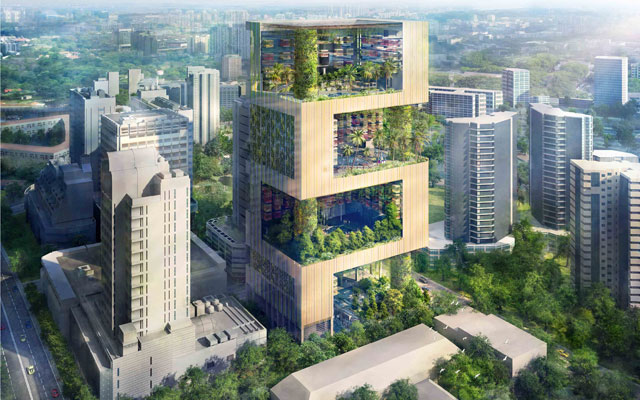
As part of its global brand refresh, Pan Pacific Hotels Group (PPHG) will introduce market-specific strategies on top of a revamped logo and new hotels in the pipeline.
Cinn Tan, chief sales & marketing officer, PPHG, told TTG Asia: “We are working more strategically with local partners in every key source market, such that we can identify and understand the behaviour (of customers in those markets).”
For example, in Japan, the group is working closely with JTB and online travel agencies to identify what the Japanese are looking for and are particular about to better fulfil their needs, she explained.
She added that for the Middle East market, PPHG now crafts customised “combo” packages for the frequently large family groups to accommodate them in connecting suites.
This market-specific strategy also includes an e-concierge “mini-programme” on WeChat for its Chinese guests, who can access information about the hotel and nearby attractions, as well as other technology in its hotels based on market segment profiles and preferences.
Tan revealed: “We can no longer set a standard operating procedure to cut across every region. This is a service industry so we need to allow our staff to have a degree of flexibility.
“We still have certain standards but we want our staff to exercise their own initiative in deciding what should go on top of delivering our standard service.”
To inculcate the refreshed service philosophy, PPHG is also launching a new service training programme that sees its own regional and upper-management teams conducting training classes for their own staff.

“The top management team knows their product and brand the best. They know the challenges and kinds of customers (the hotel is) facing day to day, so they are able to relate better, quote examples and give solutions to staff during training,” explained Tan.
The group has also combined its three websites into one to streamline and simplify its booking process. The new website will also feature social elements, such as reviews and user-generated content, to appeal to the younger generation of travellers, revealed Tan.
Lined up for the next three years are a slate of four new Pan Pacific and three Parkroyal additions globally, including the flagship Pan Pacific London by 2020, a redeveloped Pan Pacific Orchard in Singapore by 2021 and Pan Pacific’s first resort in Danang.
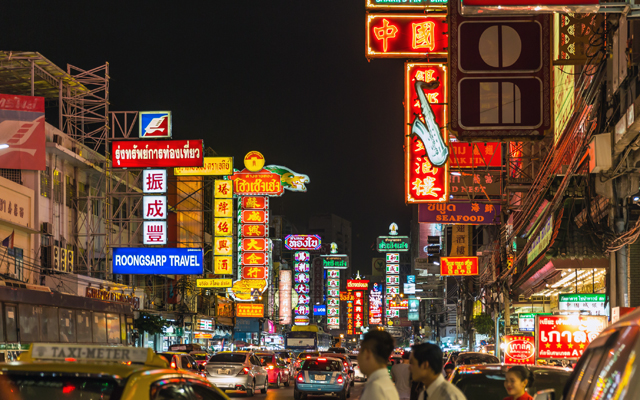
The rapid transformation of Bangkok’s Chinatown is turning it from “a centre of Chinese immigrants in Thailand” to “one of the hippest areas in Bangkok”, C9 Hotelworks’ managing director Bill Barnett notes in a blog post.
A sign of the pace of change, Barnett observed that a few years ago, millennials still viewed Chinatown as an “ancestor’s area where elders meet up and have their Asian breakfast”. While the traditional food scene still exists, the average age of visitors has dropped substantially and visitors now are becoming bar or café hoppers.
It won’t be long before this transformation extends into tourism, with the boutique hotels, hostels, hip bars and cafes becoming increasingly prominent features of Chinatown.
Barnett wrote: “Based on our research and market interviews with hotels in the area, the number of tourists visiting Chinatown has sharply increased over the past few years. Thus, hoteliers in the area foresee that Chinatown will be reinvented over the next five years.”
The average daily rate (ADR) of boutique hotels in Chinatown ranges from 2,000 to 6,000 baht (US$62-187), with occupancy averaging over 75 per cent. But due to the constraints on development scale, hotel inventories for the existing hotels range from a handful up to 70 or 80 rooms.
There has not been an international hotel brand in Chinatown until recently, with a Holiday Inn Express expected to be completed by the end of this year.
Meanwhile, Thailand-based Burasari Group, which owns and manages Shanghai Mansion Bangkok, has signed an agreement to manage a new 128-key conversion property in Chinatown early this year, marking itself as a leading operator in the area.
While the hotel and lifestyle space shapes up, public transportation remains a “a key factor” weighing on tourism potential, according to Barnett. Scheduled to open to the public in mid-2019, Wat Mangkon MRT station is the nearest mass transit connection to Chinatown, sitting across from the upcoming Holiday Inn Express. Yet, “MRT does not carry the same clot as the BTS since many tourists are not familiar with the MRT”, Barnett pointed out.

Amadeus has become the first to achieve level three certification on the latest version of the NDC standard, released in March this year.
“We’ve been working hand in hand with IATA and other industry partners to test and improve this latest version of the standard, which will help to drive industrialisation and adoption. Version 18.1 and the new data model means that NDC messages between airlines and third parties – whether aggregators, travel sellers or corporations – now have a more defined structure,” explained Gianni Pisanello, vice president, NDC-X program, Amadeus.
He added: “This means that we are getting a step closer to the milestone when all the industry players will be able to speak and interpret the NDC language, in the same way, which is a key benefit for the whole industry.”
This certification as an IT provider follows on from Amadeus’ previous level three certification as an IT provider and level one certification as an aggregator in 2016 and 2017. Amadeus says it is on track to achieve level three certification as an aggregator later this year.
Meanwhile, Qantas has joined Amadeus’ NDC-X program soon after the two renewed an IT and distribution partnership. Amadeus will connect to the Qantas Distribution Platform and deliver NDC content to travel sellers, allowing travel sellers to book NDC content alongside other travel content.
Pisanello said efforts are underway to make NDC content available within Amadeus Travel Platform. “We’re making great progress, and will have online travel bookings in production later this year, meaning that the full booking flow of ‘shop, order and pay’ will take place using the NDC standard,” he elaborated.
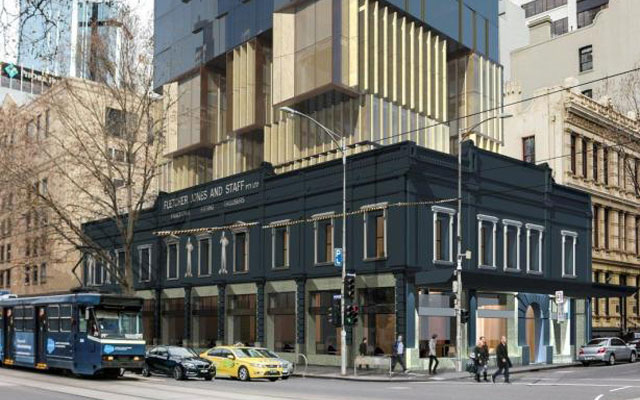
Construction has started on the Vibe Hotel Melbourne, set to open in late 2019 comprising a preserved 145-year-old building on the site of the former Fletcher Jones showroom and a new 24-storey glass fronted tower.
To rise on the corner of Melbourne’s Queen and Flinders Streets, Vibe Hotel Melbourne will feature 206 rooms as well as “contemporary communal areas”. Its upper levels will take in views of the Yarra River to Port Phillip Bay, while its dual frontage provides city views to the north and south-east.
The original two-storey building on the Queen Street site was built in 1873 in the Renaissance Revival architectural style and was called the Cobden Building, first serving as offices for the maritime trade. In 1955, clothing manufacturer and retailer Fletcher Jones bought the building, which became a fixture for Melbourne shoppers. At its peak the company ran 55 stores, using the building as its main city showroom until the company’s collapse in 2012. It was then occupied by streetwear brand Culture Kings.
Since launching in Sydney in 2003, Vibe Hotels has now grown to nine locations: Melbourne, Sydney, Rushcutters Bay Sydney, North Sydney, Gold Coast, Darwin Waterfront, Canberra and Marysville (Victoria).
In addition to Vibe Hotel Melbourne, two more Vibe Hotels are under construction in 2018 – Argyle Street in Hobart and Sydney’s Darling Harbour.
TFE Hotels’ CEO Rachel Argaman said: “We are about to unveil a multi-million-dollar refurbishment at Vibe Hotel Gold Coast with a coast-meets-hinterlands design scheme and we are completely transforming Vibe Hotel Sydney in Goulburn Street, Sydney, adding a new dining offering, Storehouse Sydney Central.”
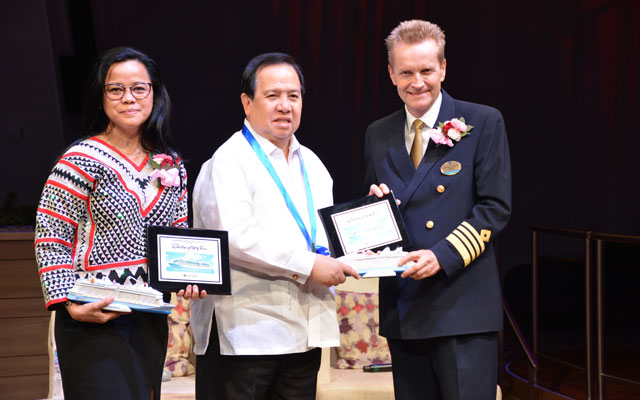
Royal Caribbean International’s Ovation of the Seas, said to be the largest cruise ship sailing in Asia, arrived in the Philippines’ Subic Bay and Manila for the first time last week.
The ship brought to the Philippines the highest number of cruise guests, which totalled close to 4,600 from around the world. At 347m long, 168,666 gross registered tonnes, Ovation of the Seas has a total capacity of 4,905 guests staying in 2,091 staterooms and hosted by 1,500 crew.
Highlights of Ovation of the Seas’ upcoming cruises are the six-night cruise from Hong Kong to Tianjin with calls at Fukuoka and Shimonoseki on June 15; the 12-night cruise from Tianjin to Singapore visiting Okinawa (Naha), Taipei (Keelung), Hong Kong, Hue/Danang (Chan May), Nha Trang and Ho Chi Minh City (Phu My) on October 7; and the 14-night cruise from Singapore to Sydney visiting Perth (Fremantle), Adelaide and Hobart on October 19.