TTG Asia
Asia/Singapore Tuesday, 28th April 2026
Page 1429

Six Senses Duxton

0
Skylight Suite's Bedroom

Location
Tanjong Pagar, the heart of Singapore’s lively business district, seems at first an unlikely seat for a Six Senses property. The brand is known for its relaxing wellness stays – a far cry from Six Senses Duxton’s busy surrounds of restaurants, pubs, cafes and offices.

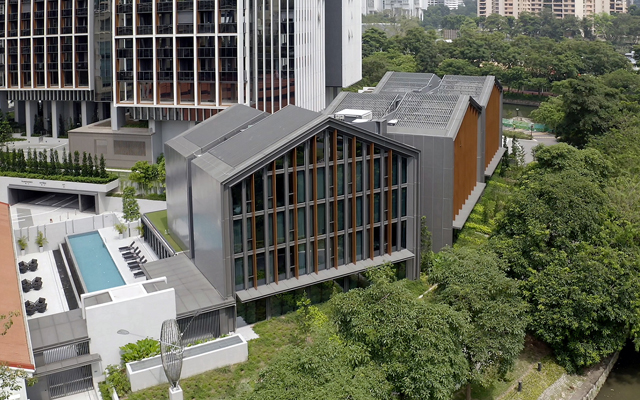
But within eight restored heritage shophouses in this bustling district, the hotel transports visitors to a plush and cosy sanctuary. It is located between the Outram Park and Tanjong Pagar train stations, and 200m from its soon-to-open sibling, Six Senses Maxwell.

Skylight Suite’s Bedroom

Rooms
The intimate property houses just 49 rooms, each uniquely designed due to the conserved layout of the building. This makes for interiors that pay homage to the heritage of its location, which dates back to the 1860s.

The Skylight Suite, in which I stayed, features a lounge flooded with natural daylight that mimics the open-air courtyard of traditional shophouses. The 41m2 room exuded a lush and calming vibe with its black-wood furnishings and brown parchment-like wallpaper, which I learnt is a reproduction of a 1800s document from the designer’s personal collection.

To call the mini-bar as such would be inadequate; the counter is stocked with alcohol in medium-sized bottles and an impressive range of local and regional goodies, including Singapore’s famous salted egg fish skin snack.

On the top level, the Duxton Duplex Suite incorporates a spacious loft concept with spiral banister stairs reminiscent of olden houses, and looks out to a striking view of neighbouring shophouses and buildings.

Yellow Pot Restaurant

F&B
Yellow Pot is Six Senses Duxton’s sole F&B option, a combination of a 50-seater restaurant and 20-seater bar. My modern Chinese dinner was extremely sumptuous, and every dish – from the seared pork cheek with cumin to the wok-seared organic beef tenderloin – left me wanting more.

The dishes washed down well with the hotel’s signature non-alcoholic beverages. My favourites are the Kaifeng Chrysanthemum Cordial and the Apple Cinnamon Tonic, concocted with the hotel’s own filtered sparkling water.

In line with the hotel’s dedication to sustainability, its dishes and drinks contain neither MSG nor GMO, and ingredients are personally sourced from local and regional suppliers by the chefs. Such ‘clean’ eating also ensured that I was filled up without the feeling of bloatedness.

Facilities
The Duxton property is the smaller of Six Senses’ two projects here. The humble space occupies just eight shophouse space, and its elongated lobby features a host of lounging and working spaces, both communal and private.

Murray Aitken, general manager of Six Senses Singapore, shared that one of these lounges will soon be converted into a traditional Chinese medicine consultation room, where one physician will be stationed to provide guests with a basic diagnosis.

Service
The hotel also offers other wellness experiences, including a visit to a nearby family-owned tea house, outdoor yoga on Duxton Hill, as well as a calming and immersive singing bowl experience.

Staff members are warm and attentive, especially in Yellow Pot where they were happy to describe the dishes in detail, and chatted with guests about their day.

I was also offered a turndown service that included treats such as a jar of soothing Tiger Balm and an adult colouring page, which made for a therapeutic evening.

Verdict
At the end of my stay, I felt completely refreshed. The hotel has even inspired me to adopt more sustainable day-to-day practices.

No. of rooms 49
Rates From S$332 (US$243)
Contact details
Tel (65) 6914 1428
Email reservations-duxton@sixsenses.com

To the big four and beyond in Myanmar

0
Mountains, caves and pagodas make Hpa-An, the capital of Kayin State, a scenic destination for trekking

Myanmar’s diversity of attractions is promising to sustain tourism interest and keep visitors returning to explore beyond the “classic four” of Yangon, Bagan, Mandalay and Inle Lake.

Minister of hotels and tourism, Ohn Maung, said: “People are getting tired of seeing the same thing and we are seeing more (return visitors), so it is necessary to develop new destinations and attractions.”

Mountains, caves and pagodas make Hpa-An, the capital of Kayin State, a scenic destination for trekking

He added that this year the ministry is focusing on promoting the emerging destinations of Mergui Archipelago in the south – which is predicted to rise in popularity from October, when the first of six approved hotel projects opens – and Kayin State. The ministry will also push Kyaikto and Ngapali Beach.

May Myat Mon Win, Myanmar Tourism Marketing’s (MTM) chairperson, said the organisation is carrying out campaigns to highlight new attractions at international trade shows and through social media.

This year has also seen MTM invite international journalists, bloggers and influencers for fam trips to experience new destinations. She said: “We are trying to diversify the products available and experiences for visitors to Myanmar.”

Tour operators are also developing a series of alternative itineraries in the form of trekking tours in Shan State, mountain bike trips and eco-adventures and community-based initiatives in other areas such as Kayin and Kayah States, including mountain bike tours, kayaking, stand-up paddle boarding and nature-related trips.

Phyoe Wai Yar Zar, managing director of Diethelm Travel Myanmar, said: “We can’t rely on run-of-the-mill products. Part of Myanmar’s (appeal) are opportunities for local interaction and the best way to (highlight) that is by telling stories. That’s easy to do in Myanmar. We create products that our clients can participate in, such as biking through villages and trekking.”

Su Su Tin, Exo Travel Myanmar’s managing director, commented: “These destinations have existed for many years. However, they are now being promoted and have more facilities. Accessibility is better, there are more restaurants and hotels, and tour operators are promoting them.”

Edwin Briels, managing director of Khiri Travel Myanmar, said destinations opening up away from the classic four of Yangon, Bagan, Mandalay and Inle Lake has meant tour operators can expand their itineraries, creating more options.

He said: “We want to create new products that aren’t just temples, and see where we can go off the beaten track and what we can do there.”

However, when looking for new destinations, Khiri tries not to stray too far off well-trodden paths, curating travels that take in authentic experiences with locals that are accessible from one of the major four.

“We want to avoid people having to fly or drive for too many hours,” said Briels, acknowledging first-time visitors want to visit some of the classics. “Myanmar is huge so it’s best to (visit) part of the country. If it’s your first time, then you may want to do Bagan and Inle Lake, and then try to include one more off-the-beaten-track area.”

Khiri has a lot of repeat visitors, who return to explore more outlying areas, Briels added.

Bertie Lawson, managing director of Sampan Travel, said even when visiting the classic four, it is imperative tour operators seek out the many undiscovered or overlooked sites that exist nearby.

Said Lawson: “Tourism isn’t spread out here yet. People still want to go to Bagan and Mandalay. They think it’s going to be very quiet but, for example, when they visit Mandalay they go where everyone goes and join hundreds of people. This is bad for tourism, bad for tourists and bad for Mandalay. Tour operators need to be clever and take people to other places that are just as beautiful.”

Water park competition heats up as Blue Tree Phuket prepares to make a splash

0

The water park battle in Phuket is about to get more intense as a number of new players are entering the marketplace, among them Blue Tree Phuket, which is set to open its doors come early 2019 as an upscale family entertainment and lifestyle complex, and touting the island’s first crystal lagoon.

The sprawling 22.5ha development, located in the upscale Cherngtalay district, is the result of a joint venture comprising unnamed Thai and international partners, who see opportunity in the family-oriented attractions sector by pumping investment upwards of US$40 million into the project.

Blue Tree Phuket will be positioned as a one-stop destination for family activities, retail and relaxation

“Pattaya has two water parks, Hua Hin has three water parks, but Phuket has just small water parks. There’s been a clear demand for inland entertainment alternatives for some time now,” said Michael Ayling, general manager of Blue Tree Phuket. He was speaking to TTG Asia about the upcoming project in an exclusive interview ahead of its pre-launch in August.

“Blue Tree will offer an immersive lifestyle experience that combines the fun of water sports, family activities, retail and relaxation in one strategically located destination that will cater precisely to this demand,” he added.

Facilities within the 11ha first phase, which opens to the public in 1Q2019, includes a Water and Entertainment park, a four-storey vertical Beach Club, Fitness Zone, Kid’s Club, restaurants and food outlets, and multiple retail spaces.

The complex’s centrepiece – the 17,000m2 man-made Blue Tree Lagoon – is flanked by artificial beaches and offers an experiential aquatic playground for families, with spaces ranging from a splash zone for young kids to adrenaline-driven activities such as Slip N Fly water slides and cliff jumping.

Ayling envisions Blue Tree to be an “accessible destination” that will appeal to “middle class Thai families and Amanpuri guests” alike. Admission fees will be kept “affordable” with a pay-and-use concept, while full access to all activities will be priced at around 1,000 baht.

Acknowledging the competition upcoming water parks like Vana Nava Phuket and Kata Water Park will bring – both of which are currently in development – Ayling thinks there is still “a lot of space for competition” in Phuket. “We will likely have the (water park) market to ourselves for a few years,” he commented.

A rendering of Blue Tree Phuket’s crystal lagoon

As well, Phuket’s growing inbound tourism arrivals and airlift will “induce demand” for Blue Tree, especially as the island’s tourist demographics move from traditional European beach holidaymakers to Asian travellers more inclined to seeking activities off the beach.

“Blue Tree Phuket will also suit the seasonality of the destination and make a great low-season product,” he added, referring to the island’s monsoon months from May to October when the seas experience rougher surf and strong currents.

When asked about the absence of accommodation at Blue Tree Phuket, Ayling stated: “Do we need a 120-room hotel when we have 12,000 rooms in the (Cherngtalay) vicinity? Phuket’s hotel scene is very competitive, but what isn’t competitive is entertainment.”

Malaysia’s Desaru Coast to have One&Only resort

0
A rendering of the upcoming One&Only Desaru Coast

Kerzner International Holdings, owner of the ultra-luxury One&Only Resorts and Atlantis Resort & Residences brands, will introduce the One&Only brand on Malaysia’s Desaru Coast.

The 52ha beachfront development will have 42 suites, two luxury suites and an exclusive four-bedroom villa, as well as approximately 50 One&Only Private Homes available for purchase.

A rendering of the upcoming One&Only Desaru Coast

“As part of the continued strategic global growth of Kerzner International, Malaysia is the perfect location for the next One&Only resort and for the brand to enter Asia,” said Michael Wale, CEO of Kerzner International.

“We are proud to have been selected to operate the ultra-luxury resort on Desaru Coast as One&Only, and we look forward to announcing an opening date in the near future.”

Share your top ASEAN hidden gem and win a free hotel stay!

0

Travel professionals in ASEAN, do you want to win a free hotel stay in either Singapore, Bangkok or Malaysia?

TTG Travel Trade Publishing is proud to be the travel trade media partner of the ASEAN Tourism Competitive Committee, and we’re giving away free hotel stays in celebration of this partnership!

Simply follow these steps to participate:
1. In the comments section below, tell us which ASEAN city is a ‘hidden gem’ to you (e.g. Ho Chi Minh City).
2. Nominate a ‘hidden gem’ spot in that city and tell us why!
3. Like TTG Asia’s Facebook page and share this post.
4. For extra chances of winning, tag 3 colleagues!

The top 3 most creative entries picked by TTG Asia will get to win:
1st Prize: 3N Hotel Stay at Mercure Singapore Bugis
2nd Prize: 2N Hotel Stay at Ariva HYDE Sukhumvit 11, Bangkok
3rd Prize: 2N Hotel Stay at ARIVA Trillion Residences, Kuala Lumpur*

All the best!

Contest ends 29 July 2018, 2359 (GMT+8).

*T&Cs apply: http://bit.ly/2KYJ39p

Peach to be first operator of Airbus A321LR in Asia

0
Airbus Chief Commercial Officer Eric Schulz and Shinichi Inoue, Peach Aviation Managing Director and CEO

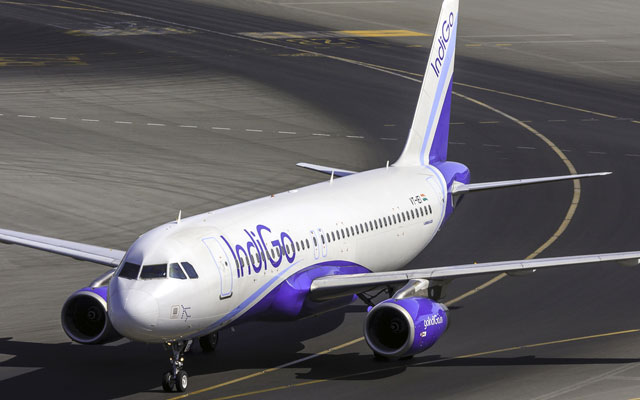
Japan’s Peach Aviation has sealed an agreement with Airbus at the Farnborough Airshow to purchase two Airbus A321LRs, which will make it the first Asian airline to operate this aircraft model in Asia as it works towards becoming an established medium-haul LCC in north-east Asia.

The newest member of the A320 family of jets, the A321LR model boasts a range of 7,400km, the longest in the world for a single-aisle jet, and will greatly extend Peach’s reach throughout Asia.

From left: Airbus’ Eric Schulz and Peach Aviation’s Shinichi Inoue

The airline revised its purchase agreement with Airbus concluded in November 2016, updating its order from 10 A320neos to eight A320neos and two A321LRs.

The two A321LRs are expected to be delivered in fiscal 2020. As of 2020, and after completing the merger with Vanilla Air, the Peach fleet will consist of more than 50 aircraft, operated across more than 50 routes.

CEO Shinichi Inoue said in a statement: “By taking on the challenge of establishing a medium-haul LCC business in Japan, we will continue to play a leading role in shaping the history of LCCs in Japan and North-east Asia. The introduction of the A321LR in fiscal 2020 will be the next major step in the evolution of our business and will further accelerate Peach’s transformation into the leading LCC in Asia.”

Veturis Travel partners SiteMinder to push into Asia, Europe

0
X

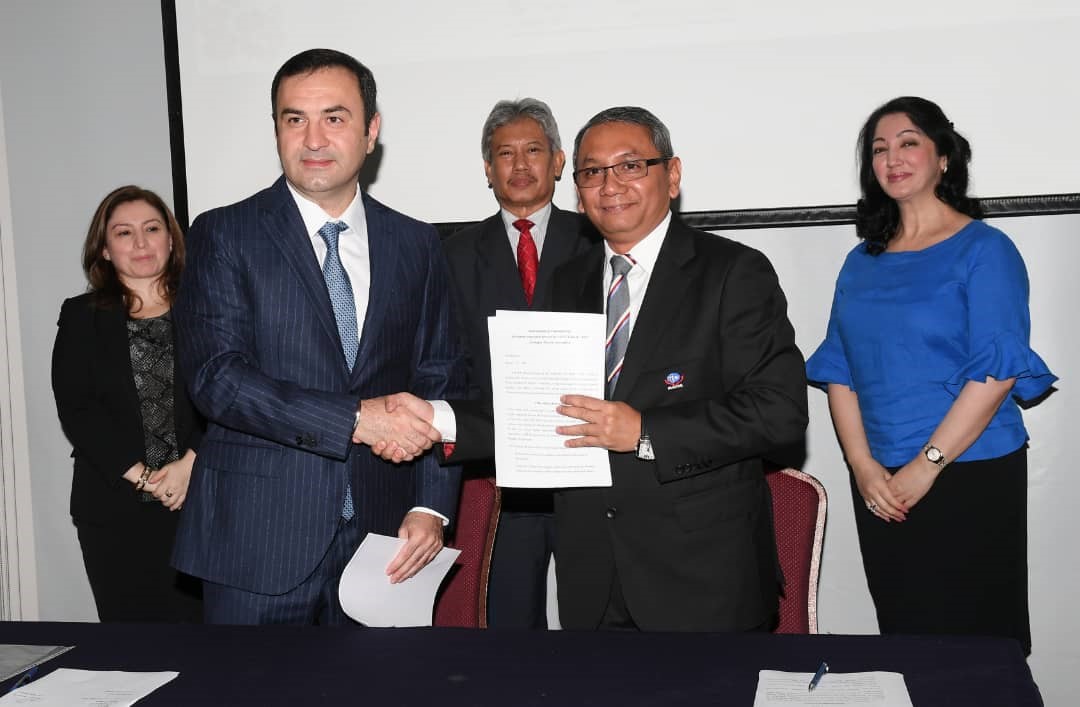
Spain-headquartered Veturis Travel has joined forces with cloud platform SiteMinder to deepen its penetration in Asia and Europe, as it seeks to grow beyond its established presence in France, Italy and the US.

The wholesale travel agency is upping its investment in cloud-based technology as part of a recent transition to dynamic online rates and a strategy to expand its direct contracts with hotels.

In a world where digitisation has become the order of the day, traditional hotel distribution channels such as wholesalers are facing new challenges and more competition

“The landscape for wholesalers is changing and key to remaining relevant is specialisation and adding value to our partners, to help them compete through distribution,” said Irma Mesa, head of sales support at Veturis Travel.

Mesa added that the partnership with SiteMinder is a strategic evolution, offering opportunities for the Veturis Travel to explore new possibilities.

The partnership also reflects the “continued value” of traditional hotel distribution channels like wholesalers in the digitalisation age, said Mateus Coelho, regional manager for Spain, Portugal and Brazil at SiteMinder.

Veturis Travel supports more than 180,000 hotels via a business-to-business interface and connectivity with travel agencies and DMCs in more than 70 countries, including Thailand where more than 8,000 hotels are based.

Kimpton to make Japan debut

0
XXXXXX

Disruption and innovation take centrestage at ITB Asia 2018 conference

0

The ITB Asia 2018 conference will take place at the Sands Expo and Convention Centre in Singapore’s Marina Bay Sands from October 17-19 with a focus on the major trends provoking disruption across the travel industry.

The opening keynote session on October 17 will be led by global leaders from Facebook, Microsoft and Trip.com. It will touch on the major technological changes driving disruption in the travel industry, such as the rise in global smartphone ownership, how organisations are evolving their business models to remain competitive and their vision for the future of the travel industry.

Global leaders will provide insights on the major trends driving change and transformation within the travel industry

The keynote addresses will be delivered by Nikhilesh Ponde, global head of travel strategy from Facebook; Shane O’Flaherty, global director of travel and transportation from Microsoft; and Xing Xiong, CEO from Trip.com.

Day two’s keynote will be a new intermediaries panel session with a focus on the future of travel distribution, given how OTAs, metasearch engines and new intermediaries are disrupting distribution.

The second keynote panel session will be led by industry players including Amy Wei, vice president, Asia-Pacific from Kayak; Andrew Hughes, regional director of sourcing from Hotelbeds; Filip Filipov, vice president of product from Skyscanner; and Charlie Osmond, founder & chief tease from Triptease.

The keynote panel session on day three will look at China’s outbound travellers are reshaping the world today with their spending power.

Sharing their insights on connecting travel brands with Chinese millennials are Alessandro Dassi, CEO & general manager, Greater China & Far East from Thomas Cook; Troy Liu, founder & CEO from Mileslife; and Changle Yang, COO from Tujia.

Putting the brakes on booking abandonment

0
Jamie Pierre

Attracting high-quality website traffic is vital to any brand. This fact isn’t lost on travel marketers with roughly 90 per cent of digital ad budgets going towards traffic generation. However, traffic generation, while important, is only one half of the job. The next step is converting this traffic into actual bookings.

Jamie Pierre

Recent research showed that the travel sector is hit hardest by consumer hesitation – more specifically, when potential bookers make their way to the checkout process only to bail out early. This is also known as booking abandonment, and it happens with nine out of every 10 consumers in the travel sector. Travel agents are hit even harder online, seeing a miserably high 97.4 per cent average abandonment rate.

A certain amount of shopping around for inspiration is a hallmark of the travel industry, with customers always likely to dip their toe before taking the plunge on an often expensive outlay. However, there are some easy ways travel agents can reduce this number to increase bookings.

Know your type online: get with the programmatic
The first chance travel agents have to decrease booking abandonment rates is actually before consumers even arrive on site. With so much marketing budget going on driving wannabe travellers to your website, making sure that this traffic is relevant and interested in your product is vital to success. This can be achieved with programmatic display ads.

Display advertising has undergone a revival of late, driven by a few reasons. For one, the widespread change to programmatic buying of inventory has made it more accessible and affordable for a greater number of companies to run display campaigns. But the main reason behind the resurgence of display advertising is the results it can now achieve.

The huge quantity of data available today allows travel companies to reach their target demographic with unprecedented accuracy. With a programmatic strategy in place, travel agents can pinpoint the difference between traffic and qualified traffic – driving only worthwhile, relevant consumers to their sites. And as a general rule of thumb, the better suited your offering is to the people who view it, the more successful bookings your website will generate.

Less persona, more personal
I’m assuming that you will be familiar with, and most likely use, buyer personas. Effective marketing, and ultimately business practice, has always involved the ability to find and develop a strong relationship with your customer – speaking to and not at. And how can you do that without knowing who they are?

However, traditional buyer personas are of limited use in the modern online landscape, and in display advertising in particular. While they’re great at telling you who your customers are, it’s only through data reporting that you can see how they act.

Take an active holiday provider, for example. Their ideal candidate for booking is 30-50 years old, a fitness nut, with moderate levels of disposable income and a fondness for running wear. With the traditional model of manual inventory purchasing, ad space would be paid for on sports news and retail websites in the hope that their readership overlaps with this customer profile. However, customers are far less one-dimensional in reality.

By using a mix of automated data points and real-life market expertise, brands can not only reach their target audience, but make a positive impression with their advertising.
Every time a visitor uses your website, their actions tell a story, it’s up to travel companies to read it. Doing so will mean travel agents can cater to behavioural trends on site and in their marketing, leading to better booking rates online.

Make your website a one-stop shop
Making travel plans often starts with a spark of inspiration, and inspiration is often followed up with a good deal of research. The more travel agents can stay relevant during this transition, the better chance they have of being there at the decisive moment – the booking.

Embed Instagram accounts, integrate TripAdvisor reviews and publish share-worthy blogs to allow consumers to continue their research journey but remain on your site to do it. Also, a thumbs up from fellow travellers along with some stunning snaps is often more persuasive than your carefully crafted and articulately illustrative website copy alone.

By bringing everything together, travel agents, regardless of size, will cut booking abandonment.

Declutter the booking process
Bookings rely on momentum, and nothing kills momentum like boredom or confusion. So any booking process needs to be kept lean, intuitive and easy to use. This means short forms, inline field validation and offering a number of different payment options to remove any blockers in the process and keep bookers on track.

Although customers are now more comfortable with online payments in general, displaying security logos and clear delivery options still goes a long way to instilling trust. If you’re unsure of what’s working and what isn’t in your booking process, run version-controlled A/B testing to find out where customers are checking out.

Reach back after rejection
Booking holidays can take up to 45 days with people visiting as many as 38 travel sites before committing, so even the best functioning sites will lose travellers at the final hurdle. This is where travel agents can make significant gains on the competition.

Given the role played by research in the booking process, those abandoning ‘almost bookers’ are far from lost causes – quite the opposite. They’ve showed solid intent at this stage, so proactively reaching back out via email or retargeting ads will oftentimes be welcomed as an extension of customer service.

So there you have it, five top ways for travel agents to reduce booking abandonment rates online that actually work. Abandonment rates may be high but as the number of bookings made online continues to skyrocket, this points more to the opportunity for travel agents to win back bookings than the threat of losing them.

Ve Global is a marketing and advertising technology business that operates from product discovery through to purchase.