Marriott International has partnered the Greaton Group to introduce the Westin Hotels & Resorts brand to South Australia in 2022.
The Westin Adelaide is set to open as part of a redevelopment of the iconic Adelaide General Post Office building, located at the corner of King William and Flinders Streets, in the heart of Adelaide’s CBD.
A rendering of the upcoming Westin Adelaide
The hotel will feature 285 guestrooms, all offering views of the city skyline and Victoria Square, an all-day dining restaurant, tearoom, bar, gymnasium, resort-style outdoor swimming pool and spa. For functions, the hotel boasts more than 310m2 of meeting and event space, as well as a 24-hour business centre.
“Expanding the Westin brand into Adelaide is important strategically, as the city is enjoying great growth and development, which isn’t showing any signs of slowing down. Visitor numbers are at a record high and on track to increase by 5.1 per cent in the next 10 years,” said Sean Hunt, area vice president, Marriott International, Australia, New Zealand and the Pacific.
Richard Crawford, senior director development, Australia, New Zealand and Pacific, Marriott International, commented: “The brand is enjoying phenomenal growth across Australia, where it has developed a loyal following thanks to its unique positioning around wellness. The Westin Adelaide joins Marriott International’s growing presence in the Pacific, where we’re on track to have 50 open hotels by 2020.”
The Westin footprint is expected to double in Australia over the next five years with hotels opened in Sydney, Melbourne and Perth and forthcoming in Brisbane, Darwin and Coolum on the Sunshine Coast.
Total international arrivals into Europe grew by 6.1% in 1Q2018, led by 12.5% growth seen from longhaul markets, according to the Air Travellers’ Traffic Barometer produced by European Cities Marketing and ForwardKeys.
Eastern destinations are “still growing at incredible rates” and traditional destinations such as Rome make a comeback, the report summarised.
Istanbul (Hagia Sophia pictured) has jumped two percentage points to become third most popular longhaul destination
The top two destinations for longhaul travellers, London (18%) and Paris (16%), kept the same shares as in the previous quarter. Istanbul’s immense growth has led it to become the third top destination, with a share increase of two percentage points.
Overall, Seville jumped from a 18.2% increase in arrivals to 33.1%. New cities to the top 10 growing destinations compared to 4Q2017 include Rome, Budapest and Amsterdam, which mark a return to more traditional destinations.
Arrivals from most regions maintained growth rates above 10%. The Middle East (+18.1%) and Central & South America (+17.3%) are the regional markets leading in arrivals growth, while intra-European travel showed moderate growth.
The traveller profile of longhaul arrivals maintained a growing “leisure-related behaviour”, the study revealed. This is indicated by the larger pax per bookings growing the most, as well as lead times of greater than 120 days, increasing more than any other category.
In 2Q, although bookings for intra-European travel is seeing a decline of 3.6%, longhaul arrivals, ahead by 8.3%, are still making up for this.
The robust growth seen last quarter has slowed down, partly because the rebound from the terrorism-related crashes has ended. Istanbul (+50.5%) is again the most promising destinations in 2Q, appearing in both top 10 rankings by volume and by performance.
Swiss destinations Geneva and Zurich are new additions to the 10 fastest growing destinations in forward bookings, possibly thanks to the recent depreciation of the Swiss franc, making Switzerland a more affordable destination.
South Korean telecommunications company KT Corp and GS Retail have jointly launched their second virtual reality (VR) theme park VRIGHT, near the main gate of Konkuk University in eastern Seoul today.
The new park features some 30 new games, rides and immersive experiences in partnership with leading Korean game developers, including Smilegate and Appnori. Each activity or room will be priced from 5,000 won (US$4.50) to 49,000 won per use or hour.
This new VR park is KT Corp’s second venture
Koh Yoon-Jeon, chief of KT’s future business development unit, shared: “We will strengthen partnerships with content creators, simulator manufacturers and other small and medium-sized enterprises at home and abroad.”
VRIGHT combines KT’s latest information and communication technologies (ICT) – including fifth-generation (5G) networks, VR and augmented reality (AR) – with GS Retail’s expertise in operating offline retail spaces and its distribution business.
KT targets an annual revenue of 100 billion won for its VR business by 2020, when the country’s immersive media market is expected to hit one trillion won.
In March, KT and GS Retail opened their first joint venture VRIGHT in Sinchon, near Yonsei University in western Seoul. The two-floor theme park has attracted more than 18,000 visitors since it opened. The Sinchon park has offers VR room activities and attractions including “Special Force VR: Universal War,” a first-person shooting game, and HADO, a multi-player AR dodge ball game.
The telecommunications company is set to open more VRIGHT parks this year under its direct management. The company also plans to franchise its VR entertainment business next year, after developing a business model to sell its VR content and platforms to individual operators in both South Korea and overseas.
Banyan Tree Kuala Lumpur, Malaysia
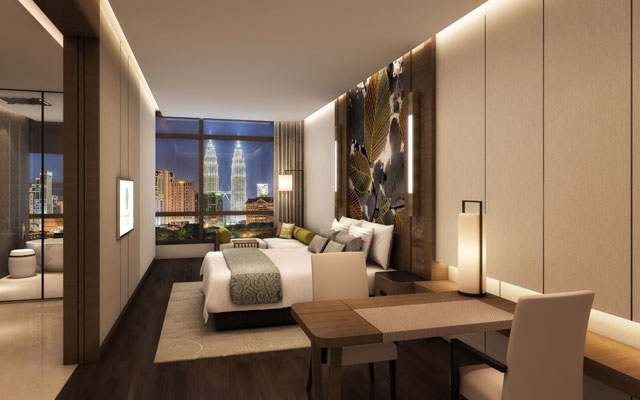
Malaysia’s first Banyan Tree property has opened, occupying the top seven floors of the Banyan Tree Signatures Pavilion Kuala Lumpur Building. The five-star hotel features 55 rooms and suites ranging from 51m2 to 200m2 in size, with most rooms offering views of the city’s landmarks like the Petronas Twin Towers and Kuala Lumpur Tower. Guests will enjoy Banyan Tree’s signature aromatherapy essentials and chromotherapy shower in all room categories, while the suites are fitted with a private relaxation pool. Facilities include a covered open-air pool, gym, a spa, four dining concepts, as well as three boardrooms for meetings.
TreeHouse Villas Koh Yao, Thailand
Taking after its name, the adults-only resort in Thailand’s Koh Yao Noi features 25 Treehouse Villas, as well as six Beachfront Pool Villas and a 390m2 two-storey Hilltop Villa. The furnishings in each villa category varies, but each dwelling will feature typical mod-cons such as a king-sized bed, flatscreen TV and a private plunge pool. Resort facilities include a 400m-long private beach, a 170m2 main pool, spa, and an extensive list of indoor and outdoor activities ranging from Thai cooking classes to scuba diving trips to nearby islands. Guests can also make custom requests for in-villa dining, spa, yoga, or book excursions through reception.
The island of Koh Yao Noi is only accessible by boat, and the resort provides transfers from international airports or hotel in Phuket or mainland Krabi for a fee.
Club Med Joyview Anji, China
Nestled in a bamboo forest at the foot of the Lingfeng Mountains is the 301-key Club Med Joyview Anji. Guestrooms and suites feature a private balcony, from which a panoramic view of the bamboo forest can be had. The resort facilities include a spa, three F&B options, a library, a teahouse, kids’ club, KTV and mahjong rooms, plus outdoor activities like horseback riding and educational farming. For MICE groups, the resort is equipped with a 530m2 pillarless ballroom, and six multifunction rooms, and offers a selection of indoor and outdoor teambuilding activities.
Somerset Baitang Suzhou, China
Somerset Baitang Suzhou is located in the heart of the Suzhou Industrial Park – home to more than 2,000 MNCs – next to the CBD in the east of Jinji Lake. The 194-unit serviced residence comprises one- to four-bedroom apartments, and offers an array of facilities such as an indoor swimming pool, gym, restaurant, golf driving range, and sauna and steam rooms.
Sekercioglu: the new platform is not an OTA, but a partner to hotels
Former Shangri-La Hotels & Resorts’ executive vice president South-east Asia Cetin Sekercioglu has laid down his corporate suit and is developing an online platform that sells hotel ancillaries – room upgrades, lounge access, club room and suite promotions – a huge income stream for hotels, he says, but one they are neglecting.
Launching in the third quarter, Upgrading.cc will enable travellers to check for availability of upgrades and buy them online, whether it’s three months or a day before their arrival, by adding their hotel’s confirmed booking details into its app or website.
Sekercioglu: upselling opportunities untapped with hotels focused on Best Available Rates and OTAs
According to Sekercioglu, founder & CEO of Upgrading.cc, people do want upgrades, among them families that want to bond by staying together in a suite rather than two smaller separate rooms, honeymoon couples who want the VIP treatment that a club room or suite affords, or resort-goers or corporate travellers who see value in lounge access.
“Based on my experience, I’ve seen hotels generate incremental revenue from upgrades of US$1 million to US$1.5 million a year. From customers’ point-of-view, they get a better experience,” said Sekercioglu. “There is definitely demand for upgrades. Unfortunately, there’s not much focus by hotels on this area, so we are coming in to make up for the shortfall.”
Instead, hotels are focused on Best Available Rates and on OTAs, which sell the lowest room type, said Sekercioglu in an interview. Improvements in the check-in process, meanwhile, have unwittingly reduced the time or the chance for a front office staff to upsell.
“I don’t want to undermine the impact of upselling at front desk so far, which can be very big for some hotels. But given the advancements in technology, and that millennials, who will comprise 60-70 per cent of the market in three years’ time, want all their interactions on mobile, it will mean a further reduction of interaction with the guests at front desk in the future. Already, you can pick up your key from a kiosk at the lobby, open your door with an app – there is less opportunity for hotels to upsell at the front desk,” he pointed out.
Upgrading.cc claims it can potentially unlock upselling revenue gains of 40 per cent to 90 per cent depending on partnership tier
The front desk is the main area of upselling when a guest arrives. It can also be during reservations, but a guest might not get the best picture or deal, he said. “When you book online through Upgrading.cc, you can have a clear description of the upgrade, the benefits, the features, and you can book prior to arrival. Why go through the hassle of going through all that when you’ve just arrived at the front desk?,” Sekercioglu said.
The company is now in discussions with hotels to get them to come onboard, beginning with properties in South-east Asia and China, then Europe and the US. There is no joining or annual subscription fees, or training costs, which are typical of technology providers. Customers pay a 10 per cent fee to Upgrading.cc when the upgrade is confirmed and the balance 90 per cent is payable at the hotel upon arrival.
Upgrading.cc promises to unlock potential upselling revenue gains of 40 per cent to 90 per cent depending on three tiers of partnership, Tall (entry-level), Grande and Venti (Sekercioglu obviously loves coffee).
“We are not OTAs, we are partners. We do not sell room at lowest available rates. Our shared goal with our partners is to increase RevPAR via upgrading online. Ninety per cent of the upsold revenue is retained by partners,” said a statement on the website.
When asked if Shangri-La, which he had served for many years, would be a launch partner, he said: “We are exploring who should be the anchors…we have just started on July 1 and are focusing on hotels (and serviced apartments) to sign up first. We could handle 100,000 hotels if we want to, but we have to be selective. The inventory must comprise hotels that are well-maintained and can offer a great guest experience.”
He expects majority of the revenue will come from upgrades to a higher room category. As for club lounges, for most hotels, not more than 50 per cent are paid for; they are automatically given to the guest as part of the deal in booking a club room. “The occupancy of the club lounge may be 70 per cent but in reality, 50 per cent is stay, 20 per cent is paid,” he said, pointing out the potential to increase this ancillary revenue.
Sekercioglu introduced the first in-room delivery robotic technology in Asia-Pacific, created a Best Practices online platform for idea-sharing and digitised F&B loyalty programmes, among initiatives that generated incremental revenues of more than US$1 billion, according to a press release issued by the company.
Meanwhile, its senior executives include co-founder & chief technology officer Johnny Lee, managing director Ting Huong Tak, and director of business development Barry Chew.
Hotels generally have been slower than airlines in tapping the a la carte revenue. In the airline sector, carriers were expected to generate ancillary revenues of US$82.2 billion worldwide last year, a breathtaking 264 per cent increase from US$22.6 billion in 2010, according to IdeaWorksCompany, which create a la carte strategies for airlines and help them boost ancillary revenues.
Airlines have gone beyond selling Coca-Cola and more legroom onboard to, for example, packaging airline-airport-resort deals. Hotels?
The Chinese conglomerate mourns the loss of one of its founders while battling financial troubles
Wang Jian, co-founder and chairman of HNA Group, has passed away, the group announced on its website.
In an obituary, the group stated that Wang, age 57, died in an accident while on a business trip in Provence, France.
The Chinese conglomerate mourns the loss of one of its founders while battling financial troubles
Bloomberg quoted local law enforcement as saying that the executive’s death was not seen as suspicious.
The HNA Group had been on a buying spree in recent years – with purchases including Hilton and what was then known as Carlson Hotels – before dumping several of its assets in quick succession due to problems with debt.
Luxury Escapes has appointed Rajah Chaudhry head of Asia, a newly created position, after recently establishing presence in Singapore, Hong Kong and India.
Rajah will oversee the Australian travel website’s expanding Asian operations, focusing on overall growth and key sales strategies for the region.
He brings over 16 years of experience in business development and finance and has been based in Asia for over 11 years. He recently co-founded Paycelerate, touted as Asia-Pacific’s first accelerated payments marketplace, and ChinaScope Financial, an integrated provider of China-focused financial analytics business intelligence.
Prior to that, Rajah held senior investment banking roles with Deutsche Bank and Renaissance Capital, focused on corporate finance advisory in Asia-Pacific across a range of sectors.
The nightlife brand will be one of the first internationally known ones to arrive in Colombo
Singaporean dining and nightlife brand Cé La Vi has partnered The Kingsbury, a five-star luxury hotel in Colombo, to launch its newest restaurant and lounge concept on July 28, 2018.
Known for its rooftop locations, Cé La Vi has built a presence in some of the greatest nightlife capitals of the world, including Singapore, Hong Kong and St Tropez.
The nightlife brand will be one of the first internationally known ones to arrive in Colombo
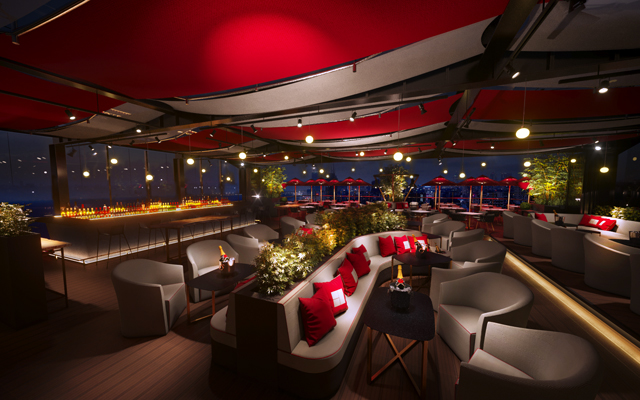
When open on the rooftop of The Kingsbury, Cé La Vi Colombo will feature a restaurant serving Japanese cuisine with modern Asian flair, as well as an indoor/outdoor lounge.
“With the exciting developments in the city, Colombo has positioned itself to be the next city to look out for among the emerging markets,” said COO of Cé La Vi, David Sarner, adding that this will be “one of the first international brands to launch in Colombo”.
Dhammika Perera, chairman and managing director of Vallibel One and co-chairman of Hayleys, expects the brand’s arrival to transform Colombo’s nightlife landscape and reshape its cocktail culture.
“The growth of the tourism sector and the rapid expansion of the city’s high end infrastructure will see growing numbers of discerning leisure and business travellers to Colombo. Cé La Vi Colombo is well set to become their number one choice,” he said.
Responsible Travel turns the lens on locals and tells the story of overtourism from their perspective
At the start of another tense summer between local people and holidaymakers, and weeks after The Wall Street Journal described tourism as “generating a global backlash”, Responsible Travel launched a documentary to drive home the message that tourism has reached a critical point.
Crowded Out: The Story of Overtourism was written and produced by activist travel company Responsible Travel. According to the company, this is the first film of its kind to document the issue of overtourism from the perspective of local people in hotspots such as Venice and Barcelona as well as further afield in places such as the Gili Islands.
Responsible Travel turns the lens on locals and tells the story of overtourism from their perspective
Justin Francis, CEO and founder of Responsible Travel who presents and narrates the film, commented: “We’re witnessing, for the first time on such scale, direct conflict between governments and local people as residents take action and make their voices heard.
“Change is on the horizon: the travel industry will now be asked to justify itself by locals and governments alike. Growth at all costs is no longer sustainable. It’s a momentous realisation.”
Francis added that locals have been “voiceless” for decades, but now is time governments must start listening to them.
Venetian resident, Alessandro Bressanello – who has been campaigning locally for change – explains in the film: “It’s a fight. Every day it’s a fight”.
Harold Goodwin of The Responsible Tourism Partnership also stated in the film: “We need rebellious tourists and rebellious locals to achieve change. It won’t just happen without some degree of rebellion by tourists being turned off destinations and locals saying ‘enough is enough’.”
Potato Head Beach Club has been a choice venue for arts, cultural and music events – and now also the Awaken conference
At the inaugural Further East event, the conference component typically expected of similar travel tradeshows will be ditched in favour of intimate learning sessions and workshops at the Potato Head Beach Club, one of Bali’s most popular hot spots located along Seminyak Beach.
Further East organiser Beyond Luxury Media says the Awaken “un-conference”, taking place on November 12, will offer fresh perspectives on topics to challenge preconceptions and generate ideas to redefine the future of luxury travel in Asia.
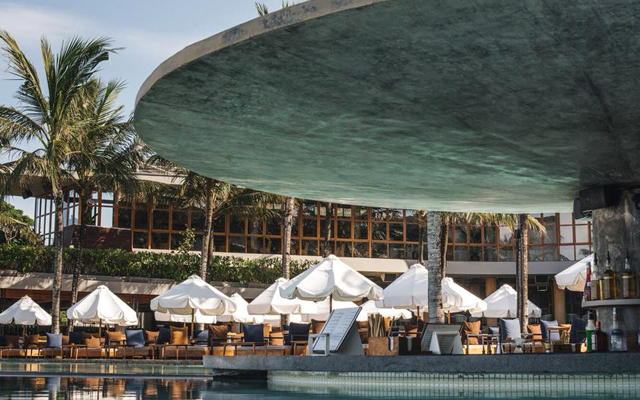
Potato Head Beach Club has been a choice venue for arts, cultural and music events – and now also the Awaken conference (photo credit: Facebook/Potato Head Beach Club Bali)
Potato Head Beach Club is expected to provide a laidback setting for the “enlightening day of talks and discussions from industry innovators and thought leaders”.
Awaken will also feature Potato Head-curated sessions focusing on themes such as conservation and authenticity.
“As well as being a sanctuary of expression for international musicians and artists, Potato Head Family is also an authentic Indonesian lifestyle brand that works with emerging local talent and supports a range of sustainability initiatives. Their endeavours are driven by a deep passion for conservation and authenticity,” according to a statement from Beyond Luxury Media.
To round off a day of insights and networking, the Beach Club will keep the vibes flowing with evening drinks for the Further East community.
Ronald Akili, serial entrepreneur and founder of Potato Head Family, commented: “As official hosts, we look forward to showcasing Potato Head Family’s dedication to challenging the status quo by providing good times for our guests while also doing good in our local communities and the world.”
All registered Further East delegates will have access to Awaken at Potato Head Beach Club as part of the four-day festival agenda. There will be a limited number of Awaken-only passes available for 599 pounds (US$791.20) via application.