TTG Asia
Asia/Singapore Thursday, 2nd April 2026
Page 1414

Edgy Chinese millennials push boundaries of international travel: Hotels.com

0
Chinese travellers choosing 'authentic local experiences' over luxury, visiting places they have never been

Chinese millennials born after 1990 are especially pushing the boundaries of international travel, increasing their travel expenditure by a staggering 80% in the past year to fund social media-influenced trips “full of edgy experiences, high-tech accommodation, exotic delicacies and taboo ticket-items”, according to recent research by Hotels.com.

The study, part of the Chinese International Travel Monitor, found that Chinese travellers overall spent 40% more in the past 12 months, compared to the previous year, with the majority (60%) planning to spend even more the next year.
Chinese travellers choosing ‘authentic local experiences’ over luxury, visiting places they have never been

One highlight of the research was that travel brag moments and selfies had a massive influence on the Chinese traveller experience in 2017, with almost two thirds of respondents (60%) posting three to five times a day.

The study also found that the Chinese are travelling farther afield, staying away longer and spending more money, with Europe, North America, Latin America and Australia sought after over the past 12 months. This year also saw travellers extending their trips by an average of one to two extra days compared with the previous year.

Next year, Europe, Africa and the Middle East are the top new destinations for more than half of travellers. North America will continue to be a hot favourite, and Latin America is also emerging as a popular choice, with 26% and 13% of travellers planning a first-time visit to these destinations in the next year respectively. Over a third of travellers plan to visit Oceania next year, with Australia topping the list for future visits.

Chinese travellers are also keen to travel further to new destinations. More than half of Chinese travellers (60%) intend to travel to a country they have not visited.

More than one third (37%) still intend to visit countries they’ve been to before but will go to different cities. Key locations in Asia are top of the list for these travellers. Japan is a standout, with 46% planning to revisit but travelling to different cities there. South Korea, Taiwan and Thailand are also high on the list.

Staying in atypical accommodation was important to over half of travellers, who opted for out-of-the-box and independent hotels with local flavour (55%) over star ratings. Another 33% booked boutique hotels, 23% eco-friendly hotels and 21% hotels with cutting-edge technology.

Chinese travellers are putting their money where their mouth is when it comes to getting down with authentic experiences – tasting exotic local delicacies (69%) and scouring the streets for authentic local items (43%) over shopping for luxury items (38%).

Connectivity and efficiency are key for Chinese on-the-go youngsters, with co-working spaces (39%), voice-activated technology (38%), virtual reality booking (38%), robotic customer service (32%), mobile phone operated room access (31%) and social media live lounges (26%) all desired additions to their accommodation.

The ability to QR code scan via WeChat and acceptance of mobile phone payment were particular points for development for Chinese travellers, according to Hotels.com. Booking and reservation methods were not up-to-scratch for a third of travellers, while local transport arrangements along with Mandarin-speaking guides and hotel staff were also areas for improvement.

BHMA unveils fresh senior leadership appointments

0
Lucas (left) to work alongside Thaliwal

Bespoke Hospitality Management Asia (BHMA) has announced two top management appointments at its Bangkok head office following its acquisition by Flight Centre Travel Group.

Hotel industry veteran Peter Lucas has been appointed CEO of the company. He was most recently Boutique Corporation’s senior vice president of asset operations, overseeing hotel, serviced apartment and F&B portfolios.

Lucas (left) to work alongside Thaliwal

Prior to this, he was COO with Destination Properties, where he asset-managed hotels operated by Accor, Starwood, Hilton and Swissotel, as well as F&B operations for franchised restaurants such as Hard Rock Café.

Working alongside him is Harry Thaliwal, recently appointed executive vice president of operations at BHMA.

Thaliwal started his career in operations with the Pan Pacific Group. He subsequently moved to the InterContinental Hotels Group, where he worked for more than 23 years before joining Centara Hotels and Resorts as corporate director of operations.

In his new role at BHMA, he will oversee all operational aspects including strategy, growth and pre-opening projects.

Meet MARVIE, Asia’s first transactional chatbot by an airline

0
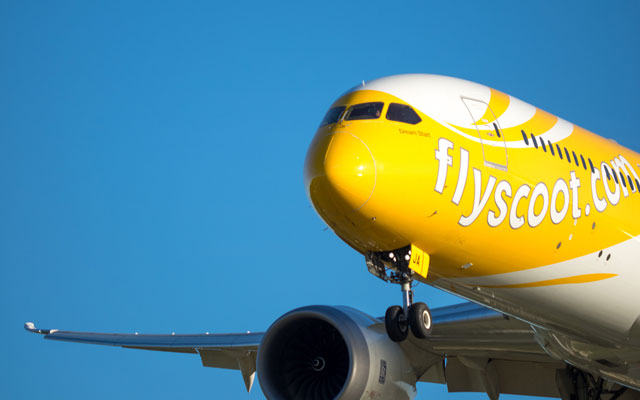
Scoot's Boeing 787 Dreamliner

Scoot has launched a transactional chatbot, named MARVIE (Scoot’s Most Awesome and Resourceful Virtual Intern Ever), on its Singapore Facebook page via Facebook Messenger.

Developed with the expertise of airline technology company Caravelo, MARVIE is said to be the first chatbot by an airline in Asia to allow transactions, in addition to responding to customer queries.

The airline launched the transactional chatbot a year after its merger with Tigerair

The chatbot is able to assist customers to search for flights, display the same fares and availability as reflected on Scoot’s website and mobile app, make flight bookings, and allow payment by credit card.

Since it was soft launched early this month, MARVIE has serviced an average of 50 unique users a day, and resolved 37.5 per cent of queries received on Facebook, according to Scoot.

This resolution rate is expected to rise as more customers interact with MARVIE.

There are plans for MARVIE to be able to accept promo codes, assist customers to manage and make changes to their bookings, purchase ancillary products such as preferred seats and travel insurance, make interline bookings involving flights by partner airlines, and accept more payment modes.

Scoot also intends to make MARVIE available in more languages and on more platforms, including the airline’s website.

Avani to manage second Malaysia hotel in Kota Kinabalu

0
Artist impression of the hotel, located 'steps away from' Jalan Lintas

Come 4Q2021, Avani Kota Kinabalu Hotel is slated to open in the capital of Sabah as the brand’s second property in Malaysia.

A 20-minute drive from Kota Kinabalu International Airport, the new-build will form part of a mixed-use development with retail, office and condominium complex.

Artist impression of the hotel, located ‘steps away from’ Jalan Lintas

The 378-key hotel will feature an all-day dining restaurant and a rooftop pool and bar, as well as 855m2 of meeting space.

Avani Hotels & Resorts currently operates 23 hotels and resorts in 15 countries, with 13 new hotels in the pipeline, including the latest signing in Melbourne, Dubai, and a third Avani property in Bangkok.

UNWTO launches website to mobilise sector towards sustainable development goals

0
Harnessing the potential of tourism, which makes up 10 per cent of world GDP, to advance SDGs

UNWTO has launched an online platform to better engage the tourism sector in the advancement towards the UN Sustainable Development Goals (SDGs), with the support of Switzerland’s State Secretariat for Economic Affairs (SECO).

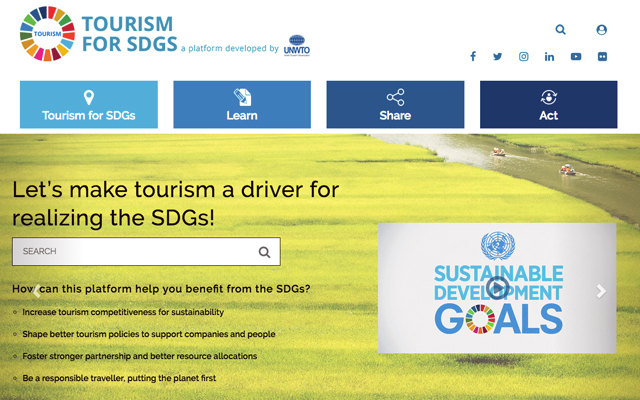
Tourism4SDGs.org is a “co-creation space” that allows users to access a wide range of resources, add their own initiatives, findings and projects, motivate discussion and collaboration, and share content related to tourism and sustainable development.

Harnessing the potential of tourism, which makes up 10 per cent of world GDP, to advance SDGs

“Tourism plays a vital role in many, if not all, of the 17 Goals”, said UNWTO secretary-general Zurab Pololikashvili. “Tourism has come of age as a cross-cutting economic activity with deep social ramifications.”

Ambassador Raymund Furrer of SECO commented: “Switzerland strongly supports this platform as it will allow a focus on the three main components of sustainable tourism: its economic, environmental and social dimensions.”

Learn, Share and Act, the three levels of interaction at Tourism4SDGs.org, aim not only to educate but also to encourage conversation and collaboration towards a sustainable tourism sector.

The platform was launched during the UN High-Level Political Forum on Sustainable Development ‘Transformation towards sustainable and resilient societies’ in New York this month, during an event co-hosted by UNWTO and the One Planet network.

The 17 SDGs constitute a global agenda for people, planet, prosperity and peace through partnerships. The SDGs aim to end poverty, fight inequality and injustice, and solve climate change by 2030.

Dive the Coralarium, a semi-submerged art gallery in the Maldives

0
Art meets biodiversity

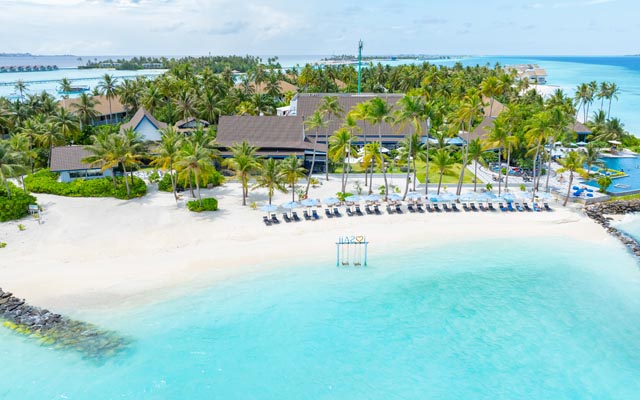
The 120-key Fairmont Maldives Sirru Fen Fushi has unveiled the world’s first semi-submerged art gallery showcasing a series of sculptural artworks in the skyline.

Created by underwater naturalist and artist Jason deCaires Taylor, the Coralarium pays homage to the abundant sea life and pristine coral house reef surrounding the resort.

Art meets biodiversity

The first coral regeneration project slash underwater art installation in the Maldives aims to showcase the fragile beauty of the Maldives and the world’s oceans and provide visitors a new experience to engage with art and nature.

The artwork creates artificial reefs which will eventually become an integral part of the local ecosystem, with sheltered spaces offering a permanent sanctuary for ocean life such as fish, crustaceans, octopuses and marine invertebrates.

The Coralarium focuses on a stainless steel cube structure at a depth of three meters in the lagoon, raising up six meters from the seafloor. It holds three dimensions of artwork: rooftop sculptures placed at the top of the cube structure; the underwater art pieces and sculptures placed on plinths at various heights to highlight tidal movements; and the semi-submerged architectural cube element, which creates a bridge and fusion between both terrestrial and sub-oceanic worlds.

Guided tours in small groups led by the resort’s resident marine biologists are available several times a day.

Indonesia in hot pursuit of Indian tourists

0
Indonesia's Ministry of Tourism is stepping up efforts and has set a tall target of 700,000 arrivals from India this year

Reporting by Mimi Hudoyo and Tiara Maharani  

Indonesia is stepping up efforts to boost arrivals from India, a market where it has seen significant growth of late.

India is now among the top five markets to Indonesia, sending 485,000 visitors last year to post a growth rate of 30 per cent, the second highest after China.

In the first two months of 2018, arrivals from India numbered 87,000, surpassing the traditional markets of Japan (74,000) and South Korea (63,000), according to data from the Ministry of Tourism.

Indonesia’s Ministry of Tourism is stepping up efforts and has set a tall target of 700,000 arrivals from India this year

Garuda Indonesia, on the back on strong demand, has increased its Denpasar-Mumbai frequency from twice- to thrice-weekly in June, barely two months after the service was launched.

Within the first two months of operating the new route, Garuda has already seen an average load factor of 87 per cent, the airline’s president and CEO Pahala Mansury told TTG Asia.

Pahala said: “We’ve had fantastic response for Denpasar-Mumbai services, so we felt the time was right to add frequency to three flights per week.”

TTG Asia understands that Garuda has plans to add a fourth frequency by this year-end.

Recognising the growth potential of India, the Ministry of Tourism is stepping up efforts and has set a tall target of 700,000 arrivals from India this year, despite the still-limited direct air links between the two countries.

The ministry has rolled out a strategy making Singapore and Kuala Lumpur as hubs to attract travellers visiting these two countries to extend their stays to Indonesia, according to Nia Niscaya, deputy minister for tourism marketing development II (Asia, Africa, the Americas and Europe).

“We are promoting the Hot Deal packages to Batam-Bintan and Jakarta, as well as culture and heritage to Yogyakarta and beach resorts like Lombok.

“(The ministry) is not only working together with travel companies in Singapore and Malaysia, but also talking to tour operators in India selling Singapore and Malaysia,” Nia said.

To keep the growth momentum of the Indian market, Umberto Cadamuro, COO inbound of Pacto, opined that Garuda should open another destination from India to Indonesia.

“I hope Garuda will open New Delhi-Denpasar or New Delhi-Jakarta anytime soon. The New Delhi market is huge for both business and leisure travel,” Umberto said.

As well, more destinations in Indonesia should be promoted to the Indian market, acknowledged Sigit Witjaksana, director of tourism marketing for Southern and Central Asia, Middle East and Africa at the Ministry of Tourism.

“During our recent visit to India, (major Indian outbound travel companies) told us that Bali sells on its own and asked us to come up with other destinations for promotion, so we plan to meet their needs,” Sigit said.

Hotelbeds seals ‘real-time’ booking partnership with tours tech specialist Rezdy

0
HotelBeds' partnership with Rezdy could help it grow its presence in Asia-Pacific and allow it to help suppliers meet demand for real-time in-destination bookings

Hotelbeds Group has partnered Rezdy, a Sydney-based software provider specialising in tours and attractions bookings, to expand its portfolio of tours and activities worldwide, particularly in the Asia-Pacific market where growth potential is high.

The partnership will bring over 1,000 additional activities to Hotelbeds Group’s ancillary bank business, with that number increasing progressively over a one-year period.

HotelBeds’ partnership with Rezdy could help it grow its presence in Asia-Pacific and allow it to help suppliers meet demand for real-time in-destination bookings

As a first stage of the integration, the group has already integrated activities from Paris, Copenhagen, Oslo, Stockholm and Barcelona. As the integration progresses, the group will include more destinations in its platform, expanding to include Asia-Pacific.

Director of ancillary bank at Hotelbeds Group, Javier Arévalo, said: “This alliance with Rezdy in particular boosts our presence in the Asia-Pacific region, one of the most important and fastest-growing marketplaces worldwide.

“Rezdy’s real-time booking solutions are transforming the industry at a time when offering mobile booking tools is absolutely critical,” he added.

With the partnership, Hotelbeds will be able to offer clients real-time availability of products, more opportunities for last minute, in-destination bookings and a better guest experience for ticket validation.

This alliance will also enhance the overall sales process and will offer a more scalable contracting model, reducing the time to market for all new products available on Hotelbeds Group’s distribution channels – which includes Hotelbeds, Bedsonline, Tourico Holidays and GTA along with local expert channels.

Rezdy specialises in online booking integration with suppliers, including the ability to handle mobile bookings, resource allocation, customer details and payment gateways.

Asian cruise market sails to double-digit growth

0
Japan is the Asian destination seeing the most cruise calls; pictured, ship at Japan's Yokohama Osanbashi Pier

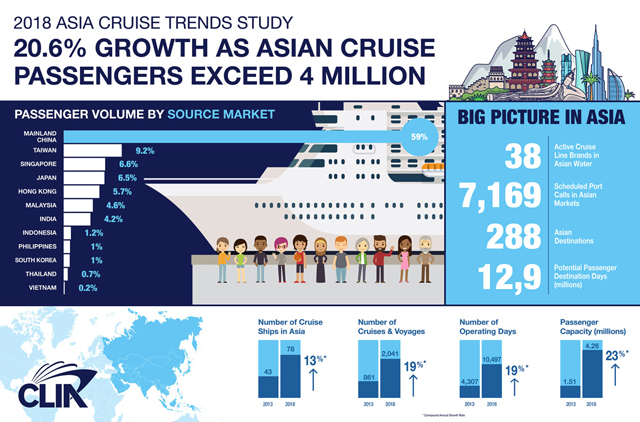
While Asian cruise passenger numbers surged 20.6% to hit another record high of over four million in 2017, overall cruise capacity deployed in the region is expected to decline marginally this year, according to the Asia Cruise Trends 2018 report recently released by Cruise Lines International Association (CLIA).

Between 2012 and 2017, Asian cruise passengers grew from 775,000 to nearly 4.1 million, an estimated 39% compound annual growth rate.

However, China, the main driver of passenger growth in Asia for the last few years, experienced a deceleration last year, adding 286,000 passengers compared to more than one million passengers in 2016.

Japan is the Asian destination seeing the most cruise calls; pictured, ship at Japan’s Yokohama Osanbashi Pier

Still, it maintained its dominance, accounting for 59% of all Asian cruise passengers.

Asia’s other major passenger source markets were Taiwan (374,000), Singapore (267,000), Japan (262,000), Hong Kong (230,000), Malaysia (188,000) and India (172,000).

CLIA observes that the majority (91%) of Asian cruisers sailed within the region in 2017, with intra-regional cruising expected to continue dominating into 2018. For longhaul, inter-regional cruisers, Europe was top choice in 2017 with 25% travelling to the Western Mediterranean, and 9% and 8% respectively traveling to the Eastern Mediterranean and the Baltics.

The Caribbean and Alaska are also popular, accounting for 24% and 11% of Asian cruisers travelling outside Asia.

Shorter sailings were by far the most popular, with the greatest share of passengers sailing four to six nights (66%), followed by two to three nights (26%) and 7 to 13 nights (5%).

In 2018, CLIA estimates overall cruise capacity deployed in Asia will slide 2% versus the planned ship calls in the prior year – although there will be more ships and a broader variety of cruise products in Asian waters.

Most capacity is coming from mega and large ships with six and 19 of them deployed in Asia respectively. As for mid-size ships, 27 are being deployed in 2018.

Small upscale ships will also be active in the region with 21 deployed seasonally, while the expedition niche will have five ships deployed in limited seasons.

In 2018, 7,169 port calls are being made in the region, 27 less than last year. Some 288 different destinations in Asia will receive cruise ships this year, and 24 Asian ports will host 99 or more calls each.

Destination markets seeing the most calls are Japan (2,601), mainland China (1,012), and Thailand (581) in 2018. Top ports with over 300 total calls planned in 2018 include Baoshan/Shanghai (416), Singapore (374) and Keelung/Taipei (322).

In terms of potential for tourist visits, Japan, Mainland China and Singapore are expected to host the most passenger destination days, with their respective capacity for over 4.8 million, 2.4 million and 900,000 passengers.

The volume in South Korea came down from 1.8 million originally scheduled last year to less than 224,000 in 2018.

With the combination of more and larger ships, added cruises and multiple port call visits, the cruise industry will bring 12.9 million passenger destination days to localities across Asia. This will be about 600,000 (or 4%) less than in 2017, according to CLIA.

Ethiopian Airlines’ Jakarta link opens up Africa as feeder market for Indonesia

0

Ethiopian Airlines has launched its Addis Ababa-Jakarta services on July 20 as part of its South-east Asian network expansion strategy, opening up a new feeder market for Indonesia’s tourism.

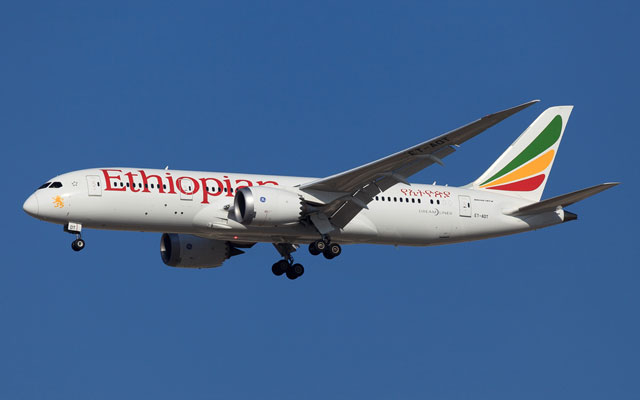
The thrice-weekly service is an extension of its daily Addis Ababa-Bangkok flights, operated with Boeing 787 Dreamliner. Jakarta is the fifth city in Ethiopian Airlines’s South-east Asia network after Singapore, Kuala Lumpur, Bangkok and Manila.

This new route has a large potential to develop inbound traffic from Africa

Zebiba Miftah, area manager Indonesia Ethiopian Airlines, commented: “We are (determined) to enable Africans or Indonesians to enjoy safe, reliable and economical air connectivity both within the two countries and between the continents (Africa and Asia).”

The service is targeting both business and leisure traffic from both Ethiopia and other African countries to Indonesia and vice versa.

Miftah said that prior to flying directly to Jakarta, the airline had been selling flights to Jakarta via Singapore, in cooperation with Garuda Indonesia for the Singapore-Jakarta leg.

Admasu Tsegaye, Ethiopia’s ambassador extraordinary and plenipotentiary to Indonesia, hopes that the service can boost the trade and tourism potential in both countries.

“This is the first African airline to fly to Jakarta. By this we hope to enhance bilateral relations, both in business, trade and friendship between Indonesians and Africans, especially Ethiopians,” Tsegaye said.

To boost leisure traffic to Indonesia, Ethiopian Airlines has appointed Panorama Destination as its tour operator in the country through their Ethiopian Holiday programmes for the next two years.

Ricky Setiawanto, director of business development Africa, Europe, and Baltic States of Panorama Destination, is optimistic that the Ethiopian-Jakarta route will increase visitor arrivals from Africa.

“The first group tour arrived on July 21 with 50 tourists from Ethiopia. The group will spend a total of eight days in Indonesia, exploring Jakarta and Bali,” Ricky said.

“We believe the potential is quite large. This is the new beginning to develop (inbound) traffic from Africa further,” he added. “Ethiopia is a new market, meaning new business. We are very confident with this.”

According to figures from The Directorate General of Immigration, Indonesia welcomed 17,787 visitors from Africa from January to May 2018, an increase of 30 per cent, compared to last year’s figures of 14,591 African visitors for the same period.

South Africa is currently the largest market from the continent with many regular flights such as Qatar Airways, Emirates, Singapore Airlines connecting the country with Indonesia.