TTG Asia
Asia/Singapore Friday, 3rd April 2026
Page 1391

Tech-driven differentiation key to Asian airlines’ growth: Sabre

0
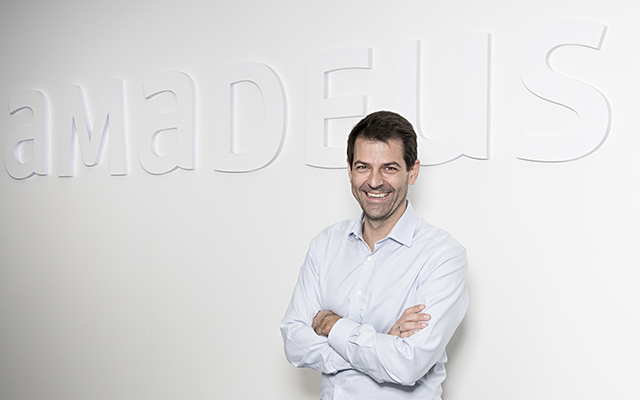
Amadeus says it is one of the first providers to have achieved level three certification both as an aggregator and IT provider

Despite acknowledging the power of innovative technologies to enable new ways to sell, a majority of Asia-based airlines surveyed by Sabre admit to falling short of their ideal ancillary sales vision.

Sabre Corporation recently surveyed 30 Asia-based airlines, and the results indicate that carriers are re-evaluating their strategic focus as they think creatively about new ways to generate revenue and increase yield.
Nearly 80 per cent of airlines surveyed say they did not meet their desired ancillary sales vision

Close to 70 per cent of the airlines who participated in Sabre’s study indicated that two main factors are influencing change: technological advancement and increasing traveller expectations.

With travellers expecting unique, targeted offers from their shopping experience, over half of the survey participants (53 per cent) believe that leveraging data intelligence, whether to gain insights into market trends or passenger behaviour, is a top growth area for their airline.

Yet, 80 per cent of the airlines surveyed claim to not have achieved their desired ancillary sales, and only one in five respondents have identified product differentiation as their airline’s strategic focus.

The results, which were announced by Sabre last week at STX Singapore, demonstrates a significant opportunity for Asia-Pacific airlines to create a personalised retail experience for the traveller as a means to differentiate their products and drive incremental revenue.

“With consumer trends evolving as fast as the markets they serve, airlines have the potential to generate significant growth by efficiently channelling their content with innovative technology solutions that harness artificial intelligence and machine learning,” said Rakesh Narayanan, vice president, air line of business, Sabre Travel Network Asia Pacific.

“Our Beyond NDC programme drives collaboration with airlines and agencies to help them create rich personas and micro-segmented offers using rich data that support their business objectives.”

Ancillary sales have increased by 88 per cent year-on-year in the region, but reports show the same top ancillary requests appear across all markets: baggage, seat selection and meals. While in-flight Wi-Fi is increasingly featured in the top three most popular ancillaries, accounting for a quarter of business traveller requests in Asia-Pacific, there remains room for airlines to partner with technology leaders to help them up the ante on competitive differentiation.

Sabre opined that successful retailers understand that the key to delivering curated experiences lies in tailoring offers to distinct buying personas, requiring a robust data-sciences approach to maximise individual consumer engagement as well as end-to-end profitability.

AirAsia Indonesia, MHTC to promote Penang’s medical tourism sector

0
From left: MHTC CEO's Sherene Azli, Malaysian deputy minister of health Lee Boon Chye, Malaysian deputy minister of finance Haji Amiruddin bin Hamzah, AirAsia Group Berhad’s Kamarudin Meranun and AirAsia Indonesia's Dendy Kurniawan

AirAsia Indonesia has signed an MoU with Malaysia Healthcare Travel Council (MHTC) to jointly promote Penang as Malaysia’s top healthcare tourism destination.

MHTC will arrange medical tourism trips including doctor and hospital appointments, as well as airport pick-up services, for Indonesian passengers of AirAsia visiting Penang for medical treatment.

From left: MHTC CEO’s Sherene Azli, Malaysian deputy minister of health Lee Boon Chye, Malaysian deputy minister of finance Haji Amiruddin bin Hamzah, AirAsia Group Berhad’s Kamarudin Meranun and AirAsia Indonesia’s Dendy Kurniawan

AirAsia will provide exclusive flight discounts to MHTC customers, while AirAsia guests with prearranged appointments made through MHTC will also enjoy additional benefits at participating hospitals, including up to 20 per cent discount on the medical check-up and non-medical bills, as well as in selected F&B outlets simply by showing their boarding pass.

MHTC CEO Sherene Azli commented: “Penang receives around 60 per cent of Malaysia’s healthcare travellers and in 2017 alone, the state’s healthcare travel industry generated half a billion ringgit (US$121 million) in revenue. Among the medical fields that Penang is known for include cardiology, orthopaedics, oncology, neurology, in-vitro fertilisation, ophthalmology and dentistry.

“Initiatives as such will only increase the potential of the state to cater to more healthcare travellers from Indonesia who have discovered Penang to be their preferred destination for healthcare.”

AirAsia Indonesia currently serves Penang with twice-daily flights from Jakarta, thrice daily flights from Medan and thrice weekly flights from Surabaya.

Asia’s best and worst cities for airport transfers: Klook

0

Klook has revealed the Asian cities with fastest and slowest airport-to-city journeys.

Siem Reap was found to provide the fastest journey (26 mins) from airport to city centre, while the trip from Tokyo-Narita takes the longest – almost two hours (100 mins).

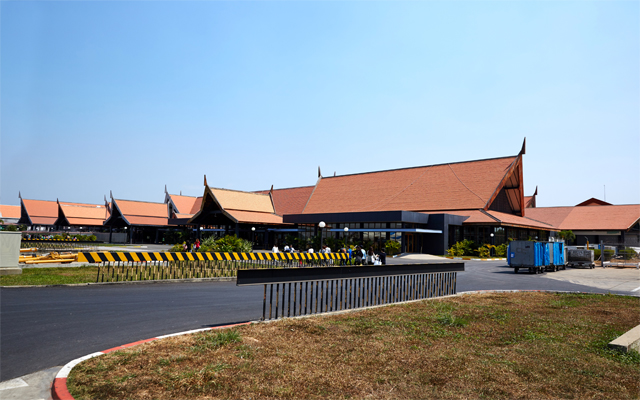
Siem Reap International Airport

Meanwhile, Klook says journeys from Kuala Lumpur, Seoul and Hong Kong airports are most efficient, averaging less than one minute per kilometre.

Car and bus traffic is slowest (from five to 10 minutes per kilometre) when traveling from Ho Chi Minh City, Cebu and Manila to the city.

The travel services booking platform researched 20 major cities across the region, timing each route in-person on a Friday evening during rush hour. It then evaluated the fastest method of transit in each destination — be it taxi, private car transfer, train, bus, or train — as well as distance, time and roadblocks along the way.

A Suite deal at Park Hyatt Bangkok

0

From August 1 to October 31, guests can enjoy a Suite package at Park Hyatt Bangkok when they spend two nights or more at the hotel.

The offer includes accommodation in a Suite (from Park Deluxe); daily breakfast at the Embassy Room; an afternoon tea for two at the Living Room; a three-course set dinner for two at Penthouse Grill; a welcome drink each at the Cocktail Bar or Rooftop Terrace; round-trip airport transfer in a BMW Series 7; fast-track pickup service including buggy service for two; one bottle of Bollinger Cuvee Brut Champagne; and high-speed Internet access throughout the stay.

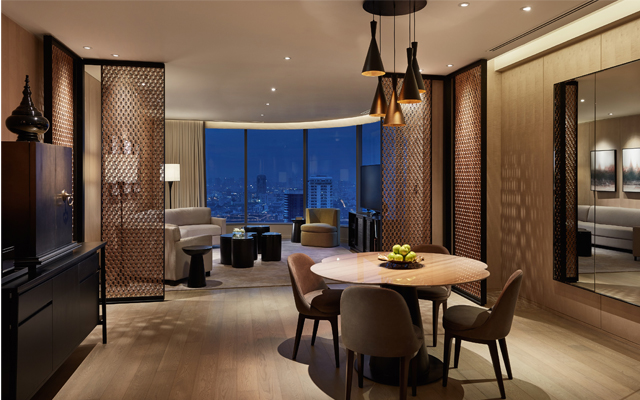
Ambassador Suite Living

To enjoy the deal, book on the hotel’s website with the offer code SUIPKG. Prices start from 22,500++ baht (US$688) per room per night.

Walk In Hong Kong’s Sham Shui Po tour

0
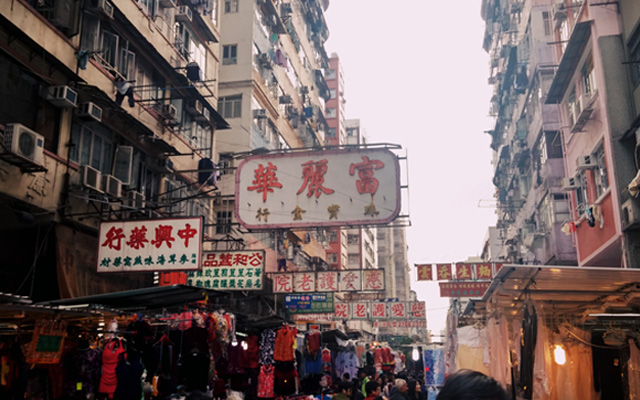
A walk through one of the world's densely populated areas

Why
For those wanting to learn about how locals live, there is no better way than stepping right into the heart of neighbourhoods. Following the success of Old Town Central walks last year, Hong Kong Tourism Board this year repackaged cultural resources of Sham Shui Po, one of the world’s most densely populated areas, to encourage visitors to explore at their own pace.

A walk through one of the world’s densely populated areas

What
The three-hour walking tour set off from Sham Shui Po MTR station in the morning. As a local, I often visit Sham Shui Po to shop and dine, but my knowledge of the area has been confined to the Golden Computer Shopping Center and Apliu Street.

This time, as I’m on a small private group tour with Chan and our retiree tour guide William Ip, I was looking forward to gaining a deeper cultural and historical appreciation of the district.

The extensive itinerary covered Mei Ho House Museum (the first public housing in Hong Kong in 1950s), Jockey Club Creative Arts Centre (JCCAC; a former industrial building transformed into a hub of arts and creativity), Pei Ho Street and Tai Po Road junction, Kung Wo Soy Bean Product Shop, Ap Liu Street Market, and handcraft & lifestyle stores on Tai Nan Street.

What interested me the most was that the area is home to a tapestry of trade, taking in pawn shops, a toy street, as well as small businesses brokering umbrella repair, fabrics and audio equipment.

How
I particularly enjoyed the opportunities for local interaction, such as with an artist at JCCAC. Due to time constraints, however, the group did not get to catch snake queen Ms Chow while at the Shia Wong Hip Snake Soup shop. Still, the staff gave us a peek at the shop’s numerous displays, from live snakes in cages to bottles of snake wine.

I hope to make another visit to Shia Wong Hip Snake Soup to take pictures with the shop’s pet snake, named Kitty, under the supervision of Ms Chow.

Our final stop surprised me, as the shops and building in Sham Shui Po have received a facelift courtesy of HKwalls graffiti, a street art group that invited local and international graffiti artists to leave their mark.

For those wanting more insight and interaction, private tours are available upon request. Prices start from HK$1,800 (US$230), for groups of two to 18 pax. Alternatively for a big corporate groups of up to 200 pax, the company can arrange for multiple guides to be present.

I would also recommend doing the tour in the morning to avoid crowds.

Verdict
There is no better way to explore the city than on foot, to soak in the ambience and rub shoulders with the locals. My knowledgeable local tour guide made a huge difference as he could easily respond to all my burning questions.

Contact
Tel: (852) 55114839
Website: walkin.hk
Email: pcychan@walkin.hk

Indonesia tourism determined to expand air connectivity, outreach with India

0
Chinese visitor numbers dropped to zero after advisory was implemented

After recording strong growth in tourist arrivals from the Indian market in the first eight months of 2018, Indonesia is now stepping up efforts to improve air connectivity between the two countries.

“We are working to renew the air services agreement between the two countries to have more flights. The negotiation for renewing air service agreement will begin this year. We are pushing for direct flights between New Delhi-Jakarta sector,” Sidharto Suryodipuro, Indonesian ambassador to India, said during the New Delhi leg of a sales mission organised by the Ministry of Tourism of Indonesia.

An additional frequency is expected to be added on Garuda’s Denpasar-Mumbai route, launched earlier this year

The ambassador shared that one major Indian private airline and another Indonesian carrier are looking to mount direct flights between the two countries. Presently, no Indian airline flies directly to Indonesia, although two Indonesian carriers operate flights to India.

Garuda Indonesia began its first direct flight between India and Indonesia, connecting Mumbai and Jakarta, in December 2016. The Indonesian flag carrier introduced thrice-weekly flights on the Denpasar-Mumbai route earlier this year, and is expected to add one more weekly flight on the sector this month.

Apart from Garuda Indonesia, Batik Airways is operating flights from Chennai to Medan and Chennai to Denpasar.

“As of last year, all 27 fights per week entitled to Indonesian carriers were utilised but Indonesia AirAsia stopped flying to India post the volcanic eruption in Bali. This left 10 slots per week vacant, so now we are looking at filling those vacant slots before extending our air service agreement with India to add more flights,” said Sidharto.

The Indonesian NTO recently concluded a multi-city sales mission covering Mumbai, New Delhi, Hyderabad and Bangalore. Furthermore, Badung, a regency in Bali with high concentration of tourism activities, also organised a sales mission in August with the Indonesian Ministry of Tourism to visit the cities of Chandigarh, Jaipur, Lucknow and Kolkata.

“We organised sales missions in India in the months of January or February. This time we organised additional sales mission in the month of August that saw participation from 21 Indonesian suppliers. We are planning to organise another one in November as well,” said Raden Sigit Witjaksono, director of marketing region III, Ministry of Tourism, Indonesia.

Indonesia’s target of 700,000 is a 40 per cent increase in its Indian tourist arrivals recorded in 2017. To achieve this target, the ministry recently also signed a strategic agreement with MakeMyTrip, one of India’s leading online travel companies to run promotional campaigns across its platforms to endorse Indian outbound to Bali, Jakarta and other regions in Indonesia.

Rajesh Magow, co-founder and CEO-India, MakeMyTrip said: “Indonesia, especially Bali, is one of the top favourite international destinations among Indian travellers and this partnership will help us tap into the massive potential.”

Nia Niscaya, deputy minister of tourism marketing, Ministry of Tourism, Indonesia, said: “The footfalls of Indian travellers holidaying in Indonesia have skyrocketed in the last couple of years. The ministry is taking additional steps to achieve incremental growth from India such as through our association with MakeMyTrip. We are also looking to extend partnership on the same lines with other major Indian travel companies like Cox & Kings in the near future.”

Amadeus stresses agent education amid NDC revolution

0

NDC is fast becoming a reality as industry adoption of the new standard becomes more widespread, although there remains work to be done to educate agents in understanding and adopting the standard.

Earlier this month, Amex GBT joined the Amadeus’ NDC-X programme to help test and familiarise itself with the new NDC flow of “shop, book, pay”. Gianni Pisanello, global head of Amadeus NDC X programme, said: “We are laying down NDC fundamentals for more airlines and agencies to use.”

Amadeus is on track in progressing with industrialisation of the standard, targeting GUI-readiness by mid-2019, before NDC deployment by 2020, Pisanello shared.

This means travel agents can look forward to a streamlined search, book, pay and service function by next year.

Gianni: on track to making NDC a reality by 2020

For now however, it is still very much about education from a travel agent standpoint. “At the immediate moment, travel agents should be informing themselves – figure out what the standards look like, what (the GDSs are doing with regard to NDC), and how they will deploy it,” said Pisanello.

Shedding light on why it may be worthwhile for agencies to consider NDC –without having to upend existing systems – he said: “Travel agencies are used to fast commands, which makes (the old way of booking) productive for those used to (the method). But for a new (entrant) who isn’t familiar with the commands, NDC is simpler to pick up, as it presents what you would typically find on a website – it’s a matter of search-click-pay.

“Overall NDC works for recruiting people not trained in cryptic commands, while being (slower) than what a pro-user of the command structure is used to. We plan to marry both worlds. “

Pisanello observes that in general, adoption of the standard tends to be slower in Asia-Pacific, although the region is likely to follow the lead of Europe and the US.

Pisanello said: “It’s about market dynamics. Asia’s travel industry is booming, and there is so much to take care of in terms of moving with that growth. In lower-growth markets such as in the US and Europe, there are more opportunities to think about further optimisation. It becomes more a question of priority (than about whether it is fruitful to advance with NDC).

“But once the best practices come through from Europe and the US, people in Asia will think about how they can apply.”

In the NDC revolution, Amadeus sees its role as “removing complexity” for travel agencies and airlines through providing technology solutions – but in the nearer term it is also doing its part to move travel agents forward through education. Last year, it conducted roadshows, both to educate industry players and mine feedback on travel agency needs for solutions design.

More recently, it launched an educational series on its website and worked with IATA on conferences, in addition to disseminating information through NDC champions in the travel agency sphere.

Pisanello said Amadeus is surprisingly on track in its timeline, “an unusual (feat) in the technology world”, but stressed that the NDC revolution was never cut out to be a quick change.

“Within the broader context, the current infrastructure took up to 40 years of optimising for ideas and features (year after year). We are going through a similar process with NDC,” he said.

Beyond the ease of search-book-pay-service lie more complex functions including multi-sector, multi-stop flights and refunds processing. But with “85 per cent of bookings being for point-to-point flights”, Amadeus has its eyes set on the immediate agenda.

E-ticketing coming soon to Thai marine parks

0
View of Phang Nga Bay (Ao Phangnga National Park) from Samet Nang She Viewpoint

Thailand’s Department of National Parks, Wildlife and Plant Conservation (DNP) will introduce an e-ticketing system at marine locations, effectively barring entry by walk-in, the Bangkok Post reports.

Proposed by the State Audit Office and the National Anti-Corruption Commission, the move is meant to regulate the number of visitors and increase transparency in revenue collection.

View of Phang Nga Bay (Ao Phangnga National Park) from Samet Nang She Viewpoint

The e-ticketing system will be rolled out first at Hat Noppharat Thara-Mu Koh Phi Phi Marine National Park in Krabi province, Ao Phangnga National Park and Mu Koh Similan National Park in Phangnga province.

Currently, there are three contenders bidding to become counter-service agents to sell e-tickets: 7-Eleven stores, Krungthai Bank, and Siam Commercial Bank.

Songtham Suksawang, director of the DNP’s National Park Office, told Bangkok Post that the bid winner – to be selected by a committee currently in the process of being set up by the department – will be announced by October.

SIA introduces mobile boarding pass access via Google Pay

0
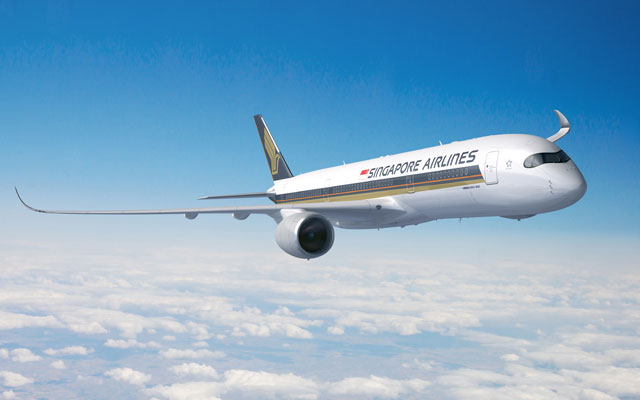
SIA’s A350-900ULR

Singapore Airlines is allowing its customers to use mobile boarding passes on Google Pay, the first time an airline in the Asia-Pacific region is offering such a capability on Google’s digital wallet platform and payment system.

With this initiative, customers can simply produce their boarding pass, which is saved to Google Pay, and proceed straight to the boarding gate after clearing immigration formalities.

SIA enter another partnership with Google

To save their boarding pass to Google Pay, customers need an Android mobile device on which they can use to generate the pass via the SingaporeAir app.

Prior to introducing this feature, SIA had also embarked on other digital projects with Google Flight, Google Now and the more recent Google Home to introduce greater ease in areas of flight information, receiving booking confirmation emails and setting reminders for upcoming flights.

Checking in for flights via a mobile boarding pass on Google Pay is available at the airports across the world. In Asia, cities include Singapore, Bangkok, Bali, Kuala Lumpur, Surabaya, Hong Kong, Seoul Taipei, Tokyo (Haneda and Narita).

Japan, India shortlisted for launch of Uber flying taxis

0

Uber has shortlisted five countries to launch its Uber Air “flying taxi” service, three of which are in Asia-Pacific.

After announcing plans to introduce electric-powered air taxis to Los Angeles and Dallas, the company now says Japan, France, Brazil, Australia and India are in the running for the third launch location.

In a statement, Uber says its criteria for the third international city include having a metropolitan population of more than two million people, dispersed population hubs, an airport at least an hour away from the city centre, and a willingness to back carpooling services.

The move comes amid heightened interest in lightweight, electric-powered, vertical takeoff and landing (VTOL, or eVTOL) aircraft. There are at least 19 companies developing flying car plans, including Boeing and Airbus, according to a report by The Verge.

Uber plans to announce the chosen country in six months, after which it will launch its flying taxi service within the next five years, although it should be noted that the technology is still in its early stages.