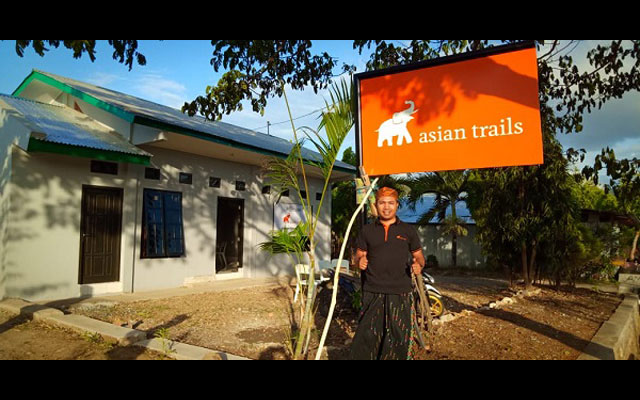
Asian Trails Indonesia is stepping up its presence in the country with the launch of a new office in Labuan Bajo, Flores.
The DMC’s expansion into Labuan Bajo, in addition to Bali, Jakarta, Yogyakarta and the Gili Islands, is driven by Flores’ rising tourism potential, said Asian Trails Indonesia’s managing director Björn Schimanski.
Asian Trails Indonesia’s newest Flores island
Said Schimanski: “Flores island always has had a great touristic potential but only since the last few years we see it slowly taking off. We are only at the beginning of what will be a major tourist destination in Asia.
“I am convinced that especially the Labuan Bajo and surrounding Komodo national park area will boom in the years to come. We can see already new interesting properties opening up and the sheer beauty of the area will make it a must-see destination.”
Alongside this opening, Asian Trails Indonesia is working on expanding its product range on and around the island.
Maeve Nolan has been named director of Luxe by Exo, a premium selection of Asia travel experiences and services launched by Bangkok-based DMC Exo Travel in October 2017.
Maeve will be responsible for servicing Exo’s luxury clientele and leading Luxe business and product development.
She moved to Hanoi in 1998 and has been travelling across Asia ever since. She moved to Bangkok in 2011.
Airbnb is stepping up its offerings in Thailand with the introduction of the premium Plus accommodation in the country.
Just launched in Bangkok and soon to be available in Phuket next month, Airbnb Plus is a new tier of homes “introduced to broaden the appeal of Airbnb and recognise local hosts who go above and beyond to provide outstanding and authentic hospitality”, said Mike Orgill, the company’s country manager, South-east Asia, Hong Kong and Taiwan.
Airbnb Plus has made its debut in Thailand
Airbnb Plus homes have been inspected and verified in person by a third party against a 100-plus point checklist covering cleanliness, comfort and design, while Airbnb Plus hosts are highly rated (4.8+ out of 5) and receive excellent reviews, the company said in a release.
The move to roll out premium-tier listings comes on the back of Airbnb’s launch of Experiences across the country and developing key strategic partnerships with the Thailand Boutique Accommodation Trade Association and the Thailand Ministry of Interior’s Department of Local Administration.
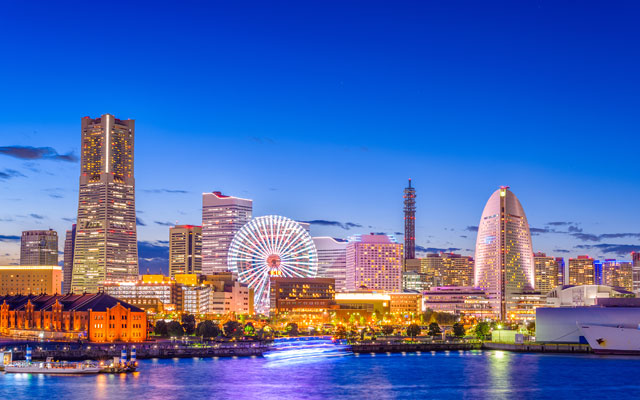
Yokohama readies for its big moment in the international spotlight when major sporting events arrive on its shores
Thirty-seven floors above street level, the construction cranes are in constant motion as the largest hotel in Japan slowly takes shape.
Yokohama readies for its big moment in the international spotlight when major sporting events arrive on its shores
The US$140 million Apa Hotel & Resort Yokohama Bay Tower will have 2,400 guestrooms across more than 58,000m2 of floor space when it opens in 2019.
This comes at a fortuitous time, coinciding with Yokohama hosting matches in the Rugby World Cup, including the final. Moreover, the hotel is in proximity of Tokyo, which will host the Olympic Games in the summer of 2020.
Some 70,000 people will be in the International Stadium Yokohama for the final of the Rugby World Cup, according to Seiichi Hata, manager of the Yokohama Convention & Visitors Bureau’s MICE team.
He further shared that Yokohama will host seven Rugby World Cup Games games, and many other events will take place throughout the city during the tournament. “We anticipate a real bustle around the city,” he remarked.
“This is a great opportunity to raise awareness of Yokohama, particularly among strong rugby-playing countries, such as New Zealand, Australia and some European nations.
“We want to keep that going the following year so we get the ripple effect from the 2020 Olympics and Paralympics,” he said. “We are confident we can do that because a number of the events – such as soccer and baseball – are being held here.”
Yokohama is already an appealing destination for visitors to Japan, thanks to historic sites that arguably have been better preserved than elsewhere in Japan, the Chinatown district, and its strong air, sea, road and rail links with the rest of the country and abroad.
Potentially enhancing its visitor appeal are new developments in the pipeline.
No fewer than 14 new hotels are due to be completed by 2020, delivering an additional 4,500 rooms. Besides the Apa property, the pipeline includes the first Hyatt Regency in the city, with 315 rooms close to the Yamashita Park waterfront district.
Plans are also under way for a new passenger ferry terminal – capable of accommodating the largest ships operated by international cruise lines – and a five-storey complex in the Minato Mirai district that will include a 20,000-seat music venue, a 21-storey hotel, exhibition spaces and offices.
At the InterContinental Yokohama Grand Hotel, Akira Honjo, general manager said inbound visitors are increasing, with foreign guests accounting for around 40 per cent of the total. Americans represent the largest single nationality, followed by Chinese, Taiwanese and South Korean visitors, although the majority remain short-stay domestic visitors from Tokyo and other neighbouring regions.
He anticipates that the global sporting events scheduled for Japan over the next couple of years will serve to raise the profile of Yokohama as a destination and boost the city’s tourism business.
“There are high expectations for the Rugby World Cup, and the Olympics, and we want to use these opportunities to demonstrate Japanese hospitality to the rest of the world,” Honjo said.
Hideaki Furusawa, manager of global sales for the Yokohama Bay Sheraton Hotel & Towers, said his property has already been accepting reservations for the Rugby World Cup and the Olympics, although overall figures for arrivals so far this year have been slightly down on the same period last year.
“The government has set a target of 40 million foreign visitors in the year 2020, and we seem to be on target for that,” he said.
Adventure travel next year is shaping up to be slower, quieter, smarter and greener
The need for downtime, concerns about overtourism and the dual desires to travel sustainably and to have informative experiences are the major influencers on adventure travel in 2019, according to adventure travel specialist, World Expeditions.
Adventure travel next year is shaping up to be slower, quieter, smarter and greener
Travel less, see more
Travel itineraries such as a multi-day trek or a cycling journey allow travellers to switch off and immerse themselves in the natural landscape and puts them in touch with their senses in a way that is becoming a luxury for many people.
“It’s a case of travelling less and seeing more – rather than travelling more and seeing less – that is inspiring many people to undertake slow travel,” says World Expeditions CEO, Sue Badyari. “When your body is your vehicle and you are immersed in your surrounds, life slows down.”
Quieter locations
Publicity about over-tourism is encouraging more confident travellers to look beyond replicating what they may see on social media of friends’ travel.
World Expeditions reports a significant increase in enquiries for the company’s range of exploratory expeditions in remote regions and in alternative treks in better known destinations.
Badyari said: “We’re finding that more confident travellers are less interested in replicating the travel experiences of others that they may see on social media and more interested in seeking out lesser visited destinations and trails.”
More information, more heart
Travelling with an expert adds a dimension to a trip that is not possible otherwise, and creates sought after experiences, World Expedition notes.
Being a “thoughtful traveller” and ensuring the places we visit are positively impacted by our visit is a priority for many travellers. Child safe tourism, animal welfare, conserving environments and cultures will remain important aspects of the travel experience, World Expeditions foresees.
Moreover, in 2019, many people will be focussed on reducing their use of plastic by taking refillable water bottles and avoiding buying single use plastic bottles.
Next year, the company will roll out a carbon-neutral project across all itineraries, which will be analysed for carbon outputs and the costs of mitigated and built into the trip cost.”
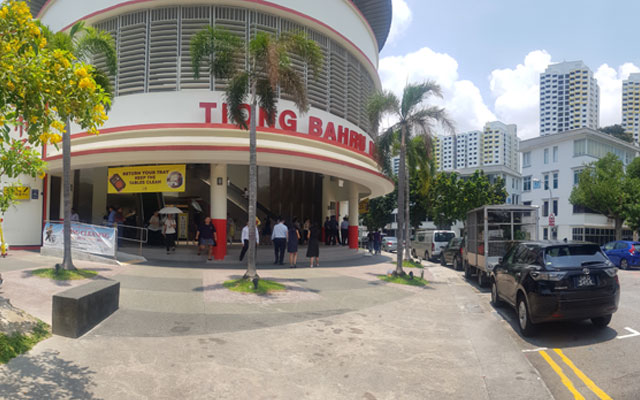
From December 1, 2018, Grand Copthorne Waterfront Hotel will roll out a complimentary half-day tour Tiong Bahru Heritage Tour, available to any guest who books a stay at the property.
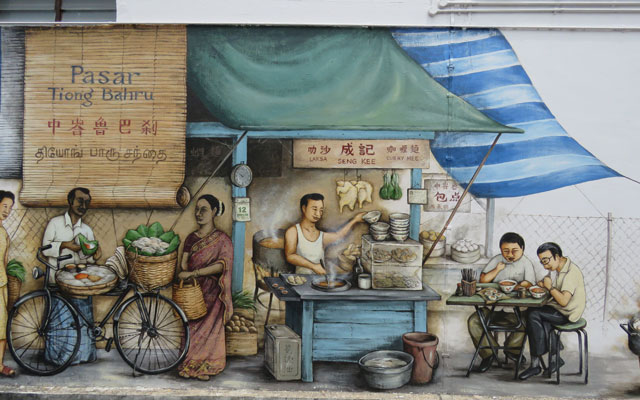
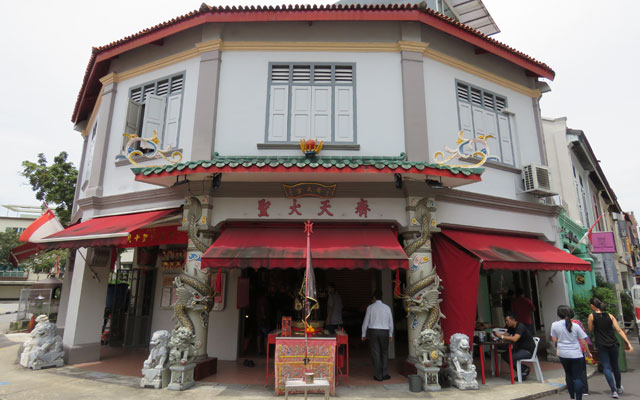
Running twice-daily every Saturday at 09.00 and 13.00, tours includes return transfer by coach, certified English-speaking guides from Tour East Singapore, and sampling of local dishes such as chwee kueh, min jiang kueh, you tiao, traditional kaya butter toast at Tiong Bahru Market. Other places of interest the tour visits include the Qi Tian Gong Temple; wall murals in the district; Seng Poh Garden; and Galicier Pastry, a four-generation-old bakery which sells traditional nonya kueh.
1 of 4
Tiong Bahru Market
Mural in the Tiong Bahru District
Qi Tian Gong Temple
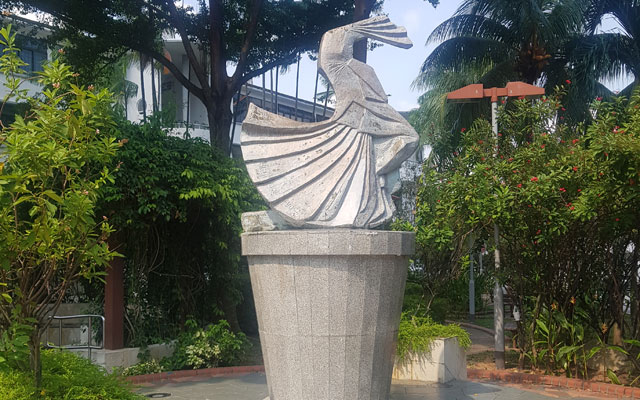
Dancing Girl Sculpture in Seng Poh Garden
In addition, the Grand Copthorne team will also create in-house activities revolving around the cultural festivals in Singapore for guests.
Readers who type “LOCAL” while booking rooms on the Grand Copthorne Waterfront Hotel’s website will receive a three per cent discount.
The ‘Live Like a Local’ campaign is supported by Singapore Tourism Board’s Experience Step Up Fund that encourages experience development projects that enhances visitors’ experience in Singapore.
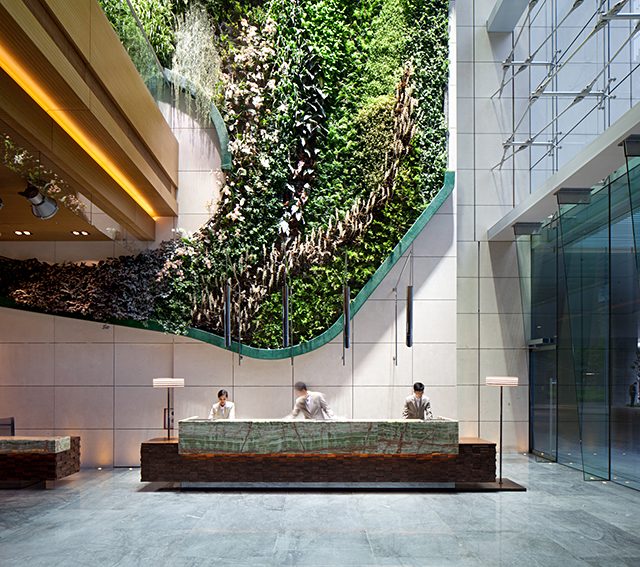
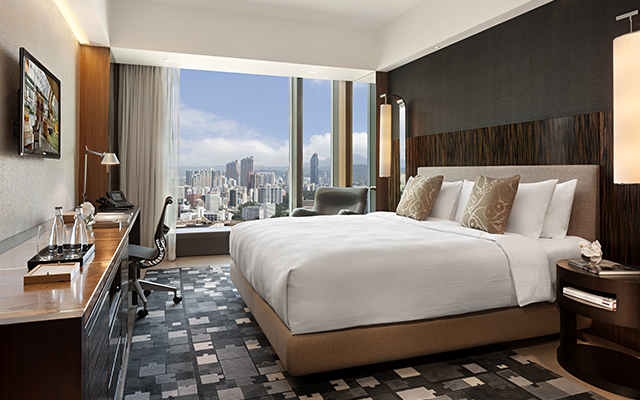
Hotel ICON is an award-winning luxury property housing 262 upmarket rooms. Located in the bustle and energy of Tsim Sha Tsui in Hong Kong, Hotel ICON is a modern, uniquely designed property with a commitment to delivering unrivalled guest comfort and featuring a wide range of dining choices for both leisure and business guests.
In addition to being a top-rated business hotel on TripAdvisor, Hotel ICON is also a training school for the next generation of hospitality leaders. Owned by Hong Kong Polytechnic University, Hotel ICON was opened in 2011 by Richard Hatter, the hotel’s general manager and adjunct professor, and operates as a research and training facility for the School and Hotel of Tourism Management in Hong Kong.
Photo: Suite bedroom
Attracting Higher-Value Guests in a Competitive Market
“Hotel ICON operates in one of the world’s most competitive hospitality markets and at very high occupancy levels—all of which means there is little margin for pricing error,” said Hatter. “Our executive team is always looking for ways to not only enhance guest experiences, but also improve the returns from our inventory and maximize revenues.”
Hotel ICON has a large inventory of upmarket club rooms and suites boasting superior amenities and accounting for 38.5% of the hotel’s total room inventory. Demand from guests, however, has traditionally been overwhelming for the property’s standard rooms, compared to higher-priced rooms. Demand for standard rooms from January to December 2017 was 126% compared with 40% for club rooms and 54% for suites.
“Our executive team was challenged by how to best lift revenues when market demand for our room inventory from guests was largely focused on lower-rated room categories,” said Hatter. “We quickly realized we needed a new approach with a best-of-breed revenue management system that could assist with room-type pricing and yielding.”
Photo: Lounge area
Returning to the Market Leader
Hotel ICON had been working with a different global revenue management system (RMS) provider but had experienced limitations with the system. Given the advanced automation and room-type management needed, Hotel ICON chose to work with IDeaS, a company the management team had previously enjoyed a successful relationship with.
“We had used a different IDeaS product previously, as well as another revenue management solution, and were confident that IDeaS G3 RMS’s unique ability to assist with room-type management and yielding, along with IDeaS’ solution for meeting space revenue management, was the best choice to drive revenue and profitability for the next stage in our revenue management journey,” said Hatter.
Through its adoption of IDeaS G3 RMS, Hotel ICON achieved optimal RevPAR performance through rate increases and by selling the higher room categories at suitable market prices. Importantly, this process helped minimize overbooking entry-level rooms and forced upgrades, a key area of opportunity many hoteliers are challenged by in the hyper-competitive Hong Kong market.
“Previously, increased demand would simply push the selling price of our room inventory higher across all room categories,” said Hatter. “Today, with the advanced IDeaS G3 RMS, Hotel ICON can accurately forecast and price our room inventory based on different room categories. This is a significant development for our property.”
Early Rewards
Since returning to work with IDeaS and implementing the industry leading G3 RMS solution, Hotel ICON has experienced significant improvement in the performance of the property’s higher-value room categories. Within three months of the G3 RMS installation, Hotel ICON saw year-on-year RevPAR growth of 4.51% for its higher-value club and suite rooms, driven by a 7.35% increase in ADR.
“When we looked to update our approach to revenue management, we committed ourselves to changing our strategies over the long term,” said Hatter. “We are pleased that since returning to work with IDeaS, Hotel ICON has experienced tangible improvements in the performance of our club and suite room categories, which has contributed to a signficant uplift in revenue over a short space of time.”
Thinking Outside the Guest Room
Going forward, Hotel ICON will also implement Smart Space by IDeaS, making their property the first in Hong Kong and China to benefit from the innovative, web-based tool which provides unparalleled visibility into meetings-and-events demand. Smart Space seamlessly pulls data from other sales tools to strategically manage function space events, allowing hoteliers to collaborate and create ideal pricing scenarios for group business.
“The positive results we have witnessed with IDeaS to enhance revenues from higher-value room categories gives us tremendous confidence we will see similar improvements from our meetings and events,” said Hatter. “We look forward to continuing our growth with IDeaS as we aim to enhance our total revenue performance.”
About IDeaS
With more than 1.6 million rooms priced daily on its advanced systems, IDeaS Revenue Solutions leads the industry with the latest revenue management software and advisory services. Powered by SAS® and with nearly three decades of experience, IDeaS proudly supports more than 10,000 clients in 124 countries and is relentless about providing hoteliers with insightful ways to manage the data behind hotel pricing.
IDeaS empowers clients to build and maintain revenue management cultures—from single entities to world-renowned estates—by focusing on a simple promise: Driving Better Revenue.
IDeaS has the knowledge, expertise and maturity to build upon proven revenue management principles with next-generation analytics for more user-friendly, insightful and profitable revenue opportunities—not just for rooms, but across the entire hotel enterprise. For more information, visit www.ideas.com.
About Hotel ICON
Unlike any other, Hotel ICON is an upscale Hong Kong hotel in the heart of Tsim Sha Tsui East. Standing as a testament to Hong Kong’s creative energy and vibrant arts scene, Hotel ICON showcases work from the city’s celebrated designers and the world’s most acclaimed architects. Offering the ultimate in comfort and committed to service excellence, Hotel ICON’s 262 stylish guestrooms comprise seductive extras, including complimentary wired and Wi-Fi internet connections, smartphone with unlimited mobile data and an ultra-slim 40” Ultra High Definition LED TV. Located on level 9, Hotel ICON’s Angsana Spa is a tranquil oasis while the harbour-facing outdoor swimming pool and fitness centre allow guests to exercise while enjoying views of Hong Kong Island’s spectacular skyline.
With a maximum capacity of 580 persons, Hotel ICON’s grand Silverbox ballroom is the ideal venue for a celebration or theatre-style conference. Hotel ICON houses three restaurants: Above & Beyond, The Market and GREEN, providing guests with exceptional quality of the food and impeccable service. wallpaper* magazine included Hotel ICON in its 2011 list of the world’s Best Business Hotels and DestinAsian included the hotel in its Luxe List 2011. The premier hotel has also won in 2 categories including the Top 25 Hotels in Asia in the 2017 TripAdvisor Traveler’s Choice Awards. Join us by following our official social media accounts at @hoteliconhk and share your memorable moments with us by using the hashtag #hoteliconhk.
After years of receiving mostly domestic tourists, Belitung is now getting ready to make its mark in the international travel community, with its first regency tourism board and destination branding in the works as well as new direct flights from Singapore.
Data released by Belitung Tourism Office showed there were a total 380,941 arrivals in 2017, comprising of 371,338 domestic visitors and 9,603 foreign visitors. This was an increase over 2016, when 292,885 visitors arrived in Belitung, 285,773 domestic and 7,112 foreign visitors.
The man-made Lake Kaolin in Belitung
Isyak Meirobie, the newly appointed deputy regent of Belitung told TTG Asia: “We are trying to promote Belitung as a holiday destination to grow visitor arrivals. I’m planning to form the Belitung Tourism Board which will be responsible for destination promotion.”
He also intends to get the destination ready for tourists by standardising tourism boats often used for island hopping, in addition to working on visitor-friendly facilities such as hospitals, land transportation and smart city digital capabilities.
Meanwhile in the private sector, the Belitung Chapter of the Association of the Indonesian tours and travel Agencies (ASITA) is stepping up regional promotions.
Karmila Santy, chairman of ASITA Belitung Chapter, said the association was conducting more sales missions, attending trade shows as well as organising fam trips for international agents and media.
Karmila lauded Garuda Indonesia’s recent launch of Singapore-Belitung flights. So far, visitors considering Belitung have ended up opting for other destinations as access to the former had to be through Jakarta, Batam, Pangkal Pinang and other gateway cities.
“Thankfully, now there is direct Singapore-Belitung flights by Garuda Indonesia. This gives us great hope with Singapore and Malaysia still the biggest (potential) markets for Belitung,” said Karmila.
Since last year, ASITA Belitung has been actively selling to the Singapore market. ASITA also held a sales mission several times to Singapore to offer Belitung.
Karmila explained: “In future, we want to develop Chinese tourists. Belitung is in accordance with the characteristics of Chinese tourists who like the beach, and Singaporean who want to relax at the weekend.”
Yudianto Evan Setiawan, director of the Billitonesia Tour, has seen growing interest from niche segments such as scientist and geopark adventure tourists.
“The government efforts to register the Belitung geopark (for UNESCO consideration) received a good response from adventure tourists. We also see a lot of scientists who are interested in coming to research the nature of Belitung,” he continued.
Up to now, however, he admitted that Belitung’s potentials have been latent, being constrained by infrastructure and lack of creativity in packaging tours.
Yudianto added: “Belitung has 200 islands, and most of them have not been explored. So tourism potential is still large, and tourists should not be bored because there are always new islands and attractions to be explored, including geoparks for nature and adventure seekers.”
Home to architectural marvels like the Great Wall, China – with its myraid attractions – should attract more inbound tourists
China may be the world’s largest tourist source but the country is punching below its weight as a global travel destination. Despite its splendid history, culture and culinary traditions, the number of international arrivals to China has yet to surpass 30 million, a meagre figure compared to the 122 million Chinese outbound travellers in 2016.
The vast “inbound tourism trade deficit” was an issue that Ctrip co-founder and chairman James Liang sought to highlight during his keynote address at the ITB China conference in Shanghai earlier this year.
Home to architectural marvels like the Great Wall, China – with its myraid attractions – should attract more inbound tourists
To put things into perspective, Liang compared China’s 29.2 million inbound travellers (excluding Hong Kong, Macau and Taiwan) with the US (75.1 million), Japan (28.7 million), the UK (37.6 million), India (14.6 million) and Turkey (39.9 million).
“China received just 30 million in actual figures for arrivals, which have not changed in years,” Liang remarked, a far cry from its booming outbound sector.
Visa policy a hindrance
To get a handle of vast discrepancy between China’s inbound and outbound figures, the Ctrip top honcho compared the country’s visa policy with that of others.
China has just 14 countries on its visa-exemption list, significantly less than the US (38), Japan (68), the UK (56) and Turkey (78). Only India, with a similar population size as China, allows fewer countries visa-free entry (three), although it also has an e-visa system in place, Liang noted.
Of the opinion that China’s restrictive visa policy is standing in its way to attract more international arrivals, Liang added that according to UNWTO, there are only five other countries in the world with stricter inbound visa restrictions than China, namely Nigeria, Gabon, Pakistan, Angola and Saudi Arabia.
China Tourism Academy’s head of international tourism research Yiyi Jiang agrees that restrictive visa policy poses a hindrance to visitors, but also argues that the Chinese inbound sector is more developed than the outbound sector, which only took off after 2000.
“China’s inbound tourism market has been opened since the country’s economic reform (in 1978), so the market can’t grow forever. It’s already a mature sector,” she posited.
As well, the Chinese economy has grown by leaps and bounds in the intervening years, pushing up living costs and salaries. What hasn’t changed as fast though are visitor perceptions, with potential travellers still viewing China as the world’s factory and a destination with cheap prices, Exo Travel China’s managing director Olivier Marchesin asserted.
“Real estate today in the big Chinese cities is much more expensive than in their European and American counterparts, so this impacts everything in the market, from salary to food,” he shared.
“When we send China quotations, (clients) are surprised by the prices. They often give up (on visiting China) when they see the rates.”
Rolling out the welcome mat
The easiest way to get around China’s shortfall in inbound tourism trade and foreign currency income is adopting a more welcoming approach in its visa regulations, Liang opined.
While foreign countries have adapted visa regulations to attract Chinese outbound tourists, he said China should likewise improve its tourist attractiveness through a less restrictive visa policy, even if the move is not reciprocated.
“If other countries want to restrict this flow of tourism (through visa policies), we shouldn’t reciprocrate. Why hurt ourselves?” questioned Liang.
Visa relaxation aside, Liang also wants airport development in China to be improved, as departure and landing fees in China’s airports are one of the world’s highest while high population cities like Suzhou, for instance, still has no airport.
He also sees ample opportunities in rail travel, which will place destinations further afield within one hour of hubs like Shanghai and Beijing.
In the march for progress, China needs to pay attention to retaining the charms of old living quarters like the Beijing hutong and Shanghai longtang, according to Marchesin. “Giving better living conditions for the residents in such places is understandable, but closing all small restaurants and the likes will push the tourists away,” he stated.
The ability to tell “a good story of China”, according to Jiang, is hence key to promoting the country on the global travel stage, focusing on its modern achievements and present way of living to match its tourism appeal with its economic development and world influence.
Believing that inbound tourism development is closely tied to a country’s progress, Jiang is certain that China’s One Belt, One Road foreign and economic policy will improve China’s image overseas and create new charm for the country as a travel destination.
Marchesin concurred: “Chinese history is amazing, but Chinese development is also exciting sometimes. My guests are really amazed with the new China, which they never expected before their visits.”
Amid the strong competition for tourist dollar in Asia-Pacific, China should invest more in tourism marketing overseas, urged Hemant Kaushik of Exotic Holidays, an Auckland-based travel firm specialising in Asia.
“China is not investing enough in tourism marketing, unlike Thailand, Malaysia and Singapore which are supportive of trade and also give strong marketing support to agents,” he said.
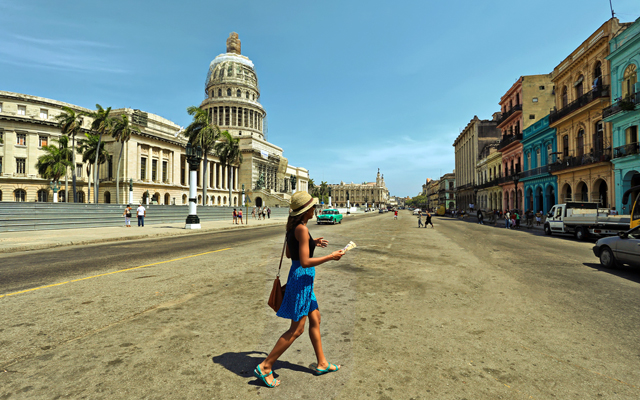
Cuba, which has in past years seen the fast boom and bust of the American feeder, is now targeting APAC's high-end travel market
Asia-Pacific’s luxury travel markets are attracting new suppliers from non-traditional destinations, hoping to bank in on the recent interest they’re seeing in their countries.
For the first time this year, representatives from Cuba and Rwanda participated in Australian luxury trade event Luxperience, telling TTG Asia they are encouraged by the response from agents.
Cuba, which has in past years seen the fast boom and bust of the American feeder, is now targeting APAC’s high-end travel market
“We noticed there is much more demand for Cuba as a destination from Australia and New Zealand,” said Senses of Cuba’s general manager, Bernd Herrmann.
The demand increase is seen from Asia-Pacific in general, but Australia and New Zealand are particularly important for higher-end travel and incentive groups, he added.
Meantime Rwanda introduced itself to the luxury market with a delegation of five tourism companies at Luxperience, including the Rwandan Development Board, which is responsible for tourism.
“Statistics show Australia is the number three source market for gorilla trekking so there’s a lot of potential,” said One and Only’s Nyungwe House’s marketing manager Bonita Mutoni. “We want to make sure we are in market trying to understand the needs and better sell our destination”.
Linda Liu, chief marketing officer for China’s Nuo Travel says she was keen to find out more about Rwanda’s offering as her company was getting more requests for Africa from clients.
“Rwanda is a very special destination especially for families with kids,” she told TTG Asia. “Our clients are interested in opportunities for their children to see animals in the wilderness and to learn about environmental issues”.
But some agents expressed concern that destinations like Cuba and Rwanda do not yet offer a total luxury product.
“(They are the kind of destination) people want to tick off their bucket lists,” said Anne Mullins from Mobile Travel Agents. “You have to sell them to the right clients, especially something like gorilla trekking where clients have to be fit to see them in their natural habitat”.
Both Liu and Mullins also expressed that clients need to be made aware that hotels in Cuba aren’t on par with international standards.
However, Herrmann said Cuba is well on the road to developing into a luxury offering with new hotel chains like Kempinski and Banyan Tree, and quality gastronomic offerings now in market.
Similarly in Rwanda, Mutoni noted that brands like Singita and Wilderness Safaris have joined One and Only to appeal to affluent travellers.
Mutoni also observed that Rwanda’s recent efforts to start courting Asia by participating in travel fairs in Hong Kong, Beijing, Singapore and Shanghai this year are paying off. “The response has been fantastic,” she said. “It was the first time I’ve been in market and been able to confirm bookings in the space of a month, which has never happened before”.
[Senses of Cuba’s Bernd Herrmann: increasing demand from APAC, with Australia and New Zealand of particular importance]