Park Hyatt Auckland has appointed Lisa Breckon as director of sales and marketing.
She has more than 20 years of experience in the hospitality industry and was most recently director of sales and marketing at CPG Hotels, where she managed the sales and marketing function across 10 properties and oversaw the launch of the Fable Hotels & Resorts brand in New Zealand.
Her expertise includes sales strategy, digital marketing, brand development and revenue optimisation. She also has experience in building teams and client relationships.
The Greater Mekong Subregion (GMS) is anticipating a visitor surge in the coming years – from 72 million in 2019 and 65 million in post-Covid 2023 – to reach a predicted excess of 85 million by 2027, according to the Mekong Tourism Coordinating Office. This projection has highlighted the importance of visitor management to protect the environments and communities that call GMS destinations home.
“What happens when visitors love a place too much? We see overflowing waste, overcrowding and communities pushing back against tourists. That’s why visitor management is key to saving what we love,” said Chumpol Musiganont, deputy director-general of the Designated Areas for Sustainable Tourism Administration in Thailand.
Sherpas help tourists with their luggage as they ascend the mountains in Phu Kradueng National Park
Speaking at the Mekong Tourism Forum in Luang Prabang, Laos in June, Musiganont added: “Poor experience leads to fewer return visits, while effective management enhances quality, protects heritage and ensures community equity.”
Common techniques
Musiganont pointed to tools used to control impacts and enhance visitor experience. Zoning and spatial planning is a common technique, where specific zones are designated for activities, such as tourism, conservation or residential use.
Timed entry and booking systems, including advance reservations and ticket quotas, can be effective in managing visitor flow during peak periods. Additionally, digital tools are proving key, such as smart visitor monitoring using apps or Internet of Things sensors, to track visitor numbers, patterns and behaviours.
“This is a good way to learn how many people there are and where congestion occurs,” said Musiganont, adding that data can help with informed decision-making and planning.
Thailand has been able to better manage tourist flows with the QueQ app, which allows visitors to reserve entry to popular attractions and venues. To date, at high demand sites, QueQ has reduced the average waiting time by 38 per cent.
A code of conduct for tourist is also essential for visitor management. Musiganont recalled how massive Chinese inbound volumes to Thailand earlier had resulted in friction between visitors and residents.
He said: “Thai people complained about improper behaviour. That happened because they (the tourists) were never informed about how to conduct themselves. Foreigners must be informed of the code of conduct.”
Finally, he recommended involving local communities. “Engaging local residents in decision-making and benefit-sharing, while fostering stewardship and cultural integrity is important to gain local support,” he stated.
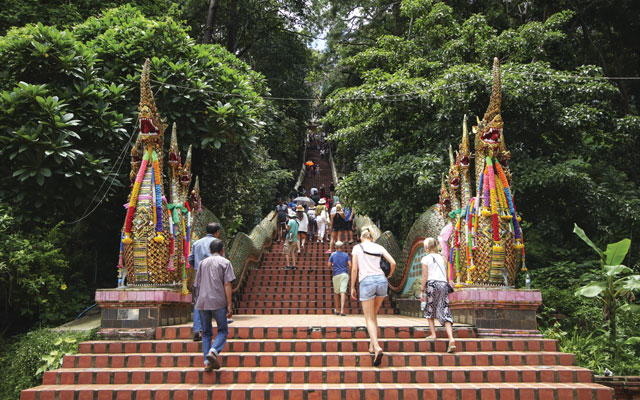
Wat Phra That Doi Suthep in Chiang Mai,Thailand
Easing congestion in Thailand
The small mountain of Doi Suthep in Chiang Mai province, Thailand is surrounded by a national park and is home to the famed Wat Phra That Doi Suthep Buddhist temple. This destination receives millions of visitors annually.
Visitorship surges especially on weekends and during religious festivals, leading to parking issues, littering and noise.
“The visitor experience and site integrity were under pressure. Many who had to wait in one place felt upset and complained,” Musiganont said.
A raft of actions was introduced. This included enforcement of one-way traffic, zoning, regulation of vendor stalls, and installing signs and behavioural guidance encouraging quiet and respectful conduct in sacred areas.
It also trialled the QueQ app, which reduced waiting times during busy periods by 32 per cent. During the trial period, all of these tools combined reduced temple congestion by 40 per cent and complaints by 50 per cent, while increasing visitor satisfaction by 27 per cent, according to Chiang Mai Tourism Office.
Thailand’s Phu Kradueng National Park is now working on strategic visitor management. It is popular with visitors hiking the 5.5km trail to camp overnight at its summit. The large volume of visitors results in up to 180kg of waste dumped daily at the summit, which attracts elephants. Trails are also erodied, making it inaccessible to the elderly and disabled. Furthermore, congestion issues are common on weekends.
To overcome this, the park has unveiled ambitious plans to introduce a cable car system and shuttle hub. App-based queuing and reservation systems will be introduced, as well as visitor zoning and capacity control, and wildlife and visitor tracking tools.
The project is currently under Environmental Impact Assessment, but predicted benefits include reduced trail erosion and improved waste management, minimising wildlife disturbance, and increased access.
Musiganont said: “Visitor management isn’t about limiting tourism, it’s about shaping it. Smart tools, like zoning and digital queuing, are already making a difference.”
He urged GMS tourism leaders to invest in capacity-based infrastructure, such as smart queuing and controlled access, engage local communities as custodians and co-designers, support legal reform and policy innovation that enables sustainable solutions in protected areas, and use data to guide action.
Taiwan is stepping up efforts to grow inbound tourism and guide visitors beyond its capital with new routes, nature trails and island attractions.
Huang Shih-Fang, deputy director general of the Taiwan Tourism Administration, told TTG Asia that while arrival targets were missed in 2024, the outlook for this year is stronger.
Taiwan showcased its destinations at the recent PATA Travel Mart to boost regional visibility
So far, arrival numbers have been encouraging, with 4.2 million tourist arrivals in the first half of this year, a 10 per cent increase from the same period last year. Its top target markets for inbound tourists are Japan, Hong Kong, Macau and South Korea.
The Taiwan Tourism Administration is actively working to promote Taiwan overseas through partnerships and events. These included participation in travel tradeshows such as Singapore’s NATAS Holidays 2025 and the PATA Travel Mart in Bangkok, and the upcoming Tourism EXPO Japan.
Taiwan also aims to encourage visitors to explore all of the island, beyond its capital of Taipei.
In February, the Pingtung County Government launched eight uniquely themed travel routes that highlight the southernmost county’s nature and cultural diversity through a series of leisure activities.
Other efforts include promoting sustainable travel through the island through the use of public transport. Huang shared that the Tourism Administration is working with national parks to promote hiking trails and tours.
He noted that the New York Times featured Alishan as one of its 52 destinations to travel to this year, which would help increase its visibility among international tourists, and mentioned the Alishan Forest Railway, a 113-year old train that was originally a logging train and now a popular tourist attraction in Chiayi county.
He also shared about the Matsu islands off the north-west of Taiwan, renowned for its bioluminescence or ‘blue tears’ phenomenon visible at certain times of the year off the coast.
YTL Hotels has acquired the 380-bedroom Thistle Hotel in Johor Bahru, marking the group’s latest investment in Malaysia’s southern region.
The property will undergo a comprehensive refurbishment and is scheduled to reopen in 2026 as a five-star hotel. The hotel will feature a range of amenities, including premium accommodation, dining options, meeting and event spaces, and leisure facilities for business and leisure travellers.
The 380-bedroom property will be refurbished and reopened as a five-star hotel, expanding YTL Hotels’ presence in southern Malaysia
The acquisition strengthens YTL Hotels’ presence in Malaysia while expanding its global portfolio. Further details on the project and design will be released as development progresses towards the 2026 opening.
With Johor Bahru experiencing growth and transformation, Francis Yeoh, executive chairman of YTL Corporation, said: “This investment represents our ongoing commitment to Malaysia’s tourism landscape, delivering memorable stays that combine exceptional service with thoughtfully designed experiences.”
Trip.com has launched a Free Layover Tour Service at Hong Kong International Airport, allowing travellers with layovers of seven hours or more to explore the city. The service offers six half-day itineraries, three free and three premium, all including guided transport and English-speaking guides.
The free tours take participants through cityscapes, heritage sites, and natural attractions. Highlights include a visit to Inspiration Lake and Ma Wan Village on the Serenity & Stories tour, the Pei Ho Street Market and Wong Tai Sin Temple on the Heritage and Local Lifestyle Citywalk, and the West Kowloon Cultural District and Avenue of Stars on the Victoria & West Kowloon Waterfront Journey.
Trip.com introduces free layover tours at Hong Kong International Airport, giving travellers time to explore the city between flights
The premium tours, requiring advance booking, include a Lantau Island half-day tour with the Ngong Ping 360 cable car and Big Buddha, a Peak tour featuring colonial architecture and Victoria Peak, and the Tai O Water Village tour exploring traditional stilt houses.
All tours last about four hours, accommodate up to 20 guests, and include airport transfers with fast-track re-entry for onward flights.
Bookings can be made via the Trip.com app, website, or on-site at designated airport counters.
Terra Madre, the global gathering created by Slow Food and known for its biennial Salone del Gusto in Turin, Italy, will hold its first regional edition in Asia and the Pacific in the Philippines from November 19 to 23, 2025.
The five-day event will be themed From Soil to Sea: A Slow Food Journey Through Tastes and Traditions. Terra Madre Asia & Pacific (TMAP) will bring together farmers, fishers, indigenous leaders, chefs, academics, youth, and cultural advocates to celebrate food biodiversity and promote sustainable food systems rooted in tradition, fairness and environmental care.
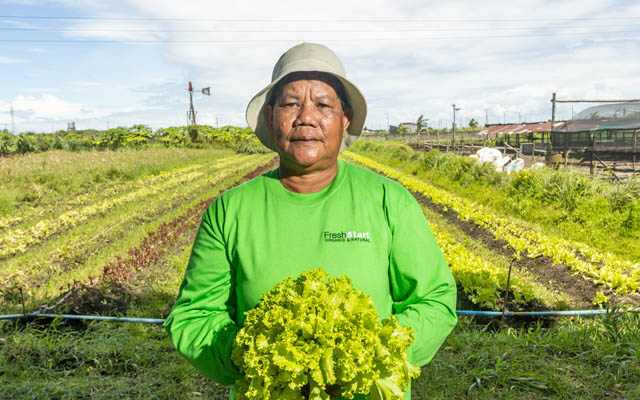
Fresh Start Organic Farm in Hacienda Maquina, Silay, showcases local farming traditions in Negros Occidental
Held at the Provincial Capitol Lagoon in Bacolod City, Negros Occidental, the event is expected to attract 2,000 delegates from over 20 countries and thousands of regional visitors.
Ramon “Chin Chin” Uy Jr, Slow Food councillor for South-east Asia, said the gathering will provide a platform where grassroots knowledge can influence policy and tradition can inspire innovation. Paolo Di Croce, general director of Slow Food, described the event as a chance to strengthen regional networks, launch strategic initiatives such as Slow Food Travel, and highlight the shared culinary traditions of Asia and the Pacific.
The event marks the designation of Bacolod City as the Center for Sustainable Gastronomy and Negros Occidental as the Organic Capital of the Philippines, building on previous Terra Madre Visayas events.
Activities will include thematic spaces and exhibits highlighting regional staples such as rice, spices, soy, and taro; educational programmes for children and adults on taste and biodiversity; coffee-focused workshops; public talks and conferences on sustainable agriculture; guided tastings and cooking demonstrations; and spaces dedicated to organic farmers, sustainable drinks, and street foods. A communal dining area will feature dishes from all 61 barangays of Bacolod, turning the event into a living showcase of local heritage.
The programme also includes an opening ceremony, official government welcome dinners, and curated ticketed dining experiences, reflecting collaboration between Slow Food, the city and provincial governments, national agencies, and local partners.
Location
The six-hectare resort overlooks the Gulf of Thailand on a stretch of coastline in Kep in southern Cambodia that has recently been developed as part of a government-led beautification programme. It is a stroll from the town’s famous crab market and a short tuk-tuk ride to the town centre, main beach and national park.
Accommodation
While Knai Bang Chatt has been welcoming guests for 22 years, its rebranding to Knai Bang Chatt by Kep West marks the start of a new chapter, not only for the resort, but for the quaint coastal town as a whole.
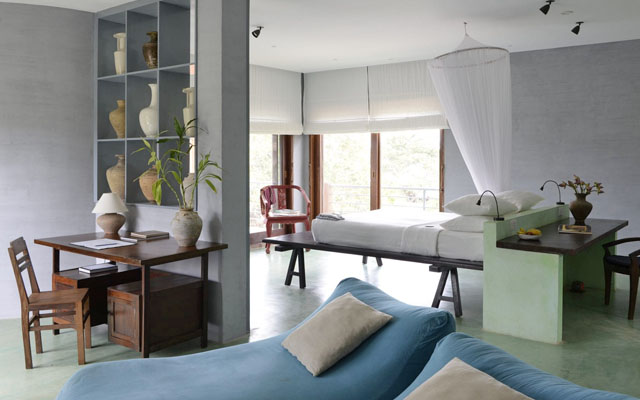
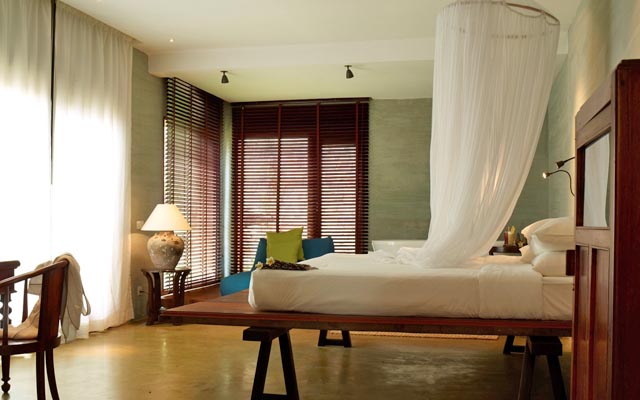
The 18 rooms span five types, with each mirroring the resort’s wabi-sabi spirit. Each blend minimalist luxury with restored modernist architecture. While they feature a mini bar and coffee and tea facilities, the rooms come without a TV, which the owner claims distract from being present in the moment. However, there is a small meeting room on-site with a TV.
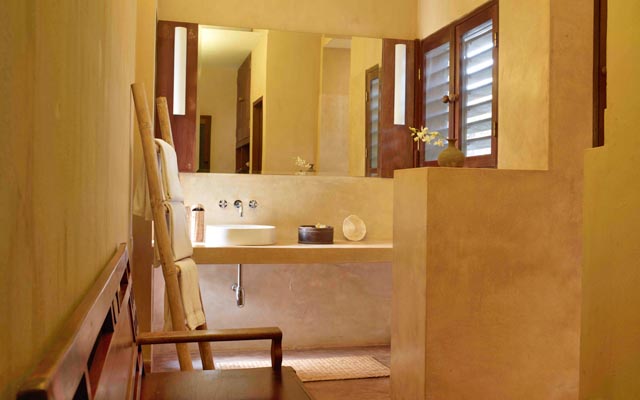
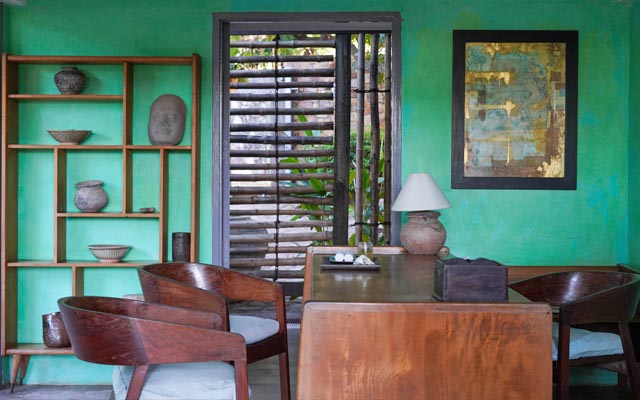
I stayed in a spacious superior room that spanned 38m² and oozed understated elegance, featuring contemporary raw concrete floors and walls, teak wood and traditional Cambodian artefacts.
F&B
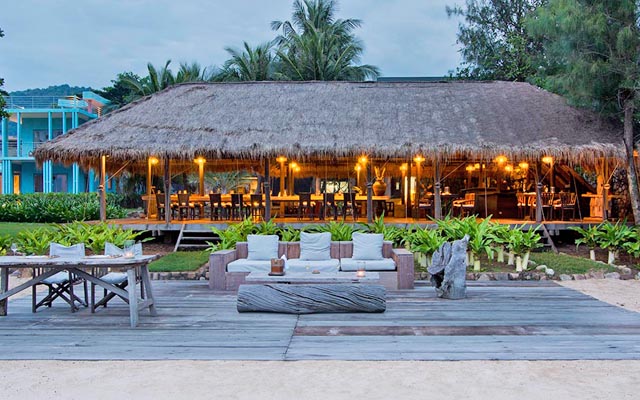
Knai Bang Chatt’s signature restaurant, The Strand, is where guests can enjoy breakfast with an ocean view. It also serves lunch and dinner. Adjacent to the resort is Kep West, a multi-functional leisure destination that sits on the oceanfront.
At The Wave, guests can opt for more casual dining at Cafe Grande, which is perfect for lunch or a relaxed evening meal. For fine dining, Crab & Co delivers a mouth-watering menu dominated by the area’s abundance of fresh seafood. The giant mud crabs and steamed king prawns are a must.
The rooftop, The Deck, is the perfect sunset spot, serving a range of tapas dishes, creative cocktails and idyllic views of the sun sinking into the sea.
Knai Bang Chatt by Kep West
1 of 7
Suite
Superior room
Bathroom
Swimming pool
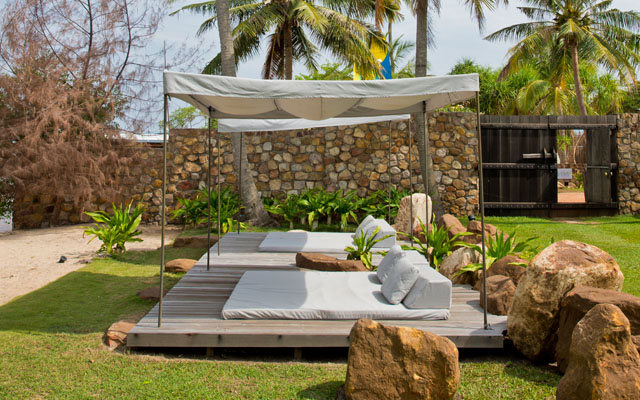
Sunbeds
The Strand
Front desk
Amenities
The resort reflects Kep’s past as Kep-sur-Mer, a retreat for the French colonial elite. It includes three original villas from the 1960s, with the rest built in the same style.
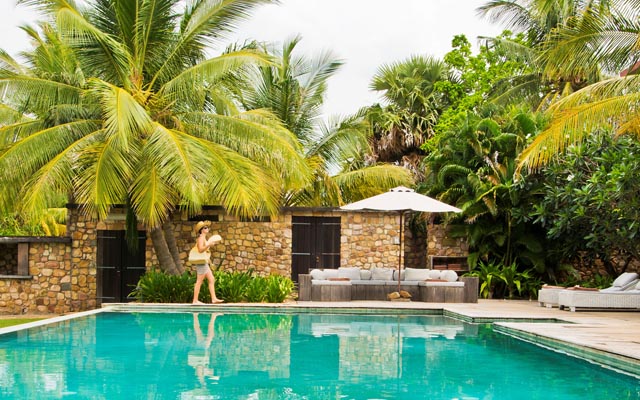
The main resort comprises expansive gardens, an outdoor swimming pool, spa and The Strand. In addition to The Wave, Kep West is home to a raft of other amenities.
Kep West Wellness Centre is the perfect place to start the day with a yoga session, holistic healing, Tibetan bowl sound healing or breath workshops, designed by wellness manager Lana Yang.
At Kep West Sailing and Discovery Centre, visitors can embark on sailing adventures and a raft of excursions designed to immerse guests into local life. Options include meeting rural farmers by motorbike, pepper farm visits, day trips with fishermen, dolphin spotting and planting mangroves. We embarked on a unique trip to Koh Seh Island, the base of Marine Conservation Cambodia, to learn about its work to protect Cambodia’s marine ecosystem.
Service
In keeping with the barefoot luxury vibe, don’t expect staff to be wearing suits greeting you with, “Ma’am” and “Sir”. Instead, you’re on first name terms, welcomed like a relative returning home.
Verdict
Knai Bang Chatt by Kep West is a great new addition to the sleepy seaside town, offering elevated adventure, dining and drinking options, while helping usher in a new era for Kep.
Disney Cruise Line (DCL) adjusted the launch timeline of its newest ship, the Disney Adventure, with its maiden voyage now planned for March 10, 2026.
During an online meeting with a DCL spokesperson yesterday afternoon, TTG Asia understands that the company has made the “difficult decision to postpone the maiden voyage”, as the company has “encountered unexpected delays in the shipbuilding process”.
Disney Cruise Line delays debut of the Disney Adventure to March 2026
The spokesperson expressed: “This is the largest vessel we’ve taken on, and has been a very ambitious project. With all the announcements that we’ve been making, we want to deliver excellence, and the highest standard and experience for our guests.”
Twenty-five voyages scheduled from December 15, 2025, to March 12, 2026, will be impacted. DCL will be reaching out to affected guests and travel agents to offer flexible rebooking options.
For guests booked on the original maiden voyage date of December 15, they will be given the opportunity to sail on the new maiden voyage on March 10, 2026, at a 50 per cent discount. This reservation will be automatically shifted, and guests will receive a confirmation with their reduced fare by October 8, 2025.
For those unable to make the new maiden voyage date, they may request for a refund of the amount paid out to DCL to their original form of payment, and they will be able to use their 50 per cent discount on a future cruise. Guests have to let DCL, or their respective travel advisor know by September 21, 2025. The future cruise must be booked by March 31, 2026, and the cruise must depart on or before March 31, 2027.
For other affected guests, refunds will be made to the original form of payment. Guests will also be extended a 50 per cent discount of their future voyage fare for use on a future cruise, and can book their future cruise as soon as they receive the cancellation confirmation of their original sailing. The future cruise must also be booked by March 31, 2026, and the cruise must depart on or before March 31, 2027.
Travel advisors have also been similarly notified. DCL has also informed travel advisors that commissions that would have been payable on clients’ cancelled sailings will not be affected and, for new bookings made using the 50 per cent future cruise discount, commissions will be calculated using the discounted price, subject to DCL’s sales agreement and/or commission programme terms and conditions.
The Disney Adventure will be the first DCL ship to homeport in Asia.
The 600-member Philippine Travel Agencies Association (PTAA) is beginning to focus on cruises, a market that remains largely untapped for its members.
Plans include a B2B mini cruise fair alongside PTAA’s general membership meeting (GMM) on September 11, serving as a prelude to the association’s first Cruise Expo, scheduled to coincide with its 33rd Travel Trade Expo in February next year.
PTAA showcases 12 cruise lines ahead of its first full-scale Cruise Expo in February
As of press time, the mini cruise fair, to be held next week at Solaire Resort in Manila, lists 12 cruise lines, including Royal Caribbean, Holland America, Disney Cruises and several river cruise operators.
PTAA president Evangeline T Manotok told TTG Asia that cruising remains an untouched outbound market, with feedback from cruise companies indicating that only 24,000 Filipinos have cruised, compared with more than 100,000 passengers from other countries.
Manotok said that selling cruises provides “a bigger avenue where travel agencies can earn more”, noting that cruise companies support travel agencies and that agencies can increase revenue by selling not only cruise packages and air tickets but also hotel packages, land arrangements and tour excursions.
Cruise rates remain commissionable to travel agencies, unlike airline bookings. Domestic airlines no longer offer commissions regardless of the number of bookings, while some international airlines still provide commissions to IATA agents, though others do not.
China overtook Japan as the top outbound country for Singaporeans in June 2025, with the top five destinations being Shanghai, Beijing, Shenzhen, Guangzhou, and Chengdu, according to recent statistics from YouTrip, a multi-currency mobile wallet.
The long, snaking queues at Chan Brothers’s, and CTC Travel’s counters selling packages to China at the recently-concluded NATAS Holidays 2025 fair were also proof that China is on the rise. Other travel agencies, like Jun-Air Travel, and WTS Travel, were also offering buy-one-get-one-free promotions to China.
Yunnan’s landscapes and affordability are drawing increasing numbers of Singaporean travellers; Blue Moon Valley in Yunnan, China, pictured
When asked which Chinese destinations were doing well for Chan Brothers Travel, Trista Foo, senior marketing communications executive, told TTG Asia: “Favourites include Chengdu and Chongqing for their culinary delights, Yunnan and Zhangjiajie for dramatic landscapes, and Beijing and Xi’an for their rich, historical heritage. Guangdong and Fujian remain popular with Singaporeans for their familiar cultural ties while Guizhou in south-west China is emerging as a hidden gem.”
CTC Travel’s CEO Chen Bin, shared similar observations: “Yunnan, Zhangjiajie, Guilin, Beijing, and Shanghai remain evergreen destinations among Singaporeans. In the post-pandemic landscape, we have also observed a surge in interest for emerging hotspots such as Xinjiang, Inner Mongolia, Mohe, Guizhou, and Chongqing.
China’s cost-effectiveness is a powerful magnet for outbound Singaporean travellers.
Kelvin Lam, chief operating officer, YouTrip, explained: “Travellers can enjoy high-quality experiences at a fraction of the cost compared to destinations like Japan or Europe. China also provides an enticing destination dupe for travellers who want to experience vast landscapes at a more affordable price point, such as switching out the Swiss Alps for Yunnan.”
“The favourable Singapore dollar – Chinese yuan exchange rate enhances the destination’s appeal, offering Singaporean travellers a highly rewarding and even more value-for-money holiday experience,” Foo said.
Chen agreed, stating that this offers travellers increased spending power, making China an attractive destination. It also helps there is “robust air connectivity between Singapore and numerous cities across China”, a mutual visa-free travel agreement, and China’s stable political and economic environment.
Foo also highlighted how social media is “reshaping how younger travellers perceive China in a fresh light”.
“China’s growing appeal is also driven by the influence of Chinese digital and social media platforms, such as Xiaohongshu and TikTok. Visually rich and engaging content on these platforms has sparked interest in trending destinations and ‘Internet-famous’ spots, particularly among younger travellers,” noted CTC’s Chen.
Looking ahead, all interviewees expect China’s momentum to continue well into 2026.
Lam is confident that the “momentum will be fuelled by the rise of China’s soft power through cultural exports – such as Pop Mart, Hai Di Lao, and Chagee – as well as heightened social media visibility”.
Foo opined that China will continue be increasingly popular among Singaporean travellers as “social media increasingly influences travel decisions across all age demographics”.
However, Lam opined that China will not “permanently overtake Japan” as the top destination for Singaporeans.
“We see Singaporeans balancing their choices: opting for China as a more affordable or frequent getaway, while reserving Japan for longer or more special trips,” Lam said.
Foo added: “In other parts of Asia-Pacific, enduring favourites such as Japan, South Korea and Taiwan continue to capture strong interest. Meanwhile, more exotic destinations like Bhutan and Uzbekistan, made more accessible with our exclusive chartered direct flight tours, are experiencing growing demand.”



 Her expertise includes sales strategy, digital marketing, brand development and revenue optimisation. She also has experience in building teams and client relationships.



 Location