Destination content technology provider Smartvel has appointed Jacqueline Ulrich as chief commercial officer (CCO).
In her new CCO role, Ulrich will lead the business development strategy, with the objective of expanding the travel tech start-up globally into new territories across international markets.
Ulrich has more than 20 years of experience in business development and sales areas, and her career has always been linked to the travel technology and hospitality sectors.
The Swede previously held senior positions in Amadeus, based in Madrid and Miami, and was senior vice president of business development EMEA in the multinational global travel technology provider Accelya.
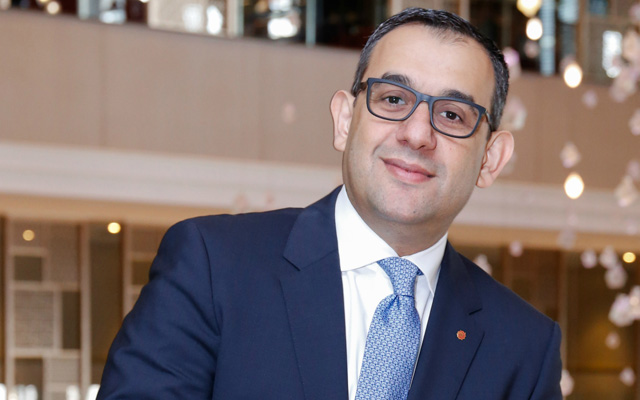
Onyx Hospitality Group has appointed Joseph Karam as general manager of Amari Watergate Bangkok.
The hospitality veteran rejoins the property, where he was previously the hotel manager from 2015 to 2017.
In total, Karam holds over two decades of experience, having honed his skills at hotels and resorts across Thailand and the Middle East. Prior to rejoining Amari, Karam held a managerial role at the InterContinental Hotel & Crowne Plaza Dubai.
The travel trade in Hokkaido is ramping up efforts to develop Ainu-focused tourism, following the enactment of a Japanese law in April that recognises the Ainu as indigenous people.
National and local governments are now required to promote activities such as tourism to correct social-economic disparities of the Ainu, who have lived for centuries on Japan’s northernmost main island.
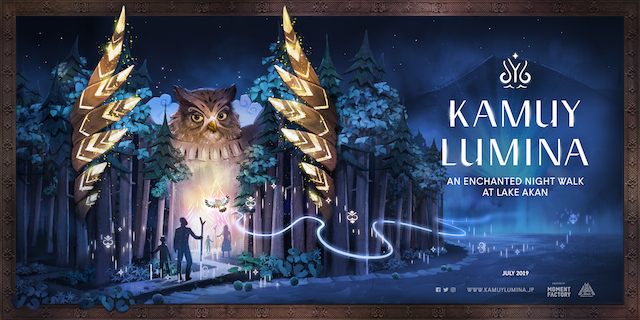
Kamuy Lumina is an outdoor multimedia night experience inspired by an Ainu legend
Among those developing new facilities and entertainment offerings is Akan Adventure Tourism. On July 5, it will open Kamuy Lumina, an outdoor multimedia night experience inspired by an Ainu legend, in Akan, an area home to Hokkaido’s largest Ainu settlement. Created by Canada-based multimedia entertainment company, Moment Factory, the show will use technology to transform woodland by displaying nature and Ainu culture in light and sound.
According to Lumina producer Jamie Tobin, Kamuy Lumina is “the first Lumina walk to be produced with any first national people anywhere in the world and the first in a national park”.
“We’re striving to make the Akan area a mecca for adventure and spiritual tourism, working with Ainu people so tourists can come and have a deep connection with the Ainu people,” Shinichi Yamashita, senior executive director of Akan Adventure Tourism, told TTG Asia.
Lake Akan’s 300-seat theatre Ikor, meanwhile, has launched a series of new performances to give audiences a window on Ainu culture, including Lost Kamuy, Ainu Ancient Ceremonial Dance and Iomante Fire Festival.
The Japanese government has recognised the Ainu people of Hokkaido as an indigenous people
Among those interested in the new attractions are school, college and business groups attracted by “the Ainu philosophy of living in harmony with nature and lessons about preserving culture and the environment,” Yamashita added.
The products are expected to boost rising interest in eastern Hokkaido among international visitors as a result of national government initiatives. Akan Mashu National Park is one of only eight national parks selected for promotion to overseas tourists and Kushiro, in Akan, is one of only three model cities chosen to entice overseas tourists to off-the-beaten track areas.
Further development in Hokkaido is also slated, including the opening of a national Ainu museum and park in Shiraoi, near Sapporo, in April 2020.
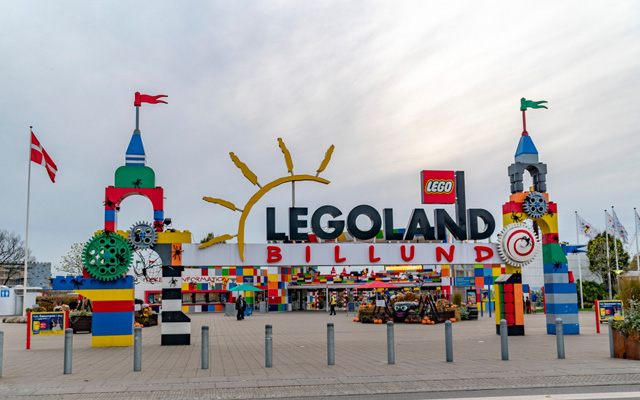
Legoland Billund, the original Legoland park, opened in 1968 in Billund, Denmark
A consortium including Lego owner Kirkbi, US private equity group Blackstone and Canadian pension fund CPPIB agreed last Friday to buy Britain’s Merlin Entertainments for US$6.3 billion including debt, reported AFP.
The offer will be made by a newly incorporated company which has been formed on behalf of the members of the consortium, with each of Kirkbi and the Blackstone/CPPIB group owning 50 per cent upon completion.
Legoland Billund, the original Legoland park, opened in 1968 in Billund, Denmark
Kirkbi, the majority owner in Danish toymaker Lego, already owns almost 30 per cent of Merlin following the sale of Legoland Parks to the latter in 2005, as part of a financial restructuring.
Kirkbi’s chief executive Soren Thorup Sorensen added that the acquisition would enable Legoland and the other activities in Merlin to “reach their full potential, which we believe is best pursued under private ownership”.
“With a shared understanding of the business and its culture, we believe that this group of investors has the unique collective resources necessary to equip Merlin, including the Legoland Parks and Legoland Discovery Centres, for their next phase of growth,” he added.
Joe Baratta, global head of private equity, Blackstone, said that the consortium is “prepared to commit the substantial resources required to support the long-term objectives of Merlin, which will require significant investment to ensure its long-term success”.
Founded in 1999, Merlin also owns other major attractions and parks including Madame Tussaud’s wax museums, Peppa Pig World of Play, and the Coca-Cola London Eye. The British company reported sales of £1.7 billion in 2018, when it welcomed a total of 67 million visitors to its tourist attractions around the globe.
Sabre's 'industry-first' booking solution is set for launch
Sabre Corporation is releasing a new solution that integrates traditional GDS hotel content alongside content from Booking.com, Bedsonline, and Expedia Partner Solutions.
Solving for growing buyer demand and content fragmentation, Sabre Content Services for Lodging provides agency and corporate buyers access to more options and a more consistent shopping experience to include the way content is displayed at the room and rate level.
Sabre’s ‘industry-first’ booking solution will include capabilities of Sabre APIs and integrate OTA content
Sabre’s API-driven solution will deliver more efficiency and revenue with increased lodging choice, as well as improved capabilities to better manage preferred content. Travel agencies have full flexibility to choose the aggregator content they would like to access.
“We looked at the pain points and needs of customers on both sides of the network – the ‘demand’ side including TMCs, leisure agencies and corporations and the ‘supply’ side including hoteliers and lodging aggregators. Then we challenged ourselves to see how – given our unique positioning – we could help move the industry forward,” said Traci Mercer, senior vice president of lodging, ground and sea for Sabre Travel Network.
“The solution that we’ve developed to this long-standing and complex challenge will revolutionise the way travel agents shop and book hotel content – making it easier and simpler for them to provide the best experience for travellers.”
The company formed a partner advisory board to get iterative feedback while building out Content Services for Lodging.
The new API capabilities will soon be incorporated across all Sabre points of sale including Sabre Red 360 and GetThere.
Additional API enhancements will be added to Content Services for Lodging into 2020.
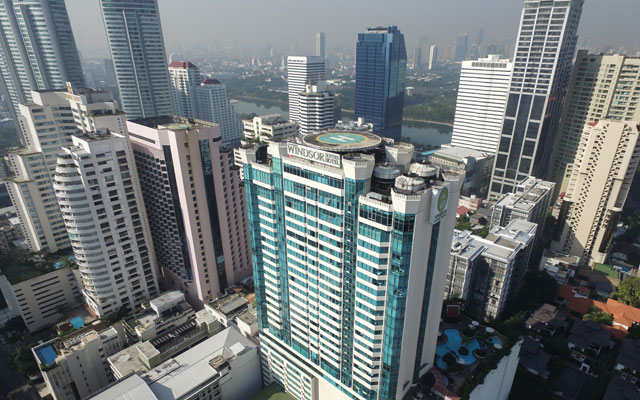
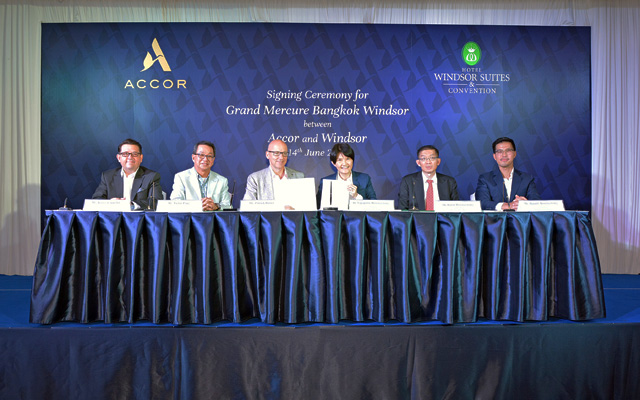
Accor has signed an agreement to manage the Windsor Suites Hotel in Bangkok, which will see the 50-year-old property undergo a two-year revamp and rebrand as Grand Mercure Windsor come 2021.
Located along Sukhumvit’s Soi 20, the 34-storey hotel features 456 rooms, six dining outlets, a fitness centre, wellness spa, executive lounge and helipad on its rooftop.
1 of 2
Artist impression of the hotel exterior
From left: Accor's Xavier Cappelut, Victor Pang, Patrick Basset; and Windsor Suites Hotel's Vipaporn Bosereewong, Burin Bosereewong and Bundit Bosereewong
The hotel will undergo an extensive refurbishment of its public areas, dining outlets and guest rooms at the end of this year to be completed in phases over the next two years.
“We are pleased to join with Accor and continue our family’s hospitality legacy. Since the opening of our first property over 50 years ago, travellers have come to stay at Windsor Suites to enjoy being in the centre of one of the world’s most exciting cities – we are so excited to continue evolving our grandfather’s dream, building upon this strong partnership and creating a boundless future,” commented Bundit Bosereewong, vice president of Windsor Suites Hotel.
Accor currently operates 83 hotels in Thailand, and has a pipeline of 13 hotels scheduled to open over the next five years. The group currently manages a portfolio of 44 Grand Mercure hotels across Asia-Pacific.
Saudi Arabia-based UmrahHolidays International (UHI), part of B2B accommodation provider WebBeds, has signed two partnership agreements to deepen its reach within China’s fast-growing halal tourism and Umrah pilgrimage sectors.
The agreements are made with Haoqiao, a wholesaler in China with a nationwide network of more than 17,000 retail travel agents; and Mafengwo, a Chinese OTA with over 130 million registered users.
The Umrah is an important pilgrimage for Muslims; Great Mosque of Mecca in Saudi Arabia pictured
Under the new partnerships, Haoqiao will become the official retail distributor of UHI in China, while Mafengwo will be the company’s exclusive OTA partner. This will help UHI to extend its reach across China, where international tourism is becoming increasingly popular among the country’s estimated 20 million Muslims.
“We understand that for many Muslims, the Umrah pilgrimage is a once-in-a-lifetime experience. But all too often the planning and booking process can be complex and daunting. UHI’s deep local knowledge, global network and multilingual team will take away the stress. Chinese customers can rest assured that they will enjoy a full range of professional services from four of the most trusted names in the industry: WebBeds, UmrahHolidays International, Haoqiao and Mafengwo,” said Aly Siky, CEO, UHI.
“China has a large and vibrant Muslim population, and an increasing number are now looking for opportunities to make their pilgrimages to the holy lands of Saudi Arabia. This is a growing sector of the market… We expect to see a sharp rise in online bookings for Umrah travel following this collaboration,” said Yu HongShang, senior director, Mafengwo.
The Umrah is an important Islamic pilgrimage to Saudi Arabia. Unlike the Hajj, which has to be performed on specific dates, the Umrah can be undertaken at any time of the year. Through UHI, Muslims travellers can book standalone accommodation at a choice of more than 600 hotels in Makkah, Medina, Jeddah and other nearby cities, or full Umrah packages.
According to the Mastercard-Crescentrating Global Muslim Travel Index 2018, the global halal travel market is forecast to surge from 131 million international travellers in 2017 to 158 million in 2020, and the sector expected to be worth US$220 billion.
The UK (London pictured) is the top winter destination this year for Aussies
The UK, the US and China are among the most popular longhaul destinations for travellers in Australia this winter holiday, according to Travelport’s analysis of GDS bookings.
As of June 14, 2019, over 39,000 advanced bookings had been made in Australia through all GDSs for return flights to the UK scheduled between June 28, 2019 and July 21, 2019. Flight bookings to the US, the second most popular destination, stood at 35,340, while bookings to China, in third place, were at 22,828.
The UK (London pictured) is the top winter destination this year for Aussies
Globally in 2018, Travelport alone processed one trillion transactions through its platform.
Scott Barber, Travelport’s managing director for Australia and New Zealand, said: “It’s been the second consecutive year for the UK, the US and China to top the chart, showing a consistent pattern in people’s travel preferences for the winter holidays.
“Despite the large number of expatriates living in Australia from these countries, their long-lasting appeal to tourists and affordable flights have also made them ever-popular choice for travellers in Australia.”
Barber added that travellers in Australia are also seeking destinations known for their sunny skies, beaches and cuisine, such as Thailand, Italy, Greece and Vietnam.
With a new potential risk identified in the Boeing 737 Max, IATA urged state aviation safety regulators to continue to align on technical validation requirements and timelines for now grounded aircraft’s safe return to service.
According to a Reuters report, the risk was discovered during a simulator test the week before. The Federal Aviation Administration (FAA) said the risk must be addressed before the aircraft can take to the skies again.
A new issue could delay aircraft’s return
Alexandre de Juniac, IATA’s director general and CEO, said: “The Boeing 737 Max tragedies weigh heavily on an industry that holds safety as its top priority. We trust the FAA in its role as the certifying regulator, to ensure the aircraft’s safe return to service. And we respect the duty of regulators around the world to make independent decisions on FAA’s recommendation.”
Boeing has been under intense fire after the crash of two of its 737 aircraft, with some 400 Boeing 737 Max pilots suing the aircraft maker over alleged “cover-up” of “known design flaws”. Last week, Boeing was accused of another cover-up. Air Canada had encountered a fuel leak 10 months into operating a 787 jet and notified Boeing of the fault in 2015.
Records stated that the required manufacturing work had been completed when it had not, although Boeing told CBC news that it “self-disclosed” the issue to FAA.
Amid the accusations and heightened focus on safety, de Juniac stressed that aviation is a “globally integrated system that relies on global standards, including mutual recognition, trust, and reciprocity among safety regulators”. A coordinated effort is necessary for the system to function and for public confidence to be restored.
IATA also reiterated the need for alignment on additional training requirements for Boeing 737 Max flight crew.
Qatar is preparing for the much-anticipated 2022 FIFA World Cup Qatar™ as the first Middle Eastern host, and many exciting developments await visitors. Qatar offers a wide array of entertainment options from retail, hospitality and family entertainment to outdoor activities and immersive cultural experiences. Qatar offers something for every traveller, with plenty of cultural gems just waiting to be discovered.
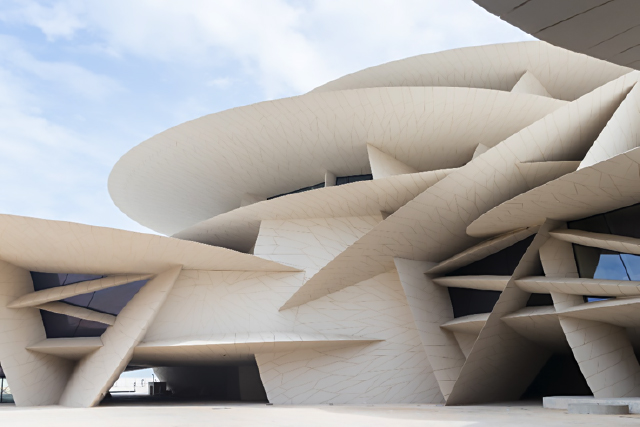
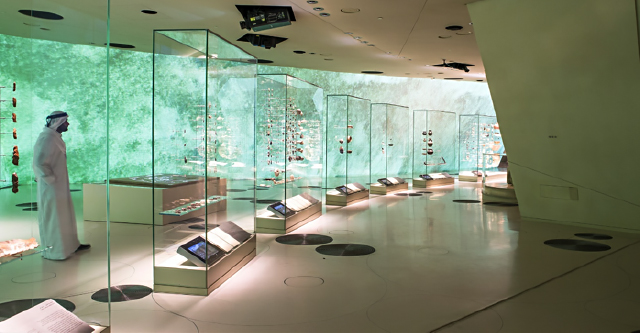
The newly opened National Museum of Qatar (NMoQ) is Jean Nouvel’s latest architectural masterpiece that promises an unparalleled immersive experience. The structure was inspired by the desert rose, a natural-occurring flower-like formation that harmonizes with the desert environment. The spectacular museum is built around the restored historic palace of Sheikh Abdullah bin Jassim Al Thani and is the culminating exhibit in the sweeping succession of gallery experiences.
The Museum’s winding 1.5-kilometer gallery path takes one on a journey through a series of unique, encompassing environments, each of which tells its part Qatar’s story through a special combination of architectural space, music, evocative aromas, archaeological and heritage objects and more. The incredible NMoQ gives voice to the nation’s rich heritage and culture, servicing as a hub for discovery, creativity, and community engagement while providing educational opportunities for Qatar and advancing the nation’s cultural vision on the global stage.
Apart from the many attractions that showcase Qatar’s vibrant culture, there is also an abundance of entertainment options to ensure that tourists never have a dull day in Qatar. The world’s first ANGRY BIRDS WORLD™, a 17,000 square metre entertainment park, just opened an outdoor extension that brings a riot of fun for everyone. Both outdoor and indoor parks are packed with exhilarating rides from a 42 metres high super slingshot themed ride, an Angry Coaster, indoor/outdoor karting track to a multi-level creative playground. With family entertainment at the heart of its offerings, the park is rolling out a host of attractions that will engage and entertain one and all.
These are just a few Qatar’s latest impressive developments. Learn more about what Qatar has to offer on their online specialist programme – Tawash. You’ll find a range of training courses that provide comprehensive information on anything you will need to explore and understand Qatar. This unique program ensures that you will have the comprehensive knowledge necessary to answer any questions about Qatar.
Register by 31 July, on Qatar’s online specialist programme Tawash here for a chance to win a Starbucks voucher!








 “Despite the large number of expatriates living in Australia from these countries, their long-lasting appeal to tourists and affordable flights have also made them ever-popular choice for travellers in Australia.”