TTG Asia
Asia/Singapore Monday, 6th April 2026
Page 1268

Navigating Brexit chaos

0

The March 29 Brexit deadline came and went, but the UK – and everyone else – is none the wiser about what to expect in coming weeks and months as uncertainties continue to surround Britain’s departure from the EU.

At press time, British lawmakers still failed to coalesce around a single proposal in indicative votes on the process of leaving the EU, with the UK now on course to leave the bloc on April 12 or May 22, depending on the agreement terms ratified.
What frustrates many in the travel and tourism business is the lack of a clear Brexit outcome – hard, soft, on hold or no deal – as the country continues to be paralysed by political division since the UK public voted to clear the EU in June 2016.

Travel industry members are cautious in speculating what this may mean for business coming into Asia, although the current uncertainty about Brexit and weakening pound appear to make Brits think twice – and longer – about booking longhaul holidays.

“Brexit opens up two levels of uncertainties. On the consumer level, travellers are not sure what’s going on and how it would affect them personally; on the trade level there will be more uncertainty over currency issues, with the pound already hit really hard a bit ago, will there be even further impacts?” asked Willem Niemeijer, CEO & co-founder, Khiri Travel.

“The UK is our largest market at Exo Travel so we are watching the situation carefully,” said Hamish Keith, CEO of Exo Travel.

“Clarity is the key component for successful business planning and unfortunately nothing is clear at the moment so it is very difficult to know what will happen and of course how to plan effectively.”

Keith added: “In the meantime we are in constant communication with our key agents and working hard to assess potential direct and indirect impacts from all scenarios, particularly any possible changes in regulations and likely responses to those changes from customers, competitors and service providers. Like everyone else, we are waiting for a clear outcome so we can move on.”

Greg Young of Destination Asia’s international sales office, UK & Ireland, said: “The British are still spending and travelling, though it is more price-led than ever before. We are seeing bookings made in the same month as departure or now for 2020 and a much slower pace in the middle area. A decision made in regards to Brexit one way or the other would help.”

In January, IATA warned that up to five million flights would be at risk if the UK leaves the EU without a deal. A no-deal Brexit was feared to see airlines capping flights at 2018 level, although tickets for 2019 routes were already on sale. Late last month, the EU reportedly stated its intentions to lift this cap.

Research by Oxford Economics projected that a no-deal Brexit would cause a five per drop in UK outbound travel and tourism trips in 2020, as a result of the stifled economic backdrop and impact of a weaker pound. On the other hand, the weaker pound could mean that UK tourism inflows are four per cent higher in a no-deal scenario, provided there is no travel disruption.

Frank Wiegand, director of team sales Europe at Focus Asia, said: “There could be some legal problems for a short while, leading to certain Europe flights (operated by UK airlines) being unable to continue – but these will be solved.”

Paul Gorman, senior manager – owner engagement, of Luxury Escapes, which is plotting its move into the European outbound market, said: “Whether Brexit will have an impact depends on what the result is. At the same time, (a great deal of) airline capacity is coming out of Europe into Asia and vice versa. The barrier to getting to places now is so much less, you can fly between Singapore and Berlin (on an LCC, for example). Ultimately it’s about (the desire to travel). I don’t think Brexit will slow that down.”

For intra-Europe travel, he said: “Nobody knows how it’ll be in terms of operating licences. Guys who have UK or Irish operating licences like Ryanair and EasyJet may have to reapply for landing rights. I suspect that will be worked out before (the deal is final), (but it is still) a big risk to a lot of companies.”

On whether these uncertainties could translate to speculative buying of Asian holidays in the short term, trade opinions are spilt.

Said Keith: “We believe some of the strong demand to Asia from the UK is driven by British travellers choosing not to go to Europe, so there is a silver lining for Asian destinations there. In addition Asian destinations such as Thailand and Vietnam are well positioned as offering quality without being as expense as other parts of the world so in times of economic uncertainty become the go-to destinations for British travellers.”

But a more doubtful Wiegand commented: “Asia is more expensive (than an European holiday). I don’t think a family in Birmingham originally intending to visit Spain will decide on Thailand instead. (Those choosing Asia and Europe holidays) are different markets.”

Particular segments of Brits may even choose to travel closer to home. Said David Kevan of Chic Locations in the UK: “I think the concern about being close to home is valid, particularly in the months immediately after Brexit. Our clients tend to be decision-makers within their business, and they want to feel they can react quickly to any crisis (as Brexit unfolds). They like the idea of a three, four hour flight rather than a 16-hour flight.”

Meanwhile, a potential slump in the UK economy and currency are larger concerns. “Nobody knows yet what the result of Brexit might be. Does it happen in March, June, or ever? Will they hold another referendum? The only risk I see is there might be less Brits travelling at all, whether to Europe or to Asia,” said Wiegand.

If or when the pound takes a hit, “travel everywhere will get more expensive”, Wiegand explained. “It happened in Russia years ago, and there could be a similar crisis ahead of the UK.”

With travellers’ spending power affected, Kevan suggested that the UK’s travelling demography may shift towards those above 60. “Like with everything, a door closes and another opens. There will be problems and opportunities in equal measure.”

Kevan suggests that senior travellers are likely winners, as they are free from concerns of job security and dependents, and have a bigger travel window that is not tied to specific dates and can be enticed with longer stays with better value.

Losers, in his opinion, are likely to be those in the 25-55 age group, as they will be hit by job concerns and uncertainties, less disposable income, and any increase in bank interest rate.

But Keith is positive that the UK market will continue to do well in the longer term when a greater level of clarity is achieved.

“Holidays and travel are still a priority for the British and some recent surveys are indicating that longhaul travel are still experiencing strong growth driven by increased availability of cheaper longhaul flights and a desire to travel outside the Eurozone, particularly to Asian destinations where there is still good value to be found.

“The bottom line is that Brits will continue to travel no matter what happens with Brexit,” he surmised.

As the clock ticks down, the travel trade has one common desire: a clear Brexit outcome, come what may. – Additional reporting by Yixin Ng
Sabre rolls out first set of NDC APIs

0
New direct flights expected to spark demand

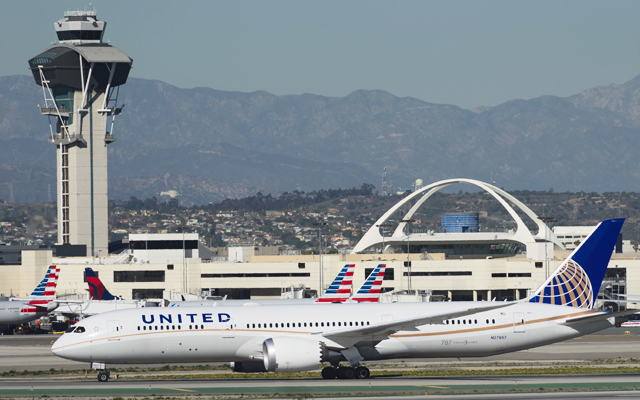
Sabre Corporation has released its first set of New Distribution Capability (NDC) APIs with launch carrier, United Airlines, enabling the airline to offer customers new fare options and additional flight amenities for a more comprehensive shopping experience.

Sabre’s Beyond NDC Agency Partners can now use the capabilities of its advanced shopping API to integrate and normalise air content from all sources, including traditional, low-cost carrier and NDC offers.

United using Sabre’s first set of NDC API

The travel technology company says this development is “a significant step forward for the travel industry”, as the pan-industry vision moves NDC closer to becoming an everyday reality for travellers, carriers, agencies, corporations and more.

Sabre will continue to work with all its Beyond NDC airline partners to integrate their NDC content this year, and will also release additional capabilities throughout 2019, including integration into its agent desktop workspace, Sabre Red 360.

Sabre has been granted a NDC Level 3 Capable (Offer and Order Management) IT provider by IATA.

Resorts World Sentosa, Marina Bay Sands set for multi-billion-dollar transformation

0
Artist impression of the enhanced aquarium

The two IRs in Singapore, Resorts World Sentosa (RWS) and Marina Bay Sands (MBS), have unveiled massive expansion plans, each at an estimated investment of S$4.5 billion (US$3.3 billion).

The RWS expansion will boost its gross floor area by about 50 per cent, adding 164,000m2 of new attractions, entertainment and lifestyle offerings. Set to integrate with the transformation of the future Greater Southern Waterfront, the expansion will be delivered in phases with new experiences opening every year from 2020 to a projected completion around 2025.

Both RWS’ major attractions, Universal Studios Singapore and S.E.A. Aquarium, will see substantial increase in size. Universal Studios Singapore will get two new, themed and immersive environments based on Minion Park and Super Nintendo World.

The S.E.A. Aquarium will be expanded to more than thrice its present size, and proposed to be rebranded as Singapore Oceanarium. RWS says there will be additional exhibits centred on prehistoric marine life and deep sea creatures.

In addition, a new Waterfront Lifestyle Complex helmed by two new destination hotels, together with the expansion of Central Zone, will add up to 1,100 more keys.

MICE capacity at RWS will also get a boost. The entire waterfront promenade will be renewed, anchored by a public attraction that will set the scene for seafront activities that include dining and lifestyle activities.

The Resorts World Theatre will make way for a new Adventure Dining Playhouse, and a new Driverless Transport System will provide last-mile connectivity between the mainland and Sentosa with better efficiency and capacity, which the group hopes would encourage more to visit RWS and the rest of Sentosa Island.

Meanwhile, Las Vegas Sands has entered into an agreement with the Singapore government to expand MBS. Located immediately adjacent to the existing MBS, the key elements of the development will be a 15,000-seat show arena, a luxury hotel tower and additional MICE space.

The 1,000-suite hotel will include a sky roof with a swimming pool and a signature restaurant. The tower will also feature an atrium and terraces along with F&B offerings and a combination of meeting rooms, ballrooms and exhibition halls.

Since opening in 2010, MBS has attracted more than 330 million visitors, and brought over 700 new MICE events to Singapore. In 2018 alone, it hosted 3,680 events at the Sands Expo and Convention Centre.

“New luxury hotel accommodations and a world-class entertainment venue are the catalysts we need to drive additional visitation to Singapore, and specifically to Marina Bay Sands,” said Rob Goldstein, the company’s president and COO. “The expansion of our Singapore IR is a key component of our company’s growth plan and also reflects the strong tourism and business potential in Singapore.

“The additional hotel rooms are extremely important to us in addressing the demand created by our leisure and business tourists and our premium gaming customers.”

Tourism’s ‘the best partner for governments’ to drive economy and job growth: WTTC

0
As tourism becomes a stronger force globally, WTTC says there should be available best practice rather than unnecessarily reinvent the wheel

The growing importance of tourism’s role in the global economy was once again underscored by WTTC president & CEO Gloria Guevara yesterday at the opening of the WTTC’s Global Summit in Seville, Spain.

“Travel & tourism is truly the best partner for governments to generate economic growth, create jobs and reduce poverty,” said Guevara, addressing over 1,500 global leaders including former US president Barack Obama at WTTC’s annual key event that is themed ‘Changemakers’ this year.

Guevara opened: “We are living in an era of rapid change, the pace of which, I predict, will only increase. Within the past decade alone we have witnessed advancements that have propelled the travel & tourism sector to new heights, fundamentally changing the way we live, the way we do business, the way we communicate with each other, and the way millions and millions of people travel every day.”

As tourism becomes a stronger force, WTTC says there should be readily available sets of best practice, such as Colombia’s investments in rebranding its image, so governments do not have to unnecessarily reinvent the wheel

Surging tourism figures in 2018 – with 1.4 billion international arrivals and 4.4 billion people flying around the world, and domestic tourism chalking up seven trips – are “just the beginning” of tourism’s exponential growth globally, the WTTC chief stated.

Industry stakeholders “need to make sure that we stay ahead of the curve by considering what the future of travel looks like, who the consumers of tomorrow will be and what they will expect”, she added.

Emphasising the global economic powerhouse that is travel & tourism sector, which is projected to generate an addition 100 million jobs, or one in four new jobs, over the next decade, she said: “Our sector is truly the best partner for governments to generate economic growth, create jobs and reduce poverty. But we cannot take historical strong performance and positive forecasts as a given.

“The reality is that the world is confronted by significant challenges that require coordinated global action, changemaking behaviour and more collaboration. If we don’t work on our future, the growth predictions could fail to materialise, impacting millions of jobs and progress towards the SDGs.”

At the summit, WTTC also launched the Global Best Practices Recognition Initiative as toolkit for public and private sectors worldwide to develop, review and implement proven policies in the sector.

Despite the travel & tourism’s ability to be a force for good, best practices across the sector are not readily available for both the public and private sectors, often compelling governments to unnecessarily reinvent the wheel, researching solutions to problems that have already been successfully innovated on elsewhere in the world, WTTC said in a statement.

WTTC’s Global Best Practices Recognition Initiative will be an ongoing drive, continually updated by integrating the most recent quantifiable success stories into a new online repository to ensure that the most innovative policies are shared among travel & tourism networks.

The initiative’s immediate focus will be on ‘quick win’ policies and ‘game changers’ in the areas of securing & facilitating travel, prioritising the sector, and planning for sustainable & inclusive growth. This will extend to policies related to infrastructure, workforce, technology, regulation, innovations, entrepreneurship, resilience and crisis planning in the future.

Among the policies identified in the initiative’s initial phase are the USA’s Global Entry programme, which provides expedited clearance for pre-approved, low-risk travellers upon arrival; Colombia’s significant investments and rebranding that have rebuilt the country as a safe and desirable destination; and Palau’s ‘Pledge’, which permits entry to the island upon the visitor signing a pledge asking them to respect the island’s ecology and support local business.

Tiffany Misrahi, Director of Policy, WTTC added, “As we launch the initial phase of our grand efforts in cross-pollinating government and private sector networks with best practice case studies, we call upon those same leaders to share with us the results of their own excellent work so that we may continue to amplify our online repository with the very best initiatives from across the globe.”

All of the best practices can be found at www.wttc.org/agenda/best-practices.

Gap in Thailand’s economy hotel sector drives expansion at Kokotel

0
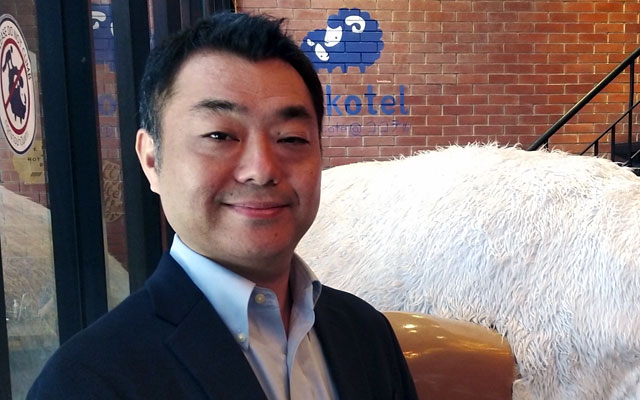
Matsuda: 18 Kokotel deals in Thailand this year

Bangkok-based Kokotel is stepping up its expansion strategy as the bed-and-cafe chain seeks to fill the gaps in Thailand’s economy scale segment, driven by growth opportunities that the budget airline and online booking boom has brought to the country.

Even in Bangkok, which faces a room oversupply, still lacks branded and standard economy hotels, especially in prime locations linking to the city’s BTS and MRT systems, according to Rei Matsuda, Kokotel’s founder and CEO.

Matsuda: 18 Kokotel deals in Thailand this year

Many owners with assets in such prime locations want to run hotels but lack the know-how. “I decided to create Kokotel four years ago to help manage economy segment hotel, starting with the first property in Bangkok,” said Matsuda.

Currently, the group operates eight hotels with a total of 422 rooms in key destinations across the country, including four in Bangkok, one in Chiang Mai, two in Krabi and one in Phuket.

Matsuda said each destination will get its own markets. Hotels in Bangkok are enjoying the Chinese boom and Phuket is gaining European markets, while the domestic clientele is strongest for its Chiang Mai hotel.

Kokotel has plans to operate more hotels in the country over the next few years, especially in Thailand’s secondary cities. In the pipeline is a 150-room hotel in Udon Thani, set to open within this year, and a 100-room hotel in Nakhon Phanom, plus two properties in Phuket offering 58 rooms and 49 rooms respectively come 2020.

As well, Kokotel is expected to sign 18 deals in Thailand within this year while talks for expansion in the Philippines and the region have already started.

The group has its sights set on expansion both within and outside of Thailand to achieve its ambitious goal of operating 1,000 properties by 2026, but its current growth trajectory appears far from its projected pipeline.

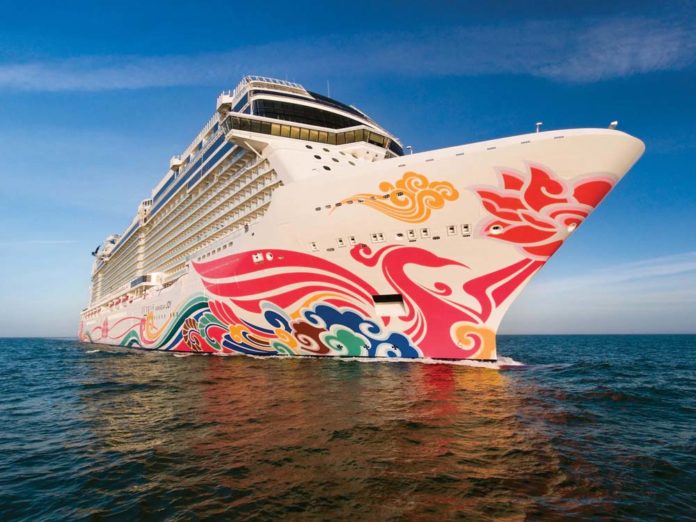
Norwegian to develop cruise training facility near Manila

0

Asian Trails names new GM to head Laos operations

0

Laetitia Law-Lai will soon become the new Asian Trails Laos’ general manager as of April 8, replacing Virginie Kury who will move to Phnom Penh to head Asian Trails Cambodia as general manager.

A French national, Laetitia joined Asian Trails in 2017 as Siem Reap-based MICE manager for Asian Trails Cambodia. She has previously lived and worked in Vientiane, and comes with “a solid background in working with people, training and developing human resources”.

She will be reporting to Thuy Tien, managing director Indochina based at the DMC’s office in Ho Chi Minh City.

Upcoming Shangri-La property named official hotel for Beijing 2022 Winter Olympics

0
The hotel will be the designated hotel for the 2022 Winter Olympics

A Shangri-La hotel set for opening in Beijing’s Shougang Park come end-2021 will be the designated official hotel and event reception venue for the 2022 Winter Olympics.

Wang Yue, deputy chief of the Beijing Culture & Tourism Bureau, and Ke Yongguo, deputy head of Shijingshan District Government, expressed that the partnership will contribute to the development of Shijingshan District and the economic growth of Beijing.

The hotel will be the designated hotel for the 2022 Winter Olympics

Shougang Park, a local landmark with over 100 years of history, is connected to the grand ski ramp of the Winter Olympics and the training centre of the National Teams.

Commented Zhang Gongyan, chairman and general manager of Shougang Group: “Shougang Park is regarded as the new landmark of the capital city’s revival and an important service provider for the Beijing Winter Olympics.”

He expects the partnership with Shangri-La Group to not only boost Shougang Park’s role in the Beijing Olympics, but also “raise the bar to contribute even more to the city’s growth”.

Hui Kuok, chairman of Shangri-La Group, said: “Beijing continues to be a very important market for Shangri-La Group. We are committed to deepening our investment and to be part of Beijing’s renewed growth plans.

“The Beijing 2022 Winter Olympics will be a historic occasion for the host city of Beijing and equally for us at Shangri-La as we open our doors to welcome the international sports community coming for the Games.”

Aviation roundup: Air New Zealand, Etihad Airways and more

0
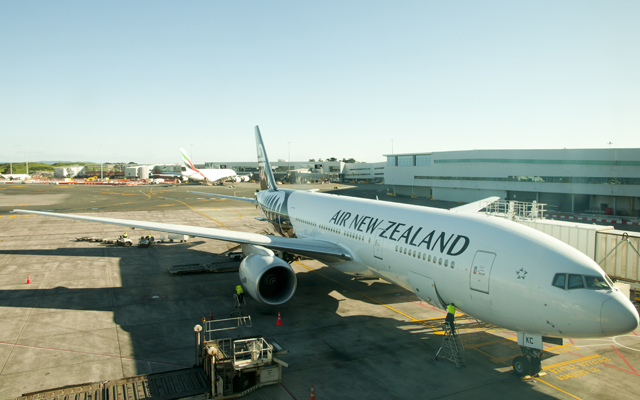
Air New Zealand estimated 2,000 of its customers were affected yesterday

Air NZ says ‘kia ora’ to Seoul
Air New Zealand will begin a thrice-weekly service to Seoul’s Incheon International Airport from November 23, 2019, flying up to five times a week on this sector during the peak holiday period from late December – mid-February.

Flight NZ75 will depart Auckland at 12.00 on Mondays, Thursdays and Saturdays, landing in Seoul at 19.55. The return flight, NZ76, will depart Seoul at 21.45 and land in Auckland at 12.55 on the same days. From December 23 to February 22, 2020, the service will operate on Wednesdays and Sundays as well.

The new service will be operated by Boeing 787-9 Dreamliner aircraft with a flight time of around 12 hours northbound and just over 11 hours southbound.


Etihad commences flights to Hong Kong
Etihad Airways has expanded its Greater China network with a daily service to Hong Kong, utilising the Boeing 787-9 Dreamliner.

EY834 departs Abu Dhabi at 22.05 to land in Hong Kong at 10.05 the following day. The return flight, EY833, departs Hong Kong at 19.45 and lands in Abu Dhabi at 12.05 the following day.

The deployment of the larger 787-9 Dreamliner to Hong Kong is part of the airline’s plan to operate all 28 weekly services to China’s four main gateways – Beijing, Chengdu, Shanghai and Hong Kong – using next-generation Dreamliner aircraft.

At the beginning of this year, the airline upgraded its daily service from Abu Dhabi to Beijing to the 787-10 Dreamliner. It has also announced that effective July 1, 2019, the daily service from Abu Dhabi to Chengdu will be upgraded to B787-9, and the current 787-9 daily service from Abu Dhabi to Shanghai will replaced by the larger 787-10 Dreamliner.


Qantas returns to Fiji after two decades
Qantas has relaunched a direct flight from Sydney to Nadi – Fiji’s main tourism gateway – for the first time in almost two decades.

The direct service will operate four times a week on Tuesdays, Fridays, Saturdays and Sundays with a Boeing 737 aircraft.

QF101 will depart Sydney at 10.30 and arrive in Nadi at 15.30. The return flight, QF102, will depart Nadi at 16.35 and land in Sydney at 20.00.


New route developments at Thai AirAsia
Thai AirAsia has announced three new routes that will commence over the next few months.

The first to launch on April 30 will be daily flights between Chiang Rai and Shenzhen. FD576 will fly to Chiang Rai at 22.40, and arrive in Shenzhen at 02.40 the following day. FD577 will depart Shenzhen at 03.45, and land in Chiang Rai at 05.50.

Beginning June 1, AirAsia will be flying four times a week between Phuket and Phnom Penh.

On Mondays and Fridays, FD640 will depart Phuket at 05.30, and land in Phnom Penh at 07.05. On Tuesdays and Saturdays, FD640 will depart at 06.15 and land at 07.50.

For the return leg, on Mondays and Fridays, FD640 will depart Phnom Penh at 07.50, and arrive in Phuket at 09.15. On Tuesdays and Saturdays, FD641 will depart Phnom Penh at 08.30, and land at 10.00.

Lastly, Thai AirAsia will add another connection to China with a direct flight from Bangkok (Don Mueang) to Shenyang.

The twice-weekly flight, operating on Tuesdays and Thursdays, will start from June 25. XJ838 will depart Don Mueang at 15.35, and arrive in Shenyang at 21.05, while the return flight XJ839 departs Shenyang at 22.15, arriving back in Don Mueang at 03.15 the following day.


Haneda renames international passenger terminal
In preparation of the launch of international flight facilities in Terminal 2 of Tokyo’s Haneda International Airport, names of the International Passenger Terminal and other facilities will be updated to reduce confusion.

Starting March 2020, the new facilities will accommodate select international flights in parts of Terminal 2. Currently, international flights at Haneda Airport depart solely from the International Passenger Terminal Building. To ensure travellers head to the correct terminal for their flights, the International Passenger Terminal Building will be renamed Terminal 3 – when the reorganisation goes into effect next year.

The relevant Keihin Kyuko Line and Tokyo Monorail railway stations, as well as parking areas will also be renamed to reflect the new terminal names.


SIA grounds two 787-10 aircraft, affecting some destinations
During recent routine inspections of Rolls-Royce Trent 1000 TEN engines on Singapore Airlines’ Boeing 787-10 fleet, premature blade deterioration was found on some engines.

Due to this development other Trent 1000 TEN engines in the Group’s 787 fleet all have had to undergo precautionary inspections.

All of these engine inspections on SIA’s 787-10 fleet have now been completed. Pending engine replacements, two SIA 787-10 aircraft have been removed from service.

As a result, some flights to destinations served by the 787-10 fleet have been affected. SIA is operating other aircraft for these flights to minimise schedule disruption to customers. However, as capacity may be lower on replacement aircraft, some customers may be affected and will be contacted accordingly.

Travelzoo makes new hire for Greater China role

0

Scott Wang will take up the mantle as Travelzoo’s head of strategy, Asia-Pacific, and general manager, Greater China, come May 22, 2019.

In the newly created role, Wang is responsible for developing and executing Travelzoo’s growth strategy in Asia-Pacific to reach profitability. Based in Hong Kong, he will also oversee daily operations of the business in Greater China with profit and loss responsibility as general manager, Greater China.

The industry veteran has 15 years of international experience in strategy development, market expansion and sales execution.

He joins Travelzoo from academic publishing company Wiley, where he worked for five years as vice president international development in Asia Pacific and China country head.

Earlier from 2010 to 2014, Wang worked for Thomson Reuters as vice president of corporate development & strategy in Asia Pacific and head of go-to-market operations & market development in China.