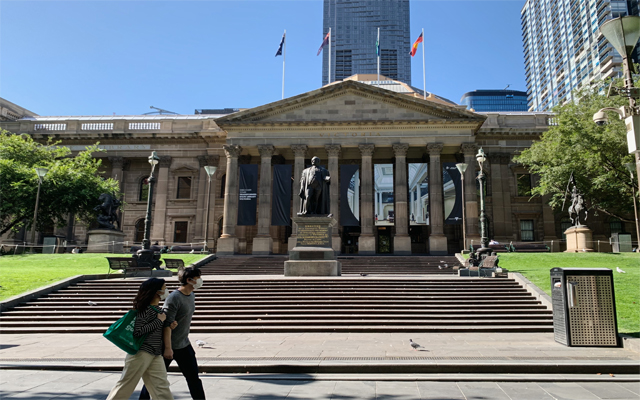
CBD Lockdown, Shopping for essential while passing by State Library Victoria.
Melbourne authorities have locked down the city for a second time after the emergence of 191 new cases overnight – its biggest daily increase since the crisis began – according to a Channel NewsAsia report.
State premier Daniel Andrews said the lockdown would begin at midnight on Wednesday and last at least six weeks. The new restrictions are expected to affect about five million people.
Melbourne has imposed a six-week lockdown after a rise in virus cases, raising fears of a second wave; people walking past State Library Victoria during lockdown in April pictured
Most school students will return to remote learning, while restaurants and cafes will be limited to serving takeaway food.
Although the lockdown covers the Melbourne metropolitan area, the entire state of Victoria will effectively be sealed off from the rest of the country from Tuesday midnight, as state borders are closed.
Roughly 3,000 people were also locked in their homes last weekend after a cluster emerged in a high-rise public housing estate. There are now 69 infections linked to the estate.
Australia has recorded almost 9,000 cases of Covid-19 and 106 deaths from the virus.
Almost all new daily cases are being detected in Melbourne, while other regions are enjoying relaxed restrictions after largely curbing the spread.
Royal Caribbean Group (RCG) has teamed up with Norwegian Cruise Line Holdings (NCLH) to assemble a panel of leading health experts who will oversee the development of enhanced health and safety protocols for cruise lines.
The Healthy Sail Panel is co-chaired by former Utah state governor Mike Leavitt, who also served as secretary of the US Department Health and Human Services; and Scott Gottlieb, former commissioner of the US Food and Drug Administration.
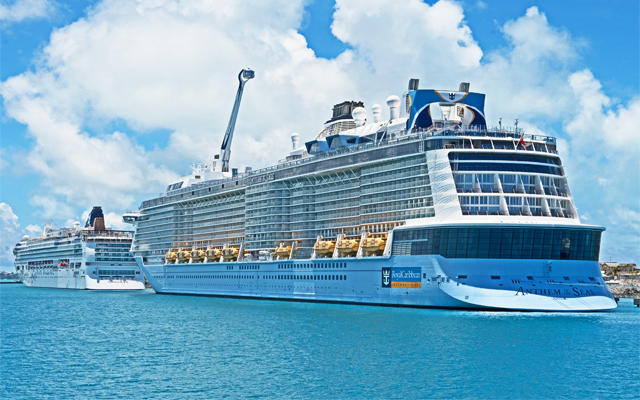
Royal Caribbean (pictured), Norwegian set up expert panel to develop health protocols for cruise lines, as it works to rebuild cruising’s reputation amid Covid-19
The duo will work alongside top experts in public health, infectious disease, biosecurity, hospitality and maritime operations to develop Covid-19 public health protocols for cruise lines to safely resume operations.
The expert panel has been working for nearly a month and will offer its initial recommendations by the end of August, according to a press release. The cruise lines said in the release that its work will be “open source” and could be freely adopted by any company or industry that would benefit from the group’s scientific and medical insights.
RCG chairman and CEO, Richard Fain, said: “This unprecedented disease requires us to develop unprecedented standards in health and safety. Bringing aboard these respected experts to guide us forward demonstrates our commitment to protecting our guests, our crews and the communities we visit.”
NCLH president and CEO, Frank Del Rio, added: “We compete for the vacationing consumer’s business every day, but we never compete on health and safety standards. While the cruise industry has always had rigorous health standards, the unique challenges posed by Covid-19 provide an opportunity to raise the bar even higher.”
Fain and Del Rio said they initiated the panel to assure the plans they will submit to the US Centers for Disease Control and Prevention and other regulators apply the best available public health, science and engineering insights. The work of the panel will be shared with the entire industry and regulators.
Hotels in Dubai may have missed out on energy savings worth AED1.5 million (US$408,441), according to a research conducted by UAE-based technology and sustainability-driven facilities management company Farnek.
The study involved 12 four- and five-star hotels and relied on hotel energy data as well as Hotel Optimizer, an online performance tracking tool for measuring and benchmarking energy, water and waste.
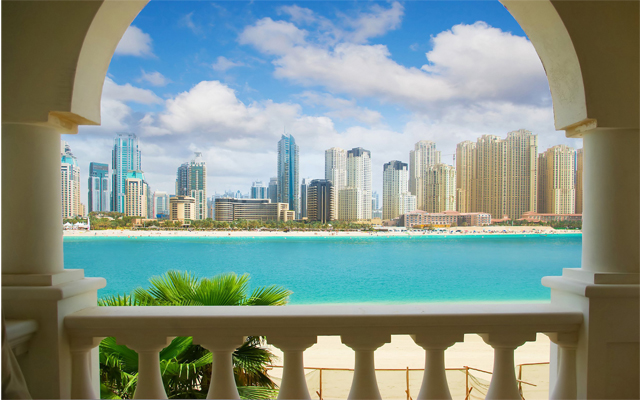
Dubai hotels missed out on huge cost savings in energy bills, according to a recent study; Dubai cityscape pictured
The study revealed that for the three-month period between March and May this year, compared with the same period last year, Dubai hotels may have each missed out on an opportunity to save at least AED80,000 in energy costs and to reduce their carbon emissions by 74 tonnes in the process.
Findings were presented to key hospitality figures during a recent webinar hosted by leading sustainability experts from Farnek, the Swiss Business Council and Earth Matters Consulting.
Markus Oberlin, CEO, Farnek, said: “The hotel industry has faced significant challenges since the outbreak of the coronavirus, not least with airlines grounded, Expo 2020 postponed, low oil prices, social restrictions and low consumer confidence. Therefore, it is vitally important that hotels make the most of any cost savings wherever possible and the first step as always, is to identify the opportunities.”
Farnek noted that the average occupancy of the 12 surveyed hotels stood at 25 per cent during March to May 2020, compared to 73 per cent in the same period last year. Energy consumption for the 12 hotels had fallen to 23,000 MWh compared to last year’s 32,000 MWh during the research period.
Nadia Ibrahim, head of consultancy at Farnek, commented: “According to our calculations, had these hotels put an effective energy management strategy into practice, they could have reduced their consumption to 19,000 MWh with a saving of 4,000 MWh or 17.4 per cent. That’s equivalent to a saving of AED1.45 million, plus it would have reduced their combined carbon emissions by 1,350 tonnes.”
Following international best practice, Farnek’s strategy to manage energy consumption includes strategic guestroom deployment, chiller and ventilation optimisation, occupancy-based set point adjustments and fan controls.
Tourists visiting ancient chinese architecture. historic buildings Imperial Palace, the forbidden city with blue sky in Beijing, China
Chinese travellers display a strong desire to resume travel this year, with most preferring to travel domestically further afield due to uncertainty around the pandemic overseas, according to a recent Ctrip survey.
The 2H2020 Travel Sentiment Survey by Ctrip’s Tourism Big Data Lab, which polled several thousand Ctrip.com users hailing from more than 50 cities across China, showed that 82.6 per cent of respondents are keen to travel in 2H2020. Of these, 80 per cent signalled preference for longer-distance travel between provinces.
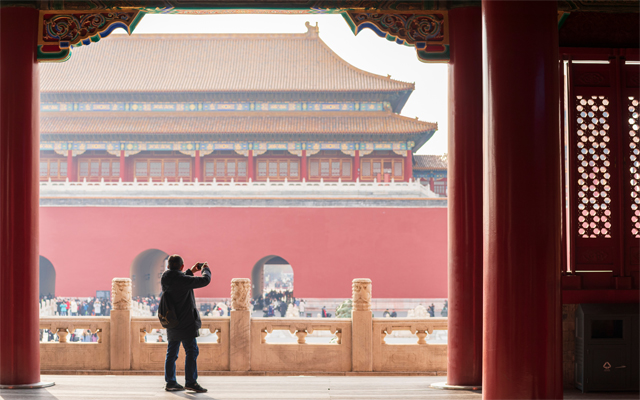
Most Chinese travellers willing to increase or maintain their travel expenditure on their next trip: Ctrip survey; a tourist visiting the Forbidden City in Beijing, China pictured
Similarly, 80.2 per cent of participants in a recent study by the China Tourism Academy (CTA) said they intend to travel in 3Q2020, marking a recovery of approximately 90 per cent compared to 2019 figures.
Ctrip’s Tourism Big Data Lab researcher Peng Liang said in a press release that pent-up market demand in 1H2020 will be progressively released in 2H2020, should the pandemic die out and cross-province travel open up. According to CTA, the travel market is likely to have a U-shaped recovery this year.
This bodes well for tourism companies and employees, especially as summer vacation and holidays such as Mid-Autumn Festival and National Day near.
Domestic travel reigns supreme
More than half of respondents (57.1 per cent) indicated that they would contemplate going on more domestic trips if outbound travel does not recover in the rest of 2020.
In line with summer holidays and the National Day holiday, results indicated that the peak travel periods will be July, October and August; with 43.1 per cent, 42.6 per cent and 41.9 per cent of respondents preferring these months, respectively.
Western provinces and Hainan province (which is near Hong Kong and Macau) are expected to become choice destinations. In fact, Yunnan, Hainan and Sichuan emerged as the top three most popular destinations. They were followed by – in order of popularity – Xinjiang, Tibet, Shaanxi, Guizhou, Shanghai, Chongqing, Beijing, Zhejiang, Jiangsu, Hunan, Guangdong and Shandong.
For domestic travel, particularly longer-distance travel within the country, most travellers favoured FIT trips (61.5 per cent) or group tours (51.6 per cent). Meanwhile, 25.6 per cent and 19.4 per cent of respondents indicated interest in customised tours and self-drive trips, respectively.
These trip type preferences were also reflected in Ctrip’s recent bookings, with the three most popular product types being FIT, intra-province group travel, and customised tours. Concurrently, car rental numbers were shown to have recovered to 2019 levels.
Meanwhile, a significantly higher proportion of participants in the CTA study indicated interest in self-drive trips (40 per cent), with the same percentage indicating a preference for trips to scenic destinations.
Departments of cultural and tourism across various destinations in China have also been pushing for plans to revive cross-province group tours, said a spokesperson from the CTA. These plans are set to be rolled out once market conditions are favourable.
Most to spend within RMB 5,000 to 10,000 per trip
Interestingly, a significant majority (70 per cent) of respondents said they intended to increase or maintain their travel expenditure.
Nearly 40 per cent of respondents indicated that they would set aside RMB5,000 (US$711) to RMB10,000 per trip, making it the most popular travel budget range in the survey. This was followed by a budget of more than RMB10,000 a trip, the choice of approximately 30 per cent of respondents.
Meanwhile, around three per cent of respondents said they would be willing to fork out RMB50,000 or more per trip.
OTAs most popular booking channel
While OTAs such as Ctrip were the most popular travel booking channel among survey respondents (45.3 per cent said they would make bookings via OTAs), 43 per cent of respondents said they would make travel reservations through traditional brick-and-mortar agencies.
Meanwhile, booking via offline retail presence of OTAs has emerged as a significant trend in recent years. This was reflected in the survey, with 41.9 per cent of respondents saying they would book through this channel.
– Translated by Angela Teo; this article was first published in TTG China
China’s tourism platform company LN Holdings has partnered Chinese air taxi maker EHang Holdings to turn LN Garden Hotel Nansha in Guangzhou into the world’s first urban air mobility (UAM) themed hotel.
The hotel will offer air tourism experiences to guests through aerial sightseeing, traveller transportation, air logistics, aerial media light shows, intelligent exhibitions and education.
LN Garden Hotel Nansha’s guests can enjoy an aerial tour of the hotel in EHang’s passenger drone
“We can fulfil guests’ travel demands in the air and on the ground by combining intelligent technology with exceptional tourist experiences. Eventually, we will provide new products and services across different sectors, business categories and regions in the country,” said Liang Lingfeng, general manager of LN Group and chairman of LN Holdings.
As part of the collaboration, EHang 216 AAV (autonomous aviation vehicle) services will be introduced at LN Garden Hotel Nansha, making it the world’s first hotel to offer such guest experiences. Guests will have the chance to enjoy aerial sightseeing in the two-seater passenger-grade AAV, as they cruise above the hotel grounds and its natural surrounds.
The hotel’s Ehang 216 AAV new service routes and packages will be announced at a later date.
This cross-sector collaboration paves the way for the integrated operation of air mobility solutions in the tourism industry, while establishing Guangzhou as China’s first and the world’s leading UAM smart city, according to Hu Huazhi, founder, chairman and CEO of EHang.
Lotte Hotels & Resorts, South Korea’s largest hotel group, has embarked on a long-term partnership with Sabre Corporation to increase its visibility in global markets.
Under the agreement, the luxury hotel chain will be connected to nearly 900,000 travel agents across multiple GDSes and more than 600 online channels across the globe, through the GDS connectivity solution powered by Sabre Hospitality Solutions’ SynXis platform.
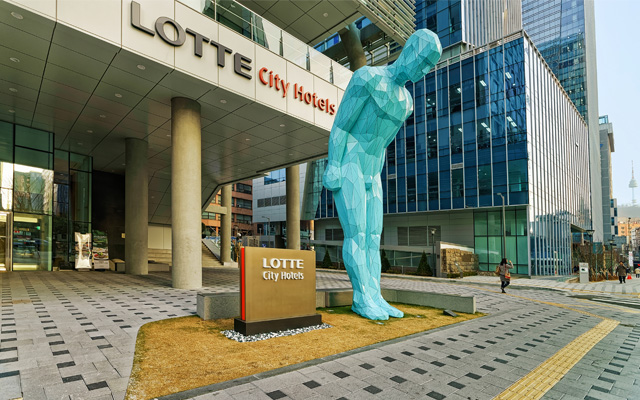
Lotte inks deal with Sabre to grow its global footprint; Lotte City Hotel Myeongdong in Seoul, South Korea pictured
Partnering with Sabre will heighten Lotte’s visibility to travellers worldwide, making it easier for travel agents to find content and book hotel stays and ancillaries using the hotel group’s unique private label chain code, LL, on Sabre’s GDS system. Lotte will migrate more than half of its hotels to the SynXis platform, starting from this year.
Frank Trampert, managing director and chief commercial officer, EMEA & APAC, Sabre Hospitality Solutions, said: ”With this announcement, we are empowering a new distribution strategy for Lotte, enabling increased exposure to global markets in line with their far-reaching expansion plans. Additionally, our solutions will enable Lotte to further grow brand awareness in new and existing markets, manage their portfolio revenue, provide future strategy planning opportunities and refine their distribution strategies to support their exciting business goals.”
Lotte has 20 properties in South Korea as well as hotels in the US, Russia, Japan, Vietnam, Myanmar and Uzbekistan, and its latest hotel in Seattle will be its 32nd opening.
Genting Cruise Lines (GCL) has revealed that Dream Cruises’ Explorer Dream is the world’s first cruise ship to receive the Certification in Infection Prevention for the Maritime industry (CIP-M) by global healthcare and classification body DNV GL.
The CIP-M certification of Explorer Dream comes ahead of the cruise ship’s resumption of sailings in Taiwan from July 26, 2020.
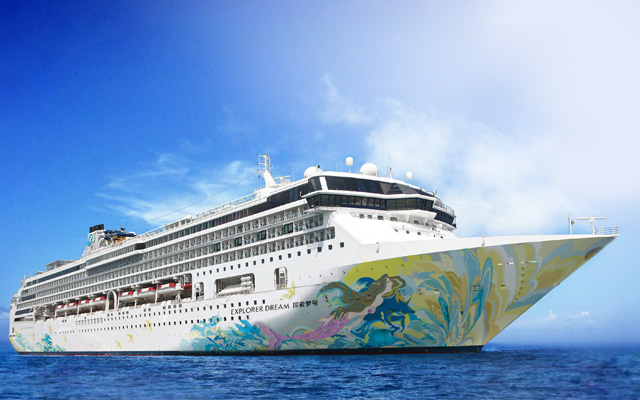
Explorer Dream receives DNV GL’s infection prevention certificate as it prepares to resume Taiwan sailings
Explorer Dream will homeport in Keelung to operate a series of round-trip cruises, including a two-, three- and four-night itinerary to Penghu, Matsu and Kinmen islands, as well as Hualien in Taiwan.
Dream Cruises will be the first cruise line in the world to begin sailing after the global cruise industry was shut down due to the pandemic.
The CIP-M certification programme, which utilises DNV GL’s expertise in infection risk management, is paving the way in introducing new safety and preventive measures tailored for the maritime industry.
GCL said in a press statement that CIP-M “is based on proven hospital standards and measures against infection risk and further tailored for cruise ships by experts from various fields including the maritime industry”.
The cruise company said that it is working with DNV GL to get CIP-M certification for all its other cruise ships “in the near future”.
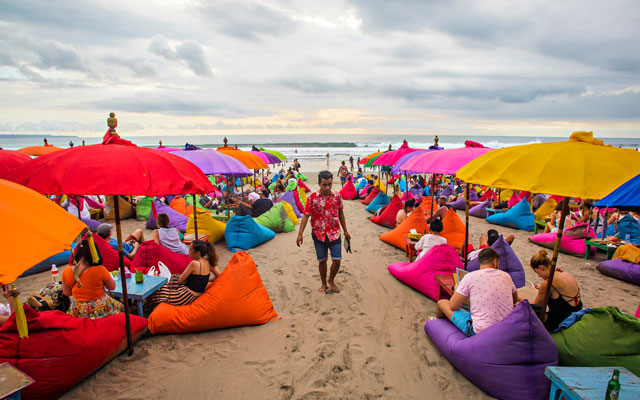
As Bali prepares to welcome domestic tourists back, tourism players in the destination are required by authorities to obtain health and safety accreditation, as part of efforts to regain traveller confidence.
According to Tjokorda Oka Artha Ardana Sukawati, vice governor of Bali, the Bali administration plans to reopen the island’s tourism facilities to local Bali residents on July 9, followed by Indonesian travellers on July 31.
Bali ramps up safety measures ahead of domestic travellers’ return; tourists at Seminyak Beach in Bali pictured
Prior to resumption of business, all tourism facilities, including hotels, restaurants, attractions, transports, and travel agencies, have to obtain certification to ensure compliance with health and hygiene protocols, he said in a statement on June 29.
A circular rolled out by Bali Tourism Agency on June 25 stipulates that tourism players looking to obtain a health and safety certification to resume operations must meet the following requirements: implementing a cashless payment system, providing hand sanitisers and thermo guns, checking the temperature of staff and visitors, declining visitors without a mask, and providing physical distancing markers.
The certification initially also required travel-related companies to conduct rapid tests for all staff on the company’s dime, but was scrapped following outcry from industry players.
Wisnu Arimbawa, managing director of Good Day Tour, said: “The fact that a rapid test costs at least 250,000 rupiah (US$17) for one person and the result would be valid for a maximum of 14 days posed an issue for travel agencies. I cannot imagine how big the expenditure will be when the result expires and we have to take the test over and over again.”
Tjokorda stressed that Bali has to apply strict health and safety measures, and punishment has to be meted out on fraudulent business players who fail to obey the protocols, not ruling out permit revocation for offenders.
Fransiska Handoko, general manager of Risata Bali Resort and Spa and government relations director of Bali Hotels Association, has, however, pointed out that the government’s circular lacked technical guidance on health and safety measures to be taken by trade players.
To ensure that hotels and resorts across Bali have adhered to safe management measures, Bali Tourism Agency head I Putu Astawa said he has formed a verification team of about 100 members to undergo spot checks during the certification process. The members hail from various associations, including the Association of Indonesian Tours and Travel Agencies and the Indonesian Hotels and Restaurant Association.
The officers in the verification team will assess the readiness of the association members with regards to the new protocols.
“(Tourism players who manage to pass the health and safety accreditation) will sign a pact of integrity. After that, we will give them the certificate,” said Putu, adding that officers will check if measures are indeed taken onsite.
Following the success of the first virtual Resilience Council summit, the Global Travel & Tourism Resilience Council will move to conduct its second series which will look into how destinations are dealing with new challenges and opportunities arising from the pandemic.
The second summit on July 8 will be held in partnership with Jacobs Media Group and FINN Partners.
There will be eight webinars available to access throughout the day, including sessions on Europe, Asia, the Middle East, Africa, and the Americas. Each panel will take an in-depth look into what is working and how each destination differs in their approach to recovery following the crisis.
A strong line-up of speakers will include PATA’s Mario Hardy; Jamaica minister of tourism Edmund Bartlett; Beautiful Destinations’ Jeremy Jauncey; Ras Al Khaimah Tourism Development Authority’s Raki Philips; and Intrepid Group’s James Thornton.
The virtual destination summit is one of a series of activities presented by Finn Partners and the Global Travel and Tourism Resilience Council, and is part of a succession of initiatives which include the launch of the Finn Partners Travel Recovery and Resilience Think Tank, a unique collection of some of the world’s best thinkers in health, technology, travel, sustainability, media and culture.
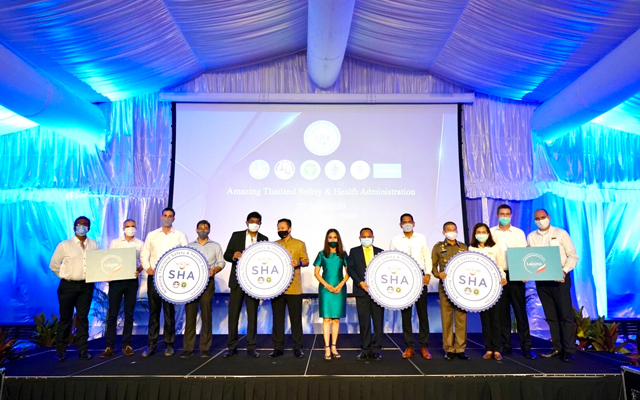
Banyan Tree Group’s integrated resort, Laguna Phuket, has been awarded the Amazing Thailand Safety and Health Administration (SHA) certificates by the Tourism Authority of Thailand.
The certificates were conferred upon the resort’s seven deluxe hotels and golf course by the Tourism Authority of Thailand (TAT) governor Yuthasak Supasorn and the new Phuket governor Narong Woonchiew at an award ceremony held at the Angsana Convention and Exhibition Space. The event was attended by representatives from the Phuket Tourist Association, hospitality professionals and local media.
Reps from Laguna Phuket’s seven deluxe hotels and golf course receiving the Amazing Thailand Safety and Health Administration certificates from TAT governor Yuthasak Supasorn and Phuket governor Narong Woonchiew
Banyan Tree Holdings executive vice president and Laguna Phuket managing director, Ravi Chandran, said: “Now reopened with enhanced protocols for safety and trust, we have launched #StaySafeWithLagunaPhuket to promote our destination as a safe sanctuary. Among the first in Thailand to receive the SHA certificates, we are uniquely placed to ensure total safety within our destination.
“All hotels in Laguna Phuket have implemented global safety programmes while the non-hotel resort facilities and services have enhanced safety measures. This makes Laguna Phuket the biggest and most inclusive destination resort that is fully certified – the safest destination to welcome our guests.”
Last month, the group launched the SafeSanctuary Programme in partnership with Bureau Veritas to co-develop a proprietary label and certification system comprising over 40 new safety protocols, which was rolled out across all its properties including Laguna Phuket.



 There will be eight webinars available to access throughout the day, including sessions on Europe, Asia, the Middle East, Africa, and the Americas. Each panel will take an in-depth look into what is working and how each destination differs in their approach to recovery following the crisis.