TTG Asia
Asia/Singapore Saturday, 27th December 2025
Page 96

ASEAN Travel Exchange 2025 to debut in Kota Kinabalu this June

0

The inaugural ASEAN Travel Exchange (ATEX) 2025 will take place at The Magellan Sutera Resort, Kota Kinabalu, from June 19 to 21, marking a significant milestone in regional tourism collaboration and recovery efforts.

The event is organised by leading South-east Asia’s tourism bodies, including the ASEAN Tourism Association (ASEANTA), Federation of ASEAN Travel Associations (FATA), and the Malaysian Association of Tour and Travel Agents (MATTA). It is supported by the Ministry of Tourism, Culture and Environment Sabah, Sabah Tourism Board, Sabah Convention Bureau, and strategic partners AirAsia Group and Jetama Water.

International buyers and sellers will convene in Kota Kinabalu for the first ASEAN Travel Exchange

ATEX 2025 is expected to attract 354 delegates, comprising 229 semi-hosted buyers and 125 sellers. Buyers will attend from 17 countries, including China, India, Nepal, Pakistan, Oman, South Korea, Iran, Myanmar and Vietnam. They primarily represent tour operators, travel agents, hoteliers, and tourism product owners.

Sellers represent seven ASEAN member states – Malaysia, Singapore, Indonesia, the Philippines, Thailand, Cambodia and Vietnam – and cover sectors such as accommodation, transport, attractions, and destination management services.

FATA president Tan Kok Liang said: “This is a timely event that not only aligns with Visit Malaysia Year 2026 but also positions Sabah as a central player in ASEAN’s multi-destination travel ecosystem. ATEX supports ASEAN connectivity goals by facilitating increased visitor flows and regional cooperation. It also reinforces Sabah’s growing reputation as a premier business events destination, helping to enhance its international visibility and economic prospects.”

The official opening on June 19 will feature speeches by Sabah’s chief minister, Hajiji Noor, and the state’s minister of tourism, culture and environment, Christina Liew. The programme will include product presentations from Sabah Parks, Sabah Wildlife, Sabah Convention Bureau, Sabah Tourism Board, and AirAsia. The day will conclude with a welcome dinner at Shangri-La Tanjung Aru.

June 20 will be dedicated to B2B speed-dating sessions between buyers and sellers. On June 21, hosted buyers will take part in curated post-show tours designed to showcase Sabah’s cultural, natural, and island attractions.

Tan added: “The post-tours are designed to give buyers immersive experiences and a deeper understanding of Sabah’s tourism offerings. It’s not just about selling a destination, it’s about experiencing it.”

Looking ahead, Tan confirmed that there are plans for ATEX to become a recurring ASEAN tourism trade event, rotating among member countries. The continuation and future host of the event will depend on the outcomes of this first edition, with factors such as stakeholder feedback, participation, and regional interest playing a role in decisions going forward.

Bhutan sees rising repeat visitorship, welcomes continued tourism developments

0

Tourist numbers to Bhutan are improving post-lockdown, with 145,065 arrivals recorded in 2024, up 41 per cent over 2023. Performance as of May 2025 has also been encouraging, with the Department of Tourism noting 73,892 year-to-date tourist arrivals.

According to Damcho Rinzin, director for Bhutan’s Department of Tourism, the year-to-date figures indicate continued momentum and increased interest in Bhutan as a preferred travel destination, particularly during the first half of the year.

Bhutan’s tourism grows as repeat visitors increase and new experiences promote year-round travel; photo by Marcus Westberg

More importantly, Rinzin said travel and tourism industry players have observed a growing number of repeat visitors to the country.

“At present, the Department of Tourism does not have formal data on the percentage of repeat visitors. However, anecdotal evidence and feedback from tour operators suggest that repeat visitation, while not yet dominant, is an emerging and valuable segment. This group typically includes longhaul travellers and visitors with a strong interest in wellness, spirituality, or in-depth cultural experiences,” he told TTG Asia.

Rinzin added that repeat visitorship is “strategically important to Bhutan”, as returning travellers tended to “stay longer, travel to tourist deficient areas, spend more, and engage more meaningfully with local communities, contributing to Bhutan’s overall tourism goals of sustainability and cultural preservation”.

Repeat visitorship to Bhutan will thrive as the country actively positions itself as a year-round destination. Efforts are focused on creating events like the Rhododendron Festival, the Black-Necked Crane Farewell Festival, and the Phallus Festival throughout the year to highlight the country’s cultural and natural heritage.

In sharing Bhutan’s tourism performance with TTG Asia, Rinzin said Asian markets are significant to the country. In the first five months of 2025, India remained the leading source country, followed by Thailand, Singapore, Bangladesh, Malaysia, and China.

He said: “These markets play a crucial role in Bhutan’s tourism landscape, not only due to geographical proximity and strong travel connectivity but also because of shared cultural affinities and a growing interest in Bhutan’s unique offerings, particularly in nature-based experiences and spiritual tourism. The Asia market is expected to remain a core pillar of Bhutan’s tourism development strategy going forward.”

Rinzin attributes Bhutan’s enduring reputation of being an aspirational and inspirational destination for many travellers to various factors: its distinctive tourism policy, which focuses on high-value, low-volume regenerative travel; its development philosophy, which focuses on Gross National Happiness that is built on priorities in well-being, environmental conservation, and cultural integrity; and a tourism system that ensures personalised service, access to expert guides, and opportunity to engage in experiences that are not commodified.

While Bhutan offers several evergreen attractions, the country is actively working to “enhance tourism while maintaining its core principles”, stated Rinzin.

One significant initiative is the Bhutan Integrated Tourism Master plan 2025–2034, a long-term roadmap focusing on product diversification, better visitor management, skills development, and improved access to lesser-visited regions.

“The aim is to spread tourism benefits across districts and enhance resilience,” he said.

Other new initiatives include the launch of the Tourism Services Portal to streamline visitor services; the opening of the Wangdichholing Museum in Bumthang to preserve Bhutan’s royal history and showcase artefacts and traditional Bhutanese art; the opening of the Samdrup Jongkhar Border Gate to improve access to Bhutan’s eastern regions; and the creation of a cryptocurrency payment system for tourism through a partnership with Binance Pay and DK Bank.

A new tourism mobile app is also being developed to provide real-time information and services to travellers, enhancing convenience and the overall travel experience.

Trip.com expands attractions business in South-east Asia through new partnerships

0

Trip.com has formed two strategic partnerships to expand its Attractions & Tours business across South-east Asia. The company has signed agreements with Vietnam’s Sun World Holding and Singapore-based DreamUs International Holdings, operator of attractions including the recently updated SuperPark Singapore.

The partnerships are part of Trip.com Group’s efforts to broaden its product range and support partners in digital transformation and international market development.

From left: Trip.com Group’s Chase Liu and Sun World Holding’s Christine Tran

In Vietnam, Trip.com has partnered with Sun World Holding, a brand under Sun Group. The agreement was signed during the Trip.com Group Envision 2025 Global Conference in Shanghai. Under the partnership, Trip.com will distribute Sun World attraction tickets in both domestic and international markets, focusing on inbound travel from South Korea, China, Thailand and Singapore. Joint marketing efforts will also promote destinations including Phu Quoc, Danang and Sa Pa.

In Singapore, Trip.com has signed an exclusive ticket distribution agreement with DreamUs International Holdings, operator of SuperPark Singapore, Pororo Park Singapore and Tayo Station. Under the agreement, Trip.com will serve as the sole authorised third-party distributor for tickets to these attractions, centralising inventory management and expanding regional access. DreamUs will continue to sell tickets directly through its official website and on-site counters; all other online platforms and resellers must now source ticket inventory exclusively through Trip.com or its appointed partners.

These partnerships form part of Trip.com’s ongoing engagement with South-east Asia’s travel sector. The company continues to expand its platform capabilities through collaboration with regional operators, supporting both digital distribution and access to local experiences.

Trip.com’s Attractions & Tours business in South-east Asia reported strong growth last year, with gross merchandise value (GMV) more than doubling year-on-year. In Vietnam, GMV rose by over 250 per cent compared to the previous year, while the Singapore market grew by more than 80 per cent.

Chase Liu, general manager of attractions & tours, Trip.com Group, said: “This partnership strengthens Trip.com’s leadership in the attractions and experiences space. Together, we aim to promote Vietnam as a premier travel destination and deliver unforgettable experiences to our users worldwide.”

Christine Tran, deputy CEO of Sun World Holding, added: “With Trip.com’s influence, we hope not only to enhance service quality for our customers through technological solutions and optimised distribution systems to Sun World parks but also to strengthen the presence of Sun Hospitality & Entertainment’s ecosystem in key international markets, especially in Asia.”

Marriott International’s luxury dining series returns across Asia-Pacific

0

Marriott International’s Luxury Group is bringing back its Luxury Dining Series, a regional culinary programme taking place from July to September 2025 across Asia-Pacific. Participating hotels include The St Regis Osaka, JW Marriott Jeju Resort & Spa, JW Marriott Bengaluru Prestige Golfshire Resort & Spa, The Ritz-Carlton Perth, The St Regis Singapore, The St Regis Jakarta, and The Ritz-Carlton Bangkok.

The series will feature collaborative dinners, tasting menus, high teas and cocktail events led by chefs and bartenders from Marriott properties and partner venues. Marriott Bonvoy members may bid for access using loyalty points through Marriott Bonvoy Moments.

The St Regis Singapore’s Astor Grill will host a six-hands menu in Marriott’s Luxury Dining Series, which returns from July to September this year

In Osaka, Japanese chefs Takato Kitano and Yuki Oe will open the series alongside Hong Kong’s Agustin Balbi and local chef Michiaki Yoshida, with additional contributions from bartender Hideyuki Saito and pastry chef Alex Chong.

Jeju’s programme includes a Six-Hands dinner by Paul Smart, Ryan Byrne and Jayden Kim, a high tea by chefs Sienna Wang and Shigeru Nojima, and a brunch menu honouring the Haenyeo divers.

Bengaluru’s events include an Indian feast by Riyaz Ahmed, a farm-to-table dinner by Neeraj Rawoot, and collaborative menus drawing from Korean BBQ, Omakase and Cantonese cuisine. A cocktail event will feature mixologists from The Bvlgari Bar in Ginza.

In Perth, chefs Brian Cole and Katsuhito Inoue will combine open-fire Australian cooking with Japanese kaiseki, accompanied by a local produce-themed afternoon tea and cocktails by Marco Barsotti and Kentaro Wada.

Singapore will offer a Four-Hands Cantonese dinner by chefs Chan Chung Shing and Daniel Wong, a European menu by chefs from Portugal, Singapore and The Astor Grill, as well as local dessert reinterpretations by Angela Lai and Ng Chee Leong. Bar teams from Singapore, Jakarta and Bangkok will collaborate on cocktails.

Jakarta’s events include chocolate tasting by Janice Wong, a Swiss menu by Arne Riehn of IGNIV Bangkok, and a traditional Indonesian dinner by Almatino Gabriel Ibrata. Afternoon tea and a mixology showcase will also be held.

The series concludes in Bangkok with European menus by chefs from Duet by David Toutain and Roganic, a brunch by regional chefs including Tala Bashmi, and a private dinner featuring Bahraini cuisine. The programme also includes bar takeovers and a chocolate-focused afternoon tea at Calēo.

Oriol Montal, regional vice president, luxury, Asia Pacific excluding China, Marriott International, commented: “This year’s exclusive collaborations and experiences will celebrate ancient ingredients reimagined for the modern palate, reflecting a key theme identified in The Future of Food 2025 report – Forgotten Flavors.

“Through immersive collaborations and multi-sensory storytelling, we are offering crafted, unforgettable culinary experiences that seamlessly blend craftsmanship, cultural heritage, and innovation.”

New hotels: Amanoi, Rosewood Luang Prabang and more

0
Amanoi Ocean Pool Residence

Amanoi, Vietnam
Amanoi, nestled between Núi Chúa National Park and Vinh Hy Bay, has unveiled its newest private villa – the Amanoi Ocean Pool Residence. The new residence is a 925m², three-bedroom villa perched above a beach, offering privacy, wellness, and ocean views. The interiors include an open kitchen, wine cellar, living room, large sundeck, alfresco dining sala, and a central swimming pool with private beach access.

The villa features a private spa house with a double treatment room, steam room, sauna, outdoor Jacuzzi, and daily 90-minute spa treatments included. Guests enjoy exclusive perks like private dining, a catamaran cruise, a 24-hour butler, minibar, buggy, daily breakfast, and airport transfers (for stays of more than two nights).

Access to resort facilities offers guided treks, snorkelling, kayaking, and a kids’ programme, plus amenities like a lakeside spa, hilltop infinity pool, restaurant, bar, library, and Beach Club.

Rosewood Luang Prabang

Rosewood Luang Prabang, Laos
Rosewood Luang Prabang reflects Laos’ cultural identity through traditional architecture and materials. Located 10 minutes from the UNESCO World Heritage city, the resort is set among mountains with a waterfall and creek running through the estate.

The property offers 23 accommodation options including Riverside Rooms, Riverside Suites, Riverside Villas, Waterfall Pool Villas and Hilltop Tents. Each unit borders the riverbank, with Hilltop Tents featuring private dining areas and balconies.

Dining options include The Great House, serving farm-to-table Laotian and Western cuisine with indoor and open-air seating overlooking gardens and a waterfall, and the Elephant Bridge Bar, located above the river offering cocktails, light snacks, and local flavours.

The spa provides treatments using Laotian healing remedies and Western techniques in tented villas overlooking the river, with ingredients from the resort’s organic garden. The central swimming pool, adjacent to a natural waterfall, offers sun beds and cabanas in a forest setting. Guests can also play pétanque or croquet in the gardens.

Tailored experiences are also available, such as trekking, river cruises, cultural tours, and wellness activities.

Courtyard by Marriott Danang Han River

Courtyard by Marriott Danang Han River, Vietnam
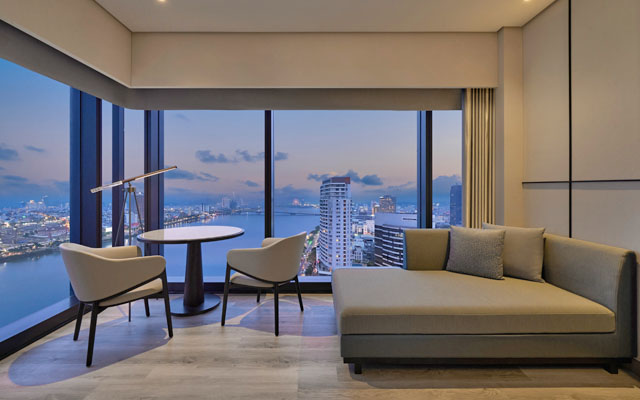
Courtyard by Marriott Danang Han River marks Marriott’s debut in Vietnam with a 45-storey hotel in downtown Danang. Overlooking the Han River, the 300-room property features floor-to-ceiling windows as well as amenities.

Dining options include a restaurant serving Vietnamese and international cuisine with live kitchens, an espresso bar, and a lobby lounge.

The hotel offers 10 meeting rooms totalling 1,000m², including a grand ballroom with an 8.5-metre ceiling, ideal for conferences, weddings, and social events. Leisure facilities feature a rooftop infinity pool, kids’ pool, and a fitness studio on the 29th floor.

Located near Danang’s famous beaches and cultural sites, the hotel is just 4.4 km from Danang International Airport.

Pullman Phu Quoc Beach Resort

Pullman Phu Quoc Beach Resort, Vietnam
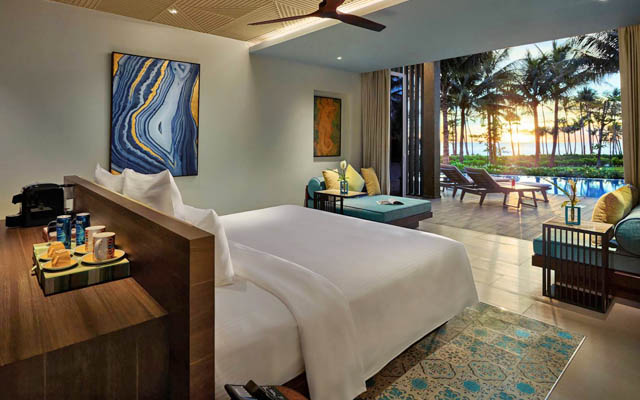
Pullman Phu Quoc Beach Resort, just 15 minutes from Phu Quoc International Airport, offers 331 rooms, suites, and cabanas, including Premium Deluxe Ocean View rooms with sweeping Gulf of Thailand vistas. The resort combines bold design with comfort, perfect for both relaxation and dynamic events.

Ideal for MICE and weddings, it features versatile indoor and beachfront venues. Dining highlights include Mad Cow Wine & Grill, a rooftop restaurant known for its Surf & Turf and sunset views.

Guests can explore nearby attractions such as pearl farms, Duong Dong night market, Hon Thom cable car, and Phu Quoc National Park.

BBTF 2025 kicks off with sustainability focus

0

The 11th edition of Bali & Beyond Travel Fair (BBTF) 2025 kicks off today, with a Tourism Talk Show: Achieving Sustainable Tourism with Intangible Cultural Heritage. This is in line with BBTF 2025’s theme, Indonesia: Preserving Green Nature and Cultural Heritage for the World.

In his opening address, I Putu Winastra, committee chairman of the BBTF 2025, said the theme reaffirms the travel and tourism industry’s “commitment to environmental and cultural sustainability and to sharing industry best practices that safeguard both nature and heritage in tourism”.

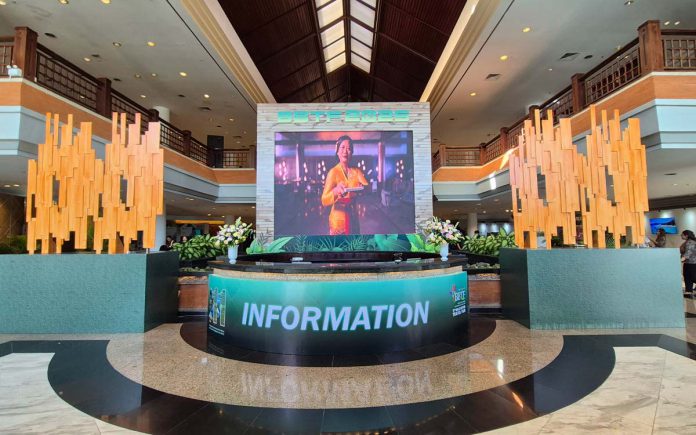
Bali & Beyond Travel Fair 2025 begins this week; photo by Mimi Hudoyo

He noted that industry players are doing more than just stating green promises; they are showing concrete proof and certifications for their environmentally friendly products and services.

“There must be proof, which will add value for (travel) buyers,” Putu told TTG Asia.

Tourism sellers are encouraged to highlight their tangible steps towards sustainability and their alignment with concepts like Bali’s Tri Hita Karana philosophy, which translates into “three sources of happiness”.

Putu said: “BBTF stands as a platform that reflects our commitment to responsible tourism, quality-driven experiences, and sustainable development. While challenges remain, our direction is clear: to promote partnerships that preserve nature, celebrate culture heritage, and create lasting value for both travellers and communities.”

Beyond the green focus, BBTF 2025 presents an array of tourism segments: spiritual and retreat tourism, medical and wellness tourism, adventure tourism, and luxury accommodation and services.

This year’s event is attended by 529 buyers from 45 countries, with the  largest contingents from Australia, India, the UAE, and the Philippines. They will meet with 499 seller companies across 284 booths, representing seven nations – Indonesia, Spain, Malaysia, Singapore, the US, Namibia, and Thailand – as well as 11 Indonesian provinces – Bali, West Nusa Tenggara, East Nusa Tenggara, DKI Jakarta, Yogyakarta, West Java, Central Java, Bangka Belitung Islands, Lampung, Riau Islands, and South Sulawesi.

There are more post-tours across Bali’s regions this year, covering Bangli to Karangasem. Additional tours outside of Bali, sponsored by Marriott International and Indonesia Tourism Development Corporation, have drawn significant interest from European buyers.

New elements have been introduced to the event this year to broaden reach and impact. The Pavilion Podcast Series is new; it is a storytelling platform for sellers to promote their offerings to global audiences.

Also new are the Knowledge Sharing Sessions, where international tourism leaders share insights. Networking spaces are larger too, to facilitate business matchmaking and industry collaboration in a more meaningful setting.

“To enhance our travel exchance experience, BBTF 2025 has introduced an upgraded digital system. Our mobile app enables buyers and sellers to manage appointments, receive real-time updates, and create more seamless and dynamic engagements,” Putu said.

Sri Lanka explores marine tourism potential through shipwreck diving

0

Sri Lanka, with 167 shipwrecks submerged in its surrounding waters, has been identified as a location with potential for marine tourism. This perspective was shared during a recent conference in Colombo, organised by the newly-formed Indian Ocean Divers Association (IODA), where discussions centred on Sri Lanka’s prospects for developing sustainable tourism.

To date, dive tourism – particularly visits to shipwrecks and underwater sites – has not been a prominent feature in Sri Lanka’s tourism offerings, which have traditionally focused on beaches, wildlife, culture, and nature-based attractions. However, participants at the conference suggested that shipwrecks and underwater exploration could become significant elements of a future tourism strategy.

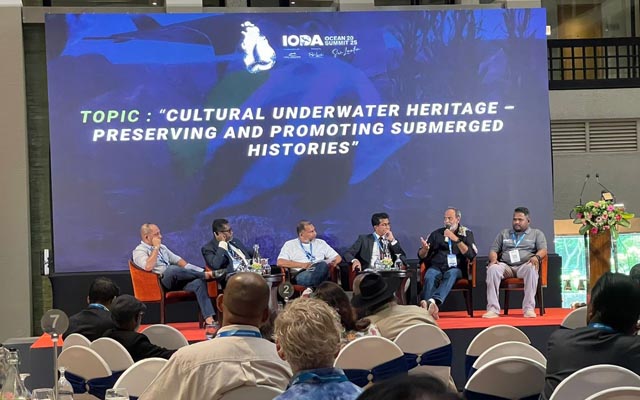
Experts highlight opportunities and challenges in developing sustainable underwater tourism during the recent conference in Colombo

Prasad Jayasuriya, director of tourism planning at the Sri Lanka Tourism Development Authority, said there is growing interest in ocean-related tourism, especially given that Sri Lanka’s maritime area is twice the size of its landmass. He noted the need to consider how best to develop ocean tourism, with diving forming a central component, and pointed to the country’s extensive marine resources.

Participants also discussed the idea of intentionally sinking decommissioned ships to create new dive sites, in addition to promoting existing wrecks, many of which date back to the world wars.

Praladh Kakkar, president of IODA, co-founder of ReefWatch Marine Conservation, and an experienced scuba diver, described the event as a platform for those interested in marine environments, including hoteliers, fishing communities, and divers. He suggested that establishing standards in dive tourism and underwater activities “could be the start of a worldwide movement”.

Kakkar emphasised the importance of preserving ocean ecosystems, stating that shipwrecks – some of which may contain historical artefacts – must be protected from vandalism and theft. He proposed that promoting these wrecks through tourism channels could attract global interest, particularly from those interested in wartime history.

Anees Adenwala, vice president of IODA and a pioneer in India’s outbound scuba diving and underwater filming industry, said that divers are naturally inclined to explore underwater environments. He highlighted the need for divers to adopt a role in protecting marine ecosystems.

The conference concluded with a call for the development of clear regulations and responsible practices in marine tourism, to ensure that ocean resources are preserved while supporting tourism growth.

Virtuoso leads sustainability summit for luxury tourism leaders

0

Virtuoso first-ever Impact Summit, held from June 2 to 5 at Fairmont Chateau Lake Louise in Canada, brought sustainable tourism development considerations to the fore through peer-to-peer discussions.

The event was attended by 105 attendees from nearly 20 countries, although none came from Asia.

Panel discussions led by industry professionals featured prominently at the Impact Summit

The by-invite event is said to be an outcome of Virtuoso’s long-established commitment to sustainable travel.

Speaking at the opening session, Virtuoso, vice chair and sustainability strategist, Jessica Hall Upchurch, said: “Our efforts to educate advisors and amplify the work of our partners to Virtuoso travellers started 15 years ago.

“Our principals when it comes to implementing sustainability in travel have always been ‘no shame, no blame’ and ‘start where you are’ – meaning we’d rather see 95 per cent of the world take one step forward than five per cent trying to get it perfect.”

She added that the idea for the Impact Summit took form “over a decade ago”, and had materialised though “continuous alignment and a labour of love and passion among our network”.

“We all know travellers want a great experience, but making it easy for them to feel good about who they give their money to adds an emotional element that’s a powerful differentiator,” said Hall Upchurch.

The Impact Summit demonstrated its own commitment to sustainability by offsetting emissions from activities. Using emissions data gathered from attendee travel and event operations, Virtuoso was able to offset 64.6 metric tons of carbon dioxide through Planetair’s verified Canada Tree Portfolio reforestation project, ensuring a carbon-neutral footprint for the gathering.

Attendees were also invited to take part in a variety of sustainability-focused activities, with options including hikes to Emerald Lake or Johnson Canyon, lessons on making natural salves, volunteering with local charity Soup Sisters to combat food insecurity, a tour of Lake Louise’s water treatment plant, and a warrior women tea ceremony.

While the inaugural event is deemed a success, Virtuoso told TTG Asia that it has yet to decide on the next edition.

Earlier in May, Virtuoso announced that its 2026 Virtuoso Symposium will head to Seoul, South Korea. Taking place from April 15 to 19, and held in partnership with the Korea Tourism Organisation, the event is expected to attract some 400 travel executives from over 35 countries.

NUSTAR ramps up sales strategy as Cebu tourist arrivals decline

0

With increased room capacity, NUSTAR Resort and Casino is stepping up its sales efforts to meet occupancy targets amid declining tourist arrivals in Cebu and growing competition.

In addition to the existing 376-room Fili Hotel, the resort has opened the 223-room NUSTAR Hotel, which is expected to be fully operational by January next year as it bids to host the ASEAN Tourism Forum. Construction has also topped off on the 400-room Grand Summit Hotel.

NUSTAR Resort intensifies sales amid lower Cebu arrivals and new hotel openings

Cristina Ong-Cruz, cluster director of sales and marketing, said the resort has general sales agents in South Korea, Japan and Singapore. It has also launched its own roadshows, engaging chambers of commerce, industry associations and travel accounts in Manila and provinces surrounding Cebu.

Sales offices in Manila and Cebu now employ 25 and 10 staff respectively, Ong-Cruz told TTG Asia.

NUSTAR Resort is also working with affiliated companies under the Gokongwei Group to support hotel and brand marketing, attract business events, and tap into international markets through the group’s wider network.

The resort aims to reach an occupancy rate of 70 per cent for Fili Hotel and 60 per cent for NUSTAR Hotel this year, said Ong-Cruz, adding that average occupancy rates in Cebu currently range between 50 and 70 per cent, down from pre-pandemic levels of around 80 per cent.

She attributed the decline to reduced foreign arrivals. China, once the leading source market, has dropped off significantly, while the current top market, South Korea, is also showing a downward trend.

According to her, Bohol and Manila have become major competitors for Cebu.

Japan’s Hirado city becomes world’s first certified Albergo Diffuso Town

0

Hirado city in Nagasaki Prefecture, Japan, has become the first local municipality in the world to receive official certification as an Albergo Diffuso Town (ADT). Under this model, accommodation, dining, and other hospitality services are distributed across the city, with the town functioning as a single, integrated hotel.

The term “albergo diffuso” combines the Italian words for “accommodation” and “dispersed” to describe a hotel concept where key functions such as reception, lodging, and dining are located throughout a town. Unlike conventional hotels, these services are accessed by moving through the town, offering visitors opportunities to engage with local residents and the surrounding environment.

Japan’s former trading hub, Hirado, redefines travel by turning the town into a living hotel; Hirado Castle, pictured

With this certification, Hirado has been recognised as the first municipality globally to adopt the ADT model. Hirado has a history as an international trading port and is known for the historical exchange between Japanese and foreign cultures. The city is home to several historical sites, including Hirado Castle, which began offering overnight stays in 2021, and the former Hirado Dutch Trading Post, once a base for the Dutch East India Company.

Hirado aims to use the certification to further promote sustainable tourism. The initiative includes efforts to increase interaction between residents and visitors while addressing challenges such as vacant housing and local employment.

Several facilities are part of the ADT network in Hirado. These include the Terrace, which serves as the general reception area and includes guestrooms, a café, and a shop within a renovated 200-year-old rice storehouse.

Restaurants include Chobotei Toranotsuki, located in a former feudal property, along with Onchan and Isokatsu. Lodging options include the Sumiya Heritage Hotel, a restored building from the late Meiji period, and the Jinbei Residence, located on land once occupied by a high-ranking samurai family.