

Yogyakarta will play host to ATF 2023
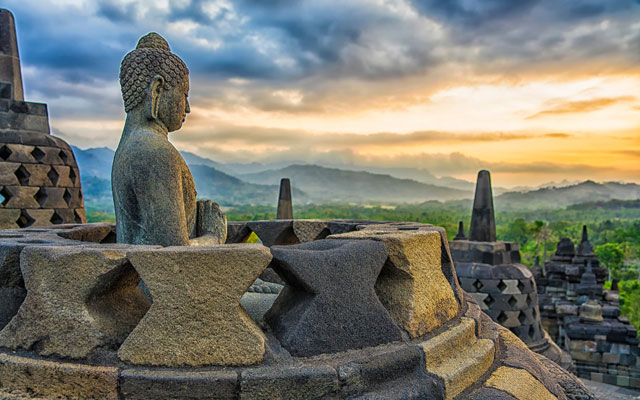
ASEAN Tourism Forum will return to Yogyakarta when it is Indonesia’s turn to host the annual event again come 2023.
The city last hosted the event in 2002.
The announcement was made by Indonesian minister of tourism and creative economy, Sandiaga Uno, at the 24th Meeting of ASEAN Tourism Ministers. “I am happy to announce that ATF 2023 will be held in one of the five super priority destinations in Indonesia: Borobudur, more specifically, Yogyakarta. We hope that ATF 2023 will (create) momentum for the national and regional recovery (of the country post-pandemic),” he said.
Ni Wayan Giri Adnyani, primary secretary of the Ministry of Tourism and Creative Economy, explained that apart from being one of the super priority destinations, Yogyakarta has been picked to host the event as the city has the facilities and capacity to host the Travex.
As well, Borobudur and the latest developments around the area will attract not only Buddhist communities from Thailand, Laos and Cambodia, but also, buyers from around the globe.
Furthermore, the new Yogyakarta International Airport, the trans-Java toll road and railway network across Java will provide relatively easy access for delegates.
Japan tour operators set to benefit from JTB-TripAdvisor partnership
Japan’s largest travel agency, JTB Corporation, and TripAdvisor’s brand Bókun have launched a digital platform to support tour and activity operators in Japan.
JTB Bókun will act as a bridge between operators and booking companies, such as overseas travel agencies, DMOs and accommodation providers, thereby boosting uptake of tours and activities among the domestic and inbound tourism markets.
The launch, on February 3, was prompted by three main factors: growing demand for “neighbourhood tourism” as a result of the pandemic, a rise in both the number of international visitors and repeat international visitors in recent years, and greater interest in themed or hands-on travel content.
JTB Bókun aims to support tour and activity businesses with limited digital resources to capture these escalating demands. Promising to help operators manage and grow their businesses, the platform has tools that will assist users in managing multiple reservation sites and inventory, evaluating sales performance, identifying growth opportunities, and facilitating partnerships.
Travellers, meanwhile, will be able to book tours and activities for almost immediate use. According to JTB Bókun, this is important because more and more visitors to Japan are making their bookings at short notice. The company notes that, much like it is common practice today for tourists to book their flights and hotel stay before they depart, it is becoming more common for tourists to book their holiday experiences online once their trip has begun.
Partners JTB and Bókun have expressed excitement at how they can help this growing market.
“We will provide a wide range of abundant and high-quality content to meet the demands of Japanese travellers and international tourists visiting Japan,” JTB said in a statement.
Bókun added that it is “committed to creating a platform to connect, support and power the experiences ecosystem, and part of that is building high-quality connections with our partners, for our customers”.
Quit labelling countries “high-risk”: WTTC

The WTTC is calling on governments to abandon the concept of “high-risk countries” and instead focus on how individual “high-risk travellers” are treated at borders, in order to revive international travel securely.
Rather than labelling entire populations as “high-risk”, governments around the world should look at individual traveller risk assessment, relying on comprehensive testing and use of technology to avoid exporting the virus.
A common international consensus on the metrics used to assess risk coupled with a focus on a cost-effective, comprehensive, and rapid departure and arrival testing scheme for all travellers could pave the way forward for the meaningful return of travel, said WTTC.
It would also ensure only those affected are forced to isolate, while travellers who test negative can continue to enjoy safe travels through observing hygiene protocols such as mask-wearing and social distancing.
Gloria Guevara, WTTC president and CEO, said: “Risk based on entire countries is neither effective nor productive. Redefining risk towards individual travellers instead will be key for unlocking the door to the return of safe international travel. We need to learn from past experiences and crises such as 9-11.
“We cannot continue labelling entire countries as ‘high-risk’ which assumes everyone is infected. While the UK is currently seeing high levels of infections, clearly not all Britons are infected; the same goes for all Americans, Spaniards, or the French.
“The reality is much more complex. Not only does it stigmatise an entire nation, but it also halts travel and mobility when many people who test negative on departure and arrival could safely travel without exporting the virus.”
Guevara also pointed out that a comprehensive testing regime will be less costly than the implementation of blanket quarantines and lockdowns.
“We must learn to live with the virus, as it will take time for the global population to be vaccinated. This is why WTTC has long advocated introducing a comprehensive and cost-effective test on departure and arrival for all international travellers, as a way of preventing those carrying the virus from spreading it,” she said.
“As always, there is a crucial balance to be struck between the priority on public health with the need to sustain economic activity. (Besides) ensuring people are safe and healthy, we also need to secure the health of the global economy – and revive the 174 million travel and tourism jobs affected by this devastating pandemic.”
TTG Conversations: Five questions with Jameson Wong, ForwardKeys

Travel bubbles, green lanes and airline initiatives around travel safety can inspire travel interest, but actual movement requires a combination of institutional framework to facilitate travel and perceived high rewards of travel among consumers.
In this new episode of TTG Conversations: Five questions video series, Jameson Wong, APAC director at ForwardKeys, discusses how progress in Covid-19 management is impacting consumers’ flight appetite and how the marketplace has responded to travel bubbles and green lanes. He also explains how data can help travel and tourism industry navigate this crisis with greater visibility.
Travel bubble with Indonesia a ray of hope for M’sia inbound players
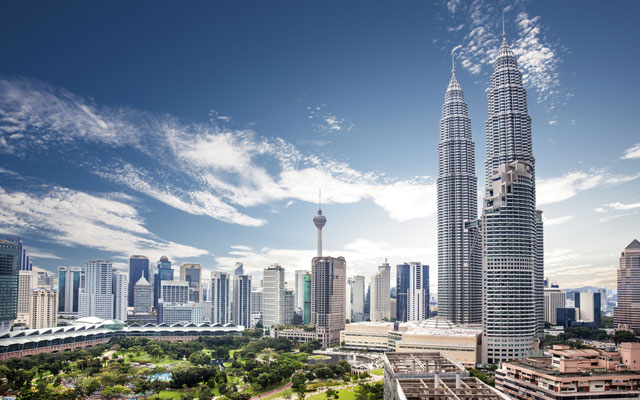
Malaysia and Indonesia have agreed in principle to implement the reciprocal green lane scheme to facilitate bilateral travel, pending approval by health authorities in both countries.
Foreign Affairs Ministry secretary-general, Muhammad Shahrul Ikram Yaakob, said that follow-ups were required to fine-tune the standard operating procedures (SOPs).
He was quoted by The Star as saying: “A follow-up is necessary as far as Malaysia is concerned on tightening the existing SOPs. The scheme will be implemented once Malaysian and Indonesian health authorities deem it appropriate.”
Tourism, arts and culture minister, Nancy Shukri, said in a press statement that the travel bubble initiative is part of the ministry’s recovery plans formulated since last July to revitalise the country’s tourism and culture sector.
She added that the ministry had also previously held discussions with the Health Ministry, Home Affairs Ministry and the Foreign Affairs Ministry to explore opportunities in creating travel bubbles with neighbouring countries such as Brunei, Singapore, Thailand, Japan, South Korea, Australia and New Zealand.
“Its implementation, however, is subject to bilateral discussions and considerations based on the aspects of health, immigration, data tracking, and ongoing monitoring by relevant agencies in both countries,” she said.
Nancy also highlighted that Malaysia had proposed for transparency and standardisation of cross-border SOPs enforced by safe countries to facilitate easier travel.
While welcoming the travel bubble plan, Malaysian Inbound Tourism Association president, Uzaidi Udanis, opined that careful and detailed study of the mechanisms is crucial to ensure strict adherence to SOPs in order to guard against imported cases.
He said: “The SOPs must be clearly stated in writing to ensure tourism industry players are clear about the procedures.”
He added that the reopening of the border with Indonesia presented inbound players from Malaysia with an opportunity to capture the high-end travellers from Indonesia, a segment that has remained under-tapped.
New support scheme planned for Thai tourism workers

The Tourism Council of Thailand (TCT), comprising a group of experts from the private sector, has proposed a new Tourism Labor Bank scheme to support Thai tourism workers whose jobs are at risk due to Covid-19.
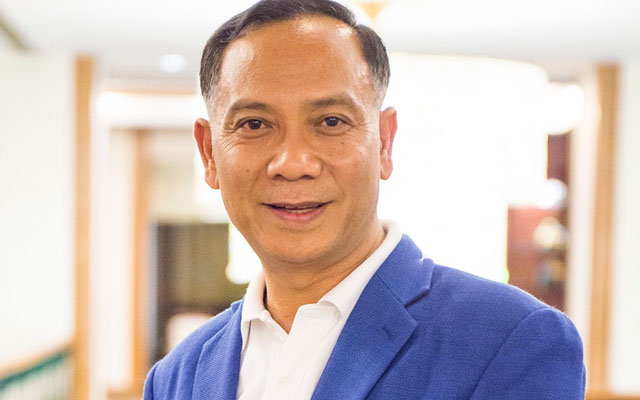
“Looking ahead at the future of tourism, we don’t think it will go back to normal soon, especially seeing the situation in Europe and other places. While Thailand has the capacity to welcome 40 million visitors a year comfortably, we are very concerned that if we don’t meet this year’s target of 10 million visitors – for example, if only 25 per cent of that number come – then 75 per cent of the tourism labor force will lose their jobs,” shared TCT’s new president Chamnan Srisawat.
Given the uncertainty as to when Covid will strike again, and current lack of income for those in the tourism sector, the TCT has designed a Tourism Labor Bank scheme for the tourism and hospitality sectors.
A key feature of the programme is the tourism employment database, which will include the employment history details of 13 categories of tourism workers from 13 geographical areas in Thailand. “If we have accurate data, we can plan better how to take care of these people,” said Chamnan.
The scheme will include co-payment for monthly salaries of up to 15,000 baht (US$498), with the government subsidising half of it, along with training programmes to upskill and re-skill workers so that they can supplement their income with side hustles like e-commerce and online marketing.
Furthermore, the scheme will capitalise on the existing knowledge bank and skill sets within the hospitality and tourism sectors to facilitate knowledge exchange; for example, hiring five-star chefs and skilled hospitality workers to train the local community-based tourism segment.
The staff could also be hired for short-term or freelance positions by other tourism businesses, and receive career coaching and training in new skills that they aspire towards, to give them hope in starting a second career.
“It’s a huge pool of talent and skill that we’re very reluctant to let go of, not to mention the fact that 90 per cent of those who work in tourism have excellent English skills. This is potential that shouldn’t be overlooked,” Chaman added.
“Imagine an army of online sellers and influencers who can sell package tours from their friends’ companies and One Tambon One Product (an entrepreneurship stimulus programme spotlighting locally-made products) items to customers abroad. Not only could they boost their own income; they can also strengthen the tourism industry nationally.”
The scheme is intended to launch in March, and will be open to all categories of tourism industry staff, both direct and indirect. Chamnan stressed the importance of not overlooking those on the periphery, such as taxi drivers, mini van drivers, river boat workers, chefs from two-star hotels, entertainment park crew, and staff from spas and massage parlours.
While the TCT intends to spearhead the scheme, the council is very open for other entities to get on board and support the initiative.
“We see this as a way out, a long-term plan for Thailand’s tourism sector that can create more sustainability and make our tourism industry more competitive on an international level,” he concluded.
Discova aids Bali farmers with new initiative
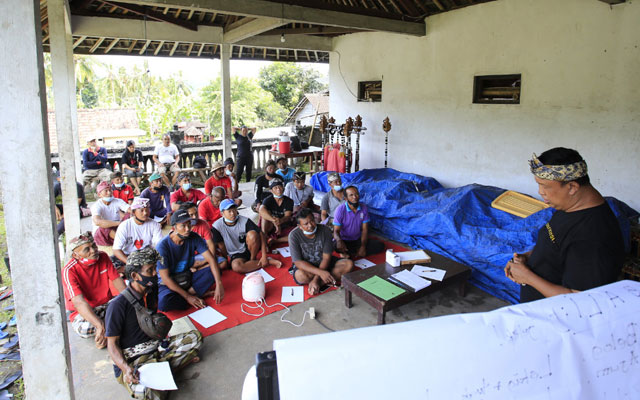
Discova is launching a new farm-to-table project in Bali to provide additional income for local farmers whose livelihoods have been impacted by the prevailing tourist drought due to the pandemic.
Peter Christiansen, Indonesia country manager for Discova, said the project will not only help local communities generate income, but also support Bali’s growing organic farming movement.
“We begin our first phase with 22 farmers and 3ha of land. I have been moved by the enthusiasm and passion of the local people to move away from traditional farming. They are focused on working towards a healthier environment, but also want to ensure healthier diets, especially for their kids,” he added.
Discova has partnered with Bali Rare Paduraksa to educate farmers from a village in Karangasem regency on organic and sustainable farming. The tie-up sees Discova provide finance for organic farming workshops, irrigation infrastructures, along with rice seeds and vegetable plants for community farmers.
Discova is also helping farmers to sell their organic and locally made produce directly to partner hotels and restaurants across the island and nationwide, including Cross Hotels & Resorts. The new initiative is part of the DMC’s long-standing commitment to a more sustainable tourism, which directly benefits local communities where it operates.
Christiansen said the farm-to-table project is a long-term initiative, with a dedicated team appointed to helm it. “We are helping community farmers convert from conventional farming using chemical intervention, to more sustainable, organic methods. When international tourism returns to Bali, we will help our communities build their own businesses providing cooking classes, trekking, cycling experiences to our travellers, generating direct income for locals,” he said.
Discova aims to collaborate with educational travel agents and institutions to bring students into the village to assist the local village to build irrigation systems for their crops and help improve their income by increasing the quality and quantity of their crop through needs analysis and study of the supply chain. The Discova Educational Travel Team also work directly with five other communities in Cambodia, Laos, Thailand, and Vietnam since 2007.
World Dream aims to make a splash with new Korean, Thai themed cruises

Dream Cruises will spice up its cruises to nowhere aboard World Dream with a new series of Super Seacations from February to May, featuring traditional and pop culture experiences from South Korea and Thailand.
At the same time, the cruise line has announced the extension of World Dream’s Super Seacation itineraries to June 27, 2021, to mark its milestone 100th day of safe sailing on World Dream coming up in mid-February.
The new Korean and Thai-themed programmes have been launched in partnership with The Embassy of the Republic of Korea in Singapore, Korea Tourism Organization, and Tourism Authority of Thailand Singapore.
Rhythm of Korea (February 21 to March 31)
Guests can enjoy a Hanbok fashion runway show, featuring the iconic garment embodying the vibrant culture and colourful representation of historic Korea. They can also unwind like Joseon nobles with old-time, outdoor games like Jegichagi, which challenges players to kick and keep the Jeji from hitting the ground for as long as possible; and Tuho & Arrows, which requires players to throw arrows into a pitch pot vase.
Catch up on Korean blockbuster movies at World Dream’s Cinema at Sea, learn about the latest K-Beauty trends during Flawless Beauty Talks and “Hair-ppiness” Styling Workshops, and groove to the greatest K-Pop hits at Hallyu K-Pop Dance 101 Classes. Those who consider themselves to be Hallyu Inssa and savvy of all things Korean can put their Kugo to the test with Basic Conversational Language Classes, or even challenge themselves with the K-Culture Trivia quiz for a chance to win great prizes.
For culinary cruisers, learn classic recipes well-loved by Koreans of multiple generations, such as kimchi and kimbap, and feast on trendy Korean street food delights like tteokbokki rice cake, japchae, haemul pajeon seafood pancake and Korean fried chicken. Guests can also treat themselves to a selection of Korean snacks, including Jeju chocolates and Korean abalones.
Amazing Thailand (March 31 to May 28)
Set the mood for the Thai New Year, better known as Songkran, as you experience themed activities ranging from traditional and pop Thai music, to a movie marathon of Thai blockbusters. For the physically inclined, enjoy a hit of adrenaline with basic Muay Thai training; or a fun game of Sepak Takraw, a hybrid sport of football, volleyball and gymnastics; before partaking in Water Gun Tag or the Pitch Burst Challenge.

Relax and rejuvenate with a massage with tropical Thai products at Crystal Life Spa, complete with a tropical beverage of one’s choice. Then, head to the Thai Street Market at Sea and tuck into world-famous Thai street food. Enjoy regional delicacies from the North and South of Thailand, as well as signature Thai desserts at the complimentary restaurants of the cruise ship.
Insta-worthy photos are only a click away at the Tuk Tuk and Big Bowl Noodle pop-up displays, as well as in front of stunning backdrops of Thai umbrellas and lanterns found throughout the ship. Guests may bring a piece of Thai culture back home at the Thai handicraft workshop, where the traditional arts of soap carving, tie dying and paper umbrella painting will be taught.
Mercure hotel rebrands as Mantra Gladstone
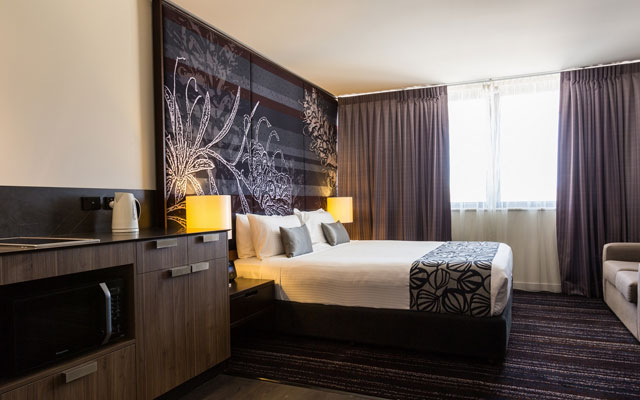
Mantra has added another property to its Australian portfolio, following the rebranding of the Mercure Gladstone situated on Queensland’s Capricorn Coast.
The refurbishment of Mantra Gladstone, as part of the rebrand, includes transforming 33 of its 60 guestrooms into spacious open plan self-contained apartments.
Located just minutes from the CBD, the hotel features a fitness centre, F&B options, meeting rooms, a soon-to-open swimming pool, and a gym at the adjoining Yaralla Sports Club complex.
Since acquiring Mantra in 2018, Accor has continued to grow the brand with five new Australian hotels opening in the past two years.








The Malaysian Association of Hotels (MAH) has proposed to the government to place tourism and hospitality frontliners on the priority list for the Covid-19 immunisation programme, behind medical workers and high-risk groups.
Doing so would help pave the way for the return of international tourists to Malaysia once her border reopens, said MAH.
The national Covid-19 immunisation programme is set to roll out at the end of February. It will be carried out in three phases, with the first involving some 500,000 medical and non-medical frontliners.
The second phase from April to August will involve those at high risk of developing complications from Covid-19, while the third phase will involve adults aged 18 and above who will receive the vaccine between May this year and February 2022.
MAH president, N Subramaniam, said: “The tourism and hotel industry employs 3.6 million persons and is one of the main contributor to the country’s economy and the people, and must not be allowed to collapse. We must be ready for recovery and maintain our tourism capacity as well as competitiveness in the region.”
He said that ever since the second movement control order (MCO) came into effect on January 13 and is currently ongoing, more hotels were reportedly closing, or planning to close.
Subramaniam added that the MCO has robbed the hospitality industry of any hopes of recovery this year, and the industry is set to lose at least RM300 million (US$86 million) in revenue on average for every two weeks of the MCO, after losing an estimated RM6.5 billion last year.
During an emergency meeting on February 4, MAH submitted a 19-point proposal to the Ministry of Tourism, Arts and Culture Malaysia requesting for immediate assistance to be provided to the industry.
Subramaniam said: “While some of these are long outstanding proposals that the industry had submitted before, they are of utmost urgency considering the worsening current situation.”
Among the 19 points are an extension of the wage subsidy programme from March to September 2021, an immediate revision to 50 per cent subsidy for employees with wages up to RM4,000 monthly and 30 per cent subsidy for those up to RM8,000 per month from the current subsidy of RM600 per employee per month, as well as an extension of the tourism tax waiver until June 2022.