TTG Asia
Asia/Singapore Friday, 2nd January 2026
Page 953

Airlines brace for long haul to recovery

0
Jet plane taking off on the runway

The global aviation industry is slowing emerging from the Covid-19 doldrums, with more flights returning to the skies, but widespread recovery could take up to three years.

That was the consensus from a major industry poll conducted as part of FlightPlan: Charting a Course into the Future, an online broadcast by Inmarsat and the Airline Passenger Experience Association (APEX).
Recovery of the global aviation industry may take up to three years

Despite bracing for a slow recovery, the poll reveals a sense of optimism for the industry’s future, with digitisation expected to drive the return to profitable growth.

The survey, which polled more than 500 professionals from across the global aviation industry between April and June 2020, showed that more than half of respondents (60 per cent) expect a recovery period between 18 months to three years. Only 13 per cent said they believe the industry was prepared for a crisis like Covid-19.

The results also offer deep insight into industry sentiment on the shape of recovery, what passenger journeys could look like post-pandemic, and the impact of the crisis on aviation sustainability goals.

Domestic travel is expected to bounce back quickest from the current crisis, with almost nine in 10 (85 per cent) predicting it will recover before international travel, which is at the mercy of factors like border restrictions and quarantines. This supports recent guidance by the IATA that rising flight volumes have been driven by recovery in some domestic markets, most notably, China.

Seven out of 10 respondents expect point-to-point travel will bounce back quicker than hub and spoke routes, with low-cost carriers expected to recover quicker than full-service carriers (55 per cent vs 45 per cent, respectively). In addition, 69 per cent of respondents expect a swifter recovery for business travel than leisure travel.

Interestingly, despite bailouts from many governments, only seven per cent of respondents believe governments have uniformly done enough to support the industry, reflecting the varied response actions across nations.

With a global recession potentially threatening investment in green technology, there was little consensus in the poll about the impact of Covid-19 on aviation’s path to sustainability, with 36 per cent believing the crisis will accelerate progress and 47 per cent thinking it will delay progress.

Dominic Walters, vice president of Inmarsat Aviation, said of the survey: “Even in a period of unrivalled uncertainty and volatility, there is a true sense of optimism about the shape of the industry in this new world. The results show a strong desire to accelerate recovery, an optimistic outlook for investment in passenger experience and sustainability initiatives, and a commitment to rebuild an industry fit for the future.”

David Coiley, vice president market enablement & market capture Asia Pacific, Inmarsat Aviation, added: “We believe that the Asia-Pacific and China regions will lead the recovery of commercial aviation, given its resilient domestic aviation sector. Since late April, the demand for flights continues to recover in the region, giving us high optimism. The critical aspect however, as the survey shows, is that the airlines will have to continue to make flight safety and hygiene a long-term and sustained priority.”

New health and safety guidance from aviation industry bodies such as APEX and IATA, including enhancing the traceability of customers and establishing clear aircraft decontamination procedures, has driven necessary changes to passenger journeys. The poll finds such developments are set to continue as the industry rebounds.

As a result of deeper cleaning measures, nine in 10 (88 per cent) expect slower turnarounds, which could have a significant impact on flight schedules. Contactless catering was highlighted by 57 per cent as being important during the recovery period, and almost half (44 per cent) expect to see empty middle seats as a common feature of the passenger journey in the coming months, despite contrary guidance given by IATA in May.

Despite the financial impact that many airlines are facing, almost half of respondents (45 per cent) believe that in terms of passenger experience, the crisis will only cause a short-term reduction in investment, and almost a third (32 per cent) believe there will be an overall increase in investment.

There was agreement that the adoption of digital and connected technologies will drive recovery, with data analytics, biometrics, artificial intelligence, and the internet of things set to have the greatest influence on future profitable growth. Majority (84 per cent) of respondents do not predict long-term disruption to passenger experience investment.

Philip Balaam, president of Inmarsat Aviation, said: “These survey results, together with the numerous discussions and debates during FlightPlan, indicate that the Covid-19 crisis may prove a decisive moment for digital transformation in an industry that’s historically been behind the curve, with the vast majority of aviation professionals expecting digital technologies to help drive a stronger return towards profitable growth.”
Buy now, stay later with Avani

0
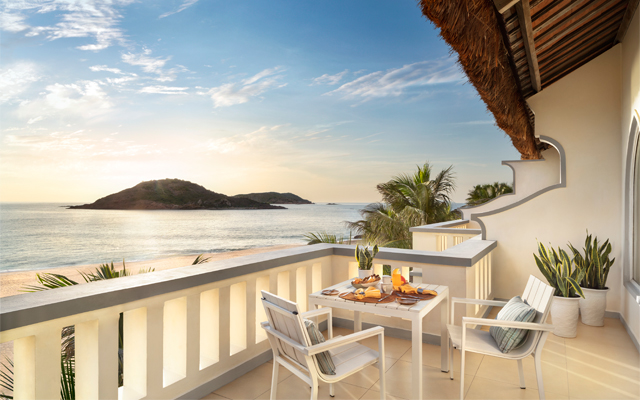
Avani Quy Nhon Resort - Beach View

Avani Hotels & Resorts is rolling out sweet deals at several properties to encourage guests to book now for stays through summer 2021.

Travellers can enjoy perks by planning ahead with Avani Hotels’ new e-gift certificate that allows guests to book now with more savings, for travel later. The promotional offer is available from now till July 22, 2020 and valid for stays until July 31, 2021.

Avani lures guests with special deals at several of its properties including Avani Quy Nhon Resort (above)

A short drive from Bangkok, Avani+ Hua Hin Resort, offers recreational activities around the area, like zipping around the town’s historic centre on a Scomadi scooter or escaping to the countryside for some wine tasting. The package includes a two-night stay in an Avani Deluxe Room at US$199 nett, with daily breakfast, 20 per cent savings on dining, and additional benefits for children, including an extra bed and interactive activities at AvaniKids.

Featuring sand, sun and adventure, Avani+ Samui Resort in Thailand is offering a package starting at US$215 nett and is valid for stays from now till July 31, 2021. The resort’s e-gift offer includes a two-night stay in an Avani Deluxe Room (a complimentary upgrade upon arrival), daily breakfast, one-time dinner for two at The Essence restaurant, an island excursion to Koh Madsum, and daily morning yoga.

A cliffside beauty, Avani Ao Nang Cliff Krabi Resort in Thailand is offering a two-night e-gift voucher at US$99 nett for stays through December 30, 2021, with a complimentary upgrade to the next room category, daily breakfast, a 30-minute yoga session, and 30 per cent savings on resort dining.

Laos’ UNESCO-listed city of Luang Prabang is packed with heritage sites and natural wonders like the Mekong River and the Kuang Si waterfalls. Guests at Avani+ Luang Prabang can book an advance stay package, starting from US$120, and travel later with extra savings.

Dine on freshly caught seafood from the bay and explore the relics of Champa civilisation with Avani Quy Nhon Resort in Vietnam. The travel voucher priced at US$375 nett includes a two-night stay in a Deluxe Studio Room on full board basis (set menu), one Vietnamese martial arts class, and complimentary accommodation for children under the age of 12.

Situated where the Kalu Ganga River meets the Indian Ocean, just across the bustling town of Kalutara is the newly renovated Avani Kalutara Resort. A two-night stay in the Sri Lankan resort’s brand-new Lagoon View Room with a spa treatment included is pegged at US$612.

Shopaholics can get their fix by checking into Avani Ibn Battuta hotel in Dubai that is attached to Ibn Battuta Mall, and is a short drive to the downtown shopping mecca. A two-night stay in an Avani Executive Room, with daily breakfast and one-time dinner starts from US$177.

Situated within walking distance from one of the world’s most spectacular waterfalls, Avani Victoria Falls Resort in Zambia not only offers easy access to the national park, but also guarantees plenty of zebra and giraffe spotting opportunities right on the doorstep. The package includes a two-night stay, one-time sunset cruise along the Zambezi River, and a three-course set dinner, all for the price of US$486.

Thomas Cook India takes over dnata Travel’s corporate portfolio

0
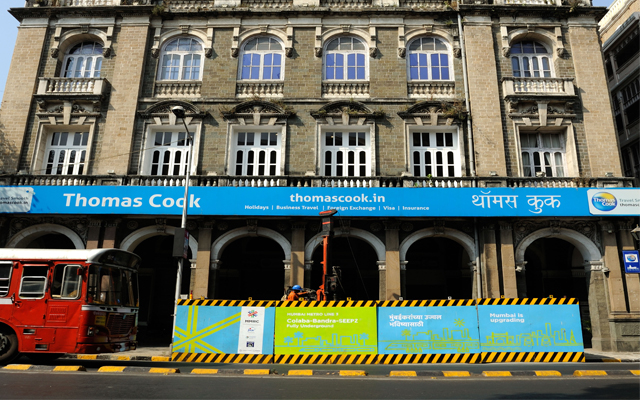
Thomas Cook & Co Building D N Road, Fort, Mumbai, India: Jan. 2017

Thomas Cook India has signed an agreement with dnata Travel to take over the latter’s corporate travel business portfolio and serve its existing clients as the travel management company closes its operations in India.

As per the agreement, there will be no transfer of assets, liabilities or manpower from dnata Travel to Thomas Cook India, with the latter only acting as an alternative service provider.

Thomas Cook India will now serve dnata Travel’s existing clients as the latter exits the corporate travel business in India

Speaking to TTG Asia, Thomas Cook India CEO & executive director, Mahesh Iyer, said: “dnata Travel wanted a stable partner who can act as a ‘safe house’ for their corporate clients with whom they have a long-term relationship… So, effectively it is going to be a migration of all the existing contracts of dnata Travel to Thomas Cook India. There was no financial commitment from either party for this transaction.”

The transition is expected to be completed in the next few weeks. The agreement was concluded after an extensive process of evaluation by dnata Travel.

dnata Travel regional vice president, Rashid Al Awadhi, said: “Whilst we are disappointed to be exiting the corporate market in India, it has always been our intention to provide our valued customers with an alternative option. We are delighted that we can now offer customers the option of a seamless transition to Thomas Cook.”

Iyer declined to divulge the size of dnata’s existing corporate client base, but said that he expects a slow recovery of corporate travel business in India, beginning with domestic markets.

He added: “The fact that we are already dealing with a lot of corporates and have the required infrastructure support puts us in good stead to serve dnata’s clients. We have started to see early green shots in corporate travel and expect to witness some recovery from the international side too beginning 4Q2020. I also expect more consolidation happening in the corporate travel business in India.”

Banyan Tree champions sustainability

0

Banyan Tree Group (BTG) is driving a sustainable future through food, even as the Covid-19 pandemic ushers in a consumer-driven shift towards healthier food choices.

Food choices greatly impact not only our health, but our collective future, and food carbon footprints through the value chain make up one-quarter of the world’s greenhouse gas emissions, said BTG in a press release.

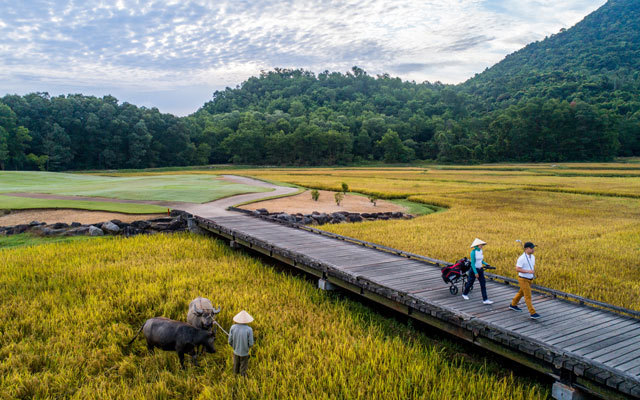
Edible golf course at Banyan Tree’s Laguna Lăng Cô in Central Vietnam featuring a rice padi field

Consumer surveys post-Covid have shown that over 75 per cent of consumers will choose to live healthier lifestyles after this pandemic, with food choices and nutrition ranking as one of the top areas for change.

Leading the curve in responsible business, this is yet another pioneering initiative by the group to bring personal wellbeing and the greater good closer together.

Championing local procurement and sustainably sourced food, the group, in partnership with Thai growers The Boutique Farmers has soft-opened ORI9IN, the first gourmet organic farm in Chiangmai, Thailand, in July.

This partnership of Agro-tourism aims to lead the curve in sustainable retained farming and cooperatives for living and eating well. It is the only retained farming operation globally that partners with a network of restaurants and hotels, focusing on import substitution and reducing carbon footprint without sacrificing flavour.

In addition, this year, in line with marine conservation goals around biodiversity, the group has implemented a 25 per cent benchmark of sustainable seafood sourcing by 2025 from sustainable fisheries. Banyan Tree Global Foundation’s experts will review seafood species served at each location and support identification of sustainably certified alternatives and opportunities for its properties.

Steve Newman, director of Banyan Tree Global Foundation, said: “It is our hope that this period, challenging as it is for the world, will prove to be a catalyst to review what, where and how we source, and an impetus for a responsible approach. By increasing community resilience through supporting local procurement, we believe that the quest for better personal wellbeing through food choices is an opportunity for us to make a difference, now.”

To this end, the group has also embarked on collaborations in different areas of the food value chain. A soon-to-launch one is with Grassroots Pantry, a pioneering brand in Hong Kong which is at the fore of plant-based cuisine in Asia’s fine dining scene.

Activist and founder-chef Peggy Chan said: “By introducing techniques and combining ingredients that are not often used in commercial kitchens, Grassroots Pantry can help pave the way for more inventive and health supportive concoctions across Banyan Tree hotels in the near future.”

A capsule menu based on plant-based, immunity-boosting foods and sustainable kitchen practices, is to launch later this year. The menu will debut in BTG’s Phuket properties, followed by a roll-out in all its hotels internationally.

The group will also partner with Country Foods, a sustainable food supply distributor, to reduce its carbon footprint by introducing a variety of plant-based products into its supply chain, starting with its Thailand hotels.

Langkawi looks to put Tuba Island on tourism map

0

Langkawi tourism players are lining up plans to promote Tuba Island’s natural beauty and unique cultures, in hopes of putting the remote island on the map as a tourist destination.

Rosly Selamat, a committee member of NGO Friends of Langkawi Geopark (FLAG), said the availability of scheduled passenger boat services between Kuah and Tuba Island since early last year has made the island accessible to tourists.

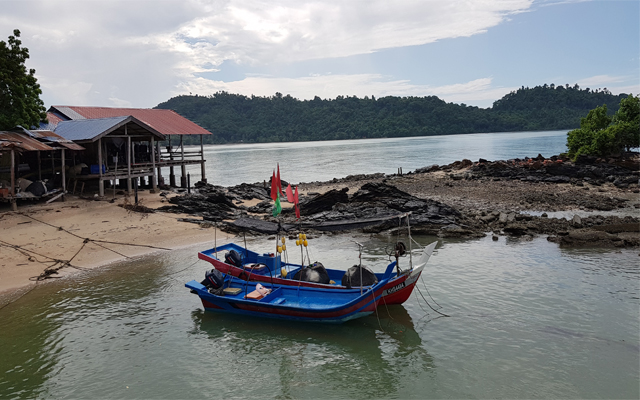
Tuba Island remains under the radar for many tourists, but industry players want that to change

He shared: “Sadly, not many locals outside of Langkawi have heard of Tuba Island. Mention Tuba Island, and some think it is in Sabah or off the coast of Mersing in Johor. One foreign tourist even quipped, ‘You mean Tuba City in Arizona?'”

The island has a population of around 3,000 people, of whom the majority are fishermen and farmers, according to Rosly.

There were around 30 homestay operators on Tuba Island many years ago but now there are only 13, of which 10 are active.

FLAG is working closely with these operators to upscale their premises and upskill their talents so they can provide visitors with an authentic Malay kampong experience.

Rosly opined: “We believe homestay visitors will enjoy experiencing the culture and lifestyle of the locals and this will be a draw to attract domestic tourists from cities to make a day trip or overnight stay on Tuba Island. And later when the border reopens, we plan to market the island to foreign tourists by enhancing our collaboration with some of the local inbound agents.

“We are also looking at options to secure micro-credits from financial institutions, including government soft loan facilities to allow these operators to purchase needed supplies to upscale their premises. Each homestay could do well in terms of providing bicycles to their guests.”

Tuba Island is part of the Dayang Bunting Marble Geoforest Park, rich with great limestone formations, marbles and unique geological features.

FLAG also plans to set up a website to promote the island’s natural beauty and tourism products including homestays and link the site to Langkawi Development Authority’s website and other related tourism websites in order to give the island greater exposure.

Rayong incident hampers Thai domestic tourism recovery

0

A collapse in hotel bookings in Rayong and public confidence in domestic travel have ensued after an Egyptian military delegate who stayed at a hotel in Rayong was found to have been infected with Covid-19.

The infected individual, part of a 31-member Egyptian delegation, was treated more leniently due to his diplomatic status. The group had exited and re-entered Thailand several times during July 8-11, at one point, visiting Chengdu City in China before flying back to U-Tapao International Airport in Rayong province with no quarantine requirements.

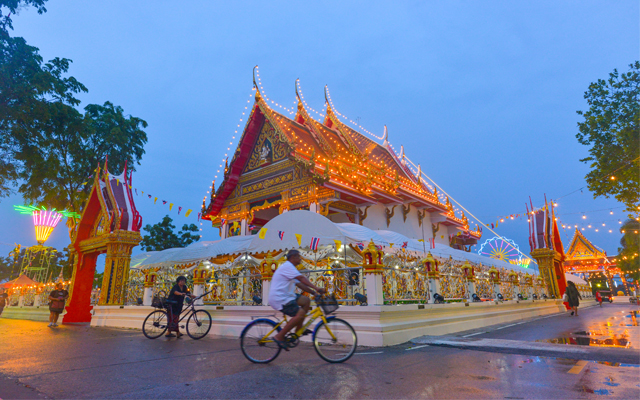
Recent imported virus cases in Rayong have thrown a spanner in Thailand’s domestic tourism recovery; locals cycling past Wat Pa Pradu temple in Rayong, Thailand pictured

Local media reported that members from the delegation also visited two malls in Rayong, during which CCTV footage showed only about one-tenth of them wore masks.

After news broke that the Covid-19 test for one delegate had returned positive the day after he left Thailand, widespread panic ensued, with many Thai locals cancelling their Rayong holiday bookings, including those over the long weekend at the end of July. Anger also rose among hoteliers and business owners in Rayong whom, having emerged from 3.5 months of lockdown, were banking on the upcoming holiday to boost their income.

Surrounding provinces were also affected. On nearby Koh Samet island, many lower-tier hotels reported 80-100 per cent cancellations; four- to five-star hotels and major brands were, however, less affected. Pattaya’s hotels also received cancellations in response to the incident.

This past week, the nine-year-old daughter of a visiting Sudanese attaché also tested positive for Covid. The family had been staying in a condominium on Sukhuvmit Road in Bangkok. By Friday, beauty clinics along Sukhumvit had reportedly received 80-100 per cent booking cancellations due to virus fears.

The double whammy sparked profuse apologies from the premier and other government members, and led to the tightening of restrictions for diplomats entering Thailand.

Though only seven individuals are known to have had direct contact with the Egyptian, the D’Varee Diva Central hotel and Laemtong mall in Rayong have closed temporarily, alongside 127 of the province’s schools. Central Plaza Rayong, which said it was not visited by the patient, remains open.

Since the incident, Thai health authorities have rushed to trace any contacts the Egyptian might have had during the visit. To date, nearly 4,000 locals from Rayong have tested negative for the coronavirus. The incident has also put Thailand’s Thai Chana tracing app to the test. Through the app, 1,882 locals visiting those malls during the same hours were alerted that they were at risk and urged to quarantine for two weeks.

The Thai government has pleaded with the local public not to lose confidence in the province. On Friday, a Democrat party senator also visited Rayong and issued a briefing there in a bid to help restore the public image of Rayong as a tourist destination, and to reassure locals that the risk of another outbreak was very low.

Several provinces have also announced they will start requiring travellers from Rayong and Bangkok to undergo a 14-day quarantine.

The twin incidents have undermined the Thai government’s efforts to revive domestic tourism. As part of those efforts, the government had coincided its WeTravelTogether campaign – which saw more than 1.9 million sign-ups on the opening date for registration – with the rescheduled Songkran holidays this month.

First Hotelier Marketplace fair hailed a “success”

0

The Hotelier Marketplace group successfully hosted its inaugural Shop with Hoteliers event on July 5, 2020, at the X2 Vibe Sukhumvit hotel.

Launched in mid-April, the Hotelier Marketplace Facebook group aims to help hoteliers who had been furloughed or laid off due to the Covid-19 pandemic to continue earning an income. The group, which now boasts over 16,000 members, was founded by Siriporn Trachoo, a PR professional who has worked with many hospitality businesses.

The First Hotelier Marketplace Fair was held at the X2 Vibe Sukhumvit hotel 

Siriporn called the Shop with Hoteliers fair a “success” as many shoppers visited throughout the day, and products at some booths even sold out. The event venue was sponsored by Cross Hotels and Resorts, who manages the X2 Vibe branded properties.

Eighteen hotel groups and tour operators participated in the event, including Plaza Athenee, Movenpick BDMS Wellness Resort Bangkok, Hilton Sukhumvit, Rosewood Bangkok, The St. Regis Bangkok, Capella Bangkok, Onyx hospitality group, H.I.S Tours, Exo Travel, and Buffalo Tours (Discova).

Siriporn said the group is keen to host its next event at either Hua Hin or Chiang Mai to support the hospitality professionals there. Plans for a monthly or bi-monthly event in Bangkok is also in discussions.

“We need to discuss with more hotels if any of them would like to support us because we really do not have any budget, but we would love to help and support our friends in the industry,” she shared.

The event is free to attend. Vendors do not have to pay to join, but interested parties will be screened by the organising team before being offered a booth. Any hotels or travel businesses keen to sponsor venue space or host a booth may reach out to hoteliermarket@gmail.com.

In a similar vein, a Thai support page titled Crew Marketplace for flight professionals has also sprung up, founded by an ex-crew member of JetStars. It now has over 20,000 members.

Pragmatism, not paranoia, key to SE Asia tourism revival

0

The South-east Asian travel industry could take a lesson from Thailand’s incident with Covid in Rayong the past week, where the 31-person Egyptian military delegation, containing one Covid-positive individual, exposed the previously Covid-free tourist town to infection.

The aftermath of the incident saw local Thai travellers bolting like scared rabbits – not just from Rayong but also neighbouring Koh Samet, with many hotels reporting 80-100 per cent decimation of their bookings.

The fact that Koh Samet is only reachable via a 1.5-hour boat ride from Rayong, and not by car, was immaterial to travellers. Overnight, the hard work, including various financial stimuli and hygiene certification schemes painstakingly instigated by the government and NTOs, to revive domestic tourism was undone in not just one province, but nearby provinces like Pattaya as well.

Though the bulk of the cancellations was sustained by economy and midscale hotels, rather than big brands and upscale properties, it did nothing to tame tempers. Rage from Rayong locals boiled over. “After months of nothing, it’s back to nothing,” lamented the father of one Rayong hospitality business owner to Pattaya Mail, referring to the past 3.5 months of lockdown.

Such is the panic and paranoia that has set in, amid fears of a fresh outbreak catalysing another lockdown, stranding travellers in destination provinces and further paralysing the economy.

In another recent incident, China temporarily banned all Thai AirAsia X and Thai Lion Air flights, after two chartered flights operated by the carriers that stopped over in Thailand with no disembarkation arrived in China carrying Covid-infected passengers.

Nearby in Myanmar, the government has also extended the ban on international flights till October and shelved the initiation of travel bubbles – similar to Thailand, which has done so indefinitely – due to potential bubble partners like China, South Korea, Hong Kong and Australia battling fresh virus outbreaks.

When I saw that news, my heart sank. Is fear the right response? It isn’t just Thailand that’s tiptoeing towards restarting its economic engines. If every country is paralysed by fear of its neighbours having even the faintest hint of Covid, the region could be locked into a Catch-22.

At this point, the Ministry of Travel and Sports projects that approximately 60 per cent of the hospitality industry in Thailand will be wiped out if foreign tourists aren’t let in by 4Q. Diethelm Travel Group CEO, Stephan Roemer, also said back in June that if Thailand were to reopen to international tourists only in October, the cost reduction on the payroll of a DMC or hotel would rise to 60 per cent.

We’re taking baby steps towards recovery, but being faced with giant setbacks. It’s becoming apparent that if we rely on fear to help us overcome Covid, it will ultimately be at the expense of our travel industry.

Meanwhile, the Thai government is banking on domestic tourism to rake in at least 900 billion baht (US$28.4 billion), or nearly one-third of the country’s total tourism industry revenue last year.

Caught in an unrelenting loop of waiting for other countries to become Covid-free, Thailand has to fall back on domestic tourism for survival – but even that once-upon-a-time anchor appears to be on shaky ground, as evidenced by the Rayong incident.

That doesn’t have to be the case. Travel bubbles have resumed for months now in Europe. There is bafflement among Europeans over the response to Covid-19 in countries like Thailand. We have fewer virus cases, but more economic casualties.

I believe the only way the travel industry can survive is if people are taught how to safely abide with Covid. Already, just weeks out of lockdown, I see people becoming more lax. We need more encouragement not to let up on mask-wearing, social distancing, and sanitising; as well as to push for wider adoption of contactless solutions to reduce transmission risk.

These paradigm shifts should be taught and broadcasted frequently, and in detail. We need to adopt a pragmatic response to the crisis in order to drive the tourism industry’s recovery. NTOs also need to work alongside the government to run campaigns to educate travellers on effective disease management, and bolster people’s confidence to travel by providing an accurate risk assessment of incidents like the Rayong case.

Phuket has done well in setting an example by swiftly moving to initiate new safety standards for the hospitality industry to avoid suffering the same fate as Rayong. The province has requested permission from the Center for the Covid-19 Situation Administration to implement its own guidelines. Additionally, the Thai government has also made a shift to tighten quarantine rules for diplomats. All these moves are a step in the right direction.

As my friend and fellow industry professional, Vincent Vichit-Vadakan, put it: “One problem is having created the unreasonable expectation that we will always have zero cases.” We can’t reboot our economic activities under the assumption that we will always remain Covid-free. Doing so would be like building a house of cards.

The travel industry needs to make a concerted push, and take a long hard look not just at environmental or financial sustainability, but also how to sustainably co-exist with Covid-19 until a vaccine is found. Ultimately, that’s the only way we can sustainably restart in countries like Thailand and the rest of South-east Asia.

Anne Somanas is correspondent, Thailand for TTG Asia Media. She reports for the company’s stable of travel trade titles, including TTG Asia and TTGmice.

Oyo scrubs up with Unilever products

0

Qatar’s private jet service takes off with a new plan

0
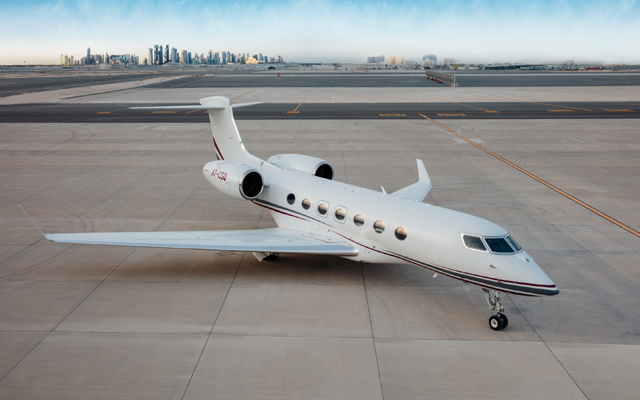
Qatar Airways' private charter arm adds a plan for business jets

Qatar Executive – Qatar Airways’ private charter arm – has introduced Diamond Agreement, a service which allows customers to pre-purchase flight time at fixed hourly rates on the company’s private jets.

To join, customers have to purchase a minimum of 50 hours flight time, without any associated membership fees. The all-inclusive and fixed-hourly rates cover both flight hours and taxi time, and unused hours are refundable at any given time.

Qatar Airways’ private charter arm adds a plan for business jets

Pre-purchased Diamond Agreement hours have no minimum annual usage and no maximum carry-over. Qatar Executive’s customers are also offered guaranteed availability for reservations booked from just 72 hours in advance.

Qatar Executive currently operates a fleet of 18 state-of-the-art private jets and includes Gulfstream G650ERs, Gulfstream G500s, and Global 5000 aircraft.