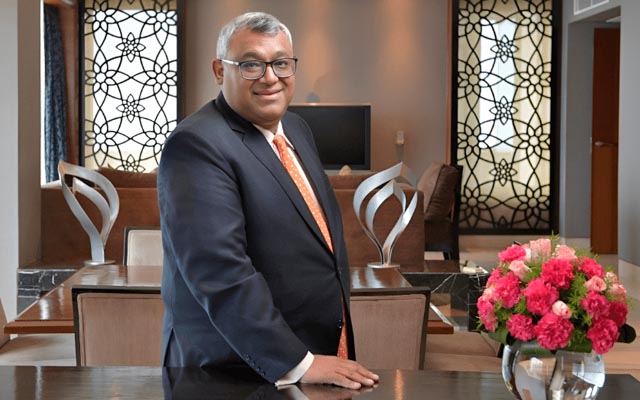
Sun Siyam has made a series of strategic appointments and promotions across its portfolio.
At Sun Siyam Iru Veli, Mohamed Najah has been promoted to resort manager after nearly a decade with the company, most recently serving as director of operations. Also at Iru Veli, Shimhad Ali becomes director of human resources, following his tenure as HR manager.
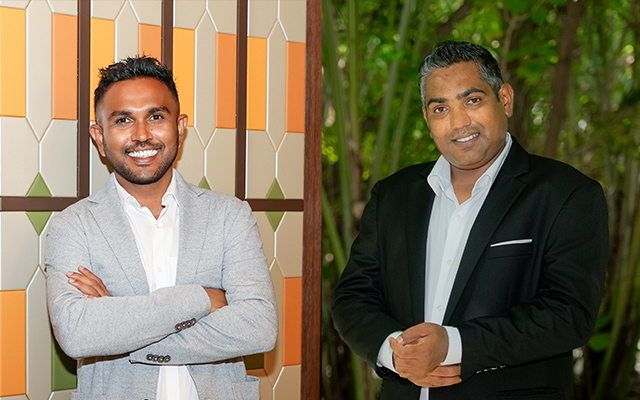
From left: Adam Afsan and Mohamed Najah
At Siyam World, Adam Afsan has been promoted to director of sales and marketing, expanding his remit to include global brand strategy. Swati Dogra has been appointed assistant director of sales and marketing at Iru Veli, continuing her progression across several Sun Siyam properties. At Sun Siyam Olhuveli, Moosa Ahmed is now assistant director of sales and marketing.
Silvia Collepardi joins the group as sales representative for Spain, Portugal and The Nordics, bringing more than 15 years of experience in luxury hospitality and sales strategy. At Olhuveli, Jiayi Deng (Denise) has been promoted to sales and marketing manager with a focus on China and East Asia.
Within the corporate division, Eenas Ahmed has been promoted to contracting manager, leading global partner negotiations and supporting commercial operations.
Asia’s lifestyle economy is evolving rapidly, pushing the industry to constantly rethink how it markets, promotes and operates amid increasing fragmentation.
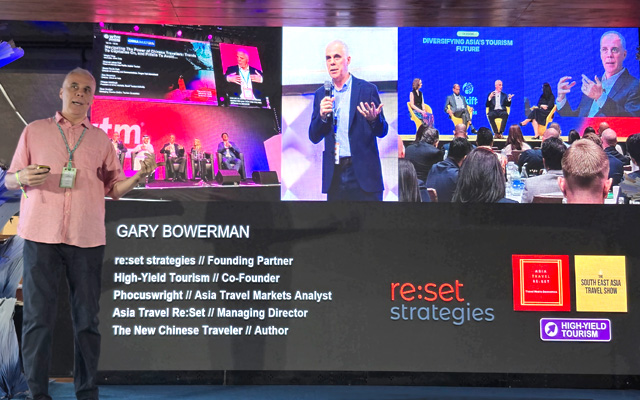
Speaking at the Open House of Further East 2025 last week, Gary Bowerman, founder of Re:Set Strategies, said the future of travel and tourism in Asia-Pacific was already here and the region was no longer importing trends from the West, driven by the rise of the lifestyle economy, which began to accelerate around 2015.
Gary Bowerman speaking at the Further East 2025 Open House on Asia’s evolving lifestyle and travel trends
Travel is no longer viewed as a separate two-week holiday, but is integrated into modern Asian lifestyles, which are shifting quickly in terms of technology, wealth, demographics and culture.
“Tourism boards now are trying to (attract) travellers through festivals like musical, cultural, and arts. These kinds of things didn’t really happen a few years ago in Asia, but they’re certainly happening now, and that’s because travel has completely diversified and it’s completely fragmented,” he said.
Bowerman also noted a lifestyle shift in Asia whereby “made in Asia” has allowed the region to not only import trends from the West.
He cited five examples of “made in Asia” brands that “this year have had a really impactful way of thinking, in terms of the way Asian people think about lifestyle and travel and tourism”.
PopMart’s Blind Box strategy has driven engagement and brand presence; Molly Tea, an upscale Chinese tea brand, has expanded rapidly into Western markets.
The South Korean film K-Pop Demon Hunters is also influencing tourism, shaping not only the number of visitors but how they behave, including spending more time and money in convenience stores.
At the higher end, Chinese luxury jewellery brand Laopu Gold has grown quickly, challenging major Western brands.
Bowerman said: “Laopu Gold went public on the Hong Kong Stock Exchange last year. This year, its stock price went up 2,000 per cent. It started to be bought by Hollywood celebrities. It started to be bought by US NBA stars, sports stars. It’s having a massive impact and it’s starting to eat into the sales of major (Western brands).”
China’s smartphone giant Xiaomi has also launched a globally competitive luxury EV.
He said: “This car, I think, sold about 350,000 cars in about 15 minutes, one of the most luxurious cars in the world. It’s compared with Porsche – and it’s a Chinese EV made by a smartphone manufacturer. Now, if that’s not lifestyle, I don’t know what is.”
Bowerman added that the era of predictable travel patterns in Asia is over. The pace of change is so “frenetic”, fast-moving and fragmented that megatrends no longer exist. He expects the industry to stop “chasing trends” and instead focus on becoming highly discoverable.
“Travellers are more discerning, selective, and will actively research good products online, even without local social media promotion,” he said.
He also highlighted the rise of the “Joy Economy”, particularly among young, hard-working Asians seeking experiences that offer separation from daily pressures. This search for fulfilment is driving trends such as ziplining and hanfu dressing at historic locations.
Significant infrastructure investment is underway across Asia to support continued travel growth, including new airports and expanded high-speed rail networks.
Ascott, the wholly owned lodging business unit of CapitaLand Investment, has introduced the Disability Inclusion Playbook for the Accommodation Sector, one of the world’s first open-access, holistic guides for inclusive hospitality. Developed with disability inclusion specialists Colorful Earth, it is supported by SG Enable, World Sustainable Hospitality Alliance and Valuable 500.
The playbook provides guidance across five pillars – Inclusive Training, Spaces, Hiring, Digital Interfaces and Programmes – enabling accommodation providers to deliver accessible stay experiences from pre-arrival to departure. It covers governance, collaboration with the disability community, barrier-free infrastructure, accessible programmes and role-specific training.
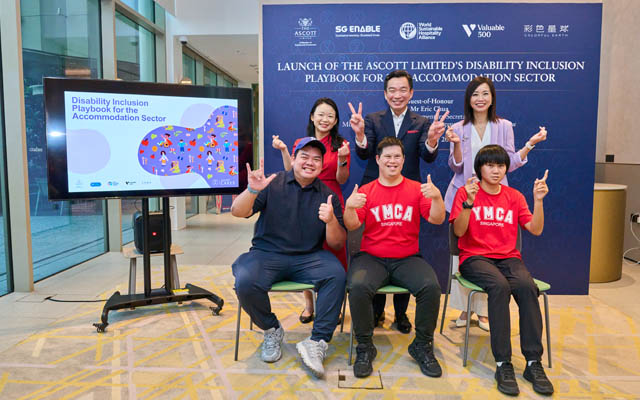
Ascott’s Disability Inclusion Playbook is a practical framework to help accommodation providers improve accessibility, inclusive hiring and guest support
Starting from 2026, at least one Ascott property in every country will host a community programme dedicated to disability inclusion. The company will also report on the hiring of persons with disabilities in its annual sustainability reports and provide standardised accessibility profiles for every property, detailing room features, measurements and transport options. Around 60 per cent of properties already provide accessibility information, with plans to extend it globally.
By 2027, all frontline associates will have completed disability awareness training. By 2028, all guest-facing digital platforms will meet Web Content Accessibility Guidelines 2.1 AA standards. Ascott’s booking website already complies, with its Ascott Star Rewards mobile app next in line.
The launch featured the playbook’s cover artwork, co-created by artists with disabilities from SG Enable’s i’mable Collective alongside Ascott associates. The artwork represents the five pillars of Ascott CARES, the company’s sustainability framework, and will be incorporated into apparel and collateral to inspire inclusive practices.
An assistive amenities toolkit, developed with SalvageGarden, was also showcased. The 3D-printed items – including holders for cutlery, toothbrushes and mugs, a toothpaste squeezer and a tactile hotel map – will be piloted at four Singapore properties, with guest feedback shaping future iterations.
The playbook is publicly available on DiscoverASR.com and will be promoted across partner platforms and Singapore Tourism Board channels.
Beh Siew Kim, chief financial and sustainability officer, lodging, CapitaLand Investment, said: “The playbook will guide Ascott’s disability inclusion efforts across our global portfolio of more than 1,000 operational and pipeline properties in over 40 countries, and we welcome other operators to join us in this collective journey.
“Real inclusion requires more than guidance – it demands action, accountability and shared learning. By sharing both our learnings and commitments, we aim to accelerate collective progress and show that inclusive hospitality is not just the right thing to do; it is vital to building resilient businesses that truly serve all guests and communities.”
SG Enable CEO Lee May Gee added: “This global disability inclusion playbook translates aspiration into action – exemplifying what can be achieved when industry leaders, persons with disabilities, and community partners come together to co-create solutions grounded in lived experience.”
“We hope it inspires others in the hospitality and tourism sectors to join us in shaping a world where everyone feels welcomed, valued and included.”
Guiyang, Guizhou Province, hosted the 2025 International Conference of Mountain Tourism and Outdoor Sports on November 11, 2025, bringing together over 350 delegates from 30 countries and regions to explore the future of sustainable mountain tourism.
Centred on the theme Integration of Culture, Tourism and Sports Presents a High-Quality Life, the event underscored China’s growing role in promoting mountain tourism as a driver of cultural exchange, outdoor recreation, and rural revitalisation.
Leaders and innovators gathered at the conference to advance sustainable mountain tourism worldwide
The conference programme included the International Mountain Tourism Alliance (IMTA) Annual Conference, the International Mountain Tourism Promotion Conference (IMTPC), field visits to Guizhou’s mountain attractions, and the Bank of Guizhou – Mountain Culture, Tourism and Outdoor Sport Equipment Exhibition.
Opening speakers included IMTA chairman Dominique de Villepin and senior Guizhou officials. IMTA also signed cooperation agreements with PATA, Everest Alliance Nepal, and the Department of Culture and Tourism of Hubei Province.
A new publication, Innovation in Mountain Tourism and Community Co-development, was released and certificates were awarded to eight World Famous Tourism Mountains and six International Mountain Hiking Tourism Demonstration Routes.
Fifteen new members also joined IMTA.
The IMTPC, themed Promote Mountain Prosperity and Create Shared Brilliance, featured presentations from IMTA vice chairman Liu Zhaohui, FAO project coordinator Giorgio Grussu, and PATA chairman Peter Semone, who introduced research on strategies to expand Guizhou’s inbound tourism from Asia-Pacific markets. Delegates from several countries shared updates on mountain tourism initiatives and sustainable practices.
Complementing the discussions, the exhibition showcased the latest innovations in mountain tourism and outdoor sports equipment, while the photography display Life Amid the Earth’s Folds celebrated the natural beauty and cultural diversity of mountain communities worldwide.
The post-conference field trip to the Huajiang Grand Canyon Bridge offered delegates a first-hand look at Guizhou’s pioneering approach to integrating tourism with sustainable infrastructure, reinforcing the province’s position as a model for mountain tourism development.
Meliá Hotels International is expanding its luxury presence across Asia with a series of landmark openings from late 2025 through 2026.
The growth is led by the debut of Paradisus by Meliá Bali in December 2025, marking the company’s first all-inclusive luxury resort in Asia.
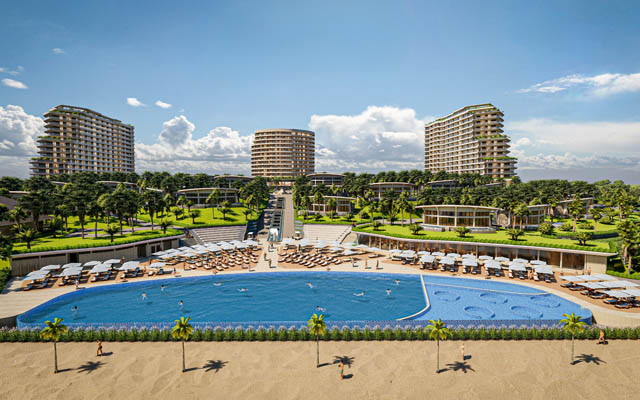
Meliá Serenity Cam Ranh, opening in 2Q2026, will offer beachfront villas, family facilities and wellness experiences along Vietnam’s Long Beach
Paradisus by Meliá Bali will introduce the brand’s Destination Inclusive concept, offering curated experiences that immerse guests in Bali’s culture, nature and wellness. The resort will feature The Reserve adults-only enclave, Family Concierge, Kidsdom club, Yourway club for teenagers, a water park and modern sports facilities.
In 2Q2026, Meliá Serenity Cam Ranh Beach Resort will open along Vietnam’s Long Beach as a retreat for personalised well-being. Families will enjoy pool villas and dedicated clubs for children and teenagers, while adults can relax at the YHI Spa and Level Pool. Later in 2026, Meliá Aurea Nha Trang will join the portfolio beside Villa Le Corail Gran Meliá, bringing beachfront hospitality to one of Vietnam’s key coastal destinations.
Over the next two years, Meliá Ba Vi Mountain Retreat, located in Ba Vi National Park near Hanoi, will be rebranded under The Meliá Collection. The transformation will highlight its French colonial and Vietnamese architectural blend amid a mountain setting. In Laos, the Grand Luang Prabang, Affiliated by Meliá, will also join The Meliá Collection, marking the brand’s debut in the country. Overlooking the Mekong River, the property combines colonial heritage with tranquil gardens in the UNESCO World Heritage city.
Opening in 2027, Gran Meliá Dubai Jumeirah will offer a Spanish-inspired luxury experience in Jumeirah 1. The resort will feature restaurants from globally recognised names including Zuma, Novikov, Park Chinois, Cazibeli, and Rubia Gallega, alongside an infinity pool, full-service spa, wellness programmes, and direct beach and marina access.
Following the opening of Meliá Hotels & Resorts in the Maldives, the group will expand with Amilla Maldives, Member of The Meliá Collection, its second property in the country. Located in Baa Atoll, the resort will feature private villas, a spa and leisure centre, and multiple dining options, with direct access to coral reefs and popular dive sites.
“Luxury travel in Asia is evolving rapidly. It’s no longer defined by exclusivity, but by meaningful connection and sense of place,” said Ignacio Martin, managing director, Asia Pacific, Meliá Hotels International. “With one in every three Meliá openings worldwide positioned in the luxury segment, we’re accelerating that transformation.”
Philippine Airlines, Southwest to broaden transpacific travel options
Philippine Airlines (PAL) has partnered with Southwest Airlines to offer single-ticket journeys for transoceanic travellers. The new interline itineraries are now available through Philippine Airlines and third-party booking sites.
The collaboration provides access between Southwest’s US network and PAL’s routes across the Philippines, Asia, Australia, and the Middle East, via shared gateway airports in Los Angeles, Seattle/Tacoma, San Francisco, and Honolulu, where Southwest operates frequent inter-island flights.
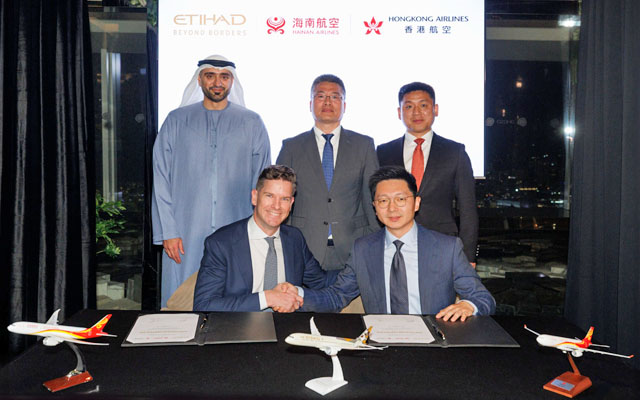
Hong Kong Airlines and Etihad expand codeshare partnership
Hong Kong Airlines, Etihad relaunch codeshare partnership
Hong Kong Airlines and Etihad Airways have relaunched their codeshare partnership and signed their first loyalty programme reciprocity agreement, expanding travel options between Asia, the Middle East and beyond.
The inaugural codeshare flight between Abu Dhabi and Hong Kong took off on November 3. Under the arrangement, Hong Kong Airlines flights to Japan, including Fukuoka, Sapporo, Okinawa and Osaka, are included in the codeshare, while Etihad operates flights between Abu Dhabi and Hong Kong as part of the partnership.
The reciprocal loyalty programme will allow members of both airlines to earn and redeem miles across each other’s networks, enhancing convenience and rewards for business and leisure travellers. The renewed partnership also strengthens commercial ties and supports growing travel demand between the Gulf region and major Asian cities.
Cathay Pacific
Cathay Pacific returns to Adelaide with seasonal flights
Cathay Pacific has resumed flights to Adelaide with the launch of a thrice-weekly seasonal service connecting Hong Kong and the South Australian capital. The first flight departed Hong Kong International Airport just before midnight on November 11 and arrived in Adelaide the next morning.
The service restores a direct link between the two cities, supporting travel, trade and cultural exchange between Asia and Australia. Travellers fly on Cathay Pacific’s Airbus A350-900, which offers fully flat beds in Business, spacious Premium Economy seats and Economy cabin comfort. In-flight entertainment is available throughout, with menus developed in collaboration with Michelin-starred Hong Kong restaurants.
Wi-Fi connectivity is offered across the fleet, currently complimentary for Business class passengers and Cathay Diamond members, with roll-out to Gold and Premium Economy passengers scheduled later in 2025.
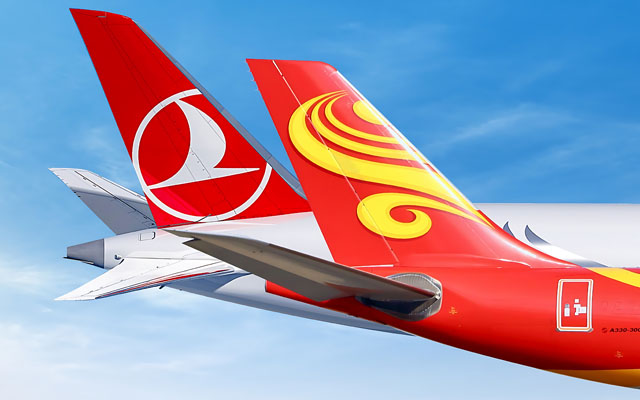
Turkish Airlines and Hong Kong Airlines
Turkish Airlines expands codeshare with Hong Kong Airlines
Turkish Airlines and Hong Kong Airlines have expanded their codeshare partnership, strengthening both airlines’ international networks and offering passengers greater flexibility and convenience.
The enhanced collaboration now includes Hong Kong Airlines’ services to Australia, providing seamless access to Sydney and Melbourne via Hong Kong for a smoother one-stop travel experience. Passengers can also enjoy improved connectivity between Hong Kong and key destinations in Asia, including Tokyo, Osaka, and Bangkok, through the extended partnership.
Zentis Osaka has introduced Ohitori Osaka by Zentis, a new stay package designed for solo travellers. The package offers a two-night stay in a Studio, Corner Studio or Suite, with daily breakfast at Upstairz, the hotel’s restaurant and lounge.
Guests will find the in-room mini-fridge pre-stocked with local Osaka beers and juices, and receive a complimentary cocktail tailored to their taste at Upstairz Bar.
Solo guests receive a SISI skincare set or The Flavor Design fabric mist as part of the Ohitori Osaka package
Additional inclusions are a skincare set by Japanese brand SISI or a fabric mist from Osaka-based The Flavor Design, along with a Zentis eco-bag. SISI products use natural ingredients and eco-friendly packaging, while The Flavor Design’s scents – two created exclusively for the hotel – reflect Zentis’s focus on calm creativity.
Solo guests can also enjoy afternoon tea or seasonal French cuisine at the restaurant. Located between Dojimahama and Kita-shinchi, the hotel is within walking distance of the Nishi-Umeda district and Nakanoshima’s cultural attractions, including the National Museum of Art and Osaka Science Museum.
The hotel’s main floor features a guest lounge with shared workspaces overlooking a garden, and Room 001, a multifunction area with laundry facilities, a Nespresso bar, and a shoe-shine corner run by The Shoeshine Guild.
Zentis also curates local experiences such as river cruises through Osaka’s waterways, connecting guests with the city’s historic “city of canals” charm. The team offers route suggestions for solo exploration, including a nearby post-war café known for its retro interiors and cutlet sandwiches.
The Ohitori Osaka by Zentis package is available to book from November 18, 2025 for stays starting from January 3, 2026, with rates starting at 58,000 yen (US$385) for single occupancy.
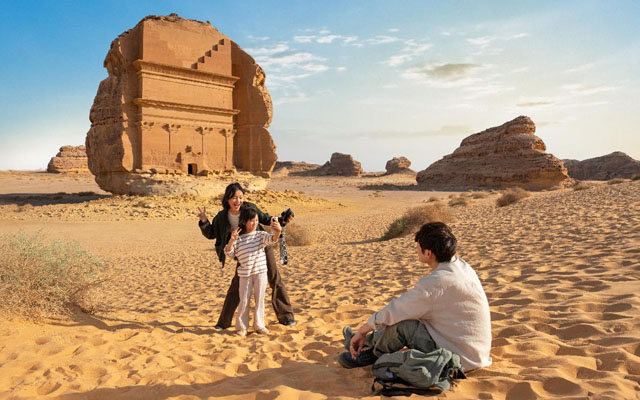
The Saudi Tourism Authority (STA) has introduced a new campaign, Immerse Your Soul in Arabia, aimed at attracting Chinese travellers.
The initiative, based on the Chinese concept of Qi Yu (serendipity), highlights Saudi Arabia’s cultural heritage, natural landscapes, and modern developments.
The campaign film follows a young Chinese family exploring Saudi Arabia, from the deserts of AlUla to the Red Sea’s luxury resorts
The campaign film showcases key destinations including the rock tombs of AlUla, historic cities Al-Balad and Diriyah, Riyadh’s cityscape, and the Saudi Red Sea, where resorts such as The St Regis Shebara and InterContinental offer water villas.
The film also illustrates local cultural experiences, including traditional dress, music, dance, and market interactions, emphasising the country’s safe and welcoming environment.
The launch comes as interest from Chinese travellers rises. Around 140,000 visited Saudi Arabia in 2024, marking a record high. Overall, the country welcomed approximately 116 million visits, a six per cent increase from 2023, including 29.7 million international arrivals, up eight per cent. Destinations such as Riyadh, Jeddah, AlUla and the Saudi Red Sea are increasingly popular among international travellers.
The campaign aims to position Saudi Arabia as a destination where cultural heritage and modern experiences coexist, encouraging visitors to explore cities, historic sites and coastal resorts. With a focus on immersive experiences and authentic human connections, STA is targeting travellers seeking meaningful and safe journeys.
Agoda has observed a rise in solo travel interest across Asia in 2025, with a 16% increase in accommodation searches compared to last year, highlighting a growing movement of travellers embracing the freedom and adventure of solo journeys.
The data, shared in the wake of Singles Day on November 11, underscores how individuals are increasingly seeking personal discovery and independent travel experiences.
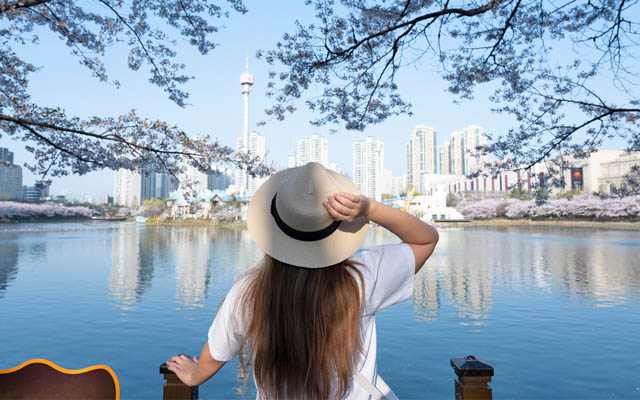
Solo travel rises across Asia in 2025, with Tokyo, Bangkok and Seoul, pictured, among the most popular destinations
When planning trips, solo travellers gravitate towards major cities, with Tokyo (Japan) leading the pack, followed by Bangkok (Thailand), Seoul (South Korea), Osaka (Japan) and Kuala Lumpur (Malaysia).
These urban hubs offer a wide range of attractions, from cultural landmarks to dining and lively entertainment, making them ideal for those exploring the world at their own pace. While these destinations have long been popular with all types of travellers, their unique offerings make them particularly appealing to those travelling solo.
At the forefront of this trend are travellers from Japan, South Korea, Thailand, Indonesia and Taiwan, who make up the top five solo travel groups in Asia. While Japanese travellers dominate in numbers, interest in solo travel has grown fastest among Indonesians, with a 72% increase in searches. Thai travellers follow with a 37% rise in solo travel interest. This growth highlights a shift in how individuals across Asia are redefining their travel experiences and looking beyond traditional group trips.
Jay Lee, regional director, North Asia at Agoda, remarked that the rise in solo travel across Asia had become a defining trend in 2025, reflecting a growing desire for personal discovery and meaningful cultural immersion.
IHG Hotels & Resorts (IHG) has partnered with The Job Plus and the Tourism and Hospitality Skill Council (THSC) to provide skills training and career opportunities for young people from underserved communities in India.
The long-term initiative aims to strengthen youth employability in the hospitality sector.
Jain: we remain focused on creating shared value – for our people, our partners, and the communities we serve
Aligned with its Journey to Tomorrow responsible business plan, IHG is addressing the industry’s growing skill gap, where many trained workers are leaving the sector, by supporting economic and social change through training and innovation. With IHG’s educational sponsorship, participants will have the chance to build careers that offer financial independence and choice rather than roles dictated by circumstance.
The Job Plus will oversee on-ground implementation by leveraging its expertise in skilling and employment across India’s hospitality sector, while THSC will assess and certify all participants under nationally recognised standards.
Sudeep Jain, managing director, South West Asia, IHG Hotels & Resorts, said: “This partnership reflects our commitment to nurturing local talent, bridging the industry’s skill gap, and enabling young people from diverse backgrounds to build meaningful careers in hospitality. As we continue to grow in India, we remain focused on creating shared value – for our people, our partners, and the communities we serve, guided by our purpose of True Hospitality for Good.”
“Through this collaboration, we aim to strengthen the industry’s talent pipeline, align skilling with global hospitality standards, and create long-term, dignified career pathways for young individuals across India,” stated Divya Krishan, chief growth officer, The Job Plus.
THSC CEO Rajan Bahadur added: “At THSC, we believe true progress comes from empowering individuals through skills. This initiative is a step towards creating equitable opportunities, enabling youth to become confident professionals who strengthen the hospitality ecosystem.”