 Many in the luxury travel space are predicting a travel recovery that is led by high-net-worth travellers – people with the financial ability and control over their own time to get through the many hurdles required of travellers amid a pandemic. Is this happening with Hilton’s best of the best properties?
I don’t think travel recovery is restricted to luxury travellers. Everyone is travelling again once it is possible.
We are seeing in Asia-Pacific that there are now more domestic travellers than we saw a year ago, which is a natural outcome of the closure of travel borders as a result of the pandemic.
In China where we have a big number of Waldorf Astoria and Conrad hotels, we have benefited a lot from the restrictions on Chinese people leaving the country for holidays. As a result, many are rediscovering China instead.
In Indonesia, Thailand and Singapore, many locals who did not chose to stay at our hotels for a vacation pre-Covid-19 have changed their mind. In Singapore, locals are motivated by the SingaporeDiscovers vouchers put in place by the government (to stimulate domestic tourism spend) and their staycations are really helping the hotels.
In Japan and South Korea, staycations were already a big hit pre-Covid-19, and are more so during the pandemic.
Many people who are not able to travel overseas are thinking of using their time and money instead on experiences they never considered or have been thinking about for a long, long time. For some, staying at a Waldorf Astoria or a Conrad is that option.
With such a reduced market size due to international travel restrictions, are your luxury hotels reaching out to a segment of guests who previously could not afford a stay? Would this impact brand positioning?
Our hotels in Bora Bora and the Maldives see mostly returning guests, guests who have had previously experienced our properties. We have a very strong loyalty programme.
We also have a lot of returning guests at our other iconic city hotels, like the Conrad Centennial Singapore.
So, it is our regular customers who are returning first.
The rise of new customers is natural, as our brand presence has been growing over the last few years. In China, for example, we opened four hotels in 2019 – two in Hangzhou, one in Shenyang and one in Tianjin. These hotels are now attracting a new customer base for us. Residents who saw such iconic hotels in their cities became curious about the brand; they wanted to know where else on their future travels could they experience the same brand.
If a customer has just discovered us, we are very happy.
In any case, when a traveller decides on a luxury trip, he will consider what he wants to experience. When he chooses to stay in a luxury hotel, he wants to have the choice of having a wonderful time. It is never about the price. And for this reason, our team must and will continue to deliver on excellent experiences.
Has marketing to the luxury traveller changed – or will change – as a result of the pandemic and new travel priorities?
Marketing to the customer hasn’t changed but our messages have. In the beginning of the pandemic there was no need for us to tell our customers how beautiful our hotels are because everyone was stuck at home.
As the pandemic progressed, we developed our Hilton CleanStay and Hilton EventsReady messages to rebuild customer confidence.
And when the first wave of infections came under control, and people begun to dream again of travel, we started the Hilton Dream Away campaign. Travel resumption started in China, then Europe and then the US. As we saw more markets restarting some travel, we had more pockets of marketing activities but using the same channels.
We continue to be sensitive in our messaging because we cannot ignore the fact that we are still in the middle of a pandemic. Once it becomes clearer that people can get from one point to another, for example with flights resuming between Singapore and the Maldives, we will then roll out targeted marketing.
I consider the travel and tourism recovery to be a confidence game, where the player that can best portray an ability to offer the safest experience for the traveller, even at a premium price, will win. How is Hilton working towards rebuilding that confidence?
I remember how we used to keep our housekeepers hidden (before the pandemic). We told them to only clean the lobby between 02.00 and 04.00 early in the morning, and please do not show themselves to guests.
Nowadays, they will clean in the day and we are happy for them to stay as long in the lobby as they can and be visible to guests. But it is more than just a show, you know. We are a company of over a hundred years old, and cleanliness has always been a part of our DNA. Particularly because our luxury customers expect the very best from us, and that they are safe and taken care of. We didn’t have to reinvent our cleanliness processes.
That said, we have to be sensitive to Covid-19 requirements, which is why we now place a Hilton CleanStay seal on room doors as a way of assuring customers that nobody else has entered their room after it is cleaned and sanitised. Some things are also triple-cleaned now, and we have a partnership with RB, the maker of cleaning brands Lysol and Dettol, to allow guests to feel safe knowing that we are using products they trust and are familiar with.
Can you paint me a picture of your luxury guest journey in this Covid-19 era?
We start communicating with our guests days before their arrival to understand their desires and have that prepared in advance.
When they arrive at the door to their room, they will see a Hilton CleanStay seal, as I have described earlier.
Our hotel can provide an absolutely contactless experience should guests wish for that. If the guest does not want to check in at the counter, we can provide a digital check-in. If they choose isolation, they get isolation throughout their stay. Choice is the key here.
But, with luxury travellers, complete isolation is rarely chosen. They often expect some interaction, to be able to sense the smile behind the mask. They expect to discover why this hotel is luxurious, why the restaurant is famous, why the brand is positioned as such, what’s special around the neighbourhood, etc. Of course, they can know all that from Google, but they would rather find out by themselves, perhaps through a five-minute conversation with our concierge.
At our Maldives resorts, we will even arrange for a Covid-19 test on the island if the guest wishes. As you know, some guests are required to clear a Covid-19 test before they can re-enter their country, so this is an option available for them. And that, to me, is a clear example of the difference between a luxury hotel and a hotel of a smaller scale. It is in our DNA to do things differently to make our customers feel comfortable.
Speaking of the Maldives, Hilton has just launched Ithaafushi – The Private Island in January. And this autumn we can expect LXR’s debut in Asia-Pacific, in Kyoto. What about them excite you most?
Ithaafushi – The Private Island is part of Waldorf Astoria Maldives, and is essentially a private island for bigger families because there are four villas. Guests can only get there by boat, so it delivers on privacy.
Families staying on Ithaafushi – The Private Island have 24-hour access to a personal concierge and all team members who are stationed at the main resort. If they wish for a meal, chefs from the resort will go over and prepare a meal on the island. It has its own spa, gym, a large living space – everything a family could need.
We have been getting enquiries for family stays.
Sounds perfect in a pandemic era, as travellers are favouring private villas and estates when travelling with family for safe distancing.
Yes, absolutely. It is a great move, something we had planned for even before the pandemic.
Meanwhile, Roku Kyoto is under our latest brand, LXR. I’ve just seen photos of it, and it is under construction. It is on time and will open in autumn. It is a wonderful hotel, just 20 minutes from the city centre but in a wonderful nature setting. It is a resort with a couple of authentic food and beverage outlets on its grounds. I think it is a wonderful addition to the LXR brand and a great way for us to bring the brand into Asia-Pacific.
How will Hilton’s luxury portfolio continue to grow for the rest of this year in this region, and which brands will we see more of in the coming years?
Despite the pandemic, our expansion hasn’t stopped. We maintain our long-term vision for our brands. In fact, we had more signings for new hotels last year than we ever did before for all our brands.
Over the last couple of months, we are getting many partners who have expressed their trust in our brands and what we have been doing. And that is helping our hotel portfolio to grow. Ultimately, we have absolute trust that travel will return.
We are opening two Conrad hotels in China this year, one in Jiuzhaigou (Sichuan province) and another in Urumqi (Xinjiang Uyghur Autonomous Region). It is important that our luxury brands go to destinations that are beautiful and perhaps not where we would have gone five years ago but are now interesting (and unknown for the growing market of domestic travellers). The world is craving for new destinations.
Here in South-east Asia, we will have Conrad Kuala Lumpur and Waldorf Astoria Bali.
Later, we will welcome Waldorf Astoria Tokyo Nihonbashi (in 2026), which we announced end of last year.
I would say there is equal interest in all Hilton’s luxury brands.
One last question – an easy one. When travel is possible again, where would you go?
Easy. The Maldives!




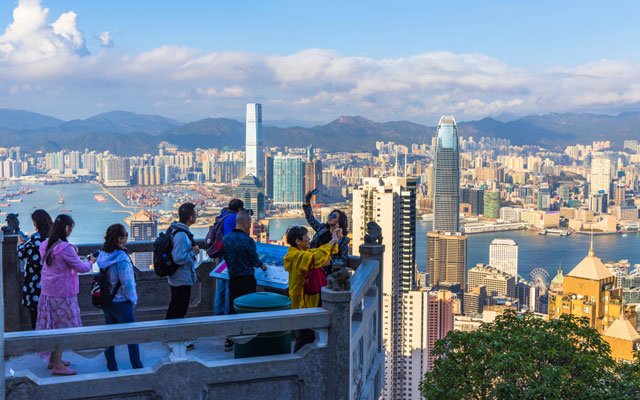








The Hong Kong Tourism Board (HKTB) has committed HK$1.138 billion (US$146.6 million) to a series of short-term, as well as medium- to long-term plans, over the next financial year to prepare for the recovery of tourism and the resumption of international travel.
The short-term strategy will focus on encouraging back international visitors to Hong Kong as soon as possible. When borders reopen and global travel resumes, HKTB will launch Open House Hong Kong, a campaign designed to restore visitor arrivals through tactical offers and exclusive experiences.
In the medium- to long-term, HKTB is conducting a holistic review of Hong Kong’s tourism brand and positioning. Following the resumption of travel, HKTB will launch large-scale promotions through multiple channels including digital platforms in key source markets, as well as media and tour operator co-ops to present Hong Kong’s reinvented tourism image.
In addition, HKTB will develop multi-destination partnerships with cities in the Greater Bay Area (GBA), such as Macau and Guangzhou, to enhance Hong Kong’s reputation as the gateway into mainland China and build on the GBA tourism brand.
The two-phased approach to the plan will complement the ongoing initiatives to support the travel trade, cruise and MICE industries, as well as maintain Hong Kong’s international exposure.
HKTB executive director, Dane Cheng, said: “Despite the start of vaccinations against Covid-19 worldwide, the pandemic situation remains volatile and unpredictable. We consider it unlikely Hong Kong will see a full resumption of cross-border travel in the next three to six months.
“However, we do expect it to be possible for Hong Kong to welcome tourists from selected markets.”
He added: “In formulating our strategies for 2021/22, we focused on two major areas. Firstly, we saw a need to offer support to the trade and boost the ambience in Hong Kong, while ensuring the city’s continued exposure on the international stage ahead of the resumption of international travel.
“Secondly, we anticipate competition for tourists will be intense once the pandemic is over, with rival markets going to great lengths to bring visitors back. The HKTB is therefore setting aside resources for large-scale promotions so that Hong Kong will stand out against competing destinations.”