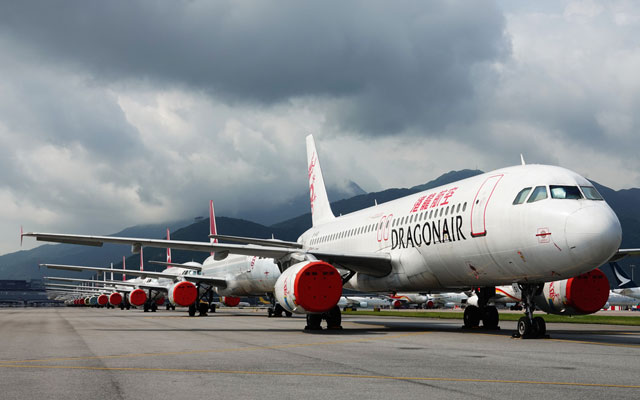
Cathay Pacific will cease the operations of its regional subsidiary Cathay Dragon after three decades with immediate effect, as part of a wider restructuring in response to the ongoing pandemic travel slump.
The Hong Kong airline said that it plans to seek regulatory approval to continue operating a majority of the routes offered by Cathay Dragon, mainly through its wholly-owned subsidiary HK Express.
Cathay to cease operations of its regional airline, Cathay Dragon, and reduce workforce by nearly a quarter
At the same time, Cathay will also cut 8,500 jobs, or nearly a quarter of its workforce across the entire group. About 5,300 employees based at its headquarters in Hong Kong and another 600 elsewhere will likely lose their jobs, while 2,600 unfilled positions will also be cut, it said in a statement.
Hong Kong-based cabin and cockpit crew members will be asked to agree to changes in their conditions of service to match remuneration more closely to productivity. Executive pay cuts will continue throughout 2021 and a third voluntary Special Leave Scheme for non-flying employees will be introduced for the first half of next year.
The airline said it will offer severance packages that “go well beyond statutory requirements”. It will also be extending medical benefits and staff travel entitlements, as well as providing counselling and job transition support services.
Cathay Pacific CEO Augustus Tang said: “The global pandemic continues to have a devastating impact on aviation and the hard truth is we must fundamentally restructure the group to survive. We have to do this to protect as many jobs as possible, and meet our responsibilities to the Hong Kong aviation hub and our customers.
“We have taken every possible action to avoid job losses up to this point. We have scaled back capacity to match demand, deferred new aircraft deliveries, suspended non-essential spend, implemented a recruitment freeze, executive pay cuts and two rounds of Special Leave Schemes.
“But in spite of these efforts, we continue to burn HK$1.5-2 billion cash per month. This is simply unsustainable. The changes announced today will reduce our cash burn by about HK$500 million per month.” Nothing that recovery will be slow, Tang said the airline expects to operate below 50 per cent of 2019 passenger capacity for the entire of next year.
More consumers are gravitating towards OTAs as contactless transactions and information transparency race to the fore of the Covid-19 world, edging businesses towards the ever-increasing need for digitisation.
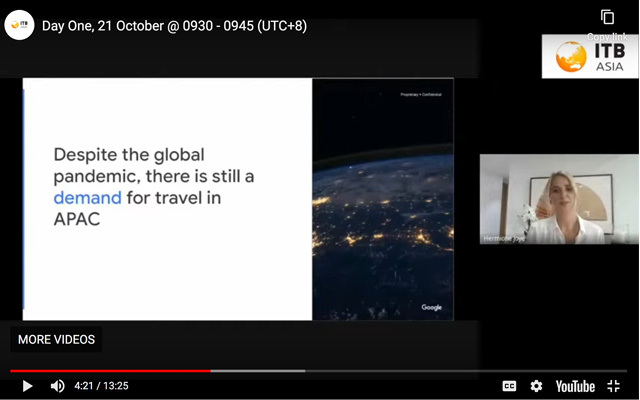
Since the onset of the pandemic, there has been an “acceleration of preference towards OTA” platforms, described Hermione Joye, sector lead, travel and vertical search APAC, Google. For instance, Chinese consumers have more than doubled their bookings via OTAs during the Covid-19 period, posting a marked shift away from direct sellers.
Joye: greater preference for bookings with OTA
“This is because (OTAs) clearly articulated what was happening around China when it came to travel restrictions and opportunities, as well as what they were doing for safety measures,” said Joye.
Speaking at a keynote session at ITB Asia 2020 Virtual on October 21, Joye stressed the importance for companies to improve their digital presence, as the modern traveller is “incredibly digitised” and will be partial to platforms that can create a personalised booking experience.
Success also hinges on adapting and responding to new needs quickly; an approach that has helped airlines secure increased direct traffic. Joye advised businesses to create new strategies based on how each market is currently adapting to the pandemic.
In addition, she urged businesses to provide consumers with relevant and current information clearly. “You need to improve your digital user interface – make sure it’s seamless and end-to-end – and make sure the consumers really understand the safety programmes, so that they feel comfortable booking with you.”
The need to instill trust and traveller confidence through messaging and tourism content is also emphasised by fellow keynote presenter Angel Llull Mancas, vice president & managing director, Asia Pacific with Booking.com.
Mancas emphasised flexible cancellation policies to give travellers’ piece of mind, as “we cannot predict when the next wave will come or how borders will react”.
Some travel trends to note, according to Mancas, include last minute bookings as well as bookings for future travel dates; and a growing preference for locations that are less populated as well as nature-based attractions such as beaches and mountainous areas. In response to these trends, Booking.com has improved on its search functions to make it more intuitive for users to find their preferred holiday locations.
He also foresees that remote working may result in a new type of customers in the years to come. These are people who choose not to work from home, but from an alternative setting, such as a beach or restaurant, where they can stay connected to their colleagues through Wi-Fi. – Additional reporting by S Puvaneswary
Chris Bottrill, immediate past chair – PATA, leading a discussion on the Association’s governance reorganisation at an Extraordinary Meeting for Members, held during the PATA Annual Summit 2019 in Cebu, Philippines
The Pacific Asia Travel Association (PATA) has made significant changes to the design of its organisational governance at the recent Board Meeting and Annual General Meeting held on October 12 and 14, respectively.
The major changes are a shift from an appointed Board to an elected Board by all members that is also substantially reduced in size, in addition to a reduced and fully elected Executive Board.
Chris Bottrill, immediate past chair – PATA, leading a discussion on the Association’s governance reorganisation at an Extraordinary Meeting for Members, held during the PATA Annual Summit 2019 in Cebu, Philippines
A feature of the new design is a shift from an expansive array of committees to Expert Task Forces (ETFs), which draw upon the deep knowledge and experience within the PATA network to address issues of interest to the Association and the industry. The ETFs are established to focus on a specific task within a specified time-frame and disband upon completion. New ETFs will be formed on new issues as they arise.
The goal is to enable the active engagement of members in dynamic and meaningful activities that support PATA’s purpose of facilitating the responsible development of travel and tourism in the Asia Pacific region.
Over the past year, three pilot ETFs have been formed. Two ETFs helped frame and facilitate the development of the PATA Crisis Resource Center and Tourism Recovery Monitor, both designed to support members through the challenges of the Covid-19 pandemic and assist towards recovery. A new ETF is currently in process to help envision the future of PATA in a post-Covid-19 environment to maximise benefits for current and future members of the Association.
The new structure is also designed to enable a voice for all members. The ETFs along with the Board, Executive Board, and Management initiatives will encourage greater member engagement through ‘micro-volunteering’ by facilitating ‘bite-sized’ feedback on issues that matter to members, while assuring the agenda remains relevant, timely, dynamic, engaging, and beneficial for all industry stakeholders.
PATA will retain a balance of public and private sector members in the new design, but the changes will enable broader participation of members to facilitate greater equity and diversity in all aspects of governance and operation.
This change in organisational governance has been in the works over the last three years, during which PATA reviewed leading organisational models and consulted with a wide range of experts to create a design that modifies and refines the Association for more efficient outcomes and engaged participation.
Destination specialist Discova has launched a range of Virtual Educational Travel programmes to allow schools to proceed with their experiential and overseas exchanges during the travel downtime, with one group already confirmed for November.
Utilising video conferencing platforms like Zoom and Adobe Connect, depending on the customers’ preference, the programmes will invite student groups from around the world to interact in real time with South-east Asia-based expert hosts to appreciate new languages, learn new skills and immerse in a new culture.
Yee: the virtual programmes allow cross-border knowledge exchange even when travel is impossible
Highly customisable, the programmes include Virtual Student Exchanges, where students will have real-time interactions with peers and experts to experience culture differences; Virtual Workshops that impart new skills; Virtual Tours by a locally-based expert guide; and Virtual Trainings that are conducted in partnerships with universities in South-east Asia.
Eileen Yee, general manager of Discova Educational Travel, told TTG Asia that the virtual products were created in response to customer demand.
“Some of our travel partners and regular clients, including schools and universities in Singapore and Australia, are looking for alternative ways to offer learning and training experiences to their students through engagement with communities and experts from another country at a time when physical travel is not possible,” Yee said.
Currently, Discova is working on a virtual training programme for nursing students in Australia who will learn remotely for credits as part of their university curriculum, through interaction with peers, teachers and professional experts from a Vietnam-based university.
Yee said live learning experiences are prioritised over pre-recorded sessions to encourage engagement and interaction. Discova will work with the participating school to ensure that all needed materials are sourced for and ready ahead of the virtual activity.
“We operate our programmes ourselves and identify every local stakeholder involved in our virtual initiatives, from the local university/school we partner with to the local expert guides and hosts. As we have been operating educational programmes in South-east Asia for more than 12 years, we have developed long-term partnerships with local educational authorities, social enterprises, communities, NGOs and other experts,” she said.
Interest from schools, universities and travel partners is strong, and Discova is now in advance stages of negotiation with some customers.
The Educational Travel programmes are part of the company’s long-standing commitment to responsible tourism.
Yee said: “We ensure that our initiatives are beneficial to everyone involved, from the participating students to the destination-based hosts and communities. All our virtual and physical educational programmes follow Discova’s robust Health and Safety standards and Child Protection policy.”
“Thanks to our new virtual initiatives, we are able to continue to support our local communities and our expert guides’ livelihoods during these challenging times for tourism- dependent economies in particular.”
While Yee recognises the value of physical educational travel, she said the virtual programmes would remain in Discova’s offerings even after international borders reopen and physical travel resumes.
“Remote experiential learning can provide a complementary experience that many will want to take advantage of,” she said.
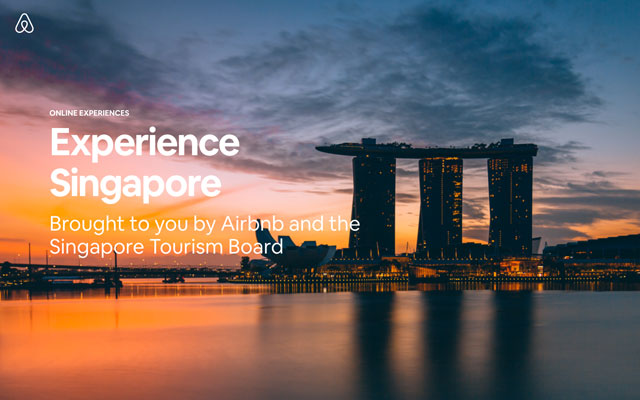
Airbnb Experiences and the Singapore Tourism Board (STB) have signed a two-year MoU to co-promote and grow a range of unique, authentic tourism experiences hosted by locals on the Airbnb Experiences platform.
This agreement comprises three strategic pillars, namely, development of Singapore Experiences in the new tourism landscape; co-marketing of destination Singapore to stay top-of-mind among global audiences; as well as facilitating data and knowledge exchange to enable effective recovery.
The partnership between Airbnb Experiences and STB will allow the companies to continue offering quality tourism experiences to global audiences in the new international tourism climate
Virtual tourism experiences have rapidly surfaced as one of the key digital commodities for the global travel and hospitality industry as the Covid-19 pandemic impacts businesses and livelihoods. Through the MoU, Airbnb Experiences and STB will join hands to showcase the range of unique and authentic Singapore Online Experiences on the Airbnb platform, through a variety of creative channels to stay top-of-mind to travellers worldwide.
To kick off this partnership, the two organisations have developed and launched Singapore Virtual Trips, a collection of Online Experiences hosted by Singapore tourism industry partners and featured on a dedicated landing page on the Airbnb platform. This first-of-kind destination page will also provide compelling Singapore destination content, offering international travellers an opportunity to explore the country virtually during this challenging period.
Singapore Virtual Trips features a wide array of unique Online Experiences, including a sustainability-themed tour at Gardens by the Bay’s Cloud Forest, a virtual visit to Peranakan home museum The Intan with owner Alvin Yapp, an interactive bingo tour of the one-north tech precinct by Monster Day Tours, and a behind-the-scenes peek into the rich history of the Old Kallang Airport with Jerome Lim, founder of heritage website The Long and Winding Road. More tourism industry partners are expected to join this initiative following this first wave of Online Experiences.
This partnership will encourage Singapore tourism businesses to take their products online and pivot towards innovative hybrid business models, as the industry reimagines the future of tourism, said STB in a release.
In the future, both parties will also collaborate to onboard unique and authentic in-person Airbnb Experiences across various categories, including dining, nature, wellness, and the arts. Aimed at the long-term development of the Singapore Experiences sector, both parties will work with local tourism industry partners to continuously offer differentiated and fresh experiences to travellers.
The partnership will thus help local entrepreneurs leverage the economic benefits of experience-driven travel, by providing them with opportunities to share their passions and interests and connecting them with travellers who are interested in Singapore.
Given ongoing international travel restrictions, the partnership also aims to capture audience interest for Singapore to remain top-of-mind as a destination among consumers worldwide, leveraging both Airbnb Experiences and STB’s strong brand images and global reach.
Under the partnership, both parties will jointly produce a lineup of co-branded content featuring destination Singapore and Airbnb Experiences, to be served across their respective platforms and channels. STB and Airbnb Experiences also plan to make such content available to travel industry partners via STB’s Tourism Information and Services Hub. These efforts are especially critical in driving effective recovery as international travel restrictions ease, said STB.
In addition, both parties will work towards extending destination information, tools, and benefits to Airbnb Experiences guests – such as exclusive offers unlocked through sign-ups for the Visit Singapore app.
Airbnb Experiences and STB will also mutually share insights and best practices to grow experience offerings in Singapore and aid in strategic tourism development and recovery.
To kick-start this, Airbnb Experiences has invited STB to access their City Portal, a data-sharing platform built exclusively for governments and tourism organisations to equip them with travel insights and other relevant resources. STB said that data and knowledge exchange will help both parties onboard more targeted Singapore Experiences, refining tourism products and services in this new environment through a deeper understanding of the evolving traveller profile.
While domestic travel interest is rising in Asia where the Covid-19 pandemic is coming under better control, demand has not been equal for all destinations and suppliers.
Yap Lip Seng, CEO, Malaysian Association of Hotels, told TTG Asia that only selected destinations in Malaysia are seeing a return in tourism business.
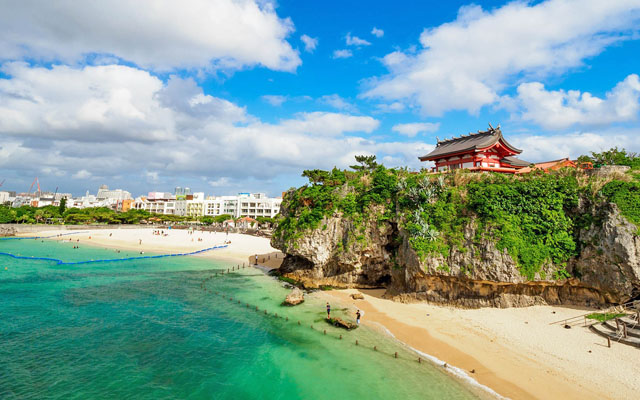
Not all tourism suppliers in Asia are reaping the benefits of domestic tourism, with islands and beach resort destinations favoured over cities
“Islands and beach resort destinations are gaining momentum from pent-up demand while main cities are still suffering with high dependency on international arrivals,” Yap said.
The same observations were shared by Jeff Redl, managing director of Diethelm Travel Vietnam, who noted that beach hotels in Vietnam “were recording almost full occupancy (from) Fridays to Sundays”, while city hotels continue to struggle with “extremely low occupancy”.
Demand is also heavily dependent on accessibility, where self-drive possibilities can influence domestic holiday decisions.
“Travellers are avoiding flights where possible,” said Yap.
Supporting the observation, Boon Kwee Lim, CEO of Dusit Hotels and Resorts, shared that his hotels in Chiang Mai and Phuket – most accessible by a short flight – are seeing low occupancies despite price reductions. On the other hand, his property in Korat, a three-hour drive from Bangkok, is frequently booked out at normal room prices post-lockdown.
Amid an ocean of travel offers now, domestic travellers have become even more price-sensitive, noted Suyin Lee, managing director of Discova. “We continue to see price as the key decision factor and we notice that travellers have an appetite now to try new destinations if the price is attractive.”
To spread domestic travel across more parts of a country, Yap suggested that industry stakeholders provide motivation for locals to “revisit older destinations not only based on attractions (there), but also experiences and stories it offers to travellers”.
He added: “Strategies can be mapped to recreate experiences of the same destinations with the help of complementing products such as seasonal events and features.”
It is also important that destination openings are paired with quality hotel development, advised Tunku-Iskandar Tunku-Abdullah, group executive chairman at Melewar Group and former president of the Malaysian Association of Tour and Travel Agents.
He said: “In Malaysia, there are some new destinations, or destinations putting a twist to current offerings through off-the-beaten-track activities and attractions. However, they are not well developed on the hotel and resort side, and as such are not seeing as much demand as expected.”
Meanwhile, industry players continue to support government intervention in domestic tourism promotion, particularly in the form of travel vouchers. Japan, Singapore and Malaysia are among the few countries in Asia with ongoing government-issued travel subsidies. – Additional reporting by Anne Somanas
Luxury villa rental company WIMCO Villas has launched WIMCO Privé, a concierge travel service for booking private jet flights, chartering yachts, and renting villas on private islands.
With WIMCO Privé, vacationers can reserve private charter flights from anywhere in the world to private villas in any of WIMCO’s destinations in the Caribbean, Americas, Europe and the South Pacific. ‘Wing to wing’ transfers can also be arranged, where transfers are required to access smaller airports on private islands, avoiding airline terminals entirely.
WIMCO offers social distancing with air and yacht charter services to complement its private island rentals
“In this era of concern about social distancing, having access to private aviation and private villas results in less points of contact with other travellers, reducing the risk of contracting a virus while away from home,” stated WIMCO’s president Stiles Bennet.
In collaboration with charter provider Tradewind Aviation, WIMCO Privé offers holidaymakers a private, luxurious and crowd-free travel experience from their home airport to their private villa rental.
Customers can choose from private jets for parties of any size, ranging from light jets (6-7 passengers) and mid-sized jets (up to 9 passengers) to large cabin (up to 15 passengers) and airliner (60 passengers).
With WIMCO Privé, a vacationer can also request quotes on chartering private yachts of any size and configuration, from any part of the world. Once a yacht is selected, a travel concierge will work with the client to pre-stock and equip the boat to their specifications, arrange flights to the destination where the travelling party will board the yacht, and consult on customised itineraries.
US-based Plug and Play Tech Center, whose mission is to invest in start-ups and connect innovators with industry leaders, is staying committed to backing technologies built for the travel and hospitality industry during the current tourism crisis. However, its area of focus has shifted to solutions that are critical for business continuity in the present landscape.
Speaking at a conference session during the ITB Asia 2020 Virtual Event on October 21, Amir Amidi, managing partner, travel & hospitality revealed that Plug and Play’s investment interest today centres on three areas: personalisation, seamless end-to-end journey, and operation efficiency.
Plug and Play Tech Center is keen to back innovators who bring personalisation, seamless purchasing journey and operation efficiencies to the travel and hospitality industry
He explained: “Personalisation is an area that is definitely lacking in today’s travel industry when you compare it against others like Brand & Retail and E-commerce. (As for) seamless end-to-end journey, the pre-pandemic practice of having an average leisure traveller in North America going to 30 different websites before booking a hotel room or flight, is wrong. We are interested in backing any technology that helps the traveller feel confident about seeing the best deal on a single website quickly.”
He added: “Operation efficiency is something that will never go away, with or without a pandemic, so we will continue to be interested in technologies that could add to the bottom line and lower costs.”
Detailing specific types of technology that Plug and Play would be keen on, Amir identified solutions that facilitate contactless, seamless journey; screening, tracking and tracing; automation of processes and operations; point of care diagnostics; traveller safety and communications; air purification, UV sterilisation and new materials; restore trust and stimulate demand.
He said these solutions would be crucial for the survival of travel and hospitality sectors in the short term, although some would remain important and relevant even in the long term when the pandemic is over.
Concluding his session, Amir advised start-ups that are looking to do something in the travel and hospitality industry to focus on B2B solutions, and not B2C as they would have to “break the bank” to compete with giants like Expedia and Booking.com for global eyeballs.
“Secondly, do not start a company that is only relevant in light of the pandemic. It should solve a problem today but remain relevant post-pandemic,” he added.
“If you are an existing start-up, look for solutions suitable in today’s environment. A great example is Sherpa, which went through our accelerator programme. It was in the e-visa space but has since developed a dashboard to provide visitors with real-time information on travel restrictions, quarantine rules, Covid-19 hot spots, etc.”
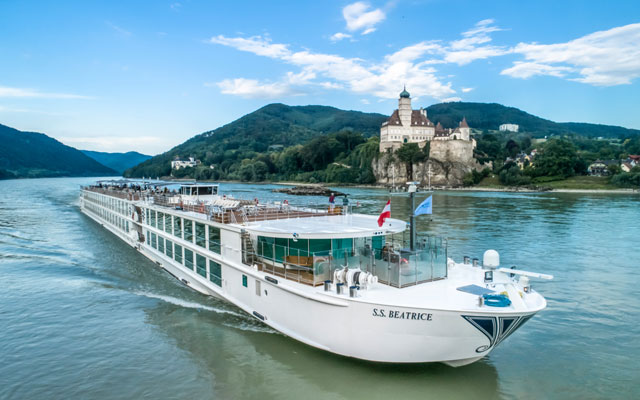
Uniworld Boutique River Cruises has become the first river cruise company to employ antimicrobial coating across all its ships and properties under its sister brand Red Carnation Hotels.
The US-based luxury river cruise line has contracted with Danish company CleanCoat A/S to adopt their ACT CleanCoat solution, which is renowned for its ability to render surfaces self-disinfecting after one application.
Antimicrobial coating is the latest safety measure rolled out by Uniworld to woo back luxury cruisers
According to Uniworld Boutique River Cruises CEO Ellen Bettridge, all ships will be sprayed with the antimicrobial coating that is invisible, odourless, non-toxic and most importantly, kills bacteria and viruses including the coronavirus family.
Sustainable and environmentally friendly, the ACT CleanCoat solution consists of two components: ACT CleanCoat, an annually applied treatment that disinfects surfaces while purifying the air; as well as the use of ACT ECA (electro-chemically activated) Water, which provides the best possible conditions for ACT CleanCoat to maximise its disinfecting effect, while itself acting as a hospital grade disinfectant for regular use.
The antimicrobial coating is in addition to Uniworld’s previously announced enhanced health and safety protocols, including health screenings, contactless payment, reserved seating when dining and other physical distancing measures.
Radisson Hotel Group (RHG) has launched a new brand, Radisson Individuals, giving independent hotels and small chains the opportunity to join the global RHG platform.
Member hotels can expect to benefit from international exposure, while retaining their own styles and identities. Radisson Individuals also allows hotels to nurture customer confidence, and access a wider audience through multiple distribution channels and a global sales structure.
Radisson Hotel Group expands brand freedom with the launch of Radisson Individuals
By joining the brand, hotels can also benefit from Radisson’s contracting power and economies of scale, as well as leverage the group’s integrated IT and revenue platforms, loyalty programme, and operational systems to increase profit margins.
RHG CEO Federico J. González said: “We created Radisson Individuals in response to the evolving demands of the modern market. Joining Radisson Individuals is an ideal first step for individual hotels with strong service scores who wish to remain independent or may be considering transitioning to one of our successful core brands in the future.
“The new brand is also a strong proposition for local and regional hotel brands seeking to explore additional distribution channels and co-branding options.”
Interested hotels will have to undergo a compliance assessment focusing on four key parameters: health and safety compliance, online rating, fire compliance, and their ability to connect to the group’s main operating systems. Member hotels will also receive training on the group’s “Yes I Can!” service philosophy.

















Luxury villa rental company WIMCO Villas has launched WIMCO Privé, a concierge travel service for booking private jet flights, chartering yachts, and renting villas on private islands.
With WIMCO Privé, vacationers can reserve private charter flights from anywhere in the world to private villas in any of WIMCO’s destinations in the Caribbean, Americas, Europe and the South Pacific. ‘Wing to wing’ transfers can also be arranged, where transfers are required to access smaller airports on private islands, avoiding airline terminals entirely.
“In this era of concern about social distancing, having access to private aviation and private villas results in less points of contact with other travellers, reducing the risk of contracting a virus while away from home,” stated WIMCO’s president Stiles Bennet.
In collaboration with charter provider Tradewind Aviation, WIMCO Privé offers holidaymakers a private, luxurious and crowd-free travel experience from their home airport to their private villa rental.
Customers can choose from private jets for parties of any size, ranging from light jets (6-7 passengers) and mid-sized jets (up to 9 passengers) to large cabin (up to 15 passengers) and airliner (60 passengers).
With WIMCO Privé, a vacationer can also request quotes on chartering private yachts of any size and configuration, from any part of the world. Once a yacht is selected, a travel concierge will work with the client to pre-stock and equip the boat to their specifications, arrange flights to the destination where the travelling party will board the yacht, and consult on customised itineraries.