


Sabre taps Gopass Global to mitigate travel risks
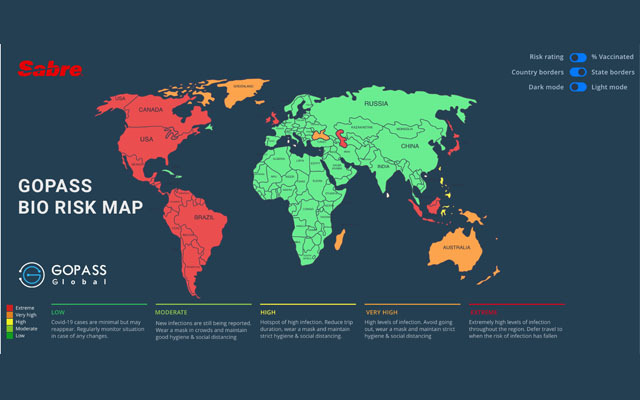
Sabre Corporation has partnered with travel risk management platform Gopass Global to help deliver its Covid-19 biosecurity risk analytics capabilities to the travel industry.
Gopass Global solutions leverages advanced analytics to deliver a single view of all of the biosecurity risk elements of a trip, thereby boosting traveller confidence.
Under the deal, travel agents across the globe now have access to Gopass travel risk management capabilities via the Sabre Developer Partner platform. By integrating with Sabre’s shopping APIs, Gopass populates a quantifiable risk score onto each travel option and displays the information to agents, who are then able to better advise their customers.
Powered by machine learning and artificial intelligence, Gopass Travel Risk Optimizer provides travellers with an end-to-end analysis of all aspects of travel and their risk exposure in the cycle of travel. Gopass Global data also looks at country conditions such as infection rates, government policies and data reliability. Putting this all together, agents can obtain a risk score out of ten per flight itinerary, enabling them to clearly identify the lowest risk rates overall.
“For the travel industry to open up, recover and grow, it is vital that we are able to reduce and mitigate the risk of travel so we can instil renewed confidence in travel for both the leisure and corporate traveller,” said Mark Radford, CEO, Gopass Global.
“It’s clear leisure travellers want to know about potential travel risks so they can avoid or mitigate them. But this is especially critical for corporate travel as we learn to live with this pandemic. Companies need to ensure they are taking their duty of care to employees seriously when it comes to travel. It’s essential, therefore, that travel agents, and ultimately travellers, have all of the critical information they need at their fingertips when planning their trip to make the decisions that are right for them.”
KTO to host four-in-one travel expo

The Korea Tourism Organization will be holding a new, hybrid travel expo from June 29 to July 13, 2021, bringing four tourism events under one umbrella for the first time.
The Korea International Travel Expo (KITE 2021) will kick off on June 29 with an opening ceremony at the Paradise City Hotel in Incheon. The programme line-up will include keynote speeches by Berlin Tourism and Congress CEO Burkhard Kieker and Singapore Tourism Board assistant chief executive Chang Chee Pey, a performance by Korean longboarder Ko Hyojoo as well as a night-time drone show.
The event will kick off with the Korea MICE Expo from June 29 to July 2, featuring a roadshow, CVB showcase, and an exhibition on meeting technologies.
This will be followed by the Korea Travel Mart from July 5-7. Highlights include discounted Korean products, early-bird flight ticket prices to South Korea, a live travel talk show with a K-pop star, and an online fam tour for overseas buyers.
Taking place from July 8-9, the Korea Luxury Travel Mart will feature a tourism conference, as well as a virtual fam tour showcasing luxury tourism and related products.
Wrapping up the expo will be the Korea Medical Wellness Tourism Fair from July 12-13, featuring a conference, virtual wellness programme, and medical consultations for overseas delegates.
Delegates can expect to obtain the latest information on South Korean tourism in relation to the four sectors, engage in one-on-one video business consultations with Korean sellers through a new online platform, and gain insight into post-Covid-19 tourism in South Korea. Over 1,500 domestic and overseas buyers, as well as thousands of visitors, are expected to attend.
Contactless ticketing system launched in Nami Island
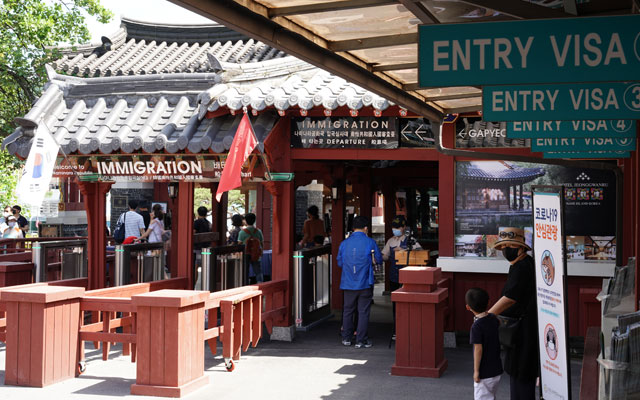
rezio, a SaaS platform that provides an all-in-one booking solution for travel operators and activity providers, has created a contactless experience for visitors to popular tourist attraction Nami Island in South Korea.
Through its online-merge-offline (OMO) cloud integration solution, rezio has successfully powered the ticketing solution for Nami Island, providing more than 100,000 visitors a safe and seamless contactless experience amid the pandemic since its launch in June.
The cloud integration solution by rezio enables customers to purchase tickets online, receive their e-tickets with QR codes and enter the attraction via the electronic turnstile by scanning their tickets, completely omitting the need for physical interactions.
Self-service ticketing e-kiosks are also available on-site, which eliminates the need for long queues and unnecessary exposure to crowds. Employees of Nami Island are also able to manage the crowd within the attraction at any one point of time through the real-time inventory notification.
IHG grows India footprint with signing of Holiday Inn Express & Suites in Jalandhar

IHG Hotels & Resorts has signed a management agreement with Samplast Resorts to develop Holiday Inn Express & Suites Jalandhar GT Road.
The new-build, 110-key hotel is expected to be operational by 1Q2024.
Located on the Grand Trunk Road, also known as NH1 which connects the country’s capital city of Delhi to Amritsar, the hotel will be a short drive from the city’s CBD as well as shopping destinations. Additionally, the hotel will have an adjoining strip mall that will offer multiple dining options for hotel guests.
On-site facilities will include a bar and lounge, fitness room, meeting rooms, 1390m² of banqueting space, as well as signature amenities.
Pandemic prompts more travellers to book directly

Covid-19 has resulted in a shift in consumer preference towards booking holidays directly, instead of going through an OTA, a recent GlobalData poll has revealed.
According to the GlobalData Live Tracker Verdict Poll of 156 respondents, some 39 per cent of respondents said they would typically book directly, followed by 17 per cent that opted for OTAs and price comparison sites. The data and analytics company attributed this shift to the flexible cancellation and straightforward refund policies offered by direct booking.

Gus Gardner, associate travel and tourism analyst at GlobalData, commented: “The pandemic has caused a significant shift in consumer booking habits.”
He noted that a previous survey in 3Q2019 showed that OTAs were the most popular booking option, followed by direct booking with a hotel or airline. The GlobalData Q3 2019 Consumer Survey, which polled 29,744 global respondents, found that 44 per cent of respondents preferred booking through an OTA, 36 per cent directly with a hotel and 34 per cent directly with an airline.
“However, some OTAs have been extremely slow to issue refunds and have received a raft of bad press as a result. This has knocked travellers’ confidence to book through intermediaries,” Gardner said.
He added: “Direct booking channels are likely to have experienced an increase in popularity due to the fragility of booking a trip in the current situation. Travellers now desire the highest level of flexibility, and it is no wonder that direct booking channels’ flexible terms, easy changes and quick refunds are winning travellers over.
“Further, the ability to make changes online places the power back into the traveller’s hands and streamlines the whole process. By booking directly, the traveller cuts out the middleman, considerably speeds up the change/refund process, and increases their satisfaction.”
Cindy Kong joins Mandarin Oriental, Singapore

Mandarin Oriental, Singapore has appointed Cindy Kong as hotel manager.
In her new capacity, Kong will spearhead initiatives to drive operational excellence and ensure high levels of guest satisfaction.
A veteran in the hospitality industry, Kong has amassed over 20 years of experience with Mandarin Oriental Hotel Group, with her most recent role being the hotel manager of The Landmark Mandarin Oriental, Hong Kong.
The Malaysian is no stranger to Mandarin Oriental, Singapore, having worked here in 2000 as a guest services executive, before taking on the role of guest services manager three years into her term.
After her six-year stint in Singapore, Kong moved on to Mandarin Oriental, Kuala Lumpur where she held managerial roles in the Front Office department, and later took the helm of the hotel’s rooms division as director of rooms before joining Mandarin Oriental, Macau in the same capacity.
Singapore travel agents show their mettle amid tourism gloom

• Government initiatives, including the SingapoRediscovers Vouchers scheme, have helped support local travel agents and spur domestic demand
• Some agencies have quickly pivoted to new business models to raise revenue during travel standstill
• Cruise sales are also helping to buoy agency revenues
The numbers don’t look too bad: Between February 2020 and end-May 2021, 137 travel agents (TAs) in Singapore ceased operations. However, only 38 TAs cited the pandemic, said the Singapore Tourism Board (STB). The rest gave other reasons such as change in business focus and/or retirement of the founder, especially smaller agencies. Annually, some 120 to 140 TAs exit voluntarily.
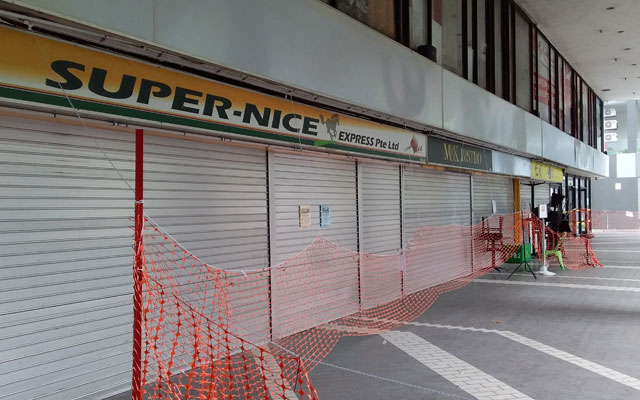
STB’s website lists 1,122 “active” travel agents, meaning they hold licenses. But many may be dormant, or downsized. Shuttered shopfronts in Beach Road and Chinatown suggest coach and regional tour operators and ticketing agencies are seriously affected.
Despite Covid-19 severely impacting all travel sectors, the National Association of Travel Agents Singapore (NATAS), which represents about a quarter of TAs, saw more than 80 per cent renewing their membership.
“We will not see strong signs of travel recovery in a while,” acknowledged NATAS president Steven Ler. “The next six to nine months will be crucial as any further delay in borders reopening will be detrimental. There’s no single set of travel standards or protocols, and this adds to the complexity of cross-border travel arrangements as restrictions are slowly eased.”
He advocated government and industry coming together to redefine travel and build a more sustainable and resilient industry. “NATAS is working on many fronts with government agencies to dovetail efforts to prepare the sector for recovery.”
The art of adaptation
The challenges posed by the pandemic have shown that continued adaptation is a key strategy for survival. Aided by government support, travel agents in Singapore have proven a resilient lot, adapting on the fly and evolving their product portfolios to suit local tastes.
Kenneth Lim, STB director, travel agents & tourist guides, said: “As a whole, our tourism industries have been resilient and adapted their business models and products. Travel agents must ensure they have the relevant skills to cater to the changing needs and preferences of consumers. To that end, STB has launched various initiatives to ensure that our tourism sector is ready for the future of travel.”
Indeed, TAs interviewed were grateful for the generous government wage subsidies and training grants, fee discounts and SingapoRediscovers Vouchers (SRV) for domestic tourism. To reduce costs, some relocated their offices; others released surplus staff for safe distancing ambassador duties.
Participating TAs commended the SRV scheme. Yvonne Low, executive director, The Traveller DMC, said the team drew upon their skill in catering to international tourists, scoured Singapore and launched Origin Journeys – enriching experiences for participants of all age groups.
She said: “The three most popular tours are True Blue Peranakan Experience, co-hosted with a Peranakan restaurant; Pulau Ubin including Chek Jawa; and Hainanese Heritage Tour which includes a food workshop, tea appreciation and Singapore Sling at Raffles Hotel. Food-related tours are more about the culture: interacting with restaurant-owners who share openly about their culture, community and love for the particular cuisine.”
Marshall Ooi, director, Nam Ho Travel, said: “Singaporeans are now exploring remote places such as Pulau Ubin and Kranji and enjoying novelties like a Singapore River cruise with scrumptious seafood dinner. The experience is key, their discovery and enjoyment facilitated through interactive storytelling.”
Tour East Singapore has also adapted tourist itineraries to suit local customers. Non-citizens don’t enjoy SRV subsidies, so they book on Eventbrite. General manager Dominic Ong said: “We have about 120 customers monthly, with a minimum of two to go. Among our eight tours – mostly walking itineraries – the Colonial Charm theme is most popular as participants can appreciate the civic district from a different perspective.”
On criticism that SRV tours are expensive, operators said they are actually “high cost, low margin”. Due to safe management measures, groups are kept small. Costs include tourist guide fees, transport and commission to the booking platform (typically 20 per cent). Moreover, meals are not standard fare but customised menus.
Betel Box Tours continued its walking and food tours without joining the SRV scheme, promoting its Katong, Geylang and Chinatown staples on the firm’s website. When food tours were suspended during the latest five-week curb on dining out, virtual events provided an opportunity.
Owner-director Tony Tan said: “We conducted an educational tour of the URA City Gallery for about 50 students of an Australian university by teaming up with National University of Singapore and Urban Redevelopment Authority. Partnership is important and we’ll be developing more virtual options.” He admitted technical challenges as outdoor and indoor tour conditions are different. Guides also must be good at telling stories and handling equipment in live tours.
Creative pandemic pivots
For Nam Ho DMC, creative thinking extended beyond routine activities. Pre-pandemic, it relied heavily on the Indian market. With that dormant, it deployed its fleet of vehicles by developing a full-fledged logistics business with its own warehouse. It also launched an online B2B marketplace for non-travel products and another for local consumers to buy food items from South-east Asia and China.
Co-founder and director, Mahesh Pawanaskar, said: “Due to the pandemic, our travel business shut down but what came to our rescue is the most valued asset – our people. The biggest learning point is that it is not just about survival of the fittest, but also survival of the most agile and adaptable.”
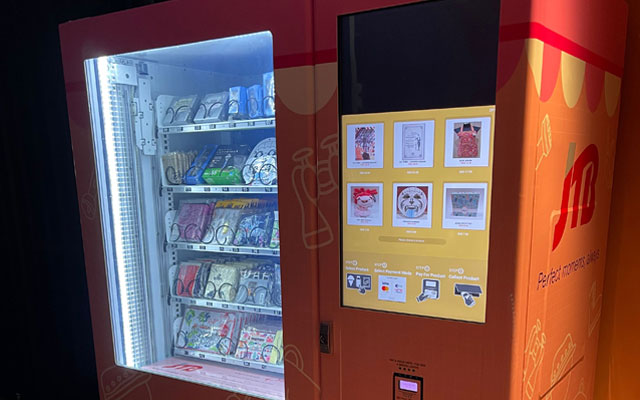
Similarly, without Japanese inbound and outbound business, JTB Singapore developed side-lines, including a self-service vending machine to dispense Singapore souvenirs at Connect@Changi since foreign visitors can’t venture outside the facility. Raffles Hotel merchandise is also stocked. Selling Japanese spa amenities, confectionery and sake on e-commerce platforms will begin soon.
Cruise sales also helped to keep TAs afloat. “We have good take-up of the two- and three-night cruises to nowhere (operated by Dream Cruises and Royal Caribbean),” said Chung Kek Yoong, chief executive, Pacific Arena. “There is a lot of pent-up demand for leisure trips and also to reunite families. This segment will probably drive travel when borders gradually reopen.”
Citing the raft of measures to ensure travel can resume safely, he added: “Granted there will be many hurdles ahead, but travel is simply too crucial to the economic well-being of many countries.”
STB’s Lim affirmed: “We will work closely with travel agents and tour operators to provide mentorship and consultancy support, drive partnerships, support product development and facilitate relevant regulatory approvals to address gaps in Singapore’s tour landscape, while developing future-ready tours that can continue to draw both local and international visitors.”
New travel training company launched to help industry upskill

A new travel training company has launched, offering a range of e-learning courses designed to help industry players upskill in preparation for the post-pandemic rebound.
Progressive Travel Training (PTT) is spearheaded by three travel professionals specialising in training and recruitment – Fi Morrison-Arnthal, Tony Macdonald and James Roberts – who also run Progressive Travel Recruitment.
Initially, PTT is offering agents a programme of 12 e-learning courses, co-authored by senior travel industry experts and PTT co-founder Fi.
Three of the modules are available for free, including a stress management course designed to support travel professionals tackling tough working conditions during the pandemic. The other two free courses are migrating to remote travel home working and blog writing to boost travel business.
Delivered in bite-sized chunks, the flexible training e-courses allow professionals to visit and return to the learning at any time.
Starting from INR3,097 (US$42), the paid courses are as follows: how to sell travel and achieve sales success, managing travel consultants to sales success, complaint resolution and great travel customer service, increase your travel enquiries using Facebook, time management (working smarter not harder), presentation skills in travel, get noticed and get the travel job, and successful corporate travel account management.
By providing training that is either free or 90 per cent cheaper than traditional one-day courses, PTT’s founding vision is that travel professionals who might now be responsible for their own learning costs after being made redundant or going self-employed during the pandemic are still able to pursue their career development, and that employers who want to invest in their teams but have faced tough trading conditions over the last 12 months can still do so, the company said in a press release.
Fi said: “It’s apparent that formal training and in-house trainers are a luxury many travel businesses and agents cannot currently afford and, while there is plenty of online training available covering destinations, product and GDS skills, travel industry employees are frustrated about the limited soft skills available. We have launched Progressive Travel Training to address that need, and to give back to the industry we love – sharing everything we know with a community that is ready to progress and come back post-Covid thriving.”
The full suite of online learning courses can be accessed here.
Centara commits to sustainability

Thailand’s Centara Hotels & Resorts has renewed its commitment to environmental sustainability with new long-term goals to meet climate-related targets.
The 10-year roadmap includes measurable goals for four key initiatives, including a 20 per cent reduction in energy and water usage, greenhouse gas emissions, and the amount of waste sent to landfills.
To achieve these goals, the group is implementing solar power projects, and installing sub-metering systems for water and electrical management. Energy conservation measures and heating system upgrades are being implemented wherever possible and embedded into daily operations.
The plan also entails ensuring that the waste management policy is being strictly followed by the individual property, especially keeping food waste reduction in focus.
By 2025, Centara aims to have all of its properties certified to an international sustainability standard, as well as eliminate single-use plastic items in the entire guest journey.
“By adopting sustainable, green practices, we are actively choosing to be more aware of our environmental impact. This not only protects the natural surroundings that enhance the guest experience in so many of the locations where we operate, (but) also creates long-term benefits for the company, our customers and our employees,” said Thirayuth Chirathivat, CEO of Centara Hotels & Resorts.
“Setting long-term sustainability goals allows us (to) incorporate green practices into our identity and ensures that all our stakeholders are aligned with Centara’s values and vision for a more mindful, ecologically conscious future.”








Singapore Airlines’ travel experiences platform Pelago has expanded its collection of activities for experience-seekers in Singapore.
The collection spans a diverse range of activities, from food and spirits, to nature, wildlife, and family-friendly activities.
For instance, foodies can learn how to whip up popular local dishes in an interactive three-hour cooking class, held in a pre-war shophouse in Chinatown; while spirits enthusiasts can try their hands at recreating the iconic Singapore Sling at Raffles Hotel Singapore.
Nature lovers can embark on a rainforest expedition and seek out nocturnal wildlife or plan a family outing at a local bee farm and learn fascinating details about bees’ ecosystem, behaviours, and more.
Pelago features content written by an in-house team of journalists. All experiences mentioned in the articles on the platform are bookable, allowing consumers to build a customised itinerary based on what they read. Consumers can also explore the site through different topics such as food and drink, art and culture, hidden gems and popular attractions.
When international travel conditions eventually normalise, consumers will also be able to access collaborative planning tools on Pelago to plan their trip itineraries.
The site currently contains more than 200 curated experiences, including exclusive ones such as the Dale Chihuly: Glass In Bloom exhibition at Gardens By The Bay. More activities will be added in the coming months.
“Think of Pelago as a travel magazine that you can be inspired by and book directly on the platform. We have carefully selected a wide range of experiences that will appeal to consumers with diverse interests and passions. Although many aspects of travel have changed, we hope to enable people to embark on adventures and experience different cultures in the city we live in,” said Siddharth Shanker, CEO, Pelago.
Pelago offers flexible cancellations and refund policies. In addition, KrisFlyer members can pay for their bookings directly on the platform with KrisFlyer miles, and also earn KrisFlyer miles with each booking.