

Sabre strengthens partnership with Shiji Distribution Solutions

Sabre Corporation has established an enhanced partnership with Shiji Distribution Solutions to better connect hoteliers to the lucrative, yet complex, Chinese travel ecosystem.
While the Chinese travel market is one of the biggest in the world, Chinese travellers have traditionally been hard to reach for many hoteliers. This expanded relationship between Sabre and Shiji will open up further access for hoteliers, through the Sabre SynXis hospitality platform, to the channels Chinese travellers typically use to search and book their trips across corporate and leisure segments.

Sabre has previously worked with Shiji to connect hoteliers to selected channels within China including the popular WeChat Booking Engine, as well as Fliggy and Meituan’s travel platforms.
Both companies have now reached a much broader agreement to enable Sabre hotel partners to connect to a wider range of travel agents, OTAs, TMCs and wholesalers across the Chinese marketplace.
Sabre’s hospitality partners will have the power to connect to these channels through Sabre Channel Connect, which simplifies and automates distribution of a hotel’s offers, rates and availability, and is designed to reach hotel guests where they shop.
Anson Lau, managing director, Shiji, said the partnership will “support hoteliers to capture recovery and grow their brand by making the most of the significant opportunities presented by the Chinese marketplace”.
He added: “The additional connections available to Sabre through Shiji will, on one hand, help Sabre’s hotel partners build brand awareness in Greater China, driving bookings from Chinese travellers and, on the other hand, help Shiji’s robust network of travel agent partners gain instant access to Sabre’s hotel customers.”
HKTB taps K-drama fever for destination promotion
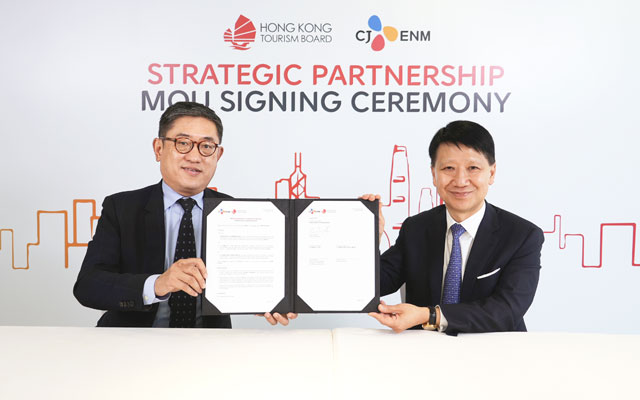
The Hong Kong Tourism Board (HKTB) has signed a three-year MoU with South Korean entertainment giant CJ ENM to promote Hong Kong as a travel destination through Korean dramas and variety TV shows.
This marks the first-of-its-kind partnership between an NTO and CJ ENM, which will see locations in Hong Kong featured in a variety of shows made by CJ ENM from 2022 until 2024. CJ ENM’s original content is currently available across more than 200 countries.
When travel restrictions ease, Hong Kong scenes will be filmed as backdrops for a range of drama and variety programmes made by CJ ENM, which is behind popular K-dramas and variety shows like Crash Landing On You, Goblin: The Lonely and Great God, Hospital Playlist, and New Journey to the West.
Under the tie-up, the two partners will work closely to create synergy, including providing advice on locations and the aspects of Hong Kong culture to be featured in each programme.
HKTB chairman YK Pang witnessed the virtual signing of the MoU between HKTB executive director Dane Cheng and CJ ENM Entertainment Division executive vice president for ad sales and partnerships Lee Sang Moo.
Pang said that the partnership “will help reinforce Hong Kong’s status as one of the world’s most exciting and interesting destinations when international travel resumes”.
He added: “We anticipate competition for tourists will be intense once the pandemic is over, and the HKTB is therefore getting a head start to secure influential media partners for maintaining Hong Kong’s visibility.”
Qatar Airways reaffirms stand against wildlife trafficking

Qatar Airways has reinforced its commitment to combat illegal trafficking of wildlife and its products by extending its participation in the USAID ROUTES (Reducing Opportunities for Unlawful Transport of Endangered Species) Partnership.
As a founding member of the United for Wildlife Transport Taskforce, Qatar Airways signed the Buckingham Palace Declaration in March 2016, aimed at taking real steps to shut down the routes exploited by traffickers of the illegal wildlife trade to move their products.
Subsequently in May 2017, the airline went on to sign the first MoU with the ROUTES Partnership. In May 2019, Qatar Airways became the world’s first airline to achieve certification to the Illegal Wildlife Trade Assessment which verifies that the airline has procedures, staff training and reporting protocols in place to combat the smuggling of illegal wildlife products.
Qatar Airways Group CEO Akbar Al Baker said: “The illegal and unsustainable wildlife trade threatens our global biodiversity, and poses a risk to health and safety, particularly in marginalised communities. We are taking measures to disrupt this illicit trade in order to conserve biodiversity and safeguard our delicate ecosystems.
“We remain committed with other aviation industry leaders to emphasise our zero-tolerance policy towards illegal trafficking of wildlife and its products, and we join the ROUTES Partnership in saying – ‘It Doesn’t Fly With Us’. We will continue to work with our stakeholders to raise awareness and improve detection of illegal wildlife activities to protect these creatures that we value.”
ACI World steers airports towards sustainable recovery

Airports Council International (ACI) World has launched comprehensive guidance to help airport executives incorporate sustainability at the core of their strategies as they work towards long-term recovery.
The ACI World Sustainable Recovery Best Practice highlights the advantages of incorporating sustainability in post-pandemic recovery plans including access to funding through government relief packages and sustainability-linked bonds, as well as further developing a more balanced business model that incorporates social, environmental, and economic sustainability.
The publication provides a table of best practices and examples of action under three pillars of sustainability and governance to guide airports worldwide in developing their own sustainable recovery plans. A step-by-step approach to building such a plan is also included.
ACI World director general Luis Felipe de Oliveira said: “As the industry seeks to ‘build back better,’ airports have been recognising the advantages of a sustainability-centric recovery strategy. While health and evolving passenger expectations remain central to airports and the industry’s sustained recovery, climate change and other related externalities remain the major risk we face as a sector and as humanity.
“We believe that aviation’s role in serving a post-pandemic, decarbonising global society and economy is critical, but continued efforts will require support from government and other stakeholders. Aviation and non-aviation players will need to further collaborate to identify solutions that realise the positive transformation that sustainability can bring to the sector, the overall economy, and in achieving each of the UN Sustainable Development Goals.”
In June 2021, ACI member airports at the global level committed to net zero carbon by 2050. To date, 352 airports have been accredited under the ACI Airport Carbon Accreditation programme, the only institutionally endorsed, carbon management certification standard for airports.
As a companion to the Best Practice guidance, the ACI World Sustainable Recovery Case Studies provides successful examples from six airports under the three pillars of sustainability. The case studies highlight sustainable alternatives for airports to consider while they plan for recovery in the short-, medium-, and long-term.
Jetstar Asia plots return to Australian skies
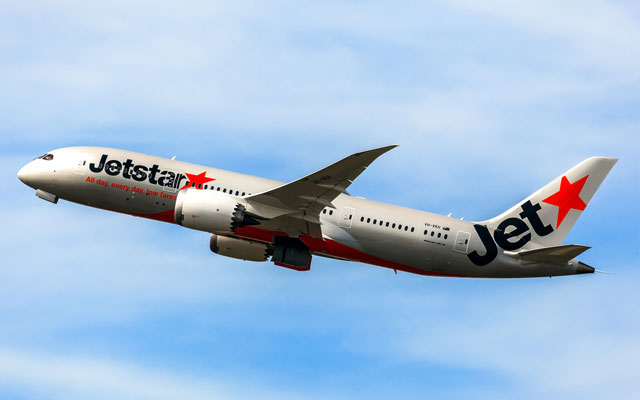
Jetstar Asia plans to resume its services between Singapore and Darwin from as early as mid-December 2021, when a travel corridor between Singapore and Australia is expected to open.
According to a release, the airline expects to start operating three-weekly services between Singapore and Darwin from December 20, pending regulatory and government approvals.

The announcement follows the Qantas Group’s international restart plan which includes Jetstar Airways resuming services between Melbourne and Singapore from December 19, 2021.
Jetstar Asia CEO, Bara Pasupathi, said preparations are underway for the airline’s return to Australia, starting with Darwin, following a two-year suspension due to the Covid-19 pandemic. He added that additional Australian routes have been planned for 2022.
“With Singapore’s strong vaccination rate and Australia on track to see 80 per cent of the population vaccinated by the end of the year, we’re starting to plan the restart of our international flights between these Covid-safe destinations,” he said.
Pasupathi added that with the Qantas Group’s plan to recommence services into Singapore as soon as a travel bubble is formed, the airline also anticipates to re-connect customers to its South-east Asian network.
A challenged recovery: Too many differences in Asia spoil the broth

The month of September has brought Asia’s travel and tourism industry some improved developments – mostly stemming from governments deciding to take a positive step towards reopening their borders for tourism.
Singapore’s all-purpose Vaccinated Travel Lanes (VTL) with Germany and Brunei kicked off on September 8. The first day of applications on September 1 attracted 735 applications from Germany and 20 from Brunei – a mix of short- and long-term pass holders. More encouragingly, the VTL announcement spurred a lively revival of outbound travel plans, with leisure travel and incentive programme specialists welcoming a spike in enquiries for travel as early as 4Q2021.
Malaysia finally gets the green light for domestic tourism resumption, with Langkawi leading the way. Some 2,500 fully vaccinated tourists from Kuala Lumpur arrived on the island when it reopened on September 16.
Thailand already has Phuket and Khao Lak reopened to fully vaccinated international travellers, with Bangkok, Chiang Mai and Pattaya lined up and ready to do the same.
Indonesia and Cambodia have plans to reopen some regions to fully vaccinated international travellers before the year is over – Bali and Bintan are on the cards for Indonesia while Cambodia has yet to unveil official plans. Still, hopes are up because Cambodia will host the ASEAN Tourism Forum in January 2022, with an in-person show component, which means tourism reopening will have to begin somehow and soon.
Vietnam will pilot a vaccine passport programme for international visitors to Phu Quoc island towards the end of 2021.
As Asia inches towards tourism resumption, destination promotions are picking up. The Philippine Tourism Promotions Board, Tourism Authority of Thailand and the Japan National Tourism Organization are among the most active in the region, driving renewed communications aimed at the travelling public as well as trade buyers.
However, it is clear that the region is reopening far slower compared to other major tourism regions such as Europe and the US. This is despite Asia being the first region in the world to take Covid-19 seriously and to respond with practical and strict containment measures.
Many obstacles remain: differing pace of national vaccination, which impacts the extent of activity resumption; differing list of recognised vaccines; differing travel restrictions that continue to change with every new wave of infection and add to travellers’ confusion; and differing political stance on pandemic management, which has ruined potential travel green lanes.
Asia is one region but every nation is different in many ways, which makes a mutually agreed upon travel restart strategy challenging to achieve. In November 2020, South-east Asian leaders said they would establish an ASEAN travel corridor to facilitate essential travel within the region. Months on, that bubble is still in discussion.
While intra-Asia travel was once a critical economic driver, Asia’s slow reopening may force tourism recovery to lean towards intra-region travel instead, changing how destinations determine their post-lockdown source markets and impacting the success of many trade events here that rely heavily on the presence of Asian buyers.
Karen Yue is group editor of TTG Asia Media. She sets the editorial direction for the company’s stable of travel trade titles and platforms, and produces content for them as well.
Trafalgar, Costsaver expand repertoire of sustainable tourism offerings

The Travel Corporation (TTC)’s Trafalgar and sister brand Costsaver plan to increase their sustainable tourism products to support the post-Covid travel rebound, by offering a minimum of one conscious travel experience on every land tour by 2023.
Dubbed Make Travel Matter Experiences, these tour offerings launched in 2020 aim to advance the United Nations Sustainable Development Goals by offering guests rich, meaningful travel opportunities that have a positive impact on the communities they visit.
Using a proprietary assessment tool endorsed by industry experts and developed exclusively for Trafalgar and TTC’s family of brands, Make Travel Matter Experiences are assessed against a set of criteria directly tied to these UN Global Goals.
Already available on 100 per cent of trips through Asia and with a total of 98 experiences across the globe, the brands are committing to extend the offering to one on every tour.
These experiences can be identified by the Make Travel Matter Experience seal on the brands’ websites.
Gavin Tollman, CEO of Trafalgar, said: “As a company with sustainable and responsible travel ingrained in our DNA, we are taking every step possible to secure the future for our industry. In the wake of the pandemic, every travel organisation should be reviewing and assessing their operations in line with the UN Global Goals and this is just one way we are securing a more inclusive future for the people and places we visit and our guests”.
The brands’ sustainability officer Gemma Myhill added: “With this change, not only will our guests continue to have incredibly rich experiences when they tour with us, but they will also know their travels will meaningfully give back to local communities, wildlife and the planet, no matter the destination they choose”.
Create Memorable Shanghai moments with Radisson

Radisson Hotel Group is inviting Chinese domestic travellers to create meaningful, memorable moments in Shanghai with a new campaign promoting perks for stays at the group’s hotels across the city.
As part of its Memorable Shanghai campaign, the group’s China Autumn Offer promotion includes a guaranteed room upgrade, daily breakfast for two, and free cancellation up until 24 hours before check-in. Radisson Rewards and Jin Jiang Club members will also enjoy 20 per cent off their chosen hotel’s Autumn promotion rate.
Additionally, guests will receive two freshly baked butterfly cookies in a special gift box. The promotion is valid for bookings made at participating hotels between now and October 31, for stays before October 31, 2021.
The offer is available at the group’s collection of seven hotels across Shanghai, including Radisson Collection Hotel, Hyland Shanghai; Radisson Blu Hotel Shanghai New World; Radisson Collection Hotel, Yangtze Shanghai; Radisson Blu Shanghai Pudong Jinqiao; and Radisson Exhibition Center Shanghai.
Emirates first airline to implement IATA Travel Pass across six continents
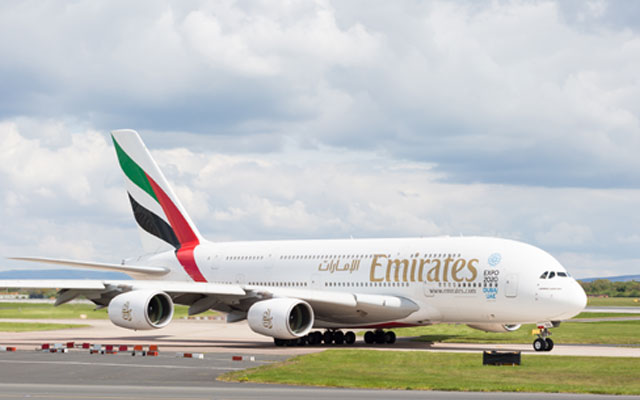
Emirates has become the first airline to implement the International Air Transport Association’s (IATA) Travel Pass on six continents as it rolls out the digital health pass to customers at all its destinations.
The IATA Travel Pass app allows passengers to manage their Covid-19 travel documentation digitally – from receiving test results and vaccination certificates directly from authorised labs and test centres, to securely sharing these documents with authorities and airlines to facilitate travel.
Following successful trials in April on select routes from its Dubai hub, Emirates gradually expanded the IATA Travel Pass pilot to customers on 12 routes in June and the airline has now signed a contract with IATA to implement the solution across its global network.
Currently available to Emirates customers travelling from 50 cities, the rollout across all 120+ Emirates destinations is expected to be completed by October.








Thailand is gearing up to reopen the country to fully vaccinated international travellers in four phases from October through January, according to the Centre for Covid-19 Situation Administration (CCSA).
The pilot phase, from October 1-31, covers four popular beach resorts – Phuket, and parts of Surat Thani, Krabi and Phang Nga. While these provinces have partially reopened to foreign tourists since July, vaccination programmes are still underway for the full reopening next month.
This phase will see the reopening of new designated areas in Krabi – Khlong Muang and Thap Khaek.
Under the second phase, from November 1-30, the reopening will be extended to 10 other destinations. These include all areas of Bangkok, Krabi and Phang-Nga, as well as designated areas in Buri Ram, Chiang Mai, Chon Buri, Loei, Phetchaburi, Prachuap Khiri Khan and Ranong.
The third phase, from December 1-31, will see the reopening of 20 more provinces which are tourism-driven, well-known for art and culture, or border destinations.
These include Ayutthaya, Chiang Rai, Khon Kaen, Lamphun, Mae Hong Son, Nakhon Ratchasima, Nakhon Si Thammarat, Narathiwat, Nong Khai, Pathum Thani, Phatthalung, Phetchabun, Phrae, Rayong, Samut Prakan, Songkhla, Sukhothai, Trang, Trat, and Yala.
Finally, the fourth phase, which will take effect from January 1, 2022, will see the reopening of 13 border provinces. These include Bueng Kan, Chanthaburi, Kanchanaburi, Mukdahan, Nakhon Phanom, Nan, Ratchaburi, Sa Kaeo, Satun, Surin, Tak, Ubon Ratchathani, and Udon Thani.