TTG Asia
Asia/Singapore Thursday, 25th December 2025
Page 82

The Langham, Custom House, Bangkok appoints new GM

0

Langham Hospitality Group (LHG) has appointed Nick Downing as general manager of The Langham, Custom House, Bangkok.

He will report to Sherona Shng, regional vice president – operations, Asia.

Downing brings over 30 years of luxury hospitality experience across South-east Asia, Australia, and the Indian Ocean. He most recently led The Siam in Bangkok.

ASEAN, South Korea plan tourism recovery at Danang roundtable

0

Tourism officials from ASEAN member states and the Republic of Korea met in Danang, Vietnam, last week to explore ways to revive travel between the two regions following the Covid-19 pandemic.

The ASEAN-Korea Roundtable in Tourism (AK-RT 2025) was jointly organised by the Southeast Asia Tourism Development Center (SATDC), Duy Tan University, and Passage to ASEAN (P2A), with funding from the South Korean government under the Korea-ASEAN FTA Economic Cooperation Project.

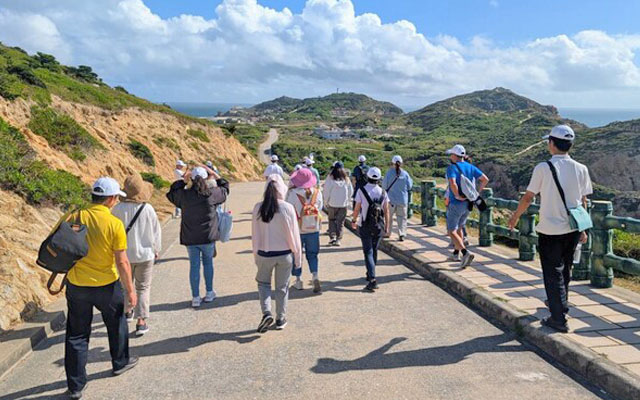
Officials gathered to discuss policies to strengthen travel ties and cultural exchange between South-east Asia and South Korea

The event focused on developing policy recommendations to support tourism recovery and economic cooperation under the ASEAN-Korea Free Trade Agreement.

The AK-RT initiative was first introduced at the 24th Meeting of ASEAN Plus Three Tourism Ministers in Johor, Malaysia, in January.

Before the pandemic, tourism contributed about 12 per cent of South-east Asia’s GDP and accounted for 11 per cent of employment, according to 2023 Organisation for Economic Co-operation and Development data. From 2010 to 2019, visitor arrivals from South Korea to South-east Asia countries grew by 11.7 per cent annually, while South-east Asia visits to South Korea increased by 10 per cent per year.

Kim Geun Ho, director general at Republic of Korea’s ministry of culture, sports and tourism, said: “Before the pandemic, nearly 13 million people travelled between our regions annually. This impressive figure reflects the connection between South Korea and South-east Asia.

“Now, as we recover from the impact of Covid-19, we face both challenges and opportunities. We must work together to create a more seamless, inclusive, and forward-looking tourism environment. This roundtable comes at a critical juncture calling for practical policy dialogue, deeper mutual understanding, and concrete solutions.”

Mo Chul Min, senior project manager of the AK-RT 2025 steering committee, added: “Tourism is one of the key sectors under the ASEAN-Korea Free Trade Agreement. The increased trade and investment flows under the FTA have enabled greater people-to-people connectivity between the two regions.

“ASEAN and (South) Korea are each other’s third-largest source markets for tourism. In 2024, ASEAN accounted for 15.4 per cent of (South) Korea’s total international arrivals, while (South) Korea represented 8.2 per cent of ASEAN’s inbound tourism in 2023.”

He noted that 2025 marks the 35th anniversary of ASEAN-Korea Dialogue Relations, now a comprehensive strategic partnership. He said the roundtable could help increase tourist flows between the two regions to 20 million, up from 13 million in 2019.

The roundtable focused on four areas: travel facilitation and security, addressing tourist inconveniences, workforce training, and cultural understanding.

Daniel Chong, dean of the school of hospitality and service management at Sunway University, Malaysia, pointed to data privacy concerns, varying levels of digital readiness across South-east Asia, and infrastructure costs as key obstacles. He pointed to data privacy, varying levels of tech readiness in ASEAN, and infrastructure costs as key challenges. His suggestions included bilateral data-sharing agreements, funding for digital border systems, and a regional task force to coordinate technology rollout.

To improve entry procedures, Nia Niscaya, senior advisor at Indonesia’s Ministry of Tourism, recommended expanding visa-free access based on reciprocity, piloting seasonal visa waivers, and introducing ASEAN-Korea youth cultural visas for students, exchange participants, and tourism apprentices.

Paithoon Monpanthong, former dean at the Graduate School of Tourism Management, National Institute of Development Administration, Thailand, highlighted job insecurity and limited professional growth in the tourism sector, especially in rural areas.

“During Covid-19 in Thailand, for example, the first job which was seriously affected was tour guides because more than 90 per cent of them were freelancers, making them feel it is not a stable career,” said Paithoon, adding that access to training is better in cities and suggesting online courses to support those in remote areas, as well as proposing improvements to workforce certification and multilingual promotion.

Pham Hong Long, dean of the faculty of tourism studies at VNU University of Social Science and Humanities, Vietnam, discussed cultural exchange and noted a disparity in perceptions. Citing an ASEAN-Korea Centre survey, he said 70 per cent of South-east Asian youth had a positive view of South Korea, while only 41.6 per cent of (South) Korean youth felt the same about South-east Asia.

“The Korean Wave (Hallyu) has significantly influenced ASEAN youth perceptions of (South) Korea,” he said, adding that this one-sided cultural flow needs to be balanced through reciprocal initiatives.

Each presentation was followed by discussions among tourism decision-makers and stakeholders to develop a joint recommendation, which is being finalised for submission to both governments.

Japan faces tourism fallout amid viral quake prophecy

0

A doomsday prediction of a megaquake and tsunami striking southern Japan this month could result in up to 560 billion yen (US$3.9 billion) in economic losses, according to think tank Nomura Research Institute.

Rumours of a possible disaster went viral after Ryo Tatsuki, an artist said to have visions of the future, predicted a massive earthquake and tsunami in the Philippine Sea on July 5, 2025, in her manga The Future I Saw. Originally published in 1999 and reprinted in 2021, the book gained attention for seemingly foretelling the March 2011 Great East Japan Earthquake and Tsunami.

Japan’s southern tourism faces losses as travellers react to viral quake prediction from 1999 manga; Takachiho Gorge in Miyazaki, pictured

The latest forecast has unsettled tourists, particularly in Asia, despite calls from Japan’s meteorological agency and local governments that the exact timing, size or location of earthquakes cannot be predicted.

Many potential travellers have cancelled their trips, chosen other destinations or postponed travel to Japan until autumn.

Arrivals from Hong Kong fell 11 per cent year-on-year in May, with a steeper decline expected in June and July, according to government data. Travel bookings from China, Vietnam, and Thailand have also dropped by 30 per cent compared to the same period last year.

In response to weakening demand, Greater Bay Airlines has reduced its thrice-weekly roundtrip flights between Hong Kong and Tokushima, Shikoku, to two, and suspended its seasonal service to Yonago in Tottori Prefecture. Hong Kong Airlines has also cancelled its July and August flights to Kagoshima and Kumamoto in southern Kyushu.

Ascott commences talent programme to support massive opening pipeline

0

Ascott, the lodging business unit of CapitaLand Investment, has launched Ascott Accelerate, a structured talent programme designed to catapult high-potential associates into leadership roles across more than 300 new properties slated to open in the coming years.

Wong Kar Ling, chief strategy officer and managing director, Southeast Asia at Ascott, who is also co-chair of the Ascott Learning Council, told TTG Asia said the company has to ramp up talent development to support its target of achieving over S$500 million (US$391.5 million) in fee-related earnings by 2028. This goal will materialise through the opening of more than 300 new properties by 2028, resulting in the creation of more than 12,000 new jobs, including over 1,500 property leadership roles.

Ascott Accelerate fast-tracks leadership while engaging associates through initiatives like the Ascott Learning Festival

Ascott Accelerate features three progressive career development tracks: Aim, which builds foundational leadership skills essential for supervisors; Advance, which focuses on management capabilities for heads of departments; and Aspire, which grooms future residence managers and general managers.

Aspire is the first track to launch under the programme, with courses beginning on July 1 for around 30 associates selected from across South-east Asia, where Ascott is set to see its fastest portfolio growth.

These associates are determined to be ready for their next career progression by their country operation leader and the country head in human resources.

Associates must meet specific criteria, including serving a minimum number of years with the company, attainment of an above-average performance rating, and possessing the right personality for leadership roles.

At the same time, Ascott has allowed country leaders to exercise their own judgement in their selection, “as they know their people best”.

Wong shared that the first batch of Aspire trainees is being paired with mentors from the company’s country leadership team. The trainees will follow an e-learning module covering all aspects of management, mark monthly learning milestones through expert sharing sessions, and complete the year-long course with a graduation ceremony.

Wong explained that the programme is hybrid – combining online lessons with face-to-face interaction with mentors – to make it easier for associates to learn while fulfilling their day job.

The Aim track will launch next year with potentially 30 to 40 participants.

Eventually, all three tracks will be conducted concurrently, but Aim and Advance tracks will “be decentralised from headquarters and driven by regional teams”.

Wong said an equal amount of thought goes into retaining talents.

“We have to understand our associate’s aspiration and what we, as an organisation, can provide. The success of our programme is not determined by the number of candidates we put through it, but by how fast we can place them into leadership roles. This drives retention,” explained Wong, stating that training without opportunity to progress is pointless.

She added that employees also appreciate the opportunity to expand their skill sets and grow across different departments, as Ascott does not “box our people in”.

“The Ascott brand tagline is, Stay your way, where our ambition is to provide a home away from home for our guests. This applies internally too. We want our people to grow their way,” Wong said.

Ascott Accelerate is just one of many talent development programmes offered as part of the Ascott Global Academy for Excellence, a comprehensive training platform designed to build a future-ready workforce for the company. Wong shared that team members are engaged in regular Ascott Global Exchange Programme and Ascott Learning Festivals. There are also specific task forces that associates can volunteer to join.

Hilton to open Waldorf Astoria in Bali’s Nusa Dua by 2027

0

Hilton has signed an agreement with Indonesian property developer Balibuana Perkasa to open Waldorf Astoria Bali, expanding the group’s presence in one of South-east Asia’s key tourism destinations.

Scheduled to open in late 2027, the resort will be located along Sawangan Beach in Nusa Dua. It is Hilton’s second collaboration with the developer, following Hilton Bali Resort, and will join the group’s 16 operating and 12 pipeline hotels across Indonesia.

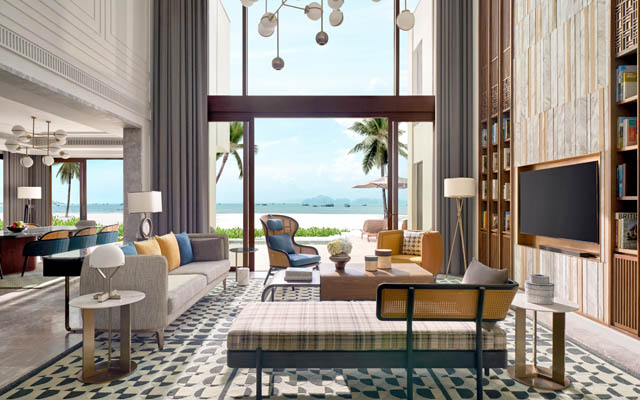
Slated to open in 2027, Waldorf Astoria Bali is set to open in 2027 in Sawangan Beach

Waldorf Astoria Bali will comprise 71 villas and 68 guest suites overlooking the Indian Ocean. The property will include a beach club, a restaurant and pool terrace under the brand’s Peacock Alley concept, and a new outlet by chef Dave Pynt, who is known for his open-flame cooking and the one behind Burnt Ends in Singapore and The Ledge at Waldorf Astoria Maldives Ithaafushi.

Facilities will include a spa influenced by Balinese wellness traditions, a fitness centre, ocean-view swimming pools, family activities and a children’s club. The resort will also feature 748m2 of event space, including a ballroom and a chapel for weddings and private events.

Located 14.5km from Ngurah Rai International Airport, the resort offers proximity to nearby attractions including Ungasan, Uluwatu, and Geger Beach.

Waldorf Astoria hotels participate in Hilton Honors, the company’s loyalty programme. Members who book directly receive benefits such as flexible points payment, exclusive discounts, standard Wi-Fi and access to the Hilton Honors app.

Clarence Tan, senior vice president, development, Asia Pacific, Hilton, commented: “With the upcoming arrival of Waldorf Astoria, Bali will hold the distinction of being home to three of our luxury brands, including Conrad Hotels & Resorts and LXR Hotels & Resorts, in addition to our flagship Hilton Hotels & Resorts and Hilton Garden Inn.”

Gandi Rudiarto, director of Balibuana Perkasa, said: “The island paradise has been in the global spotlight for hosting world events like the G20 Summit, and we are confident that Waldorf Astoria Bali will introduce new heights of unforgettable luxury that befits leaders and luminaries – true to the brand’s illustrious legacy of hosting presidents and royals.”

Hwajing brings Piano Land to Malaysia in first Chinese cruise homeporting initiative

0

Hwajing Travel & Tours has partnered with Astro Ocean Cruise to bring the MV Piano Land to Malaysia. The vessel will make her maiden voyage on November 30, becoming the first Chinese cruise ship to be homeported in Malaysia.

The deployment will run from November 30 to December 16, and marks Hwajing’s second major international cruise collaboration, following the homeporting of an Italian cruise ship last year.

From left: Astro Ocean Cruise’s Jian-feng Tong, Tourism Malaysia’s Yeoh Soon Hin, and Hwajing Travel & Tours’s Kenny Cheong

Itineraries will include a three-day, two-night return sailing from Penang to Port Klang, and a four-day, three-night voyage visiting Penang, Langkawi, and Port Klang. Passengers can embark from either Penang or Port Klang, offering more flexibility for Malaysian and regional travellers.

A special six-night New Year Countdown Cruise is also planned, sailing from Port Klang to Singapore, Nha Trang, and Hong Kong. The itinerary will feature a New Year celebration at sea, with passengers viewing fireworks over Hong Kong’s skyline from the ship as she welcomes 2026.

The signing ceremony took place at the Penang Port Commission and was witnessed by Yeoh Soon Hin, chairman of the Penang Port Commission and deputy chairman of Tourism Malaysia. The agreement was signed by Kenny Cheong, managing director of Hwajing Travel & Tours, and Jian-feng Tong, vice president of Astro Ocean Cruise.

Yeoh said in a press release issued by Hwajing Travel: “In line with transport minister, Anthony Loke’s vision to position Malaysia as a premier homeport destination, we are committed to driving the nation’s cruise tourism agenda forward.

“By encouraging travellers to begin and conclude their cruise itineraries in Malaysia, we aim to boost tourist arrivals, create local employment opportunities, and showcase Malaysia’s vibrant culture, heritage, and cuisine on the global stage. With the right strategy, cruise tourism holds tremendous potential to deliver sustained economic benefits and uplift communities across the country.”

Cheong added: “Welcoming MV Piano Land to Malaysia reinforces our commitment in making cruise holidays more accessible and enriching for both Malaysian and South-east Asian travellers. This milestone comes at a special time for us, as Hwajing celebrates its 36th anniversary this year. We look forward to playing a key role in developing Malaysia into a thriving homeport hub for international cruises.”

“The deployment of MV Piano Land is a key milestone in the company’s strategic expansion across Asia. We believe its unique culture and cruise model will effectively stimulate cruise travel demand in Malaysia and surrounding markets,” stated Tong.

Singapore Food Festival returns for 32nd edition with focus on heritage and innovation

0

The Singapore Food Festival (SFF) will return for its 32nd edition from September 4 to 24, 2025, marking more than 30 years of events highlighting the country’s food culture. Ahead of the festival, a series of activities will offer previews of what visitors can expect.

The 2025 theme, Have You Eaten Yet?, reflects the role of food in connecting people, especially in Asian cultures where care is often shown through sharing meals rather than words. The festival will feature over 15 events, including three Signature Events, three Pop-up Events, seven Unique Events, SG60 Specials, and online activities. Its central hub, Mise en Place at Dempsey Hill, will be open to the public and showcase a range of experiences combining food, culture and lifestyle.

The Long Table offers a communal dining experience blending food and storytelling

Mise en Place will also host Zumbo Desserts, led by celebrity chef Adriano Zumbo, marking the brand’s debut in Asia. The festival will focus on Singapore’s food heritage and innovation in celebration of SG60. Fashion curator Daniel Boey will contribute by integrating fashion and food in one of the festival’s showcases.

The Signature Events include Long Table, a communal dining experience combining food with storytelling and theatre; Food Is Art, which pairs dessert chefs, mixologists and artists to explore food as visual art; and Future Food, highlighting food innovation through tastings and demonstrations.

Pop-up Events will bring food experiences to various parts of Singapore, including food truck tours and heritage walks. Unique Events aim to create immersive food experiences by combining culinary arts with other creative fields.

SG60 Specials will honour Singapore’s culinary history with contemporary interpretations. The festival will also engage international audiences through online and social media content. Over 50 affiliate partners will offer additional curated experiences across the city.

In July, the Singapore Food Stories digital series will share personal accounts and recipes from Singaporeans, emphasising the cultural and emotional significance of food.

Chinatown Complex Food Centre will be the festival’s Heritage Hawker Partner. The centre, located in central Singapore, houses 226 stalls and is known for its traditional dishes passed down through generations. From September 4 to 24, it will host events under the banner of SFF 2025, highlighting the role of hawkers in preserving local food culture through the concept A Taste of Time, which focuses on craft, community and continuity.

For more information, visit Singapore Food Festival 2025.

Japan expands rural destination development project to broaden luxury tourism potential

0

Three more destinations – the foothills of Mount Fuji, Niigata, and Yamagata – have been added to the Japan Tourism Agency (JTA) and Japan National Tourism Organization’s (JNTO) project to develop model destinations aimed at spreading the consumption of high-yield inbound travellers. This brings the total number of beneficiary destinations to 14.

The commitment to intensively support the development of rural destinations for quality tourism was initiated last year. The project aims to address challenges in tourism product offerings, accommodation supply, human resources, and connections with overseas trade partners, with support provided by both JTA and JNTO.

The Echigo-Tsumari Art Triennial turns rural landscapes into a global stage for art and nature, attracting travellers seeking unique cultural and outdoor experiences

Ryo Ito, manager, luxury travel promotion office, global projects department with JNTO, told TTG Asia during ILTM Asia Pacific last week that Mount Fuji, Niigata, and Yamagata were selected for the project based on their strong potential for further tourism development, which will create more reasons for travellers to visit and return.

Niigata, while renowned for its top quality rice and sake, also boast a rich arts movement. The Echigo-Tsumari Art Triennial, held once every three years, is Niigata Prefecture’s signature modern art event, with installations displayed across various sites, including town centres and rice fields.

Ito noted that the Triennial could elevate Niigata’s appeal as an art destination, similar to how the Setouchi Triennale has raised the profile of the Seto Inland Sea islands.

The focus on Niigata will also highlight Sado city, known as the habitat of the Japanese crested ibis.

Yamagata’s natural landscapes and mountain scenery will be promoted in overseas markets where the prefecture remains relatively under the radar compared to other parts of Japan.

For the Mount Fuji foothills, the focus will be on developing and showcasing alternative tourism experiences, aiming to broaden international perceptions of the area beyond hiking.

Asked about the project’s progress with the initial 11 destinations, Ito said there had been “great progress,” particularly in improving accommodation, developing experiences, and strengthening DMCs.

He added that several destinations have participated in international trade shows with JNTO, with Kyushu and Tottori joining ILTM Asia Pacific for the first time this year.

“The response from travel advisors at ILTM Asia Pacific 2025 has been encouraging. Many overseas agencies are looking for new destinations in Japan, not just the popular ones,” reflected Ito.

“We are promoting high quality destinations across Japan so that travel agencies can build itineraries that combine the big and popular cities with lesser-known ones,” he said, adding that travellers can easily access off-the-beaten-track destinations via major transport hubs.

New PATA series offers insights into travel shifts across Asia-Pacific

0

PATA has released the first edition of Tourism in Focus, a new monthly publication highlighting key tourism trends and developments across the Asia-Pacific region in a concise, accessible format.

Published under the tagline Insights for a Meaningful Pacific Asia Tourism Economy, the series delivers timely, data-driven intelligence on how travel and tourism is shaping national economies and industry priorities. It will inspect a wide range of tourism segments, including activity-based, cultural, experiential, health and wellness, special interest, and purpose-driven tourism.

Tourism in Focus offers monthly insights on emerging travel trends across the Asia-Pacific region

The debut edition, titled The Future of Travel is Personal, Playful, and Profound: What Marketers Must Embrace Next for Travel, was produced in partnership with Tripadvisor.

PATA CEO Noor Ahmad Hamid commented: “This initiative, crafted in alignment with the Association’s Strategy 2030, enhances PATA’s commitment to equipping members and the wider industry with knowledge of emerging trends, innovations, and opportunities that will shape the future of travel and tourism.”

He added that each edition would share insights from different PATA partners and experts, helping the industry stay informed and ready for what’s next.

The complimentary publication is now available on the PATA Catalog and can be accessed here.

Digital technologies drive changes in airport traveller behaviour and spending

0

Airports worldwide are increasingly adopting digital technologies that are changing how travellers move through terminals and how much they spend.

A recent global survey by Priority Pass, which included over 12,000 travellers from key Asia-Pacific markets such as Hong Kong, Australia, India, Indonesia, Singapore, South Korea, and Thailand, highlights the growing impact of automation on passenger behaviour and airport commerce.

The survey finds airport automation is changing traveller behaviour and increasing spending across the Asia-Pacific region

The global airport automation market is expected to grow from US$55.05 billion in 2025 to USD$85.12 billion by 2033. The increase is attributed to changing passenger expectations and investment in digital infrastructure. Technologies such as biometric identification, real-time updates, and automated check-in and baggage handling are influencing traveller preferences and expenditure.

In the Asia-Pacific region, fast-track security (78%) and digital boarding passes (77%) were the most widely cited technologies impacting travel. Automated baggage drops (74%) and advanced security scanners (72%) also featured prominently.

68% of travellers in Asia-Pacific – including 77% of Gen Z and 73% of millennials – reported spending more at airports as a result of automation. This compares to a global average of 60%. Nearly half (48%) of travellers in the region said automation gives them an additional 10 to 30 minutes per journey, while 21% reported gaining up to an hour. This extra time is commonly spent on dining (58%), shopping (51%), or using airport lounges (46%). Around 31% of respondents said automation made them feel more relaxed, leading to greater discretionary spending.

Airport lounges and spending patterns
Lounge access remains a significant aspect of the airport experience in Asia-Pacific, where 80% of respondents said they had used a lounge at least once. Among lounge users, 73% said automation increased their airport spending, compared to 45% of non-users.

A separate study by analytics firm Fonto, commissioned by Collinson, found that Australian payment cardholders with Priority Pass spend 19% more annually than cardholders with access through other providers or without lounge access.

Travellers identified three preferred future developments in lounges: tech-enabled environments with tailored food, entertainment and workspaces (46%), seamless app-based bookings (42%), and sustainable lounge and wellness area design (41%). 67% of Asia-Pacific respondents said that lounge access through payment cards improved their airport experience.

Balancing automation and human support
While automation is generally viewed positively, travellers continue to value human interaction at key points. In Asia-Pacific, 69% of respondents believe the pace of AI and technology adoption in airports is appropriate. However, the study notes that human presence remains important during customer service interactions (66%), security procedures (53%), and lost property assistance (52%), where reassurance and clarity are often needed.

Looking ahead, travellers in Asia-Pacific expressed interest in standardised global security processes (45%), fully biometric travel (44%), and smart baggage tracking (43%).

As airports incorporate more technology, opportunities are increasing for service providers and brands to engage travellers. According to Priority Pass, aligning loyalty benefits with traveller preferences may enhance customer engagement within a changing airport environment.

Collinson International CEO Christopher Evans stated: “Automation is freeing up valuable time, lowering stress levels and providing better information, in real time to the traveller. When the experience delivers, travellers are more inclined to explore places to relax, sample dining options or retail stores. By integrating digital access to lounges and new airport experiences into the Priority Pass app, we’re creating more choice and opportunities for enhanced moments throughout the journey.”

“The dynamic Asia-Pacific region is home to some of the world’s busiest international airport hubs, with several airports investing significantly in expansion and modernisation of infrastructure to meet growing demand. The region is also leading the charge in adopting airport technology; in turn, setting new global standards for efficiency and traveller experience,” added Todd Handcock, global chief commercial officer and Asia Pacific executive chair at Collinson International.

He added that their research showed travellers in Asia-Pacific also place high value on “connection, trust and service alongside these innovations”.

The full report can be viewed here.